DD
MM
YYYY

PAGES

DD
MM
YYYY

spot_img

PAGES

Home Blog Page 1180

Germany’s Industry Is Optimistic Following Friedrich Merz Visit To The U.S.

0

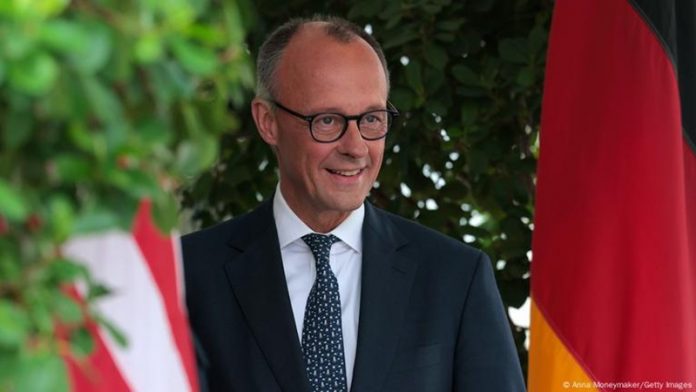
German industry is cautiously optimistic following Chancellor Friedrich Merz’s visit to the U.S. on June 5, 2025, where he met with President Donald Trump to discuss trade, among other issues. Merz, a staunch advocate for free trade, pushed for a reduction in U.S. tariffs, particularly the 25% levy on imported vehicles and parts and the 10% tariff on other goods, which significantly impact Germany’s export-driven economy, especially its automotive sector. These tariffs, combined with a 50% duty on steel and aluminum, threaten German manufacturers, who employ around one million people in the U.S. through their operations.

During the visit, Merz and Trump agreed to strengthen cooperation on trade, with Merz expressing hope for progress before the EU-U.S. trade deal deadline of July 9, 2025. He emphasized a “zero-for-zero” tariff approach, aiming to eliminate industrial duties entirely, a stance he reiterated in discussions with European Commission President Ursula von der Leyen. German industry leaders, particularly in automotive and manufacturing, are hopeful this signals a path toward de-escalation, as a trade war would exacerbate existing challenges like high energy costs and declining competitiveness.

However, Merz warned that the EU could retaliate against U.S. tech companies if trade tensions escalate, pointing to the U.S. services trade surplus as a potential target. While the talks were described as “extremely satisfactory” by Merz, with Trump praising their personal rapport, no concrete agreements were announced, leaving industries awaiting tangible outcomes. The German automotive sector, a cornerstone of the economy, remains particularly vulnerable, with exports to the U.S. valued at €157.9 billion in 2023. Progress in upcoming EU-U.S. negotiations, potentially discussed at the G7 and NATO summits in June, will be critical for German industry’s outlook.

The implications of German Chancellor Friedrich Merz’s U.S. visit and the push for trade talk progress are significant for German industry, the EU, and global trade dynamics. Progress toward a “zero-for-zero” tariff deal could reduce or eliminate U.S. tariffs (e.g., 25% on vehicles, 10% on goods, 50% on steel/aluminum), protecting Germany’s €157.9 billion export market to the U.S., especially for automakers like Volkswagen, BMW, and Mercedes-Benz. Lower tariffs would safeguard jobs and competitiveness, critical amid Germany’s economic stagnation and high energy costs.

Failure to secure concessions could intensify trade barriers, raising costs for German manufacturers and potentially forcing production shifts to the U.S. or other markets. A trade war would exacerbate pressures on an already struggling industrial base, with ripple effects on supply chains and SMEs. Successful talks could strengthen EU-U.S. trade ties, aligning with Merz’s and von der Leyen’s goal of a broader industrial tariff agreement by July 9, 2025. This could stabilize transatlantic economic relations and counterbalance China’s trade influence.

If negotiations stall, Merz’s warning of EU retaliation against U.S. tech giants (e.g., Google, Apple) could spark a broader trade conflict, disrupting the U.S.’s services surplus (€70 billion in 2023) and escalating tensions. This tit-for-tat risks fracturing EU-U.S. economic cooperation. A de-escalation in U.S.-EU tariffs could set a precedent for multilateral trade agreements, encouraging open markets globally. Conversely, a breakdown could embolden protectionist policies, disrupting WTO frameworks and global supply chains, particularly in automotive and tech sectors.

Emerging markets reliant on EU or U.S. trade could face indirect impacts, as German industry’s performance influences global demand for raw materials and components. For Merz, securing trade progress bolsters his leadership and Germany’s economic credibility within the EU, especially after his recent election. Failure could weaken his coalition and fuel criticism from pro-protectionist factions. In the U.S., Trump’s willingness to negotiate may hinge on domestic political pressures, balancing his “America First” agenda with demands from U.S. industries reliant on EU imports.

Most at risk, with 25% tariffs threatening profitability and U.S. market share. A deal could preserve Germany’s 1 million U.S.-based jobs. EU retaliation could hit U.S. tech firms, raising costs for consumers and complicating digital trade. Trade stability would support Germany’s energy-intensive industries, while disruptions could worsen cost pressures. The outcome of these talks, likely shaped by G7 and NATO summits in June 2025, will determine whether German industry gains breathing room or faces heightened economic strain, with broader consequences for global trade stability.

Why Do We Have Companies? Ndubuisi Ekekwe Answers As Tekedia Mini-MBA Begins on Monday

0

We will begin the next edition of Tekedia Mini-MBA tomorrow, Monday, June 9, 2025. In a 50+ page lecture note, I will take time to explain why we have companies, and why companies exist. Yes, we need to understand the necessity of having companies before we can move into the phase of understanding how to run or manage them.

Once that necessity component is established, I will then focus on the three pillars upon which all companies in the world are built upon, and why the improvements in firms revolve around those pillars. The three pillars of People, Processes and Tools are central in everything we do in markets, and all domains of competitions are designed and engineered to shift market positioning around those three pillars. Because if you have the best mix of those pillars, you will win territories as your equations of markets will balance:

Great Company =: Awesome Products + Superior Execution

Innovation =: Invention + Commercialization

But remember, as in construction, pillars must be built on things, and those are the elemental factors of productions. We will examine the role of Knowledge in this building process, and most importantly how that Knowledge is rearchitecting business management. In other words, if knowledge becomes commoditized because of pervasive artificial intelligence, how do we build new competitive advantages in markets and what should managers of business be expected to do?

Good People, from Oriendu Market in Ovim to Wall Street banks in New York, we will use the next 12 weeks to understand the foundational mechanics of markets. I welcome hundreds of young people who have signed up for another academic festival in Tekedia Institute. Thank you and get ready for a co-learning experience as we advance together “to restore the dignity of man and woman” [credit to UNN] by fixing frictions in markets. Welcome to the #BestSchool!

Ndubuisi Ekekwe

Tekedia Institute | school.tekedia.com

The Volodin-Merz Spat Highlights A Broader Russia-West Divide

0

The Speaker of the Russian State Duma, Vyacheslav Volodin, warned German Chancellor Friedrich Merz against actions that could escalate tensions with Russia, particularly following Merz’s statements in the United States about World War II. Volodin’s message, sent to Bundestag President Julia Klöckner and parliamentary faction leaders, accused Merz of distorting the history of the victory over Nazism and claimed that Germany’s government was creating preconditions for provoking clashes with Russia.

This warning aligns with broader Russian concerns about Merz’s policies, especially his support for Ukraine, including permitting Kyiv to use German-supplied weapons for long-range strikes inside Russia. Russian officials, including Foreign Minister Sergei Lavrov and Kremlin spokesman Dmitry Peskov, have criticized Merz’s remarks as escalatory, suggesting they imply a pre-existing, secretive decision to allow such strikes. Russian parliamentarians, like Leonid Ivliev and Dmitry Kolesnik, have further cautioned that any threat to Russia’s security could prompt a swift and forceful response, referencing capabilities like the Iskander missile system.

Merz’s rhetoric, including his push to supply Taurus missiles to Ukraine and his coalition’s stance labeling Russia as a major threat to European peace, has fueled Moscow’s accusations of provocation. Russia’s reaction reflects its ongoing strategy of issuing warnings to deter Western escalation in the Ukraine conflict, as seen in prior threats over missile deliveries. However, these warnings have often been described as saber-rattling, with Russia failing to follow through on nuclear or other extreme threats when Western red lines were crossed.

The Russian narrative may exaggerate Merz’s statements to justify its own military posture, while Merz’s coalition faces domestic pressure to balance robust support for Ukraine with avoiding direct NATO-Russia confrontation. Without independent verification of Merz’s exact WWII remarks, the Russian response could be leveraging historical sensitivities to amplify its diplomatic pressure. Always consider that state-driven narratives, whether from Russia or the West, may prioritize geopolitical agendas over factual nuance.

The warning from Russian State Duma Speaker Vyacheslav Volodin to German Chancellor Friedrich Merz underscores a deepening geopolitical divide between Russia and Western powers, particularly Germany, with significant implications for European security, NATO-Russia relations, and the ongoing Ukraine conflict. Merz’s support for Ukraine, including allowing German-supplied weapons for long-range strikes into Russia and advocating Taurus missile deliveries, heightens the risk of escalation. Russia’s warning signals its intent to deter further Western military involvement, but its repeated threats (e.g., nuclear rhetoric or missile strikes) have historically been more posturing than action.

However, miscalculation remains a concern, as any Russian retaliation—such as targeting German assets or expanding strikes in Ukraine—could draw NATO closer to direct conflict. The Russian narrative, amplified by figures like Lavrov and Peskov, frames Merz’s policies as provocative, potentially justifying preemptive or asymmetric responses. This could include cyberattacks, energy disruptions, or increased hybrid warfare tactics in Europe.

Strain on European Unity

Germany’s shift toward a more hawkish stance under Merz’s leadership (assuming he’s chancellor in this context) may create friction within the EU and NATO. Countries like Hungary and Slovakia, which favor dialogue with Russia, could resist Germany’s push for stronger military support to Ukraine, complicating EU sanctions or NATO defense strategies. Domestically, Merz faces a balancing act. His coalition’s hardline rhetoric appeals to voters favoring robust Western alignment but risks alienating those wary of economic fallout (e.g., energy costs or trade disruptions) or direct confrontation with Russia.

Volodin’s accusation that Merz distorts WWII history reflects Russia’s strategy of weaponizing historical memory to rally domestic support and pressure the West. By invoking the Soviet victory over Nazism, Russia casts itself as a defender against a resurgent “fascist” threat, framing Germany’s actions as historically insensitive or aggressive. This tactic deepens the ideological divide, as Western leaders like Merz prioritize current security threats (Russia’s invasion of Ukraine) over Russia’s historical sensitivities. Without Merz’s exact WWII remarks, it’s unclear if Russia is exaggerating for effect, but the dispute highlights how history fuels mistrust.

Long-Term NATO-Russia Tensions

Merz’s policies align with NATO’s broader strategy to counter Russia, including increased defense spending and forward deployments in Eastern Europe. Russia’s warnings aim to deter NATO’s expansion of military aid to Ukraine, but they may instead solidify Western resolve, pushing countries like Germany to invest more in deterrence. The divide risks a prolonged new Cold War dynamic, with Europe as the primary theater. Russia’s reliance on threats and military posturing could backfire, isolating it further economically and diplomatically, while NATO’s cohesion strengthens.

Russia seeks to maintain a sphere of influence in its near abroad, viewing Ukraine’s alignment with the West as a red line. It uses threats and historical narratives to deter NATO expansion and weaken Western unity. Germany/West prioritizes supporting Ukraine’s sovereignty and countering Russian aggression, seeing it as critical to European security. Merz’s push for escalation (e.g., long-range strikes) reflects a shift toward proactive deterrence, contrasting with earlier German caution under leaders like Scholz.

Russia frames the West, particularly Germany, as escalatory and historically revisionist, accusing Merz of downplaying the Soviet WWII role. This resonates domestically, reinforcing Putin’s narrative of Russia under siege. Germany/West views Russia’s actions in Ukraine as a direct threat to the rules-based international order. Merz’s rhetoric, labeling Russia a major threat, reflects a consensus in Western capitals that appeasement has failed. Russia’s invocation of WWII taps into a deep cultural narrative of sacrifice and victory, portraying Western actions as ungrateful or provocative.

Germany, aware of its WWII guilt, navigates a delicate balance but prioritizes modern security over historical deference to Moscow. This clash over history widens the emotional and ideological gap, making diplomatic off-ramps harder to find. Germany’s earlier dependence on Russian energy (e.g., Nord Stream) has shifted to diversification, reducing Moscow’s leverage. Russia’s warnings may aim to exploit lingering European fears of economic disruption, but Germany’s pivot to alternative energy sources weakens this threat.

The Volodin-Merz spat highlights a broader Russia-West divide, with immediate risks of escalation in Ukraine and long-term implications for European security. Russia’s warnings aim to deter but may entrench Western resolve, while historical disputes deepen mistrust. The divide—strategic, political, and cultural—shows no signs of narrowing, as both sides prioritize incompatible goals. Merz’s challenge is to sustain support for Ukraine without crossing Russian red lines that could spark wider conflict, while Russia’s posturing risks further isolation if its threats prove hollow. Always approach state narratives critically, as both sides may exaggerate for domestic or diplomatic gain.

MoonPay’s BitLicense Is A Milestone That Strengthens Its U.S. Presence And Credibility

0

MoonPay, a cryptocurrency payments company, secured a BitLicense and a money transmitter license from the New York State Department of Financial Services (NYDFS). This approval allows MoonPay to operate legally in New York, completing its regulatory coverage across all 50 U.S. states. The BitLicense, considered a rigorous standard, enables MoonPay to offer fiat-to-crypto services, including buying, selling, and storing digital assets, directly to customers nationwide without third-party intermediaries.

MoonPay joins an elite group of 35 crypto firms, such as Coinbase and Circle, authorized to conduct virtual currency activities in New York. The company’s CEO, Ivan Soto-Wright, described this as achieving the “golden regulatory stack” for crypto in the U.S. This milestone follows MoonPay’s opening of a new headquarters in New York City and its strong financial performance in 2024, marking a significant step in its U.S. expansion. However, the BitLicense program faces scrutiny, with critics like New York City Mayor Eric Adams calling for its end, arguing it stifles innovation.

MoonPay securing the New York BitLicense has significant implications for its operations and the broader crypto industry, while also highlighting a divide in perspectives on crypto regulation in the U.S. With the BitLicense, MoonPay can now legally offer its fiat-to-crypto services in all 50 U.S. states, including New York, one of the most heavily regulated markets. This enables seamless access to buying, selling, and storing digital assets for U.S. customers without relying on third-party intermediaries, potentially increasing user adoption and transaction volume.

The BitLicense is a stringent regulatory standard, and MoonPay’s approval signals compliance with high anti-money laundering (AML) and consumer protection requirements. This enhances MoonPay’s reputation as a trusted player, likely attracting more institutional and retail users. As one of only 35 crypto firms with a BitLicense, MoonPay joins an elite group (e.g., Coinbase, Circle). This positions it favorably against competitors lacking similar approvals, especially in New York, a global financial hub.

The BitLicense aligns with MoonPay’s recent opening of a New York City headquarters and its reported strong financial performance in 2024. This could accelerate its U.S. market penetration, potentially driving partnerships with local financial institutions or Web3 projects. With regulatory barriers cleared, MoonPay can innovate more freely, potentially expanding services like NFT purchases, Web3 integrations, or new payment solutions, leveraging its now-complete U.S. regulatory framework.

The BitLicense also underscores a broader divide in the U.S. crypto ecosystem between those who support stringent regulation and those who view it as a barrier to innovation. Supporters, including regulators like the NYDFS, argue that the BitLicense ensures robust AML, know-your-customer (KYC), and cybersecurity standards, protecting consumers from fraud and market manipulation. Compliance with such regulations attracts institutional investors and fosters mainstream adoption by aligning crypto firms with traditional financial standards.

MoonPay’s pursuit of the BitLicense reflects alignment with this view, emphasizing regulatory compliance as a foundation for scaling operations and building trust. Critics, including New York City Mayor Eric Adams, argue that the BitLicense’s high compliance costs and lengthy approval process deter smaller startups and innovators from entering the market, concentrating power among larger firms like MoonPay.

Some states, like Wyoming and Texas, have adopted more crypto-friendly regulations, attracting businesses away from New York. Critics see the BitLicense as driving innovation to less-regulated regions or offshore jurisdictions. The broader crypto industry often views New York’s regulatory framework as overly restrictive, potentially limiting the U.S.’s competitiveness in the global blockchain economy. The divide reflects ongoing tensions in U.S. crypto policy, particularly as the 2024 presidential election highlighted contrasting approaches. For instance, President Donald Trump’s pro-crypto stance and promises to make the U.S. a “bitcoin and crypto capital” contrast with stricter regulatory frameworks favored by some Democrats and regulators.

MoonPay’s achievement may intensify this debate, as it demonstrates the feasibility of navigating strict regulations, yet critics argue such barriers exclude smaller players, creating an uneven playing field. MoonPay’s BitLicense is a milestone that strengthens its U.S. presence and credibility but also amplifies the regulatory divide.

While it enables MoonPay to scale and innovate, the broader industry debate over regulation—exemplified by figures like Mayor Adams calling for the BitLicense’s end—highlights a tension between fostering innovation and ensuring consumer protection. This divide will likely shape future U.S. crypto policy, influencing how firms like MoonPay navigate growth in a fragmented regulatory landscape.

Meta in Talks to Invest Over $10bn in Scale AI, Deepening Its Bet on Artificial Intelligence

0

Meta Platforms Inc. is reportedly in advanced talks to make a multibillion-dollar investment in Scale AI, the data infrastructure startup powering some of the most important players in the generative AI race.

According to Bloomberg, People familiar with the matter say the deal — still in flux — could exceed $10 billion, making it one of the largest private funding rounds ever seen in the tech industry.

While neither company has confirmed the potential investment, it would mark a major strategic pivot for Meta, which has traditionally relied on its own in-house AI research and open-source collaborations rather than funneling billions into outside startups, as some of its rivals have done.

Scale AI, co-founded in 2016 by CEO Alexandr Wang, has quietly grown into a cornerstone of the AI supply chain by providing data-labeling services essential to training machine learning models. With a client roster that includes OpenAI and Microsoft, the company made $870 million in revenue last year and expects that number to more than double to $2 billion by 2025.

Scale was valued at $14 billion during a 2024 funding round that included Meta and Microsoft. A subsequent tender offer reportedly valued the company at $25 billion.

A Rare Power Move by Meta

If finalized, this would be Meta’s biggest external AI investment to date, signaling a shift in strategy as the company ramps up its efforts to dominate the AI frontier. So far, Meta has been largely self-reliant in developing its Llama series of large language models, which now power chatbots used by over a billion people monthly across Facebook, Instagram, and WhatsApp. CEO Mark Zuckerberg has committed up to $65 billion for AI projects this year alone, and making Scale a deeper partner could help the company fill critical gaps in training data and infrastructure.

Unlike Microsoft, Amazon, or Google, Meta does not operate a public cloud business, and it remains unclear whether its deal with Scale would include infrastructure credits or take a different shape entirely. But the move would help Meta keep pace in an increasingly competitive arms race, where rivals have poured massive resources into AI development: Microsoft has invested more than $13 billion in OpenAI, while Amazon and Google have committed billions to Anthropic.

Strategic Alignment Beyond Commercial AI

Beyond the commercial AI space, Meta and Scale have already found common ground in military applications. Just last week, Meta announced a new partnership with defense contractor Anduril Industries to build military-grade technologies, including an AI-powered mixed-reality helmet. The deal confirmed Meta’s willingness to expand its AI ambitions beyond consumer tech and into defense infrastructure.

Scale, for its part, has already established itself as a key AI contractor to the U.S. government. It recently secured a Pentagon contract for developing advanced AI agents — a deal the company described as a “significant milestone in military advancement.” It is also working with Meta on “Defense Llama,” a customized version of Meta’s Llama large language model designed specifically for military use.

The emerging defense tech collaboration between Meta, Scale, and Anduril underlines a growing convergence between Silicon Valley and Washington, with AI now seen as central to both economic competition and national security. Meta has even begun licensing its AI models for use by U.S. agencies and defense contractors, marking a departure from its earlier more cautious stance on military applications.

Scale AI’s Strategic Importance

Scale’s business is built on the idea that powerful AI systems are only as good as the data that trains them. The company uses tens of thousands of contract workers to scrub, label, and structure massive datasets — a critical but often overlooked aspect of building reliable AI models.

Meta is not just investing in another AI unicorn by doubling down on Scale. It’s securing access to the foundational layer of training data infrastructure, which could prove to be as important to its long-term AI ambitions as GPUs or software models.