DD
MM
YYYY

PAGES

DD
MM
YYYY

spot_img

PAGES

Home Blog Page 1180

The Volodin-Merz Spat Highlights A Broader Russia-West Divide

0

The Speaker of the Russian State Duma, Vyacheslav Volodin, warned German Chancellor Friedrich Merz against actions that could escalate tensions with Russia, particularly following Merz’s statements in the United States about World War II. Volodin’s message, sent to Bundestag President Julia Klöckner and parliamentary faction leaders, accused Merz of distorting the history of the victory over Nazism and claimed that Germany’s government was creating preconditions for provoking clashes with Russia.

This warning aligns with broader Russian concerns about Merz’s policies, especially his support for Ukraine, including permitting Kyiv to use German-supplied weapons for long-range strikes inside Russia. Russian officials, including Foreign Minister Sergei Lavrov and Kremlin spokesman Dmitry Peskov, have criticized Merz’s remarks as escalatory, suggesting they imply a pre-existing, secretive decision to allow such strikes. Russian parliamentarians, like Leonid Ivliev and Dmitry Kolesnik, have further cautioned that any threat to Russia’s security could prompt a swift and forceful response, referencing capabilities like the Iskander missile system.

Merz’s rhetoric, including his push to supply Taurus missiles to Ukraine and his coalition’s stance labeling Russia as a major threat to European peace, has fueled Moscow’s accusations of provocation. Russia’s reaction reflects its ongoing strategy of issuing warnings to deter Western escalation in the Ukraine conflict, as seen in prior threats over missile deliveries. However, these warnings have often been described as saber-rattling, with Russia failing to follow through on nuclear or other extreme threats when Western red lines were crossed.

The Russian narrative may exaggerate Merz’s statements to justify its own military posture, while Merz’s coalition faces domestic pressure to balance robust support for Ukraine with avoiding direct NATO-Russia confrontation. Without independent verification of Merz’s exact WWII remarks, the Russian response could be leveraging historical sensitivities to amplify its diplomatic pressure. Always consider that state-driven narratives, whether from Russia or the West, may prioritize geopolitical agendas over factual nuance.

The warning from Russian State Duma Speaker Vyacheslav Volodin to German Chancellor Friedrich Merz underscores a deepening geopolitical divide between Russia and Western powers, particularly Germany, with significant implications for European security, NATO-Russia relations, and the ongoing Ukraine conflict. Merz’s support for Ukraine, including allowing German-supplied weapons for long-range strikes into Russia and advocating Taurus missile deliveries, heightens the risk of escalation. Russia’s warning signals its intent to deter further Western military involvement, but its repeated threats (e.g., nuclear rhetoric or missile strikes) have historically been more posturing than action.

However, miscalculation remains a concern, as any Russian retaliation—such as targeting German assets or expanding strikes in Ukraine—could draw NATO closer to direct conflict. The Russian narrative, amplified by figures like Lavrov and Peskov, frames Merz’s policies as provocative, potentially justifying preemptive or asymmetric responses. This could include cyberattacks, energy disruptions, or increased hybrid warfare tactics in Europe.

Strain on European Unity

Germany’s shift toward a more hawkish stance under Merz’s leadership (assuming he’s chancellor in this context) may create friction within the EU and NATO. Countries like Hungary and Slovakia, which favor dialogue with Russia, could resist Germany’s push for stronger military support to Ukraine, complicating EU sanctions or NATO defense strategies. Domestically, Merz faces a balancing act. His coalition’s hardline rhetoric appeals to voters favoring robust Western alignment but risks alienating those wary of economic fallout (e.g., energy costs or trade disruptions) or direct confrontation with Russia.

Volodin’s accusation that Merz distorts WWII history reflects Russia’s strategy of weaponizing historical memory to rally domestic support and pressure the West. By invoking the Soviet victory over Nazism, Russia casts itself as a defender against a resurgent “fascist” threat, framing Germany’s actions as historically insensitive or aggressive. This tactic deepens the ideological divide, as Western leaders like Merz prioritize current security threats (Russia’s invasion of Ukraine) over Russia’s historical sensitivities. Without Merz’s exact WWII remarks, it’s unclear if Russia is exaggerating for effect, but the dispute highlights how history fuels mistrust.

Long-Term NATO-Russia Tensions

Merz’s policies align with NATO’s broader strategy to counter Russia, including increased defense spending and forward deployments in Eastern Europe. Russia’s warnings aim to deter NATO’s expansion of military aid to Ukraine, but they may instead solidify Western resolve, pushing countries like Germany to invest more in deterrence. The divide risks a prolonged new Cold War dynamic, with Europe as the primary theater. Russia’s reliance on threats and military posturing could backfire, isolating it further economically and diplomatically, while NATO’s cohesion strengthens.

Russia seeks to maintain a sphere of influence in its near abroad, viewing Ukraine’s alignment with the West as a red line. It uses threats and historical narratives to deter NATO expansion and weaken Western unity. Germany/West prioritizes supporting Ukraine’s sovereignty and countering Russian aggression, seeing it as critical to European security. Merz’s push for escalation (e.g., long-range strikes) reflects a shift toward proactive deterrence, contrasting with earlier German caution under leaders like Scholz.

Russia frames the West, particularly Germany, as escalatory and historically revisionist, accusing Merz of downplaying the Soviet WWII role. This resonates domestically, reinforcing Putin’s narrative of Russia under siege. Germany/West views Russia’s actions in Ukraine as a direct threat to the rules-based international order. Merz’s rhetoric, labeling Russia a major threat, reflects a consensus in Western capitals that appeasement has failed. Russia’s invocation of WWII taps into a deep cultural narrative of sacrifice and victory, portraying Western actions as ungrateful or provocative.

Germany, aware of its WWII guilt, navigates a delicate balance but prioritizes modern security over historical deference to Moscow. This clash over history widens the emotional and ideological gap, making diplomatic off-ramps harder to find. Germany’s earlier dependence on Russian energy (e.g., Nord Stream) has shifted to diversification, reducing Moscow’s leverage. Russia’s warnings may aim to exploit lingering European fears of economic disruption, but Germany’s pivot to alternative energy sources weakens this threat.

The Volodin-Merz spat highlights a broader Russia-West divide, with immediate risks of escalation in Ukraine and long-term implications for European security. Russia’s warnings aim to deter but may entrench Western resolve, while historical disputes deepen mistrust. The divide—strategic, political, and cultural—shows no signs of narrowing, as both sides prioritize incompatible goals. Merz’s challenge is to sustain support for Ukraine without crossing Russian red lines that could spark wider conflict, while Russia’s posturing risks further isolation if its threats prove hollow. Always approach state narratives critically, as both sides may exaggerate for domestic or diplomatic gain.


MoonPay’s BitLicense Is A Milestone That Strengthens Its U.S. Presence And Credibility

0

MoonPay, a cryptocurrency payments company, secured a BitLicense and a money transmitter license from the New York State Department of Financial Services (NYDFS). This approval allows MoonPay to operate legally in New York, completing its regulatory coverage across all 50 U.S. states. The BitLicense, considered a rigorous standard, enables MoonPay to offer fiat-to-crypto services, including buying, selling, and storing digital assets, directly to customers nationwide without third-party intermediaries.

MoonPay joins an elite group of 35 crypto firms, such as Coinbase and Circle, authorized to conduct virtual currency activities in New York. The company’s CEO, Ivan Soto-Wright, described this as achieving the “golden regulatory stack” for crypto in the U.S. This milestone follows MoonPay’s opening of a new headquarters in New York City and its strong financial performance in 2024, marking a significant step in its U.S. expansion. However, the BitLicense program faces scrutiny, with critics like New York City Mayor Eric Adams calling for its end, arguing it stifles innovation.

MoonPay securing the New York BitLicense has significant implications for its operations and the broader crypto industry, while also highlighting a divide in perspectives on crypto regulation in the U.S. With the BitLicense, MoonPay can now legally offer its fiat-to-crypto services in all 50 U.S. states, including New York, one of the most heavily regulated markets. This enables seamless access to buying, selling, and storing digital assets for U.S. customers without relying on third-party intermediaries, potentially increasing user adoption and transaction volume.

The BitLicense is a stringent regulatory standard, and MoonPay’s approval signals compliance with high anti-money laundering (AML) and consumer protection requirements. This enhances MoonPay’s reputation as a trusted player, likely attracting more institutional and retail users. As one of only 35 crypto firms with a BitLicense, MoonPay joins an elite group (e.g., Coinbase, Circle). This positions it favorably against competitors lacking similar approvals, especially in New York, a global financial hub.

The BitLicense aligns with MoonPay’s recent opening of a New York City headquarters and its reported strong financial performance in 2024. This could accelerate its U.S. market penetration, potentially driving partnerships with local financial institutions or Web3 projects. With regulatory barriers cleared, MoonPay can innovate more freely, potentially expanding services like NFT purchases, Web3 integrations, or new payment solutions, leveraging its now-complete U.S. regulatory framework.

The BitLicense also underscores a broader divide in the U.S. crypto ecosystem between those who support stringent regulation and those who view it as a barrier to innovation. Supporters, including regulators like the NYDFS, argue that the BitLicense ensures robust AML, know-your-customer (KYC), and cybersecurity standards, protecting consumers from fraud and market manipulation. Compliance with such regulations attracts institutional investors and fosters mainstream adoption by aligning crypto firms with traditional financial standards.

MoonPay’s pursuit of the BitLicense reflects alignment with this view, emphasizing regulatory compliance as a foundation for scaling operations and building trust. Critics, including New York City Mayor Eric Adams, argue that the BitLicense’s high compliance costs and lengthy approval process deter smaller startups and innovators from entering the market, concentrating power among larger firms like MoonPay.

Some states, like Wyoming and Texas, have adopted more crypto-friendly regulations, attracting businesses away from New York. Critics see the BitLicense as driving innovation to less-regulated regions or offshore jurisdictions. The broader crypto industry often views New York’s regulatory framework as overly restrictive, potentially limiting the U.S.’s competitiveness in the global blockchain economy. The divide reflects ongoing tensions in U.S. crypto policy, particularly as the 2024 presidential election highlighted contrasting approaches. For instance, President Donald Trump’s pro-crypto stance and promises to make the U.S. a “bitcoin and crypto capital” contrast with stricter regulatory frameworks favored by some Democrats and regulators.

MoonPay’s achievement may intensify this debate, as it demonstrates the feasibility of navigating strict regulations, yet critics argue such barriers exclude smaller players, creating an uneven playing field. MoonPay’s BitLicense is a milestone that strengthens its U.S. presence and credibility but also amplifies the regulatory divide.

While it enables MoonPay to scale and innovate, the broader industry debate over regulation—exemplified by figures like Mayor Adams calling for the BitLicense’s end—highlights a tension between fostering innovation and ensuring consumer protection. This divide will likely shape future U.S. crypto policy, influencing how firms like MoonPay navigate growth in a fragmented regulatory landscape.

Meta in Talks to Invest Over $10bn in Scale AI, Deepening Its Bet on Artificial Intelligence

0

Meta Platforms Inc. is reportedly in advanced talks to make a multibillion-dollar investment in Scale AI, the data infrastructure startup powering some of the most important players in the generative AI race.

According to Bloomberg, People familiar with the matter say the deal — still in flux — could exceed $10 billion, making it one of the largest private funding rounds ever seen in the tech industry.

While neither company has confirmed the potential investment, it would mark a major strategic pivot for Meta, which has traditionally relied on its own in-house AI research and open-source collaborations rather than funneling billions into outside startups, as some of its rivals have done.

Scale AI, co-founded in 2016 by CEO Alexandr Wang, has quietly grown into a cornerstone of the AI supply chain by providing data-labeling services essential to training machine learning models. With a client roster that includes OpenAI and Microsoft, the company made $870 million in revenue last year and expects that number to more than double to $2 billion by 2025.

Scale was valued at $14 billion during a 2024 funding round that included Meta and Microsoft. A subsequent tender offer reportedly valued the company at $25 billion.

A Rare Power Move by Meta

If finalized, this would be Meta’s biggest external AI investment to date, signaling a shift in strategy as the company ramps up its efforts to dominate the AI frontier. So far, Meta has been largely self-reliant in developing its Llama series of large language models, which now power chatbots used by over a billion people monthly across Facebook, Instagram, and WhatsApp. CEO Mark Zuckerberg has committed up to $65 billion for AI projects this year alone, and making Scale a deeper partner could help the company fill critical gaps in training data and infrastructure.

Unlike Microsoft, Amazon, or Google, Meta does not operate a public cloud business, and it remains unclear whether its deal with Scale would include infrastructure credits or take a different shape entirely. But the move would help Meta keep pace in an increasingly competitive arms race, where rivals have poured massive resources into AI development: Microsoft has invested more than $13 billion in OpenAI, while Amazon and Google have committed billions to Anthropic.

Strategic Alignment Beyond Commercial AI

Beyond the commercial AI space, Meta and Scale have already found common ground in military applications. Just last week, Meta announced a new partnership with defense contractor Anduril Industries to build military-grade technologies, including an AI-powered mixed-reality helmet. The deal confirmed Meta’s willingness to expand its AI ambitions beyond consumer tech and into defense infrastructure.

Scale, for its part, has already established itself as a key AI contractor to the U.S. government. It recently secured a Pentagon contract for developing advanced AI agents — a deal the company described as a “significant milestone in military advancement.” It is also working with Meta on “Defense Llama,” a customized version of Meta’s Llama large language model designed specifically for military use.

The emerging defense tech collaboration between Meta, Scale, and Anduril underlines a growing convergence between Silicon Valley and Washington, with AI now seen as central to both economic competition and national security. Meta has even begun licensing its AI models for use by U.S. agencies and defense contractors, marking a departure from its earlier more cautious stance on military applications.

Scale AI’s Strategic Importance

Scale’s business is built on the idea that powerful AI systems are only as good as the data that trains them. The company uses tens of thousands of contract workers to scrub, label, and structure massive datasets — a critical but often overlooked aspect of building reliable AI models.

Meta is not just investing in another AI unicorn by doubling down on Scale. It’s securing access to the foundational layer of training data infrastructure, which could prove to be as important to its long-term AI ambitions as GPUs or software models.

Shiba Inu (SHIB) Traders Rotate to Early-Stage Coin Set for 17820% Bull Run

0

Early Shiba Inu (SHIB) traders who saw its astronomical growth in the early part of 2021 are now focusing on Rexas Finance (RXS), an early-stage coin, which is set to enjoy an amazing bull run. The analysts support this change with a daring forecast of the 17,820% rise based on RXS’s efforts to address a multi-trillion-dollar real-world asset (RWA) market. This transition indicates a growing trend among smart investors who are looking for projects with real utility and high growth prospects.

Rexas Finance Is Breaking Barriers — Real Asset Ownership Now Just a Token Away!

Rexas Finance stands out as it allows the tokenization of real-world assets including real estate, art, commodities, and intellectual property. This ability enables RXS holders to trade in markets that have been unavailable to many investors, thus narrowing the gap between decentralized finance and ownership of real assets. The tools of the platform such as Rexas Token Builder and QuickMint Bot facilitate token creation and distribution without the need for technical skills, opening up the options for adoption.

This practicality contrasts with numerous speculative tokens, constituting the basis for the sustainable development. The RXS token is already listed on CoinMarketCap and CoinGecko, and it has undergone security audit by CertiK, thus increasing its credibility and security in the crypto environment.

RXS Presale 93% Sold — Early Investors Lock in Gains Before Launch Price Surge!

The presale’s close to being completed at 92.97% with $48,969,596 collected evidence of the high demand for RXS. This degree of involvement shows that the investors understand the potential of the token to exploit the huge RWA market. The presale cost of $0.20 per token has drawn vast amounts of capital, and at the official launch price of $0.25, early investors will reap instant value increase. This pre-sale success is a good indicator that RXS is set for a huge growth with the help of thriving community and strategic partnerships. The no-VC policy guarantees fair distribution, ruling out mass sell-offs that may jeopardize price stability after the launch.

Apart from tokenization, Rexas Finance has a set of utilities that are meant to increase the value of the ecosystem. The Rexas Launchpad allows crowdfunding of crypto startups and real estate projects, while the AI-powered analytics solutions offer market insights and maximize yield farming prospects. Safety attributes like Rexas AI Shield prevent the users from fraud and hacking creating a trustworthy relationship with them and promoting long-term interaction. These utilities not only make the token more useful but also attract institutional investors who are looking for alternatives to extremely volatile assets such as SHIB. The all-inclusive strategy of integrating RWAs into DeFi places RXS as a game-changing entity in the crypto market.

RXS Set for 17,820% Surge — Don’t Miss the Next Big Crypto Breakout!

The RXS’ 17,820% bull run projection is a reflection of the token’s unique value proposition and increased appetite for asset-backed cryptocurrencies. This prediction, which is reinforced by market analysts and early investors, is propelled by the fact that RXS has an ability to access a multi-trillion market that has real-world applications. The closer it gets to the completion of the presale, the higher the eagerness is to have the token officially listed and traded. The solid fundamentals, useful functionality, and opportune timing indicate that RXS could provide exceptional returns, a reason which makes RXS an attractive investment proposition for those who are seeking to go beyond meme coins like SHIB.

Conclusion

Rexas Finance is on the radar of Shiba Inu traders and greater crypto investors due to its token that is linked to real-world backing and definite growth prospects. 92.97% of its presale is complete and over $49 million raised, the token is poised to take off on its official launch at $0.25 from June 19, 2025. The predicted 17,820% bull run only highlights the potential for the token to mimic or even beat the explosive growth experienced by early SHIB investors.

Website: https://rexas.com

Whitepaper: https://rexas.com/rexas-whitepaper.pdf

Twitter/X: https://x.com/rexasfinance

Telegram: https://t.me/rexasfinance

“He’s very disrespectful:” Trump Shuts Door on Musk Amid Fallout That Could Help Democrats and Rebrand Tesla

0

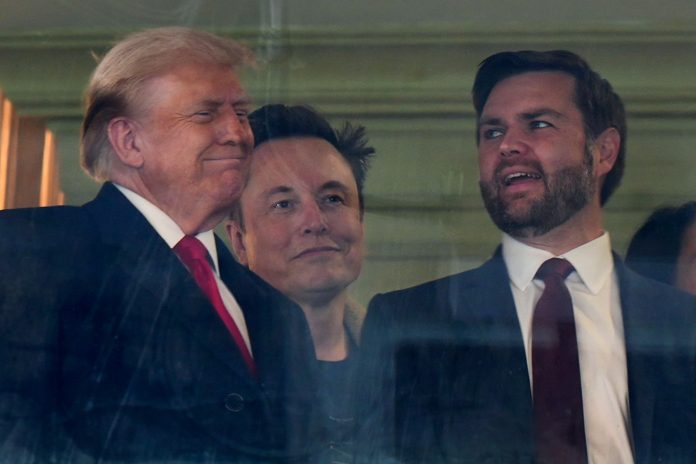
President Donald Trump has ruled out reconciling with Elon Musk, saying he’s not interested in mending their relationship after it dramatically collapsed this week. Speaking to NBC News on Saturday, Trump was blunt when asked if their alliance was over: “I would assume so, yeah.”

The president accused the billionaire of being “disrespectful to the office of the President,” a remark that came just days after Musk publicly criticized Trump’s tax reform bill—legislation Trump has proudly branded the “One Big Beautiful Bill.” That criticism sparked a rapid-fire exchange between the two men on their respective social media platforms, where Trump threatened to terminate government contracts tied to Musk’s businesses. Musk retaliated with a now-deleted post referencing Trump’s alleged ties to the so-called “Epstein files.”

“He’s very disrespectful. You could not disrespect the office of the President,” Trump said in the NBC interview, reaffirming his refusal to make peace.

Although Musk has signaled a willingness to de-escalate—scrubbing posts that included damaging videos and blunt accusations—Trump, known for his deep intolerance for criticism, has shown no interest in reconciliation. His latest comments suggest this split may be permanent.

The high-stakes feud is already rippling through the political and business spheres. Analysts say the very public fallout may inadvertently favor the Democrats by weakening a previously powerful alliance that helped fund and amplify Trump’s messaging. Trump, clearly still stung by the betrayal, warned Musk against backing Democratic candidates in future elections.

“If he does, he’ll have to pay the consequences for that,” Trump said. “Very serious consequences.”

Musk, who poured hundreds of millions into supporting Trump’s 2024 campaign, has since signaled a more hands-off approach. “I do not currently see a reason” to spend on politics, Musk said at the Qatar Economic Forum in May.

While the clash has unsettled markets—Tesla stock and Dogecoin both dipped after Musk’s posts—it may have handed the carmaker something money couldn’t buy: political neutrality.

According to American author and energy analyst Alex Avoigt, the rift has unshackled Tesla from the polarizing image it had gained in recent months.

“Tesla is now once again a brand that can be bought with a clear conscience by Democrats and Republicans alike, and that’s a positive thing,” Avoigt said. “Elon has expressed his negative opinions and feelings towards both parties, making Tesla products neutral and not politically connected. No one needs to justify buying and driving a Tesla anymore.”

Trump’s stance suggests that even if Musk continues to retreat from the spotlight or tempers his commentary, the bridge may already be burned. The president, who has clashed with former allies in the past—such as Jeff Sessions, Rex Tillerson, and even Fox News—rarely circles back to repair relationships once they sour.

Vice President JD Vance tried to strike a middle ground, describing Musk as “one of the most transformational entrepreneurs ever,” but also calling his behavior a “huge mistake.”

“I’m not saying he has to agree with everything… I just think it’s a huge mistake to be at war with the world’s most powerful man,” Vance said during a podcast interview. “Hopefully Elon figures it out and comes back into the fold.”

But as of now, that fold appears firmly shut. And while the political cost to Musk remains unclear, the unintended consequence of rebranding Tesla as a nonpartisan brand may be one upside in an otherwise messy fallout.