DD
MM
YYYY

PAGES

DD
MM
YYYY

spot_img

PAGES

Home Blog Page 1183

JD Vance Says It’s “A Huge Mistake” for Musk to Go After Trump, Calls for Truce as The Clash Draws Business Heavyweights Into the Fray

0

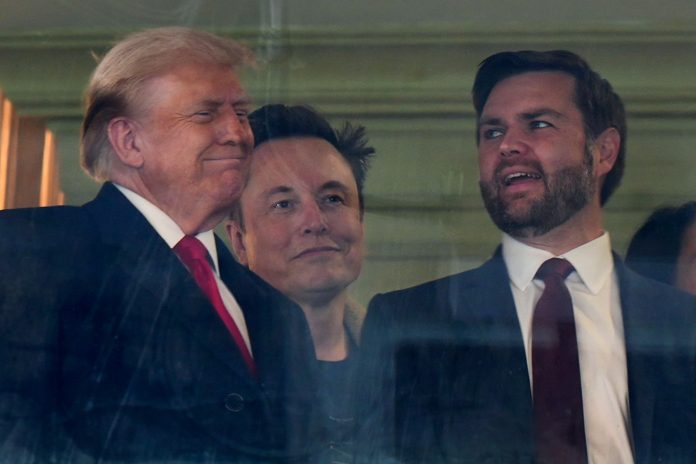
Vice President JD Vance is urging restraint amid the deepening feud between President Donald Trump and Elon Musk, warning that the high-profile clash between the world’s most powerful political leader and the world’s richest man risks harming the country if allowed to escalate unchecked.

Vance addressed the matter in an episode of This Past Weekend with Theo Von, recorded Thursday as the row was intensifying. Musk had earlier denounced Trump’s signature infrastructure and manufacturing bill as a “disgusting abomination,” prompting a wave of online backlash and a forceful response from the president during a White House event with German Chancellor Friedrich Merz.

“I think it’s a huge mistake for him to go after the president like that,” Vance said, emphasizing that while Musk is free to disagree, the public nature of the fight was damaging. “I’m not saying he has to agree with everything… I just think it’s a huge mistake for the world’s wealthiest man… to be at war with the world’s most powerful man.”

Vance acknowledged Trump had grown “a little frustrated” by Musk’s criticism but insisted the conflict could still be defused, calling it “bad for the country” and urging Musk to “come back into the fold.”

The spat, which began with policy criticism, soon spiraled into personal jabs. Trump, while initially muted, fired back Thursday, saying Musk had benefited enormously from the administration’s support.

“I’m very disappointed in Elon. I’ve helped Elon a lot,” Trump said, adding that Musk “never had a problem” with the bill while working closely with the administration, only to turn critical after stepping down from his advisory role.

Musk then launched a volley of posts on X (formerly Twitter), accusing the president of ingratitude and claiming Trump would have lost the 2024 election without his help. The billionaire even warned of “misleading spin” and hinted at deeper issues, before later deleting a controversial post in which he suggested Trump appeared in sealed Jeffrey Epstein files—implying that was why the documents hadn’t been made public. While the post was later taken down, it added fuel to a growing fire and drew sharp reactions online.

Business Titans Weigh In

The public feud has alarmed several prominent figures in business and tech, prompting calls for both sides to stand down.

Billionaire hedge fund manager Bill Ackman took to X to express support for both Trump and Musk, urging them to resolve their differences for the sake of national stability.

“We are much stronger together than apart,” Ackman wrote in a widely shared post. “Make peace for the benefit of our country.” Musk, in a notable shift in tone, replied, “You’re not wrong.”

Ackman has been a vocal supporter of Trump’s 2024 re-election bid, and his comments suggest a growing concern within elite financial circles over the public brawl between two of the country’s most influential figures.

Paul Graham, cofounder of Y Combinator and a revered figure in Silicon Valley, also weighed in on the matter: “A lot of people seem to be treating this as if it were just a beef. But the underlying allegation is a very serious one. If it’s true, Trump is surely going to have to resign,” he said.

Graham didn’t clarify which allegation he was referring to, but his comment is believed to be about the Epstein file.

Signs of a Thaw

Despite the heated exchange, there were signs late Friday that both parties were seeking to ease tensions. The White House’s rapid response team posted a clip of Trump aboard Air Force One, saying, “I wish Elon well.” Musk responded hours later with a one-word post: “Likewise.”

Though brief, the exchange suggested both men were open to cooling the rhetoric, particularly as pressure mounted from allies and business leaders to lower the temperature.

Musk had responded with “You’re not wrong,” when Ackman called on the two to put aside their differences and “make peace for the benefit of our country.”

The dispute, while personal on the surface, has far-reaching implications. Trump and Musk had cultivated a working alliance since Musk’s endorsement of Trump’s 2024 campaign. Their partnership represented a potent combination of political influence and technological power—one that could shape everything from energy and infrastructure policy to AI regulation and space exploration.

Now, the split threatens to fracture that alignment. Trump, whose administration has been heavily invested in anti-environmental policies, also hinted at reviewing Musk’s federal contracts in response to the Tesla CEO’s criticisms.

Vance, trying to keep the damage contained, said both Trump and Musk play critical roles in America’s future.
IBIT Entry Into The Top 25 ETFs By AUM Marks A Turning Point For Bitcoin Integration

0

The iShares Bitcoin Trust ETF (IBIT) has indeed made significant strides, entering the top 25 ETFs by assets under management (AUM). As of January 2025, IBIT has amassed over $52.9 billion in AUM, making it the largest spot Bitcoin ETF in the U.S. and a standout among all ETFs. This milestone was achieved in just 227 trading days, breaking records previously set by traditional ETFs like the iShares Core MSCI Emerging Markets ETF (IEMG).

IBIT’s rapid growth is attributed to its high liquidity, strong institutional support from BlackRock, and significant inflows, with nearly $38 billion in net inflows since its launch on January 11, 2024. It has outperformed competitors like the Grayscale Bitcoin Trust (GBTC), which saw outflows of over $21 billion, and even surpassed gold ETFs in AUM within its first year.

Other spot Bitcoin ETFs, such as Fidelity’s Wise Origin Bitcoin Fund (FBTC) with nearly $20 billion in AUM, ARK 21Shares Bitcoin ETF (ARKB), and Bitwise Bitcoin ETF (BITB), also rank among the top 20 ETF launches by AUM, highlighting the growing mainstream adoption of Bitcoin through regulated investment vehicles. The iShares Bitcoin Trust ETF (IBIT) entering the top 25 ETFs by AUM, with over $52.9 billion as of January 2025, carries significant implications for the financial landscape and highlights a growing divide in investor sentiment and market dynamics.

IBIT’s rapid rise signals increasing institutional and retail acceptance of Bitcoin as a legitimate asset class. Its backing by BlackRock, a titan in asset management, lends credibility, encouraging traditional investors to allocate capital to crypto through regulated vehicles like ETFs. The ETF’s success, alongside other Bitcoin ETFs like FBTC ($20 billion AUM), reflects a shift in portfolio diversification strategies, with Bitcoin now competing with traditional assets like gold (IBIT surpassed gold ETFs in AUM within a year).

IBIT’s high liquidity (average daily trading volume of $1.2 billion in its first year) makes Bitcoin more accessible to investors who prefer ETFs over direct crypto ownership, reducing barriers like managing private keys or navigating crypto exchanges. This liquidity also attracts institutional investors, such as hedge funds and pension funds, potentially stabilizing Bitcoin’s price volatility over time.

The success of spot Bitcoin ETFs, particularly IBIT, underscores the SEC’s approval of these products in January 2024 as a pivotal moment. It has spurred competition, with 12 spot Bitcoin ETFs now managing a combined $74.6 billion in AUM by January 2025. It may pressure regulators to approve similar products, like spot Ethereum ETFs, or expand crypto-related financial instruments, further integrating digital assets into traditional markets.

IBIT’s inflows ($38 billion since launch) indicate significant capital flowing into Bitcoin, potentially driving price appreciation. Bitcoin’s market cap grew to $1.92 trillion by early 2025, reflecting a 128% annualized return since IBIT’s inception. This growth benefits early adopters and institutional investors but could widen wealth gaps if retail investors are slow to participate or lack access.

IBIT’s success is driven largely by institutional inflows, with BlackRock’s marketing and infrastructure catering to large players. This gives institutions an edge in capturing Bitcoin’s upside, potentially marginalizing retail investors who may face higher fees or lack access to sophisticated investment vehicles. Retail investors, while benefiting from ETF accessibility, may still be hesitant due to Bitcoin’s volatility (e.g., a 20% drop in August 2024) or lack of financial education about crypto. This creates a knowledge and access divide.

Some in the crypto community view ETFs like IBIT as contrary to Bitcoin’s decentralized ethos, arguing they centralize ownership through custodians like Coinbase (which holds IBIT’s Bitcoin). They fear this could lead to market manipulation or dilute Bitcoin’s original purpose as a peer-to-peer currency. Wall Street’s embrace of Bitcoin via ETFs represents a co-opting of crypto into the existing financial system, prioritizing profit over ideological purity. This divide fuels debates about whether ETFs undermine Bitcoin’s core principles.

The rapid AUM growth of IBIT and other ETFs benefits wealthy investors and institutions with early exposure, while retail investors or those in developing regions may miss out due to limited access to U.S.-based ETFs or high minimum investments. This exacerbates global wealth disparities. IBIT’s dominance contrasts with outflows from competitors like Grayscale’s GBTC ($21 billion in outflows), highlighting a divide in investor preference. IBIT’s low fees (0.25%) and BlackRock’s reputation give it an edge over higher-fee funds like GBTC (1.5%), creating a winner-takes-most dynamic in the Bitcoin ETF space.

IBIT’s entry into the top 25 ETFs by AUM marks a turning point for Bitcoin’s integration into mainstream finance, boosting liquidity, institutional adoption, and market growth. However, it also deepens divides between institutional and retail investors, crypto purists and traditional finance, and winners and losers in the ETF market. These tensions reflect broader questions about Bitcoin’s role—whether as a revolutionary asset or a co-opted financial product—and who stands to benefit most from its rise.

Circle’s IPO Strengthens Its Position Against Competitors Like Tether (USDT)

0

Circle, the issuer of the USDC stablecoin, has increased its IPO share offering, targeting a $7.2 billion valuation. The company plans to sell 34.3 million shares at $22.25 to $24.75 each, up from the previously planned 25.7 million shares at $21.25 to $23.75. This upsized offering aims to raise up to $849 million. The IPO includes an option for underwriters to purchase an additional 5.145 million shares. Circle’s shares are set to trade on the NYSE under the ticker “CIRC.” The valuation reflects confidence in Circle’s role in the stablecoin market, with USDC’s market cap at $37 billion and $15 billion in average weekly transaction volume in 2025.

The upsized IPO of Circle, targeting a $7.2 billion valuation, carries significant implications for the company, the stablecoin market, and the broader financial ecosystem.  Circle’s IPO, with its substantial valuation and regulatory compliance (e.g., registration with the SEC and adherence to U.S. financial laws), signals growing mainstream acceptance of stablecoins. USDC’s $37 billion market cap and high transaction volume ($15 billion weekly in 2025) position Circle as a leader in bridging crypto and traditional finance.

The IPO could set a precedent for other crypto firms, encouraging public listings and increasing transparency in the sector. This may attract institutional investors seeking regulated exposure to digital assets. Raising up to $849 million provides Circle with significant capital to expand its infrastructure, enhance USDC adoption, and invest in new products or markets. This could accelerate global stablecoin use in payments, remittances, and DeFi applications.

The funds may also support Circle’s compliance efforts, such as meeting evolving regulatory requirements, which is critical given increasing scrutiny of stablecoins worldwide. The upsized offering and higher share price range ($22.25–$24.75) reflect strong investor confidence, as seen in X posts noting robust demand. This could bolster Circle’s stock performance post-IPO, assuming market conditions remain favorable.

However, the crypto market’s volatility and regulatory uncertainties could pose risks. A downturn in crypto sentiment or adverse regulatory actions could impact Circle’s valuation and USDC’s stability. Circle’s IPO strengthens its position against competitors like Tether (USDT), which dominates the stablecoin market but faces questions about transparency. Circle’s regulatory clarity and public listing could attract users and partners prioritizing trust and compliance.

The IPO may pressure other crypto firms to pursue similar paths, intensifying competition in the stablecoin and broader digital asset space. Circle’s adherence to U.S. regulations (e.g., SEC filings, AML/KYC compliance) sets it apart from less-regulated competitors like Tether. This divide could widen as regulators globally tighten rules on stablecoins, potentially favoring Circle while challenging non-compliant players.

The IPO underscores a divide between jurisdictions. The U.S.’s relatively clear regulatory framework contrasts with regions like the EU (with MiCA regulations) or Asia, where rules vary. Circle’s U.S.-centric approach may limit its flexibility in less-regulated markets, creating a strategic divide. Circle’s ability to raise $849 million highlights a divide between well-funded crypto firms and smaller players. This capital influx could enable Circle to dominate stablecoin infrastructure, marginalizing smaller or less-funded projects.

The IPO benefits institutional and accredited investors, potentially widening the wealth gap in crypto. Retail investors, limited by high share prices or market access, may feel excluded, a sentiment echoed in some X posts criticizing IPOs as favoring elites. Circle’s IPO bridges crypto and traditional markets, but it also highlights a divide between crypto adopters and skeptics. While USDC facilitates seamless transactions, traditional finance users may remain wary of stablecoin risks (e.g., depegging, as seen in past stablecoin failures).

USDC’s growth benefits regions with high crypto adoption (e.g., U.S., parts of Asia), but areas with low digital infrastructure or regulatory bans on crypto face exclusion, deepening the global digital finance divide. Circle’s centralized, regulated approach contrasts with the decentralized ethos of many crypto purists, as seen in X discussions criticizing stablecoins for relying on fiat-backed systems. The IPO may alienate some crypto natives who view public listings as a departure from blockchain’s anti-establishment roots.

The IPO reinforces trust in regulated entities for some, while others, skeptical of centralized finance, may see Circle’s move as capitulation to traditional systems, widening ideological rifts within the crypto community. Post-IPO, Circle will face heightened scrutiny as a public company. Any missteps in compliance or USDC’s stability could trigger regulatory crackdowns, impacting investor confidence and the broader stablecoin market.

Circle’s success could influence stablecoin policies worldwide, potentially harmonizing regulations but also highlighting divides between pro-crypto and anti-crypto jurisdictions. Circle’s upsized IPO at a $7.2 billion valuation strengthens its position in the stablecoin market, signaling mainstream crypto adoption and providing capital for growth.

However, it amplifies divides—regulatory, economic, and ideological—between compliant and non-compliant entities, crypto and traditional finance, and centralized and decentralized visions. These divides could shape Circle’s trajectory and the stablecoin landscape, with regulatory clarity and market sentiment being critical factors to watch.

Launch of Kraken’s Prime Brokerage Service For Institutional Clients A Pivotal Moment For DeFi

0

Kraken has launched Kraken Prime, a full-service prime brokerage platform tailored for institutional investors, such as asset managers, hedge funds, and corporations. The platform integrates trading, custody, and financing into a single interface, offering access to over 90% of the digital asset market’s liquidity across more than 20 global venues. Key features include sophisticated trading tools, 24/7 white-glove support, asset-backed lending, T+1 credit facilities, and a smart order routing system for seamless on- and off-platform liquidity.

Trades can be executed directly from qualified custody managed by Kraken Financial, a U.S. state-chartered bank. The platform is SOC 2 Type I and ISO/IEC 27001 certified, emphasizing security and compliance. Kraken Prime aims to meet the execution quality and operational rigor expected in traditional finance, competing with platforms like Coinbase Prime and FalconX, and is now available to eligible institutional clients.

Kraken Prime provides institutional investors with a robust platform integrating trading, custody, and financing, which could accelerate institutional participation in crypto markets. Features like smart order routing, deep liquidity access (over 90% of the market), and asset-backed lending cater to the sophisticated needs of hedge funds, asset managers, and corporations.

This move aligns with the broader trend of traditional finance (TradFi) institutions entering crypto, especially as regulatory clarity improves in some regions (e.g., the U.S. with Kraken Financial’s banking charter). By offering access to liquidity across 20+ global venues, Kraken Prime could reduce market fragmentation and improve price discovery. This may lead to more stable and efficient markets, benefiting both institutional and retail participants.

The platform’s T+1 credit facilities and lending options could also increase trading volumes, further boosting liquidity. Kraken Prime enters a competitive space alongside players like Coinbase Prime and FalconX. Its focus on security (SOC 2 Type I and ISO/IEC 27001 certifications) and white-glove support positions it as a strong contender, potentially driving innovation and better services across the sector.

This competition could lower costs and improve offerings for institutional clients, indirectly influencing retail markets through better infrastructure. Kraken’s use of a U.S. state-chartered bank (Kraken Financial) for custody and its compliance certifications signal a push toward meeting TradFi’s rigorous standards. This could attract risk-averse institutions and set a benchmark for other crypto platforms.

Kraken Prime is exclusively for institutional clients, offering features like sophisticated trading tools, dedicated support, and credit facilities that retail investors typically cannot access. This creates a tiered ecosystem where institutions benefit from superior infrastructure, potentially leading to better execution and lower costs compared to retail platforms. Retail investors, limited to standard exchange interfaces, may face higher fees, less liquidity, and fewer financing options, widening the gap in market access.

Institutional participation through platforms like Kraken Prime can drive significant price movements due to their large capital pools. Retail investors, with smaller positions, are often more exposed to volatility caused by institutional trades, creating an uneven playing field. For example, institutions using smart order routing can optimize trades across multiple venues, while retail investors are typically confined to a single exchange’s order book.

Institutional platforms often operate under stricter compliance frameworks (e.g., Kraken Financial’s banking charter), which can provide institutions with greater legal clarity and protection. Retail investors, however, may face inconsistent regulations across jurisdictions, increasing their risk exposure. The certifications and banking integration of Kraken Prime may also give institutions confidence in custody solutions, while retail investors rely on less regulated or decentralized options.

The minimum capital requirements and eligibility criteria for Kraken Prime exclude most retail investors, concentrating advanced financial tools among wealthy institutions. This mirrors trends in TradFi, where prime brokerage services are reserved for high-net-worth clients. Retail investors may feel sidelined as institutions gain access to exclusive services, potentially fueling resentment or distrust in centralized platforms.

As institutional infrastructure improves, retail platforms may adopt similar technologies (e.g., better custody or trading tools), indirectly benefiting retail users. Retail investors could push for more inclusive access to advanced tools through community advocacy or decentralized finance (DeFi) platforms that mimic prime brokerage features. Clearer regulations could level the playing field, ensuring retail investors have access to secure, compliant platforms with competitive features.

Kraken Prime strengthens the institutional crypto ecosystem but underscores the growing divide between well-resourced institutions and retail investors. While it may enhance market efficiency, it risks leaving retail participants at a disadvantage unless broader access to similar tools and opportunities emerges.

Truth Social Bitcoin ETF Is A High-Stake Move With Potential To Reshape Crypto’s Mainstream Perception

0

Trump Media & Technology Group, the parent company of Truth Social, has filed for a spot Bitcoin ETF named the Truth Social Bitcoin ETF. On June 3, 2025, NYSE Arca filed a Form 19b-4 with the SEC to list the ETF, followed by an S-1 registration statement on June 5, 2025. The ETF aims to track Bitcoin’s price and will be managed by Yorkville America Digital, with Crypto.com’s Foris DAX Trust Company as the custodian. This move aligns with Trump Media’s broader crypto initiatives, including a $2.5 billion Bitcoin treasury plan and a partnership with Crypto.com to launch digital asset products.

The SEC has up to 240 days, until January 29, 2026, to decide on the application. The filing has raised concerns about potential conflicts of interest due to Trump’s majority ownership, though his shares are held in a trust controlled by Donald Trump Jr. The ETF enters a competitive market dominated by BlackRock’s iShares Bitcoin Trust, with nearly $69 billion in assets. The filing for a Truth Social Bitcoin ETF by Trump Media & Technology Group carries significant implications and highlights a polarized divide in public and market sentiment.

The ETF could further legitimize Bitcoin as an institutional-grade asset, especially given Trump’s high-profile association and his administration’s pro-crypto stance. With Truth Social’s visibility and Trump’s influence, the ETF could attract retail and institutional investors, boosting Bitcoin’s mainstream appeal. Critics argue this could be more speculative hype than substance, potentially inflating Bitcoin’s price without addressing underlying volatility or regulatory risks. The ETF’s success hinges on SEC approval, which is uncertain given concerns about market manipulation in crypto.

Political and Cultural Polarization

The ETF ties Bitcoin to Trump’s brand, which is deeply divisive. Supporters may view it as a bold move aligning with Trump’s “America First” agenda and his push for U.S. leadership in crypto. Critics, however, see it as a self-serving venture leveraging Trump’s influence, potentially politicizing crypto markets further. This could deepen the divide between pro-Trump investors and those wary of his involvement, with some viewing the ETF as a patriotic investment and others as a risky, politically charged gamble.

Trump’s majority ownership (114.75 million shares, ~60% of Trump Media) raises red flags about conflicts of interest, especially given his role as the 47th U.S. President. Although his shares are managed by a trust under Donald Trump Jr., skepticism persists about impartiality in regulatory or policy decisions impacting the ETF. The SEC’s review process could face scrutiny, with allegations of favoritism if approved or political bias if rejected, potentially affecting public trust in financial regulators.

The ETF enters a crowded field, competing with established players like BlackRock’s iShares Bitcoin Trust ($69 billion AUM). Truth Social’s smaller scale and lack of financial track record could limit its ability to capture significant market share. The announcement has already driven a 30% surge in Trump Media’s stock (DJT) and a 10% Bitcoin price increase post-filing, reflecting speculative enthusiasm. However, this could lead to volatility if the ETF fails to deliver or faces delays.

Approval could signal a more crypto-friendly SEC under Trump’s administration, encouraging other firms to launch similar products. Rejection, however, might reinforce regulatory caution, impacting the broader crypto ETF landscape. The 240-day SEC review period (until January 29, 2026) adds uncertainty, as market conditions and political dynamics could shift. Trump’s base sees the ETF as a win for innovation and economic freedom, aligning with his pro-crypto policies (e.g., Bitcoin treasury reserve proposals). They view it as a counter to “establishment” financial institutions like BlackRock.

Proponents argue it democratizes crypto access for retail investors, leveraging Truth Social’s platform to promote financial sovereignty. Trump’s brand carries weight with his supporters, who may invest out of loyalty or belief in his business acumen, despite risks. Opponents highlight Trump’s ownership stake as a potential abuse of power, especially if his administration influences SEC decisions. This fuels distrust among those skeptical of his motives.

Financial analysts and crypto skeptics warn of volatility and lack of transparency in Trump Media’s operations. The company’s $4 billion valuation despite minimal revenue raises concerns about speculative bubbles. Critics argue tying Bitcoin to Trump’s polarizing brand could alienate institutional investors and hinder broader crypto adoption, framing it as a partisan issue rather than a neutral financial innovation.

DJT’s 30% surge contrasts with broader market caution, as investors weigh Trump Media’s financial instability (reporting losses and limited revenue). The ETF amplifies the broader cultural split in the U.S., where Trump-related initiatives are often seen through a binary lens of loyalty or opposition. This could deter neutral investors, who may avoid the ETF to steer clear of political baggage.

The Truth Social Bitcoin ETF is a high-stakes move with potential to reshape crypto’s mainstream perception while intensifying political and financial divides. Its success depends on regulatory outcomes, market reception, and Trump Media’s ability to navigate conflicts of interest. The polarized reactions underscore broader tensions around Trump’s influence, with supporters viewing it as a bold economic step and critics as a risky, self-serving venture. Monitoring SEC developments and market trends through January 2026 will be critical to assessing its impact.