DD
MM
YYYY

PAGES

DD
MM
YYYY

spot_img

PAGES

Home Blog Page 1184

Circle Upsizes IPO to $896m, Targets $7.2bn Valuation Amid Rising Stablecoin Optimism

0

Circle Internet Financial, the company behind the USDC stablecoin, said on Monday it has increased the size of its initial public offering, now targeting a fully diluted valuation of up to $7.2 billion.

The New York-based fintech firm and some of its existing investors are looking to raise as much as $896 million from 32 million shares, priced between $27 and $28 each — up from an earlier offering of 24 million shares priced between $24 and $26.

The revised IPO plans signal a resurgence of investor appetite for regulated crypto firms, helped by a more welcoming political environment under President Donald Trump, whose administration has promised clearer and friendlier rules for the sector. Circle is expected to list on the New York Stock Exchange later this week under the ticker “CRCL”, with J.P. Morgan, Citigroup, and Goldman Sachs acting as lead underwriters.

From SPAC Collapse to Wall Street Listing

Circle’s road to an IPO has been anything but smooth. The company initially announced plans to go public in 2021 through a $9 billion merger with Concord Acquisition Corp, a special purpose acquisition company (SPAC). At the time, the move was hailed as a breakthrough moment for stablecoins, which were gaining popularity among crypto traders and fintech platforms.

But that deal collapsed in December 2022, after delays in securing regulatory approvals — a setback many in the crypto space blamed on the Biden-era clampdown on digital assets. The SEC’s slow movement and growing scrutiny of crypto firms made it nearly impossible for Circle to complete the merger within the required timeframe. The failed SPAC was a turning point, reinforcing concerns that U.S. crypto firms faced a hostile environment that was pushing innovation offshore.

Now, under a Trump-led administration that has repeatedly pledged to scale back enforcement-heavy tactics and roll out a stablecoin bill, Circle is seizing what it views as a more favorable moment. The firm’s renewed IPO effort comes amid a broader push by U.S.-based crypto companies to return to domestic capital markets, encouraged by the promise of regulatory clarity and market access.

Stablecoin Boom and Financials

Circle’s flagship product, USDC, is the second-largest stablecoin globally, maintaining a 1:1 peg to the U.S. dollar and backed primarily by short-term U.S. Treasuries. USDC is widely used for transferring funds between tokens and across platforms and is increasingly being adopted in cross-border payments and institutional finance.

With interest rates remaining high, Circle’s reserve income — generated from yields on U.S. Treasuries — surged 55.1% to $557.9 million in the quarter ending March 31. However, the company also saw a 68.2% jump in distribution and transaction costs, largely due to its partnerships with Coinbase and other distributors.

The rising costs have tempered profit margins, but Circle executives remain confident that the IPO will support long-term growth and scalability.

Regulatory Tailwinds and Institutional Adoption

Much of the optimism around Circle’s IPO is tied to expectations that Congress will soon pass a stablecoin regulation bill, which is seen as a catalyst for increased institutional involvement. The legislation would set clear standards for how reserve-backed tokens like USDC operate, helping to distinguish regulated issuers like Circle from offshore players with opaque reserves.

Some analysts believe that USDC is already well-regarded for its transparency and regulatory alignment. If the bill passes, Circle is positioned to become the go-to issuer for institutional stablecoin use in the U.S.

That regulatory support is now more likely under President Trump, who has previously criticized the overregulation of the crypto industry and voiced support for digital innovation in the financial sector. Several crypto initiatives are tied to Trump-linked campaigns, and the administration has signaled a willingness to bring crypto players back into the fold after a period of regulatory flight.
Musk’s xAI Seeks $113bn Valuation as Morgan Stanley Shops $5bn Debt Package

0

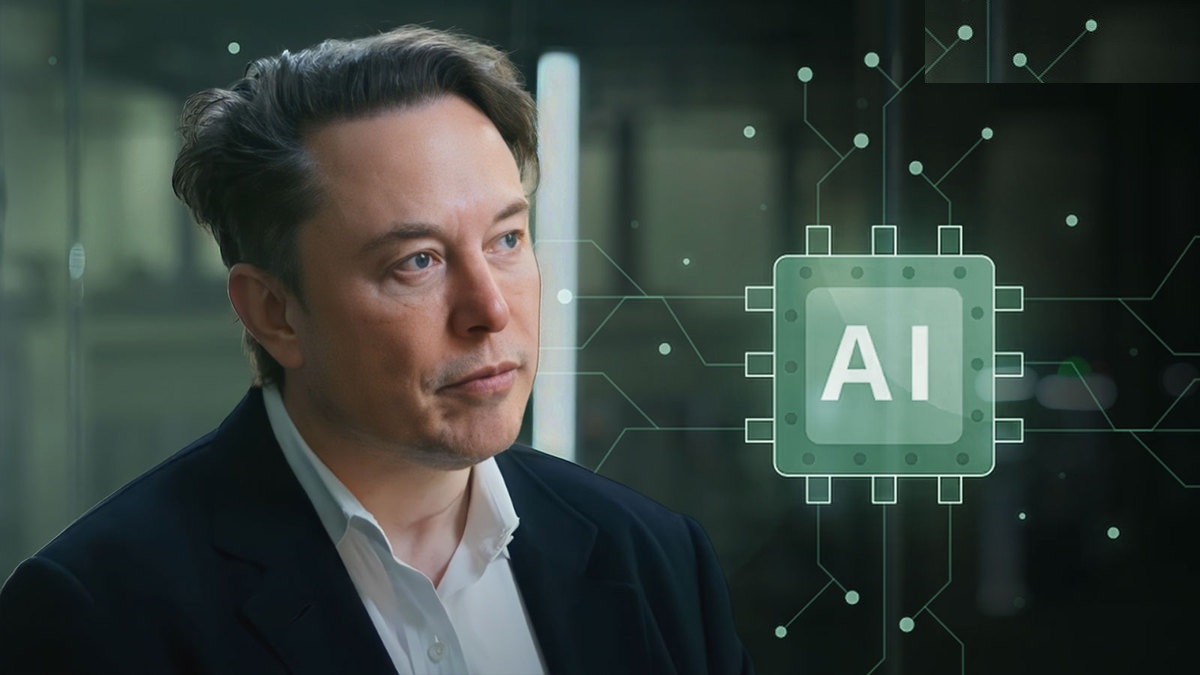
Elon Musk’s artificial intelligence venture xAI is seeking a staggering $113 billion valuation in a share sale worth $300 million, according to reports on Monday.

The development underscores the breakneck pace at which xAI is growing, just two years since its founding, and comes amid a flurry of financial engineering designed to consolidate its role in the AI-social media space.

According to Bloomberg, Morgan Stanley has launched a $5 billion debt package to support xAI, including a term loan B, a fixed-rate term loan, and senior secured notes. The proceeds will reportedly be used for “general corporate purposes.”

Commitments for the debt sale are due by June 17.

The Financial Times earlier reported that the $300 million share sale will allow employees to sell their shares to investors, with a larger investment round expected to follow. In that subsequent round, xAI plans to issue new equity to outside investors, possibly marking a major infusion of fresh capital for the company.

A Blurred Line Between xAI and X

The latest capital moves come just months after Musk formally merged his social media platform X (formerly Twitter) into xAI. The March acquisition valued xAI at $80 billion and the X platform at $33 billion, according to Musk. The combined business model integrates social media with generative AI, potentially giving xAI a significant user base to feed and test its AI models in real time across one of the most politically active and controversial digital platforms in the world.

The merger also drew attention to Musk’s broader ambition to build a vertically integrated tech ecosystem — one that touches AI, media, cloud infrastructure, autonomous vehicles, and energy — all with Musk-linked entities at the center.

The financing push also follows Musk’s departure from a high-profile role in President Donald Trump’s administration, where he led the Department of Government Efficiency (DOGE). The campaign, aimed at reducing federal spending, ended in a chaotic four-month stretch that drew both praise and criticism.

Musk resigned earlier this month but is expected to remain a close adviser to Trump, who has increasingly aligned himself with high-growth tech entrepreneurs in a bid to frame his administration as pro-innovation.

During Tesla’s earnings call in April, Musk said he would refocus on the electric vehicle company, though he continues to juggle his involvement with SpaceX, Neuralink, The Boring Company, X, and xAI. The AI startup, in particular, is now at the forefront of Musk’s vision for a future dominated by artificial general intelligence and user-driven algorithmic platforms.

Reports from April had indicated that xAI was in early-stage talks with investors to raise as much as $20 billion to support its expansion, including potential investments in GPU infrastructure, data centers, and content moderation systems for X. With the new debt deal and upcoming equity sale, the firm appears to be accelerating those plans.

The combined valuation of $113 billion, if achieved, would place xAI among the top-valued AI companies globally, rivaling even OpenAI and Anthropic. Unlike its peers, xAI has the added advantage of a built-in social platform for real-time deployment and feedback — an integration Musk has said will be central to training more “truthful” and censorship-resistant AI models.

Growing Market Appetite for AI and Musk-Branded Ventures

The upsized valuation drive reflects both growing investor appetite for artificial intelligence and continued market confidence in Musk-led ventures, despite growing concerns over leverage and governance. Musk’s ability to raise massive rounds — whether through debt, equity, or convertible instruments — has remained largely intact due to his tech and business acumen and the cult-like following surrounding his companies.

Morgan Stanley’s involvement is another signal that Wall Street is again warming to high-stakes, high-valuation bets, especially under a Trump administration that is promising a more favorable climate for AI development and reduced regulatory headwinds for controversial social platforms like X.

If successful, the current funding round and debt raise would make xAI not only one of the fastest-growing startups in history but also a cornerstone of Musk’s broader ambition to reshape everything from public discourse to digital cognition.

With Elon Musk’s controversial time in Washington, D.C., having officially come to a close, two of his fledgling companies are shoring up their financial standing: Musk’s neurotech startup, Neuralink, announced a $650 million Series E funding round on Monday. Meanwhile, Musk’s xAI artificial intelligence venture is looking to generate fresh capital via a $300 million secondary stock offering, per the Financial Times, citing anonymous sources. An anonymously-sourced Bloomberg report notes xAI is also weighing selling $5 billion in debt.

Bessent Dismisses Dimon’s Bond Market Warning as Business Leaders Sound Alarms Over U.S. Deficit and Fiscal Path

0

U.S. Treasury Secretary Scott Bessent on Sunday rejected dire warnings from JPMorgan CEO Jamie Dimon that the country’s bond market is heading for a rupture due to runaway spending and lax fiscal discipline.

Speaking on CBS’ Face the Nation, Bessent downplayed Dimon’s concerns as typical of his forecasting style and reassured Americans that the administration was already on course to reduce the deficit gradually over time.

“I’ve known Jamie a long time and for his entire career, he’s made predictions like this. Fortunately, none of them have come true,” Bessent said. “That’s why he’s a banker — a great banker. He tries to look around the corner.”

Dimon, speaking Friday at the Reagan National Economic Forum, warned that excessive stimulus spending during the COVID-19 pandemic — including quantitative easing and record-breaking deficits — has created a structural imbalance that could result in a “crack in the bond market.”

“It is going to happen,” Dimon said. “I just don’t know if it’s going to be a crisis in six months or six years.”

He said market makers have lost much of their flexibility to absorb shocks, and warned that unless the U.S. reverses its debt trajectory, confidence in its creditworthiness and institutions could erode rapidly.

But Bessent insisted the administration remains committed to fiscal discipline.

“So the deficit this year is going to be lower than the deficit last year, and in two years it will be lower again,” Bessent said. “We’re going to bring the deficit down slowly. We didn’t get here in one year — this has been a long process.”

However, concerns over U.S. fiscal policy are not limited to Dimon. Tesla and SpaceX CEO Elon Musk, who recently stepped down as head of the White House Department of Government Efficiency (DOGE), also voiced his disappointment in what he called reckless spending.

“I was, like, disappointed to see the massive spending bill, frankly, which increases the budget deficit — not decreases it — and undermines the work that the DOGE team is doing,” Musk said in an interview with CBS Sunday Morning. “I think a bill can be big, or it can be beautiful. But I don’t know if it can be both.”

The bill in question, President Donald Trump’s “Big Beautiful Bill”, recently passed in the House and is now under Senate review. The legislation, designed to expand infrastructure, defense, and energy spending, is expected to add $2.5 trillion to the federal deficit over the next decade, according to the Committee for a Responsible Federal Budget.

Peter Schiff, chief economist and global strategist at Euro Pacific Capital, was even more direct, warning that the bill could erode global confidence in the U.S. dollar itself.

“Jamie Dimon warned that if we don’t get our fiscal house in order soon, then in forty years the U.S. dollar won’t be the world’s reserve currency,” Schiff said. “He’s right, but his time frame is off. If the Big, Beautiful Bill passes, the U.S. dollar won’t be the reserve currency in four years!”

Schiff, known for his bearish views on U.S. debt and inflation, has long argued that Washington’s addiction to deficit spending risks destabilizing global markets, especially at a time when countries like China and Russia are building alternative settlement systems that bypass the dollar.

The concerns shared by Dimon, Musk, and Schiff highlight a growing consensus among influential business leaders that the U.S. is approaching a tipping point.

While Bessent continues to defend the administration’s fiscal path, pointing to its pledge to “leave the country in great shape in 2028,” many believe that the rising debt burden, aging infrastructure, and costly new spending plans are placing the U.S. on a dangerous trajectory — one that could rattle global markets and weaken the foundations of the dollar-based global order.

Ghana’s Cedi Becomes 2025 Strongest Currency, with 50% Rally Powered by Gold, Tight Policy and IMF Reforms

0
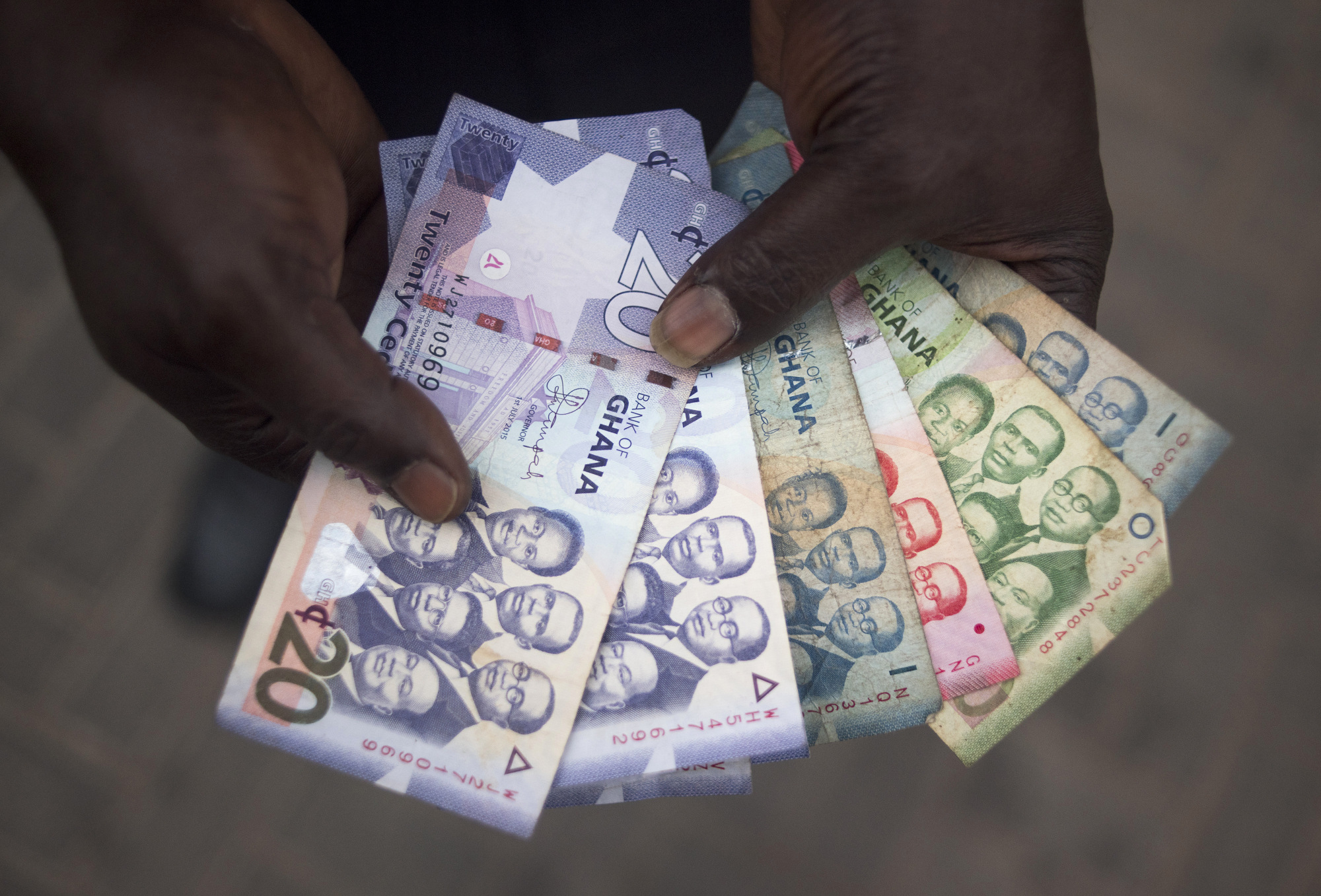
A man holds Ghanian currency in his hands on September 20, 2016 in Accra, Ghana. Ty Wright/Bloomberg News

The Ghanaian cedi has emerged as the world’s strongest currency in 2025, surging nearly 50 percent against the US dollar since January and reversing years of market volatility and investor skepticism. The turnaround has stunned analysts and rekindled confidence in an economy that only recently crawled out of its deepest debt crisis in decades.

From trading near 15 Cedis to the dollar at the start of the year, the cedi has steadily climbed, brushing against the symbolic C10/$ resistance level. On Monday, the currency opened at GHC 10.21, posting a 7 percent gain over Friday’s close. Bloomberg data confirms that the cedi now holds the title of best-performing currency globally in 2025.

This sharp appreciation is particularly striking when contrasted with 2022, when the cedi was the worst-performing currency in the world, losing over half its value amid runaway inflation and a sovereign debt default. That chaos forced Ghana into the arms of the International Monetary Fund and triggered a painful economic overhaul. Today, however, the narrative has flipped dramatically, with Ghana now being lauded for what appears to be one of the fastest currency stabilizations in recent history.

Several key forces are behind the Cedi’s meteoric rise.

First, a windfall from surging commodity exports has pumped hard currency into the economy. Ghana’s status as a leading global gold producer — now ranked sixth in the world — has paid off handsomely, especially as gold prices soared from around $2,000 an ounce in 2024 to more than $3,400 in May 2025. That price spike helped lift the country’s gold export earnings from $7.6 billion in 2023 to $11.6 billion the following year. Cocoa and oil exports also contributed to a record trade surplus of $4.3 billion in 2024.

A major shift in policy under the government’s Gold Board initiative further strengthened the local currency. Exporters were mandated to settle gold purchases in Cedis before shipping them abroad. That helped the Bank of Ghana triple its gold reserves from just 9 tons in late 2023 to 31 tons today, easing pressure on the foreign exchange market and boosting confidence in the Cedi’s long-term stability. Ghana’s gross international reserves now stand at $11.4 billion — their highest level in history.

Meanwhile, the Bank of Ghana has taken a decidedly hawkish stance to guard against inflation and defend the currency’s newfound strength. In March 2025, the central bank surprised markets with a 100-basis-point interest rate hike, pushing the benchmark policy rate to 28 percent. Governor Johnson Asiama has insisted that “stability doesn’t mean fixation,” stressing the need for a delicate balance between a strong cedi and the need to maintain export competitiveness.

The central bank has also made structural changes to how the foreign exchange market functions. By replacing speculative limit-order-based controls with spot-market forex auctions, the BoG has improved dollar availability and reduced currency hoarding among businesses. These steps have calmed volatility and added clarity to currency pricing mechanisms.

Lower inflation has helped create further breathing room for monetary authorities. Ghana’s inflation dropped to 21.2 percent in April, easing from a 2023 peak of over 40 percent. But that figure still sits well above the BoG’s official target band of 6 to 10 percent, prompting some economists to warn against premature policy loosening. Rising utility tariffs and residual inflation risks mean the central bank may have to hold its fire on rate cuts for now, despite mounting pressure from parts of the business community.

Backing all of these domestic measures is a lifeline from the International Monetary Fund. The country’s $3 billion bailout deal, part of a broader three-year reform package signed in 2023, has been instrumental in unlocking concessional financing, restoring investor trust, and enforcing fiscal discipline.

Under the program, Ghana took aggressive steps to reduce its debt burden, including suspending 65 billion Cedis in arrears payments and slashing short-term Treasury bill yields from 28 percent to around 15 percent. These austerity measures, though unpopular, helped narrow the deficit and keep financing costs manageable.

Political stability has also underpinned Ghana’s turnaround. President John Mahama’s sweeping economic reforms, many of them adopted under pressure from the IMF, have helped reassure international investors and rating agencies that Ghana’s recovery is on solid footing. The return of foreign capital has, in turn, supported the cedi’s rally.

But the cedi’s strength, while helpful for controlling import-driven inflation, could eventually erode export competitiveness, especially for sectors like agriculture and manufacturing that depend on a cheaper currency. Policymakers are also wary that speculators could take aim if the central bank lets its guard down.

For now, however, the mood has shifted from anxiety to optimism. Investors who once fled Ghana’s bonds are slowly returning, emboldened by the currency’s performance and the broader stabilization story.

Microsoft Deepens Swiss Commitment with $400m Investment in AI, Cloud, and Skills Development

0

Microsoft has announced a $400 million investment to bolster its cloud computing and artificial intelligence capabilities in Switzerland, marking a significant expansion of its 36-year presence in the country.

The announcement was made in Bern by Microsoft Vice Chair and President Brad Smith, who was joined by Swiss Federal Councilor Guy Parmelin and Catrin Hinkel, CEO of Microsoft Switzerland.

The tech giant’s latest commitment builds upon earlier initiatives, including the launch of local data centers in 2019 and the opening of its Innovation Hub in 2022. This new investment aims to reinforce Switzerland’s role as a leader in AI adoption, digital resilience, and innovation.

Microsoft will expand its existing data center infrastructure in the Zurich and Geneva regions to meet the country’s growing demand for cloud and AI services. These upgrades will serve over 50,000 customers, including key players in highly regulated sectors such as healthcare, finance, and government. The investment will also introduce the most advanced graphics processing units (GPUs) to support intensive AI workloads.

Microsoft said this is part of its broader strategy to enable data to stay within Swiss borders, a critical requirement for institutions that handle sensitive information. Catrin Hinkel, CEO of Microsoft Switzerland, emphasized the company’s enduring partnership with the country.

“Our commitment and investment in Switzerland spans 36 years, and today’s announcement is a testament to that enduring partnership,” she said. “We are steadfast in our mission to empower our customers and partners, as AI’s true potential is unlocked when innovation meets real-world implementation.”

Brad Smith echoed the sentiment. “Switzerland has created one of the world’s leading innovation ecosystems, blending world-class research with real-world applications,” he said. “This latest investment helps further strengthen Switzerland’s long-term economic resilience and competitiveness, while ensuring full compliance with Swiss regulations.”

Federal Councilor Guy Parmelin described Microsoft’s decision as a sign of confidence in the country’s political stability and technological prowess.

“Every investment represents trust in the future. This initiative is putting trust into Switzerland, in our people, and in our ability to push the boundaries of AI,” Parmelin said.

According to Microsoft’s internal data, Swiss engagement with AI technologies is rising sharply. Azure OpenAI usage in the country has increased significantly since mid-2023. GitHub data shows that Switzerland ranks second globally in AI-related code contributions, with the number of contributors nearly doubling since 2022. Over the past six months, the share of Microsoft users in Switzerland using AI tools rose by about three percentage points to 31 percent.

Among the organizations benefiting from this expansion is UBS, one of the world’s largest banks. UBS relies on Microsoft services that comply with Swiss data sovereignty requirements and scale to meet global business needs.

Mike Dargan, UBS’s Group Chief Operations and Technology Officer, noted the two companies’ decade-long collaboration.

“UBS’s partnership with Microsoft in Switzerland, and globally, is deep and long-standing. We are working together to support UBS’s ambition to be a technology leader in financial services and support its evolving business needs in areas like AI,” he said.

Healthcare institutions such as Luzerner Kantonsspital (LUKS), one of Switzerland’s largest hospitals, will also benefit from the upgraded infrastructure.

The investment is part of Microsoft’s broader European Digital Commitments, a continent-wide initiative focused on building a resilient cloud and AI ecosystem. These commitments include advancing open-source support, defending cybersecurity, protecting data privacy, and ensuring digital sovereignty — all principles that align closely with Switzerland’s regulatory framework and innovation heritage.

Microsoft is also targeting the country’s innovation ecosystem through partnerships and programs aimed at nurturing startups and small businesses. A new collaboration with the Switzerland Innovation Parks will help speed up the commercialization of AI research across sectors ranging from manufacturing to public administration. The aim is to bridge the gap between research and market-ready solutions, with a particular focus on empowering SMEs, which Microsoft describes as the backbone of the Swiss economy.

The company’s Swiss AI Tech Accelerator will continue with a new cohort in the fall of 2025, offering startups nationwide access to technical training, mentorship, and community support. Since 2019, Microsoft has provided more than CHF 30 million in technology resources to over 1,500 local startups, contributing to the creation of more than 11,000 jobs.

To sustain innovation, Microsoft is placing a strong emphasis on skills development. It plans to train one million people in Switzerland by 2027, targeting workers, students, educators, and nonprofit organizations. Training programs will be run in collaboration with partners such as FH Schweiz, Innovate Switzerland, local chambers of commerce, and industry associations. A special “AI Guide for SMEs” is being developed to support AI adoption in small businesses, while educational tools like AI-Fitness.ch and LerneKI.ch aim to promote broad-based AI literacy.

Microsoft is also extending training to apprentices and young professionals, including a transatlantic program in collaboration with Swiss firm Bühler and the State Secretariat for Education, Research, and Innovation.

The company is doubling down on its presence in “International Geneva,” where it works alongside the United Nations and other international bodies to promote responsible AI development and governance. Microsoft is supporting UN agencies such as UNHCR, IOM, and OHCHR in deploying AI tools to streamline refugee support, manage migration, and enhance human rights advocacy.

The company’s work with the International Federation of Red Cross and Red Crescent Societies (IFRC) is helping modernize digital platforms for humanitarian response. Meanwhile, its partnership with the CyberPeace Institute is providing cybersecurity support to NGOs. Microsoft also collaborates with the International Telecommunication Union (ITU) on global AI initiatives, including the AI for Good Summit and the Partner to Connect project.

Environmental sustainability remains another cornerstone of Microsoft’s Swiss operations. The company has pledged to become carbon-negative, water-positive, and zero waste by 2030. It currently powers all its operations in Switzerland with renewable energy and continues to procure green power across Europe to meet its 100 percent direct renewable energy target. In 2024, Microsoft signed a six-year agreement with Swiss firm Neustark for the removal and storage of 27,600 tons of biogenic carbon, with deliveries from projects in Switzerland and Germany.

The Swiss expansion follows similar moves by Microsoft in other parts of Europe, as the company ramps up multi-billion-dollar investments to build secure, scalable, and sustainable AI infrastructure across the continent. With Switzerland now more deeply embedded in that strategy, Microsoft is positioning the country as a key node in the global AI ecosystem.