DD
MM
YYYY

PAGES

DD
MM
YYYY

spot_img

PAGES

Home Blog Page 1186

Zuckerberg Says Small Teams Can Now Execute Big Ideas, Thanks to AI

0

Meta CEO Mark Zuckerberg says today’s startup founders have a unique edge — access to powerful AI tools that didn’t exist when he was building Facebook.

His remarks, made during a session at the Stripe Sessions conference this week, underline not just a new era of rapid innovation, but also growing fears that AI could ultimately shrink job opportunities in the tech industry.

“If you were starting whatever you’re starting 20 years ago, you would have had to have built up all these different competencies inside your company, and now there are just great platforms to do it,” Zuckerberg said.

He argued that AI is allowing smaller, more focused teams to achieve what once took entire departments.

“This is just going to lead to much better quality stuff that gets created around the world,” he said. “You’re just being able to have these, like, very small talent-dense teams that are, like, passionate about an idea.”

But while that message sounds like a celebration of innovation, it also carries a stark warning that the future of tech may be built with far fewer workers.

In a separate appearance on The Joe Rogan Experience podcast earlier this year, Zuckerberg predicted that by 2025, Meta and its competitors will deploy AI systems that can effectively perform the job of a “midlevel engineer” — a layer of the tech workforce that has historically formed the backbone of software development.

“Probably in 2025, we at Meta, as well as the other companies that are basically working on this, are going to have an AI that can effectively be a sort of midlevel engineer that you have at your company that can write code,” he said.

That forecast feeds directly into one of the biggest concerns sweeping the tech industry: that as AI becomes more powerful, it may displace millions of knowledge workers, beginning with those in software engineering, customer service, data entry, and IT operations.

Some researchers say that the future is already taking shape, but with some challenges. Harry Law, an AI researcher at the University of Cambridge, warned that large language models (LLMs) may appear capable but often produce buggy or insecure code.

“Ease of use is a double-edged sword,” Law told Business Insider. “Beginners can make fast progress, but it might prevent them from learning about system architecture or performance.”

He added that overreliance on AI for coding could make applications harder to scale and debug, while opening the door to security vulnerabilities.

However, major tech companies are racing to automate their software development pipelines. Google CEO Sundar Pichai disclosed in October that more than 25 percent of the company’s new code is now AI-generated and reviewed by engineers.

“This helps our engineers do more and move faster,” Pichai said during the company’s third-quarter earnings call. He called the shift a major boost to Google’s “productivity and efficiency.”

Others have gone even further. Shopify CEO Tobi Lütke reportedly instructed company managers to prove that AI couldn’t perform a task before seeking approval to hire a new employee. That policy, viewed by some as radical, reflects the growing push across Silicon Valley to lean into AI while reducing labor costs.

Zuckerberg himself declared 2023 the “year of efficiency” at Meta, a year marked by several waves of mass layoffs that saw thousands of workers lose their jobs. In that context, his praise for small teams and automation has drawn criticism from those who see AI as a justification for downsizing.

The startup world, however, is embracing the shift with enthusiasm. Y Combinator CEO Garry Tan said in March that startups are now reaching $10 million in annual revenue with teams as small as five to ten people.

“The wild thing is people are getting to a million dollars to $10 million a year revenue with under 10 people, and that’s really never happened before in early stage venture,” Tan said in an interview with CNBC.

He described the phenomenon as being powered by “vibe coding,” a term coined by OpenAI cofounder Andrej Karpathy. In a February post on X, Karpathy explained the term as a style of working where developers no longer write code in the traditional sense but instead guide AI models through prompts, copy-paste snippets, and let the machine handle the heavy lifting.

“It’s not really coding,” he wrote. “I just see stuff, say stuff, run stuff, and copy paste stuff, and it mostly works.”

Anthropic cofounder and CEO Dario Amodei has gone so far as to say AI could be “writing essentially all of the code” within 12 months.

OpenAI CEO Sam Altman echoed that sentiment in February, saying he expects software engineering to look “very different” by the end of 2025.

These declarations reflect a broader cultural shift in tech, where large companies are no longer prioritizing headcount as a measure of strength. Instead, they are optimizing for smaller, faster, more efficient teams — often powered by AI.

However, that evolution raises uncomfortable questions about the future of employment. If AI becomes proficient enough to replace mid-level engineers, what happens to entry-level developers? How will the next generation of programmers build expertise if they are never given the chance to work on real systems?

And beyond engineering, as AI tools become more capable in design, marketing, legal analysis, and business operations, will entire swaths of white-collar work be redefined, or eliminated?

Texas Secures Record $1.375bn Privacy Settlement from Google in Landmark Data Rights Case

0

In a settlement that underscores the growing scrutiny of Big Tech’s data practices, Google has agreed to pay $1.375 billion to the state of Texas to resolve claims that it violated residents’ privacy rights by unlawfully tracking and storing sensitive user data.

The announcement was made on Friday by Texas Attorney General Ken Paxton, who framed the deal as the largest privacy-related settlement ever secured by a state against the tech giant—and a defining moment in his office’s ongoing battle against what he described as Silicon Valley’s disregard for consumer rights.

“For years, Google secretly tracked people’s movements, private searches, and even their voiceprints and facial geometry through their products and services,” Paxton said in a statement. “This $1.375 billion settlement is a major win for Texans’ privacy and tells companies that they will pay for abusing our trust.”

The settlement stems from two separate lawsuits filed by Paxton’s office in 2022. The suits accused Google of systematically collecting personal data without adequate user consent, including biometric identifiers and location information, in violation of Texas’s biometric privacy laws and the state’s Deceptive Trade Practices Act.

Central to the claims were allegations that Google’s Chrome browser’s incognito mode misled users into thinking their activity was private, and that location data was being collected through Google Maps even when users had turned off location history settings. Additional claims were tied to the collection of biometric data through Google Photos, where users’ facial geometry and voiceprints were allegedly used for features like facial recognition without informed consent.

Though Google denies any wrongdoing and has admitted no liability as part of the settlement, the financial penalty is a sign that state attorneys general are willing to challenge powerful tech companies over how they collect and use consumer data.

Google spokesman José Castañeda said the settlement “resolves a raft of old claims” that concern product policies which have “long since changed.” He emphasized that Google will not be required to alter any of its current services as a result of the agreement.

“This settles a raft of old claims, many of which have already been resolved elsewhere, concerning product policies we have long since changed,” Castañeda said. “We are pleased to put them behind us, and we will continue to build robust privacy controls into our services.”

However, the settlement’s magnitude, nearly $1.4 billion, eclipses previous agreements reached between other states and Google. It follows a similar $1.4 billion settlement Paxton secured from Meta Platforms Inc. in 2023, involving the unauthorized use of facial recognition technology on Facebook and Instagram.

Texas Leading a New Front on Tech Regulation

The back-to-back billion-dollar deals position Texas as a leader in holding tech firms accountable for data privacy violations, particularly through enforcement of its state-level biometric privacy law. Paxton’s legal strategy has relied on leveraging Texas’s biometric statute, which is modeled in part after Illinois’s Biometric Information Privacy Act (BIPA)—a law that has already led to several high-profile legal outcomes.

“Big Tech is not above the law,” Paxton said.

Although federal legislation on data privacy has remained stalled in Congress, the Texas settlement demonstrates how states are stepping into the regulatory vacuum. Experts say the rising tide of state-led enforcement could create a patchwork of privacy regimes nationwide, and increase pressure on companies to build more transparent and accountable data systems.

A Warning to The Industry

The settlement sends a strong message to other tech companies relying on user data to power their services. As regulatory scrutiny increases at both state and federal levels, industry players are likely to face mounting legal costs and reputational risks if found to be in breach of local privacy laws.

What’s more, the deal reinforces the growing relevance of biometric privacy—a subset of data rights that encompasses facial recognition, fingerprint scanning, voice recognition, and more. With tech companies increasingly incorporating such features into their products, legal safeguards around biometric data may become the next major battleground.

U.S. SEC Considering Conditional Exemption to Facilitate Trading of Tokenized Securities

0

U.S. Securities and Exchange Commission (SEC) is considering a conditional exemption to facilitate the trading of tokenized securities on blockchain platforms, aiming to balance innovation with investor protection. This initiative, led by the SEC’s Crypto Task Force, would allow qualified firms to issue, trade, and settle securities using distributed ledger technology (DLT) without needing to register as broker-dealers, clearing agencies, or exchanges under traditional SEC frameworks.

The exemption seeks to address current regulatory barriers, such as those in Regulation National Market System, which require lengthy and costly compliance processes that deter firms from entering the tokenized securities space. Firms benefiting from this exemption would still need to comply with anti-fraud and market manipulation rules, maintain adequate capital, and provide disclosures about platform operations, wallet and custody arrangements, and blockchain-specific risks.

The SEC is also exploring a regulatory “sandbox” to let crypto exchanges experiment with tokenized securities in a controlled environment, drawing inspiration from frameworks in countries like the UK and Colombia. This sandbox could enable platforms like Coinbase to test tokenized securities trading before formal rules are established.

Commissioner Hester Peirce has emphasized that this is a work-in-progress, welcoming feedback from market participants to create a commercially feasible approach. The shift in the SEC’s stance, particularly under new leadership since April 2025, reflects a narrower view of its jurisdiction over digital assets, with recent guidance stating that memecoins and stablecoins used for payments may not qualify as securities.

This development could accelerate blockchain-based trading, enhance U.S. competitiveness in the global crypto market, and democratize access to high-value assets through fractional ownership, though concerns remain about regulatory arbitrage and investor protection. By reducing regulatory barriers, the exemptions could spur more companies to tokenize securities (e.g., stocks, bonds, real estate) on blockchain platforms, leveraging D benefits like transparency, efficiency, and fractional ownership.

The U.S. could strengthen its position in the global blockchain market, competing with jurisdictions like Singapore and the EU, which already have crypto-friendly frameworks. Tokenization could democratize access to high-value assets, enabling retail investors to own fractions of assets like real estate or private equity. The SEC’s regulatory sandbox allows controlled experimentation, potentially leading to permanent, tailored rules for tokenized securities.

Exemptions from broker-dealer and exchange registration lower costs and complexity, encouraging more platforms to enter the market. Firms must still comply with anti-fraud, capital adequacy, and disclosure rules, balancing innovation with safeguards. Firms might exploit loopholes, moving operations to less-regulated jurisdictions while targeting U.S. investors.

Blockchain-specific risks (e.g., smart contract vulnerabilities, custody issues) could expose investors to new forms of fraud or loss. Without robust oversight, tokenized securities could be prone to pump-and-dump schemes or insider trading on decentralized platforms. Broker-dealers and exchanges may face competition from blockchain platforms, pushing them to adopt DLT or risk obsolescence.

Firms like Coinbase could expand tokenized securities trading, diversifying revenue beyond crypto spot trading. Tokenization could provide smaller firms with easier access to capital markets through tokenized offerings. The SEC’s exploration of tokenized securities exemptions has sparked a divide among stakeholders, reflecting differing priorities and concerns.

Crypto exchanges, blockchain startups, and pro-crypto investors view exemptions as a long-overdue step to legitimize and scale tokenized securities. They argue it fosters innovation, reduces costs, and aligns the U.S. with crypto hubs like Singapore and Dubai. Leaders like Coinbase’s Brian Armstrong and Commissioner Hester Peirce (“Crypto Mom”) champion this as a way to integrate blockchain into mainstream finance.

They warn that overly restrictive conditions (e.g., stringent disclosures) could stifle the benefits, pushing firms offshore. Traditional financial institutions and some SEC officials worry that exemptions could undermine investor protections and create systemic risks. They cite past crypto scams (e.g., FTX) as evidence of inadequate oversight.

Risks like custody failures, market manipulation, and regulatory arbitrage dominate their arguments. They fear tokenized securities could bypass existing safeguards like the Securities Act of 1933. They demand clear, enforceable rules before exemptions are finalized, emphasizing robust audits and compliance.

The issue reflects broader U.S. political divides. Progressive lawmakers advocate for strict oversight to protect retail investors, while pro-business factions (e.g., some Republicans) support deregulation to spur economic growth. The U.S. risks falling behind jurisdictions with established tokenized securities frameworks (e.g., EU’s DLT Pilot Regime). However, some argue the SEC’s cautious approach ensures stability, unlike less-regulated markets prone to volatility.

Countries like Colombia and Thailand are experimenting with tokenization sandboxes, potentially attracting U.S. firms if domestic rules remain stringent. The SEC’s sandbox could appease both sides by allowing innovation under controlled conditions, gathering data to inform permanent rules.

Ongoing feedback, as emphasized by Peirce, could align regulations with industry needs while addressing risks. Integrating tokenized securities with existing frameworks (e.g., ATS rules) could satisfy traditional finance while enabling blockchain adoption.

The exemptions signal a pivotal moment for U.S. crypto policy, but the divide underscores the challenge of balancing innovation, investor safety, and global competitiveness. The outcome will shape whether tokenized securities become a mainstream asset class or remain a niche experiment.

SOL Strategies Set To Tokenize Its Equity on Solana Blockchain

0

SOL Strategies, a Canadian firm focused on the Solana blockchain, has announced plans to explore tokenizing its equity on the Solana blockchain through a non-binding partnership with Superstate, a tokenized asset management company. This initiative aims to make SOL Strategies the first public company to issue SEC-registered shares directly on-chain, using Superstate’s Opening Bell platform.

The move is part of their mission to build institutional trust in Solana’s infrastructure and expand participation in decentralized networks. No shares are being tokenized yet, and there’s no plan to issue derivative tokens or convert existing equity into tokenized form. The announcement led to a 20% spike in SOL Strategies’ share price on May 8, 2025. The decision by SOL Strategies to explore issuing tokenized shares on the Solana blockchain has significant implications for both the company and the broader financial ecosystem.

Tokenizing shares on a blockchain could democratize access to investment opportunities. Fractional ownership of tokenized shares lowers the barrier to entry, allowing retail investors with limited capital to participate in SOL Strategies’ equity market. On-chain shares could enhance liquidity, as blockchain-based assets can be traded 24/7 on decentralized exchanges (DEXs) or other platforms, bypassing traditional stock market hours and intermediaries. This could attract a broader investor base, including crypto-native investors.

The 20% spike in SOL Strategies’ share price on May 8, 2025, following the announcement suggests market enthusiasm for the potential of on-chain equity to drive demand. Blockchain-based share issuance leverages smart contracts to automate processes like dividend distribution, shareholder voting, and compliance, reducing administrative costs and errors. Solana’s high-throughput, low-cost blockchain is particularly suited for this, with transaction fees averaging ~$0.00025 compared to Ethereum’s ~$1-10 during peak congestion.

On-chain shares provide immutable records of ownership and transactions, enhancing trust and auditability for investors and regulators. SOL Strategies will need to ensure robust cybersecurity to protect against hacks or vulnerabilities in smart contracts, which have historically led to significant losses in DeFi (e.g., $3.7 billion in losses across DeFi protocols in 2022).

As the first public company to issue SEC-registered shares on-chain, SOL Strategies could set a precedent for regulatory acceptance of tokenized securities. This aligns with the SEC’s gradual openness to blockchain-based financial instruments, as seen in approvals for Bitcoin and Ethereum ETFs in 2024. Regulatory uncertainty remains. The SEC could impose stringent requirements on tokenized securities, such as KYC/AML compliance or restrictions on secondary trading, which could limit the benefits of decentralization. Non-compliance could lead to legal challenges or fines.

Solana Ecosystem Growth

By leveraging Solana, SOL Strategies reinforces the blockchain’s position as a viable infrastructure for institutional finance. This could attract more projects and capital to Solana, increasing its total value locked (TVL), which stood at ~$12 billion as of May 2025, compared to Ethereum’s ~$80 billion. Increased adoption could drive SOL’s price and network activity, benefiting Solana’s stakeholders, including validators and token holders.

The partnership with Superstate, a regulated asset manager, signals growing institutional interest in blockchain-based finance. This could encourage other public companies to explore tokenization, accelerating the convergence of traditional finance (TradFi) and decentralized finance (DeFi). Institutional adoption may be slowed by concerns over blockchain scalability, regulatory clarity, and integration with existing financial systems.

The move to issue shares on-chain could create or widen several divides in the financial and technological landscape. Investors and institutions familiar with blockchain technology (e.g., crypto-native users, DeFi participants) will likely adapt quickly to tokenized shares, while those reliant on traditional systems (e.g., legacy brokers, older retail investors) may face a steep learning curve. Accessing on-chain shares requires crypto wallets, understanding of blockchain interfaces, and familiarity with DEXs or tokenized platforms.

This could exclude less tech-savvy investors, creating an uneven playing field unless user-friendly interfaces (e.g., Superstate’s Opening Bell) bridge the gap. For example, only ~16% of Americans owned crypto in 2024, per Pew Research, indicating a significant portion of the population may be unprepared. SOL Strategies and Superstate could invest in education and onboarding tools, but the initial divide may persist.

While tokenization lowers barriers through fractional ownership, wealthier investors with access to better infrastructure (e.g., high-speed internet, advanced trading tools) and knowledge of DeFi strategies (e.g., liquidity provision, yield farming) may still dominate trading and profit opportunities. Early adopters in the crypto space, often younger and more affluent, could gain disproportionate benefits, exacerbating wealth inequality. For instance, DeFi users tend to be concentrated in high-income countries, with ~70% of global crypto trading volume originating from North America and Western Europe in 2024.

Broadening access to tokenized shares through traditional platforms (e.g., integrating with Robinhood or Fidelity) could help, but this risks diluting the decentralized ethos. Jurisdictions with progressive crypto regulations (e.g., Canada, Singapore) may embrace tokenized securities faster than those with restrictive frameworks (e.g., China, India). Within the U.S., the SEC’s approval could create a divide between compliant tokenized assets and unregulated crypto markets.

Investors in restrictive regions may be excluded from participating in SOL Strategies’ on-chain shares, limiting global adoption. This could also create a two-tier market: regulated tokenized securities for institutional players and unregulated tokens for retail speculators. Harmonizing global regulations through frameworks like the EU’s Markets in Crypto-Assets could reduce this divide, but progress is slow.

Institutional investors with access to Superstate’s platform and regulatory expertise may have an advantage in navigating tokenized shares, while retail investors could face barriers like high compliance costs or limited access to sophisticated trading strategies. This could reinforce the dominance of institutional players in tokenized markets, mirroring trends in TradFi where hedge funds and banks often outperform retail traders. For example, institutional crypto custody solutions held ~$20 billion in assets in 2024, compared to retail-dominated wallets.

SOL Strategies could prioritize retail-friendly features, such as low-cost trading or simplified voting mechanisms, but institutional bias may persist. SOL Strategies’ choice of Solana over competitors like Ethereum, Polygon, or Binance Smart Chain could deepen the divide between blockchain ecosystems. Solana’s focus on speed and low costs (1,400 TPS vs. Ethereum’s ~30 TPS) may attract more tokenized projects, but Ethereum’s larger developer base (4,000 monthly active developers vs. Solana’s ~1,200 in 2024) and DeFi dominance could limit Solana’s appeal.

This could fragment the tokenized securities market, with different blockchains hosting competing standards, reducing interoperability and investor choice. Cross-chain bridges and interoperability protocols like Chainlink’s CCIP could unify ecosystems, but technical and governance challenges remain.

SOL Strategies’ move to tokenize shares on Solana is a pioneering step that could enhance accessibility, efficiency, and trust in blockchain-based finance while setting a regulatory precedent. However, it risks creating divides between tech-savvy and traditional investors, wealthy and retail participants, progressive and restrictive jurisdictions, and competing blockchain ecosystems.

To maximize inclusivity, SOL Strategies and Superstate must prioritize user education, regulatory compliance, and interoperable infrastructure. The success of this initiative will likely hinge on balancing decentralization’s promise with the practical needs of a diverse investor base.

Better Buy: Shiba Inu (SHIB) Before It Skyrockets to $0.00020 or Rexas Finance (RXS) Before a 15820% Pump?

0

Shiba Inu (SHIB) and Rexas Finance (RXS) showcase different investment potentials in the cryptocurrency market through their distinct growth prospects. Shiba Inu has established itself as a popular meme token supported by an active community, but Rexas Finance has developed its position in blockchain technology through its RWA tokenization initiative.

SHIB Soars 578% in Burn Rate—Is $0.00020 Closer Than You Think?

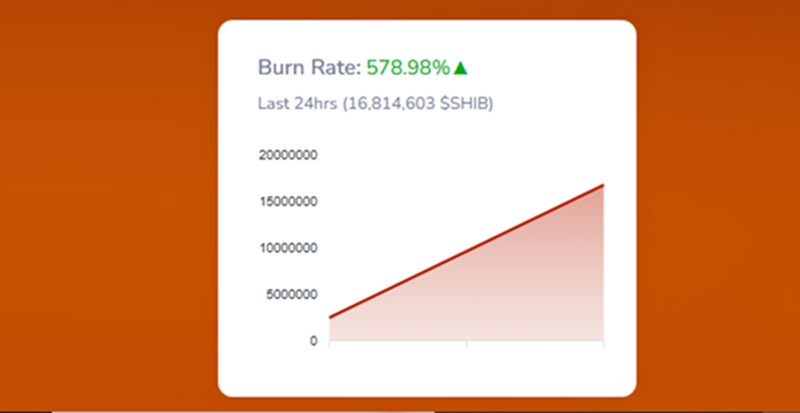
Shiba Inu (SHIB) stands out in the crypto market because its community-backed activities combine with speculative trading to fuel its success. The price of SHIB currently sits at $0.00001223 with a 4.98% daily increase, and its ability to achieve $0.00020 depends significantly on its planned burn rate strategy. In the last 24 hours, SHIB has accomplished a token burning rate of 578.98%, which has led to the removal of 16,814,603 tokens from its circulating supply. The price reaching $0.00020 requires extended burning operations and wider SHIB adoption in decentralized applications and payment systems to achieve this long-term goal.

Rexas Finance (RXS) Unlocks Trillions—Tokenize Real-World Assets with Just a Click!

Rexas Finance (RXS) represents a transformative force in the crypto industry because it focuses on creating tokens for real-world assets (RWAs). The utility of RXS stands out from Shiba Inu because it allows users to tokenize assets, including gold real estate and intellectual property. Through this method, blockchain technology gains access to multiple trillion-dollar markets. The RXS token serves as the central component of this ecosystem because it enables transactions, governance functions, and stakeholding activities. The RXS token operates under the ERC-20 standard, which provides wallet and decentralized application compatibility. Rexas Finance makes previously inaccessible illiquid markets more accessible through its features for fractional asset ownership and its no-code token builder for simple asset tokenization.

RXS Presale 92% Complete—Last Chance to Get In Before June 19 Listing at $0.25!

RXS currently stands at Stage 12 of its presale phase while attracting considerable investor interest through its $0.200 pricing and planned June 19, 2025, listing at $0.25. The RXS presale’s final phase shows 92.08% completion as investors have contributed $48,085,318 toward its $56 million target while purchasing 460,424,302 tokens from its 500 million total supply. Investor confidence in RXS’s blockchain-based asset management revolution stands strong because of these significant financial indicators.

RXS Set for 15,820% Surge? Real-World Asset Focus & Certik Audit Fuel Investor Hype!

The utility of Rexas Finance rests in its RWAs sector focus because blockchains project exponential growth for the next few years, while Shiba Inu depends on speculative trading and community initiatives for its expansion. The analysts project RXS has the potential to experience an enormous price increase of 15,820% because of its innovative method of merging traditional assets with decentralized finance (DeFi).

Security assurances provided by Certik support Rexas Finance because the platform exists on CoinMarketCap and CoinGecko alongside their auditing process. Its credibility and investment appeal derive from these factors, which support its standing as a promising investment option.

Conclusion

Rexas Finance is a better investment choice than Shiba Inu due to its practical utility alongside its real-world application. RXS will drive the potential asset tokenization transformation as analysts predict its value could increase by up to 15,820%. With presale almost selling out, savvy investors have a limited time to act and buy into the final presale stage 12.


Website: https://rexas.com

Whitepaper: https://rexas.com/rexas-whitepaper.pdf

Twitter/X: https://x.com/rexasfinance

Telegram: https://t.me/rexasfinance