DD
MM
YYYY

PAGES

DD
MM
YYYY

spot_img

PAGES

Home Blog Page 1187

Africa Must Add 16GW of Power Annually Until 2050 — AFC Warns, Urges Nigeria to Take Lead 

0

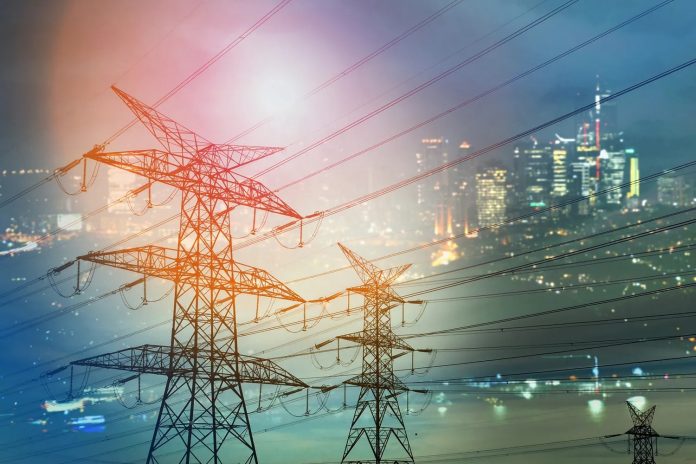
Africa must urgently scale up its grid-connected power generation by at least 16 gigawatts (GW) every year until 2050 to meet even its most basic energy needs, according to the State of Africa’s Infrastructure Report 2025 released by the Africa Finance Corporation (AFC).

The report paints a stark picture of the continent’s energy gap, warning that without aggressive and sustained investment in both generation and transmission, Africa’s industrial ambitions will remain elusive.

“To meet such transmission needs, Africa will require at least $3.2–4.3 billion annually through 2040,” the report said, adding that generation must increase by 16GW every year through 2050 just to lift the continent’s average capacity to 0.300 megawatts per thousand people—on par with levels currently seen in India and Indonesia.

This target is significantly beyond Africa’s current pace. Most African countries still rely on underfunded, outdated infrastructure that frequently collapses under pressure. While the AFC acknowledges the severity of the crisis, it also framed the moment as a vast investment opportunity across solar PV, gas-to-power, hydropower, battery storage, and grid modernization. With bold reforms and targeted capital inflows, the Corporation believes Africa can build the most dynamic and future-ready energy system in the world.

A Grim Benchmark: Nigeria As An Example

Africa’s energy struggle is perhaps best embodied by Nigeria, the continent’s most populous nation and its largest economy. The country currently generates around 5,000 megawatts (MW) of electricity on average, according to government data—an abysmally low figure for a nation of over 200 million people. Energy experts and government agencies have consistently said Nigeria needs at least 30,000MW to deliver a stable electricity supply nationwide. That target is six times more than current output, yet successive administrations have failed to close the gap meaningfully.

The AFC report places Nigeria at the heart of the continental push to increase generation and transmission capacity. Without decisive action by Nigeria, the rest of Africa could fall behind as well. The absence of a clear-cut strategy to meet the 16GW-per-year benchmark raises serious concerns about the continent’s long-term industrialization prospects.

In November 2024, the Nigerian government acknowledged that it would require at least $10 billion in private investment over the next 5–10 years to stabilize the power supply and transition towards reliable electricity for homes and industries. Yet despite multiple roadmaps and initiatives, there is still no cohesive national plan detailing how this will be achieved.

Private Capital, Reforms Key to Reversing Trend

The AFC emphasized that lessons from countries like Brazil, which opened its transmission sector to private investment in the 1990s, could guide Africa’s way forward. Brazil’s transmission infrastructure grew from 105,000 kilometers in 2012 to 184,000 kilometers by 2023. Just in 2024, the country’s first transmission tender attracted $3.65 billion—matching Africa’s entire annual requirement for grid investment.

“Brazil’s experience demonstrates that creating a viable investment pipeline—anchored in regulatory reform, unbundled utilities, and long-term planning—is essential to crowd in private capital at scale,” the AFC stated.

Nigeria, which has begun unbundling its power sector through the privatization of generation and distribution companies, has yet to fully unlock private sector potential in transmission—a key bottleneck in the country’s electricity chain. Power frequently fails not because there is no generation, but because there is no capacity to wheel it to end users.

The Nigerian government has pointed to progress under the Mission 300 initiative, a joint program by the World Bank and African Development Bank (AfDB) aimed at connecting 300 million Africans to electricity by 2030. In April 2025, Power Minister Adebayo Adelabu claimed that around 150 million Nigerians now have some form of electricity access, though 80 million still lack reliable supply.

However, experts have noted that expanding access without increasing generation and improving grid stability only spreads out scarcity. Most Nigerians still rely on expensive diesel or solar alternatives to meet basic energy needs. For industries, the reliance on private generation inflates production costs, stifles competitiveness, and limits job creation.

A Far Cry From Industrialization

The gap between Africa’s current energy landscape and its projected needs underscores a deeper challenge: industrialization. Without stable electricity, Africa’s ambitions to become a global manufacturing hub or a digitally-driven economy remain theoretical.

The failure to bridge the 16GW-per-year gap is expected to keep countries like Nigeria locked in energy poverty—where lights flicker in homes, businesses rely on noisy generators, and entire sectors remain underpowered.

Energy experts believe that unless Nigeria and other key African economies act quickly to attract capital, reform regulations, and build resilient infrastructure, the continent’s energy story will remain one of lost potential and deferred development.

Palmpay in Talks to Raise Between $50M – $100M Series B to Fund African and Asian Expansion

0

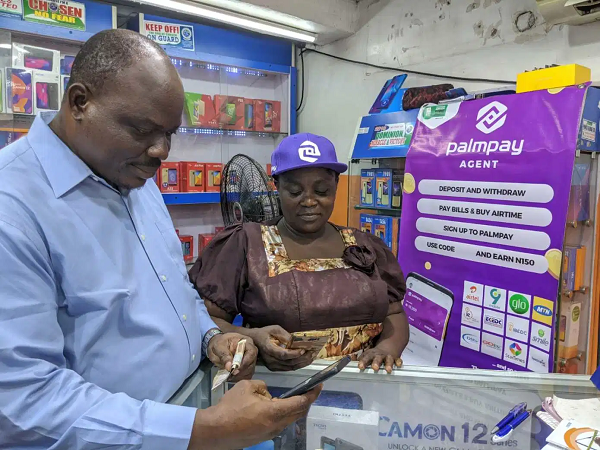
Palmpay, a licensed and insured mobile money operator in Nigeria that offers money transfer, bill payment, and savings, is reportedly in talks to raise $50 million to $100 million in a Series B funding round.

This funding effort follows the company’s previous raise of nearly $140 million across seed and Series A rounds.

The anticipated funding, a mix of equity and debt, will support Palmpay’s expansion in Nigeria, scale its business-focused offerings, and drive entry into new African and Asian markets.

While the company has not disclosed its valuation for this upcoming round, its 2021 Series A funding positioned it just shy of unicorn status, making it one of the most valuable startups in Africa. Industry watchers believe that this new raise could push PalmPay into unicorn territory.

Since its launch in 2018, PalmPay has quickly emerged as Africa’s leading Fintech, making a tangible impact on the continent’s financial landscape. Its commitment to delivering secure, accessible, and innovative digital payment services has garnered the trust and support of millions of users and merchants, driving financial inclusion across the continent

For customers, the fintech has been at the forefront of offering accessible and diversified financial services to individual users.  For Businesses, it helps them expand with tech-powered solutions and smooth digital payment services. Also, its innovative services and data-driven insights enable your business to thrive.

In early 2023, the Central Bank of Nigeria (CBN) restricted cash limits for Nigerians, which put a lot of pressure on the ICT infrastructure of all commercial banks. Most fintech companies benefited from the chaos as they experienced an upsurge in customer behavior and engagement. PalmPay became commonplace and has since been experiencing growth in new customer sign-ins and engagement.

This year, the company was ranked number 2 on the Financial Times’ list of Africa’s Fastest-Growing Companies in 2025 and #1 in the financial services sector. This recognition underscores the effectiveness of Palmpay’s business model, the dedication of the team, and the impact of delivering inclusive financial solutions at scale.

Over the past years, the company has grown to serve over 35 million users. The mobile banking platform provides digital payments, savings, credit, insurance, and business tools that are transforming how people manage and move their money.

With Africa being home to the world’s next billion digital financial users, PalmPay is at the forefront of this, building the infrastructure to serve them through trusted products, strategic partnerships, and localized innovation. The fintech has empowered individuals and businesses across Africa to realize their financial goals. With expansion into new markets and a growing suite of products, the company is bringing inclusive financial services to even more people on the continent.

Beyond Nigeria, PalmPay has entered Tanzania and Bangladesh, using device financing and consumer credit as entry points before expanding services. The company also plans to launch device financing in Nigeria. Its business-facing cross-border payment solution, live in Nigeria, Kenya, and Tanzania (with South Africa planned), processes “hundreds of millions of dollars monthly” via a single API, addressing a critical merchant pain point.

As it rivals platforms like OPay, Moniepoint, and Paga, PalmPay’s continued growth and investment momentum signal its rising influence in Africa’s digital economy and potentially, its imminent entry into the unicorn club.

The anticipated funding, will no-doubt position it to accelerate its growth, solidify its leadership in Nigeria, and challenge global fintechs in new markets, while further bridging Africa’s financial access gap.

Reddit Sues Anthropic for Scraping Its Data Without License, Escalating AI Copyright Wars

0

Reddit has filed a federal lawsuit against artificial intelligence startup Anthropic, accusing it of unlawfully using Reddit users’ content to train AI models without any licensing agreement — a legal challenge that deepens the growing rift between content owners and AI developers over data ownership and intellectual property rights.

The complaint, filed Wednesday in the U.S. District Court for the Northern District of California, alleges that Anthropic scraped Reddit’s data more than 100,000 times, ignoring the company’s robots.txt protocol and a direct warning that it did not have authorization to access or use the platform’s content. Reddit claims the scraping continued even after Anthropic told the company in 2024 that it had blocked its bots.

Reddit says the AI startup exploited this data for “billions of dollars” in value, using it to train its language models — a move Reddit argues was done without consent and in violation of its user agreement. The company is demanding compensatory damages and restitution and is also seeking an injunction to prevent Anthropic from using Reddit content in the future.

“We will not tolerate profit-seeking entities like Anthropic commercially exploiting Reddit content for billions of dollars without any return for redditors or respect for their privacy,” said Ben Lee, Reddit’s chief legal officer, in a statement to TechCrunch.

Anthropic responded to the lawsuit in a statement, saying: “We disagree with Reddit’s claims and will defend ourselves vigorously,” according to spokesperson Danielle Ghighlieri.

This legal clash makes Reddit the first Big Tech platform to sue an AI model developer over training data. But it is far from the first entity to raise the alarm. The New York Times filed a high-profile lawsuit against OpenAI and Microsoft in December 2023, claiming the companies used millions of its articles without compensation or permission to train generative AI models like ChatGPT and Copilot.

The Times’ complaint argued that OpenAI’s models could regurgitate near-verbatim excerpts from its articles, undermining both its journalistic product and subscription business. That case has become a watershed moment in the debate over AI and copyright, as it tests whether AI companies can freely scrape and repurpose content under the guise of “fair use.”

Reddit, which is preparing for an IPO, has meanwhile positioned itself as willing to license its vast archive of user-generated data — under controlled terms. It has inked training deals with OpenAI and Google, allowing them access to Reddit posts, but says those partnerships include specific provisions designed to protect users’ privacy and intellectual property.

Sam Altman, OpenAI’s CEO, owns 8.7 percent of Reddit, making him the third-largest shareholder in the company.

The core issue in Reddit’s case, as in many other lawsuits against AI firms, is the unlicensed use of creative or proprietary content to build commercially valuable AI systems. Similar legal complaints have been filed by authors like Sarah Silverman, artists, and music publishers against a wide range of AI developers, who are increasingly being asked to justify where and how they collect their training data.

With courts now being asked to define the boundaries of “fair use” in the context of large-scale scraping and machine learning, legal experts believe that these lawsuits could reshape the regulatory and financial landscape for the AI industry. If plaintiffs like Reddit or The New York Times succeed, AI developers may be forced to either pay for the data they use or significantly restrict their access to publicly available content.

As public concern grows over the unchecked use of intellectual property in AI development, these legal battles are poised to set the precedent for how future chatbots are trained, and whether the internet’s data — from news stories to social media posts — remains free for AI consumption or protected under copyright and data rights law.

Auto Industry Braces for Production Crisis as China’s Rare Earth Curbs Strain Global Supply Chains

0

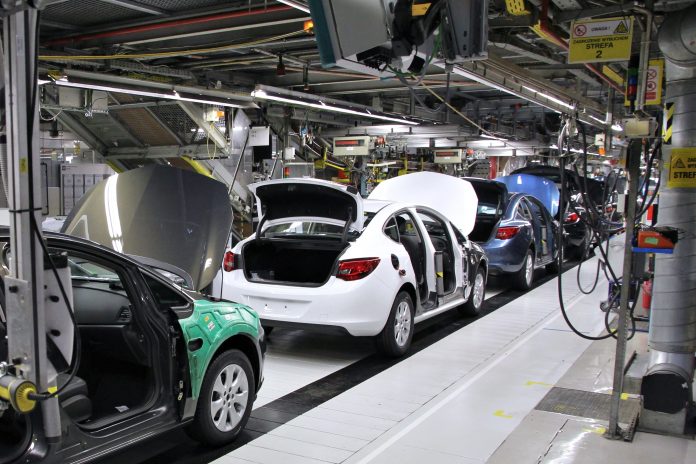
The global auto industry is inching toward a production crisis as China’s export restrictions on rare earth minerals and magnets begin to bite, halting some manufacturing lines in Europe and prompting dire warnings from US automakers.

The restrictions, in place since early April, require companies to obtain a license to export key materials used in electric vehicles and other critical technologies. But only about 25 percent of license requests have been approved, according to Nikkei, with others held up in bureaucratic limbo as tensions between Washington and Beijing deepen.

Auto parts suppliers across Europe have already started shutting down operations due to the shortage of rare earth components, according to the European Association of Automotive Suppliers (CLEPA).

“With a deeply intertwined global supply chain, China’s export restrictions are already shutting down production in Europe’s supplier sector,” said Benjamin Krieger, CLEPA’s secretary general. “We urgently call on both the EU and Chinese authorities to engage in a constructive dialogue to ensure the licensing process is transparent, proportionate, and aligned with international norms.”

In the United States, executives in the auto sector are warning that production cuts could follow within weeks unless supplies resume. Rare earth magnets are essential to electric and hybrid motors but are also found in traditional components like catalytic converters and electronic seats. Their absence could stall not just EV output, but wide swaths of conventional car production as well.

The export restrictions are part of China’s tit-for-tat response to US tariffs introduced by President Donald Trump. While many of those tariffs have been temporarily paused, China has not reversed its curbs on rare earth exports. That decision has made rare earth minerals a central lever in trade negotiations, and many analysts believe it gives Beijing the upper hand. China controls more than 90 percent of the global rare earth supply chain, leaving Western industries deeply exposed.

Trump on Thursday revealed that he had held his first direct conversation with Chinese President Xi Jinping since returning to the White House in January, describing the call as “very positive.” In a post on his social media platform, Trump said the hour-and-a-half-long discussion had led to a breakthrough, with both sides agreeing to hold trade talks aimed at resolving the standoff over tariffs and the supply of rare earths.

“Our respective teams will be meeting shortly at a location to be determined,” Trump wrote.

The US delegation will include Treasury Secretary Scott Bessent, Commerce Secretary Howard Lutnick, and US Trade Representative Jamieson Greer.

Trump also disclosed that Xi “graciously” invited him and First Lady Melania Trump to China and that he had extended a reciprocal invitation for the Chinese leader to visit the United States. While no formal meetings have been scheduled, expectations are building that rare earth access will be front and center in the upcoming talks.

In the meantime, manufacturers are bracing for worsening conditions. The New York Times reported this week that even Chinese magnet producers have begun pausing operations due to the licensing bottleneck, raising concerns of deeper shortages in the months ahead.

Beyond the auto sector, the restrictions threaten to disrupt industries from consumer electronics to defense systems. But carmakers — particularly those dependent on electric vehicle production — remain the most exposed, especially as they navigate the broader fallout of shifting trade policies under Trump’s renewed administration.

With negotiations pending, automakers on both sides of the Atlantic are in a holding pattern, anxiously awaiting any signal that rare earth shipments might resume.

Avalanche Gains Speed, But Lightchain AI Gains Value With AI Logic and a Surging Presale Momentum

0

Avalanche may be gaining speed, but Lightchain AI is gaining something far more lasting—real value through AI logic and accelerating presale momentum.

With all 15 presale stages completed and the Bonus Round now live, Lightchain AI is attracting developers, builders, and investors who recognize its long-term potential. The platform’s AI-native infrastructure includes a virtual machine purpose-built for intelligent workloads and a consensus model that rewards meaningful computation.

As the July 2025 mainnet launch nears, Lightchain AI continues to move with purpose—quietly building a scalable, utility-driven ecosystem. While others race for speed, Lightchain AI is constructing the architecture for intelligent growth.

Avalanche Impresses With Network Speed and Performance

Avalanche?(AVAX) is a Layer 1 protocol known for its unparalleled speed and scalability. Process in excess of?4,500 transactions per second (TPS) and achieve transaction finality in less than 2 seconds, this differentiates Avalanche from others.

This speed characteristic is due to its unique design of having three chains that work together: X-Chain for assets creation and trading, the C-Chain for smart contracts, and the P-Chain for coordinating validators?and subnets. The?project’s unique consensus method- the fusion of classical and Nakamoto’s protocols, guarantees both high speed and security.

Avalanche’s support for the Ethereum Virtual?Machine (EVM) also makes it easy to interface with developers already familiar with Ethereum, and thereby strengthens its play in the dapp ecosystem.

Lightchain AI Adds Real Value Through Built-In AI Logic

Lightchain AI delivers real value by embedding AI logic directly into its protocol—making intelligence a native feature, not an afterthought. Unlike traditional blockchains that rely on external systems for AI integration, Lightchain introduces the Artificial Intelligence Virtual Machine (AIVM), capable of executing complex AI tasks like model training and inference on-chain.

This logic is enhanced by the Transparent AI Framework, ensuring all outputs are verifiable and auditable. Developers benefit from dynamic gas optimization, allowing cost-effective deployment of AI-driven dApps.

Combined with a dedicated developer portal, APIs, and governance tools, Lightchain AI enables smarter execution, real-time responsiveness, and full accountability. This deep integration of AI functionality makes Lightchain AI not only more useful—but foundational for the next wave of decentralized, intelligent applications.

Presale Surge Signals Strong Market Confidence in Lightchain AI

The ongoing presale surge for Lightchain AI is a clear signal of strong market confidence in the project’s long-term potential. With over $20.9 million already raised and the Bonus Round now live, investors are responding to more than just momentum—they’re backing real infrastructure.

Lightchain AI integrates intelligent execution at the protocol level through the Artificial Intelligence Virtual Machine (AIVM) and the Proof of Intelligence consensus. Its developer portal is already active, offering APIs, SDKs, and a sandbox for streamlined deployment.

The complete reallocation of the original 5% Team Allocation to builder grants further demonstrates a community-first vision. As the Transparent AI Framework and privacy-focused architecture gain visibility, Lightchain AI is solidifying its role as the intelligent blockchain poised for breakout utility.

https://lightchain.ai

https://lightchain.ai/lightchain-whitepaper.pdf

https://x.com/LightchainAI

https://t.me/LightchainProtocol