DD
MM
YYYY

PAGES

DD
MM
YYYY

spot_img

PAGES

Home Blog Page 1189

The Acquisition of Deribit Gives Coinbase a Competitive Edge But Introduces Execution Risks

0

Coinbase’s acquisition of Deribit for $2.9 billion, announced on May 8, 2025, marks the largest merger and acquisition in the cryptocurrency industry’s history. The deal, comprising $700 million in cash and 11 million shares of Coinbase Class A common stock, positions Coinbase as the global leader in crypto derivatives by open interest and options volume. Deribit, a Dubai-based platform, processed $1.2 trillion in trading volume in 2024, with approximately $30 billion in current open interest, making it the world’s leading crypto options exchange.

This acquisition enhances Coinbase’s derivatives offerings, complementing its existing U.S. futures and international perpetual futures businesses, and is expected to diversify revenue streams and boost profitability due to Deribit’s consistent positive adjusted EBITDA. The transaction, subject to regulatory approvals, is anticipated to close by year-end 2025. Deribit’s founders, John and Marius Jansen, will step down post-closure, while CEO Luuk Strijers emphasized the deal’s potential to accelerate growth in global crypto derivatives trading. Coinbase’s stock (COIN) rose 5.3% to $215.40 on May 8, reflecting market optimism, though it has declined 21% year-to-date in 2025.

However, Coinbase’s Q1 2025 earnings, released concurrently, presented a mixed picture. While specific financial details from the earnings report are not fully detailed in available sources, it’s noted that the acquisition announcement overshadowed the earnings, which reportedly missed expectations. Coinbase had previously reported doubled revenue in Q4 2024, driven by a retail trading rebound, but the Q1 2025 results suggest short-term challenges, potentially due to market volatility or operational costs.

The acquisition’s long-term strategic value—bolstering Coinbase’s institutional offerings and global reach—appears to outweigh immediate earnings concerns, with analysts like Matt Hougan of Bitwise predicting Coinbase could become a $1 trillion valuation company as derivatives trading expands. The deal aligns with a broader trend of consolidation in the crypto industry, fueled by a crypto-friendly U.S. regulatory environment under the Trump administration.

For comparison, Kraken acquired NinjaTrader for $1.5 billion, and Ripple acquired Hidden Road for $1.25 billion in recent months. Regulatory hurdles, particularly in integrating Deribit’s Dubai license with Coinbase’s U.S.-focused compliance framework, and potential volatility in derivatives trading volumes remain risks. Still, the acquisition positions Coinbase to compete with global giants like Binance and OKX, capitalizing on the growing institutional demand for crypto derivatives, which outpaced spot trading volumes threefold in 2023.

By acquiring Deribit, Coinbase secures a leading position in the crypto options and derivatives market, which is critical as derivatives trading volumes significantly outpace spot trading (3:1 in 2023). Deribit’s $1.2 trillion in 2024 trading volume and $30 billion in open interest bolster Coinbase’s portfolio, complementing its U.S. futures and international perpetual futures offerings.

Deribit’s consistent positive adjusted EBITDA offers Coinbase a stable, high-margin revenue stream, reducing reliance on volatile spot trading fees. This could enhance financial resilience amid crypto market fluctuations. The acquisition strengthens Coinbase’s appeal to institutional investors, who increasingly demand sophisticated derivatives products. This aligns with Coinbase’s pivot toward institutional services, evidenced by its custody and prime brokerage growth.

The deal positions Coinbase to compete more effectively with Binance, OKX, and Bybit, which dominate global derivatives markets. Deribit’s established brand and infrastructure give Coinbase a foothold in non-U.S. markets, particularly in Asia and Europe. The acquisition reflects a broader wave of crypto industry consolidation, with deals like Kraken’s $1.5 billion NinjaTrader acquisition and Ripple’s $1.25 billion Hidden Road purchase. This trend suggests a maturing market where scale and regulatory compliance are critical for survival.

Integrating Deribit’s Dubai-based operations with Coinbase’s U.S.-centric, compliance-heavy framework could face hurdles. Regulatory approvals are pending, and any delays or restrictions could impact the deal’s timeline or scope. The derivatives market is inherently volatile, with trading volumes tied to crypto price movements. A bear market could reduce Deribit’s profitability, while Coinbase’s $700 million cash outlay and 11 million shares dilute shareholder value short-term.

Coinbase must balance its U.S. regulatory obligations with Deribit’s international client base, which may require nuanced compliance strategies to avoid alienating non-U.S. users. Coinbase’s stock surged 5.3% to $215.40 on May 8, 2025, signaling investor confidence in the acquisition’s long-term value, despite a 21% year-to-date decline. Analysts like Matt Hougan project a potential $1 trillion valuation for Coinbase, driven by derivatives growth.

The deal capitalizes on a crypto-friendly U.S. regulatory environment under the Trump administration, which could ease compliance burdens and encourage institutional adoption. However, Q1 2025 earnings misses suggest short-term headwinds, potentially from operational costs or market volatility.

The acquisition could accelerate the mainstream adoption of crypto derivatives, particularly options, which remain underutilized compared to futures. This may attract more institutional capital, further legitimizing crypto as an asset class. Coinbase’s enhanced capabilities may pressure competitors to innovate or consolidate, potentially leading to better products and lower fees for users. However, it could also centralize market power, raising concerns about monopolistic behavior.

The acquisition highlights a divide in how different stakeholders perceive its impact, reflecting tensions in priorities, market dynamics, and regulatory contexts. Retail traders, Coinbase’s traditional base, may see limited immediate benefits, as Deribit primarily serves sophisticated traders. Spot trading fees, a key retail revenue driver, could face pressure if Coinbase shifts focus to derivatives. Additionally, the Q1 2025 earnings miss may erode retail investor confidence in short-term profitability.

Institutions, including hedge funds and asset managers, view the acquisition favorably, as it expands Coinbase’s derivatives offerings. Deribit’s robust options platform caters to their need for hedging and speculative strategies, potentially driving institutional capital inflows. In the U.S., a crypto-friendly regulatory shift under Trump supports Coinbase’s growth, but its heavy compliance costs and focus on regulated products (e.g., futures via Coinbase Financial Markets) may limit agility compared to global competitors.

Deribit’s non-U.S. client base, operating under Dubai’s lighter regulatory framework, may resist Coinbase’s stricter compliance standards. This could create friction in retaining Deribit’s existing users, particularly in Asia and Europe, where Binance and OKX dominate. The $2.9 billion price tag, including $700 million in cash, strains Coinbase’s balance sheet, especially after Q1 2025 earnings underperformed. Integration costs and regulatory delays could further pressure profitability in 2025.

The acquisition’s strategic value—market leadership, revenue diversification, and institutional growth—positions Coinbase for dominance in a maturing crypto market. Analysts’ $1 trillion valuation projections reflect confidence in derivatives as a growth driver. Some crypto enthusiasts may criticize Coinbase for prioritizing institutional products and regulatory compliance, potentially at the expense of decentralization principles. Deribit’s integration into a U.S.-listed company could be seen as a step toward centralization.

Traditional financial players, including banks and regulators, view the acquisition as a sign of crypto’s maturation. It aligns with their push for regulated, transparent markets, potentially paving the way for broader crypto adoption. Rivals like Binance, OKX, and Kraken face increased pressure to scale or acquire to compete with Coinbase’s expanded derivatives capabilities. Smaller exchanges may struggle to survive without similar consolidation.

The acquisition gives Coinbase a competitive edge but introduces execution risks. Successfully integrating Deribit’s technology, team, and client base will be critical to realizing the deal’s full potential. Coinbase’s $2.9 billion acquisition of Deribit is a transformative move that cements its leadership in crypto derivatives and positions it for long-term growth in a consolidating industry.

However, it amplifies divides between retail and institutional priorities, U.S. and global regulatory frameworks, and short-term financial pressures versus long-term strategic gains. While the deal capitalizes on a favorable regulatory climate and institutional demand, Coinbase must navigate operational risks, competitive pressures, and stakeholder expectations to fully realize its potential.


Tinubu’s Promise to Include Anambra In National Railway Plan After Soludo Endorsement, and Southeast’s Place in National Development

0

President Bola Ahmed Tinubu’s recent visit to Anambra State was marked by both grand political theater and renewed scrutiny over the exclusion of Nigeria’s Southeast from critical national infrastructure planning.

Speaking at a civic reception in Awka on Thursday, Tinubu announced that Anambra State would be included in the National Rail Development Plan. According to a statement issued by presidential spokesman Bayo Onanuga, the president assured that the Ministry of Transportation would correct the exclusion.

“I am standing before you to say that the Ministry of Transportation is aware and will include the connection in the Master Plan and give it attention,” Tinubu was quoted as saying during the ceremony at Alex Ekwueme Square.

But just as the applause faded, the moment gave way to a deeper national conversation—one not just about railways, but about equity, regional politics, and Nigeria’s long-standing developmental fault lines.

That conversation intensified when Anambra State Governor, Charles Soludo, declared Tinubu as the adopted presidential candidate of the All Progressives Grand Alliance (APGA) for the 2027 general election, despite Tinubu being a member of the ruling All Progressives Congress (APC).

“In 2011, before I joined APGA in 2013, the party took an official position to support and collaborate with the political party and government at the center. That year, APGA adopted the then-sitting president as its presidential candidate. That policy has not changed,” Soludo said.

“Coincidentally, Mr. President, the current government at the center also professes progressivism. As Nigeria’s foremost progressive party, APGA is ideologically and strategically aligned with the center. Those in the APC are our brothers and sisters,” he added.

This unprecedented endorsement, delivered at a state-funded civic reception, has raised critical questions about the integrity of federal development decisions. Many have asked: Is inclusion in Nigeria’s national development agenda now contingent on supporting the president’s political ambitions?

Rail Projects and Regional Disparities

The national rail master plan is captured in the 2025 budget, which allocates N400 billion to rail projects across four states—Kano, Kaduna, Ogun, and Lagos—with no provision for any Southeast or South-South state.

The breakdown of allocations is as follows:

  • N150 billion to Kano State
  • N100 billion each to Ogun and Kaduna States
  • N50 billion to Lagos State for light rail
  • An additional N146.14 billion to Lagos for the Green Line Metro Rail Phase 1

This brings Lagos’s total rail allocation to N196.14 billion—the largest share among the four states. In contrast, oil-producing states like Rivers, Bayelsa, Delta, and Akwa Ibom, as well as commercial hubs like Anambra, Abia, and Enugu, are excluded from any rail investment.

Many believe that this disparity is not accidental. Rather, it reflects a continuity of systemic exclusion that has characterized Nigeria’s federal development strategy since after the civil war.

The Southeast and South-South regions together account for the bulk of Nigeria’s oil revenue, which remains the primary source of federal income. Yet, in key infrastructure projects, from highways to railways to energy transmission, the regions are believed to have been frequently left behind.

In 2021, under former President Muhammadu Buhari, the federal government controversially approved the construction of a railway line from Kano to Maradi in Niger Republic. The project, valued at over $1.9 billion, was flagged by critics as emblematic of sectional favoritism, especially as no corresponding rail investment was planned for the Southeast.

Some political analysts have criticized what happened in Anambra, arguing that it risks creating a dangerous precedent where regions must barter their political independence to earn what should be their constitutional right.

Tinubu’s decision to include Anambra in the national railway plan is believed to have been motivated by politics, mainly, Soludo’s endorsement of the president’s 2027 reelection.

The Cost of Marginalization

For many in the Southeast and South-South, the issue is far bigger than a single rail line. It is about decades of federal neglect that have stifled economic potential, increased youth unemployment, and fueled separatist sentiments.

The regions’ lack of critical infrastructure, such as functioning seaports, is another point of reference, leading to the belief that this underdevelopment is by design, part of a national framework that favors some zones while undermining others.

“The South-South and the South-East should vehemently oppose this economic logic that the way to open trade is to deliberately refuse the diversification of maritime operations to the Eastern Corridor,” an economist, Kelvin Emmanuel, said.

He noted that instead of developing the seaports in the Eastern Corridor, the federal government is building a coastal road so containers and liquid bulk can travel on that road back and forth to sea ports in Lagos.

“Apapa is a river port, and Lekki is the only deep sea port in Lagos. Considering that Akwa Ibom has the shortest shore to sea of 16km in Nigeria, the Eastern Corridor is even more suitable for maritime operations than the Western Corridor,” he added.

The unfolding decisions are believed to be more political than economic, resulting in a lack of faith in the Nigerian project and feeding longstanding calls for restructuring or even secession.

While President Tinubu’s pledge may bring temporary optimism for Anambra, it does not overshadow the bigger challenge, which is whether federal development will ever be driven by need, merit, and equity, rather than political sentiment.

Celsius’s Founder Mashinsky Sentenced to 12-Year Imprisonment

0

Alexander Mashinsky, the founder and former CEO of Celsius Network, was sentenced to 12 years in prison on May 8, 2025, for securities and commodities fraud. He pleaded guilty in December 2024, admitting to misleading investors about Celsius’s financial stability and manipulating the price of its proprietary token, $CEL, while secretly selling his own holdings for over $48 million in personal gains.

Prosecutors described Mashinsky as a “predator” who “preyed on hope,” luring retail investors with false promises of safety and high returns, leading to $4.7–$7 billion in customer losses when Celsius collapsed into bankruptcy in July 2022. The sentence, handed down by U.S. District Judge John G. Koeltl in Manhattan, includes three years of supervised release, a $50,000 fine, and $48.3 million in forfeiture.

Prosecutors sought 20 years, while the defense requested one year, citing a 2022 crypto market crash, but the judge deemed the crimes “extremely serious.” Mashinsky’s case parallels other crypto fraud convictions, like Sam Bankman-Fried’s 25-year sentence for FTX’s collapse. The sentencing of Alexander Mashinsky to 12 years for crypto fraud carries significant implications for the cryptocurrency industry, its regulation, and the ongoing divide between crypto advocates and skeptics.

Mashinsky’s case, alongside other high-profile convictions like Sam Bankman-Fried’s, reinforces the U.S. government’s crackdown on crypto fraud. It signals to regulators, such as the SEC and CFTC, to tighten oversight of crypto platforms, particularly those offering high-yield products or proprietary tokens. Expect more enforcement actions targeting unregistered securities and manipulative trading practices.

The $4.7–$7 billion in losses from Celsius’s collapse erodes trust in centralized crypto platforms. Investors may shift toward decentralized finance (DeFi) or regulated institutions, while market volatility could persist as fraud cases highlight systemic risks. Smaller crypto firms may struggle to secure funding, as venture capital grows wary.

The 12-year sentence sets a benchmark for punishing crypto-related fraud, aligning it with traditional financial crimes. Courts are increasingly treating crypto fraud as equivalent to securities fraud, which may deter future misconduct but also complicate operations for legitimate firms navigating unclear regulations.

The case underscores the regulatory gray zone in crypto. Celsius’s failure to register as a securities provider was central to the fraud. This may accelerate calls for comprehensive crypto legislation, balancing innovation with investor protection, though political divides could delay progress.

Crypto Advocates argued hat fraud cases like Celsius are outliers and not indicative of crypto’s potential. They view harsh sentences as government overreach, stifling innovation in a nascent industry. Some blame the 2022 market crash, not Mashinsky’s actions, for Celsius’s collapse, and they push for self-regulation and decentralized systems to avoid reliance on flawed centralized entities. On platforms like X, pro-crypto voices may frame this as a witch hunt against industry pioneers.

Critics see Mashinsky’s case as evidence of crypto’s inherent risks, with unregulated platforms enabling fraud under the guise of innovation. They argue that high-yield promises like Celsius’s up to 18% returns are red flags, and the industry’s lack of transparency invites scams. Regulators and traditional finance advocates use this to justify stricter controls, viewing crypto as a speculative bubble prone to exploitation.

The divide extends to retail investors and the broader public. Some remain drawn to crypto’s promise of financial freedom, while others, burned by losses or wary of scams, see it as a risky gamble. High-profile convictions deepen skepticism among the latter, while diehard believers double down on crypto’s long-term value.

The sentencing reflects a broader tension between innovation and accountability. While crypto’s decentralized ethos challenges traditional finance, cases like Celsius highlight the need for guardrails. The divide will likely persist until clear regulations emerge, balancing investor protections with the industry’s growth. Meanwhile, ongoing lawsuits against other crypto figures like Binance’s Changpeng Zhao or Terraform Labs’ Do Kwon will keep this debate in the spotlight, shaping the industry’s trajectory.

US SEC and Ripple Labs Reached $50M Settlement on Long-Standing Litigation

0

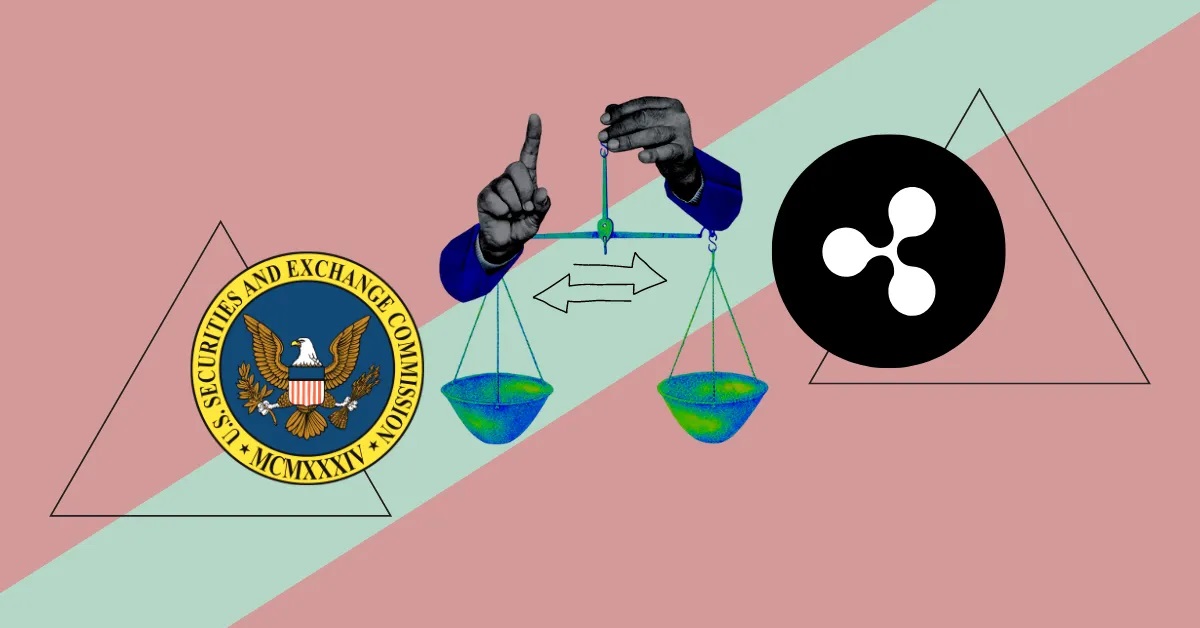
U.S. Securities and Exchange Commission (SEC) and Ripple Labs have reached a settlement in their long-standing legal dispute over XRP, with Ripple agreeing to pay a $50 million fine, significantly reduced from the original $125 million penalty imposed in August 2024. This agreement, announced on March 25, 2025, by Ripple’s Chief Legal Officer Stuart Alderoty, marks the conclusion of a four-year legal battle that began in December 2020, when the SEC accused Ripple of conducting an unregistered securities offering through XRP sales, allegedly raising $1.3 billion.

The SEC will retain $50 million of the $125 million fine, with the remaining $75 million, held in an interest-bearing escrow account, returned to Ripple. Both parties have dropped their respective appeals: the SEC withdrew its appeal of a July 2023 ruling by U.S. District Judge Analisa Torres, which found that XRP sold on public exchanges did not constitute a security, and Ripple dropped its cross-appeal. The SEC will request Judge Torres to lift an injunction that previously required Ripple to register future securities sales, pending final approval from the SEC and the court.

Ripple did not admit to any wrongdoing as part of the settlement. The lawsuit centered on whether XRP sales violated securities laws. Judge Torres’ 2023 ruling provided a partial victory for Ripple, determining that only institutional sales of XRP (worth $728 million) violated securities laws, while programmatic sales to retail investors on exchanges did not. The $125 million fine was a fraction of the $2 billion initially sought by the SEC, and the settlement further reduces Ripple’s financial penalty.

This resolution reflects a broader shift in U.S. crypto regulation, with the SEC scaling back enforcement actions under new leadership and a changing political landscape. The settlement is seen as a significant win for Ripple and the crypto industry, potentially paving the way for clearer digital asset regulations. XRP’s price remained relatively stable at around $2.47 following the announcement, showing no immediate market impact.

The $50 million settlement between the SEC and Ripple Labs over the XRP lawsuit has significant implications for the cryptocurrency industry, U.S. regulatory frameworks, and the ongoing divide between regulators and crypto advocates.  The settlement reinforces the July 2023 ruling by Judge Analisa Torres, which distinguished between institutional sales (deemed securities) and programmatic sales on public exchanges (not securities). This partial victory for Ripple provides a legal framework that other crypto projects may leverage to argue that tokens sold to retail investors via exchanges are not securities.

The SEC’s decision to drop its appeal of the Torres ruling suggests a retreat from aggressively classifying most cryptocurrencies as securities under the Howey Test. This could limit the SEC’s jurisdiction over certain crypto activities, shifting regulatory focus to other agencies like the Commodity Futures Trading Commission (CFTC). The settlement’s removal of the injunction on Ripple’s future securities sales (pending approval) indicates flexibility for Ripple to expand operations, such as its On-Demand Liquidity (ODL) product, without immediate SEC oversight, provided it complies with securities laws for institutional sales.

Market and Industry Impact

The reduced $50 million fine (from $125 million) and the absence of an admission of wrongdoing are seen as a win for Ripple, boosting its credibility and operational stability. This could enhance investor confidence in XRP, though the token’s price remained stable at ~$2.47 post-announcement, suggesting markets had already priced in a favorable outcome.

The resolution may encourage other crypto firms facing SEC lawsuits (e.g., Coinbase, Binance) to pursue settlements or challenge the SEC in court, citing the Ripple precedent. It could also spur innovation by reducing regulatory uncertainty for projects involving token sales. Ripple’s ability to reclaim $75 million from escrow strengthens its financial position, potentially fueling expansion into cross-border payments and other blockchain-based services.

The settlement aligns with a perceived softening of SEC enforcement under new leadership and a pro-crypto political climate in the U.S., particularly following the 2024 election. Reports suggest the SEC is scaling back high-profile crypto cases, possibly due to political pressure or a strategic pivot toward clearer rulemaking. The case highlights the need for comprehensive crypto legislation. The Ripple lawsuit exposed gaps in applying 1940s securities laws to modern digital assets, prompting calls for Congress to define clear boundaries between securities, commodities, and other asset classes.

Globally, the settlement may position the U.S. as less hostile to crypto innovation, potentially attracting investment and talent, though it lags behind jurisdictions like the EU, which has implemented the Markets in Crypto-Assets (MiCA) framework. The Ripple-SEC case encapsulates a broader divide between U.S. regulators and the cryptocurrency industry, rooted in differing views on innovation, investor protection, and regulatory authority. This divide manifests in several ways:

The SEC, under former Chair Gary Gensler, argued that most cryptocurrencies, including XRP, are unregistered securities, requiring strict oversight to protect investors from fraud and market manipulation. The agency viewed Ripple’s $1.3 billion in XRP sales as a violation of investor protections, emphasizing compliance with existing securities laws. Ripple and crypto advocates argue that applying outdated securities laws stifles innovation and mischaracterizes decentralized tokens like XRP, which function as currencies or utilities rather than investment contracts. They contend that the SEC’s enforcement-heavy approach creates uncertainty, driving companies to jurisdictions with clearer regulations.

The SEC’s claim over crypto assets conflicts with the CFTC’s view that many tokens are commodities. The Ripple ruling, which found programmatic XRP sales outside SEC jurisdiction, strengthens the CFTC’s case, intensifying debates over which agency should regulate crypto. This jurisdictional overlap confuses market participants, as seen in posts on X criticizing the SEC for overreach and calling for a unified regulatory framework.

The divide is amplified by political shifts. Pro-crypto sentiment, reflected in X posts and web commentary, credits the 2024 election of crypto-friendly lawmakers and a potential Trump administration for pressuring the SEC to settle. Conversely, consumer protection advocates argue that weaker enforcement risks retail investor losses, as seen in past crypto scams.

The public split is evident on X, where crypto enthusiasts celebrate the settlement as a blow to SEC overreach, while skeptics warn of unchecked market risks without robust regulation. The U.S.’s enforcement-driven approach has pushed crypto firms to jurisdictions like Singapore, Dubai, and the EU, which offer clearer rules. The Ripple settlement may signal a U.S. pivot, but the lack of legislative clarity keeps the divide alive, with industry leaders urging Congress to act to retain global competitiveness.

The Ripple settlement narrows the regulatory divide by providing a legal benchmark and signaling SEC flexibility, but it doesn’t fully resolve the tension. The crypto industry will likely push for legislation to codify the Torres ruling’s distinctions, while regulators may advocate for stricter oversight to prevent future market failures. The outcome depends on political will, with 2025 shaping up as a pivotal year for U.S. crypto policy.

Implications of US Federal Reserve’s Recent Decision and Trump’s Criticism

0

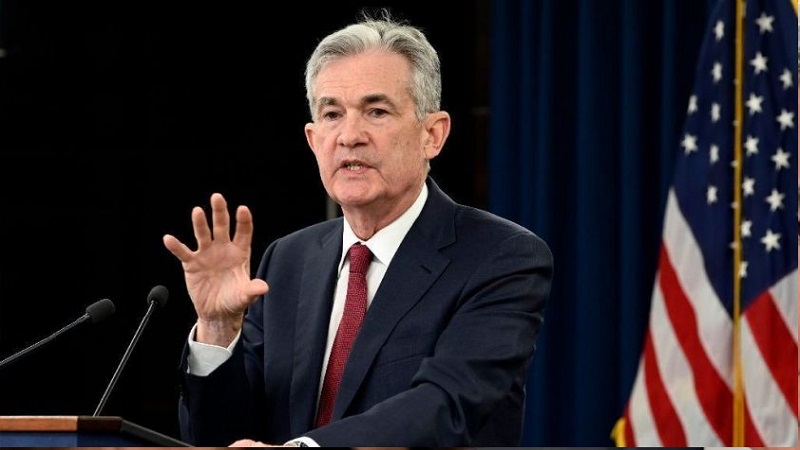
The Federal Reserve, led by Chair Jerome Powell, decided to maintain interest rates at 4.25% to 4.5% during its May 7, 2025, meeting, marking the third consecutive meeting without a change. Powell emphasized a cautious approach, stating the economy is “resilient and doing fairly well,” and the Fed is “well positioned to wait for greater clarity” before considering rate cuts. This stance is driven by concerns over persistent inflation, which remains above the Fed’s 2% target at 2.3% in March 2025, and potential economic disruptions from President Trump’s tariff policies, which could fuel both inflation and slower growth.

Powell noted that tariffs might cause a temporary price spike or more persistent inflationary pressures, complicating the Fed’s dual mandate of price stability and maximum employment. President Trump sharply criticized Powell, calling him a “fool” and “Too Late Jerome Powell” in a May 8, 2025, Truth Social post, arguing there is “virtually no inflation” and that “tariff money” is boosting the economy.

Trump has repeatedly pressured the Fed to cut rates, claiming it would act as “jet fuel” for markets, and accused Powell of inaction compared to other central banks like the Bank of England, which cut rates to 4.25%. He suggested Powell’s refusal to cut rates stems from personal bias, stating, “he’s not in love with me.” Despite earlier threats to fire Powell, Trump clarified he has “no intention” of removing him before his term ends in May 2026.

Economists warn that Trump’s pressure could backfire, as the Fed prioritizes independence to avoid political influence, which historically prevents inflation spikes. Some analysts, like Evercore ISI’s Krishna Guha, suggest that attempts to undermine Fed autonomy could destabilize markets, raising yields and lowering equities. While one Fed official, Christopher Waller, indicated tariffs’ inflationary effects might be temporary, most policymakers advocate waiting for clearer economic data, with markets now expecting the first rate cut in July 2025.

By keeping rates steady at 4.25%–4.5%, the Federal Reserve aims to curb inflation, which remains sticky at 2.3% (March 2025), above the 2% target. However, this could slow economic growth, especially if Trump’s proposed tariffs (e.g., 10%–20% on imports, 60% on Chinese goods) raise consumer prices, potentially pushing inflation higher or causing stagflation (high inflation with low growth).

The Fed’s cautious stance and Trump’s aggressive tariff rhetoric create uncertainty. Markets, initially expecting a rate cut in March 2025, now price in July 2025, reflecting fears of prolonged high rates. This could dampen investment and consumer spending, though strong equity markets (S&P 500 up 30% in 2024) suggest resilience so far.

Trump’s tariffs, if implemented, could disrupt global supply chains, raise costs for U.S. businesses, and invite retaliatory measures from trading partners like China and the EU. The Fed’s wait-and-see approach may delay relief for export-driven sectors, while higher import costs could exacerbate inflation. The Fed’s focus on its dual mandate (price stability and maximum employment) is tested. Unemployment remains low at 4.1% (March 2025), but prolonged high rates could cool hiring, especially in rate-sensitive sectors like housing and manufacturing.

Political and Institutional Implications

Trump’s public attacks on Powell, calling him a “fool” and pressuring for rate cuts, threaten the Fed’s autonomy. Historically, Fed independence prevents political cycles from driving inflation spikes (e.g., 1970s). If Trump pushes for control—via legislation or appointing loyalists post-Powell’s 2026 term—markets could react negatively, with higher yields and lower equities, as warned by analysts like Krishna Guha.

Trump’s fiscal agenda (tax cuts, tariffs) clashes with the Fed’s monetary tightening. Expansionary fiscal policy could overheat the economy, forcing the Fed to maintain or even raise rates, countering Trump’s growth goals. This tension may lead to volatile market reactions and public confusion over economic strategy. Trump views monetary policy as a tool for immediate economic boosts, believing low rates and tariffs will drive growth and stock market gains. He dismisses inflation concerns, claiming “tariff money” offsets costs.

Powell, conversely, prioritizes long-term stability, emphasizing data-driven decisions to avoid premature cuts that could reignite inflation. Trump’s rhetoric, including personal jabs like Powell not being “in love with me,” escalates tensions. His earlier threats to fire Powell (now softened) contrast with Powell’s insistence on serving out his term, highlighting a power struggle over Fed control.

Trump seeks rapid, visible economic wins to bolster his political brand, while Powell adheres to the Fed’s mandate, resisting short-term political pressures. This divide risks inconsistent messaging, potentially eroding public and investor confidence. Trump’s base supports his anti-establishment stance, viewing the Fed as elitist and obstructive. Critics, including some economists and Democrats, defend the Fed’s independence as a bulwark against populist overreach, fearing Trump’s influence could destabilize the economy long-term.

Investors, accustomed to Fed predictability, may face volatility if Trump’s pressure alters Fed behavior or if tariffs disrupt growth. Meanwhile, workers and consumers could bear the brunt of higher prices from tariffs and sustained high rates, widening economic inequality. Trump’s “America First” tariffs prioritize domestic industries but risk global trade wars, which the Fed must account for in its inflation forecasts. This pits nationalist economic policies against the Fed’s need to consider global spillovers, creating friction in international markets.

The Fed’s steady rates and Powell’s cautious approach aim to balance inflation and growth amid Trump’s disruptive fiscal plans. The divide—between Trump’s aggressive, growth-focused rhetoric and the Fed’s independent, stability-driven mandate—creates risks of policy misalignment, market volatility, and eroded institutional trust. If Trump’s pressure intensifies or tariffs escalate, the Fed may face tougher choices, potentially deepening economic and political divides.