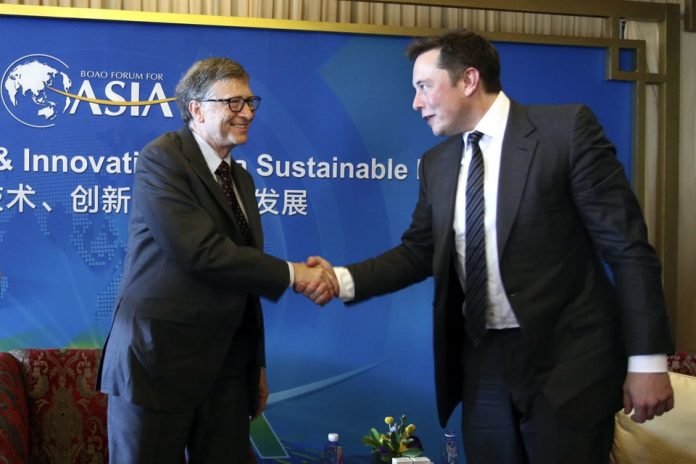
One of the birthday gifts I received last year was Elon Musk by Walter Isaacson – a 670-page biography of Elon Musk detailing his life, exploits, and business dealings from birth till April of 2023. In one of the chapters, Walter Isaacson details how Elon organizes his design and engineering teams – together. Elon’s policy is that “the designers sketching the shape of the car should work hand in glove with the engineers who were determining how the car would be built”. Design doesn’t sit in some cozy office creating impractical and artistic representations of products while engineering sits on the factory floor racking their heads to bring those designs to life. Design sits beside engineering, so if what they’re prototyping is an implausible mess, they can see in real-time and act accordingly. This organizational design principle has played a salient role in improving collaboration between design and engineering teams at Tesla (and possibly SpaceX) and ultimately driving better product outcomes.
This piece is the second part of a multi-part series on Startups, Corporate Innovation, and Venture Investing in Africa. You can read the first part here.
More often than not, every successful company that withstands the pressures of the market over an extended period of time gets three things right: they build a great product (a solution that solves a real and pertinent need people face) they develop a great strategy (a framework for getting their products into the hands of users in the most commercially viable way possible), and they develop a great culture (a system that allows them to do one and two repeatedly over an extended period).
The reason most companies end up building one or two great products that underpin the entire business’s existence, and struggle to replicate that success across multiple other opportunity vortexes, is because of poor design. Companies must be designed intentionally if they want to win and continue winning.
The Anatomy of a Business
There’s a lot of intentionality in the design of the human body, and a corporate entity is really not any different. There is a reason the human heart beats at 100 beats per minute, there is a reason the entire respiratory process takes 5 seconds, there is a reason the human has two kidneys (hint: it isn’t to sell one to buy an iPhone), and there is a reason the human heart has 40,000 neurons in it (my friend who was a pharmacy major explains this is why heartbreaks feel deep, a little unclear as to why this was the main example he cited, but I digress). The design of the human system, and the interconnections between multiple organs, blood vessels, and neurons is what enables the human body to operate. A successful technology company also has a similar design.
Every technology company has three core components – people, processes, and principles. Similar to how one malfunction within the body doesn’t necessarily lead to the death of the entire human (depending on where the malfunction occurs), a malfunction within one component of a company isn’t necessarily its end. However, consistent malfunctions across multiple components are usually a bad sign and one that can have precarious long-term consequences.
People
Companies say a lot of things that are inherently not true as a way to virtue signal. However, “our people are at the heart of our business” isn’t one of them. According to Elon Musk – “the output of any company is the vector sum of the people within it”. My personal version of this is great people create great outcomes.
The output of every great company is directly proportional to the quality of people who work in it. Ideas are great, but high-quality ideas are usually a function of collective intelligence (your intelligence + the intelligence of your team). Plans are great, but high-quality execution is almost always the function of a high-quality team. This is why the composition of a team really matters when trying to build and scale a consequential business. While there are occasional overlaps here and there, there are broadly three types of people that work within companies; earners, scalers, and builders.
Earners: Earners make up the vast majority of the workforce today. Their main objective for working with your business is the pay (and whatever benefits are tied to your compensation plan). Earners do the bare minimum required of them to keep their jobs and aren’t laser-focused on creating any meaningful change within your organization beyond what has been explicitly listed in their job descriptions.
Earners may be loyal to your company, but their loyalty is timed – it’s between 9 to 5. More often than not, earners usually have some side hustle or the other they’re involved in, and they only work with your business because it pays the bills. Earners are motivated primarily by money and will leave your company the minute someone offers them a 50% pay bump.
To be clear, there’s nothing inherently wrong with earners, people have different priorities, and there’s nothing wrong with a person prioritizing their personal well-being over everything else. Also, contrary to popular opinion, earners are not incompetent people. An earner can be a very competent engineer or product manager, he just doesn’t care that much about your company and is mainly driven by the opportunity to earn money. In fact, a good number of earners tend to be competent employees, they just don’t care enough to go above the call of duty to get anything done for you.
A good number of people who join companies start as earners (we’re here primarily for the pay) and are eventually converted into builders (we fell in love with the mission), so moving an employee from an earner to a builder isn’t impossible if you have a good mission you can rally people around. Earners serve their spirits.
Scalers: Scalers are a unique category. They care about your company’s mission and will work longer and harder than required to help you get there, but they have a different objective. While earners are in it for the money, scalers are in it for the prestige. Scalers are optimized for career progression, will do what is required to climb the corporate ladder, and will be loyal to you as long as there are opportunities for them to climb that ladder. The minute there is no career upside tied to working for you, they’ll be gone faster than Jollof rice at a Nigerian party.
Scalers are more common in big multi-layered companies where there are huge opportunities for career progression and cross-deployment. While Earners serve their spirits, Scalers serve the spirit of the company. This means they play the games required to scale up the corporate hierarchy within their firms. In other words, Scalers play politics. Scalers will rather do what is valuable to leadership within the company to put themselves in good light than do what is valuable to the market to put the company in a good light.
If leadership is highly meritocratic and values competence, most scalers will have a meaningfully positive impact on the trajectory of the company. If leadership is about ego massaging, scalers will play along to secure their careers. Scalers can be converted into builders if the “spirit of the company” is relentless at rewarding and recognizing competence. More often than not, scalers will do what is required, and if what is required is competence, they will become just that.
Builders: The highest echelon of employee value is builders. Not only do builders care about the company’s mission and vision, they’re strongly optimized to create, build, and add value. While Builders want to get paid well, the most important thing to them is being able to do great and consequential work. At their core, builders are contributors. Builders don’t play politics, and more often than not they genuinely detest environments where they have to play politics to get things done.
In theory, most companies want builders, in reality, a company must be optimized to both attract and retain builders. While Earners serve their spirits and Scalers serve the “spirit of the company”, Builders serve the “spirit of the market”. This means if leadership is optimized for any outcome that is at odds with an objective market reaction to a certain opportunity, there will always be a clash between leadership and the builders within their employ.
These are the kinds of things that start to manifest in engineers at Apple calling their AI/ML team, AIMLESS (no jokes), employees resigning from companies to build competing products (see Moniepoint), and constant disagreements from internal teams with management’s direction. Most companies struggle to retain builders. Builders serve the market, and to retain them, leadership must be laser-focused on trying to build great products, optimizing for excellence, and proactive innovation. Anything else will repel builders.
Company Composition
The composition of a company’s workforce is very essential to whether it succeeds or not. For instance, a company competing within a wildcard market MUST have a good builder composition if it will succeed. A company may be filled with Scalers, but if leadership is focused on building great products and has very little tolerance for optics, most of those Scalers will act as Builders because the “Spirit of the company” has compelled them to.
Having an all-builder composition is theoretically the desirable thing to have, but that isn’t always possible. The priority is having the right distribution of earners (who may not care about your mission, but are extremely competent), scalers (who can be oriented to act like builders if that is what leadership is optimized for), and builders (the holy grail).
Having a solid system that also takes in new career entrants and turns them into builders is another key way to keep the system oiled and progressive.
Having the right distribution of talent within a company is a salient requirement for any well-designed company to operate effectively.
Processes
While people influence “who” is at a company, processes influence “how” a company operates. Processes can have both an uplifting or deteriorating impact on the trajectory of a firm because they largely influence how things get done. When a company creates artificial bureaucracies that do nothing but make certain people important, they inadvertently hinder their ability to innovate and respond to market changes swiftly. Jamie Dimon from JP Morgan’s recently leaked town hall meeting with the team where he complained about bureaucracy is a perfect example of how processes can break down within a company to create unnecessary lethargy and hinder progress. If your company has too much bureaucracy, not only will it affect your “ability to execute”, but it’ll also repel genuine builders who want to do real work.
Three Layers
Every company is made up of three layers: Strategic Management, Tactical Management, and Execution.
Strategic Management: Made up of the CEO, CTO, COO, CMOs, SVPs, and other senior executives within the firm. Their main responsibility is to define the strategic direction of the firm – to deterministically define what the company’s priorities are for any given period based on perceived opportunities within the market and/or their strategic positioning. Their second responsibility is to provide resources for the next layer within the company to operate. Resources could be financial, political, etc.
Tactical Management: Comprised of Head of Products, Engineering Managers, Heads of Marketing, Heads of Sales, etc. main responsibility is to take strategic direction and resources from strategic management and translate into detailed and actionable implementation plans for the operations layer to implement.
Operations: Consists of Product Manager I, Product Manager II, Software Engineering, Business Development Managers etc. The main responsibility is to take clear tactical instructions from the tactical management layer and execute with them.
Interactions
Strategic management relays information to the tactical management layer, which breaks that information down and conveys it to the execution layer. Tactical management is responsible for both communicating plans to the execution layer and monitoring implementation. The loop, however, isn’t monodirectional. There is a high-level feedback loop from outcomes (results) back to the first layer that helps strategic management iterate on their existing strategic objective based on real market feedback. So for instance, if a company decided they were going to drive new revenues from a B2B product within their stack by focusing intently on events and inbound marketing, tactical management breaks that down into a list of key events to target and what inbound marketing strategies to employ. Execution then takes that information and develops collaterals, engages with event sponsors, and plans out how to go to market. The return on investment over this period of time is properly mapped and tracked. That information is sent back to strategic management who either double down on that customer acquisition channel (if the results are good) or completely deprecates it (if the results are deplorable).
However, there are more detailed feedback loops within this architecture. For instance, execution provides more detailed feedback to tactical management (i.e., their direct leads), who can either modify their plans based on that feedback or communicate back to strategic management for a change in strategy.
For instance, Product managers may be tasked with adding an SME component to an existing product within their portfolio, PMs may do some user research and realize there is no core commercially viable use case for SMEs for that product and communicate back to tactical management (Heads of product) that this approach may not be ideal. This is then documented with specific reasons (not high-level failure loops) and circled back to strategic management for a rethink of their strategic objectives for that period of time.
This system also makes it easier for people to take responsibility for outcomes (both positive and negative ones). If responsibilities are cascaded linearly and there’s a malfunction somewhere, it’s easier to identify where it came from and mitigate effectively, also if someone (or a team) goes over and beyond and does an exceptional job, it’s also easier to identify them and reward them accordingly.
Companies that operate this way get three fundamental things right – they allow their teams to operate autonomously; they react specifically to feedback from the “spirit of the market”. And they create opportunities for bottoms-up strategy development where people on the field can suggest new strategic approaches based on live market feedback.
This is why strategy must be iterative. Linear strategies created in an air-conditioned room without real feedback from market participants or internal teams who are “closer to the metal” tend to be more PowerPoint presentations than actual useful strategy documents.
Holding on to a strategic objective that is impractical due to existing market conditions, ignoring feedback from internal teams and the “spirit of the market” based on sunk costs, and chasing shiny things without an objective evaluation of what the company can actually do (not what it hopes to do) is where companies get it wrong and shoot themselves in the foot.
Principles
If people refer to the who and processes refer to the how principles refer to the why. Every company that hopes to be successful must have a strong enough why backing it.
The reason most companies end up attracting earners as against builders is because the “why” behind their organization is weak. A company may have a mission and vision statement, and a list of values plastered around the office complex, but everyone knows those are just wallpaper designs, and the real purpose of the company is to just make money, their values are at best amorphous, and the entire companies code of conduct is built on a lot of air.
A company calls itself innovative, but it hasn’t shipped a new product in the last 4 years, a company says it values its people, but everyone hates management, a company says it is high integrity, but it gives (and takes) bribes, and a company claims it is customer-centric, but never leverages insights from customers in the product development and design process. Principles are the unspoken rules that govern your organization and they create the basis for how your teams operate.
Unwritten Culture
More often than not, you don’t have to write your values anywhere, when people join your company, it won’t take too long for them to realize what is valued within your firm, and what is not. It usually doesn’t take too long for them to understand what the “spirit of your company” is.
Leaders need to have a clear picture of what the real principles that govern their companies are and make intentional steps to implement those principles effectively.
The principle of mediocrity is not hard to identify; companies develop this by covering up mediocre performers in the name of “they’ve worked here for really long”, “they’re my friend”, or “we can forgive them”. While you don’t want to impulsively fire people for poor performance, you cannot build a high-performing culture by keeping such people around in perpetuity. The main way to build an anti-mediocrity culture is to 1.) Hire as many builders as possible. 2.) Reprimand poor performance quickly. Some people might consider firing people for poor performance to be harsh, but a company is a team (multi-disciplinary individuals on a mission), and no serious team will keep a poor performer around just because they like him.
The principle of advancement is an objective system that guarantees that hard-working employees will be identified (regardless of where they work in the business) and rewarded. When a company skips this key principle, it builds a system where people not only question the authenticity of promotions, they believe the system is inherently unfair to them. If employees believe a system is unfair, not only do they lose faith in it, they lose faith in the company’s ability to add real value to them.
The principle of ownership and risk: The best cultures are those that create massive autonomy for people in the tactical management layer by not only giving them the power to structure and monitor strategic initiatives, but also the power to take risks, test the outputs, and leverage insights from those experiments to inform strategic imperatives. If a company doesn’t encourage risk-taking and ownership, it risks disruption (they won’t identify real opportunities on time).
Companies must have a principle of ownership and risk that allows people to try out ideas, watch them fail or succeed, and learn iteratively from those experiences. If a company wants to enhance its ability to execute, it must imbibe the principle of ownership and risk and give teams the ability to not just run on instructions but to take initiatives on their own to push ideas forward.
The principle of customer centricity: most companies claim to be customer-centric, most companies are not. A customer-centric company is one that repetitively asks itself what the best experience for the customer should be and goes ahead to design that experience regardless of whether the customer has requested it or not.
The principle of customer centricity ties very neatly with the concept of proactive product development – figuring out what the better version of your product should be and optimizing for it as against waiting for competitor activity to pull your hands. A company that upholds the value of customer centricity creates an environment that rarely falls into stasis (people not knowing what to do) which is a good requirement for attracting and keeping authentic builders. More often than not, genuinely customer-centric companies win in the long run.
Conclusion
One of the most important roles of corporate leadership is to design an organization that not only helps the company leverage its inherent competitive advantages, but uncover new ones, operate nimbly, identify opportunities when they present themselves, and make the most of them.
Inspired By The Holy Spirit
Like this:
Like Loading...