DD
MM
YYYY

PAGES

DD
MM
YYYY

spot_img

PAGES

Home Blog Page 1193

China Reportedly Grants Temporary Rare-Earth Export Licenses to U.S. Auto Suppliers as Tensions Simmer

0

China has issued temporary export licenses to rare-earth suppliers of the top three U.S. automakers—General Motors, Ford, and Stellantis—offering limited relief to supply chains rattled by Beijing’s sweeping restrictions on critical minerals, according to two people familiar with the matter who spoke to Reuters.

The licenses, some of which are valid for up to six months, were quietly granted earlier this week and come amid growing disruptions in the global supply of rare earth—minerals essential to electric vehicles, aerospace systems, semiconductors, and advanced weaponry. The sources, who requested anonymity due to the sensitivity of the matter, said the approvals were granted Monday, though the exact scope of quantities and specific materials permitted for export remain unclear.

Since early April, China has required companies to obtain official clearance to export a wide range of rare earth materials and related magnets. The move—framed as a national security safeguard—has begun to paralyze supply chains worldwide, particularly those in the automotive sector. According to Nikkei, only about 25 percent of export license applications have been approved, with the remaining requests mired in red tape as geopolitical friction between Beijing and Washington escalates.

The global auto industry is now inching toward a full-blown production crisis. Auto parts suppliers across Europe have begun shutting down operations due to the unavailability of rare earth components, according to the European Association of Automotive Suppliers (CLEPA).

“With a deeply intertwined global supply chain, China’s export restrictions are already shutting down production in Europe’s supplier sector,” said Benjamin Krieger, CLEPA’s secretary general. “We urgently call on both the EU and Chinese authorities to engage in a constructive dialogue to ensure the licensing process is transparent, proportionate, and aligned with international norms.”

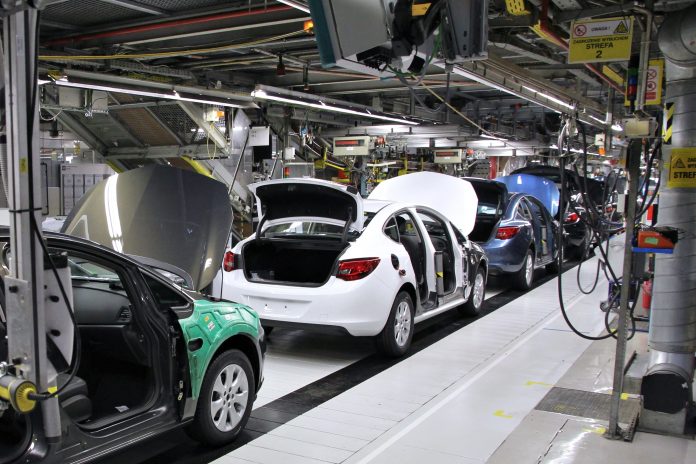
In the United States, executives in the auto sector are also sounding alarms. Without a reliable flow of rare earths, production cuts could begin within weeks, they warn. These minerals are not only vital for electric and hybrid motors but are embedded in components found in traditional vehicles, such as catalytic converters and power-adjustable seating systems. Their scarcity threatens to stall not just electric vehicle production, but wide swaths of conventional automobile manufacturing as well.

Ford, GM, and Stellantis—all heavily reliant on these materials for their EV strategies—have already felt the pressure. In May, Ford was forced to halt production of its Explorer SUV at its Chicago plant for a week due to a rare-earth component shortage. Stellantis acknowledged the strain in a statement, noting it was working with suppliers to “ensure an efficient licensing process” and had so far been able to “address immediate production concerns without major disruptions.” GM and Ford declined to comment on the matter.

The export restrictions are widely seen as a tit-for-tat response to U.S. tariffs imposed under President Donald Trump. While some tariffs were temporarily paused as part of a trade truce last month, Beijing has not lifted its rare-earth curbs. Instead, the minerals have become central bargaining chips in the ongoing negotiations. Analysts say this gives China significant leverage, as it currently controls over 90 percent of the global rare-earth supply chain—leaving Western manufacturers deeply exposed.

The issuance of licenses to U.S. firms—albeit limited—offers a short-term reprieve to an industry on edge. The move follows similar approvals in recent days granted to suppliers of American electronics firms and at least one non-automotive U.S. company. While the broader export controls remain intact, the selective granting of licenses is being interpreted as a sign that Beijing and Washington may reach a consensus.

China’s Ministry of Commerce has yet to comment publicly on the approvals. However, authorities have signaled an intent to deepen control over the rare-earth sector. Earlier this week, Reuters reported that China introduced a national tracking system for rare-earth magnet production—a measure aimed at curbing smuggling and tightening oversight of both domestic use and foreign sales.

Trump, who discussed rare-earth supply during a recent call with Chinese President Xi Jinping, later posted that “there should no longer be any questions respecting the complexity of Rare Earth products,” signaling that the topic remains a priority in bilateral discussions. Both governments confirmed that trade teams will resume negotiations in the coming weeks.

However, the future remains under the shadow of uncertainty. While some U.S. suppliers have received temporary relief, others remain caught in the licensing backlog.

“We have to give the Chinese the benefit of the doubt that they’re working through this,” one source said. “It’s up to them to show that they are not weaponizing it.”

Anthropic Researchers Warn of ‘Terrible Decade’ Ahead Over AI Threat to Wipe Out White-Collar Jobs

0

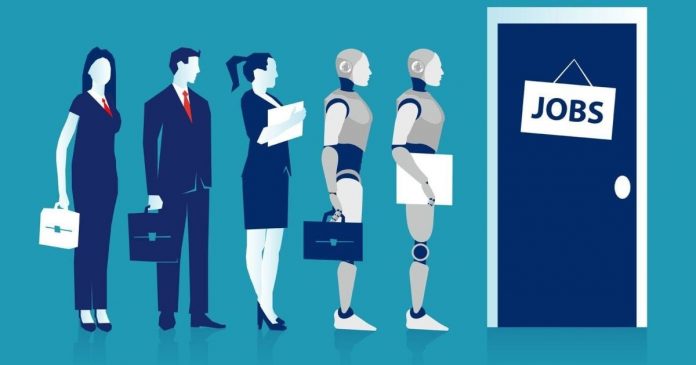
Artificial intelligence is accelerating faster than society can adjust, and researchers at Anthropic are warning that this could unleash a turbulent decade—particularly for white-collar workers whose jobs are increasingly at risk of being automated.

The AI firm, which recently released some of the most advanced large language models to date, said current technology is already capable of replacing many entry-level office roles and that the situation could worsen significantly over the next few years.

Sholto Douglas, one of the company’s top researchers, told AI commentator Dwarkesh Patel that a drop in white-collar employment is not only possible—it’s likely inevitable. He said this shift could begin within two years and become impossible to ignore within five.

“There is this whole spectrum of crazy futures,” Douglas explained. “But the one that I feel we’re almost guaranteed to get—this is a strong statement to make—is one where, at the very least, you get a drop in white-collar workers at some point in the next five years.”

He added that even if AI advancement were to slow, existing models trained on domain-specific data are already capable of automating a large share of administrative, customer service, and analytical functions.

“The current suite of algorithms is sufficient to automate white-collar work provided you have enough of the right kinds of data,” he added.

Anthropic’s Dario Amodei had previously echoed similar concerns. In a recent CNN interview with Anderson Cooper, the company’s CEO warned that up to half of all entry-level white-collar jobs may disappear within five years due to AI automation. These roles include positions in customer support, paralegal work, bookkeeping, and marketing—jobs once considered relatively safe from mechanization.

Trenton Bricken, another Anthropic technical staff member, added that businesses should already be preparing for the large-scale automation of desk jobs.

“We should expect to see them automated within the next five years,” he said.

Evidence of disruption is already surfacing across the corporate world. Companies like Shopify and Duolingo have begun reducing hiring for functions that AI now handles, such as content creation, basic coding, and support ticket resolution. Meanwhile, Klarna, the Swedish fintech company, briefly embraced AI to replace over 700 customer service staff but had to walk back some of that adoption due to performance and trust issues.

Revelio Labs, a workforce analytics firm, reported a steep drop in job postings for high-exposure white-collar roles such as data entry, IT support, and financial analysis—positions that generative AI models can now increasingly perform with minimal human supervision. Firms seeking to cut costs have already begun turning to tools like OpenAI’s GPT-4, Google’s Gemini, and Anthropic’s Claude series to automate documentation, data processing, and even aspects of software engineering.

Nvidia CEO Jensen Huang recently added his voice to the growing chorus warning about job disruptions. Huang, whose company produces the GPUs powering most AI systems, noted that “every job” will be touched by AI. He predicted that while some employees may not be outright replaced, they could still find themselves edged out by more productive colleagues leveraging AI tools to outperform human-only workflows.

Anthropic’s new models, Claude Opus 4 and Claude Sonnet 4 are already showing signs of this future. Early testing shows these systems can write software code, produce legal drafts, summarize long reports, and even troubleshoot technical problems with minimal input. One tester said Opus 4 “coded autonomously for nearly seven hours” on a complex task, offering a glimpse into how AI could displace even highly skilled knowledge workers.

The looming wave of automation has raised deeper societal concerns. Unlike previous waves of disruption that primarily affected factory or field workers, this one is targeting the middle class—those with college degrees and office careers. Economists say this shift could spark mass underemployment and wage stagnation, especially in countries where the service sector dominates.

At the same time, the cost savings AI offers are hard for companies to ignore. Replacing a team of entry-level analysts with a single AI model fine-tuned on internal data can slash operational expenses, boost productivity, and streamline decision-making. But the social fallout of mass job losses may force governments to intervene.

Calls for stronger labor protections, AI taxation, and universal basic income have resurfaced as policymakers grapple with how to manage the transition. Some experts are urging the creation of retraining programs and education reforms aimed at equipping workers with skills in robotics, machine learning, and human-centered design—roles still out of reach for today’s AI.

The timeline laid out by researchers like Douglas and Amodei is already ticking. As they warn, the transition could be brutal before it gets better. If robotics, which lags behind software AI, fails to keep pace, displaced workers may find themselves unable to pivot into new roles that demand physical labor or technical expertise. In that gap, the world may experience what Douglas called a “pretty terrible decade”—a painful reality where jobs vanish faster than new opportunities emerge.

“Imagine a world where people have lost their jobs, and you haven’t yet got novel biological research. That means people’s quality of life isn’t dramatically better,” he said. “A decade or two after, the world is fantastic. Robotics is solved, and you get to radical abundance.”

Polygon and Chainlink Strengthen Positions, Yet Lightchain AI Gains Buzz With a 2025 AI Surge on the Horizon

0

Polygon and Chainlink continue to strengthen their positions in the market, but Lightchain AI is generating a different kind of buzz—one rooted in a bold AI-driven future. With all 15 presale stages completed and the Bonus Round now live, the platform is gaining attention for more than momentum.

Its architecture is designed to support intelligent workloads natively, powered by a consensus model that rewards real computation and a dedicated AI virtual machine. With a July 2025 mainnet launch approaching, Lightchain AI is quickly emerging as a top contender for the next wave of intelligent blockchain innovation.

Polygon and Chainlink Expand Utility in a Competitive Market

Polygon and Chainlink are progressing in 2025, adding utility to strengthen their place in?the fierce world of block chaining.

Polygon intends to bring agnosticism across chains and, by way of the newly?introduced POL token and its AggLayer interoperability protocol to address fragmented Web3 ecosystems. Deployment of modular, zero-knowledge-based Layer 2 chains in late 2025 will further improve shared liquidity and?transaction finality. Polygon infrastructure bootstrapping also acts as the defacto Ethereum scaling solution and embodies a?foundational modular framework for Web3’s composability.

Chainlink is further solidifying its place as the?Web3 infrastructure building block. Linking 37 New Blockchains and Over?77 Data Streams on Mainnet Chainlink successfully integrated with 37 additional blockchains in Q1, 2025 and launched at least 77 new Data Streams on mainnet. With the CCIP, Chainlink supports the seamless cross-blockchain?communication, and becomes the dominant force of future blockchain integration. Additionally, Chainlink infrastructure supplies the real-time, secure computing commodities?needed for DeFi platforms.

Both projects are adding to their ecosystems, in order to cater to the needs of the growing blockchain industry, in?terms of scalability,interoperability, and real-world use-case.

Lightchain AI Builds Momentum Ahead of Its 2025 Breakout Phase

Lightchain AI is rapidly building momentum as it approaches its anticipated breakout phase in 2025. Having successfully completed all 15 stages of its presale and raising over $20.9 million, the project has entered its Bonus Round, offering a final opportunity for early participants to acquire LCAI tokens at a fixed price of $0.007.

The upcoming mainnet launch, set for July 2025, will introduce key features including the Artificial Intelligence Virtual Machine (AIVM), Proof-of-Intelligence consensus mechanism, Decentralized Validator and Contributor Nodes, Meme Launchpad with accompanying ecosystem tools, and public access to GitHub. These advancements are strategically designed to enable scalable, intelligent applications across a range of industries.

By reallocating the original 5% Team Allocation to fund developer grants and ecosystem incentives, Lightchain AI emphasizes a builder-first approach, fostering a community-driven ecosystem. With its robust infrastructure and strategic initiatives, Lightchain AI is positioning itself as a significant player in the intersection of AI and blockchain technologies.

Grab Lightchain AI for Massive Gains

Now is the moment to grab Lightchain AI for massive gains before the mainnet launch flips the switch. With a Bonus Round offering fixed pricing and builder momentum accelerating, early access is more than an opportunity—it’s a strategic edge.

From real AI utility to transparent governance, Lightchain AI is laying the foundation for breakout growth. Smart investors aren’t waiting—they’re already locking in their position.

https://lightchain.ai

https://lightchain.ai/lightchain-whitepaper.pdf

https://x.com/LightchainAI

https://t.me/LightchainProtocol

NITDA Launches Nationwide Roadshow to Scout Tech Talent Ahead of GITEX Nigeria 2025

0

The National Information Technology Development Agency (NITDA) has opened applications for its GITEX Nigeria 2025 Regional Roadshow, a national campaign to scout Nigeria’s most promising tech startups across all six geopolitical zones.

The roadshow serves as a precursor to the GITEX Nigeria 2025 Startup Festival, which will be held in Abuja from September 1 to 4, 2025.

The regional events are scheduled to run from June through August 2025 in Lagos, Enugu, Akwa Ibom, Abuja FCT, Gombe, and Kano. Each of these cities will host startups from their respective regions, giving them a platform to present innovative, scalable solutions to local problems. The goal, according to NITDA, is to identify and empower bold local innovators whose solutions have the potential to shape Nigeria’s digital economy.

“This is your chance to nominate your startup, pitch your solution, and earn a spot at GITEX Nigeria 2025 in Abuja?Nigeria’s largest innovation showcase happening from September 1?4, 2025,” they stated

Applications are open to early-stage or growth-stage startups that are either already registered with the Corporate Affairs Commission (CAC) or are currently in the process of registering. Sectors of interest for this edition of the roadshow include HealthTech, AgriTech, FinTech, Artificial Intelligence, EdTech, ClimateTech, and CreativeTech.

NITDA emphasized that the initiative is targeted at entrepreneurs developing technology that addresses real problems and can be expanded to reach broader markets.

Startups that emerge from each zonal pitch will be sponsored to exhibit at the GITEX Nigeria 2025 Startup Festival in Abuja. They will also have the opportunity to pitch their ideas before a panel of top ecosystem stakeholders, including tech investors, industry experts, government officials, and the media.

In addition to gaining national visibility, selected startups will be prepared for the possibility of showcasing at GITEX Global in Dubai — one of the world’s most influential technology trade shows.

Participation in the roadshow begins with a digital application through NITDA’s nomination portal. After submitting the form, applicants who are shortlisted will enter the GITEX Nigeria exhibitor pipeline and will be invited to pitch live at the roadshow event in their region. Top-performing startups from each zone will be offered sponsorship to the Abuja festival, subject to the terms and conditions of the program.

GITEX Nigeria was modeled after the Gulf Information Technology Exhibition (GITEX), which has been held annually in Dubai since 1981. The global event is known for attracting multinational tech corporations, venture capitalists, governments, and startups from around the world. Nigeria has consistently participated in GITEX Global, with local startups and government officials using the platform to court investors and promote indigenous innovation.

Recognizing the value of international exposure and partnership opportunities, NITDA established GITEX Nigeria as a localized version of the Dubai tech showcase. The Abuja-based festival is designed to provide a similar experience for Nigerian startups by connecting them with policy leaders, investors, corporate partners, and international markets without the barrier of travel or visa restrictions.

The 2025 edition of the roadshow marks a continued effort to decentralize innovation and ensure that promising ideas from across Nigeria — not just the major tech hubs — are brought to the national stage. NITDA hopes to tap into untapped talent pools, broaden the base of digital entrepreneurship, and prepare Nigerian innovators for participation in the global tech economy by going into each geopolitical zone.

‘Build for People, Not Just AI’: Lattice CEO Sarah Franklin Urges Human-First Balance as AI Fears Grow

0

Lattice CEO Sarah Franklin says the only sustainable path through the AI revolution is one that centers on people — not algorithms.

Speaking at the SXSW London conference and later in an interview with TechCrunch, Franklin urged tech companies to adopt artificial intelligence with a deep sense of balance, warning that unchecked deployment of AI systems could erode trust, accelerate job losses, and alienate customers.

Her remarks come at a time when public anxiety over AI’s impact on jobs and society is reaching new heights. As companies roll out tools capable of generating content, making decisions, and even managing employees, concerns are growing about the mass displacement of workers, biased algorithms, and the lack of meaningful oversight.

“We put people first,” Franklin said of Lattice, the $3 billion performance management platform. “It’s important to ask yourself, ‘Are you building for the success of the AI first, or are you building for the success of the people and your customers first?’”

Franklin believes that while AI can enhance productivity, using it to replace human labor entirely — especially in fields rooted in relationships, trust, and creativity — is a short-sighted strategy. She warned that companies that automate for the sake of cost-cutting may soon find themselves out of step with customer expectations and internal culture.

Her position is not merely theoretical. Lattice has already introduced AI features, including an AI-powered HR agent that provides proactive insights and supports employees in one-on-one meetings. The company also offers tools for clients to build custom AI agents tailored to their business needs. However, even as Lattice embraces these innovations, Franklin insists that human oversight remains essential.

“You don’t want to trade out trust,” she said, emphasizing that trust — with both customers and employees — is the most important asset any business can cultivate in an AI-driven world.

Her appeal for balance lands amid growing concerns from policymakers, labor unions, and industry watchdogs about the social and economic risks of AI. In recent months, leaders from OpenAI, Microsoft, and Google have entertained calls for AI regulation, following growing concerns across various sectors that AI will eliminate creative and technical roles.

According to a 2024 report by the International Labour Organization, while AI may enhance certain types of work, it is already disrupting administrative jobs at scale and threatening income security for millions. In the U.S., the White House has launched an AI Safety Institute, and several states are considering laws that require transparency when companies deploy AI tools affecting workers’ livelihoods.

Franklin’s call for “checks and balances” echoes these broader efforts. She advocates for transparency about how AI is used, clear boundaries on its deployment, and above all, accountability. Leaders, she argues, must ensure that humans are ultimately responsible for what AI systems produce or influence.

“Otherwise, we are then in service of the AI, versus the AI being in service of us,” she said.

She also warned against blind faith in automation. “It’s a way to just have the regular checks and balances that we’re used to in our workforce,” she said, noting that over-reliance on AI without human judgment could weaken decision-making and degrade workplace dynamics.

For Franklin, the future belongs to companies that harness AI while preserving what she sees as irreplaceable: human connection, empathy, and trust.

“We all have a responsibility to make sure that we’re doing this for the people of society,” Franklin said. “Human connection cannot be replaced, and the winners are going to be the companies that understand that.”