DD
MM
YYYY

PAGES

DD
MM
YYYY

spot_img

PAGES

Home Blog Page 1195

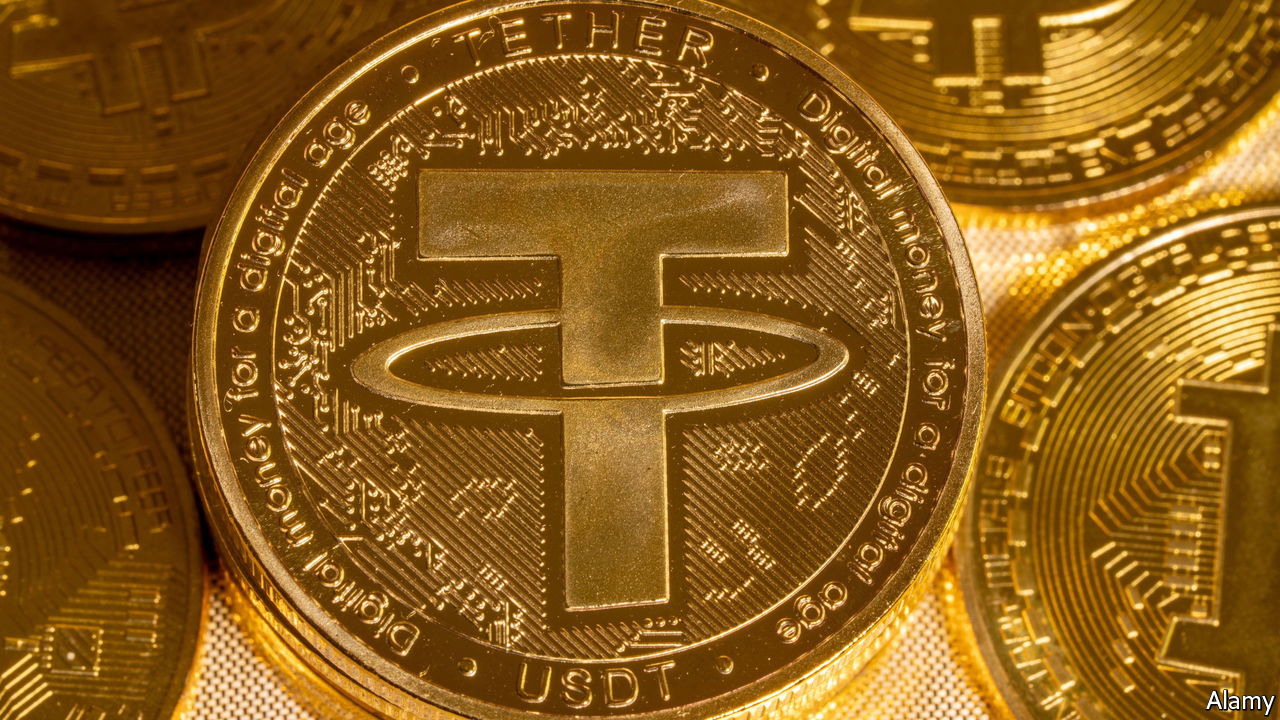
Tether and Bitfinex Transfer 25,812.22 BTC, Valued at $2.7 Billion, To Twenty One Capital

0

Tether and Bitfinex transferred a combined 25,812.22 BTC, valued at approximately $2.7 billion, to Twenty One Capital. This transfer was part of the pre-funding for Twenty One Capital’s equity raise and its strategy to build a significant Bitcoin treasury, aiming for 420,000 BTC to become the third-largest corporate Bitcoin holder. The breakdown includes Tether moving 14,000 BTC and 4,812.22 BTC in separate transactions, while Bitfinex sent 7,000 BTC.

Additionally, Tether transferred 10,500 BTC on behalf of SoftBank, bringing the total to 37,229.69 BTC (worth ~$3.9 billion) in some reports. Regarding Cantor Equity Partners (CEP), which is merging with Twenty One Capital via a SPAC to list on Nasdaq under the ticker “XXI,” its share price rose 7% to $43 on June 2, 2025, with a peak at $59.75, reflecting strong investor enthusiasm. However, the specific claim of CEP being up 4% pre-market lacks direct confirmation in the provided sources.

Twenty One Capital, led by Strike CEO Jack Mallers, is backed by Tether, Bitfinex, SoftBank, and Cantor Fitzgerald, with a focus on Bitcoin-native financial products and transparency through public wallet addresses. The transfer of 25,812.22 BTC (valued at approximately $2.7 billion) from Tether and Bitfinex to Twenty One Capital, coupled with Cantor Equity Partners’ (CEP) merger to form a Bitcoin-centric public company, has significant implications for the cryptocurrency market, institutional adoption, and broader financial systems.

The transfer, backed by major players like Tether, Bitfinex, SoftBank, and Cantor Fitzgerald, signals strong institutional belief in Bitcoin as a store of value and a strategic asset. Twenty One Capital’s goal to hold 42,000 BTC, positioning it as the third-largest corporate Bitcoin treasury behind MicroStrategy and MARA Holdings, underscores Bitcoin’s growing legitimacy among traditional financial institutions. Large-scale Bitcoin acquisitions by institutions can reduce available supply, potentially driving price increases, especially if demand remains steady or grows.

By merging with CEP to form a publicly traded entity (Nasdaq: XXI), Twenty One Capital allows retail and institutional investors to gain Bitcoin exposure without directly holding the asset, similar to MicroStrategy’s model. This could accelerate mainstream adoption but also introduces risks tied to market speculation, as evidenced by CEP’s stock surging 134%–462% post-announcement. Twenty One Capital, led by Strike CEO Jack Mallers, aims to develop Bitcoin-native financial products, such as lending models and capital market instruments, using metrics like Bitcoin Per Share (BPS).

This could redefine corporate performance metrics, prioritizing Bitcoin accumulation over traditional earnings. Mallers’ emphasis on proof of reserves via public wallet addresses could set a new standard for transparency in crypto-related firms, addressing concerns about opaque operations, particularly with Tether’s controversial history. The use of convertible notes and corporate debt to fund Bitcoin purchases mirrors MicroStrategy’s high-risk, high-reward strategy. While this could amplify returns in a bull market, it risks significant losses if Bitcoin’s price crashes or if debt obligations become unmanageable.

CEP Stock Performance

CEP’s share price surged from $10.65 to a peak of $59.75, with a 7% rise to $43 on June 2, 2025, reflecting investor enthusiasm for Bitcoin’s potential and the merger’s high-profile backing. However, the stock later settled at $29.84, indicating volatility and possible overvaluation driven by “FOMO” (fear of missing out). Some sources describe CEP as a “meme stock,” driven by retail investor hype rather than fundamentals. This suggests potential for sharp corrections if market sentiment shifts, especially amid global economic uncertainties like trade wars or Bitcoin price fluctuations.

The claim of CEP being up 4% pre-market lacks direct confirmation in the sources, but the stock’s history of sharp gains (e.g., 5.2% after-hours post-Bitcoin purchase) suggests such movements are plausible. Tether’s involvement raises concerns due to its past regulatory scrutiny over reserve transparency. Some analysts suggest Twenty One Capital could act as a “shadow central bank,” leveraging Tether’s stablecoin liquidity to influence Bitcoin markets within U.S. equity structures, potentially bypassing regulatory oversight. This could challenge traditional monetary systems but risks regulatory pushback.

Bitcoin’s appeal as a hedge against economic risks (e.g., trade wars under a Trump administration) is noted, but its recent underperformance compared to gold suggests it’s not yet a universal safe-haven asset. Twenty One Capital’s launch, backed by Wall Street (Cantor Fitzgerald) and crypto giants (Tether, Bitfinex), exemplifies the convergence of traditional and decentralized finance.

However, it also creates a divide, as Bitcoin-native firms like Twenty One challenge legacy financial models by prioritizing decentralized assets over fiat-based metrics. Analysts frame Twenty One as a “monetary infrastructure node” competing with central banks like the Federal Reserve. This suggests a structural divide where Bitcoin-based entities could undermine traditional monetary policy, creating parallel financial systems.

Publicly traded Bitcoin treasuries like Twenty One allow broader investor access, but the complexity of SPACs, convertible notes, and Bitcoin volatility may exclude less sophisticated retail investors, deepening the divide between institutional and individual participation. Institutional Bitcoin accumulation (e.g., Twenty One’s 42,000 BTC goal) concentrates wealth among entities with capital to invest, potentially widening the gap between crypto “whales” and average investors. If Bitcoin’s price surges, early institutional adopters stand to gain disproportionately.

Bitcoin-native financial products, like those Twenty One plans to develop, may primarily benefit those already integrated into crypto or financial markets, leaving unbanked or underserved communities further behind unless initiatives like Strike’s Bitcoin payment platform expand access. The “meme stock” frenzy around CEP could draw in retail investors seeking quick gains, but volatility risks losses for those least equipped to absorb them, reinforcing economic divides.

Twenty One’s mission, articulated by Mallers as “a public stock, built by Bitcoiners, for Bitcoiners,” highlights an ideological divide between Bitcoin advocates who view it as “reliable money” and skeptics who see it as speculative or risky. The divide extends globally, as Bitcoin’s appeal as a hedge against fiat inflation (noted in relation to global M2 money supply) contrasts with traditional safe-haven assets like gold, which have outperformed Bitcoin in recent market turmoil.

While the transfer and merger signal Bitcoin’s growing institutional acceptance, they also amplify risks and divides. Tether’s opaque history and the speculative nature of CEP’s stock surge raise questions about sustainability. The Bitcoin-native model could disrupt traditional finance, but its reliance on debt and market sentiment mirrors past financial bubbles. The socioeconomic divide may widen if access to Bitcoin’s benefits remains skewed toward institutions and wealthy investors. Conversely, transparency efforts and financial innovation could bridge gaps if executed inclusively.

Implications of Classover Holdings’ $500M Solana Treasury Investment

0

Nasdaq-listed Classover Holdings Inc. (NASDAQ: KIDZ), an educational technology company, has announced plans to raise up to $500 million through senior secured convertible notes to build a Solana (SOL)-based treasury reserve. The agreement, signed with Solana Growth Ventures LLC, requires Classover to allocate up to 80% of the net proceeds to purchasing SOL tokens.

An initial $11 million funding is expected soon, pending customary closing conditions. This move builds on a prior $400 million equity purchase agreement, bringing Classover’s total potential financing for SOL acquisitions to $900 million. The company has already purchased 6,472 SOL tokens for approximately $1.05 million and is exploring discounted locked token acquisitions. Following the announcement, Classover’s stock surged nearly 40%, closing at $3.72, though it faces operational challenges, including a 102% year-over-year revenue decline and liquidity issues.

Classover’s move to allocate up to $500 million for Solana (SOL) tokens signals growing corporate interest in cryptocurrencies as treasury assets, following the likes of MicroStrategy and Tesla with Bitcoin. This could legitimize Solana as a corporate investment, potentially boosting its market perception and price, given Solana’s focus on high-speed, low-cost blockchain transactions.

By committing 80% of the funds to SOL, Classover is heavily exposed to crypto market volatility. Solana’s price, while up 65% year-to-date to around $192, is subject to sharp fluctuations (e.g., a 30% drop in Q2 2024). This strategy could amplify financial risks, especially given Classover’s reported 102% revenue decline and liquidity concerns, potentially threatening its operational stability if SOL underperforms.

The 40% stock surge postannouncement reflects investor optimism about Classover’s crypto pivot, possibly driven by speculation on Solana’s growth. However, the stock’s low price ($3.72) and Classover’s operational struggles suggest this rally may be speculative, with risks of a correction if the strategy falters or market sentiment shifts. The investment could increase Solana’s adoption, particularly if Classover leverages Solana’s blockchain for educational technology applications (e.g., tokenized certifications or decentralized learning platforms).

Large-scale SOL purchases may also tighten supply, potentially driving price appreciation, though this depends on broader market dynamics. Allocating significant corporate funds to crypto could attract regulatory attention, especially in the U.S., where securities laws and accounting standards for digital assets remain unclear. Classover may face compliance challenges, particularly if SOL is deemed a security or if the SEC questions the fiduciary prudence of such a treasury strategy.

Supporters see this as a bold move to diversify Classover’s treasury and capitalize on Solana’s potential as a leading blockchain. Solana’s scalability (65,000 transactions per second) and growing ecosystem (e.g., DeFi, NFTs) make it an attractive bet for long-term value. The investment could inspire other small-cap companies to allocate treasury funds to crypto, strengthening Solana’s position relative to competitors like Ethereum or Cardano.

Speculative investors may view Classover as a proxy for SOL exposure, driving short-term stock gains. Critics argue Classover’s pivot is reckless, given its weak financials (102% revenue drop, $1.3 million quarterly loss). Betting heavily on a volatile asset like SOL could exacerbate liquidity issues, potentially leading to insolvency if crypto markets crash. Classover’s core business (edtech) has little apparent synergy with Solana, raising questions about strategic coherence.

Unlike MicroStrategy, which uses Bitcoin as a hedge against inflation, Classover’s rationale seems speculative rather than strategic. The stock surge may reflect hype rather than fundamentals, with risks of a sell-off if SOL underperforms or Classover fails to integrate blockchain meaningfully. The strategy highlights a broader divide in the investment community:

Crypto advocates view treasury allocations to digital assets as forward-thinking, while traditional investors see them as high-risk gambles, especially for struggling companies. The stock’s 40% jump suggests short-term speculative interest, but long-term success depends on Classover’s ability to stabilize its core business and justify its crypto bet with tangible blockchain integration.

Classover’s $500 million Solana investment is a high-stakes move that could either position it as a pioneer in corporate crypto adoption or exacerbate its financial woes. The divide between bullish crypto optimists and bearish traditionalists underscores the uncertainty, with outcomes hinging on Solana’s market performance, Classover’s operational recovery, and regulatory developments.

Coinbase Data Breach Links To Support Agents in India

0

The Coinbase data breach, disclosed in May 2025, affected 69,461 customers and was linked to customer support agents in India, employed by the U.S.-based outsourcing firm TaskUs. Hackers bribed these agents to steal sensitive customer data, including names, addresses, phone numbers, email addresses, government-issued IDs, partial Social Security numbers, bank account details, and account information like balances and transaction histories.

The breach, which began in December 2024, was first detected in January 2025 when a TaskUs employee in Indore, India, was caught photographing her work computer with her personal phone, allegedly passing data to hackers for bribes. TaskUs fired over 200 employees in Indore, though only two were confirmed to have been directly involved. Coinbase estimated the breach could cost $180–400 million in remediation and customer reimbursements.

On May 11, 2025, hackers demanded a $20 million ransom to not leak the data, which Coinbase refused, instead offering a $20 million reward for information leading to the attackers’ arrest. The U.S. Department of Justice and SEC are investigating, focusing on the hackers, not Coinbase itself. The attackers, reportedly part of a loose network called “the Comm,” used the stolen data for social engineering scams, impersonating Coinbase to trick users into transferring cryptocurrency.

TaskUs stated the incident was part of a broader criminal campaign targeting multiple service providers. Coinbase has since cut ties with TaskUs, enhanced security, and opened a U.S.-based support hub. The exposure of sensitive personal and financial data (names, addresses, IDs, partial SSNs, bank details, etc.) undermines confidence in Coinbase, a major cryptocurrency exchange. Customers may hesitate to use platforms perceived as insecure, potentially driving them to competitors.

Coinbase estimates remediation costs of $180–400 million, including customer reimbursements, legal fees, and security upgrades. Scams enabled by the stolen data, such as social engineering attacks, have already caused significant user losses, with hackers impersonating Coinbase to steal cryptocurrency. Ongoing investigations by the U.S. Department of Justice and SEC could lead to stricter regulations for crypto exchanges, particularly around third-party vendor oversight and data security practices.

The breach highlights risks associated with outsourcing customer support to third-party firms like TaskUs, especially in regions with lower labor costs but potentially weaker security protocols. The involvement of bribed agents in India exposes gaps in employee vetting and monitoring. TaskUs’s termination of over 200 employees in Indore, though only two were confirmed culpable, suggests broader systemic issues. This could deter other companies from outsourcing to similar firms or regions.

Coinbase’s decision to cut ties with TaskUs and open a U.S.-based support hub signals a shift toward in-house operations with tighter control. Other firms may follow, prioritizing data security over cost savings. The involvement of “the Comm,” a loose hacker network, indicates growing coordination in cybercrime, exploiting insider access. This could prompt the crypto industry to adopt advanced threat detection and insider threat prevention measures.

India, a global hub for IT and customer support outsourcing, faces reputational risks. The breach may lead to reduced business from U.S. firms, impacting India’s $200 billion IT-BPO industry, which employs millions. The incident could strain business relations, as U.S. companies may push for stricter oversight of Indian vendors, while India defends its workforce and systems.

The outsourcing of sensitive operations to lower-cost regions like India reflects economic disparities. While cost savings benefit companies in wealthier nations, they expose vulnerabilities when security standards differ. The firing of 200+ TaskUs employees in India, many likely uninvolved, highlights how workers in lower-wage countries bear disproportionate consequences for systemic failures.

Coinbase and TaskUs, as corporations, can absorb financial and reputational hits, but individual workers in India face job losses and stigma, exacerbating economic inequality. The breach exposes differences in cybersecurity infrastructure. U.S.-based firms like Coinbase operate under stringent regulations, but third-party vendors in countries like India may lack equivalent oversight, creating weak links in global supply chains.

The reliance on insiders (bribed employees) rather than external hacks reveals a divide in how companies prioritize security. External threats often receive more attention, while insider risks, as seen here, are harder to detect and mitigate. Customers expect platforms like Coinbase to safeguard their data, but the breach widens the gap between user expectations and corporate realities. Refusal to pay the $20 million ransom, while principled, may frustrate affected users seeking immediate resolution.

Cryptocurrency platforms already face skepticism compared to traditional banks. This breach reinforces perceptions of crypto as riskier, potentially slowing mainstream adoption. In the U.S., the breach may fuel narratives about outsourcing risks, while in India, it could be seen as an unfair generalization of its workforce. This divide complicates global tech partnerships, as both sides navigate blame and accountability.

The Coinbase breach exposes systemic vulnerabilities in outsourcing, cybersecurity, and the crypto industry, with ripple effects on trust, regulation, and global business practices. The divide—economic, security-related, and geopolitical—highlights tensions between cost-driven outsourcing models and the need for robust data protection. Coinbase’s shift to in-house support and the industry’s push for stronger security may reshape outsourcing trends, but the incident underscores the challenges of balancing cost, security, and trust in a globalized digital economy.

The U.S. M2 Money Supply Hitting An All-Time High Signals Potential Economic Growth

0

The U.S. M2 money supply recently hit a new all-time high, reaching approximately $22.03 trillion in May 2025, M2 includes cash, checking deposits, savings deposits, money market funds, and small-denomination time deposits (under $100,000). This surge follows a period of contraction in 2022-2023, with growth resuming at a 3.9% year-over-year rate by January 2025.

Historically, M2 growth is linked to economic expansion and can signal inflationary pressures, though effects often lag by 12-18 months. The recent increase is attributed to factors like monetary policy easing and rising consumer/business spending, potentially boosting liquidity and risk assets like Bitcoin. However, some analysts caution that rapid M2 growth could reignite inflation if economic output doesn’t keep pace.

Data from the Federal Reserve and other sources confirm this upward trend, with M2 at $21.86 trillion in April 2025 and climbing. The all-time high in U.S. M2 money supply at ~$22.03 trillion in May 2025 has significant economic implications and highlights a growing divide in wealth and opportunity.  A rising M2 money supply often precedes inflation, as more money chases the same or fewer goods and services.

Historical data suggests a 12-18 month lag before price effects materialize. With M2 growing at 3.9% year-over-year (as of January 2025), inflation could accelerate, especially if supply chains or production lag. Excess liquidity tends to flow into risk assets like stocks, real estate, and cryptocurrencies. X posts highlight correlations between M2 spikes and Bitcoin rallies, as investors seek hedges against currency devaluation.

Real estate and equity markets may see further gains, but this risks inflating asset bubbles, as seen in 2020-2021 when M2 surged post-COVID stimulus. Increased M2 can stimulate spending and investment, boosting GDP in the short term. However, if growth is driven by debt or speculative investments rather than productivity, it may lead to economic fragility.

The Federal Reserve’s balancing act—easing policy to support growth while managing inflation—will be critical. A larger money supply can weaken the dollar’s purchasing power over time, especially if other central banks tighten policy. This could raise import costs, impacting consumers and businesses reliant on foreign goods.

Asset Owners vs. Non-Owners: Those with assets (stocks, real estate, crypto) benefit from liquidity-driven price increases, while those without assets (e.g., low-income households) face rising living costs without wealth gains. Analysts frequently highlight how the top 10% of wealth holders own ~70% of U.S. financial assets, amplifying this gap. Inflation erodes real wages for lower and middle-income groups, who spend a higher share of income on essentials (food, housing, energy). The wealthy, with diversified investments, are better insulated.

Loose monetary policy often makes borrowing easier, but access is uneven. Wealthy individuals and corporations secure low-rate loans for investments, while lower-income borrowers face higher rates or exclusion. This dynamic, noted in economic analyses, entrenches financial exclusion. Younger generations, often burdened with student debt and limited assets, struggle to enter appreciating markets like housing.

Older generations, with established wealth, benefit more from M2-driven asset inflation, as seen in home price surges (e.g., median U.S. home prices up ~5% year-over-year in 2025, per web data). Urban areas, with higher concentrations of financial assets and investment opportunities, absorb more liquidity benefits. Rural areas, reliant on wages or fixed incomes, face inflation without equivalent wealth growth.

A weaker dollar (from M2 expansion) impacts emerging markets reliant on dollar-based trade or debt. Countries with weaker currencies face higher import costs, while U.S. consumers and investors maintain relative purchasing power, widening global economic gaps. From $21.86 trillion in April 2025 to $22.03 trillion in May, per Federal Reserve data and X posts. This follows a 2022-2023 contraction, the first since the 1930s, making the rebound notable.

The top 1% in the U.S. hold ~32% of wealth, while the bottom 50% hold ~2%, per 2024 Federal Reserve data. M2 growth amplifies this skew via asset inflation. CPI inflation was ~3.2% in early 2025, per web sources, but could rise if M2 growth outpaces economic output. Short-term stimulus from M2 growth may boost markets, but long-term risks include inflation, debt burdens, and potential corrections if bubbles burst.

The Federal Reserve may raise rates to curb inflation, but this could slow growth and widen the divide by favoring savers over borrowers. The M2 money supply hitting an all-time high signals potential economic growth but risks inflation and asset bubbles, disproportionately benefiting asset owners and exacerbating wealth, generational, and regional divides. Those without assets face rising costs, while the wealthy capitalize on liquidity. Monitoring Federal Reserve actions and real-time economic data will be key to understanding how this unfolds.

Moniepoint Secures CAK Approval to Acquire 78% Stake in Sumac Microfinance Bank, Eyes Kenyan Expansion

0

Nigerian fintech unicorn, Moniepoint Inc., has moved closer to establishing a formal presence in Kenya’s financial ecosystem after receiving approval from the Competition Authority of Kenya (CAK) to acquire a 78% stake in Sumac Microfinance Bank Limited.

The deal which awaits final approval from the Central Bank of Kenya (CBK), allows Moniepoint to enter Kenya’s $67.3 billion mobile payments market.

A Moniepoint spokesperson confirmed:

“Regulatory approval has been received from the Competition Authority of Kenya for a potential transaction with Sumac Microfinance Bank. Further updates will be given as appropriate.”

If completed, the acquisition would provide Moniepoint with a regulatory shortcut into the Kenyan market, granting immediate access to an operational microfinance bank in one of Africa’s most vibrant and competitive financial landscapes.

Sumac Microfinance: A Rising Local Player in Kenya

Established in 2002 and granted a deposit-taking license in 2012, Sumac Microfinance Bank currently holds a 4.3% market share with over 43,000 active loan accounts.

The bank has consistently been awarded since 2018, which shows a remarkable trajectory of progress. Sumac was awarded the 2nd Fastest-Growing Microfinance Bank in Kenya, marking its first major recognition at the Think Business Banking Awards in 2018.

This highlighted its rapid expansion in terms of market outreach, clientele growth, and product development. The bank’s loan book grew from Ksh458 million to Ksh850 million, and deposits increased from Ksh135 million to Ksh500 million within three years, showcasing significant financial growth.

Fast forward to 2025, Sumac was recognized for its consistent performance, emerging as the 2nd runner-up in the “Overall Best Microfinance Banks in Kenya” category at the 2025 and 2024 Think Business Banking Awards.

Licensed by the CBK, Sumac serves SMEs across Kiambu, Nairobi, and Nakuru counties, offering funding, training, and a strong customer experience. The bank offers a broad range of products tailored to business needs, including the Inua Biashara Business Loan, which supports micro and small business owners in meeting working capital needs and improving cash flow.

This loan is accessible to businesses without formal registration, such as general shops, hardware stores, Jua Kali artisans, and agribusiness traders, making it inclusive and impactful.

Sumac’s mission is to provide financial solutions that transform businesses and livelihoods and impact lives,” and its vision is to be the premier financial solutions provider that has been central to its operations.

Despite being a medium-sized player in a market dominated by five microfinance banks that control over 80% of the sector, Sumac presents Moniepoint with an attractive entry point, to compete with other players.

Moniepoint Strategic Growth via Acquisition of Sumac

Moniepoint’s move to acquire a 78% stake in Sumac Microfinance Bank Limited, exemplifies a broader trend among fintechs aiming to sidestep the lengthy process of establishing new operations by acquiring already regulated institutions.

By acquiring a licensed microfinance bank with a 4.3% market share, $23 million in assets, and over 43,800 active loan accounts, Moniepoint gains immediate access to Kenya’s financial ecosystem. This avoids the time-consuming and costly process of securing a new banking license, enabling faster market penetration.

Also, Sumac’s existing customer base, which includes SMEs, and its service offerings such as loans, deposits, and money transfers, provide Moniepoint with a ready platform to deploy its digital banking and payment solutions. This infrastructure allows Moniepoint to serve Kenyan businesses efficiently, aligning with its core focus on SME and merchant financial services.

Notably, Moniepoint’s expertise in digital payments and banking, honed in Nigeria’s competitive fintech landscape, complements Sumac’s microfinance operations. Integrating Moniepoint’s tech stack could modernize Sumac’s offerings, improve efficiency, and expand its reach, particularly in underserved SME and retail segments.

The acquisition of Sumac follows Moniepoint’s unsuccessful bid to acquire Kenyan fintech KopoKopo in 2023, signaling a deliberate pivot to alternative targets to achieve its East African ambitions.

Headquartered in the U.S. but operating primarily from Nigeria, Moniepoint—through its subsidiaries, has built a strong reputation in the digital banking space. This move marks the beginning of the company’s East African expansion, starting with microfinance.

All eyes now turn to the CBK for the final regulatory decision that could pave the way for Moniepoint’s official entry into the Kenyan market, where mobile payments and financial inclusion are key drivers.