DD
MM
YYYY

PAGES

DD
MM
YYYY

spot_img

PAGES

Home Blog Page 1196

Court Dismisses MultiChoice’s Suit on DStv, GOtv Price Hikes, Declares It Abuse of Process

0

A Federal High Court in Abuja has thrown out the suit filed by MultiChoice Nigeria Limited in a bid to shield its controversial DStv and GOtv price hikes from regulatory scrutiny, ruling that the case amounted to an abuse of court process.

Justice James Omotosho delivered the judgment on Thursday, weeks after hearing arguments from the pay-TV provider and the Federal Competition and Consumer Protection Commission (FCCPC). He found that MultiChoice had filed its case despite being aware of a similar ongoing suit brought by consumer rights lawyer Festus Onifade. That case, also before the Federal High Court but in a different division, deals with the same issues of pricing and alleged abuse of dominance.

“The plaintiff in this instant suit could have ventilated his grievance before the previous pending suit,” Omotosho ruled. “This is an abuse of court process.”

FCCPC Overreached Its Powers – But Still Wins

Although the judge sided with MultiChoice on some legal points, particularly that the FCCPC had overstepped its bounds by attempting to halt price increases without a completed investigation, he still dismissed the suit on the grounds of duplicity.

Omotosho acknowledged that while the FCCPC, as a federal agency, has the authority to investigate anti-competitive practices, it lacks the statutory power to stop a company like MultiChoice from setting prices in Nigeria’s deregulated economy.

“FCCPC is not vested with the power to suspend the price hike of an entity before conducting an investigation,” he ruled. “Nigeria operates a free market economy, and only the President can approve price regulation through a legally backed instrument or price control board.”

Despite the sharp rebuke of the FCCPC’s early interference, the case ultimately failed because it was improperly filed.

Background to the Case

In February 2025, MultiChoice announced another round of price hikes for its DStv and GOtv packages, citing inflation and operational costs. The new rates, which took effect March 1, included a 25% increase for DStv Compact (from N15,700 to N19,000) and a 20% increase for DStv Premium (from N37,000 to N44,500). The GOtv Supa Plus package also saw a rise from N15,700 to N16,800.

The announcement provoked a wave of public backlash, with many Nigerians pointing to the limited competition in the pay-TV market. In response, the FCCPC summoned MultiChoice for an investigative hearing and warned that failure to justify the hikes could lead to sanctions.

MultiChoice pushed back, filing a suit in March to stop the FCCPC from taking any steps against it based on a letter dated March 3, 2025. The company argued that the Commission had no legal authority to demand price controls or regulatory approval for service adjustments.

Lead counsel for MultiChoice, Moyosore Onigbanjo (SAN), told the court that price regulation falls outside the FCCPC’s statutory mandate. He insisted that Nigeria’s free market principles allow companies to set prices based on commercial considerations without needing regulatory clearance.

FCCPC Defends Mandate to Curb Market Abuse

The FCCPC’s legal team, led by Prof. Joe Agbugu (SAN), maintained that the Commission was not attempting to fix prices but to investigate MultiChoice’s dominant position and whether its actions violated market fairness.

Agbugu pointed to consumer complaints and argued that unchecked price increases without market competition could constitute abuse of dominance, which the FCCPC is empowered to address under its establishing law.

However, the court was unconvinced by this line of reasoning, at least regarding the timing of FCCPC’s intervention. Justice Omotosho ruled that an investigation must precede any directive or sanction, and the Commission had acted prematurely.

Even so, he concluded that the broader question of market dominance should have been addressed in the already pending suit filed by Onifade, making the MultiChoice action redundant.

Why is MultiChoice Targeted?

Economists have questioned the motive behind the FCCPC’s exclusive focus on MultiChoice, despite similar pricing moves by other content platforms and pay-TV providers operating in Nigeria. Many have attributed this development to MultiChoice’s multinational status.

However, the judge recalled a 2022 ruling by the Competition and Consumer Protection Tribunal that recognized MultiChoice’s right to raise subscription prices, noting that consumers could choose from alternative services.

He warned that any attempt to fix prices in a free market economy could deter investment and damage the country’s economic image.

“Prices cannot be regulated in a free market economy. Attempt to fix prices will only scare investors away,” he said.

The judge’s decision means MultiChoice’s suit is dismissed, and the FCCPC is free to proceed with its own legal action already filed in Lagos over the company’s failure to cooperate with regulatory investigations.

However, the ruling also draws clear boundaries for the FCCPC, clarifying that it cannot interfere with pricing unless a formal investigation finds evidence of market abuse. The Commission is limited to issuing guidelines or making recommendations to the President on price-related interventions.

This judgment reaffirms the challenge regulators face in reining in powerful market players in a liberalized economy. It also highlights the legal tightrope between consumer protection and upholding Nigeria’s constitutional commitment to a free market.

With the Abuja suit dismissed, the stage is now set for a potential legal showdown in Lagos, where the FCCPC’s case accusing MultiChoice of obstructing an investigation is still pending. MultiChoice, on its part, maintains that it is being unfairly targeted and that it operates within its rights under Nigeria’s economic framework.
India’s Military Strikes on Pakistan Have Significant Global Implications

0

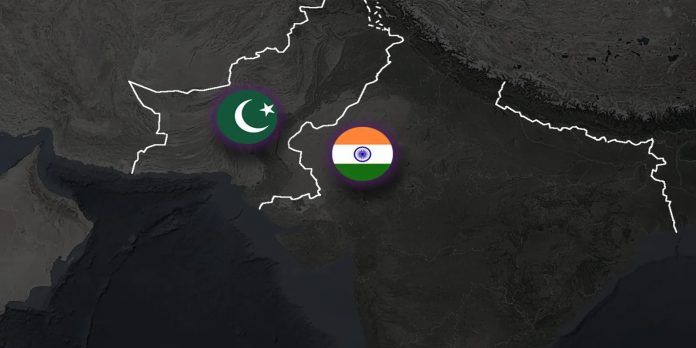
India launched military strikes, codenamed Operation Sindoor, targeting nine sites in Pakistan and Pakistan-administered Kashmir. The strikes were in retaliation for a militant attack on April 22, 2025, in Pahalgam, Indian-administered Kashmir, which killed 26 civilians, mostly Hindu tourists. India’s Ministry of Defence described the operation as “focused, measured, and non-escalatory,” targeting terrorist infrastructure linked to groups like Lashkar-e-Taiba and Jaish-e-Mohammed, with no Pakistani military facilities hit.

The strikes hit locations in Muzaffarabad, Kotli, and Bahawalpur, among others, using precision missiles without Indian aircraft entering Pakistani airspace. Pakistan condemned the strikes as an “act of war,” reporting 31 civilian deaths, including women and children, and 57 injuries. Pakistani officials denied the targets were terrorist camps, claiming civilian areas, including mosques, were hit. Pakistan’s military claimed to have shot down five Indian jets, including French-made Rafales, though India has not confirmed these losses.

Pakistan retaliated with missile strikes and heavy shelling along the Line of Control, killing at least 15 civilians in Indian-administered Kashmir. Tensions had been rising since the Pahalgam attack, with India accusing Pakistan of supporting the attackers, a charge Islamabad denied. Diplomatic measures, including visa suspensions and airspace closures, preceded the strikes. Global leaders, including the UN, US, and UAE, urged restraint, with concerns about escalation between the nuclear-armed neighbors.

Analysts warn that Pakistan’s vowed retaliation could lead to further conflict, though both sides’ actions suggest an intent to avoid full-scale war. The situation remains fluid, with both nations on high alert and international calls for de-escalation intensifying. The military strikes between India and Pakistan, following Operation Sindoor on May 7, 2025, carry significant implications across multiple dimensions.

Both nations possess nuclear arsenals, raising fears of escalation. While current actions appear calibrated to avoid all-out war, miscalculations or further retaliatory strikes could spiral, especially if Pakistan’s vowed response targets critical Indian infrastructure. Increased shelling and skirmishes along the LoC could destabilize Jammu and Kashmir, potentially drawing in more militant groups and complicating de-escalation.

India’s strikes aim to deter Pakistan-backed militant groups, but they may provoke intensified proxy attacks by groups like Lashkar-e-Taiba, further inflaming the Kashmir conflict. The strikes bolster Prime Minister Narendra Modi’s image as a strong leader ahead of domestic elections, but civilian casualties from Pakistani retaliation could fuel public discontent if the situation worsens.

Pakistan: The government faces pressure to respond decisively to restore national pride, but economic fragility and internal political divisions may limit its ability to sustain prolonged conflict. Anti-India sentiment could unify factions temporarily but risks domestic unrest if civilian losses mount.

Trade and Investment: Already limited bilateral trade is likely halted, with both nations closing airspaces and suspending visas. Foreign investors may pull back from South Asia due to heightened geopolitical risks. Pakistan, grappling with high inflation and debt, faces further strain from military mobilization and potential sanctions if branded the aggressor.

India’s economy, projected to grow steadily, could face disruptions in border regions and global market confidence if conflict escalates. The US, China, and Russia have stakes in South Asia. The US and UAE urge restraint, while China, Pakistan’s ally, may provide diplomatic or material support, potentially straining India-China ties further. Russia, balancing ties with both, may push for mediation.

Calls for UN intervention or sanctions could emerge, but Security Council divisions (e.g., China vs. US) may stall action. The strikes spotlight the Kashmir dispute, possibly reviving international debates over self-determination and human rights. India’s alignment with the Quad (US, Japan, Australia) may strengthen, while Pakistan could lean further on China and Turkey, polarizing South Asia’s geopolitical landscape.

Over 70 deaths (31 in Pakistan, 15 in India from retaliation, 26 from the initial Pahalgam attack) and numerous injuries signal a rising humanitarian crisis. Displacement along the LoC is likely as shelling continues. In India, anti-Pakistan rhetoric could fuel Hindu-Muslim tensions, while in Pakistan, nationalist fervor may suppress dissent but exacerbate sectarian divides. Prolonged conflict could drive refugees into neighboring Afghanistan or Bangladesh, straining regional stability.

Both nations may accelerate defense spending, with India leveraging its Rafale jets and Pakistan seeking Chinese or Turkish systems, escalating the arms race. Pakistan risks further isolation if evidence links it to the Pahalgam attack, while India’s unilateral strikes may draw criticism for bypassing international norms.

The strikes reinforce India’s hardline stance on Kashmir but may galvanize separatist sentiments, prolonging the insurgency. South Asia’s instability could disrupt regional energy routes (e.g., proposed pipelines) and global trade, given India’s role in tech and pharmaceuticals. The strikes highlight the persistent challenge of cross-border terrorism, potentially prompting stricter global counterterrorism measures or renewed focus on groups operating in Pakistan.

Military focus may divert resources from climate adaptation and food security, critical for both nations facing monsoon disruptions and agricultural stress. The immediate priority is de-escalation through backchannel diplomacy or third-party mediation (e.g., UAE, UN).

However, entrenched mistrust and domestic pressures make sustained peace elusive. The crisis underscores the need for a long-term resolution to the Kashmir dispute, though current dynamics suggest continued volatility. Global powers must balance strategic interests with humanitarian imperatives to prevent a broader conflict with catastrophic consequences.

IMF Delists Nigeria From Debtors List After Pandemic Loan Repayment, Analysts Say It’s Not A Triumph

0

The International Monetary Fund (IMF) has officially removed Nigeria from its list of debtor countries, following the final repayment of the $3.4 billion Rapid Financing Instrument (RFI) loan the country obtained in 2020 during the COVID-19 crisis.

The development, confirmed by the IMF in its May 6, 2025 update titled “Total IMF Credit Outstanding – Movement from May 01, 2025 to May 06, 2025,” shows Nigeria is no longer among the 91 developing and least-developed nations with outstanding obligations totaling $117.8 billion.

Presidential aides and government supporters have quickly seized the opportunity to trumpet the development as a hallmark of fiscal discipline under President Bola Tinubu. But financial analysts and economists familiar with the structure of the IMF’s emergency lending framework say this is not an achievement that warrants celebration. They note that the repayment was an obligation with a clear deadline and not a result of exceptional performance by the current administration.

“Both sides, move on, nothing to see here. A loan that was to be repaid by a set date has been repaid. Nigeria has gone back to not having any IMF loan,” economist Kalu Aja said, brushing aside the fanfare.

The Loan Nigeria Had to Take — and Had to Repay

The $3.4 billion Nigeria borrowed under the IMF’s Rapid Financing Instrument was not a traditional loan. It was a special emergency package made available to IMF member countries facing balance of payment challenges triggered by the pandemic. At the time of application in April 2020, Nigeria’s economy was reeling from an oil price collapse that drastically cut government revenue, prompting then-President Muhammadu Buhari’s administration to seek immediate support.

Crucially, Nigeria had no outstanding loan with the IMF before this disbursement. The last formal IMF loan Nigeria took dates back to 2000. The RFI disbursement was unprecedented, not only in size but also in its leniency—a 1% interest rate, a five-year tenor, and no structural adjustment conditions. Repayments were allowed to begin after three years and had to be completed by 2025. That repayment timeline was automatic and binding.

An analyst said it is not a traditional IMF programme, as it came with no conditionalities, no quarterly reviews, no policy benchmarks—just an emergency injection of funds. This implies that you can’t call repaying it an economic masterstroke. It was simply due.

A Convenient Victory Lap?

Despite the nature of the loan, the Tinubu administration has turned the repayment into a public relations moment. Presidential aide O’tega Ogra, in a post on X, portrayed the development as the fruit of fiscal responsibility, reform, and strategic reset under Tinubu.

“We are better placed to strengthen our fiscal credibility,” Ogra wrote. “Nigeria is rising with clarity, capacity, and credibility.”

The presidency insists this is more than just closing a loan book—it’s a reflection of a shift in mindset. According to Ogra, future engagements with the IMF or other global lenders will be “proactive, not reactive,” and built on “partnership, not dependence.”

But this perspective clashes with how the IMF system works. The fund’s rapid credit facilities are designed precisely for temporary shocks. They are short-term tools that countries repay as they regain footing. Nigeria’s repayment, critics argue, is not proof of robust fiscal management but a sign the clock simply ran out.

A Reminder: Nigeria Rarely Borrows From the IMF

Nigeria’s use of IMF credit is historically minimal. The RFI loan was the first IMF borrowing since 2000, and its disbursement during the pandemic was more of the exception than the norm. In fact, the $3.4 billion Nigeria accessed in 2020 represented the full 100% of its IMF quota—a bold move necessitated by the fiscal shock of plummeting oil prices.

Data tracked by StatiSense shows Nigeria’s debt to the IMF dropped steadily from $1.61 billion as of July 2023 to $1.37 billion in January 2024, $933 million in July 2024, and $472 million by January 2025, culminating in full repayment in early May. The IMF account was settled without fanfare from the Fund, which often treats RFI repayments as procedural milestones, not markers of policy excellence.

Moreover, the repayment bears no similarity to Nigeria’s expensive Eurobond debts or China EXIM loans, both of which come with high interest rates and longer tenors. The RFI was closer to a financial breathing space than an investment in development.

IMF Still Has Praise—Cautiously

Despite the divergence in how the government and economists perceive the loan clearance, the IMF has in recent months commended Nigeria’s reform path. In its 2025 Article IV Consultation Mission, the IMF team led by Axel Schimmelpfennig acknowledged “important steps” by the Nigerian government to stabilize the economy and support growth. These included the cessation of deficit financing by the Central Bank, removal of fuel subsidies, and reforms in the foreign exchange market.

However, the Fund also highlighted enduring vulnerabilities: “The macroeconomic outlook is marked by significant uncertainty,” the IMF said. “Macroeconomic policies need to further strengthen buffers and resilience, reduce inflation, and support private sector-led growth.”

That cautious optimism stands in contrast to the unrestrained jubilation among presidential aides.

However, Nigeria’s exit from the IMF debtor list does not close the door to future engagement. The country remains a full member of the IMF and retains the option of seeking credit again if economic conditions worsen.

SIX Digital Exchange Partners With Citigroup on Planned Tokenization of Pre-IPO Shares

0

The Swiss firm SIX Digital Exchange (SDX), in partnership with Citigroup, has announced a plan to tokenize pre-IPO shares of late-stage, high-growth, venture-backed private companies, targeting a $75 billion market. Set to launch in Q3 2025, the initiative will enable institutional investors (excluding those in the U.S.) to access tokenized shares on a regulated blockchain-based platform, with Citi acting as custodian and issuer agent.

The platform will initially focus on markets in Switzerland, Singapore, and Asia, aiming to enhance liquidity for private equity and simplify ownership tracking through distributed ledger technology. This move aligns with growing institutional interest in real-world asset (RWA) tokenization, with the RWA market projected to reach $50 billion by the end of 2025.

The tokenization plan by SIX Digital Exchange (SDX) and Citigroup for pre-IPO offerings carries significant implications across financial markets, technology, and regulation. Tokenizing pre-IPO shares enables fractional ownership, allowing institutional investors to trade smaller units of high-value assets. This could unlock liquidity in the traditionally illiquid private equity market, making it easier to buy and sell stakes in late-stage, high-growth companies.

By targeting institutional investors outside the U.S., the platform democratizes access to pre-IPO investments, previously limited to elite venture capital firms or high-net-worth individuals. This could diversify investment portfolios and spread economic opportunities across regions like Switzerland, Singapore, and Asia. Blockchain-based tokenization streamlines processes like ownership tracking, settlement, and custody through distributed ledger technology.

This reduces administrative costs, minimizes intermediaries, and enhances transparency, potentially setting a new standard for private market transactions. With the real-world asset (RWA) tokenization market projected to hit $50 billion by late 2025, this initiative positions SDX and Citi as early leaders in a rapidly growing sector. It may spur competition among other financial institutions and blockchain platforms, accelerating innovation in digital assets.

Operating under Swiss regulation, the platform could serve as a model for other jurisdictions, encouraging global standards for tokenized securities. However, excluding U.S. investors highlights regulatory challenges, as differing frameworks (e.g., SEC rules) may limit cross-border adoption. Tokenization introduces cybersecurity risks, such as hacking or smart contract vulnerabilities. Additionally, market adoption depends on investor trust in blockchain technology and the platform’s ability to ensure compliance, stability, and scalability.

If successful, this could reshape private capital markets, paving the way for broader tokenization of assets like real estate or debt. It may also pressure traditional exchanges to integrate blockchain, blurring lines between public and private markets. This initiative signals a shift toward digital-first financial systems, with potential to redefine how private investments are structured, traded, and regulated globally.

Tokenization enables fractional ownership, allowing easier trading of pre-IPO shares, which could transform the illiquid private equity market. Institutional investors (excl. U.S.) gain entry to high-growth, late-stage companies, diversifying portfolios and opening opportunities in Switzerland, Singapore, and Asia. Blockchain reduces intermediaries, lowering transaction and administrative costs for issuers and investors.

Using distributed ledger technology for ownership tracking and settlement could set a precedent for broader blockchain integration in financial systems. Tokenization enhances transparency in asset ownership but introduces cybersecurity risks like hacking or smart contract flaws. Success hinges on the platform’s ability to handle high transaction volumes and integrate with existing financial infrastructure.

Operating under Swiss oversight, the platform could influence global standards for tokenized securities, encouraging harmonized regulations. Excluding U.S. investors due to regulatory differences (e.g., SEC rules) highlights barriers to global adoption. Ensuring adherence to anti-money laundering (AML) and know-your-customer (KYC) rules on a blockchain platform will be critical.

SDX and Citi position themselves as pioneers in the $50 billion RWA tokenization market, potentially outpacing competitors. The platform may spur rival financial institutions and blockchain providers to launch similar offerings, accelerating digital asset innovation. By unlocking a $75 billion pre-IPO market, tokenization could drive capital flow to high-growth firms, boosting economic activity in targeted regions.

Tokenization could blur lines between private and public markets, pressuring traditional exchanges to adopt blockchain. Success may lead to tokenization of other assets (e.g., real estate, debt), reshaping global capital markets. Institutional investors may increasingly favor tokenized assets for their liquidity and efficiency, altering investment strategies.

New Token Projected to Skyrocket 17800% When Ethereum (ETH) Kicks off the Next Altcoin Season

0

Investors focus on rising coins with excellent upside potential as Ethereum (ETH) picks momentum and positions itself to lead the next significant altcoin season. Rexas Finance (RXS) is a ground-breaking real-world asset (RWA) tokenizing platform that has not only enthralled early investors with its innovative use case but is also entering the last stages of a blockbuster presale, having already raised $48,077,905. Driven by real-world acceptance, mass appeal, and highly cheap current presale price, experts now estimate that RXS might skyrocket by up to 17,800% once Ethereum starts the next bull run.

Why Does Ethereum’s Signal Indicate RXS as a Golden Opportunity?

Ethereum has long been the preferred network for decentralized apps and smart contracts. Historically, ETH’s entering a bullish phase brings the whole altcoin market along for the ride. With the next altcoin season approaching, the stage is set for explosive expansion among tokens created on or compatible with Ethereum’s ecosystem, driven by ETH ETF speculation, scaling improvements, and mainstream adoption. One such project, fully integrated with Ethereum and other EVM-compatible chains, Rexas Finance, provides a mobile-first, user-friendly platform tokenizing real-world assets and enabling blockchain tradeability. As Ethereum restores investor confidence, innovative tokens like RXS will likely be the biggest gainers from the market-wide capital inflow.

Inside the explosive Rexas Finance Presale

Rexas Finance, at Stage 12 of its presale, has drawn investor interest with a strong utility case and well-defined roadmap. For early investors, RXS presents a good upside at a presale price of $0.20 and a verified launch price of $0.25. The presale has already sold 460,387,236 tokens, marking over 92% progress and generating more than $48 million off a $56 million cap. The immense market potential of the real-world asset tokenizing sector, expected to reach a multi-trillion-dollar market, makes this presale particularly appealing. Rexas is releasing asset liquidity and democratizing investing possibilities like never before by letting consumers tokenize everything from real estate and fine art to commodities and intellectual property.

How to participate in the RXS presale before it sells out?

Even for those unfamiliar with decentralized finance (DeFi), entering the Rexas Finance presale is easy. First, you will need a wallet connected to the Ethereum blockchain, MetaMask, or Trust Wallet. Then, go to rexas.com, link your wallet, and decide whether to buy RXS USDT or ETH. Enter the amount you desire to invest and approve the transaction in your wallet. Your RXS tokens will be handed to you instantaneously upon confirmation. The standard two-step approach for most token sales is for USDT consumers to authorize the USDT contract before purchasing. Those new to cryptocurrencies can also join by buying ETH with a credit or debit card using Ramp Network, Transak, or MoonPay and then utilizing that ETH to make direct purchases of RXS.

Supercharge Investor Engagement with $1 Million Giveaway

Rexas Finance is hosting a $1 million contest as part of its big launch campaign, giving 20 winners the chance to win $50,000 in RXS tokens each. Users must provide their ERC20 wallet address, complete a series of easy missions, and can increase their chances by recommending others—earning +15 additional entries per referral. Apart from being a great incentive, this gift is a calculated action to develop the Rexas community before its official start on June 19, 2025. With its presale almost at its hard cap, the hype about RXS is getting more intense daily.

Opening a New Age of Asset Investment with the Rexas Ecosystem

Rexas is a whole ecosystem meant to transform asset ownership and investment, not only a token. Its main products are the Rexas Token Builder, which lets anyone tokenize real-world assets without writing a single line of code; the Rexas Launchpad, which supports decentralized fundraising on several blockchains; and Rexas GenAI, an AI-powered tool for creating digital artwork especially valuable for creators entering the NFT space. Emphasizing fractional ownership, the platform lets users purchase high-value assets, including real estate, gold, or businesses, with a few clicks. This strategy levels the playing field so that everyone from any background or income level can access once-exclusive investment prospects. Additionally, Rexas promotes security and transparency. Completing a CertiK audit ensures that all smart contracts are thoroughly validated and safe for users.

Conclusion

RXS is poised to be one of Ethereum’s biggest victors as it prepares to spearhead the assault into the next altcoin season. Unmatched functionality, an almost sold-out presale, a confirmed launch date of June 19, 2025, and a fast-growing community all point to Rexas Finance as the next significant crypto breakout. Getting in early on RXS could be one of the best decisions of 2025 for those wishing to turn this cycle into a life-changing opportunity. Given estimates of its potential worth up to 17,800% above its presale price, Rexas Finance might be the investment that defines this bull run.


For more information about Rexas Finance (RXS) visit the links below:

Website: https://rexas.com

Win $1 Million Giveaway: https://bit.ly/Rexas1M

Whitepaper: https://rexas.com/rexas-whitepaper.pdf

Twitter/X: https://x.com/rexasfinance

Telegram: https://t.me/rexasfinance