DD
MM
YYYY

PAGES

DD
MM
YYYY

spot_img

PAGES

Home Blog Page 1197

“No Rules, No Recourse”: Republican AI Moratorium Sparks Uproar After Hidden Clause Strips States of Regulatory Power for a Decade

0

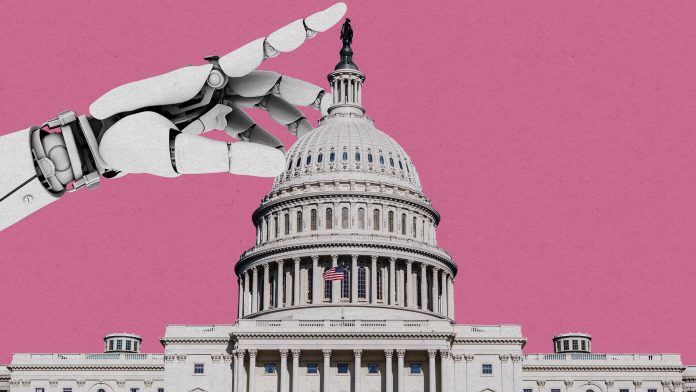
A sweeping provision buried deep in the Republican-led budget bill, the Opportunity and Balanced Budget Blueprint (OBBB), has ignited backlash across party lines after it was revealed that it would prohibit all U.S. states from enacting or enforcing any laws regulating artificial intelligence for the next ten years.

The measure, largely unnoticed during the bill’s initial passage, has triggered concern from lawmakers, civil rights organizations, and policy experts who say it effectively guts state-level authority, granting tech companies a decade-long free pass to develop and deploy AI systems without local oversight — even as their use grows in sensitive areas like hiring, education, law enforcement, and child safety.

Even some Republicans who voted in favor of the bill have now expressed regret, saying the AI moratorium was not adequately disclosed.

“Full transparency, I did not know about this section on pages 278–279 of the OBBB that strips states of the right to make laws or regulate AI for 10 years,” said Rep. Marjorie Taylor Greene, in a statement on Thursday.

“I am adamantly OPPOSED to this and it is a violation of states’ rights, and I would have voted NO if I had known this was in there… We have no idea what AI will be capable of in the next 10 years, and giving it free rein and tying states’ hands is potentially dangerous.”

Greene added that she expects the Senate to strip the clause during its revision process and warned she would not support the final version of the bill if the language remains.

“We should be reducing federal power and preserving state power — not the other way around. Especially with rapidly developing AI that even the experts warn they have no idea what it may be capable of.”

A Decade Without Guardrails

The AI moratorium provision, described in just a few paragraphs toward the back of the nearly 300-page bill, bars states from introducing, enforcing, or maintaining any existing or future legislation aimed at regulating artificial intelligence.

The measure’s defenders, led by the U.S. Chamber of Commerce and supported by several leading AI firms, argue the move is necessary to prevent a chaotic “patchwork” of conflicting rules across the 50 states. They say the AI sector needs regulatory clarity and freedom from compliance burdens in order to maintain U.S. global leadership.

But critics say the provision is an overreach of federal power, and dangerously shortsighted.

The coalition of 77 advocacy organizations, including Common Sense Media, the Center for Humane Technology, and Fairplay, issued a scathing letter to congressional leadership this week demanding the clause be removed.

“By wiping out all existing and future state AI laws without putting new federal protections in place, AI companies would get exactly what they want: no rules, no accountability, and total control,” the letter reads.

At present, no comprehensive federal legislation exists to address AI risks — and none is expected anytime soon. If the moratorium passes, Americans would be left without AI-specific protections until 2035, aside from the costly option of suing companies for harm after the fact.

States on the Frontlines — and Now Sidelined

Over the last year, several states have moved quickly to address immediate and emerging risks posed by artificial intelligence. Tennessee passed the ELVIS Act to outlaw unauthorized AI voice impersonations, especially those affecting musicians. In California, two proposed bills would regulate AI chatbot platforms targeting teens, with one banning “anthropomorphic AI companions” designed to foster emotional dependence or manipulate children.

Lawmakers in New York, Massachusetts, and Illinois are also weighing AI-related bills covering areas from employment discrimination to facial recognition surveillance.

All of those state-level initiatives would be nullified under the federal moratorium.

A Familiar Pattern of Corporate Influence

Advocates like Camille Carlton, policy director at the Center for Humane Technology, say the federal AI moratorium fits into a long-standing pattern in tech policy: corporations oppose regulation at the state level, call for federal rules instead, then turn around and lobby Congress to stall or weaken those very laws.

“What we’re seeing is déjà vu. This is exactly how Big Tech delayed and diluted every major effort to protect consumers — from digital privacy to kids’ safety,” said Carlton. “Now the same playbook is being used for AI.”

Carlton said the idea that local AI laws are stifling innovation is a mischaracterization. Most of the proposed laws focus on narrow and urgent safety issues and often provide exemptions for small businesses or tiered obligations based on company size and use cases.

“These aren’t sweeping bans on AI,” she added. “They’re common-sense protections against fraud, deepfakes, and predatory chatbots aimed at children. But with this bill, even those guardrails vanish.”

Lessons from Social Media’s Free Rein

Legal scholars warn the moratorium risks repeating the same errors that allowed social media platforms to operate with near-total impunity for over a decade — leading to today’s mental health crisis among teens, rampant misinformation, and the rise of algorithmic manipulation.

Gaia Bernstein, professor at Seton Hall University School of Law, says states became the primary drivers of tech accountability precisely because Congress has failed to act — and may do so again with AI.

“If you’re saying states cannot do anything, then it’s very alarming,” Bernstein said. “Most of the effective protections we have today — for youth safety, for online privacy — came from state laws. Now we’re about to shut that down.”

Bernstein emphasized that AI is already embedded in algorithms that shape what children see online, govern how people are scored and hired, and determine what health information individuals receive.

“This is not some distant threat. AI is already shaping lives. And without oversight, it will do so with zero accountability.”

Tech Industry Wins Big — Again

Though few in Congress have acknowledged it directly, several of the companies positioned to benefit from a decade of AI deregulation are also major donors to President Donald Trump, raising questions about whether the provision serves public interest or corporate influence.

A former House staffer who helped analyze the bill called it “one of the most extreme handouts to Big Tech” he’s ever seen tucked into budget legislation.

“It’s a blank check,” the staffer said. “And if you know the history of how the tech industry operates, you know exactly what they’ll do with it.”

The bill now moves to the Senate, where Democrats and a growing number of Republicans are expected to push back against the AI moratorium clause. Senate staff have confirmed that discussions are underway to remove or amend the provision.

If the Senate returns a revised version, the bill must go back to the House for final approval — setting up a potential showdown over tech regulation, state rights, and federal power.

Rep. Marjorie Taylor Greene, said, having known better, she will oppose the bill.

“I will not vote for the final bill if this language is still in there,” she said. “Congress must not hand over ten years of unchecked power to tech companies while tying the hands of our states. That’s not leadership. That’s surrender.”
dLocal Announces Intention to Acquire AZA Finance, Strengthening Cross-Border Payment Capabilities Across Africa

0

dLocal, a leading cross-border payment platform, has announced intention to acquire AZA finance, a prominent African fintech specializing in cross-border payments and foreign exchange (FX) solutions, pending regulatory approval.

While the financial details were not officially disclosed, Bloomberg reports that the deal is valued at approximately $150 million.

dLocal acquisition of AZA finance comes after both companies in February this year, forged a strategic partnership to expand their footprint in Africa. By combining dLocal’s robust cross-border payment infrastructure with AZA Finance’s foreign exchange capabilities and network of regional licenses, customers of both companies benefit from improved payment processing, increased reach, and enhanced financial services.

Founded in Nairobi in 2013, AZA makes it easier for companies around the world to exchange currencies, make payments, and settle easily in all major African and G20 currencies. The platform has established itself as a leader in remittances, providing efficient and reliable services for sending money into Africa.

Its secure and efficient API and web platform is a trusted gateway for leading remittance providers, multinational corporations, and innovative enterprises worldwide. The recent acquisition plan will significantly enhance dLocal’s presence across the African continent, enabling billions in cross-border transactions.

With AZA Finance’s FX capabilities, dLocal gains access to improved liquidity, better pricing, and deeper expertise in remittance services. AZA Finance’s skilled team brings valuable on-the-ground knowledge, aligning with dLocal’s mission to deliver seamless, localized payment experiences across the EMEA region.

“This partnership is key to increasing access for our global merchants to Africa’s dynamic markets,” said Carlos Menendez, Chief Operating Officer at dLocal.

Once the acquisition is approved, it is expected to accelerate dLocal’s expansion into Latin America, the Middle East, and the Asia-Pacific region, extending its cross-border infrastructure and merchant services.

“By combining dLocal and AZA Finance, we are well-positioned to offer innovative, efficient, and localized payment solutions to help businesses and individuals prosper in this rapidly evolving region,” Menendez added.

dLocal’s growth has been significantly propelled by its strong presence in the Middle East and Africa, regions characterised by high cryptocurrency adoption. Key markets for dLocal’s expansion include the UAE, Turkey, and Nigeria, where stablecoin usage is particularly high.

Through the “One dLocal” concept (one direct API, one platform, and one contract), global companies can accept payments, send pay-outs and settle funds globally without the need to manage separate pay-in and pay-out processors, set up numerous local entities, and integrate multiple acquirers and payment methods in each market.

As AZA Finance moves toward becoming part of the dLocal family, the company has reaffirmed its commitment to delivering best-in-class cross-border payment solutions to businesses across emerging markets. The company’s award-winning team has been instrumental in addressing the unique needs of businesses operating in and out of Africa, offering compliant, market-driven services backed by local licenses, banking partnerships, and a steadfast focus on regulatory alignment.

These efforts have culminated in a suite of innovative products that enable businesses and their end-users to access seamless cross-border payment capabilities. This mission will remain central as AZA Finance prepares to integrate with dLocal’s global payments platform, pending regulatory approval.

The company anticipates that its technology and senior-level expertise will complement dLocal’s infrastructure, further connecting markets and expanding the reach of its services.

Bill Gates Pledges Majority of $200bn Philanthropy to Africa, Vowing to Cut 99% of His Wealth by 2060

0

American tech billionaire and philanthropist Bill Gates has disclosed he will channel most of the $200 billion he intends to give away over the next two decades into Africa, focusing on health, education, and partnerships with governments that prioritize citizen welfare.

The Microsoft co-founder made the declaration on Monday while addressing a gathering at the Nelson Mandela Hall of the African Union headquarters in Addis Ababa, Ethiopia, where he spoke to an audience of more than 12,000 people — including government officials, diplomats, health workers, development partners, and youth leaders.

The announcement marks a significant shift in global philanthropy at a time when U.S. foreign aid has declined, particularly under President Donald Trump, whose administration has scaled back humanitarian funding and gutted staffing at the U.S. Agency for International Development (USAID). Gates’ vow to step into that void underscores what he sees as the urgency to invest in Africa’s future, especially as the continent faces persistent challenges in health, poverty, education, and climate vulnerability.

“I recently made a commitment that my wealth will be given away over the next 20 years. The majority of that funding will be spent on helping you address challenges here in Africa,” Gates said at the event, according to a statement from the Gates Foundation.

The 68-year-old philanthropist, who is currently worth about $108 billion, says his net worth will fall by 99% by 2060, in line with his goal of distributing nearly all of his fortune through the Bill & Melinda Gates Foundation.

In a recent interview with CBS Mornings, Gates explained that his decision was inspired by Andrew Carnegie’s 1889 essay, “The Gospel of Wealth,” which asserts that the wealthy have a moral obligation to give away their riches during their lifetimes. The essay’s core idea — that “the man who dies thus rich dies disgraced” — has become a guiding principle for Gates, who has spent the past two decades trying to reallocate wealth to fight disease and inequality.

This isn’t Gates’ first act of philanthropic ambition. In 2010, he co-founded The Giving Pledge alongside Warren Buffett and Melinda French Gates, urging billionaires to commit at least half their fortunes to causes aimed at improving the human condition. But this new plan takes that ambition further by setting a firm 20-year horizon and a regional priority.

Africa as the Central Focus

While Gates has always had global ambitions through his foundation — funding vaccine development, eradicating diseases like malaria and polio, and strengthening health systems — his current announcement centers on Africa as the primary beneficiary. This includes support for health infrastructure, educational access, agriculture resilience, and innovation hubs across the continent.

“By unleashing human potential through health and education, every country in Africa should be on a path to prosperity — and that path is an exciting thing to be part of,” Gates said at the AU event.

His remarks highlighted the belief that investing in people, especially in developing nations, is the most effective way to lift entire regions out of poverty. Gates emphasized that this funding would not just be about charitable giveaways, but about partnering with African governments that show a commitment to reform and long-term impact.

In recent years, Gates and his foundation have ramped up involvement in African countries through initiatives like the Africa Health Diagnostics Platform (AHDP), support for vaccine manufacturing in Senegal and South Africa, and climate-resilient crop programs.

Filling the Void of U.S. Foreign Aid Cuts

Under the Trump administration, funding for USAID — historically one of the world’s largest conduits for humanitarian and health aid — was slashed significantly, and staffing levels fell. That retreat has left a vacuum in many low-income countries, particularly in sub-Saharan Africa, where programs once supported by American aid have stalled or been abandoned.

Gates’ expanded commitment signals an attempt to fill that void. With governments under fiscal pressure and private foreign aid plateauing, philanthropy may now carry more weight than ever before in shaping the future of public health and education in developing countries.

Initial reactions to Gates’ pledge have been mixed. African governments and health leaders welcomed the announcement, seeing it as a needed intervention during a time of global economic uncertainty. Many stressed that the funding must not only be generous but sustainable and equitably distributed, with an emphasis on African ownership of development programs.

“Disgusting Abomination:” Musk Slams Trump-Backed “Big, Beautiful” Budget as Deficit Timebomb

0

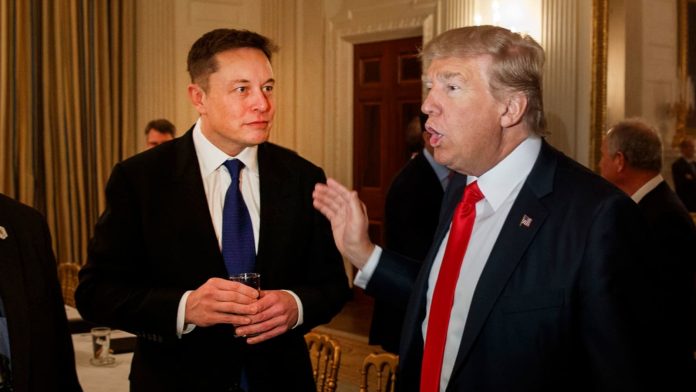
Elon Musk has triggered a political firestorm after denouncing President Donald Trump’s sprawling tax-and-spending bill as a “disgusting abomination,” warning that the legislation will explode the federal deficit and plunge America deeper into unsustainable debt.

Musk, posting Tuesday on X, the social media platform he owns, blasted the sweeping bill pushed through by Trump’s allies in Congress.

“This massive, outrageous, pork-filled Congressional spending bill is a disgusting abomination,” he wrote. “Shame on those who voted for it: you know you did wrong. You know it.”

The outburst was a sharp turn from the image of partnership the two men projected just days earlier. Musk’s recent role as head of Trump’s Department of Government Efficiency (DOGE) had seemingly cemented his place in Trump’s orbit — a relationship capped by a public send-off at the White House last week, with both men heaping praise on each other. But Tuesday’s post, filled with blunt indignation, marked a rupture.

“I’m sorry, but I just can’t stand it anymore,” Musk wrote in a follow-up post, accusing Congress of exploding the national debt for short-term political wins. “This will massively increase the already gigantic budget deficit to $2.5 trillion (!!!) and burden American citizens with crushingly unsustainable debt.”

Trump’s press secretary, Karoline Leavitt, tried to brush off the remarks: “Look, the president already knows where Elon Musk stood on this bill,” she told reporters. “It doesn’t change the President’s opinion. This is one big, beautiful bill, and he’s sticking to it.”

Leavitt went further, attacking the Congressional Budget Office for its projection that the bill would add $3.8 trillion to the national deficit over the next decade.

“We believe the CBO’s math is wrong — and has been biased against Republican-led reforms for years,” she said.

Business Leaders and Lawmakers Rally Around Musk

But while the White House attempted to downplay Musk’s dissent, his post quickly became a rallying cry for fiscal conservatives and disaffected business figures — many of whom believe Musk has exposed the contradiction at the heart of Trump’s fiscal policies.

“Elon is absolutely right,” said Peter Schiff, chief economist at Euro Pacific Capital. “I’m so glad he’s willing to call out the hypocrisy in the Republican Party. He is a man of principle. The Big, Beautiful Bill is a fraud. Hopefully, Elon can persuade Trump to veto it if it passes the Senate in its current form, or anything close to it.”

Senator Rand Paul, who has clashed with Trump in the past over deficit issues, echoed the sentiment. “I agree with Elon. We have both seen the massive waste in government spending and we know another $5 trillion in debt is a huge mistake,” Paul said. “We can and must do better.”

Rep. Thomas Massie, another staunch fiscal hawk, kept his response simple: “He’s right.” Musk replied: “Simple math.”

Even Senator Mike Lee of Utah, a longtime critic of the GOP’s shift toward big-spending populism, stepped in.

“Congress has hollowed out America’s middle class through reckless deficit spending and the inflation it causes,” he posted. “The Uniparty propels this vicious cycle and must be stopped in its tracks.”

A Point of No Return?

The intensity of Musk’s criticism has now fueled speculation that a full break with Trump is imminent. While Musk supported Trump’s re-election bid with over $250 million in campaign contributions and played a key advisory role in the administration’s tech and efficiency agenda, observers say Trump’s well-known intolerance for public dissent means the two men are likely going to break apart.

Musk had already been raising eyebrows in recent weeks for comments suggesting unease with Trump’s handling of tariffs and industrial policy. In a CBS News interview aired Sunday, he said the new budget bill “undermines everything we tried to do with DOGE.”

He’s also had run-ins with senior members of the administration. At various times, Musk openly insulted Trump’s former trade advisor Peter Navarro, and clashed with Treasury Secretary Scott Bessent over fiscal strategy.

Trump Lashes Out at Dissent

Earlier Tuesday, even before Musk’s post gained steam, Trump had already shown signs of irritation over criticism of the bill. The president lashed out at Senator Paul for denouncing the proposal to raise the debt ceiling, accusing the Kentucky senator of lacking economic vision.

“He doesn’t understand the tremendous GROWTH this bill will generate,” Trump posted on Truth Social.

But Trump’s argument — that the bill will spur growth large enough to outpace the additional debt — is beginning to fall flat even among his loyalists. The CBO’s projection paints a grimmer picture, estimating the bill will deepen the deficit by nearly $4 trillion in ten years, even under favorable economic assumptions.

Musk remains one of the few major Trump allies willing to break ranks publicly. But analysts say his post could mark a tipping point, and if Musk continues to galvanize opposition to the bill, it may be harder for Trump to claim unified support from the business community ahead of the 2026 midterms.

Currently, the Senate is preparing to vote on the bill, but the blowback shows no signs of fading. What once looked like a ceremonial budget victory is now shaping up to be the beginning of an ideological civil war — with Musk, not for the first time, in the middle of it.

Microsoft Bing Debuts Free AI Video Generator Using OpenAI Sora, Marking First Public Access to the Groundbreaking Model

0

Microsoft has officially rolled out a new AI-powered video generation tool called Bing Video Creator, making it the first platform to publicly deploy OpenAI’s Sora model for free.

The launch, announced Monday, marks a significant milestone in the race to democratize generative video technology and underscores Microsoft’s deepening partnership with OpenAI.

Sora — unveiled in February 2024 — is OpenAI’s most advanced text-to-video model to date. It stunned the tech world with its ability to produce highly coherent, realistic videos from short-written prompts. In internal demos, it generated scenes like a bustling Tokyo street, a coral reef, and a woman walking through the snow — all from plain text inputs. Until now, however, public access to the tool was limited to a small group of vetted researchers and commercial partners under strict usage guidelines.

Free, but Limited Access Through Bing App

Through Bing Video Creator, Microsoft is offering ordinary users their first chance to experiment with Sora — albeit in a heavily restricted format. The tool is currently exclusive to the Bing mobile app, with no desktop access at launch.

Users logged into a Microsoft account can generate up to 10 videos for free. After that, each video generation costs 100 Microsoft Rewards points, a loyalty currency that can be earned by using Bing Search or shopping in the Microsoft Store. For instance, users receive 5 points per desktop Bing search, up to 150 points per day.

Each video is capped at five seconds, and users can only queue up three generations at a time. Output is limited to a vertical 9:16 aspect ratio, designed for platforms like TikTok, Instagram Reels, and YouTube Shorts. Microsoft said it will soon support horizontal aspect ratios, likely in response to growing interest in AI-generated video for broader creative and cinematic uses.

Despite a “fast mode” setting promising shorter wait times, some users report waiting hours for video generation to complete, indicating either a capacity bottleneck or deliberate throttling by Microsoft to manage demand.

Microsoft Bets on Sora to Compete in the AI Ecosystem

Microsoft is both expanding access to cutting-edge AI and pushing aggressively into markets dominated by Google and YouTube by integrating Sora into its search app. While Microsoft’s Bing still holds under 5% of the global search engine market, its integration of generative AI tools — including GPT-4.5, DALL·E image generation, and now Sora — positions Bing as a feature-rich alternative to Google Search.

This strategic deployment also strengthens Microsoft’s commercial relationship with OpenAI. Microsoft has invested over $13 billion into OpenAI since 2019 and currently holds an exclusive license to commercialize its models via Azure. Sora’s deployment on Bing represents the first time the public has been able to use it without direct payment or institutional access.

Ethical Concerns and Impact on Creative Industry

Sora’s capabilities have sparked debate within the creative industry and among policymakers. While praised for its potential to revolutionize filmmaking, education, advertising, and gaming, Sora has also raised alarm over deepfake risks, misinformation, and potential job displacement for editors, animators, and video producers.

OpenAI has acknowledged these risks, saying it will implement “guardrails” and develop tools for provenance and watermarking. Microsoft appears to be following suit by limiting video length, scope, and access — at least in this early phase.

Microsoft’s move comes amid rising competition. Google’s own AI video model, Lumiere, which was unveiled in January 2024, remains in research preview. Meta is reportedly working on an AI video model internally but has not made it public. Unlike Microsoft, both tech giants have so far chosen to keep such tools behind closed doors, citing ethical concerns and platform safety.

By contrast, Microsoft is betting that controlled public rollout — paired with reward-based engagement — could help it leapfrog rivals and generate buzz ahead of broader monetization.

While Bing Video Creator is still in its infancy, Microsoft’s decision to launch Sora in this format signals a long-term vision for making high-quality AI video creation accessible to everyday users. If generation speeds improve and output options expand, the tool could evolve from a novelty into a widely used feature across social platforms and personal projects.