DD
MM
YYYY

PAGES

DD
MM
YYYY

spot_img

PAGES

Home Blog Page 1199

The Backbone of Modern Life: How Computers Power Everything

0

Just look?around: your phone, your laptop, and even your coffee machine likely have a computer chip inside. We inhabit a world where computers are no longer just machines that sit on our desks; they’re quietly woven into the fabric of just about everything?we use. From transportation, communication, entertainment, and education, computers have become the invisible fuel?that runs the contemporary world. But how, exactly, did we arrive at this point — and how far, exactly, does the power?of computing extend?

Business in the Digital Age: Smarter Payments, Smoother Operations

One of the biggest shifts computers have sparked is how businesses handle payments. Today, dozens of payment service providers (PSPs) operate using different gateways, often causing complex integration delays—especially when trying to work with merchant cashier systems. This is where multi channel payment solutions shine. By allowing companies to start using any PSP within just 1–2 weeks, they eliminate those painful bottlenecks.

Beyond speed, these solutions offer real freedom and security. Businesses can accept payments across platforms smoothly and safely, making them one of the most impactful innovations in modern commerce. Behind the scenes, it’s this quiet tech that keeps today’s economy moving.

Healthcare: Precision, Speed, and Lives Saved

Computers have?an effect that goes beyond finance. They are saving lives in?healthcare. From AI diagnostics to real-time monitoring of patients, computers allow doctors to detect diseases earlier, tailor treatments, and even perform surgery with?robotic precision. Today, hospitals depend on computer systems for everything from?patient records to the supply chain. In a crisis, every second counts, and computers help?guarantee that pertinent information is at hand when needed.

Transportation and Travel: Getting There Smarter

Whether you’re hailing a?ride on a cab app or boarding an international flight, computers are likely playing a big part in making it happen. Traffic control systems, airline ticket booking engines, and GPS?navigation are all driven by computing. And the sci-fi dream of vehicles operating entirely without human intervention is edging closer to becoming mainstream reality. Computers no longer just move?data — they help move us.

Education and Creativity: Expanding Human Potential

Today’s classroom is nothing like the one from a decade?ago. From online learning platforms to virtual classrooms?and interactive educational software, computers have transformed the way education is shared and received. But beyond education,?they have also redefined what is creative. Musicians, artists, writers, and filmmakers?sit at their fancy computers and create their ideas using robust digital tools. You don’t need a full studio to make it?anymore—just a laptop and a little imagination.

Everyday Life: The Invisible Network

There is a tendency for us not to appreciate the computers?that work behind the scenes during the day. They control the lighting in smart homes, maximize energy use, and even recommend?the next show to binge on a streaming service. Our social lives are driven?by algorithms that match us with friends, interests, and communities. Even grocery shopping has gone smarter — automated checkout, inventory management, personalized offers, to name a few — all enabled by?computers.

More Than Machines

We often take for granted the day-working computers, which are responsible for a lot of smart living, such as controlling the lighting of smart homes to ensure maximum energy consumption and even advising the next film that one should watch on some online streaming service. The social life today is determined by algorithms that make sure we have friends who share our interests and place us in communities where we belong. It’s not just about automated checkouts anymore – there are things like inventory control systems or CRM solutions with their digital coupons and so on, all thanks to progress in technology and particularly computers.
Coinbase-Riot Partnership is a High-Stakes Bet to Integrate Crypto Into Gaming

0

Coinbase has partnered with Riot Games, the developer of League of Legends and VALORANT, to become the exclusive cryptocurrency exchange and official blockchain technology partner for their global esports events. Announced on May 6, 2025, the multi-year deal kicks off at the VALORANT Champions Tour Masters Toronto on June 7, 2025, and will extend to major tournaments like League of Legends’ Mid-Season Invitational and Worlds, as well as VALORANT’s Masters and Champions events.

The partnership focuses on enhancing fan engagement through media visibility, broadcast integrations, and in-game content rather than direct crypto transactions or blockchain features in the games themselves. Coinbase will introduce new broadcast segments, such as the “Econ Report” for VALORANT and “Gold Grind” for League of Legends, offering real-time analysis of in-game currency and team strategies.

Fans will also receive digital rewards like emotes and icons, plus promotions including all-expenses-paid trips to major events. This move aligns with Coinbase’s strategy to tap into the gaming community, a digital-native audience curious about crypto’s potential. It builds on their existing sports partnerships, like with the NBA and esports organization Team Liquid. However, the deal has sparked skepticism among some fans due to crypto’s controversial history in gaming, including Riot’s prior $96 million sponsorship with the now-collapsed FTX exchange.

Critics worry about the normalization of crypto branding in esports, though no NFT or crypto payment integrations are planned for now. The partnership reflects a broader trend of crypto companies aligning with esports to reach younger audiences, but its success may hinge on navigating community pushback and delivering meaningful fan experiences without overt monetization.

The Coinbase-Riot Games partnership carries significant implications for the integration of cryptocurrency into gaming and esports, while highlighting a persistent divide in how crypto is perceived within the gaming community. The partnership exposes millions of League of Legends and VALORANT fans to Coinbase’s brand through high-profile esports broadcasts, in-game content, and fan rewards. With League of Legends Worlds drawing over 70 million viewers in 2024, this provides Coinbase a massive platform to normalize crypto as a financial tool among a young, tech-savvy audience.

By focusing on branding and engagement (e.g., “Econ Report” segments, digital rewards), Coinbase avoids direct crypto transactions, potentially reducing friction and making crypto more approachable without requiring immediate adoption. Gaming communities are digital-native and overlap with crypto’s target demographic—young, tech-curious individuals. Coinbase’s move could accelerate crypto adoption by embedding its brand in a culturally relevant space, building trust through association with a reputable gaming company like Riot.

The partnership may pave the way for future integrations, such as tokenized rewards, blockchain-based collectibles, or crypto payments for in-game purchases, though these are not currently planned. For Riot Games, the deal secures a major sponsor in Coinbase, providing financial stability in an esports industry often challenged by high costs and volatile sponsorships. This follows Riot’s recovery from the FTX collapse, which cost them $96 million.

The partnership could attract other crypto or blockchain companies to esports, diversifying revenue streams but also risking over-commercialization if not carefully managed. While the current deal focuses on branding, Coinbase’s role as the “official blockchain technology partner” suggests potential exploration of blockchain applications, such as secure ticketing, fan voting systems, or decentralized tournament platforms. These could enhance transparency and engagement if implemented thoughtfully.

Regulatory and Market Risks

The partnership operates in a volatile crypto market and under varying global regulations. Negative market events or regulatory crackdowns could tarnish Coinbase’s brand, impacting Riot’s reputation by association. Conversely, a successful partnership could bolster Coinbase’s credibility, especially as it navigates legal battles like its ongoing SEC disputes.

The partnership underscores a polarized reception of crypto in gaming, driven by historical baggage, philosophical differences, and practical concerns. Riot’s prior $96 million FTX sponsorship, which collapsed in 2022 amid fraud allegations, left a sour taste for many fans. The FTX debacle, coupled with other failed crypto-gaming ventures (e.g., Axie Infinity’s unsustainable play-to-earn model), has made gamers wary of crypto’s reliability and intentions.

Gamers often view crypto integrations as attempts to monetize their hobbies, especially after negative experiences with NFTs and pay-to-win blockchain games. The 2021 backlash against Ubisoft’s NFT plans and Square Enix’s blockchain pivot highlighted this sentiment, with fans accusing companies of prioritizing profits over player experience.

Coinbase’s branding-heavy approach avoids direct monetization, but subtle integrations like broadcast segments still spark fears of creeping commercialization. Supporters argue blockchain can empower players with ownership of digital assets, decentralized governance, or secure transactions. Coinbase’s involvement could signal a step toward innovative fan experiences, like tokenized rewards or transparent prize pools.

Critics see crypto as unnecessary in gaming, arguing that existing systems (e.g., Steam’s marketplace, in-game currencies) already meet player needs without blockchain’s complexity or environmental concerns. Many view crypto sponsorships as opportunistic rather than value-adding. Younger fans and those in crypto-friendly regions (e.g., parts of Asia, North America) may be more open to Coinbase’s presence, especially if rewards like free trips or emotes enhance their experience.

Conversely, fans in regions with stricter crypto regulations (e.g., parts of Europe) or less crypto familiarity may be more skeptical. On X, reactions range from excitement over potential perks to outright dismissal, with some users calling for boycotts of Riot events, though these represent a vocal minority.

Trust and Transparency Concerns

Crypto’s association with scams, volatility, and speculative bubbles fuels distrust. Fans worry that Coinbase’s branding could subtly push crypto adoption without clear disclaimers, especially for younger audiences. Riot’s challenge is to balance Coinbase’s visibility with maintaining community trust, ensuring the partnership feels additive rather than exploitative.

To succeed, Coinbase and Riot must address the divide through: Clearly communicating that no NFTs or crypto payments are planned, focusing on fan-centric benefits like rewards and content. Listening to fan feedback and avoiding overly aggressive crypto branding that could alienate players. Delivering innovative, non-intrusive blockchain applications (e.g., secure ticketing) that prove crypto’s utility without disrupting the gaming experience. Offering subtle, optional resources to demystify crypto for curious fans, avoiding heavy-handed promotion.

The Coinbase-Riot partnership is a high-stakes bet to integrate crypto into gaming’s mainstream through esports, with potential to drive adoption and innovation. However, it faces a divided audience shaped by past failures, cultural resistance, and differing views on blockchain’s role in gaming. Its success will depend on delivering genuine value to fans while navigating skepticism and maintaining Riot’s credibility. The deal could set a precedent for crypto’s role in esports—or serve as a cautionary tale if community backlash overshadows its benefits.

Trump’s Tariffs Hit Hard as Shein, Temu See Sharp Sales Slump and Shift Strategies

0

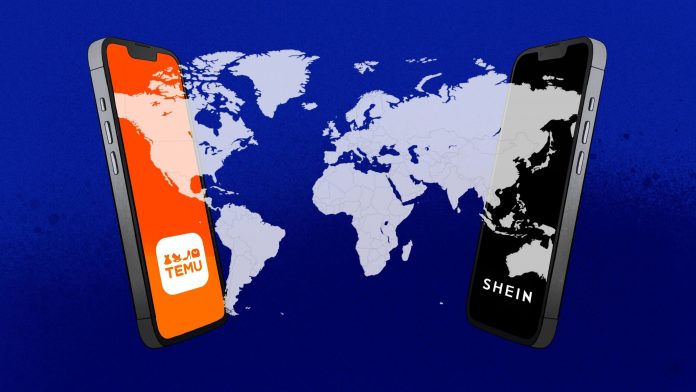
The American shopper is beginning to feel the first sting of President Donald Trump’s aggressive tariff war on Chinese imports, with fast-fashion giants Shein and Temu recording double-digit sales declines in the wake of sweeping tax hikes.

After months of rising tensions and rhetoric over trade imbalances, Trump’s move to eliminate the de minimis rule, long used by Chinese retailers to ship low-value goods to the U.S. duty-free, has begun to bite. The initial casualty: low-cost online shopping, a category dominated by Shein and Temu.

According to transaction data tracked by Bloomberg Second Measure, Shein’s U.S. sales plummeted by 23 percent between April 25 and May 1, compared with the week prior. Temu, owned by Chinese e-commerce giant PDD Holdings, experienced a 17 percent drop in the same period. The downturn came immediately after both companies began raising prices to offset the newly imposed import tariffs.

This marks a sharp reversal from the retail boom seen in March and early April, when price-conscious consumers rushed to stockpile cheap clothing, gadgets, and kitchen items ahead of the expected price surge. Now, the cost of inflation is no longer theoretical—it’s showing up in shopping carts.

The blowback stems from Trump’s dismantling of the de minimis loophole, which previously allowed shipments under $800 to enter the U.S. free of duties. With that lifeline gone, Temu and Shein face an entirely different business calculus. Trump has also hiked tariffs on a range of Chinese imports, some up to 145 percent, drastically reshaping the pricing structure for thousands of products sold online.

Both platforms raised prices from April 25, a move that immediately cooled consumer enthusiasm. Temu, which had based its explosive growth on ultra-low prices for China-made goods, passed on almost all the new tax costs to buyers. In some cases, the price of items doubled overnight.

Bloomberg’s product pricing tracker reveals that Shein’s top 100 beauty and health items more than doubled in price compared to April 15. Toy and game categories rose by over 60 percent, home and kitchen goods saw a 40 percent bump, while women’s clothing increased 10 percent on average.

The effect isn’t limited to consumer pain. Shein’s long-anticipated IPO is now reportedly in doubt. The company is reassessing its U.S. market strategy amid regulatory uncertainty and the impact of tariff-induced operating costs.

Temu’s Strategic Pivot

For Temu, the path forward appears to be a pivot away from Chinese imports entirely. The company is now embracing a “local fulfilment” model, prioritizing inventory sourced from U.S.-based merchants to sidestep import taxes.

Since April 25, Temu has flooded its bestseller pages with goods warehoused domestically. Bloomberg data shows hundreds of items are now marked as “locally shipped” from April 30 onwards. These goods have remained stable in price, shielded from the latest wave of trade penalties.

The shift is dramatic for a company that scaled through cross-border shipping logistics, offering products as low as $1 direct from Chinese factories. Now, it’s effectively rewriting its playbook to survive in a more protectionist U.S. trade environment.

Retailers Caught in the Middle

The pressure isn’t limited to Chinese platforms. Major U.S. retailers like Walmart and Target have yet to raise prices, but behind the scenes, supply chains are straining. Chinese suppliers, many of whom provide private-label goods to American chains, are beginning to balk at absorbing the cost of the tariffs. If they hold the line, prices will inevitably rise for U.S. consumers, or profit margins will erode.

Amazon is already walking a tightrope. After a public complaint from Trump, the company opted not to display tariff charges on its site, a move that underscores the growing unease among retailers. They are now faced with two unattractive options: absorb the cost themselves or push it onto shoppers who are already struggling with high living costs.

U.S. consumer confidence fell to its lowest level in nearly five years in April, according to recent sentiment data. With inflationary pressures expected to intensify in coming months, and more tariffs potentially in the pipeline, the worst may not be over.

What was once a niche debate about import rules has now exploded into a nationwide consumer issue. And with platforms like Shein and Temu serving millions of Americans each month, the fallout from Trump’s tariff hikes is becoming increasingly difficult to ignore.

Apple Moves to Reshape Safari to AI-Powered Search Engine, Threatens Google’s Grip on Search

0

Apple is reportedly exploring ways to reshape its Safari browser to prioritize AI-powered search engines, a decision that could disrupt Google’s dominance over one of the most lucrative corners of the internet economy.

While no final announcements have been made, the mere suggestion that Apple is actively eyeing this change has already sent tremors through the market.

According to Bloomberg, Apple’s services chief Eddy Cue testified in federal court this week, revealing that the company is preparing to welcome AI search tools like OpenAI and Perplexity into the Safari ecosystem. Though they may not become the default overnight, Cue hinted it’s only a matter of time before these tools are added as user-selectable options.

The courtroom moment wasn’t just about Apple’s future search plans; it also brought into sharp relief the weakening grip of Google’s long-standing search empire. For years, the tech giant has paid Apple tens of billions of dollars to remain the default search engine on Safari, a deal that secures Google’s place in front of hundreds of millions of iPhone users worldwide. Google pays the iPhone maker billions of dollars per year, as much as $20 billion per year back in 2022, according to testimony in the trial, to be the default search engine on iPhones.

But now, cracks are appearing in that arrangement.

Cue admitted that Safari search traffic declined in April for the first time, a landmark shift he blamed on users increasingly favoring AI tools over traditional search engines. That decline, even if modest, points to a change in user behavior that could threaten Google’s dominance from within one of its most lucrative channels.

Alphabet shares plunged more than 7% on the news, while Apple’s stock dipped about 2%. The market reaction wasn’t just to the decline in traffic or Cue’s comments; it was about what this could mean in the long run. If Safari, which commands a significant portion of mobile browsing, begins to shift its search ecosystem toward AI, Google could face serious consequences, not just in terms of traffic but in advertising revenue and user data.

Tech investors are already jittery. “The loss of exclusivity at Apple should have very severe consequences for Google even if there are no further measures,” said D.A. Davidson analyst Gil Luria. “Many advertisers have all of their search advertising with Google because it is practically a monopoly with almost 90% share. If there were other viable alternatives for search, many advertisers could move much of their ad budgets away from Google to these other venues.”

For now, Cue has maintained that Google remains the preferred default, at least until a better option emerges. But even his own statements betray a growing sense of inevitability.

“We will add them to the list — they probably won’t be the default,” Bloomberg quoted Cue as saying, referring to AI-based search engines like OpenAI’s ChatGPT and Perplexity.

Ironically, Apple’s own hesitation could be the most telling sign of how serious the threat to Google really is. Cue reportedly acknowledged that he’s lost sleep over the prospect of walking away from the revenue-sharing deal with Google. But Apple’s deal with OpenAI to integrate ChatGPT into Siri, and its ongoing talks to potentially add Google’s Gemini AI as well, suggest that the company is positioning itself to play all sides in the coming AI search war.

Google, meanwhile, is trying to stem the tide. Last month, it reassured investors that its AI investments are beginning to deliver results, pointing to stronger-than-expected first-quarter earnings. But that may not be enough. As the Justice Department’s antitrust trial against Alphabet intensifies, the scrutiny surrounding Google’s search monopoly is deepening, and Apple’s evolving stance could become the turning point in the case.

In many ways, Apple’s Safari rethink is more than just a user experience redesign. It’s a carefully timed maneuver — one that hints at a broader strategic pivot. By opening the door to new AI search engines, Apple is not just testing the waters; it’s signaling to the industry that the age of Google’s dominance may be approaching a historic inflection point.

And it’s doing so at a time when AI, not conventional search, is rapidly becoming the first stop for users seeking answers.

Is RCOF Outrunning the XRP Price in May 2025? Early Indicators Hint at 1,200% Rally

0

Halfway through the second quarter of 2025, the XRP price has remained sluggish, dropping by over 6.9% in the past week to trade at $2.11. This drop has allowed a newcomer to the market, RCO Finance (RCOF), to steal XRP’s spotlight.

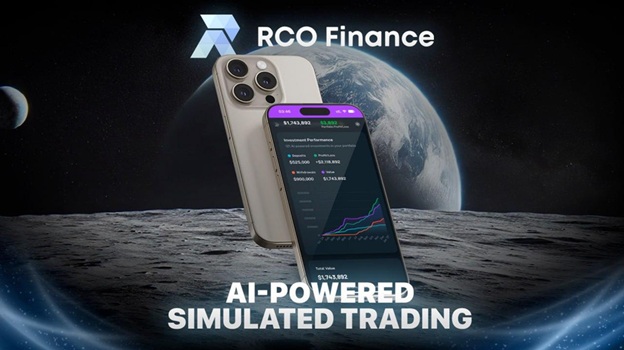
This AI-powered altcoin is gaining momentum fast with its cutting-edge investment tools, real-world asset integration and decentralized accessibility. Currently priced at just $0.16, RCOF is already attracting major attention from institutional players.

Just recently, a big tech VC firm tied to ChatGPT’s early funding acquired the remainder of Stage 6 and all of Stage 7, signaling serious belief in RCOF’s long-term upside.

Based on early growth metrics, adoption rates, and previous token launch trends, analysts are predicting a potential 1,200% rally post Uniswap listing, marking RCO Finance as a top contender for the biggest altcoin breakout of 2025.

XRP Price Performance: Is Momentum Slowing in May?

So far, the XRP price seems to be consolidating, indicating its momentum is slowing. While fluctuation between $2.11 and $2.30 is not a decline, it is also not the kind of breakout momentum investors hoped for, especially after the SEC dropped its case against Ripple.

Technical indicators show the XRP price is holding above key moving averages, suggesting persistent but not explosive momentum. Analysts note a volume squeeze, hinting at a possible breakout, but also warn that a small correction to the $1.70–$2.00 range could occur before any new highs are attempted.

Market sentiment around the XRP price feels muted as the community closely watches its regulatory developments, like the approval of a spot XRP ETF. If this ETF is approved, the XRP price could skyrocket to new highs, but it has been hit with delays and confusion, dampening enthusiasm and contributing to the XRP price’s sideways movement.

RCO Finance (RCOF): The Altcoin Outrunning XRP

As the XRP price stagnates, RCOF is starting to steal the spotlight. With aggressive development, major VC backing, and features tailored to retail and institutional users, including AI-driven investing and tokenized real-world assets, this altcoin presents the kind of agile, forward-looking value proposition that today’s investors crave.

Fueling RCOF’s buzz is its AI-driven investment tools like the robo-advisor, a tool that automates portfolio management, provides data-backed actionable insights, and personalized investment strategies based on your preferences.

The robo-advisor simplifies the investment process and removes the guesswork, helping you make smarter moves and optimize gains while reducing risk.

While XRP maintains its traditional use case in cross-border payments, RCOF is pushing the boundaries, further expanding your investment horizons by increasing your investment options. It has tokenized real-world assets like ETFs, real estate, stocks, FX, and more, broadening your exposure beyond just crypto.

In this digital age, accessibility matters, and to ensure users from anywhere worldwide can access its platform, RCO Finance does not require KYC verification. This KYC-free model lowers entry barriers, fosters inclusivity, and maintains user privacy.

To further bolster security, its smart contracts and infrastructure have been audited by SoliProof. This audit enhances RCOF’s credibility, security, integrity, and transparency.

1,200% Rally: Hype or Data-Driven?

On the surface, a 1,200% rally for a relatively unknown altcoin sounds ambitious, but if you look at what it has achieved so far, you will understand why this is just the beginning.

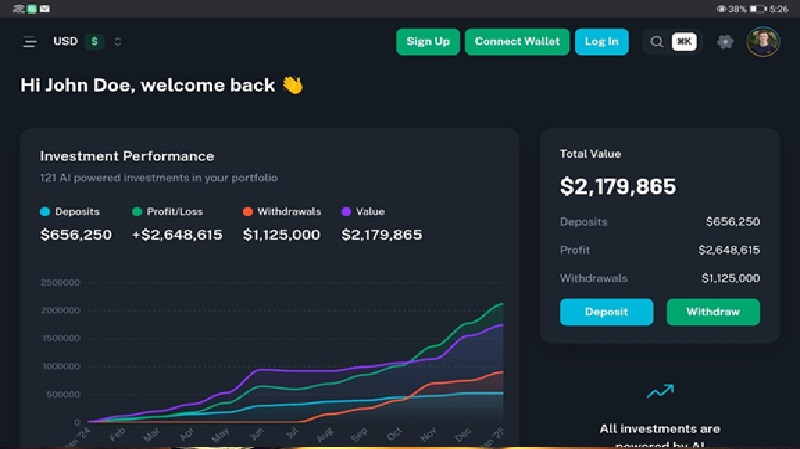
RCOF recently debuted its beta platform, giving early adopters access to live features like the robo-advisor, an AI dashboard showing you real-time investment analytics, smart portfolio management, custom watchlists, demo trading with live data, and more.

The platform has been a big hit in the DeFi space, racking up over 282,000+ app downloads and 122,000+ daily active users. That’s massive engagement for a platform still in its presale phase, showing there’s strong demand for RCOF’s innovative AI-powered approach and users are eager to have it.

Perhaps the most clear sign of RCO Finance’s upward trajectory is how quickly it is gaining institutional trust. In the 5th stage of the presale, a top-tier VC firm invested $7.5M, buying out the remainder of that stage and nearly half of the tokens allocated for the 6th stage.

Then, barely a few weeks later, a big tech venture capital firm tied to early ChatGPT funding bought out the rest of stage 6 and all of stage 7, pushing RCOF to its final presale phase at $0.16.

With these investments, RCOF has now raised $31 million, making it one of the fastest-rising presales of the year. The token price is locked at $0.16. But this won’t last past May 31st when it launches on Uniswap, with Binance and Coinbase listings to follow this summer. Once it goes live, price discovery will kick in, and based on current momentum, that price could skyrocket quickly.

When RCOF lists, the full team will be revealed, including a major name, a former board member at Microsoft. For serious investors, this is a game-changing trust signal.

Altogether, the ingredients for a major post-listing rally are all here: strong presale backing, high engagement, real utility, and blue-chip exchange exposure.

Your Final Shot to Join RCOF: Are You In?

With the XRP price holding steady and showing no real breakout potential, institutional and retail eyes are turning to RCOF, a project that’s more agile and ready to break out.

Powered by AI innovation, multi-asset trading, big VC backing, and major exchange listing in the pipeline, RCOF is flashing all the right signs. If it stays on track, a 1,200% rally and more are within reach.

The presale ends May 31st, making this your last chance to secure your stake while tokens are at $0.16. Will you be watching from the sidelines or riding the next breakout altcoin?

For more information about the RCO Finance (RCOF) Presale:

Visit RCO Finance Presale

Join The RCO Finance Community