
DD
MM
YYYY

PAGES

DD
MM
YYYY

spot_img

PAGES

Home Blog Page 12

White House Crypto Meeting and FWA’s NFT Gacha Strategy

0

The intersection of cryptocurrency, digital assets and mainstream policy is entering another important phase as the White House prepares to bring industry executives into the political conversation.

While platforms such as FWA continue experimenting with new ways to turn NFTs into consumer-focused digital experiences. The developments highlight how blockchain is moving beyond speculative trading and increasingly becoming part of both policy discussions and entertainment ecosystems.

The White House is reportedly preparing to host executives from the cryptocurrency and prediction-market industries on August 19. The gathering comes at a particularly important moment for the U.S. digital-asset industry, with lawmakers still struggling to advance the CLARITY Act.

The guest list and agenda remain subject to change, and it is not yet clear whether President Donald Trump will personally attend. The timing is significant because the Senate has postponed its consideration of the CLARITY Act until September.

The legislation is intended to establish clearer rules around digital assets, including how tokens are classified and which regulators should oversee different parts of the market. Crypto companies have strongly supported the bill, arguing that regulatory certainty could encourage investment, innovation and greater institutional participation.

The White House meeting could therefore become more than a symbolic gathering. Industry executives are likely to use the opportunity to emphasize issues surrounding market structure, stablecoins, prediction markets and the regulatory boundaries between federal agencies and states.

The fact that prediction-market companies are expected to participate is notable, given the growing legal battles surrounding platforms such as Kalshi and Polymarket. The meeting is expected shortly before the Commodity Futures Trading Commission convenes its Innovation Advisory Committee.

Putting crypto and prediction markets at the center of Washington’s financial-policy discussion. This creates the possibility of increased coordination between policymakers and industry leaders as the United States attempts to establish itself as a global hub for blockchain-based financial infrastructure.

Meanwhile, the NFT sector is pursuing a very different but equally important form of innovation. FWA is adding Art Blocks Curated NFTs to its gacha machine, while teasing additional NFT launches on the platform.

The move introduces curated digital art into a format more commonly associated with randomized digital collectibles, creating a bridge between established generative-art culture and gamified consumer experiences.

Art Blocks has played an important role in the evolution of generative NFT art, where algorithms and blockchain infrastructure combine to produce unique digital works. Bringing Art Blocks Curated NFTs into a gacha-style mechanism could make the collecting experience more interactive, potentially encouraging users to discover artists and works they might not otherwise encounter.

For FWA, the strategy could represent a broader attempt to make NFTs feel less like static assets and more like participation-based digital products. Instead of simply purchasing an NFT from a conventional marketplace, users can engage with a system built around anticipation, discovery and collection.

The combination of these developments illustrates two sides of blockchain’s maturation. Crypto is increasingly being discussed directly with government officials as an emerging financial industry. At the consumer level, NFTs are being redesigned into interactive experiences capable of reaching audiences beyond traditional crypto communities.

Whether through legislation in Washington or experimentation in digital entertainment, the blockchain industry is steadily moving toward a future where ownership, financial infrastructure and digital culture increasingly overlap.

The next phase may therefore depend not only on token prices, but on how effectively these technologies become integrated into everyday systems and experiences.

STS Digital to Accept and Pledge USDM1 Across Derivatives and Structured Products Books

Meanwhile, STS Digital Ltd., a Bermuda-regulated principal trading firm specializing in digital asset derivatives, structured products, and institutional liquidity solutions, announced that it will accept USDM1 from eligible counterparties and pledge the instrument as collateral across its over-the-counter derivatives, structured products, and financing relationships.

Through its institutional-grade trading infrastructure and principal market-making model, STS Digital provides institutional counterparties with access to deep liquidity, advanced derivatives capabilities, and bespoke solutions across digital asset markets.

The adoption of USDM1 further expands STS Digital’s commitment to bridging traditional financial infrastructure with the next generation of digital asset markets.

USDM1 brings on-chain collateral with 24/7 transferability into established institutional derivatives frameworks.

Although corporate digital dollar instruments are transferable on-chain, for institutions, perfecting security interests in them can present challenges. As instruments, they are often not covered in industry netting opinions. As a result, their ability to provide collateral and capital efficiencies is often limited.

USDM1 can be used as initial or variation margin under standard derivatives documentation supporting legally enforceable netting sets, and may reduce unsecured counterparty exposure and the amount of other collateral required to support a portfolio.

The economic significance of close-out netting is well established in traditional derivatives markets. Bank for International Settlements data show that, at year-end 2025, legally enforceable netting reduced the gross market value of outstanding OTC derivatives by approximately 85.3%, or $19.4 trillion.

USDM1 brings on-chain collateral into the frameworks supporting these efficiencies. USDM1 is compatible with repo and secured-financing arrangements under standard GMRA and GMSLA documentation and accrues a sovereign coupon.

It enables title-transfer repo, collateral substitution and reuse within established institutional frameworks. When held unencumbered, USDM1 maintains look-through to the credit of pledged US Treasury instruments and supports treatment as Level 1 HQLA under Basel standards.

Maxime Seiler, CEO of STS Digital, said: “As a principal derivatives dealer, collateral efficiency directly affects how we price, fund and scale our book. Accepting USDM1 from eligible counterparties, pledging it across our own trading and financing relationships and utilizing it in structured products supports more efficient inventory financing, tighter client pricing and greater trading capacity per dollar of balance sheet.”

Jordan Goldman, President and Chief Operating Officer of M1X Global, said: “STS Digital is one of the most active and sophisticated crypto derivatives dealers. As digital assets enter a new phase of institutional adoption, USDM1 connects on-chain markets with the legal, collateral and risk-management frameworks regulated institutional counterparties require while preserving the benefits of 24/7 settlement.”

USDM1 is a fully collateralized, USD-denominated sovereign bond natively issued on-chain by the Republic of the Marshall Islands.

It is structured in the style of a Brady bond under New York law, with an explicit customary waiver of sovereign immunity, and secured on a 1:1 basis by short-duration US Treasury instruments pledged by a US trust company in a bankruptcy-remote structure.

The Republic of the Marshall Islands operates exclusively on the US dollar standard under its Compact of Free Association with the United States. As a dollar-denominated sovereign obligation, USDM1 does not carry foreign-exchange or convertibility risk.

Holders maintain enforceable rights to par redemption against a sovereign issuer and a perfected, first-priority security interest in Treasury collateral under UCC 8/9. USDM1 is compatible with ISDA, GMRA and GMSLA agreements for derivatives, repo and secured lending, and is eligible for robust US close-out netting protections.

Cleary Gottlieb Steen & Hamilton LLP serves as issuer’s counsel and advised with respect to the structuring of the instrument under New York law, with the participation of partners specializing in sovereign debt, UCC and secured transactions, creditors’ rights, netting and digital asset markets.
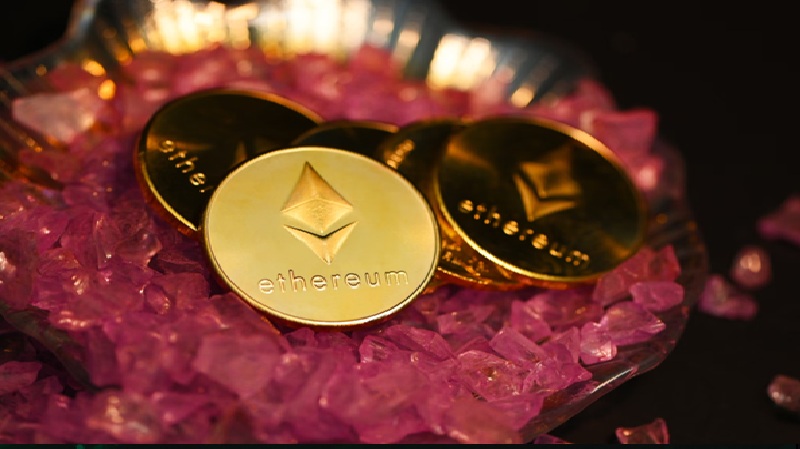

FG Nexus Sells, Norway Holds $82M BMNR and SharpLink Stakes $200M ETH

0

The corporate Ethereum treasury market is entering a more complex phase, with companies and institutional investors taking increasingly different approaches to digital assets.

FG Nexus is reportedly selling its digital-asset holdings after pivoting toward an Ethereum-focused digital asset treasury strategy, Norway’s sovereign wealth fund has disclosed an $82 million position in BitMine Immersion Technologies, and SharpLink is preparing to stake $200 million worth of ETH through Lido.

The moves highlight the rapidly evolving relationship between traditional finance, corporate treasuries and Ethereum. FG Nexus’ strategy illustrates the challenges facing digital asset treasury companies.

The firm originally positioned Ethereum as its primary treasury reserve asset, raising capital specifically to accelerate its ETH accumulation. Yet treasury companies are increasingly being forced to balance their crypto holdings against shareholder value, liquidity requirements and the performance of their own stocks.

FG Nexus previously sold 10,922 ETH to finance share repurchases, demonstrating how quickly a DAT strategy can shift when market conditions change. The Norwegian sovereign wealth fund presents the opposite side of the equation.

Norway’s Government Pension Fund Global, one of the world’s largest institutional investors, now holds approximately $82 million worth of BitMine Immersion Technologies shares.

The investment provides the fund with indirect exposure to Ethereum because BitMine operates as a major Ethereum treasury company. That distinction matters. Norway has not simply purchased ETH and placed it directly on its balance sheet.

Instead, its BMNR position gives the sovereign fund exposure through a publicly traded company whose value and strategy are closely connected to Ethereum. The development nevertheless signals growing institutional recognition of crypto-treasury companies as a potential bridge between conventional capital markets and digital assets.

SharpLink is taking yet another approach. The Ethereum treasury company plans to deploy $200 million of ETH into staking through Lido, receiving wrapped staked ETH, or wstETH, in return. The assets are expected to be held with institutional custodian Anchorage Digital.

The move is significant because it transforms a passive ETH treasury into a productive balance-sheet asset. Instead of simply holding Ethereum and waiting for price appreciation, SharpLink can generate staking rewards while retaining a liquid representation of its staked position through wstETH.

The strategy also expands the company’s participation in Ethereum’s decentralized finance ecosystem. SharpLink’s allocation represents roughly 12% of the 888,938 ETH equivalents it reported holding as of August 3, according to recent reports.

That scale demonstrates how corporate Ethereum treasuries are moving beyond accumulation toward active capital management. These developments show that the institutional Ethereum story is no longer simply about buying and holding ETH.

Some companies are selling assets to strengthen their equity positions, sovereign investors are gaining indirect exposure through treasury firms, while others are seeking yield by staking their holdings.

The emerging competition may determine which treasury model proves most sustainable. For Ethereum, the broader trend remains important: ETH is increasingly being treated not merely as a speculative cryptocurrency.

But as a strategic financial asset capable of serving as a reserve, productive treasury instrument and gateway into decentralized finance. The developments underline the growing importance of staking yields in corporate crypto management.

As ETH treasury firms accumulate larger positions, generating on-chain income could become an important component of their investment models. This may encourage more companies to combine Ethereum price exposure with staking rewards, creating treasury strategies that resemble conventional income-generating investments while maintaining digital asset exposure.

Yen Intervention Loses Grip as BOJ Rate-Hike Bets Surge

0

Japan’s currency market is once again testing the limits of government intervention, with the yen weakening sharply despite Tokyo’s recent efforts to stabilize it.

Two weeks ago, Polymarket traders placed the odds of the Bank of Japan delivering a rate hike in September at only 22%. That probability has now surged above 80%, reflecting a growing belief that intervention alone may not be enough to stop the yen’s slide.

The yen fell roughly 1% against the U.S. dollar this week to around 159.43, putting it on track for its worst weekly performance since May. The move has erased approximately half of the gains achieved after Japan’s coordinated intervention in late July and early August.

The reversal highlights a persistent problem for Japanese policymakers: currency intervention can temporarily influence exchange rates, but it cannot easily change the underlying forces driving the market.

Japan has faced repeated pressure on the yen because of the wide interest-rate differential between Japan and the United States.

While the Federal Reserve has maintained comparatively restrictive monetary conditions, the BOJ has been cautious about tightening policy. That divergence has encouraged investors to hold dollar-denominated assets and sell the yen, creating sustained downward pressure on Japan’s currency.

Tokyo’s interventions have therefore produced only temporary relief. A similar pattern emerged following intervention in April, when the yen initially strengthened before gradually weakening again toward levels near its four-decade lows.

The latest reversal is raising concerns that policymakers may once again be forced to rely on monetary policy rather than foreign-exchange operations to defend the currency.

Strategists increasingly argue that a genuinely hawkish BOJ represents the most credible long-term support for the yen.

A rate increase would potentially narrow the yield gap between Japan and other major economies, making yen-denominated assets more attractive and reducing incentives for investors to maintain yen-funded carry trades.

That expectation appears to be reflected in prediction markets. The dramatic increase in September rate-hike odds suggests traders are positioning for the BOJ to recognize that currency weakness has become increasingly difficult to contain through intervention alone.

However, the market is also becoming vulnerable to a significant reversal if policymakers disappoint those expectations. If the BOJ decides to keep rates unchanged in September.

Traders could interpret the decision as confirmation that Japanese monetary policy remains too accommodative to support the currency. In that scenario, the yen could quickly weaken beyond the psychologically important 160-per-dollar threshold.

Such a move would put additional pressure on Japanese authorities and potentially force them to consider another round of intervention. Yet repeated interventions without a corresponding change in monetary policy could produce diminishing returns.

The yen’s latest decline therefore represents more than another currency-market fluctuation. It is becoming a test of whether Japan can successfully align fiscal, foreign-exchange and monetary policy to restore confidence in its currency.

With rate-hike expectations now above 80%, the September BOJ meeting has become increasingly important. Markets are no longer simply asking whether Japan will intervene. They are asking whether the central bank is prepared to deliver the policy shift necessary to make that intervention sustainable.

BANKR’s Robinhood Chain Push and Reddit’s S&P 500 Breakthrough Signal a New Era of Retail Market Power

0

The intersection of decentralized finance and traditional markets is becoming increasingly difficult to ignore, with two developments this week highlighting how rapidly retail-driven financial ecosystems are evolving.

BANKR is reportedly preparing to deploy Pools.fun’s launchpad on Robinhood Chain with a native token, while Reddit is set to join the S&P 500 next week after its shares surged more than 10% following the announcement.

BANKR’s expected move places it directly inside the growing competition for token-launch infrastructure on Robinhood Chain. The network has already attracted multiple launchpad projects.

While Uniswap recently introduced its own Pools launchpad, allowing new tokens to launch through different mechanisms and transition into liquidity pools.

A BANKR deployment could therefore add another significant participant to an increasingly crowded ecosystem. The addition of a native token would potentially give the platform an economic layer beyond simply providing token-creation infrastructure.

Depending on its final design, the token could be connected to governance, incentives, liquidity, platform activity or other functions within the launchpad. The significance goes beyond BANKR itself.

Robinhood Chain is positioning itself as infrastructure for onchain financial activity, with Robinhood highlighting capabilities such as 24/7 trading and the ability to use tokenized assets in lending pools and as collateral across decentralized finance.

This creates fertile ground for launchpads that can transform retail attention into new onchain markets. The launchpad race could also become an important test of whether retail users are prepared to move beyond speculative token trading toward deeper participation in decentralized applications.

If BANKR successfully integrates Pools.fun with Robinhood Chain, the platform could benefit from Robinhood’s expanding user base while bringing new liquidity and attention into the chain’s ecosystem. Native-token incentives could further intensify competition among launchpads.

The other major development is Reddit’s arrival in the S&P 500. S&P Dow Jones Indices confirmed that Reddit will replace AvalonBay Communities, with the change becoming effective before trading opens on August 18. The announcement immediately triggered a powerful reaction.

Reddit shares jumped roughly 11% in after-hours trading and later gained more than 12% in premarket activity. The rally reflects more than investor enthusiasm: inclusion in the S&P 500 typically creates automatic demand from index-tracking funds.

Reuters reported that funds tracking the benchmark could need to purchase approximately 16.7 million Reddit shares, nearly three times the stock’s average daily trading volume since its 2024 public listing. That mechanical demand can create significant short-term price pressure as institutional portfolios rebalance.

Yet Reddit’s S&P 500 inclusion represents a broader transformation of the platform. Reddit began as a community-driven social network and became deeply influential in financial markets, particularly during the meme-stock era. Its elevation into the S&P 500 demonstrates how a platform built around online communities has evolved into a major publicly traded technology company.

There are still risks. Reddit has faced concerns surrounding user growth, search traffic and the changing relationship between traditional search engines and AI-generated answers. The immediate rally therefore does not guarantee sustained gains.

Investors will focus on whether Reddit can convert its enormous community into durable advertising, data and AI-related revenue opportunities.

BANKR’s potential Robinhood Chain expansion and Reddit’s S&P 500 inclusion illustrate two sides of the same market transformation. One is moving financial experimentation further onchain.

While the other shows how internet-native communities can mature into institutional market assets. As Robinhood Chain attracts more token infrastructure and Reddit gains deeper exposure to passive investment flows, the boundary between retail culture, technology and mainstream finance continues to disappear.

OpenAI Shake-Up Continues as Senior Executives Walk Away

0

OpenAI’s leadership shake-up is continuing, with a second major executive departure this week adding to a growing list of senior figures who have left the artificial intelligence company.

Chief Revenue Officer Denise Dresser announced her departure after less than a year at OpenAI, following the exit of longtime executive Brad Lightcap just days earlier. The latest changes are particularly significant because they arrive as OpenAI prepares for a potential public offering and intensifies its competition with Anthropic.

Dresser joined OpenAI in December after previously serving as CEO of Slack. Her departure follows Lightcap, who joined OpenAI in 2018 and had served as chief operating officer before transitioning to special projects.

Lightcap said he was leaving to start a new venture, suggesting that the movement of experienced AI executives may create new competitors rather than simply removing talent from the industry.

The two departures are only the latest in a much broader executive reshuffling.

Other prominent names who have exited or moved away from major operational roles include Fidji Simo, who had been leading OpenAI’s applications business and later its AGI deployment efforts, Kevin Weil, the company’s former chief product officer, and Kate Rouch, its former chief marketing officer.

Their departures demonstrate how dramatically OpenAI’s leadership structure has changed as the organization has expanded from a research laboratory into a major commercial technology company. For investors, the turnover raises an interesting question.

Is it better to find a way to buy into OpenAI or Anthropic, or to build the next company capable of challenging them? Private-market access to the leading AI laboratories is difficult. Unlike publicly traded technology companies.

Some of the people leaving leading AI laboratories are precisely the individuals with the experience, technical knowledge and industry relationships required to build ambitious startups. Lightcap’s decision to launch a new venture is a clear example of how executive departures can potentially become the foundation for another generation of AI companies.

The same pattern has appeared throughout Silicon Valley. Large technology companies attract exceptional researchers and operators, provide them with resources and expose them to enormous markets. Eventually, some of those people leave and use what they learned to build something independently.

Of course, creating another OpenAI or Anthropic is extraordinarily difficult. Frontier AI development requires massive computing resources, specialized chips, research talent, data and billions of dollars in capital. Startups cannot simply replicate the infrastructure of established laboratories.

But they do not necessarily have to. The next major AI company could specialize in autonomous agents, enterprise software, robotics, cybersecurity, AI infrastructure or a completely new category that has not yet emerged.

That is why OpenAI’s current shake-up deserves attention beyond the company’s immediate corporate structure.

Denise Dresser, Brad Lightcap, Fidji Simo, Kevin Weil and Kate Rouch represent different parts of OpenAI’s leadership evolution, and their departures illustrate how quickly the industry is changing.

For entrepreneurs, that disruption could be an opportunity. The next OpenAI may not be bought on a secondary market. It may be founded by someone who previously worked inside today’s leading AI companies.