

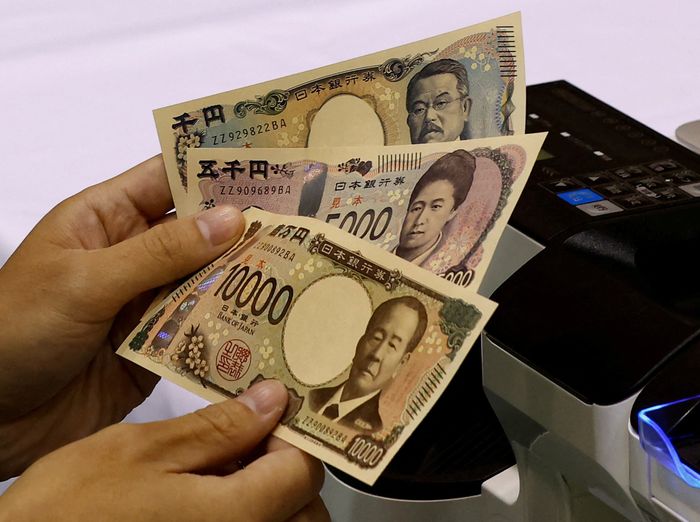
Japan’s currency market is once again testing the limits of government intervention, with the yen weakening sharply despite Tokyo’s recent efforts to stabilize it.
Two weeks ago, Polymarket traders placed the odds of the Bank of Japan delivering a rate hike in September at only 22%. That probability has now surged above 80%, reflecting a growing belief that intervention alone may not be enough to stop the yen’s slide.
The yen fell roughly 1% against the U.S. dollar this week to around 159.43, putting it on track for its worst weekly performance since May. The move has erased approximately half of the gains achieved after Japan’s coordinated intervention in late July and early August.
Register for the next Tekedia Mini-MBA.
Register for Tekedia AI in Business Masterclass.
Join Tekedia Capital Syndicate and co-invest in great global startups.
The reversal highlights a persistent problem for Japanese policymakers: currency intervention can temporarily influence exchange rates, but it cannot easily change the underlying forces driving the market.
Japan has faced repeated pressure on the yen because of the wide interest-rate differential between Japan and the United States.
While the Federal Reserve has maintained comparatively restrictive monetary conditions, the BOJ has been cautious about tightening policy. That divergence has encouraged investors to hold dollar-denominated assets and sell the yen, creating sustained downward pressure on Japan’s currency.
Tokyo’s interventions have therefore produced only temporary relief. A similar pattern emerged following intervention in April, when the yen initially strengthened before gradually weakening again toward levels near its four-decade lows.

The latest reversal is raising concerns that policymakers may once again be forced to rely on monetary policy rather than foreign-exchange operations to defend the currency.
Strategists increasingly argue that a genuinely hawkish BOJ represents the most credible long-term support for the yen.
A rate increase would potentially narrow the yield gap between Japan and other major economies, making yen-denominated assets more attractive and reducing incentives for investors to maintain yen-funded carry trades.
That expectation appears to be reflected in prediction markets. The dramatic increase in September rate-hike odds suggests traders are positioning for the BOJ to recognize that currency weakness has become increasingly difficult to contain through intervention alone.

However, the market is also becoming vulnerable to a significant reversal if policymakers disappoint those expectations. If the BOJ decides to keep rates unchanged in September.
Traders could interpret the decision as confirmation that Japanese monetary policy remains too accommodative to support the currency. In that scenario, the yen could quickly weaken beyond the psychologically important 160-per-dollar threshold.
Such a move would put additional pressure on Japanese authorities and potentially force them to consider another round of intervention. Yet repeated interventions without a corresponding change in monetary policy could produce diminishing returns.
The yen’s latest decline therefore represents more than another currency-market fluctuation. It is becoming a test of whether Japan can successfully align fiscal, foreign-exchange and monetary policy to restore confidence in its currency.
With rate-hike expectations now above 80%, the September BOJ meeting has become increasingly important. Markets are no longer simply asking whether Japan will intervene. They are asking whether the central bank is prepared to deliver the policy shift necessary to make that intervention sustainable.