DD
MM
YYYY

PAGES

DD
MM
YYYY

spot_img

PAGES

Home Blog Page 12

SoftBank Acquires DigitalBridge for $4bn to Bolster AI Infrastructure

0

SoftBank Group has agreed to acquire DigitalBridge Group, a leading global digital infrastructure investment firm, in an all-cash transaction with an enterprise value of approximately $4 billion.

The deal, announced Monday, represents a major escalation in founder Masayoshi Son’s aggressive push to dominate the physical backbone of artificial intelligence, securing critical data center capacity, connectivity, and power assets essential for next-generation AI scaling. Under the terms, SoftBank will pay $16 per share for all outstanding common stock of DigitalBridge—a 15% premium to Friday’s closing price and a 50-65% premium to pre-rumor levels earlier in December.

The acquisition values the equity at about $2.92-3 billion, with closure expected in the second half of 2026 pending regulatory approvals. DigitalBridge shares surged 9.7% to $15.27 in Monday trading, building on a 45% rally earlier this month after initial reports of talks. The stock approached but remained slightly below the offer price, reflecting anticipation of deal completion.

As AI transforms industries worldwide, the need for more compute, connectivity, power, and scalable infrastructure, grows. DigitalBridge is a leader in digital infrastructure, and this acquisition is expected to strengthen the foundation for next-generation AI data centers, advance Softbank’s vision to become a leading Artificial Super Intelligence platform provider, and help unlock breakthroughs that move humanity forward.

DigitalBridge CEO Jacob Yahiayani noted that the buildout of AI infrastructure represents one of the most significant investment opportunities of our generation. SoftBank’s vision, capital strength, and global network are expected to allow DigitalBridge to accelerate its mission with greater flexibility, invest with a longer-term horizon on behalf of our investors, and better serve the world’s leading technology companies as they scale their AI ambitions.

Post-closing, DigitalBridge will operate as a separately managed platform under Ganzi’s leadership, preserving its operational independence while integrating into SoftBank’s ecosystem. DigitalBridge, founded in 1991 as real estate-focused Colony Capital and rebranded in 2021 after a pivot under Ganzi, manages $108 billion in assets as of September 30, 2025. Its portfolio spans data centers, fiber networks, cell towers, small cells, and edge infrastructure across North America, Europe, Asia, and the Middle East—making it one of the largest dedicated digital infrastructure investors globally.

The acquisition directly enhances SoftBank’s involvement in the Stargate project, a $500 billion AI infrastructure initiative with OpenAI, Oracle, and MGX. DigitalBridge participates in Stargate, including Vantage’s near-gigawatt Wisconsin campus. Recent expansions brought Stargate to nearly 7 gigawatts of planned capacity across sites in Texas, New Mexico, Ohio, and the Midwest, with over $400 billion committed—putting the venture ahead of schedule toward its 10-gigawatt U.S. goal by year-end.

Son’s 2025 AI strategy has been relentless: SoftBank committed up to $30 billion to OpenAI (including syndicated portions), liquidated its $5.8 billion Nvidia stake to fund commitments, and pursued aggressive financing. The DigitalBridge deal follows Son’s public assertions of pursuing Artificial Super Intelligence, dismissing bubble concerns while predicting AI will generate at least 10% of global GDP.

Market reactions were positive in thin holiday volume: SoftBank shares edged higher, while analysts praised the strategic fit for securing scarce AI-enabling assets amid hyperscaler demand. The move positions SoftBank to control more of the “picks and shovels” in AI—namely, data centers, power, and networks—complementing its investments in Arm, OpenAI, and robotics.

Tinubu Approves Cancellation of $1.42bn, N5.57 Trillion NNPC Debts to Federation Account

0

President Bola Tinubu has approved the cancellation of about $1.42 billion and N5.57 trillion in outstanding debts owed by the Nigerian National Petroleum Company Limited (NNPC Ltd) to the Federation Account, a move that significantly reshapes the fiscal relationship between the state-owned oil firm and the federal government.

The approval was contained in a document issued by the Nigerian Upstream Petroleum Regulatory Commission (NUPRC) and presented at the Federation Account Allocation Committee (FAAC) meeting held in November 2025. The development was disclosed in a statement published on Monday on the official X page of the Presidency.

“President Bola Ahmed Tinubu has approved the cancellation of a substantial portion of NNPC Ltd’s outstanding debts owed to the Federation Account, effectively wiping out approximately $1.42 billion in legacy obligations,” the statement said.

Scope of the debt cancellation

According to the document, the cancelled liabilities relate to legacy obligations incurred by NNPC Ltd up to December 31, 2024. These include debts arising from production sharing contracts (PSCs), domestic crude oil supply obligations, repayment agreements, modified carry arrangements, as well as joint venture and PSC royalty receivables owed to the Federation.

The presidency said the decision followed recommendations by the Stakeholder Alignment Committee, which was established to reconcile long-standing debts between NNPC Ltd and the Federation Account. It added that the necessary accounting adjustments have already been effected to reflect the write-off.

However, the government clarified that obligations incurred between January and October 2025 were excluded from the cancellation. Those debts remain outstanding and are being actively tracked and recovered.

Reform push amid scrutiny

The debt write-off comes as the Tinubu administration continues reforms in the oil and gas sector, aimed at resolving legacy financial issues, stabilizing public revenues and improving transparency at NNPC Ltd, which was commercialized under the Petroleum Industry Act.

In recent years, the national oil company has faced sustained criticism over governance, transparency and accountability, particularly amid Nigeria’s fuel supply challenges and declining oil output.

The latest report by the Auditor-General of the Federation, published in September and recently submitted to the National Assembly, highlighted what it described as systemic violations of financial regulations within NNPC Ltd. The audit cited weak internal controls, unexplained payments and irregularities linked to controversial contracts.

The report accused the company of fund misappropriation, inflated contracts, irregular payments and failure to deduct and remit statutory taxes.

One example cited was NNPC’s failure to deduct the statutory one percent stamp duty on payments totaling N24.7 billion and $52.98 million made to contractors and service providers. According to the audit, this resulted in unpaid taxes of N247 million and $529,863. The anomalies, which occurred between 2020 and 2021, involved more than $51 million in questionable settlements.

Unresolved under-remittance dispute

The NUPRC document presented at FAAC also referenced a separate and long-running dispute over an alleged under-remittance of $42.37 billion between 2011 and 2017. That claim, which has featured in previous audits and legislative reviews, remains unresolved.

NNPC Ltd has consistently rejected the allegation, insisting that all revenues due to the Federation during the period were properly accounted for.

“A separate, long-running dispute over an alleged under-remittance of $42.37 billion (2011–2017) remains unresolved, with NNPC Ltd rejecting the claims and insisting all revenues were properly accounted for,” the presidency said.

The debt cancellation eases pressure on NNPC Ltd’s balance sheet and could improve cash flow for the commercialized entity, but it also raises fresh questions about accountability and the long-term handling of public oil revenues. Analysts say the move underscores the scale of legacy financial entanglements in Nigeria’s energy sector, even as the government pushes for stricter oversight and reform.

The challenge for the Tinubu administration now lies in ensuring that new obligations do not add to the pile of unresolved debts, while outstanding audit issues and disputes over past remittances are conclusively addressed.

Verisk Abandons $2.35bn AccuLynx Acquisition After FTC Review Delay, Setting Stage for Legal Dispute

0

Verisk has terminated its planned $2.35 billion acquisition of roofing software firm AccuLynx after U.S. antitrust regulators failed to complete their review by the deal’s final deadline.

The development pinpoints how prolonged regulatory scrutiny continues to reshape the calculus for large technology and data-driven transactions.

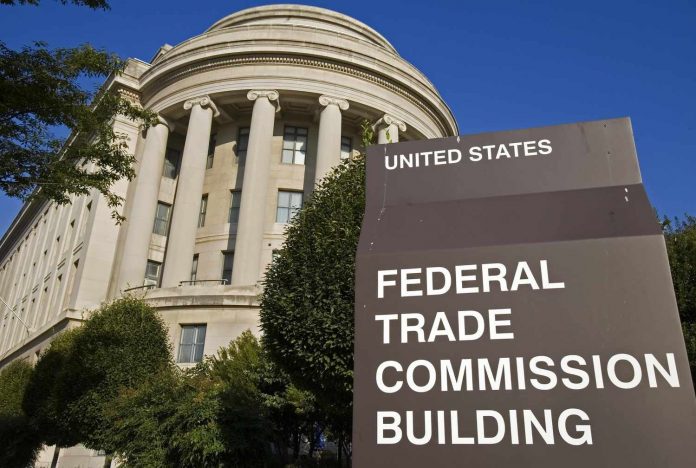
The data analytics company said on Monday that it pulled the plug after being notified by the U.S. Federal Trade Commission that the agency had not finished reviewing the deal by December 26, the termination date set under the merger agreement. The transaction, announced in July, had initially been expected to close by the third quarter of 2025 before regulatory delays pushed the timeline back.

The decision immediately sparked a dispute between the two companies. AccuLynx has notified Verisk that it believes the termination is “invalid,” while Verisk said it “strongly disagrees” with that assessment and intends to “vigorously defend” its position. The standoff raises the prospect of a legal battle over whether Verisk was contractually entitled to walk away once the regulatory clock expired.

Verisk shares rose 1.7% in afternoon trading, suggesting investors were largely relieved by the outcome or saw limited strategic damage from the abandoned deal. Analysts at Raymond James said the termination could free up capital and potentially lead to incrementally higher share repurchases in 2026, now that Verisk will not need to deploy cash for the acquisition.

The deal had faced mounting uncertainty since October, when the FTC requested additional information from both Verisk and AccuLynx, a step that typically signals a deeper antitrust review and can extend timelines by several months. At the time, Verisk executives said discussions with regulators were progressing, but the extended review ultimately prevented the transaction from closing within the agreed window.

Verisk is believed to have given regulators additional time to complete their work by extending the termination date to December 26. When that deadline passed without clearance, the company opted to abandon the deal rather than face what could have become a protracted regulatory and legal process. In similar cases, companies often must choose between litigating against regulators—a process that can take years and carry reputational and financial risks—or walking away from the transaction altogether.

Founded in 2008, AccuLynx provides cloud-based software designed to help roofing contractors manage sales, estimates, production workflows, and overall business operations. The acquisition was intended to deepen Verisk’s exposure to construction and property-related analytics, complementing its core businesses that serve insurers, risk managers, and corporate clients with data-driven insights.

The transaction would have been one of Verisk’s largest strategic moves in recent years, reflecting a broader push among data and analytics firms to expand vertically into software platforms that generate proprietary operational data. Regulatory scrutiny of such combinations has intensified as authorities examine whether data consolidation could reduce competition or create barriers for smaller rivals.

With the acquisition now off the table, Verisk said it plans to redeem the $1.5 billion of debt it issued to finance the deal, reversing a key component of the transaction’s capital structure. That move is expected to strengthen the company’s balance sheet and restore financial flexibility, particularly as uncertainty persists around the pace of deal approvals in the U.S.

China Announces Tariff Cuts on Key Commodities and Medical Products Starting 2026

0

China will implement tariff reductions on a range of imported products beginning January 1, 2026, including resource-based commodities and medical supplies, as part of ongoing adjustments to its trade policy.

The cuts, detailed in a statement from the Customs Tariff Commission of the State Council on Monday, aim to lower costs for critical inputs, support domestic industries, and enhance access to advanced technologies amid global supply chain shifts and economic recovery efforts. Key reductions target resource-based commodities such as recycled black powder used in lithium-ion batteries—a vital material for EV and energy storage production—reflecting China’s push to secure sustainable supply chains for its dominant battery sector, which controls over 80% of global manufacturing capacity.

The country will also lower levies on medical products, including artificial blood vessels and diagnostic kits for certain infectious diseases, to facilitate imports of advanced healthcare technologies and reagents, building on post-pandemic priorities for public health resilience. The commission specified that provisional import tariff rates for 935 products will be set below the most-favored-nation rates applied to all World Trade Organization members, granting preferential access to selected goods.

While the full list of affected items was not immediately released, the adjustments are expected to cover high-tech components, raw materials for strategic industries, and essential consumer goods, continuing a pattern from previous annual revisions that involved similar numbers of products in sectors like machinery, chemicals, and agriculture. The move comes as China balances import facilitation with domestic protectionism.

In 2025, the country has navigated trade tensions—including retaliatory duties on EU dairy (up to 42.7% from December 23) and ongoing U.S. tariff disputes—while promoting high-tech self-reliance under the Made in China 2025 framework. Lowering duties on battery materials supports the nation’s EV dominance and circular economy goals, such as recycling targets under the 14th Five-Year Plan (2021-2025), which emphasize green manufacturing and resource efficiency. Medical cuts align with efforts to bolster healthcare innovation, following investments exceeding 1 trillion yuan in biotech and pharmaceuticals this year.

Analysts interpret the adjustments as strategic signals of selective opening. Some believe the targeted reductions prioritize inputs that complement China’s industrial strengths, reducing costs for manufacturers while maintaining leverage in broader negotiations.

The changes could lower import expenses by 5-15% for affected categories, benefiting sectors like renewable energy with a projected 20% growth in 2026, and healthcare, aiming for universal coverage enhancements. No immediate market reactions were observed in thin holiday trading, but sectors like battery manufacturers and medical importers may benefit from cost savings, potentially boosting stock performance in Shanghai and Shenzhen indices.

Globally, the cuts could ease pressures on suppliers from Australia’s lithium resources and Europe’s medical tech, amid a projected 3.5% rise in China’s imports to $3.2 trillion in 2026. As global trade dynamics evolve—with potential U.S. policy shifts and EU-China frictions—these tariff tweaks underscore Beijing’s calibrated approach to fostering imports that complement domestic strengths without undermining industrial policy objectives, while navigating a slowing economy with 4.7% GDP growth in 2025 and external uncertainties.

The full HS code list and exact rate reductions are expected in supplementary notices from the General Administration of Customs by year-end.

Nvidia Completes $5bn Intel Share Purchase, Offering Key Lifeline to Struggling Chipmaker

0

Nvidia has completed a $5 billion investment in Intel, finalizing a closely watched transaction that underscores both Intel’s financial strain after years of strategic missteps and Nvidia’s growing influence across the global semiconductor ecosystem.

In a filing on Monday, Intel confirmed that Nvidia purchased more than 214.7 million Intel common shares at a price of $23.28 per share, in line with the terms announced in September. The shares were acquired through a private placement, giving Nvidia a significant minority stake in the U.S. chipmaker at a time when Intel is undergoing one of the most difficult transitions in its history.

The deal had already received regulatory clearance, with U.S. antitrust agencies signing off earlier in December. A notice posted by the Federal Trade Commission indicated that the investment did not raise immediate competition concerns, despite Nvidia’s dominant position in artificial intelligence chips and Intel’s central role in both chip design and manufacturing.

The transaction is widely viewed as a crucial financial lifeline for Intel. The company has spent the past several years grappling with lost technological leadership, delays in advanced manufacturing processes, and fierce competition from rivals such as AMD and TSMC. At the same time, Intel has embarked on an ambitious and costly strategy to rebuild its manufacturing base, committing tens of billions of dollars to new fabrication plants in the United States and Europe as it seeks to become a major contract chipmaker for external customers.

Those capital-intensive expansions have weighed heavily on Intel’s balance sheet, draining cash flow and putting pressure on margins. The Nvidia investment provides a significant infusion of capital that can help support Intel’s turnaround plans, shore up investor confidence, and complement government subsidies Intel has secured under U.S. and European semiconductor industrial policies.

Nvidia, by contrast, is entering the deal from a position of exceptional strength. The company has surged to become the world’s most valuable firm, fueled by explosive demand for its AI accelerators, which are now the backbone of data centers powering large language models and other AI systems. While Nvidia does not manufacture chips itself and relies heavily on Taiwan Semiconductor Manufacturing Company, its investment in Intel signals a strategic interest in reinforcing the broader U.S. semiconductor supply chain.

Although neither company has described the transaction as a strategic partnership, the deal deepens financial ties between the two firms that have traditionally competed in data center processors and other segments. Analysts say Nvidia’s move may also be interpreted as a vote of confidence in Intel’s long-term manufacturing ambitions, particularly as geopolitical tensions and U.S. policy increasingly prioritize domestic chip production.

Market reaction to the completion of the deal was subdued. Nvidia shares slipped about 1.3% in premarket trading, while Intel stock was little changed, suggesting investors had largely priced in the transaction since its announcement in September.

The investment comes at a time when the semiconductor industry is being reshaped by artificial intelligence, geopolitical rivalries, and government intervention. Washington has made semiconductor self-sufficiency a strategic priority, encouraging private capital to complement public funding. Intel sits at the center of that effort, but execution risks remain high.

However, by finalizing the $5 billion share purchase, Nvidia has reinforced Intel’s near-term financial position while positioning itself closer to the policy and industrial currents reshaping the chip sector. Another highlight of the deal is that in today’s semiconductor landscape, fierce competitors can also become strategic partners as the industry adapts to unprecedented technological and political change.