DD
MM
YYYY

PAGES

DD
MM
YYYY

spot_img

PAGES

Home Blog Page 1205

Woo Casino game providers – NetEnt, Microgaming, Pragmatic Play and others

0

At Woo Casino, players can explore a diverse range of games from some of the industry’s most revered software providers, including NetEnt, Microgaming, and Pragmatic Play. Each provider brings its own unique flair and innovative mechanics to the table. NetEnt is renowned for its high-quality graphics and engaging themes, particularly evident in slots like “Starburst” and “Gonzo’s Quest”. Meanwhile, Microgaming offers an extensive library that includes iconic titles like “Mega Moolah”, known for its record-breaking jackpots. Pragmatic Play is celebrated for its dynamic game features and live casino offerings. By partnering with these and other top-tier providers, Woo Casino ensures a premium gaming experience that caters to a wide variety of player preferences.

Overview of Woo Casino’s Key Providers

Woo Casino collaborates with some of the most prominent game developers in the online gambling industry, ensuring a diverse and high-quality gaming experience. The key providers of Woo Casino include NetEnt, Microgaming, Pragmatic Play, and many others, each bringing their unique offerings to the platform. These developers are renowned for their innovation, reliability, and a vast range of game types, catering to the diverse preferences of players.

The partnership with these leading game developers allows Woo Casino to offer an extensive library of games, from slot machines to live dealer options. With the latest technology and graphics, players enjoy a seamless and engaging experience. Furthermore, the games are regularly updated to include new features and enhancements, ensuring that the players are consistently entertained.

Key Providers

  • NetEnt: Known for their high-quality graphics and innovative gameplay, NetEnt offers popular slots like Starburst and Gonzo’s Quest. Their focus on creating engaging storylines and unique features makes them a player favorite.
  • Microgaming: A pioneer in the online gaming industry, Microgaming provides a vast portfolio including progressive jackpot games such as Mega Moolah. Their consistent release of new games keeps the casino’s library fresh and exciting.
  • Pragmatic Play: Offering a range of products from slots to live casino games, Pragmatic Play is celebrated for its versatile games and high-quality live streaming technologies that bring a real-life casino experience to players.

In addition to these top-tier providers, Woo Casino also collaborates with emerging developers, ensuring a mix of popular and novel gaming options. This strategy not only attracts a wide range of players but also fosters an environment where innovation is continuously encouraged.

To enhance your gaming experience at Woo Casino, it is recommended to explore games from different providers. This will not only diversify your gameplay but also increase the chances of discovering new favorites. The combination of established and emerging providers guarantees quality, variety, and continuous entertainment.

Game Specifications by Provider

The gaming landscape at Woo Casino is rich with options, thanks to its collaboration with renowned game providers like NetEnt, Microgaming, and Pragmatic Play. Each of these providers comes with unique game specifications, catering to different player preferences and enhancing the overall gaming experience. Analyzing these specifications helps players make informed choices based on gameplay features, RTP rates, and thematic elements. Below, we delve into the specifics of the most popular providers featured at Woo Casino.

Understanding game specifications is crucial for maximizing enjoyment and strategy. Factors such as Return to Player (RTP) percentages, volatility levels, bonus features, and mechanical design vary significantly across different providers. Players should consider these elements based on individual preferences for risk and gameplay style. Let’s take a closer look at the specifications offered by each of these top-tier providers.

Provider-Specific Game Features

  • NetEnt 

Known for its cutting-edge technology and innovative design, NetEnt’s games often feature high-definition graphics and immersive themes. The average RTP for NetEnt slots is around 96%, offering balanced volatility options that cater to both casual players and high rollers. Key titles such as Starburst and Gonzo’s Quest are renowned for their interactive features and appealing bonus rounds.

  • Microgaming 

Microgaming offers a vast array of games with varying RTPs, typically ranging from 92% to 97%. Their progressive jackpots, like Mega Moolah, are among the industry’s most sought after. Microgaming excels in diverse game mechanics and licensed themes, providing players with frequently updated content and sophisticated gameplay.

  • Pragmatic Play 

Pragmatic Play stands out with its impressive selection of high-volatility slots and live casino games. A highlight is their Wolf Gold slot, offering engaging game mechanics and rewarding bonus modes. Pragmatic Play’s games commonly feature an RTP of around 96%, with appealing graphics and sound design contributing to an engaging user experience.

  • Other Providers 

Other providers at Woo Casino, such as Play’n GO and Quickspin, add further diversity to the game library. Play’n GO is favored for dynamic gameplay and unique features, often integrating gamification elements. Meanwhile, Quickspin’s games are renowned for their high-quality visuals and innovative bonus systems.

How to Choose Games by Provider: A Player’s Guide

When diving into the world of online casinos, selecting games by their provider can greatly enhance your playing experience. Each provider has its own unique style, game mechanics, and payout potential. Understanding these differences can help you make informed decisions that align with your gaming preferences.

Three of the leading providers available at Woo Casino are NetEnt, Microgaming, and Pragmatic Play. These companies have carved niches in the industry, offering a wide range of games from vibrant slots to immersive table games. Learning about their strengths and game selections can help you find the right fit for your gaming style.

Steps to Choose the Right Games by Provider

  1. Define Your Preferences: Decide whether you prefer slots, table games, or live dealer experiences. NetEnt is known for its innovative slots with standout graphics. Microgaming is famed for its progressive jackpots, while Pragmatic Play offers a balanced mix of both slots and live casino games.
  2. Research Game Features: Look into specific features such as volatility, RTP (Return to Player), and bonus rounds. NetEnt games often have higher RTP rates like Jumanji with 96.33%, while Pragmatic Play is known for high volatility slots such as Madame Destiny Megaways. Choose based on whether you prefer frequent small wins or larger, less frequent payouts.
  3. Evaluate Game Variety: If variety is crucial, assess each provider’s range of themes and styles. Microgaming offers an extensive array of branded games, whereas NetEnt is celebrated for creative themes and storylines.
  4. Check Software Compatibility: Verify device compatibility. Both NetEnt and Pragmatic Play offer mobile-optimized games, ensuring smooth gameplay across devices. Microgaming also supports a wide range of platforms but check specific game requirements.
  5. Read Reviews and Opinions: Consult player reviews and expert opinions. Platforms often provide feedback on game performance and additional insights that can influence your choice.

By understanding these core aspects, you’ll be better equipped to select games that align with your preferences and optimize your enjoyment at Woo Casino.

Player Reviews: Likes and Dislikes

Player feedback on Woo Casino’s game offerings highlights a blend of excitement and a few areas for improvement. Popular providers like NetEnt, Microgaming, and Pragmatic Play stand out, but user experiences vary based on individual preferences and expectations.

Most players appreciate the diverse game selection, noting the seamless gameplay and innovative features from these leading providers. However, some users express concerns regarding game loading times and occasional technical hiccups.

What Players Like

  • Game Variety: Many players enjoy a wide range of game categories, from slot machines to live dealer experiences, ensuring there’s something for everyone.
  • Graphics and Sound: Players consistently praise the high-quality graphics and immersive sound effects provided by these top-tier developers.
  • User Experience: The intuitive and user-friendly interface receives positive remarks, allowing for easy navigation and an enjoyable gaming session.

Areas for Improvement

  • Loading Times: Some players report frustration with slow loading times, particularly during peak hours.
  • Technical Issues: Occasional bugs and disconnections can occur, disrupting gameplay and leading to a less satisfactory experience.
  • Game Availability: While the selection is broad, a few players wish for more frequent updates with new releases.

To enhance the gaming experience, focusing on technical stability and optimizing server capacity during peak times could significantly improve user satisfaction. Regular updates and expansions to the game library might also address player desires for fresh content.
DeepSeek Quietly Releases Upgraded Model—DeepSeek-R1-0528

0

Chinese artificial intelligence startup DeepSeek has quietly released an upgraded version of its open-source reasoning model, DeepSeek-R1-0528, further shaking the global AI ecosystem that has already been disrupted by the company’s surprising ascent.

While the model boasts stronger reasoning capabilities and reduced hallucinations, researchers and developers say it also exhibits signs of deeper censorship, a concern many believe could stunt its global adoption.

The updated version was released without fanfare on the AI model repository Hugging Face, mirroring the company’s approach with its first model. Despite the low-key debut, the new model is loud on impact, now trailing OpenAI’s o3 and o4-mini models on LiveCodeBench, a competitive benchmark site that ranks large language models (LLMs) based on their performance in reasoning and code generation tasks. It also places ahead of Google’s Gemini 2.5 Pro, another heavyweight in the generative AI race.

In an interview with CNBC, Adina Yakefu, an AI researcher at Hugging Face, said, “DeepSeek’s latest upgrade is sharper on reasoning, stronger on math and code, and closing in on top-tier models like Gemini and o3.” She added that the model shows “major improvements in inference and hallucination reduction,” emphasizing that, “this version shows DeepSeek is not just catching up, it’s competing.”

However, the model is reportedly more censored than its predecessor. Developers using the model observed that prompts related to politically sensitive topics, especially in the Chinese context, tend to trigger restrictions or deflections. This issue, although expected from a model developed in China, is seen as a significant drawback in the global AI community, where open-ended reasoning and unfiltered information access are critical features.

A detailed technical review shared on Hugging Face forums noted that the model “refuses to answer prompts on geopolitics, governance, or controversial historical events,” even when phrased academically. Some note that although it’s a solid coder and great at math, the walls come up fast when you venture into anything sensitive.

This has raised questions about how scalable DeepSeek’s models might be in international enterprise environments or research contexts, especially compared to less restricted open-source rivals like Meta’s LLaMA 3 or Mistral models.

DeepSeek’s quiet rise began earlier this year when its initial R1 reasoning model shocked the AI world by outperforming Meta and OpenAI in certain logic-heavy benchmarks. The model’s low development cost and quick turnaround time rattled investor confidence in American AI firms, including Nvidia, temporarily wiping billions from tech market valuations. While markets have since recovered, the psychological impact lingers—particularly as U.S. tech firms reevaluate their infrastructure spending strategies.

The controversy also re-ignited debates about whether heavy investments by firms like OpenAI, Google, and Anthropic are truly yielding proportional performance benefits—or just ballooning costs. The U.S. government’s export curbs on advanced chips to China have attempted to slow the country’s AI progress, but with models like DeepSeek-R1-0528, the effectiveness of those policies is increasingly under scrutiny.

Jensen Huang, CEO of Nvidia, publicly addressed this during an investor event last week, noting: “The U.S. has based its policy on the assumption that China cannot make AI chips. That assumption was always questionable, and now it’s clearly wrong. The question is not whether China will have AI. It already does.”

Currently, DeepSeek remains a potent symbol of China’s accelerating AI ambitions, and the release of R1-0528 cements the company’s place among global LLM leaders. However, unless it addresses the issue of restrictive filtering, it may find itself boxed into specific markets or limited in its appeal to global researchers and developers looking for transparency and flexibility in AI systems.

Apple Reports $406 Billion in 2024 U.S. App Store Sales, Amid Antitrust Heat

0

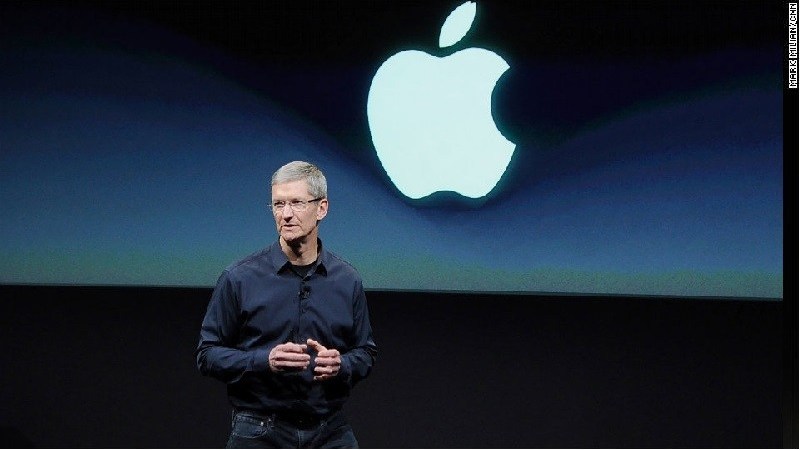
Apple is spotlighting the economic engine of its App Store ecosystem just weeks ahead of its Worldwide Developers Conference. The company states that the U.S. App Store generated $406 billion in developer billings and sales in 2024, representing a significant increase from the $142 billion recorded in 2019.

The numbers were published Thursday through an Apple-funded study conducted by Boston University’s Professor Andrey Fradkin and Dr. Jessica Burley of the Analysis Group, a firm that has worked with Apple for years to frame the company’s market position amid ongoing antitrust scrutiny.

According to the study, a majority of the earnings—90 percent—were made without Apple taking any commission. This is a recurring talking point Apple has leaned on heavily in recent years, especially as it faces legal and regulatory efforts to loosen its control over how iOS apps are distributed and monetized.

In a statement accompanying the report, Apple emphasized that its App Store “connects developers of all sizes with users around the world,” and that “in 2024, U.S. developers earned more than twice what they did five years ago.” The company also highlighted the impact of its Small Business Program, which reduces the App Store commission from 30% to 15% for developers making under $1 million per year. Apple claims that earnings for small business developers rose by 76 percent between 2021 and 2024, attributing this in part to that commission reduction.

Though Apple portrayed the figures as evidence of its positive role in developer success, the numbers come against the backdrop of a U.S. federal court ruling last month that found the company in violation of an earlier injunction related to the Epic Games lawsuit. The court ruled that Apple had failed to comply with a 2021 judgment that required the company to allow developers to link to external payment systems. As a result, Apple is now legally required to let developers include external payment options within their apps, without collecting its standard commission on those transactions. The company is appealing the decision.

In its 2024 report, Apple gave a more granular breakdown of the App Store’s U.S. economic activity. It said that $277 billion came from physical goods and services sold through apps, such as retail and food delivery, areas where Apple does not collect commissions. It added that $75 billion came from in-app advertising and $53 billion from digital goods and services, including subscriptions and app content—categories where Apple typically takes a percentage of each sale.

The report also aimed to show broader economic trends linked to app-driven commerce. Apple noted that spending on physical goods and services via the App Store more than tripled since 2019 while spending on digital goods and in-app advertising more than doubled. It also said that sectors like retail and grocery delivery experienced a fourfold increase during that time.

Apple’s defense of its App Store model continues to rely on two central claims: first, that developers succeed because of the infrastructure, security, and global access the App Store provides; and second, that the commission it collects only affects a narrow slice of its developer base. In its words, the App Store “allows developers to reach customers in 175 countries and regions,” while offering “over 250,000 APIs” through frameworks like HealthKit, Metal, Core ML, MapKit, and SwiftUI. The company also maintains that its review system and fraud protection measures have “prevented billions of dollars in fraudulent transactions.”

However, Apple’s critics say that the company’s tight control over app distribution and payment methods effectively creates a monopoly. Many developers continue to push back against what they see as exploitative practices. Some argue that Apple’s claims of generosity are misleading, since developers’ access to the App Store itself—on a closed operating system like iOS—comes with significant restrictions and unavoidable dependencies.

In the years-long legal fight with Epic Games, the court did not go as far as declaring Apple a monopoly, but the judge concluded that the company’s anti-steering provisions, which previously prevented developers from informing users about alternative payment options, were anti-competitive and unlawful. This judgment led to the ruling that Apple must allow external payment links inside iOS apps.

Apple is now walking a tightrope: trying to reassure regulators and courts that it is not stifling innovation, while still defending the walled-garden model that has made the App Store a cornerstone of its services business. The $406 billion figure, though headline-grabbing, is also part of that effort—to underscore Apple’s argument that the App Store is not a bottleneck, but a boost.

However, with more regulations pending in the U.S. and Europe, and developer sentiment increasingly restive, Apple’s fight over the App Store is far from over. The court-mandated changes to payment policies, and the company’s appeal of those orders, signal that the coming years could bring more cracks to a model Apple has long regarded as unshakable.

Incentivization of Nigeria’s Technical College Students: Between Promise and Public Perception

0

Like many countries, Nigeria’s education system is designed to provide citizens with the skills and knowledge necessary to contribute meaningfully to national development. From primary to tertiary levels, the country has made various efforts to improve access, quality, and relevance. These efforts have included interventions in infrastructure, curriculum reform, and occasional financial support to students. Despite these interventions, Nigeria’s education sector continues to evoke mixed reactions among citizens and observers, primarily due to issues related to implementation, transparency, and sustainability.

The recent announcement by the Nigerian government to provide a monthly stipend of ?45,000 to students enrolled in technical colleges has once again stirred public debate. For some, the move is a step in the right direction toward empowering technical and vocational education. For others, it is yet another policy announcement lacking the structure and integrity to deliver long-term impact. To better understand how Nigerians perceive this development, we reviewed 23 public reactions on Nairaland, one of Nigeria’s largest online forums. These comments revealed 34 unique sentiments across eight thematic areas.

Three themes stood out most prominently in this analysis. The first was a deep distrust in government and its ability to follow through on promises. Many citizens recalled previous unfulfilled commitments such as the non-payment of palliatives, delays in minimum wage implementation, and half-hearted pension reforms. This skepticism was particularly evident in comments suggesting that the stipend program would likely become another political mirage. Some users described the announcement as a form of deception, comparing it to tactics often used to appease the public before elections or as part of broader propaganda efforts. This perception aligns with findings by the Brain Builders Youth Development Initiative, which has consistently highlighted the credibility gap between the government and its citizens when it comes to education policy implementation.

The second theme, though contrasting, reflects a more optimistic perspective. Many Nigerians support the idea of providing financial incentives for technical college students, provided the initiative is implemented effectively. They believe that such support can increase enrollment, enhance student motivation, and elevate the status of technical education. There were personal testimonies from individuals who had benefited from technical training, which they credited with helping them become economically self-reliant even before obtaining university degrees. Supporters of the policy argue that Nigeria must diversify its educational focus by moving away from a purely academic model and embracing technical and vocational pathways that are more aligned with current labor market demands. However, even within this supportive camp, there is a call for broader systemic reform. These include upgrading infrastructure in technical colleges, ensuring quality instruction, and fostering public-private partnerships that can sustain the initiative beyond government subsidies.

The third theme points to a broader conversation about the revival of technical and vocational education as a national priority. Many citizens see technical skills as essential for economic transformation. Nigeria’s growing youth population, combined with high unemployment rates, underscores the urgency of promoting job-relevant skills. Several comments emphasized the poor condition of existing technical schools, citing broken-down equipment, outdated curricula, and underpaid instructors. There is a growing recognition that stipends alone cannot solve these deep-rooted challenges. What is required is a comprehensive strategy that includes infrastructural renewal, curriculum modernization, teacher training, and regular quality assurance.

The Brain Builders Youth Development Initiative has previously documented these same concerns in its evidence-based policy analysis of Nigeria’s progress towards achieving the Sustainable Development Goals, especially in the area of Technical and Vocational Education and Training. Its findings reiterate the importance of not only designing good policies but also building the systems and capacity needed for their effective execution.

To move forward, the stipend programme should be part of a broader reform framework. First, the government must ensure transparency through clear disbursement channels and real-time monitoring to prevent corruption or the inclusion of fictitious beneficiaries. Second, technical colleges must be upgraded to meet modern standards, both in terms of facilities and instructional materials. Third, partnerships with industries should be established to align training with the actual needs of employers and to provide pathways for student internships and employment. On a final note, teachers must be given the training and resources they need to deliver quality instruction.

Key Lessons from Segelu, Abidemi, Oladele’s Symbolic Capital Accumulation Ahead of Oyo 2027

0

While policy manifestos are yet to be unveiled, subtle cues, like public felicitations, homage to traditional rulers, and alignment with political godfathers, offer a glimpse into how candidates are positioning themselves in the political market.

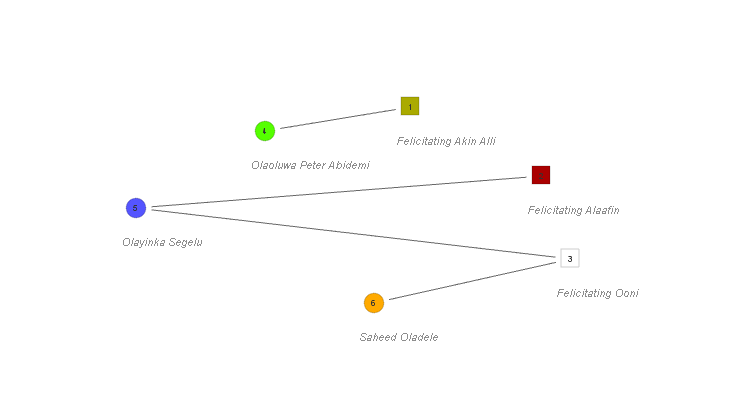
Our social network analysis of these symbolic gestures reveals Olayinka Segelu, Olaloluwa Peter Abidemi, and Saheed Oladele as the three major actors. Their early moves provide critical insights into the power of symbolic capital in the cultural and political terrain of Oyo. This piece unpacks their strategies and distills key lessons for political aspirants, strategists, and observers navigating the interplay of tradition, identity, and party politics in Nigeria.

Exhibit 1: Strategic alliance network

Source: Nigerian Newspapers, 2024-2025; Infoprations Analysis, 2025

Olayinka Segelu: Building Broad Cultural Legitimacy

Olayinka Segelu emerges as the most strategically embedded candidate in the symbolic network, having extended public felicitations to both the Alaafin of Oyo and the Ooni of Ife. These aren’t mere ceremonial gestures, calculated acts of political signaling.

The Alaafin and Ooni represent two of the most iconic traditional authorities in Yoruba land. By engaging both, Segelu taps into a reservoir of pan-Yoruba legitimacy, positioning himself as a unifier with reach beyond Oyo State’s internal party divisions. This is particularly potent in a region where traditional rulers retain strong moral, cultural, and even political influence over both elite and grassroots constituencies.

Key Lesson: In a state like Oyo where tradition is deeply woven into politics, symbolic overtures to respected cultural institutions can serve as multipliers of political legitimacy. Candidates who ignore this dynamic risk being seen as disconnected from local values.

Olaloluwa Peter Abidemi: Betting on Political Structures

In contrast, Olaloluwa Peter Abidemi has so far made a single public symbolic move, felicitating with Akin Alli, a former chairman of the All Progressives Congress (APC) in Oyo State. While Alli is not a traditional ruler, he is a critical figure within the APC machinery and holds sway among key stakeholders.

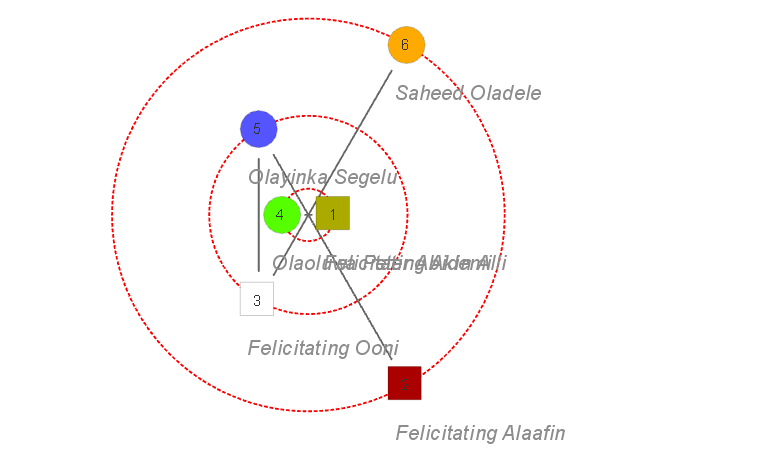
Exhibit 2: Candidates’ centrality in symbolic capital acquisition

Source: Nigerian Newspapers, 2024-2025; Infoprations Analysis, 2025

This suggests Abidemi’s symbolic capital strategy is rooted in party dynamics rather than cultural engagement. It reflects a calculated move to shore up internal political support, perhaps with the goal of securing the party ticket or aligning with a strong political bloc ahead of primaries.

However, while this approach may work within the confines of the APC, it does little to cultivate broader voter sympathy or cultural resonance. It assumes that political endorsements are sufficient, an assumption that may fall short in a state where emotional and symbolic legitimacy carry serious electoral weight.

Key Lesson: Party structures matter, but so does emotional connection to the electorate. Political capital without symbolic grounding can appear technocratic and out of touch, especially in culturally conscious electorates like Oyo.

Saheed Oladele: A Symbolic Yet Narrow Gesture

Saheed Oladele’s gesture is focused solely on the Ooni of Ife, indicating an effort to align with Yoruba cultural heritage. While this move speaks to a desire for regional legitimacy and traditional blessings, it falls short of the wider engagement seen in Segelu’s strategy.

Symbolic outreach to only one royal institution may not be enough in a competitive political environment where breadth of engagement matters. Oyo’s political geography is diverse; allegiance to one royal house may not resonate equally across all constituencies.

Key Lesson: Symbolism matters, but range matters more. Candidates should not only reach out to key traditional figures but also balance these gestures across different cultural, religious, and geopolitical zones to build a compelling cross-cutting appeal.

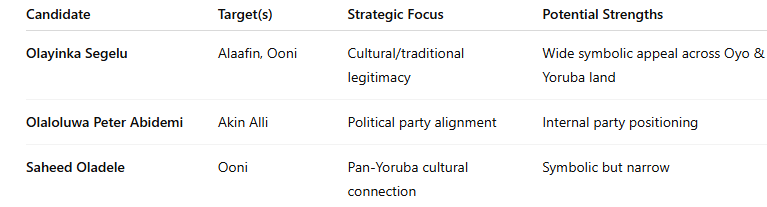
Exhibit 3: Summarised strategic implications

Source: Nigerian Newspapers, 2024-2025; Infoprations Analysis, 2025