DD
MM
YYYY

PAGES

DD
MM
YYYY

spot_img

PAGES

Home Blog Page 1208

FEC Approves Nigeria’s Full Membership in Asian Infrastructure Investment Bank (AIIB)

0

The Federal Executive Council has approved Nigeria’s full accession to the Asian Infrastructure Investment Bank (AIIB), a move government officials say will deepen international economic cooperation and unlock funding for key infrastructure projects.

The approval formalizes Nigeria’s status as a non-regional member of the China-backed multilateral lender, joining over 100 countries, including several from Europe and Africa. Nigeria received an invitation to join the AIIB in 2021 and has now completed the legal and financial obligations necessary for admission.

Finance Minister and Coordinating Minister of the Economy, Wale Edun, who presented the accession memo, confirmed that Nigeria subscribed to 50 shares in the institution at $100,000 per share, amounting to a $5 million equity stake. He described the membership as a step toward attracting low-interest, long-term capital for roads, power, transportation, and other public infrastructure.

“We’ve concluded that process now, and we are fully-fledged members of the Asian Infrastructure Investment Bank,” Edun told reporters. “It is set up to promote infrastructure development and sustained economic growth in all its members.”

Is It More About Access to Loans Than Reform?

Beneath the official optimism lies growing public concern that Nigeria’s real motivation is to deepen its access to external borrowing—a path that has placed a significant part of the country’s future at the mercy of creditors and undermined its ability to fund homegrown development initiatives.

Analysts and economists are already sounding the alarm. While multilateral institutions like AIIB can serve as valuable partners in infrastructure development, Nigeria’s track record with concessional loans and foreign partnerships has been checkered with failed projects, opaque procurement practices, and rising debt servicing obligations.

Against this backdrop, two of Africa’s most respected voices in international economics—Dr. Akinwumi Adesina, President of the African Development Bank, and Dr. Ngozi Okonjo-Iweala, Director-General of the World Trade Organization, have both repeatedly warned that African countries must shift away from a dependency on loans and aid.

Adesina has been especially blunt, arguing that the continent is “not poor” but “impoverished by its failure to harness its wealth.” He has urged countries like Nigeria to develop their vast natural resources, rather than constantly seeking loans to finance infrastructure that does not yield returns.

Similarly, Okonjo-Iweala has cautioned against reliance on debt and aid, pushing instead for deeper investments in local industries, regional trade, and export diversification. At recent forums, both have lamented the pattern of African states, including Nigeria, taking on debt while doing little to improve domestic productivity or reduce import dependency.

“Africa really needs to change its mindset about access to aid. We should begin to see it as a thing of the past.”

“Instead of looking outward for financial support, we must strengthen our own institutions,” she urged.

The Debt Burden and Infrastructure Deficit

Nigeria’s public debt stood at approximately N144.67 trillion (US$91.46 billion) in Q1 2024. This represents a growth of 24.99% quarter-on-quarter from N97.34 trillion in Q4 2023. The Debt Management Office (DMO) reported that Nigeria’s public debt stock reached N144.67 trillion as of December 31, 2024. Thus, the country spends over 60 percent of its revenue on debt servicing, leaving little room for capital investment.

However, with Nigeria’s vast infrastructure gap, which is estimated at $100 billion annually for a decade to close, government officials argue that platforms like AIIB will help bridge that gap with concessional financing.

There’s also growing anxiety that the influx of foreign funds into infrastructure sectors dominated by Chinese and other foreign contractors has not translated into domestic capacity building or job creation.

However, the government has been touting the ongoing reforms by the Tinubu administration to address the gaps. Edun, while speaking on the sidelines of Nigeria’s recent attendance at the IMF and World Bank Spring Meetings in Washington, D.C., said that international institutions had praised Nigeria’s macroeconomic reforms, including subsidy removal and exchange rate unification. He noted that these efforts have helped stabilize the economy despite external shocks, such as the reciprocal tariffs recently imposed by the United States.

Edun also cited a recent upgrade of Nigeria’s credit outlook by Fitch Ratings, from B- to B, as evidence that the country’s reform program is gaining traction.

However, Nigeria’s overwhelming economic downturn has made it difficult to believe the government’s assertions on its economic reforms. Economists note that Nigeria’s path forward should not be determined by access to foreign lending institutions, but by the ability to build a self-sustaining economy rooted in productivity, value addition, and export diversification.

That would mean, besides developing its vast mineral deposits, creating policies that attract local and foreign investors to process raw materials domestically.

“We need to develop our processing industries to create jobs, boost intra-continental trade, and ensure we stop exporting raw materials without value addition,” Iweala added.

Nigeria’s FEC Approves NIEP – National Electricity Policy to Overhaul Power Sector, Spur Investment

0

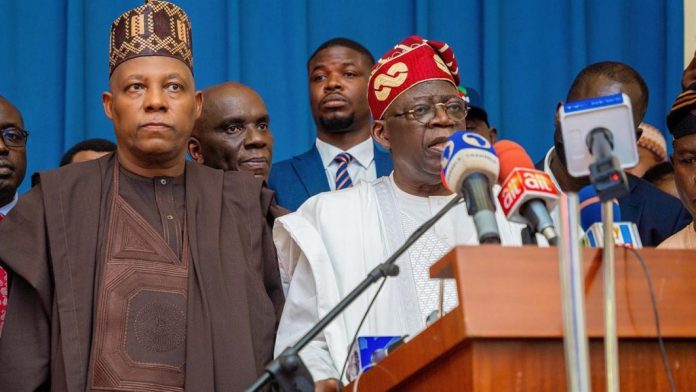
The Federal Government has approved the National Integrated Electricity Policy (NIEP), a sweeping framework billed as the most ambitious attempt yet to overhaul Nigeria’s chaotic and underperforming electricity sector.

The policy was ratified during the Federal Executive Council (FEC) meeting held on Monday and is designed to serve as a national roadmap that aligns with the new Electricity Act, 2023. The announcement was made in a statement released by Mr. Bolaji Tunji, Special Adviser on Strategic Communications and Media Relations to the Minister of Power, Mr. Adebayo Adelabu.

The NIEP replaces the outdated National Electric Power Policy of 2001, with the federal government describing it as a blueprint for restructuring the Nigerian Electricity Supply Industry (NESI). The new policy seeks to improve service delivery, encourage investment, deepen regulatory reforms, and fast-track the adoption of renewables and decentralized energy models.

Mr. Adelabu confirmed that the implementation of the policy has already begun. “This roadmap addresses critical challenges in Nigeria’s electricity sector through a comprehensive framework that provides clear guidelines for sustainable power generation, transmission, and distribution,” he said.

According to him, the NIEP is designed to address long-standing structural issues in the sector and is aligned with global best practices.

“This policy will guide stakeholders—federal and state governments, investors, developers, and consumers—as we navigate this energy transition,” Adelabu stated.

The policy also satisfies the mandate in Section 3(3) of the Electricity Act, 2023, which compels the Federal Government, through the Ministry of Power, to publish an integrated electricity policy and strategic implementation plan within one year of the Act’s passage.

Policy Features: Bold but Familiar

Among the notable features of the NIEP is its emphasis on encouraging decentralized planning and giving states the autonomy to develop and regulate their own electricity markets—powers already conferred by the Electricity Act, 2023. These provisions have opened the door for states to draft their own electricity laws and explore independent generation and distribution plans.

But beyond the decentralized structure, the NIEP adds other ambitious reforms aimed at directly addressing the root causes of Nigeria’s power sector dysfunction. These include:

  • Breaking up monopoly structures in power generation and distribution to foster competition.
  • Boosting capital investment, especially in power infrastructure and local manufacturing.
  • Expanding renewable energy options to reduce overdependence on gas-powered generation.
  • Improving energy efficiency, with the goal of reducing system losses and lowering costs for consumers.
  • Climate resilience and sustainability, aligning Nigeria’s power growth with global climate goals.

The government says it expects the policy to attract private capital, enhance reliability, and restore investor confidence in a sector that has failed to live up to expectations despite years of reform.

Another Policy. Same Problems?

However, not everyone is convinced that the new policy will deliver meaningful results. Nigeria has overhauled its electricity laws and structures several times in the past, with little to show for it.

The most significant overhaul began under President Olusegun Obasanjo in the early 2000s, when the government unbundled the National Electric Power Authority (NEPA) and initiated the privatization of the sector. This led to the creation of successor companies under the Power Holding Company of Nigeria (PHCN) and eventually the transfer of distribution and generation assets to private operators in 2013.

However, the privatization drive has not translated into improved electricity supply. Nigerians continue to endure frequent blackouts, while the national grid collapses multiple times each year. Electricity access remains below 60 percent nationwide, and businesses spend billions of naira annually on diesel generators to compensate for unreliable power.

While many stakeholders have expressed optimism that the NIEP might finally steer the sector in a better direction, some have questioned whether the political will and institutional capacity required for execution truly exist.

Observers point out that decentralization alone won’t fix the sector if the underlying issues—such as weak regulation, insufficient transmission capacity, lack of metering, tariff shortfalls, and corrupt procurement practices—are not simultaneously addressed.

For instance, the Transmission Company of Nigeria (TCN), which remains under government control, continues to be a weak link in the power chain, frequently failing to evacuate generated power due to aged infrastructure and poor coordination. Meanwhile, regulatory bodies like the Nigerian Electricity Regulatory Commission (NERC) have often struggled to enforce compliance or penalize defaulters.

The government says it understands these concerns and insists that the NIEP was developed with this history in mind. Adelabu explained that the policy was formulated through extensive stakeholder engagement that included public and private sector players, civil society organizations, state governments, academia, and donor agencies.

“This is not just another policy. It’s a practical and inclusive document grounded in broad consensus,” he said.

The NIEP also incorporates mechanisms for coordination between federal and state actors and introduces reforms aimed at ensuring cost-reflective tariffs while protecting vulnerable consumers.

NIPOST Moves to Go Cashless by July 2025, But Nigerians Say Theft by Staff Remains the Bigger Problem

0

The Nigeria Postal Service (NIPOST) has announced it will stop accepting cash payments across all its post offices nationwide starting July 1, 2025, in a move it says is part of a sweeping modernization effort aimed at restoring trust, enhancing transparency, and aligning with global best practices.

“All post offices nationwide will cease accepting cash. Customers will transact using approved electronic payment channels,” said Postmaster-General and CEO, Tola Odeyemi, during a media briefing on Tuesday. “This move enhances security, transparency, and aligns with global best practices.”

Odeyemi described the transition as a major milestone in NIPOST’s efforts to rebuild from years of inefficiency and public distrust.

“We are not just rebranding. We are rebuilding,” she said, adding that the agency was strengthening its engagement channels to ensure Nigerians have a voice in its transformation.

She also disclosed that a new reward and recognition system is being introduced to encourage performance among staff, alongside strict disciplinary measures to deal with conduct that undermines institutional integrity.

The Other Rot: A Culture of Theft

While the cashless payment policy is being welcomed by some Nigerians as a way to curb rampant corruption and underhand dealings involving cash at post offices, many citizens say the core rot in the institution lies deeper, specifically, in the brazen theft of packages by NIPOST staff.

Across social media platforms, Nigerians have expressed doubt that removing cash alone would improve service quality at NIPOST. Numerous customers say that staff theft remains the major scourge damaging the institution’s reputation and stifling its growth.

“Received items from the states only to go to pick it up at the post-office and realize they had stolen everything in there, kept the pack inside the box and taped it back,” a user named Francis lamented on X last month.

For years, Nigerians have shared similar stories of receiving empty boxes, tampered parcels, and missing items, even when packages were tightly sealed. In most cases, victims say there is little to no accountability or redress from NIPOST.

“Hi @tola_odeyemi I want to bring to your notice the issue of theft happening under the organization you head,” a Nigerian posted last week. “My Items sent from UK to Nigeria was tampered, items stolen, left to be eaten by rodents. I don’t just understand.”

The stories have become so frequent that many Nigerians now avoid the agency altogether when sending or receiving important parcels, choosing instead to patronize private courier services despite higher charges.

The shift to cashless operations, which may help reduce petty bribery and diversion of payments, does little to address the more damaging issue of theft, critics say. While Odeyemi emphasized discipline and performance, she gave no direct assurance that the issue of stolen goods is being actively investigated or punished.

NIPOST, which operates under the Ministry of Communications, Innovation, and Digital Economy, has struggled to maintain relevance in Nigeria’s fast-growing digital and logistics space. Most of the market share in parcel delivery has been lost to nimble private courier operators, who not only deliver faster but also offer better tracking systems and security guarantees.

In 2023, Communications Minister Bosun Tijani called on Nigerians to suggest ways to reposition the agency. Some of the most popular suggestions included transforming NIPOST into a backbone infrastructure, like the Nigeria Inter-Bank Settlement System (NIBSS), for the logistics industry, supporting licensed courier companies in powering trade and e-commerce deliveries nationwide. Others suggested that NIPOST be deeply integrated with online shopping platforms to improve the delivery experience and credibility.

But these ideas, observers say, cannot materialize unless the trust deficit is addressed.

Stamp Duties Dispute Settled—for Now

Odeyemi also clarified NIPOST’s position in its long-running battle with the Federal Inland Revenue Service (FIRS) over stamp duties. She confirmed that NIPOST is not authorized to collect stamp duties, ending a legal and bureaucratic standoff that caused confusion for years.

“Our role is to provide postage stamps, the legal instruments used to authenticate documents and denote duty payment. The responsibility for collecting stamp duties lies solely with the Federal Inland Revenue Service (FIRS),” she said.

The clarification brings to a close a dispute that once saw both agencies laying claim to the same revenue stream. It had led to overlapping mandates and institutional bad blood. Though the FIRS eventually retained the role, NIPOST’s previous insistence on collecting stamp duties was seen by some as a desperate attempt to stay financially viable in the face of declining relevance.

Public Skepticism Remains High

Despite the Postmaster-General’s optimistic tone and reform promises, Nigerians remain unconvinced that the institution can regain its credibility without addressing the thefts that have become synonymous with its brand.

With less than three months to the full rollout of the cashless system, stakeholders say the agency must confront the deeper cultural and operational failings that have driven customers away if it hopes to play a meaningful role in Nigeria’s logistics and e-commerce space.

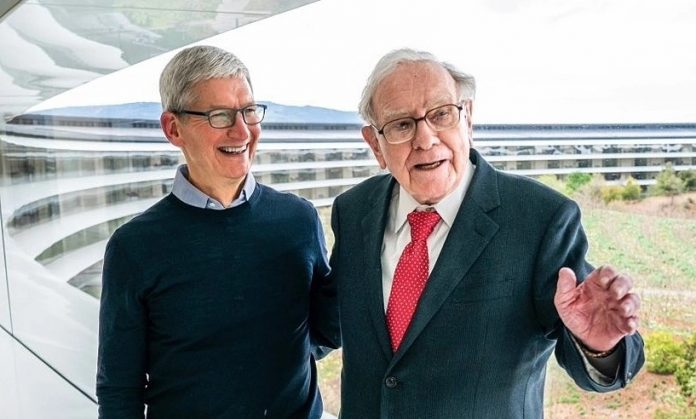
Warren Buffett Hails Tim Cook as ‘One-of-a-Kind’ Leader After Major Apple Sell-Off

0

Warren Buffett, the legendary investor who built Berkshire Hathaway into a global investment powerhouse, stunned shareholders this weekend with a dual headline: a heartfelt tribute to Apple CEO Tim Cook and confirmation that he will step down from his role at the end of 2025.

Speaking at Berkshire’s annual shareholders meeting in Omaha on Saturday, Buffett lauded Cook’s leadership as unparalleled, even as he acknowledged that Berkshire has sold about two-thirds of its shares in Apple, long regarded as one of the firm’s crown jewels.

“Tim Cook has made Berkshire a lot more than I have made Berkshire,” Buffett said, drawing warm laughter from the audience. His remark underlined just how transformational Apple’s stock has been for the company. Berkshire invested around $35 billion in Apple between 2016 and 2018; by the end of 2023, the stake had ballooned to roughly $173 billion.

However, Berkshire began trimming its Apple position in early 2024 and had sold about 67% of its holdings by the end of September. By December, the conglomerate held 300 million Apple shares, valued at about $62 billion at Friday’s closing price of $205 per share.

The sell-off triggered surprise across Wall Street and raised questions about whether Buffett, known for long-term, concentrated bets, was signaling concerns about Apple’s growth trajectory or merely rebalancing Berkshire’s portfolio. He did not directly answer that question but used the opportunity to reiterate his respect for Cook, especially in the context of Apple’s evolution since the era of Steve Jobs.

“I knew Steve Jobs briefly,” Buffett said. “Nobody but Steve could have created Apple, but nobody but Tim could have developed it like it has.”

A Subtle Farewell

The compliments to Cook came in the same breath as Buffett’s own announcement: that he plans to formally step down from Berkshire Hathaway by the end of the year, closing a chapter on one of the most storied careers in financial history.

At 94, Buffett said the decision was about succession and continuity. “It’s time,” he told shareholders. “I’ve done this for nearly 60 years. The future of Berkshire is in very capable hands.”

He confirmed that Vice Chairman Greg Abel, long rumored to be his heir apparent, will take over operational control of the firm. Buffett emphasized that the company’s culture, values, and investment philosophy would remain unchanged.

The timing of the announcement, paired with the Apple divestment, suggested a broader transition underway at Berkshire. Abel has played an increasingly visible role in recent years, particularly in overseeing the company’s sprawling non-insurance businesses. Shareholders had widely expected the move, but it still marked the end of an era.

Apple’s Run Under Cook

Since assuming the CEO role in 2011, Cook has led Apple to extraordinary growth: the company’s stock has risen from under $15 (split-adjusted) to over $200, and Apple has become the first publicly traded company to reach and sustain a market capitalization of more than $3 trillion.

Cook also navigated Apple’s transition from a product-focused company to a services-and-ecosystem-driven giant. Apple’s wearables, App Store, iCloud, and Apple Pay businesses now generate tens of billions of dollars annually, helping the company offset slowing iPhone growth.

Buffett has consistently applauded Cook’s use of Apple’s enormous free cash flow, especially its aggressive share buyback program, which has made each of Berkshire’s remaining shares more valuable.

Why Sell Apple Now?

While Buffett didn’t go into specifics, analysts believe the sale of Apple shares is part of a larger strategic shift to reduce risk exposure and rebalance Berkshire’s portfolio ahead of a leadership transition. Others have speculated that Buffett may be preparing for large-scale philanthropic giving, a process that has already seen him donate billions to the Gates Foundation and other causes.

Some observers also see Apple’s move as a subtle signal about future challenges in the tech sector, including regulatory headwinds, slowing growth, or margin compression due to shifting global supply chains and AI-related competition.

However, Apple remains Berkshire’s largest publicly traded holding, and Buffett made it clear he continues to believe in the company and in Cook.

The End of an Era

Buffett’s departure caps an unparalleled career that transformed a struggling textile mill into one of the most respected investment vehicles in the world. Berkshire Hathaway today owns stakes in dozens of publicly traded companies and outright owns major businesses such as BNSF Railway, GEICO, and Dairy Queen.

Buffett’s disciplined approach, folksy wisdom, and long-term investment philosophy earned him the moniker “Oracle of Omaha.” But as he made clear on Saturday, Berkshire’s next chapter will belong to Abel and a new generation of leaders—and, in the case of Apple, to a CEO he holds in the highest esteem.

U.S. Justice Department Seeks Breakup of Google’s Ad Tech Empire in A Fresh Proposal

0

The U.S. Department of Justice (DOJ) has unveiled one of the most aggressive antitrust remedies in modern American history, proposing a full-scale breakup of Google’s digital advertising technology business.

The plan, filed in federal court on Monday, demands that the tech giant divest its cornerstone ad platforms, AdX (its advertising exchange) and DFP (DoubleClick for Publishers, now Google Ad Manager), to dismantle what the government calls a “self-reinforcing cycle of dominance.”

The move stems from an April ruling in which a federal judge concluded that Google had violated antitrust laws through a “decade-long campaign of exclusionary conduct.” At the center of that conduct was Google’s tight integration of its demand- and supply-side advertising tools, which enabled the company to operate simultaneously as broker, auctioneer, and participant in the vast online ad marketplace, giving it undue advantage and suppressing competition.

Dismantling Google’s Ad Tech Stack

Under the DOJ’s proposal, Google would be required to sell AdX and DFP to separate entities. The Justice Department argues that the company used these platforms to lock in publishers and advertisers, distort auction outcomes, and tilt the digital ad ecosystem in its favor by forcing the use of its own exchange and tools.

The DOJ outlines a three-phase plan:

  1. Open Access Integration – In the first phase, Google would be forced to open its ad management platform to competitors. This would involve creating an API to allow third-party ad exchanges to integrate with DFP and building export tools for publishers to transfer their data to rival ad servers.
  2. Auction Transparency – Google would be required to open-source the code used in its final ad auctions and be prohibited from replicating that code in its own services, including Chrome, Android, and YouTube, ensuring that the company cannot simply reintroduce the same architecture under different branding.
  3. Full Divestiture – The final step would compel Google to divest DFP to a company independent of the one that acquires AdX. The separation, the DOJ argues, is necessary to prevent continued vertical integration that gives Google outsized control over the entire ad transaction chain.

In addition, the DOJ recommends a 10-year ban on Google operating an ad exchange and strict data-use limitations that would prohibit it from leveraging user data collected through Search, Gmail, YouTube, Android, and Chrome to gain further advantages in the ad market. These mark Google’s ad tech breakup proposal as the most ambitious regulatory intervention yet in the 21st-century digital economy.

“Disruptive and Unworkable:” Google Pushes Back

Google fiercely opposes the DOJ’s proposal and has filed its own counter-remedy. The company argues that a divestiture would be disruptive not only to its business, but to the broader ecosystem of publishers and advertisers that depend on its tools. In a filing, Google maintains that it legally acquired AdX and DFP and that no evidence suggests they were obtained or operated with anticompetitive intent.

Google contends that spinning off the platforms is not a simple matter of transferring software licenses. According to the company, the source code is deeply embedded within its broader systems, meaning it would take years and considerable resources to build stand-alone versions of the platforms that could operate independently of Google’s infrastructure.

“In the meantime, this process would significantly harm the customers of AdX and DFP,” Google wrote. “During the years of rebuilding either or both of AdX and DFP, coding new versions of the tools would conscript precious resources… and leave existing clients with degraded services.”

Instead, Google has offered a narrower set of behavioral remedies. These include:

  • Allowing real-time bids from AdX to be accessible to rival ad servers.
  • Ending policies that prevent those bids from being shared with competitors.
  • Deprecating “unified pricing rules” (UPR), which the DOJ said gave Google undue leverage over pricing floors.
  • Formally discontinuing controversial auction tools like First Look and Last Look, which had allowed Google advertisers privileged early and late access to ad auctions.

The Case in Context: Big Tech and the Antitrust Reckoning

This case is only one front in the DOJ’s wider offensive against Google and Big Tech in general. The agency is concurrently pursuing a separate case targeting Google’s dominance in search, which resulted in another legal defeat for the company. In that case, the DOJ is reportedly seeking the forced sale of Google Chrome, the world’s most widely used browser.

The combined pressure threatens to fracture Google’s tightly integrated business model and potentially unravel its influence over billions of daily online interactions.

The DOJ’s offensive also dovetails with a global trend: regulators in the European Union, United Kingdom, India, and Australia have taken increasingly aggressive stances against tech monopolies, often targeting the same market structures Google relies on. Notably, EU regulators have previously levied multi-billion-euro fines on Google for antitrust violations involving search bias, Android dominance, and Google Shopping.

In 2022, the United Kingdom’s Competition and Markets Authority (CMA) launched a similar investigation into Google’s ad tech practices, examining its vertical integration and market dominance. And in France, Google was fined for self-preferencing its own advertising services at the expense of competitors. Currently, Google is facing a £5 billion ($6.6 billion) class action lawsuit in the United Kingdom, on the allegation of exploiting its “near-total dominance” in the online search market to inflate advertising prices.

If the DOJ succeeds in breaking up Google’s ad business, it will mark a turning point in global digital regulation. For years, critics have accused U.S. authorities of being too lenient, allowing corporate consolidation to hollow out competition and endanger democratic norms. Now, with bipartisan support in Congress for tech reform and mounting judicial wins, that tide appears to be turning.

But Google has made clear it intends to appeal the original antitrust ruling, and the court is not obligated to accept either party’s proposed remedy. This means a drawn-out legal battle seems inevitable. However, even the prospect of forced divestiture, or structural reform, sends a powerful message to Silicon Valley and the broader business world: the era of hands-off antitrust may be coming to an end.

Analysts believe the implications will reverberate through the entire tech ecosystem if courts uphold the DOJ’s remedy and force a Google breakup. It is also expected to embolden regulators to pursue similar action against Amazon’s logistics arm, Meta’s ad targeting system, or Apple’s App Store dominance.