DD
MM
YYYY

PAGES

DD
MM
YYYY

spot_img

PAGES

Home Blog Page 1210

Integration of ZK-Proofs into Google Wallet Has The Potential to Exacerbate Existing Divides

0

Google Wallet has integrated zero-knowledge proof (ZKP) technology to enhance privacy in age and identity verification, allowing users to prove they meet age requirements without revealing sensitive personal data like birthdates or full IDs. This system, which leverages cryptographic principles often associated with blockchain, is live across mobile devices and apps using Google’s Digital Credential API.

The dating app Bumble is among the first partners, using digital IDs from Google Wallet for user verification while ZKPs handle age confirmation. The rollout began in the UK, with digital IDs linked to passports, and is expanding to U.S. states like Arkansas, Montana, Puerto Rico, and West Virginia, with plans for 50 more countries. Google also intends to open-source its ZKP tools, potentially setting a new standard for privacy-preserving digital identity.

While the system’s blockchain ties are unclear, it aligns with growing privacy demands in digital services like dating, e-commerce, and social media. The integration of ZK-proofs into Google Wallet for age and ID verification has several implications. ZK-proofs allow users to verify attributes (e.g., being over 18) without disclosing sensitive details (e.g., exact birthdate or full ID). This reduces the risk of data breaches and misuse of personal information, addressing growing privacy concerns in digital services.

The rollout in the UK and U.S. states, with plans for 50 more countries, could accelerate the global shift toward digital IDs. Partnerships with apps like Bumble suggest practical use cases in industries like dating, e-commerce, and social media, potentially normalizing digital credentials. While not explicitly blockchain-based, ZK-proofs are a hallmark of blockchain systems. Their use in Google Wallet could normalize cryptographic tools in mainstream tech, paving the way for broader blockchain adoption in identity management and beyond.

Google’s plan to open-source its ZKP tools could democratize access to privacy-preserving tech, enabling developers to build similar systems. This may spur innovation but also risks uneven implementation if not standardized properly. As digital IDs expand, governments and regulators may scrutinize interoperability, security, and compliance with laws like GDPR or CCPA. Google’s dominance could raise trust concerns, especially if data handling practices are questioned.

While ZK-proofs enhance privacy, their complexity could introduce vulnerabilities if not implemented correctly. Ensuring robust security across diverse devices and regions will be critical. This move positions Google Wallet as a leader in privacy-focused digital identity, potentially challenging competitors like Apple Wallet or decentralized identity platforms. It could reshape market dynamics in digital payments and identity verification.

This development signals a shift toward privacy-first, scalable digital identity systems, with significant implications for user trust, regulatory landscapes, and technological innovation. ZK-proof-based digital IDs rely on smartphones and apps like Google Wallet, which may exclude individuals without access to modern devices or reliable internet, particularly in rural or developing regions. The expansion to 50 countries may prioritize urban, tech-savvy populations, leaving others behind.

Older or lower-end devices may struggle with the cryptographic processing required for ZK-proofs, potentially limiting access for users with outdated hardware. This could widen the gap between tech-enabled populations and those without access, reinforcing inequalities in digital service participation (e.g., online dating, e-commerce).
While Google Wallet’s base service is free, the broader ecosystem (smartphones, data plans, or linked payment methods) involves costs that may exclude low-income users. Digital IDs tied to passports or state-issued credentials may also require fees or bureaucratic processes. Early adopters, like Bumble users in the UK or U.S. states, are likely to be in wealthier, tech-forward demographics. Regions or communities with lower digital literacy or trust in tech giants may lag in adoption.

Socioeconomic disparities could deepen if digital IDs become a prerequisite for accessing services, marginalizing those unable to participate. ZK-proofs offer strong privacy protections, but trust in Google—a company with a history of data controversies—may vary. Tech-savvy users may embrace the system, while others, wary of surveillance or data misuse, may opt out or lack the knowledge to evaluate it.

In countries with high privacy awareness (e.g., EU nations under GDPR), adoption may be smoother. In contrast, regions with less regulatory oversight or histories of tech misuse may see resistance. A trust divide could emerge between those comfortable with Google’s ecosystem and those who reject it, potentially fragmenting digital identity adoption.

The rollout prioritizes certain regions (UK, select U.S. states) and plans expansion to 50 countries, but many nations, especially in Africa or parts of Asia, may be excluded due to infrastructure or regulatory hurdles. This could create a global divide in access to privacy-preserving digital IDs. Differing data protection laws and ID systems (e.g., EU’s eIDAS vs. U.S. state-based IDs) may lead to uneven implementation, favoring regions with established digital frameworks.

A global north-south divide could persist, with wealthier nations benefiting from advanced identity systems while others struggle to integrate. Google’s plan to open-source ZKP tools could empower developers globally, but only those with the technical expertise and resources to leverage them will benefit. Smaller firms or developers in under-resourced regions may struggle to compete with larger players.

If Google’s Digital Credential API becomes a de facto standard, it could marginalize decentralized or competing identity solutions, favoring Google’s ecosystem. A divide could form between developers integrated into Google’s framework and those pursuing alternative systems, potentially stifling innovation in decentralized identity.

Mitigating the Divide

Google could partner with governments or NGOs to subsidize devices, improve connectivity, or provide digital literacy programs, especially in underserved regions. Supporting global standards for digital IDs (e.g., W3C’s Verifiable Credentials) could reduce fragmentation and ensure broader access. Clear communication about data practices and ZKP security could bridge trust gaps, encouraging adoption across diverse demographics.

Prioritizing low-income or underrepresented regions in the expansion to 50 countries could narrow global disparities. The integration of ZK-proofs into Google Wallet has the potential to exacerbate existing divides—digital, socioeconomic, trust-based, global, and innovation-related—unless deliberate steps are taken to ensure inclusivity and equity. While the technology promises privacy and efficiency, its benefits may initially accrue to tech-savvy, wealthier, or geographically advantaged groups, leaving others at risk of exclusion.
India Proposed Zero Tariffs on Pharmaceuticals, Steel and Autos from United States

0

India has proposed zero tariffs on pharmaceuticals, steel, and auto parts from the United States on a reciprocal basis, up to a specific import volume, as part of trade negotiations aimed at securing a bilateral trade deal by fall 2025. Beyond this threshold, standard duties would apply. The offer was made by Indian trade officials during talks in Washington in late April 2025, prioritizing select sectors to expedite an agreement before the end of a 90-day pause on US reciprocal tariffs.

This move aligns with efforts to strengthen Indo-US trade relations amid a contracting US economy, with Trump indicating potential trade deals could be finalized soon. India is also addressing US concerns over Quality Control Orders by proposing a mutual recognition agreement for regulatory standards in sectors like medical devices and chemicals.

US-India Tariff Negotiations (Up to May 2025)

US-India tariff negotiations have gained momentum in 2025, driven by the second Trump administration’s push for quick bilateral trade deals and India’s strategic aim to strengthen economic ties amid a contracting US economy and India’s robust 7% GDP growth. The current focus is a limited trade agreement targeting zero tariffs on specific sectors by fall 2025, following a 90-day pause on US reciprocal tariffs announced in early 2025.

During talks in Washington, Indian trade officials proposed zero tariffs on US pharmaceuticals, steel, and auto parts on a reciprocal basis, up to a specified import volume. Beyond this cap, standard duties would apply. This offer prioritizes select sectors to expedite a deal, aligning with Trump’s goal of finalizing trade agreements quickly.

India also proposed a mutual recognition agreement for regulatory standards in sectors like medical devices and chemicals to address US concerns over India’s Quality Control Orders (QCOs), which have been seen as non-tariff barriers. The US has welcomed India’s proposal but seeks broader market access, particularly in agriculture (e.g., dairy, poultry) and digital trade (e.g., easing data localization rules).

Trump has signaled optimism, stating in April 2025 that a deal with India could be finalized “very soon,” leveraging the tariff pause to pressure for concessions. The US is pushing for India to reduce high tariffs on goods like whiskey (150%) and electronics (20%), which have long been contentious. Bilateral trade reached ~$200 billion in 2024, with India running a $36 billion goods trade surplus. The US is India’s largest export market ($83 billion), while India is the US’s 9th largest goods supplier ($44 billion).

The negotiations build on the US-India Trade Policy Forum (revived 2021) and strategic frameworks like the Quad and iCET, which emphasize economic cooperation amid shared concerns over China. Pre-2018: Tariff disputes were frequent, with the US criticizing India’s high ttariffslike the 50% on autos, 100% on agriculture and India raising concerns over US visa restrictions and agricultural subsidies. The Generalized System of Preferences (GSP) allowed duty-free Indian exports worth $5.6 billion until its revocation in 2019.

Trump’s First Term (2018–2020): US imposed 25% steel and 10% aluminum tariffs, impacting India. India retaliated with tariffs on 28 US products (e.g., almonds, apples). US revoked India’s GSP status, escalating tensions. Talks for a limited trade deal stalled over US demands for dairy access and India’s push for GSP restoration.

Biden Era (2021–2024): Tensions eased, with some progress via the Trade Policy Forum (e.g., poultry market access). However, no major tariff reductions were agreed upon. India’s QCOs and digital trade policies (e.g., data localization) remained sticking points, alongside US steel tariffs.

The second Trump administration’s tariff pause and India’s proactive zero-tariff offer mark a shift toward pragmatic, sector-specific negotiations, though a comprehensive free trade agreement (FTA) remains unlikely in the short term. India seeks reciprocal tariff cuts to boost exports (pharmaceuticals, IT services, textiles) and secure US investment in manufacturing under its “Make in India” initiative.

Faces domestic pushback, with experts highlighting concerns about increased competition from US imports in steel and auto parts, potentially impacting local industries. Pushes for H-1B visa reforms to ease access for Indian IT professionals. US aims to reduce India’s trade surplus and secure market access for agricultural and high-tech goods, and viewed India’s tariff offer as a starting point but demands broader concessions, including on non-tariff barriers like QCOs and IP protections for pharmaceuticals.

India leverages the tariff pause to extract commitments, with Trump emphasizing “fair trade” in public statements. US seeks access for dairy and pork, but India resists due to cultural and domestic sensitivities (e.g., dairy tied to small farmers). US opposes India’s data localization rules, while India prioritizes sovereignty over digital infrastructure.

Regulatory Alignment: Mutual recognition of standards (e.g., FDA vs. Indian regulators) remains complex. Indian stakeholders worry about job losses in steel and auto sectors; US agricultural lobbies push for deeper market access. The April 2025 proposal signals a realistic approach, focusing on achievable tariff cuts in pharmaceuticals, steel, and auto parts rather than a broad FTA.

A deal by fall 2025 is plausible if both sides compromise on volume caps and regulatory alignment. Success hinges on addressing non-tariff barriers (e.g., QCOs) and balancing domestic pressures. India’s willingness to offer concessions reflects its strategic need to diversify trade partners amid global uncertainties, while the US sees India as a counterweight to China.

Africa’s Start-up Ecosystem Rebounds Strongly With $343M Raised in April 2025

0

In April 2025, African start-ups made a remarkable comeback, raising a total of $343 million through deals valued at $100,000 and above (excluding exits), across 39 ventures.

Recall that last month’s March performance was poor in comparison, though, as only $50m in funding was announced, one of the lowest monthly tallies since late 2020. The number of start-ups announcing funding was on par with previous months, with no deals over $10m announced.

Following a disappointing March, April came in hot, which spurred optimism about startup funding across the African continent. This not only marked a strong rebound from a quiet March but also became the second-highest April funding total on record, trailing only the peak days of April 2022’s funding frenzy.

Compared to the same month last year, the difference is dramatic funding has surged by 4.5 times since April 2024. It’s a powerful signal that, while investors remain selective, they still firmly believe in Africa’s long-term potential.

Several mega-deals helped push April’s numbers higher. In South Africa, hearX, a health tech company, secured a $100 million boost through its cross-border merger with U.S.-based Eargo, showing bold ambition in reshaping the global hearing health market. This union marks a significant moment for Africa’s healthtech sector, positioning an African-born innovation at the heart of a global solution for one of the world’s most overlooked health challenges hearing loss. This deal also marks the first mega-deal of 2025.

In Egypt, Islamic fintech platform Bokra raised an impressive $59 million through a sukuk issuance a major leap from its $4.6 million pre-seed round just a year earlier. Meanwhile, South African payments infrastructure firm Stitch attracted $55 million from existing investors as it scales its end-to-end solutions across Africa. The funding is aimed at expanding its in-person payment offerings, improving its online payment suite, and facilitating its entry into card acquiring.

On the exit front, at least four transactions took place, three of which involved fintech:

  • ADVA (Egypt) was acquired by UAE-based Maseera. According to Maseera, this strategic deal positions ADVA as its dedicated technology and data analytics base for North Africa, marking a significant milestone in the company’s regional expansion strategy.

  • Nigeria’s Bankly was taken over by C-One Ventures. The acquisition includes Bankly’s licenses, platform, and team, which will be integrated into C-One’s ecosystem to scale technology-driven financial services.

  • Peach Payments (South Africa) acquired PayDunya, expanding its footprint into Francophone West Africa. In the process, it enters mainland Francophone Africa for the first time, following its expansion to Eswatini (2024), Mauritius (2021) and Kenya (2018).

Adding to the optimism, over $1.3 billion in VC fund capital focused on Africa has been raised since early 2024. Firms like Janngo Capital (with a gender lens), Airnergize Capital, Verod-Kepple Africa Ventures, Saviu’s Fund II (Francophone focus), and LoftyInc Capital are leading the charge.

Looking at the year-to-date figures, the outlook is equally promising. Between January and April 2025, African start-ups raised $803 million across 163 ventures up 43% from the $563 million secured during the same period in 2024. Funding is also reaching more start-ups, up from 147 in the previous year, with 225 unique investors already participating in $100k+ deals in 2025.

This surge suggests more than a temporary rebound. It’s a sign of renewed confidence and growing breadth across sectors, geographies, and stages. While two strong months don’t define an entire year, the momentum is clear.

Join The Ride for a Journey to Knowledge with Tekedia Mini-MBA

0

We just concluded the last edition of Tekedia Mini-MBA. And now we are sending our vehicle to get the next co-learners for the 17th edition. Good People,  we have spacious SUVs for you, and we want you to come along. So, innovators, builders, entrepreneurs, students, lawyers, doctors, freelancers, engineers, makers, businesspeople, etc, jump into this digital SUV by registering here https://school.tekedia.com/course/mmba17/ .

If you do, you will join our trip to KNOWLEDGE which begins on June 9 for 12 weeks at Africa’s finest temple for the mastery of entrepreneurial capitalism and the mechanics of business. At Tekedia Institute, we have one product: knowledge.

Yours truly Ndubuisi Ekekwe is the lead priest of this knowledge temple, and our promise is clear: when you join our program, you will see the abundance in our world, and by co-learning together, we will get you to unlock your portion.

In ancestral Igbo, the elders will say “uwa bu ahia” which has a literal meaning that the world is a marketplace. Come here…and let us learn how to live in the world, and play the markets. I saw the “piece” from the “master” for a Masterpiece, and I am in the “place” in the “market” and I live in the Marketplace!

Tekedia Institute – to discover and make scholars noble, bright and useful. Join us today and get early bird discounts.

How Overused Sentiment in Digital Marketing Undermines Trust

0

Scroll through any social media feed or landing page and you’ll find a familiar language: messages steeped in optimism, filled with phrases promising transformation, success, and empowerment. This emotionally charged tone is no accident. Brands have come to rely heavily on positive sentiment as a strategic tool to cut through the noise and engage audiences. But as this trend becomes ubiquitous, it raises a critical question, what happens when positivity becomes performative? When every brand is relentlessly upbeat, does the message lose its meaning?

The Seduction of Positivity

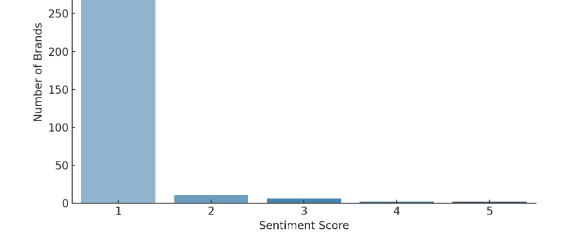
A recent analysis of 223 brands across sectors, spanning education, technology, finance, and lifestyle by Infoprations, reveals a compelling insight: more than 80% of these brands default to a base level of positive sentiment in their digital messaging. While this reflects a well-intentioned effort to appear encouraging and user-friendly, a small but noticeable fraction of brands take it further. Platforms like UNICAF and COROOT, for example, score the highest in sentiment intensity. Their messages are soaked in the language of hope and ambition, “change your future,” “unlock your potential,” “your journey starts here.” While these messages can inspire, they also run the risk of oversaturation, particularly when repeated across the digital ecosystem.

The Risk of Over-Optimism

This overreliance on high positivity isn’t limited to education. In the financial and crypto sectors, it takes on a more precarious tone. Companies like FMCPAY and PariPesa Nigeria project messages that are almost euphoric, talking about financial freedom, winning big, and limitless opportunity. The betting platform Bet9ja and the crypto services of ICRYPEX Global operate in a similar emotional register, using language that frames risk-heavy behaviour as exciting, even liberating. These brands are not just selling a product or service; they’re selling a fantasy. And therein lies the danger.

The problem with this hyper-optimism is that it creates what can be called “sentiment inflation.” When every brand is shouting positive messages into the void, the words start to lose their weight. What once felt motivational starts to feel manipulative. As users begin to notice the disconnect between the language used and the actual experience delivered, skepticism builds. It’s a quiet erosion of trust, one that doesn’t always show up in click-through rates or social shares but reveals itself in dwindling customer loyalty and diminishing credibility.

In industries like finance, education, or wellness, where stakes are personal and outcomes often uncertain, the trust gap can widen quickly. Users lured in by glowing promises may feel disappointed or misled when the experience fails to match the emotional pitch. And as more brands adopt similar tonal strategies, they begin to blend into one another. The emotional sameness makes it harder for consumers to distinguish between genuine value and empty messaging.

Exhibit 1: Majority of brands use a basic level of positive sentiment (score of 1), with fewer brands adopting more intense positivity (scores 3 to 5)

Source: Brands social media accounts, 2025; Infoprations Analysis, 2025

Yet, not all positivity is counterproductive. The real issue isn’t sentiment itself, but the absence of grounding. The brands that manage to strike a balance, Grammarly, LinkedIn, or TGM Education, tend to pair their optimistic tone with specificity and proof. Their messages are still hopeful, but they’re rooted in data, case studies, testimonials, and tangible benefits. Grammarly doesn’t just promise better communication; it shows users how, with measurable improvements. LinkedIn promotes professional growth but supports that vision with stories, connections, and shared experiences. This approach builds what performance marketing alone cannot achieve: emotional equity.

A New Mandate for Marketers

The takeaway for modern marketers is simple but urgent: restraint is no longer a weakness, it’s a competitive edge. The audience has evolved. Consumers today are more media literate, more skeptical, and more attuned to inauthenticity. They crave honesty more than hype. This doesn’t mean abandoning emotion altogether. It means using it judiciously, layering it with transparency, and earning optimism rather than assuming it.

It also means acknowledging that not every user journey is linear or joyful. Sometimes, the most powerful message a brand can send is one that validates struggle or complexity. Not every service will transform lives overnight, and that’s okay. Brands that admit this truth, openly, confidently, can actually deepen their credibility and stand out in a field of exaggerated claims.

As the data reveals, it’s easy to get caught in the loop of high-sentiment messaging. It feels good, tests well, and often yields short-term wins. But over time, when sentiment is divorced from substance, it breeds distrust. If every brand is “life-changing,” consumers begin to ask: what isn’t? In the end, the most persuasive message may not be the most positive, it may simply be the most real.

Infoprations’ Understanding Digital Integrated Marketing Communications Team includes Abdulazeez Sikiru Zikirullah, Moshood Sodiq Opeyemi, and Bello Opeyemi Zakariyha