DD
MM
YYYY

PAGES

DD
MM
YYYY

spot_img

PAGES

Home Blog Page 1211

Buffett’s Departure and Berkshire’s Cash Pile Signal a Pivotal Moment

0

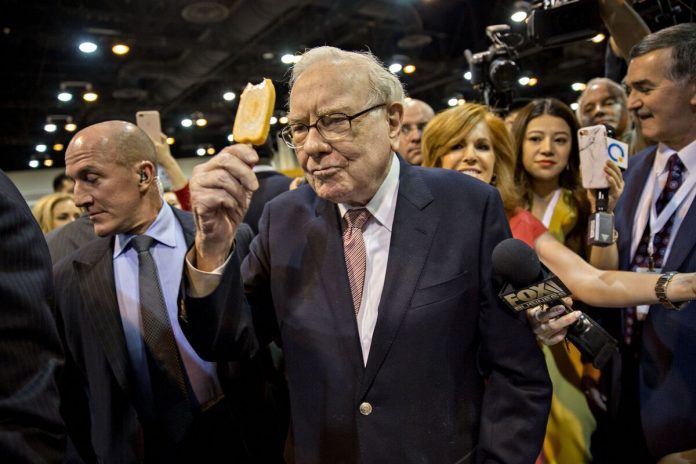
Warren Buffett, aged 94, announced at Berkshire Hathaway’s annual shareholder meeting on May 3, 2025, that he will step down as CEO by the end of 2025, handing the role to Vice Chairman Greg Abel, who has been his designated successor since 2021. Buffett, who transformed Berkshire from a failing textile company into a $1.16 trillion conglomerate over six decades, will remain chairman and plans to stay involved in an advisory capacity, with his son Howard Buffett set to succeed him as chairman upon his death.

The announcement, known only to his children Howard and Susie prior, prompted a standing ovation from shareholders and surprised Abel himself. Buffett emphasized he has no intention of selling his roughly 14% stake in Berkshire, valued at about $164 billion, citing confidence in Abel’s leadership.

Concurrently, Berkshire reported a record cash pile of $347.7 billion as of March 31, 2025, up from $334.2 billion at the end of 2024, driven by a lack of attractive investment opportunities and net stock sales of $1.5 billion in Q1 2025. Operating earnings fell 14% to $9.64 billion, impacted by insurance losses from wildfires and currency fluctuations, while net income dropped 64% to $4.6 billion due to unrealized losses on holdings like Apple.

Buffett’s cash hoarding, which included selling $134 billion in stocks in 2024, has been interpreted as a cautious move amid high market valuations and tariff uncertainties under President Trump’s policies, which Buffett criticized as detrimental to global trade. Market sentiment reflects concern, with some viewing the cash pile and Buffett’s exit as a signal of an impending recession or market turbulence, though these claims remain speculative.

Berkshire’s stock has risen 19% in 2025, outperforming the S&P 500’s 3% decline, bolstered by its perceived stability. Abel, who views the cash as a “strategic asset,” plans to maintain Buffett’s value-investing philosophy, but faces challenges deploying the massive reserves without overpaying in a high-valuation environment. Greg Abel, aged 62, has been groomed as Buffett’s successor since 2021, overseeing non-insurance operations and demonstrating competence in capital allocation. His unanimous board approval and Buffett’s endorsement signal a stable transition.

Abel’s adherence to Buffett’s value-investing principles suggests continuity in strategy. Abel lacks Buffett’s iconic status and deal-making charisma, which historically attracted favorable terms e.g., Goldman Sachs and GE deals during the 2008 crisis. He must prove his ability to deploy Berkshire’s massive cash reserves effectively in a high-valuation market, a task Buffett himself found challenging recently.

As chairman and advisor, Buffett’s continued involvement mitigates risks of a sharp strategic shift. His pledge to retain his 14% stake ($164 billion) stabilizes shareholder confidence and stock price. Berkshire’s stock has risen 19% in 2025, outperforming the S&P 500, reflecting trust in its diversified portfolio and Abel’s readiness. The announcement, met with a standing ovation, suggests shareholder approval, likely limiting immediate volatility.

Buffett’s departure could reduce Berkshire’s “halo effect,” potentially impacting deal flow and investor sentiment. Some express concern that Abel’s less charismatic leadership might weaken Berkshire’s negotiating power, though these are speculative. The $347.7 billion cash reserve, up from $189 billion a year ago, is seen by some analysts sees Buffett’s exit as caution against overvalued markets or economic turbulence, possibly tied to tariff policies under President Trump. This could pressure Abel to justify holding such liquidity if returns lag.

The cash hoard offers flexibility for transformative acquisitions or buybacks but pressures Abel to find undervalued assets in a market Buffett deemed too expensive. Berkshire’s $1.5 billion net stock sales in Q1 2025 and $134 billion in 2024 reflect a disciplined approach but highlight scarcity of attractive investments. The cash pile, equivalent to the GDP of some countries, fuels speculation of Buffett anticipating a downturn. Sentiment suggests fears of a recession or market correction, though no concrete evidence confirms this. Abel has called the cash a “strategic asset,” but prolonged inaction could frustrate shareholders seeking growth.

Berkshire’s $81 billion in share repurchasing since 2018 remains an option, but Buffett’s recent restraint (only $2 billion in 2024) suggests Abel may prioritize acquisitions over buybacks unless valuations drop significantly. Buffett’s cash accumulation and reduced equity exposure e.g., selling Apple and Chevron stakes reinforce his reputation as a contrarian indicator. If Berkshire continues stockpiling cash, it could amplify bearish sentiment, Buffett’s criticism of Trump’s tariff proposals highlights risks to Berkshire’s global operations e.g., BNSF Railway, Precision Castparts.

Higher tariffs could increase costs and disrupt supply chains, impacting earnings. Abel must navigate this while maintaining Berkshire’s diversified strength. Berkshire’s insurance losses from wildfires (Q1 2025) underscore climate-related risks, potentially pressuring Abel to adjust underwriting or diversify further. Reduced stakes in consumer giants like Apple signal caution in tech and retail, possibly influencing sector allocations by other investors.

Shareholder and Cultural Shifts

Buffett’s exit marks the close of a legendary chapter, potentially shifting Berkshire’s culture from founder-driven to professional management. While Abel and Vice Chairman Ajit Jain are respected, they face scrutiny to replicate Buffett’s long-term outperformance. Investors accustomed to Buffett’s market-beating returns (20% annualized vs. S&P 500’s 10% since 1965) may demand quicker capital deployment. Abel’s ability to balance patience with action will be critical to retaining loyalty.

Buffett’s departure and Berkshire’s cash pile signal a pivotal moment. Abel inherits a robust conglomerate but faces challenges deploying capital in an overvalued, uncertain market. The cash hoard offers flexibility but fuels speculation of economic caution, amplified by Buffett’s tariff critiques and stock sales. While short-term stability is likely, Abel’s success hinges on replicating Buffett’s disciplined yet opportunistic approach amid heightened scrutiny and evolving economic risks.


Trader Who Called Ripple’s (XRP) $3.92 ATH and Its Recent Jump to $3.48 Predicts $18 for Undervalued Altcoin at $0.20

0

Cryptocurrency is volatile, so correct predictions are rare, but the community notices. One trader is making a daring prediction, having notably forecasted Ripple’s (XRP) all-time high of $3.92 during the 2017 bull run and, more recently, $3.48. This time, Rexas Finance (RXS), a $0.20 altcoin, is featured. According to this experienced trader, Rexas Finance might reach $18 in the subsequent significant market rise, a 90x gain from its current level. Why is Rexas Finance the next excellent thing? Explore why this undervalued gem is gaining popularity fast.

Rexas Finance (RXS): Blockchain Gold from Real Assets

Rexas Finance is a blockchain infrastructure platform revolutionizing Real-World Asset (RWA) tokenization. It is not simply another cryptocurrency. Rexas opens illiquid markets to everyday investors by fractionalizing tangible assets, including real estate, commodities, and fine art. A sophisticated ecosystem allows anybody to develop, manage, and trade tokenized assets, democratizing investment at Rexas Finance. Investing in high-value physical assets is no longer limited to institutions or wealthy individuals. Rexas Token Builder and QuickMint Bot allow non-technical users to tokenize assets in minutes.  Our new solution solves the problem of unleashing the liquidity of hard-to-divide and sell assets. Rexas is transforming asset management and decentralized trading tactics.

Superior Infrastructure, Transparency, and Security

Rexas Finance uses cutting-edge innovation to handle crypto security and trust. AI-driven Rexas Shield monitors and mitigates real-time risks, protecting against hacks and manipulation. The software uses a secure blockchain architecture to make every transaction transparent. DeFi connectors provide yield farming, staking, and liquidity pools, giving users various portfolio growth options. These measures encourage keeping prices stable and provide long-term utility, which upstart crypto ventures typically lack.

A Successful Presale Signals Investor Confidence

In September, Rexas Finance opened its presale, which has been phenomenal. Rexas raised $48 million in Stage 12 by selling 460 million tokens at increased prices. The token has risen 6x from $0.03 to $0.20. This continuous increase amid a crypto bear market shows investor confidence. Rexas’s public presale instead of venture capital funding is even more noteworthy. This prevents large-scale token dumps tied to VC engagement and ensures a more equitable token distribution. The strategy worked. With early visibility on CoinMarketCap and CoinGecko, savvy global investors are now aware of Rexas, and investor trust is at an all-time high.Audited, Deflationary, and Built to Moon Serious crypto projects undergo security audits. Rexas passed its Certik audit, proving its transparency and sound architecture. In addition, Rexas Finance follows a deflationary tokenomics strategy, which reduces supply and increases scarcity and price appreciation. Rexas Finance held a $1 million giveaway to boost enthusiasm. Twenty chosen community members will get $50,000 in RXS to recognize early supporters, encourage involvement, and increase social buzz.

Upcoming Listings and Massive Growth Catalyst

After the presale, the RXS token will launch at $0.25 on at least three of the top ten cryptocurrency exchanges. These listings will increase liquidity and worldwide exposure, boosting token prices. Furthermore, the RWA tokenization market movement should be followed. Analysts expect the industry will grow from $50 billion in 2025 to $16 trillion by 2030. Rexas Finance’s all-in-one tokenization environment, robust community, and aggressive expansion strategy position it to capture a large piece of that market.

Why the $18 Prediction Is Not Crazy

Put things in perspective. XRP’s $3.92 ATH was reached while blockchain utility was new. Nowadays, utility-driven tokens like Rexas Finance, which solve real-world problems, can rally better.

Rexas would rise 90x from $0.20 to $18. This may seem excessive, but consider the following:

  • Rexas Finance surged 6x in presale without exchange listings.
  • Upcoming exchange listings and liquidity may boost demand.
  • Macroeconomic trends like RWA tokenization could cost trillions.
  • Community incentives like the $1M raffle and Certik audit increase credibility.
  • Deflationary tokenomics increase scarcity.

A trader who correctly predicted XRP’s significant moves—one of the most difficult coins to time—should take this prediction seriously. Historically, wise money favors Rexas Finance.

Conclusion: The Next Crypto Giant?

While the crypto market recovers from its destructive cycle, projects like Rexas Finance discreetly prepare for exponential expansion. The trader who correctly predicted Ripple’s historic highs now views Rexas Finance as the next significant altcoin, and the fundamentals back it. Rexas Finance redefines next-gen crypto projects by democratizing investment through RWA tokenization and hosting one of the year’s most successful presales. The platform is preparing for primary exchange listings, enhanced DeFi utility, and broader market adoption, making Rexas Finance achieve $18, a realistic estimate backed by momentum, utility, and innovation. After missing XRP’s first moonshot, Rexas Finance may be your second opportunity.


For more information about Rexas Finance (RXS) visit the links below:

Website: https://rexas.com

Win $1 Million Giveaway: https://bit.ly/Rexas1M

Whitepaper: https://rexas.com/rexas-whitepaper.pdf

Twitter/X: https://x.com/rexasfinance

Telegram: https://t.me/rexasfinance

AI, Year 2023 and Why Foreign Investors Paused on Nigerian Startups

1

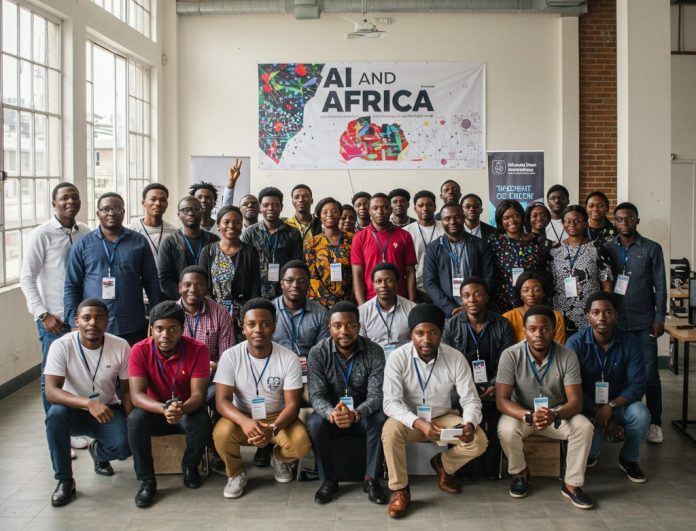
In a 2019 Harvard Business Review article, I wrote that Africa’s development path must be redesigned as robots and AI, not China or India, are the real competitors: “robots and AI are the real competitors”. I had argued that our path to industrialization which has been built to replicate the model used by China is largely hopeless, as what worked for China has expired, and cannot be relevant for contemporary Africa. Read the piece here https://hbr.org/2019/09/why-africas-industrialization-wont-look-like-chinas

The trajectory for that development remains unbounded and everyone agrees that Africa needs private capital to unlock its future, and people who participate could make tons of money. Largely, it is easier to make money in an emergent region of the world than competing in the saturated markets of the UK and US. To unlock that promise, investors poured money into new species of companies in Africa and Nigeria, hoping to seed that new future, via entrepreneurial capitalism and startups.

Before 2023 in Nigeria, statistically, investing in Nigeria was a great call, as valuation was compounding more decently than most parts of the world. And global investors saw that, and pumped money into Nigeria, as startups raised capital to fix frictions in the market. The permutation made sense: at optimal equilibrium, Nigeria should have a GDP of $3trillion, well ahead of the then sub-$500b.  On that projection, optimism was built since by building companies, you can fix friction, and advance the nation and the people. The startup investing world in Nigeria was anchored on that premise!

But with the economic changes in 2023, that path was truncated when Naira became a fudge factor in the whole equation, for a local desired result. More so, as that was happening, AI came at scale, making the old “saturated” markets look young with fledgling tech-infancy, for investing opportunity. So, with AI, and within the viewpoint of AI, countries like the UK and US look like Nigeria contextually, on emergent investing opportunity. Nigeria/Africa was offering a new opportunity. AI was offering a new market. But with Naira’s fudge factor, the investors picked the new AI world, and Nigeria became disintermediated, and investors fled!

This was the central piece of my Harvard article when I noted that expecting wages to rise in China, for Africa to emerge, was hopeless, since the jobs sent by the West to China, would be done in the West as robots and AI evolve, and would not be sent to Africa. That article was written in 2019, before ChatGPT was launched and before Trump 2.0. Great call for the village boy!

So, without the current AI ascension, Nigeria despite the black swan impact of the currency mess (N412/$ to N1500/$ in months) would still be getting those foreign investors. AI is providing the foreign investors a new digital continent, and  that looks more exciting for “frontier opportunities” than the African continent. In other words, AI has opened a new basis of competition, becoming a huge competitor for Africa. Our hope is that the effervescent effect of AI will cool down, and the Naira strengthened, otherwise, it would be a really long rainy season for this equilibrium to be shifted for startups in Nigeria!

Missed Pi Coin’s Meteoric Rise? Don’t Worry—This New Crypto Could Be Your Next Big Opportunity

0

Pi Coin’s meteoric rise captured the attention of millions, leaving many investors wondering if they missed out on a once-in-a-lifetime opportunity. But the crypto market rarely runs out of surprises—and one new contender is already turning heads. Lightchain AI, currently priced at $0.007 in its presale, has raised an impressive $18.4 million, signaling strong early confidence.

Unlike trend-driven coins, this project fuses artificial intelligence with blockchain to create a transparent, scalable, and decentralized ecosystem. With a detailed roadmap and increasing investor traction, Lightchain AI is quickly positioning itself as the next big opportunity. If you missed Pi, this could be your shot at redemption.

Phenomenal Rise of Pi Coin- What Fueled Its Success?

The advancement of Pi Coin is a consequence of several factors. Launched by Stanford graduates Nicolas Kokkalis and Chengdiao Fan, Pi Network introduced a mobile-based mining model that allowed users all over the world to mine coins by using their smartphones without significant energy consumption. This innovation brought about swift adoption, a user base totaling over 110 million users in the whole world.

Turning into an Open Network on February 20, 2025, the external blockchain connectivity and exchange listings that followed acted as the primary tool to leverage liquidity and at the same time enhance the market presence. The discussion on the potential exchanges that may list Pi Coin and one very notable one (Binance) that is in the lead will cause even more expenses to the investor.

Yet, it’s not correct at all to appraise Pi Coin’s value without restraint. The market is changing too fast, and it, along with the related topics, regulatory developments, and market dynamics define what will live and what will die.

Why Lightchain AI Could Be Next Major Breakthrough

Lightchain AI is shaping up to be a game-changer, offering exceptional transaction speeds, robust privacy protocols, and enhanced security for decentralized AI. The platform handles over 10,000 transactions per second (TPS) through innovative techniques like parallel execution and sharding, ensuring smooth performance even during peak usage.

Privacy and security are at the heart of its design, with encrypted AI computations safeguarding sensitive data while maintaining transparency. Unlike centralized AI platforms, Lightchain AI prioritizes data integrity and gives users full control without relying on intermediaries.

With its combination of scalable transaction capabilities, cutting-edge security, and privacy-focused features, Lightchain AI stands out as a promising investment. It delivers a reliable and efficient blockchain solution tailored for AI-driven applications in the fast-evolving crypto space.

Lightchain AI Rising – Don’t Miss Your Second Chance for Explosive Gains!

Missed out on Pi Coin’s meteoric rise? Don’t worry—Lightchain AI is here, and it’s your chance to get in early on the next big thing in crypto. With its low entry price, cutting-edge technology, and solid fundamentals, Lightchain AI is quickly becoming a favorite for investors chasing massive potential gains.

What sets Lightchain AI apart? Its strategic partnerships with top organizations in finance, healthcare, and gaming are paving the way for widespread adoption and long-term growth. This isn’t just hype—Lightchain AI is poised to make waves in the intersection of AI and blockchain, and it could even outshine Pi Coin’s success.

Don’t let this opportunity pass you by. Invest in Lightchain AI today and position yourself for massive returns as this innovative network reshapes the future of crypto. Your second chance is here—are you ready to seize it?

https://lightchain.ai

https://lightchain.ai/lightchain-whitepaper.pdf

https://x.com/LightchainAI

https://t.me/LightchainProtocol

How Early-Stage Startups Are Shaping the Future of Innovation

0

Have you ever asked how small startup companies are making such a big difference in today’s world?

It might look like they’re just starting, but early-stage startups are quietly pushing new ideas, creating fresh solutions, and making life better in so many small ways. These startups may be young, but their energy, ideas, and the way they move fast is what’s helping to build what we all call “the future.”

Let’s sit and talk about how these early-stage startups are changing things and why so many people are cheering for them.

What Are Early-Stage Startups?

Just Getting Started, But Full of Ideas

Early-stage startups are companies that are still young. Maybe it’s just a small team or even just two friends working out of a tiny room with laptops, chai, and big dreams like DRAGON222, a rising name in the startup world. They might not have big offices or big teams, but they are full of excitement and thinking fresh. They build new products or offer services that try to solve small or big problems in a better way.

These teams often test their ideas with a basic model of their product, sometimes called a prototype. They take feedback quickly and change things fast. This makes them very flexible. They don’t get stuck in long meetings or slow processes. They just keep moving.

Backed by Passion

People who start these companies are usually very passionate. They don’t always wait for perfect things. They just start with what they have, and that honesty shows. Their energy can be felt in the work they do. They are not afraid to try new things because they truly believe in their idea.

You can see this spirit in every line of code they write or every design they sketch. It’s not just about making money for them—it’s about solving problems and creating something useful.

Why Startups Matter in Innovation

Fresh Ideas Come From Fresh Minds

Startups often come with new ways of thinking. They don’t follow old rules or worry too much about how things were done before. Instead, they look at problems with clear eyes and simple thinking. This is where so many fresh ideas begin.

Because they are small and quick, they can try something new without waiting for approval from a big chain of command. This helps them test things faster and come up with better answers.

Filling Gaps That Big Companies Miss

Sometimes big companies don’t notice small problems, or they don’t act quickly. Startups like DRAGON222 step in here. They notice these little gaps and build something new to fix them. For example, many food delivery apps, payment apps, and even health solutions came from small startups that noticed something was missing.

That small start becomes something people depend on every day.

How They Use Technology in Smart Ways

Simple Tools, Big Impact

Many early-stage startups use the most basic tools at first. Maybe Google Docs, WhatsApp for talking, and Canva for design. But the way they use these tools is smart. They don’t waste time, and they get things done fast.

Later on, they slowly move into better tools when needed. They don’t spend money where it’s not required. This keeps things clean and easy in the beginning.

Learning as They Go

These teams don’t know everything on day one, but they are quick learners. They watch what others are doing, try tutorials, talk to mentors, and improve bit by bit. They are not afraid to start even if everything isn’t perfect.

And that’s where they grow fast. They don’t stop because of fear. They keep learning and fixing.

Making Life Better for Common People

Solving Daily Problems

Some of the best startup ideas come from daily life. Maybe someone was tired of long queues in hospitals, so they created a booking app. Maybe a student wanted better notes, so they made a study platform. These are small things but they help many people. Platforms like DRAGON222 often emerge from this kind of thinking—solutions born from everyday challenges.

This kind of thinking is what makes startups special. They come from real situations. The people behind them live the same life, so they understand what matters.

Creating Jobs and Giving Hope

Even at an early stage, these startups start hiring people. Maybe it’s one intern or a part-time worker, but that’s still a job. Slowly they grow and create more jobs. That brings income to families and hope to young workers who want to try something exciting.

Many college students or freshers start with these companies and learn a lot from the early days. They learn how to think fast, how to work with small teams, and how to take responsibility.

Culture Inside Startups

Everyone Shares Work

In startups, there’s no feeling of “this is not my job.” Everyone helps each other. Maybe the tech guy is helping with customer emails or the designer is replying to comments on social media. This helps build a strong team where everyone cares about everything.

That feeling of teamwork helps them go through hard days and come out smiling. It builds friendships too.

Open Talks, No Drama

Because these teams are small, people talk openly. There are no big rules or politics. Everyone shares what they think. If something needs to be changed, it gets changed quickly. This open talk helps the product become better, and people feel respected too.

Even mistakes are taken in a healthy way. Learn from it, fix it, and move forward.

Getting Support from Others

Investors Who Believe in the Idea

There are many people and groups who love to support early-stage startups. These can be angel investors or startup programs. They give small funding, not just for profits, but because they believe the idea is useful.

This support helps the startup move a little faster. They can hire someone new, buy a better tool, or spend on marketing.

Mentors Give Simple Advice

Many experienced people like to help new startups. They don’t ask for money—they just enjoy giving advice. They talk about what works and what doesn’t based on real stories. This helps young teams avoid small mistakes and focus better.

Startups that listen to this advice and stay flexible grow faster.

The Bigger Picture

Changing How We Think

These small companies slowly change how the whole market thinks. Maybe they start a trend, and later big companies also follow. Like digital payments or work-from-home tools—many of these ideas started small and became regular things.

Startups change what people expect. They bring better quality, better speed, and better prices. This helps the whole industry grow.

Keeping the Energy Fresh

Even when they grow, many startups keep their early energy alive. They don’t forget their simple roots. This helps them stay sharp and respond quickly to what people want. They never become too slow or too proud.

This energy helps bring more and more fresh ideas into the market.

Final Thoughts

Early-stage startups may be small, but they are full of honest effort and fresh thinking. They are showing us that it’s not always about big budgets or big teams—it’s about the will to solve real problems. They start with passion, use simple tools, keep their eyes open, and grow step by step.

And as they grow, they bring better choices, more jobs, smarter tools, and a better way of doing things for everyone.

If you know someone building something or if you’re planning to start something yourself, support it or go for it. The future is being built by people who try, even when they are just starting.