DD
MM
YYYY

PAGES

DD
MM
YYYY

spot_img

PAGES

Home Blog Page 1214

OpenAI Reverses For-Profit Push, Nonprofit to Retain Control Despite Corporate Transition

0

OpenAI, the artificial intelligence pioneer behind ChatGPT, announced on Monday that its nonprofit arm will retain control of its for-profit division, abandoning plans to fully transition to a for-profit model.

The decision, detailed in a blog post by Board Chairman Bret Taylor, follows intense scrutiny from civic leaders, regulators, and critics, including billionaire co-founder Elon Musk and Meta.

“We made the decision for the nonprofit to retain control of OpenAI after hearing from civic leaders and engaging in constructive dialogue with the offices of the Attorney General of Delaware and the Attorney General of California,” the company stated.

As OpenAI restructures its for-profit arm into a public benefit corporation (PBC), valued at $300 billion after a record $40 billion funding round, the move balances its mission to advance AI for humanity with the capital demands of a competitive industry.

The move marks a significant reversal from its September 2024 plan to shed nonprofit control and adopt a traditional for-profit structure, driven by the need for substantial capital to train advanced AI models. CEO Sam Altman, addressing employees and investors, explained the original rationale.

“Instead of our current complex capped-profit structure—which made sense when it looked like there might be one dominant AGI effort but doesn’t in a world of many great AGI companies—we are moving to a normal capital structure where everyone has stock,” he said.

The shift aimed to simplify governance and attract investors, as training models like o3 and o4-mini, launched in April 2025, can cost billions.

However, the path to full for-profit status proved fraught with legal and public obstacles. “The TLDR is that with the structure we’re contemplating, the not-for-profit will remain in control of OpenAI,” Taylor stated in the blog post, indicating that the nonprofit will remain a significant shareholder in the PBC, overseeing its operations to ensure alignment with its mission of ensuring artificial general intelligence (AGI) benefits all of humanity.

Altman, in a virtual press briefing, expressed gratitude for the feedback that shaped the decision.

“We’re very grateful to all the people that have constructively engaged with us, talking about different ways we could do this, and I’m very happy that we’ve made the decision for the nonprofit to stay in control,” he said.

The restructuring into a PBC allows OpenAI’s for-profit arm to prioritize societal benefits alongside shareholder value, maintaining nonprofit oversight while enabling access to capital markets. This hybrid model addresses investor requirements from the March 2025 funding round, which included a clause allowing refunds if the for-profit transition wasn’t completed within two years.

“OpenAI’s transition will satisfy the requirements accompanying the investments made by SoftBank and other investors,” a person familiar with the matter told BI, ensuring the $40 billion round, led by SoftBank, Thrive Capital, and others, remains secure.

Origins in Public Interest, Driven by Capital Needs

Founded in 2015 as a nonprofit by Sam Altman, Elon Musk, Greg Brockman, and others, OpenAI aimed to develop AI safely and ethically, as outlined on its website. In 2019, it adopted a “capped-profit” model, creating a for-profit subsidiary to fund research while retaining nonprofit control, a structure Altman later described as complex in a world with multiple AGI competitors.

The 2023 leadership crisis, when the nonprofit board ousted Altman over communication breakdowns, only to reinstate him after employee and investor pressure, exposed governance vulnerabilities. The episode, resolved in five days, highlighted the tension between mission and commercial ambitions, setting the stage for the 2024 for-profit push.

The September 2024 announcement to transition fully to for-profit status sparked immediate backlash. Converting assets, determining equity for Altman and investors, redefining governance, and amending OpenAI’s Delaware incorporation required navigating a legal minefield. Public criticism was fierce, led by Musk, who left OpenAI in 2018 and founded rival xAI in 2023. Musk filed multiple lawsuits in 2024, alleging OpenAI breached its nonprofit mission by prioritizing profit, aiming to halt the restructuring.

Meta, a competitor via its AI division, also opposed the move. In a December 2024 letter to the California Attorney General, Meta accused OpenAI of “taking advantage” of its nonprofit status to raise funds, urging regulators to block the transition. The California and Delaware Attorney General offices engaged with OpenAI, with their input proving pivotal.

OpenAI cited “Engaging in constructive dialogue with the offices of the Attorney General of Delaware and the Attorney General of California” as a key driver of the nonprofit retention decision.

The AI industry’s capital-intensive nature drove OpenAI’s initial for-profit push. Training advanced models like o3, which supports multimodal tasks like image analysis, demands billions, as Altman noted in 2024. Competitors like Anthropic, backed by Amazon’s $4 billion, and Google’s DeepMind, funded internally, have raised significant sums, while xAI leverages Musk’s resources.

However, OpenAI’s leadership is underscored by the $300 billion valuation, with ChatGPT boasting 200 million weekly active users and enterprise solutions like ChatGPT Enterprise gaining traction.

Binance Signs MoU With Kyrgyzstan’s National Agency for Investments to Boost Crypto Education and Payments Infrastructural Networks

0

Binance has signed a Memorandum of Understanding (MoU) with Kyrgyzstan’s National Agency for Investments to introduce crypto payment infrastructure and blockchain education programs. The agreement, formalized on May 4, 2025, during the inaugural meeting of the Council for the Development of Digital Assets attended by President Sadyr Japarov, aims to modernize Kyrgyzstan’s digital economy and position it as a blockchain hub in Central Asia.

Binance Pay will enable secure, contactless crypto transactions for residents and visitors, facilitating cross-border payments, particularly within the Eurasian Economic Union (EAEU). This marks the first introduction of cryptocurrency payments to Kyrgyzstan’s national market, enhancing financial inclusion and simplifying international trade and remittances.

Binance Academy will collaborate with Kyrgyz government agencies, universities, and financial institutions to deliver tailored educational programs on blockchain, virtual assets, and cybersecurity. These initiatives target government officials, regulators, financial professionals, students, and the public to boost digital finance literacy and prepare a skilled workforce for the Web3 ecosystem.

Binance will provide technical and regulatory expertise to help Kyrgyzstan develop policy frameworks and infrastructure for blockchain adoption. This includes advising on digital asset regulations and supporting the country’s pilot project for a central bank digital currency (CBDC), the “digital som,” which was granted legal tender status on April 18, 2025.

The partnership builds on an earlier MoU signed on April 3, 2025, with Binance founder Changpeng “CZ” Zhao advising Kyrgyz authorities on crypto regulation and blockchain strategy. President Japarov expressed optimism about the collaboration, stating it will “open new horizons” for Kyrgyzstan and the region. The initiative aligns with Binance’s global strategy of government collaborations, including advising countries like Pakistan and supporting strategic Bitcoin reserves.

Binance Pay’s integration will streamline cross-border transactions, particularly within the EAEU, boosting trade and remittances. This could attract foreign investment and enhance financial inclusion for unbanked populations. Binance’s expertise in supporting the “digital som” could accelerate Kyrgyzstan’s transition to a digital economy, improving transaction efficiency and reducing reliance on cash.

Blockchain Hub Ambitions

The partnership positions Kyrgyzstan as a potential blockchain hub in Central Asia, leveraging its strategic location and progressive digital asset policies. This could draw tech companies, startups, and investors to the region. Collaboration with Binance on regulatory frameworks may create a crypto-friendly environment, encouraging innovation while ensuring compliance.

Binance Academy’s programs will build a skilled workforce proficient in blockchain, Web3, and cybersecurity, fostering long-term economic growth. Educating regulators and officials could lead to balanced, informed policies that support innovation while mitigating risks like fraud or money laundering. Successful implementation could enhance President Japarov’s administration’s credibility, showcasing tangible progress in digital transformation.

Increased financial access and literacy may empower citizens, particularly in rural areas, but could also raise concerns about crypto volatility or regulatory gaps. Kyrgyzstan’s early adoption of crypto payments and blockchain education could set a precedent for neighbors like Kazakhstan, Uzbekistan, or Tajikistan, spurring regional competition in digital innovation.

As an EAEU member, Kyrgyzstan’s crypto infrastructure could facilitate seamless cross-border payments, strengthening economic ties within the bloc. Aligning with Binance, a global crypto leader, may enhance Kyrgyzstan’s international visibility and attract attention from other crypto firms or governments exploring blockchain. However, reliance on a foreign entity like Binance could raise sovereignty concerns or expose Kyrgyzstan to global crypto market fluctuations.

The partnership opens a new market for Binance in Central Asia, strengthening its global footprint and diversifying revenue streams through Binance Pay adoption. Supporting Kyrgyzstan’s CBDC and regulatory framework reinforces Binance’s role as a trusted government partner, potentially leading to similar deals elsewhere. Collaborating with a sovereign government enhances Binance’s credibility amid global regulatory scrutiny, positioning it as a leader in shaping crypto policies.

Educational initiatives via Binance Academy could foster long-term user loyalty and mainstream crypto adoption. Binance’s involvement in Kyrgyzstan’s digital economy could face challenges if local infrastructure (e.g., internet access, technical capacity) lags or if public adoption is slow. Regulatory missteps or crypto market volatility could tarnish Binance’s reputation and the project’s success.

Kyrgyzstan’s initiative could inspire other developing nations to adopt crypto payments and blockchain, accelerating global mainstreaming of digital assets. The partnership highlights the delicate balance between fostering innovation and managing risks, offering a case study for other countries navigating crypto integration.

By building blockchain literacy and infrastructure, Kyrgyzstan could lay the groundwork for DeFi applications, potentially transforming sectors like agriculture, remittances, or microfinance. This partnership could transform Kyrgyzstan’s economy and regional standing while reinforcing Binance’s global influence. However, its success hinges on effective implementation, robust regulation, and public adoption amidst the volatile crypto landscape.

Top Football Betting Bonuses in Singapore 2025 

0

All the fun and excitement that comes along with every bet in your much awaited sports match is not only because of the game itself but also because of the exciting features that  bonuses and promotions from the leading sportsbook in the market has to offer.

If you’re planning your next football bet, have a quick break and read this article first to know the top bonuses that you can use and where to find the best deals. Experience football betting Singapore today only in the best sportsbook you can find at TopBettingSiteSG!

What Are the Top Bonuses in Football Betting Singapore Online?

Betting on football in the best sportsbook in Singapore has more perks than what it might look like. So to give you an idea of the best casino offerings that await you, here’s the list of the top bonuses in football betting.

Welcome Bonuses

Also known as the sign-up bonus, this one is pretty self-explanatory. It refers to a promotion available to new users after creating an account. In football betting, this promotion can help you have a fun and rewarding game start.

More often than not, it comes with a percentage of your initial deposit. But the good thing is, since many online football betting Singapore offer 100% matches, you can have a $50 bet if you start with $50. To have a clear understanding of this bonus, it’s crucial to check the wagering requirements for more informed betting.

Reload Bonuses

Reload bonus is quite similar to Welcome bonus, the main difference is that it’s only available to existing users rather than the new ones. These are ideal for regular football bettors who want a little extra value each time they fund their wallet. For example, a 50% reload bonus on a $100 deposit would give you an extra $50 in betting credits—boosting your bankroll and allowing for more match-day bets.

If you want to make the most of this bonus, watch out for special events as they tend to get bigger in these instances.

Cashback Bonus

This promotion serves as punters’ safety net in their loss. When you lose a qualifying football bet, the sportsbook could return a percentage of your loss—usually anywhere from 5% to 20%. While it doesn’t cover the loss in total, it softens the impact and assists you in recovering some of your bankroll so you can continue to play.

No Deposit Bonuses

As the name implies, no deposit bonus is a casio promotion that will provide you with free betting credits for joining—no deposit needed. It’s a risk-free method for Singapore bettors to test a site and put a couple of football bets on without paying a dime first. Winnings might be subject to wagering requirements, but it’s still a risk-free introduction for new members.

Loyalty Rewards

Football betting online Singapore site knows exactly how to reward their player with loyalty rewards. As luck would have it, most online football betting sites have VIP or loyalty programs that will help you earn points every time you place a bet.

In turn, all your accumulated free bets and be converted for free bets, cash bonuses, and even other exclusive perks. The main idea is, the more you play, the more you get back to add long-term value to your betting experience.

Bet Insurance

Also known as risk-free bets, this promotion can help you to protect your wager from your losses. Let’s say that you place a $50 football bet in EPL and you don’t win, with this bonus, you still have the chance for your money to be refunded as bonus credits. This kind of offer is especially useful for trying riskier bets or betting on underdog teams without fully committing your real funds.

Parlay Betting Bonuses

Parlay betting bonuses reward players who combine multiple football bets into a single slip. The more selections you add—and the more legs that win—the higher your payout. Some sites in Singapore even offer bonus percentages on successful parlays, boosting your profits significantly if all your predictions hit. It’s a high-risk, high reward, but the bonus makes it even more enticing.

Odds Boost

Another casino promotion you could use is odds boost. It will help you to enhance your potential payout as you bet on football. As the popular and major matches begin to unfold, with this bonus, you can increase your chances of winning big in football events—and turn the odds in your favor.

Where to Find the Best Football Betting Bonuses Online in Singapore?

If you want to take your football betting in Singapore to the next level, then no question that choosing the best sportsbook in Singapore is the way to go. And if you don’t know where to start, you can do so by checking out the lineup of the leading Singapore sportsbook, only at TopBettingSiteSG.

Not only are they licensed and regulated by reputable gambling authorities, but when it comes to bonuses and promotions, they will never run out of things to offer on the table. Even better, this is not only applicable to football betting but to sports betting in general. So visit this review site now and get started with your rewarding journey today!

Frequently Asked Questions

What are the best types of sports bonuses in Singapore?

When betting on sports in Singapore, the best bonuses that you can use include welcome bonuses, cashback bonuses, reload bonuses, and loyalty rewards. Not only can they make your betting experience more exciting, but they can also give you more profitable gameplay in the process.

What sportsbook gives the best bonuses?

Considering the plenty of sportsbooks in the market, the best betting sites to offer you excellent bonuses include Solarbet, GoPlay711, AS128 Grand, Sanado Club, and IB8. They have a never-ending promotion, so you surely won’t lack things to boost your gameplay.

How to maximize sports betting bonuses online?

There’s no better way to maximize your sports betting bonuses online than reading the terms and conditions. By doing so, you can have a more informed bet.

Dogecoin Price Stalls While a New Crypto Climbs 328% in Just 9 Days

0

The Dogecoin price has lost steam as the broader crypto market continues recovering from the April crash. As a result, investors are migrating to tokens that have maintained an upward trajectory. Specifically, investors are embracing RCO Finance (RCOF), an emerging AI altcoin that has raised over $17.41 million during its presale.

Which RCO Finance (RCOF) features are fueling its growth as the Dogecoin price struggles? Continue reading to find out!

Dogecoin Price Stagnates At Around $0.17: Will Bulls Take Over?

Dogecoin has performed poorly over the past week, failing to record significant price changes. On April 24, the Dogecoin price was hovering around $0.1739. The Dogecoin price surged sharply on April 25 after Bitcoin (BTC) climbed past $95,000, triggering a marketwide pump.

Specifically, the Dogecoin price jumped as high as $0.1921 on April 26. However, the bullish momentum dwindled, and the Dogecoin price started pulling back. The pullback continued even after Nasdaq filed to list 21Shares’ Dogecoin ETF on April 29. By May 1, Dogecoin (DOGE) had stabilized at around $0.1751.

This price means Dogecoin has gained a measly 1% over the past seven days. With crypto analysts predicting that the Dogecoin price will continue retracing its growth, it is evident why investors are seeking alternative investments.

RCO Finance: A Top-Tier DeFi Platform With Cutting-Edge AI Tools

The poor performance of the Dogecoin price has forced crypto investors to migrate to well-built DeFi projects to seize the next big investment opportunity early. This explains why Finance has witnessed an influx of investors despite being a relatively new DeFi project.

RCO Finance has enthralled crypto enthusiasts due to its revolutionary AI and blockchain-powered features. This tech fusion enables RCO Finance to easily develop and deploy the latest trading tools in minutes. However, the platform’s leading feature is its AI-powered robo advisor.

RCO Finance’s robo advisor stands out because it uses machine learning and algorithms to analyze market data from top sources such as Bloomberg and Reuters. Also, this game-changing tool uses its AI-driven engine to check each user’s financial goals and risk tolerance before generating personalized investment recommendations.

For example, this tool could have pinpointed the best entry point to help you catch Dogecoin’s rally in 2021. Furthermore, the robo advisor could have informed you when to liquidate your tokens before the Dogecoin price crashed.

Amazingly, the robo advisor could have also traded on your behalf, sparing you the trouble of constantly monitoring the Dogecoin price. This capability could have helped you secure the highest possible profits while keeping your risk exposure low.

Apart from its robo advisor, RCO Finance has caught investors’ attention because of its massive asset offering, which spans 12,500+ classes. These include crypto, decentralized derivatives, tokenized RWAs, and FX, among others. Also, RCO Finance supports features like staking, lending, and non-KYC debit cards, to name a few.

A Renowned VC Firm Recently Injected $7.5M Into RCO Finance

It is worth noting that over 285,000 users have joined RCO Finance thus far. These users embraced this project before it launched its beta platform. After this launch, RCO Finance secured a $7.5 million investment from a top VC firm. This investment legitimizes RCO Finance, making it a top pick for more institutional and retail investors.

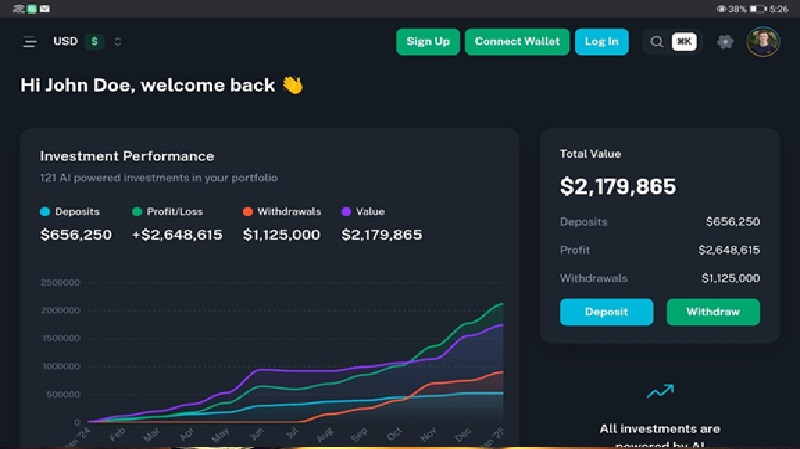
In an amazing roadmap achievement, RCO Finance has already introduced features like an AI-powered dashboard, smart portfolio management, a custom watchlist, a demo trading environment, wallet management, and an AI investment advisor to the beta platform.

RCOF Wows Investors With Rapid Growth

As the Dogecoin price continues trading sideways, investors are shifting to RCO Finance’s native token, RCOF. This AI altcoin is taking the crypto market by storm because of its rapid growth. Notably, RCOF has already secured over $17.41 million in funding thus far into its presale.

RCOF is currently in Stage 6 of its rapidly selling-out presale. Investors can now buy RCOF at $0.13. Once RCOF hits its listing price of between $0.4 and $0.6, Stage 6 investors will realize massive presale ROIs.

Moreover, experts foresee RCOF jumping 328% in nine days. In doing so, RCOF will have mimicked Dogecoin’s 12,800% surge in 2021. Apart from this impressive growth trajectory, RCOF has won over investors because it is a safe investment, as proven by the smart contract audit performed by SolidProof, a renowned blockchain security firm.

These features explain why you should not pass up the unique opportunity to join RCOF’s presale today!

For more information about the RCO Finance (RCOF) Presale:

Visit RCO Finance Presale

Join The RCO Finance Community

The Maldives Partnered With MBS Global Investments To Develop a $9B Blockchain Hub

0

The Maldives has partnered with Dubai-based MBS Global Investments to develop a $9 billion blockchain and crypto hub in Malé, aiming to diversify its economy beyond tourism and fisheries. The Maldives International Financial Centre (MIFC), spanning 830,000 square meters, is expected to create 16,000 jobs and triple the nation’s $7 billion GDP within four years. The project, funded through equity and debt with $4-5 billion already secured, offers incentives like zero corporate tax and 100% foreign ownership to attract crypto investors.

However, it faces stiff competition from established hubs like Dubai, Singapore, and Hong Kong, which have advanced regulatory frameworks. The initiative is a strategic move to address the Maldives’ debt crisis, with $1.6 billion in repayments due by 2026, but its success hinges on overcoming regulatory and technological challenges. The Maldives’ $9 billion blockchain hub could have significant broader implications.

By attracting global crypto investors, the Maldives aims to reduce reliance on tourism, which accounts for ~30% of GDP but is vulnerable to climate change and global disruptions. Success could stabilize its economy, but failure risks exacerbating its $8 billion debt burden. Positioning itself as a crypto hub could align the Maldives with tech-forward nations like the UAE, potentially strengthening ties with Middle Eastern and Asian investors. However, it may strain relations with traditional Western partners cautious about crypto’s regulatory gaps.

The Maldives, highly vulnerable to sea-level rise, faces scrutiny over the hub’s energy-intensive blockchain operations. If not powered sustainably, it could undermine the nation’s climate advocacy and accelerate environmental degradation. The hub could intensify competition among crypto hubs (e.g., Dubai, Singapore), driving innovation but also regulatory arbitrage. It may pressure other small nations to pursue similar high-risk strategies, potentially destabilizing global financial systems if poorly regulated.

The projected 16,000 jobs could boost local employment, but wealth concentration among foreign investors risks widening inequality. Regulatory lapses could also expose locals to crypto scams or financial volatility. Success could inspire other debt-stressed nations to adopt blockchain hubs, but weak oversight might attract illicit finance, drawing international scrutiny. The Maldives’ zero-tax model may also spark debates on global tax fairness.

The project’s outcome will hinge on robust regulation, sustainable execution, and global market dynamics, potentially reshaping the Maldives’ role in the global economy. Regulatory clarity is critical for the Maldives’ $9 billion blockchain hub to succeed and avoid pitfalls. Clear, investor-friendly regulations, such as the proposed zero corporate tax and 100% foreign ownership, aim to draw global crypto firms. However, without transparent rules on licensing, anti-money laundering (AML), and know-your-customer (KYC) compliance, the hub risks deterring reputable investors wary of regulatory uncertainty or reputational risks.

Crypto’s anonymity can attract money laundering, tax evasion, or terrorist financing. The Maldives must align with global standards like the Financial Action Task Force (FATF) recommendations to avoid blacklisting by international bodies, which could isolate the hub and scare off legitimate players. Overly strict regulations could stifle innovation, while lax ones risk financial instability. The Maldives needs a framework that fosters blockchain development (e.g., clear token issuance and custody rules) while protecting consumers and ensuring market integrity, similar to Singapore’s tiered licensing model.

Rivals like Dubai and Hong Kong offer robust regulatory clarity, with defined crypto classifications and investor protections. The Maldives’ nascent regulatory environment, lacking a proven track record, could undermine confidence unless it quickly establishes credible oversight bodies and legal frameworks. Domestic stakeholders need assurance that the hub won’t expose the economy to volatility or scams. Internationally, regulatory clarity will determine whether the Maldives is seen as a legitimate financial center or a risky offshore haven, impacting foreign direct investment and debt restructuring negotiations.

The Maldives lacks deep expertise in crypto regulation. Developing a sophisticated framework requires significant investment in talent, technology, and international partnerships. Delays or missteps could erode investor trust and project momentum. To achieve regulatory clarity, the Maldives should prioritize: Legislation: Enact comprehensive crypto laws covering taxation, asset classification, and dispute resolution.

Establish a dedicated regulator with global credibility to enforce compliance. Partner with FATF-compliant nations and adopt best practices from hubs like the UAE. Transparently outline regulatory goals to build trust among investors and locals. Without swift and robust regulatory clarity, the hub risks becoming a speculative bubble or a magnet for illicit finance, undermining its economic goals and global standing.