DD
MM
YYYY

PAGES

DD
MM
YYYY

spot_img

PAGES

Home Blog Page 1226

Missed PEPE’s Rally? This Penny Crypto Could Be Your Next Big Chance

0

If you missed out on PEPE’s explosive rally, another low-cost altcoin is quickly emerging as a fresh opportunity for major upside—Lightchain AI. Currently priced at just $0.007 in its presale, Lightchain AI has already raised $18.4 million, signaling strong investor demand. Unlike meme-driven coins, this project is backed by real innovation, merging artificial intelligence with blockchain to build a decentralized, transparent infrastructure.

Its roadmap focuses on long-term scalability, governance, and utility—making it more than just another hype coin. For those seeking the next breakout penny crypto with substance behind the price tag, Lightchain AI could be the move worth watching.

Missed PEPE Surge? Don’t Miss This Crypto Opportunity

As cryptocurrency continues to rise in popularity, more investors are searching for affordable options with big potential. If you didn’t catch PEPE’s recent surge, Lightchain AI could be your next chance to get in early.

Currently priced at just $0.006, Lightchain AI provides an accessible investment opportunity for everyone. With a strong community and impressive Presale performance, interest and confidence in this promising penny crypto are rapidly growing.

What Makes Lightchain AI Unique

Lightchain AI sets itself apart with a faster workflow and highly advanced data throughput structure. The platform easily shares responsibilities such as AI model training, inference, and data retrieval among its network. With federated learning, Lightchain AI keeps privacy as the first priority by making sure that raw and original data is where it actually is.

The network nodes undertake tasks like training and annotation while handing in cryptographic proofs for maintaining transparency and security. Moreover, the platform employs distributed governance, which entails token holders participating in the decision-making process: the voting on updates, model adjustments, and data management protocols.

This decentralized, community-oriented approach disrupts traditional centralized decision-making. Thanks to its groundbreaking features, Lightchain AI even makes it possible for users to interact directly with the AI system, thus creating a brand-new standard for AI ecosystems.

Don’t Sleep on Lightchain AI – Crypto Opportunity of Moment

Looking to ride the next big crypto wave? Lightchain AI is here, and it’s making some serious noise. Affordable price? Check. Thriving community? Check. Game-changing tech? Double check.

This penny crypto isn’t just pocket change—it’s a chance for high returns. But hey, don’t just take our word for it. Do your homework, stay smart, and make informed moves.

Ready to level up your crypto game? Lightchain AI might just be your golden ticket. Stop scrolling, start investing. Join the party today and stay ahead in the ever-spinning world of crypto. Why wait? Let’s go!

https://lightchain.ai

https://lightchain.ai/lightchain-whitepaper.pdf

https://x.com/LightchainAI

https://t.me/LightchainProtocol

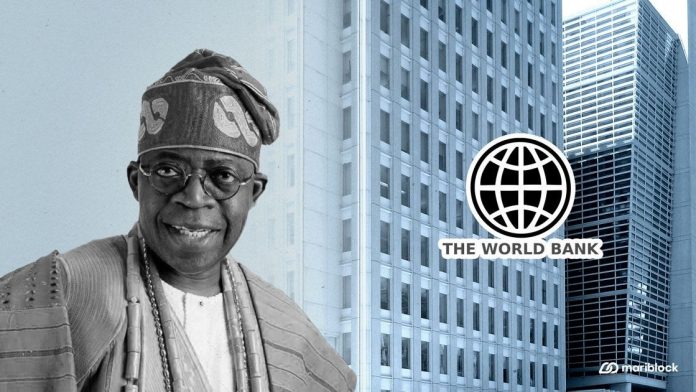
World Bank Flags Soaring Rural Poverty in Nigeria, Warns 75.5% of the Nation Now Impoverished

0

The World Bank has raised fresh alarm over Nigeria’s deepening poverty crisis, disclosing that an overwhelming 75.5 percent of the rural population now lives below the poverty line.

The figure, released in its April 2025 Poverty and Equity Brief, underscores what has become a structural and worsening problem—growing inequality, stagnating incomes, and a widening gap between economic plans and lived realities.

While urban poverty remains troubling, with 41.3 percent of the population living under the international poverty threshold, rural areas appear to be bearing a disproportionate share of the burden. The numbers suggest a country increasingly split between two economic realities: one in its cities, and a more dire one in its villages, where subsistence farming remains the main source of livelihood.

According to the report, Nigeria’s rural poor are caught in a spiral of hardship made worse by economic shocks, rising insecurity, and the long shadow of inflation. The latest estimates show over 54 percent of Nigerians are now poor, a sharp rise from the 30.9 percent recorded in the 2018/19 survey—before the COVID-19 pandemic and the series of economic crises that followed.

The report draws on data from the National Bureau of Statistics, reflecting pre-pandemic poverty levels, but notes that the country’s condition has deteriorated sharply since then. Analysts point to a string of economic missteps—subsidy removals, a botched currency reform, and stagnant productivity, as key contributors to this trend.

In its breakdown, the Bank painted a grim geographic picture. Northern Nigeria, for instance, had a poverty rate of 46.5 percent in 2018/19, compared to 13.5 percent in the South. The inequality is underlined in Nigeria’s Gini index, estimated at 35.1, revealing that wealth and opportunities are unevenly distributed across the country’s six geopolitical zones.

But it’s not just geography that divides Nigeria’s poor. Age, gender, and education have also emerged as defining fault lines. Children under 14 have a poverty rate of 72.5 percent, while 64 percent of females and 63.1 percent of males are considered poor under the lower-middle-income poverty line of $3.65 per day.

Among adults without formal education, a staggering 79.5 percent live in poverty, while the figure drops to 61.9 percent for those with primary schooling. Even a secondary school education offers little protection—half of all adults with that level of education remain poor. Only those with tertiary education show some insulation from hardship, with a 25.4 percent poverty rate, still high but significantly lower than national averages.

Beyond income, the World Bank’s report touches on multidimensional poverty indicators that suggest the situation is even more complex. Nearly one-third of Nigerians survive on less than $2.15 per day. 32.6 percent lack access to basic drinking water, 45.1 percent to proper sanitation, and 39.4 percent to electricity—an indictment of decades of failed infrastructure promises.

Education also remains a bottleneck. 17.6 percent of Nigerian adults have not completed primary education, and nearly 1 in 10 households has at least one school-aged child not enrolled in school, symptomatic of a system where public education continues to suffer from chronic underfunding and poor governance.

The report noted that poverty reduction in Nigeria had stagnated even before COVID-19, with only marginal declines since 2010. In urban areas, the World Bank said, the living standards of the poor have barely improved, while the job market continues to offer little respite.

“Jobs that would allow households to escape poverty are lacking,” it said.

Indeed, this lack of structural transformation, Nigeria’s economy remains deeply tied to oil, has made the country particularly vulnerable. Rural areas, which rely heavily on agriculture, are struggling with low productivity and rising climate threats, which the Bank warns will worsen if urgent reforms aren’t made.

“The limited availability of jobs is symptomatic of an economy beset by structural transformation constraints,” the report stated, “and the continued dependence on oil. In rural areas, livelihoods heavily rely on agricultural activities, often for subsistence, with limited productivity gains and are ill-adapted to mitigate mounting climatic challenges.”

Since the last survey in 2018/19, things have only grown worse. According to World Bank estimates, 42 million more Nigerians have fallen into poverty. While the removal of fuel subsidies and the liberalization of the naira exchange rate were intended to stabilize Nigeria’s macroeconomic environment, they have had an immediate and brutal impact on ordinary Nigerians, whose purchasing power has crumbled under runaway inflation.

“Inflation remains high, dampening consumer demand and continuing to undermine the purchasing power of Nigerians. Labor incomes have not kept up with inflation, pushing many Nigerians, particularly in urban areas, into poverty,” the Bank warned.

Amid this backdrop, the World Bank said Nigeria’s current response efforts, such as temporary cash transfers to 15 million households, are commendable, but insufficient. The urgency now, it says, is to move beyond stopgap measures.

It recommended reforms which include:

  • Strengthening Nigeria’s fragmented social protection systems
  • Expanding access to education and healthcare
  • Investing in infrastructure to improve economic productivity
  • And perhaps most critically, diversifying away from oil to foster job creation in other sectors.

Despite successive governments repeatedly pledging to tackle poverty, the situation on the ground reveals a different story. President Bola Tinubu’s economic reforms have yet to translate into tangible relief for ordinary Nigerians, while it is believed that spending priorities remain skewed—favoring elite privileges over pro-poor investments.

The World Bank’s findings arrive at a critical juncture for Nigeria, a country with one of the fastest-growing populations in the world, but an economic structure that appears increasingly unfit for purpose. Unless urgent, sweeping reforms are carried out—not just on paper, but through actual implementation, the report suggests that the country risks entrenching a generational cycle of poverty.

“I Have A Little Warm Spot In My Heart For Tiktok:” Trump Says App Will Be “Protected”, Granted More Time

0

President Donald Trump has again signaled a major shift in his approach toward TikTok, the Chinese-owned social media platform that once faced the brunt of his administration’s national security crackdown.

In a pre-taped interview aired Sunday on NBC’s Meet the Press, Trump said he would protect TikTok and was open to granting the app more time to comply with U.S. divestment requirements.

“Perhaps I shouldn’t say this,” Trump said to host Kristen Welker, “but I have a little warm spot in my heart for TikTok.” Despite no formal deal between TikTok’s parent company, ByteDance, and a U.S.-based buyer, Trump declared the app “will be protected,” signaling a more conciliatory tone after years of treating the platform as a national security threat.

During his first term, Trump’s administration issued executive orders aimed at banning TikTok, citing the Chinese Communist Party’s potential access to user data as a top concern. The move would later set off legal battles and a broader public debate about data privacy and digital sovereignty. His decision at the time to force a sale of TikTok’s U.S. operations to an American entity was blocked by courts, but it established a framework later embraced by his successor.

A Surprising U-turn

Trump’s newfound fondness for TikTok has left many surprised, with analysts questioning the motivation behind his softened stance, especially considering how aggressively he moved to ban the platform during his first term.

However, the pointer beams at the clear political undercurrents behind the move. During his 2024 campaign, Trump increasingly leaned on the platform’s massive youth audience to amplify his message. TikTok played a significant role in rallying young voters behind him — a campaign effort quietly spearheaded by his youngest son, Barron Trump, who is said to have convinced his father to reconsider his opposition to the app.

While Trump has repeatedly claimed that he “won young people by 36 points,” exit polls reported by CNN after the last election showed the opposite: former Vice President Kamala Harris defeated Trump 54% to 43% among voters aged 18 to 24. Nonetheless, Trump’s heavy presence on the platform during the campaign, alongside influencers and viral content, is credited with helping him close the gap among younger voters.

It’s against this backdrop that many believe Trump’s decision to grant TikTok another 75-day extension, which he announced on April 4, just a day before the previous deadline expired, was politically motivated. It’s the second such extension from the Trump White House, allowing ByteDance more time to divest its American operations in line with legislation passed by Congress and upheld by the Supreme Court.

Another Lifeline for TikTok

The latest extension buys TikTok more time to remain operational in the United States, despite the mounting bipartisan pressure for a full divestment or outright ban. ByteDance has yet to reach a final agreement with any American buyer, but talks are ongoing. Interest has come from high-profile figures including investor and Shark Tank star Kevin O’Leary and YouTube creator MrBeast.

Still, some see these repeated delays not as genuine attempts to secure a deal but as strategic maneuvering by Trump himself.

A New Bargaining Chip?

Multiple reports suggest that Trump may be planning to use TikTok as leverage in his ongoing trade tensions with Beijing. In March, he hinted that he could offer China “a little reduction in tariffs or something to get it done” — a remark that has only deepened speculation that the app’s future is now caught up in broader geopolitical gamesmanship.

If true, it would mean TikTok is being repurposed from a national security threat into a bargaining chip in a revived trade war — one Trump has long promised to escalate. Supporters of the president argue that this is a smart negotiating tactic, allowing the U.S. to maintain leverage over a tech platform China cares deeply about. However, his critics warn that it undermines the very basis for the original push to ban the app: protecting Americans’ data from foreign surveillance.

Meanwhile, the legal framework for TikTok’s forced divestment remains in place. President Joe Biden signed into law a bill last year mandating that ByteDance sell off TikTok’s U.S. business or risk being banned from American app stores. The Supreme Court upheld the law in January, prompting TikTok to briefly halt access to its app for U.S. users — a move that caused widespread alarm among content creators and influencers.

Trump’s decision to issue back-to-back extensions has effectively defanged the law’s immediate threat, allowing TikTok to continue operating as negotiations drag on. But with political calculations now increasingly intertwined with tech policy, the app’s fate remains uncertain.

The 6 Best Poker Hands

0

Those wanting to learn to play poker need to start with the basics: Which poker hands are the best? Players can’t bluff or win if they don’t know which combination of cards is stronger than another, which is why ranking poker hands from worst to best is useful for all players.

It’s not as straightforward as it seems, either, as it can be easy to confuse your Straight with your Straight Flush when playing Texas Hold’Em. New players who want to play poker in Texas online to practice their skills should know these poker hand rankings so they can play with confidence once they face up to other opponents in real life. Gavin Beech has selected some of the best online poker sites in terms of payment options, rakeback, and traffic, among other factors. But first, here’s the poker hands you need to know:

6. Straight

A Straight hand is when five cards with consecutive values are held in sequence. These cards do not all have to have the same suit for the hand to be considered a Straight (if they all are of the same suit, then it’s a Straight Flush, which is more powerful).

An Ace can either be a low or a high card, but not both in the same hand. Meaning, 5-4-3-2-A and A-K-Q-J-10 are both valid Straights, however, 2-A-K-Q-J isn’t since the Ace is acting as a high and low card. The lowest Straight possible is 5-4-3-2-A, and if there are two Straights in a hand, the person with the highest Straight wins.

5. Flush

A Flush is any five cards from the same suit. All suits carry the same weight, so the suit is irrelevant in the strength of the hand. So, for example, if a player has a hand that has K-J-9-4-3 all from the diamonds suit, then they have a Flush, even if the cards are not in consecutive order. A Flush with higher cards will be stronger if there are two Flushes in a game. Meaning, K-J-8-7-5 all from the same suit will be a stronger hand than K-J-4-3-2 from the same suit.

4. Full House

A Full House appears when a player holds three cards of one numeric value and two cards of another numeric value. It is a strong poker hand, outranking a Straight and a Flush. If more than one player has a Full House, the value of the three-of-a-kind determines the strength of the hand. For example, 10-10-10-2-2 beats 7-7-7-A-A.

If both players have the same value for their three-of-a-kind, then the value of the pair will determine who has the stronger Full House. That means that 8-8-8-9-9 will outrank 8-8-8-5-5. Suit does not have an impact on a Full House hand.

3. Four Of A Kind

Four-of-a-Kind is when a player is holding four cards of the same rank, like four kings. The card can be any card from any suit. The player holding the highest value four-of-a-kind cards will have a stronger hand. For example, 6-6-6-6-4 is stronger than 3-3-3-3-Q. This hand is also called Quads.

2. Straight Flush

The Straight Flush is the second-best hand in poker. It involves five cards in sequence from the same suit. Q-J-10-9-8 from the spade suit would be a Straight Flush, as would 7-6-5-4-3 of hearts. The suit has no impact on the strength of the hand; the Straight Flush with the highest value card will win if there is more than one Straight Flush in a game.

Just like with a Straight, the Ace can be high or low, but not both. Meaning 5-4-3-2-A is a valid Straight Flush (and the lowest possible Straight Flush hand), but 3-2-A-K-Q is not.

1. Royal Flush

The Royal Flush is the strongest poker hand and is also exceptionally rare. It occurs when a player has an A-K-Q-J-10 from the same suit. A Royal Flush can be any suit, as all suits have equal value. This hand can’t be beat, but most casual players will never get a Royal Flush in their lives, although it has happened where recreational players win the jackpot with this hand. It is even rarer at professional poker tournaments, and is always a big event if a Royal Flush appears.

Final Thoughts

Understanding which poker hands are the best can transform your game and make you a more confident player. Knowing which cards to hold to build a strong hand can give you a goal while playing, so you can work towards winning the pot. The best possible hand is the Royal Flush, but this hand doesn’t commonly appear unless you’re very lucky, so it is best for players to work towards building a Straight Flush or Four

Worried About the Bear Market? Lightchain AI Shows How AI-Driven Crypto Is Built to Last

0

In a time when market uncertainty has many investors on edge, Lightchain AI is proving that real innovation doesn’t depend on bullish sentiment alone. While others stall during downturns, this AI-powered blockchain project is steadily gaining momentum. Priced at $0.007 in its presale and already raising $18.4 million, Lightchain AI’s success is rooted in its long-term vision—combining artificial intelligence with decentralized infrastructure to deliver scalable, transparent solutions.

Its roadmap is focused, its technology is forward-thinking, and investor confidence remains strong. As fear grips weaker tokens, Lightchain AI is quietly showing that utility, not hype, is what drives lasting value in crypto.

Bear Market Worries Grow Among Investors

Investors are very worried that the current stock market is the beginning of a bear market. This is because of the recent 10 percent correction in the U.S. stock market that has led to fears that it may be the start of a bear market – a decline of at least 20 percent from the recent highs.

At the same time, consumer confidence has gone down to the lowest level since 2021 with the Consumer Confidence Index falling to 92.9 in March. The discouragement of consumers thereby raises concerns regarding the possibility of lower spending and their probable effect on corporate earnings.

Furthermore, the trade policy uncertainties and threats of potential tariffs have deepened investors’ anxiety on the other side, thus, led to increased market volatility. These aspects as a whole are a manifestation of the investors’ worried mood, which leads to many of them to do the whole to risk and become more cautious in investments.?

Lightchain AI Proves Resilience with AI Utility

Lightchain AI proves its resilience in a volatile market by offering real AI utility within a scalable blockchain framework. Its streamlined workflow breaks AI tasks into modular units, distributes them across contributor nodes, and verifies results through cryptographic proofs—ensuring fast, secure execution.

At the core is Proof of Intelligence (PoI), a consensus model that rewards meaningful AI computations instead of traditional mining. This drives real value and network participation. The platform also supports powerful dApp development, giving builders access to AI-driven infrastructure via intuitive APIs and SDKs.

Its tokenomics are built for sustainability; 40% presale, 28.5% staking rewards, with the rest distributed to liquidity, marketing, treasury, and team—creating a balanced, growth-ready ecosystem for long-term success.

Lightchain AI- Future of Blockchain Innovation

Lightchain AI isn’t just another blockchain project—it’s a game-changer. This long-term powerhouse is set to redefine how we approach decentralized applications and digital assets.

With cutting-edge technology, Lightchain AI delivers lightning-fast transactions, seamless smart contract execution, and ultra-secure data storage. It’s a platform that businesses and developers can trust to build the next wave of innovation.

What truly sets Lightchain AI apart? Its commitment to sustainability. By designing tokenomics that reward participation and drive value, it ensures a thriving ecosystem for years to come. This isn’t just the future—it’s happening now. Are you ready to join the revolution?

https://lightchain.ai

https://lightchain.ai/lightchain-whitepaper.pdf

https://x.com/LightchainAI

https://t.me/LightchainProtocol