DD
MM
YYYY

PAGES

DD
MM
YYYY

spot_img

PAGES

Home Blog Page 123

Japan’s Financial Services Agency Is Considering Investing on Crypto Exchanges

0

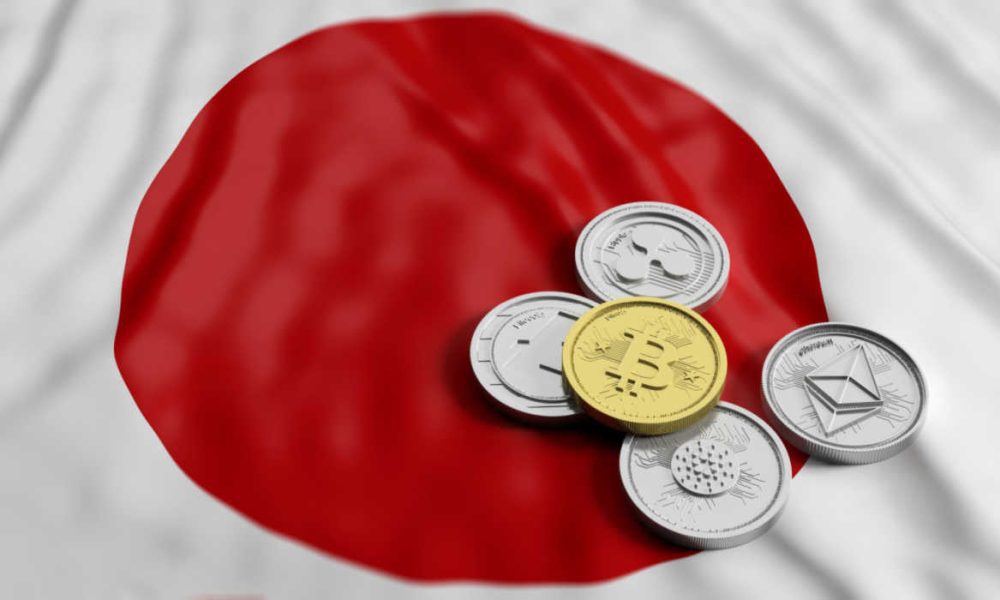
Japan’s Financial Services Agency (FSA) and its evolving stance on cryptocurrency exchanges. It’s advancing a series of reforms to integrate crypto more deeply into Japan’s financial system.

This includes enabling banks and financial institutions to acquire, hold, or operate crypto exchanges, alongside stricter security mandates for existing platforms. These moves aim to boost investor protection, reduce taxes, and treat crypto like traditional assets—potentially accelerating mainstream adoption.

The FSA is reviewing 2020 guidelines that currently prohibit banks from holding volatile assets like cryptocurrencies. If approved, banks could acquire Bitcoin (BTC) and other cryptos as investments, similar to stocks or bonds.

Additionally, banking groups could register as “cryptocurrency exchange operators” to directly provide trading and custody services. This will be discussed at the Financial Services Council’s working group meeting, with potential capital and risk-management rules introduced soon after.

The shift aligns crypto regulation from the Payment Services Act to the Financial Instruments and Exchange Act (FIEA) for stronger oversight. Japan’s crypto user base has surged to over 12 million accounts up 3.5x since 2020, driven by global trends and domestic growth 120% YoY in on-chain value received through June 2025.

Allowing credible banks to enter could make crypto more accessible and secure for retail investors. This has been hailed as a “monetary structure shift,” with institutions like Nomura, SBI, and Mitsubishi UFJ exploring crypto funds and stablecoins.

Just yesterday (November 24, 2025), the FSA announced plans to require all registered crypto exchanges to maintain “liability reserve funds.” These would cover user losses from hacks, fraud, or operational failures—mirroring protections for traditional securities brokerages.

Exchanges could fund reserves via revenue shares or insurance policies. The goal is rapid compensation, avoiding scenarios like the 2018 Coincheck hack which cost $530M or a 2024 third-party breach affecting major platforms.

This ties into “securities-level standards” for platforms, including enhanced risk controls and JVCEA (Japan Virtual and Crypto Assets Exchange Association) retraining for auditors. With rising consultations on crypto scams, this bolsters trust in Japan’s 28+ licensed exchanges like BITPOINT, Coincheck.

The FSA proposes treating 105 major cryptos including BTC and ETH as “financial products” under FIEA. This would impose insider trading rules, require detailed disclosures (e.g., issuer info, volatility profiles), and enable products like investment trusts and ETFs.

Crypto gains would face a flat 20% tax rate down from the current 55% miscellaneous income bracket, making Japan more competitive globally. The package heads to parliament in 2026, potentially approving yen-backed stablecoins by then from Mitsubishi UFJ or Monex Group.

Banks barred from holding crypto. Allowed to acquire/hold BTC; operate exchanges. Wider access via trusted institutions; volatility risks to banks. Self-regulated via JVCEA; past hacks. Faster user compensation; higher compliance costs for exchanges. Boosts retail participation; revenue loss for govt ~¥100B est.

Institutional inflows; over-regulation fears. These reforms position Japan as a crypto leader, blending innovation with caution—especially after high-profile breaches. Six major asset managers (e.g., Nomura, Sumitomo Mitsui) are already prepping BTC/ETH funds, signaling institutional buy-in.

On X, reactions are bullish: users call it a “neon-lit revolution” for adoption, with posts highlighting the tax slash as “extremely bullish.”


Dangote Refinery Partners with Honeywell to Double Capacity in Push Toward Becoming the World’s Largest Petroleum Plant

0

Nigeria’s Dangote Refinery has taken another major step in its expansion journey after securing a wide-ranging agreement with Honeywell to support its plan to boost output to 1.4 million barrels per day by 2028, Reuters has reported.

The move is being read across the energy industry as the strongest indication yet that the Lagos-based complex is pushing ahead with its ambition to become the world’s largest petroleum refinery.

The collaboration gives Dangote access to Honeywell’s catalysts, process technology, and specialized equipment that will allow the refinery to handle a broader slate of crude grades. That flexibility is crucial for the planned second single-train unit, which will sit alongside the refinery’s existing 650,000-barrel-per-day line—the largest single-train refining unit ever built.

The partnership also covers petrochemicals, with the refinery set to expand its polypropylene output to 2.4 million metric tons per year. This will be achieved through Honeywell’s Oleflex technology, a globally used process for producing on-purpose propylene—an industrial material that powers everything from plastic containers to automotive components.

Financial terms were not disclosed, but a source familiar with the arrangement said the deal could exceed $250 million, noting that costs for such technical contracts typically rise with the scale and sophistication of the equipment involved.

Dangote’s decision to expand the refinery comes amid ongoing efforts to end Nigeria’s decades-long reliance on imported fuel. Despite being Africa’s top crude producer, the country has operated with non-functional state refineries, forcing it to depend almost entirely on foreign-refined fuel. This has led to chronic shortages, multi-billion-dollar subsidy troubles, and relentless pressure on foreign exchange reserves.

The $20 billion Dangote complex in Lekki was designed to break that cycle by meeting domestic demand and exporting the surplus. The refinery’s management has said the plant will eventually process nearly all of Nigeria’s current production volume once the expansion lifts capacity to 1.4 million barrels per day. That output would not only exceed the country’s local consumption needs but also position Nigeria as a major regional fuel supplier.

The latest deal comes at a sensitive moment for Honeywell, which is restructuring its business and preparing to carve out its aerospace unit. The company is seeking to stabilize earnings across its portfolio as it reshapes itself, and its work with Dangote adds a major long-term revenue stream at a time of internal repositioning.

The refinery’s path to full operations has included its own challenges, including regulatory delays and technical adjustments after construction. But the new Honeywell partnership signals that Dangote is accelerating rather than slowing, and is leaning on some of the world’s most established engineering and process-technology providers as it pushes toward its goal of becoming the most extensive refining operation on the planet.

This move, if successful, is expected to clear all doubt about the refinery’s capacity to meet domestic demand amid its push to expand to new markets. Although the chairman of the oil plant, Aliko Dangote, has repeatedly said that the refinery, at its current capacity, will meet domestic demand, critics have expressed doubt.

However, the refinery expansion is expected to open a fresh source of petrochemical exports—while giving Honeywell a strong foothold in one of Nigeria’s oil market.

Amazon Urges Engineers to Ditch Third-Party AI Coding Tools, Pushes Its Own Kiro Platform

0

Amazon is directing its engineers to favor its proprietary AI code generation service, Kiro, over tools developed by third parties, according to an internal memo reviewed by Reuters.

The memo, posted on Amazon’s internal news site, underscores the company’s commitment to developing and promoting its own AI capabilities.

“While we continue to support existing tools in use today, we do not plan to support additional third party, AI development tools,” the memo stated.

Signed by Peter DeSantis, senior vice president of AWS utility computing, and Dave Treadwell, senior vice president of Amazon eCommerce Foundation, the guidance positions Kiro as the company’s recommended AI-native development platform.

“As part of our builder community, you all play a critical role shaping these products and we use your feedback to aggressively improve them,” the memo said.

Kiro, launched in July, allows engineers to generate websites and apps using plain English commands, representing Amazon’s bid to catch up with rivals like OpenAI and Google in AI development. While Kiro leverages coding tools from Anthropic, it does not specifically rely on Claude Code. The company recently expanded Kiro’s availability to a global audience and introduced several new features, reflecting Amazon’s push to integrate the tool more fully into its engineering workflows.

The new guidance effectively precludes employees from using popular AI coding tools like OpenAI’s Codex, Anthropic’s Claude Code, and products from startup Cursor, despite Amazon’s significant investments in the sector. The company has invested approximately $8 billion in Anthropic and signed a seven-year, $38 billion deal to provide cloud computing services to OpenAI.

The move comes as Amazon faces criticism for lagging behind competitors in AI innovation, even as AI tools become increasingly central to software development. Third-party coding tools like Codex, Cursor, and Claude Code have become widely adopted among engineers for quickly spinning up new services. Cursor, for instance, was valued at nearly $30 billion following a funding round earlier this month.

Internal memos indicate that Amazon has previously restricted the use of some third-party tools. In October, the company designated OpenAI’s Codex as “Do Not Use” after a six-month assessment. Claude Code was also temporarily labeled “Do Not Use,” though this decision was reversed after media inquiries.

The trend at Amazon underlines a broader shift in the U.S. tech industry, where companies increasingly develop in-house AI solutions to reduce reliance on external providers. Firms aim to retain greater control over intellectual property, streamline operations, and cut costs associated with outsourcing critical AI capabilities by creating proprietary tools. Industry insiders say the strategy also serves to protect companies from competitive pressures as AI adoption accelerates across sectors.

An Amazon spokesperson confirmed the memo but declined further comment. Representatives for Anthropic, OpenAI, and Cursor did not immediately respond to requests for comment.

Amazon’s strategy points to a growing emphasis among U.S. tech giants on building internal AI ecosystems rather than relying on third-party technologies as AI tools become essential for software engineering. Analysts see the move as both defensive and strategic, aimed at ensuring long-term competitiveness in an increasingly AI-driven market.

Riding the AI Wave: Alibaba Shares Rise As Accelerated Cloud Sales Drive 34% Jump

0

Alibaba Group Holding signaled on Tuesday that it is prepared to aggressively ramp up capital expenditures beyond its already massive projections, betting the company’s future on an artificial intelligence boom that CEO Eddie Wu describes as “highly definitive.”

The Chinese tech titan reported accelerated sales at its pivotal cloud division, sparking a premarket rally of nearly 4.3% in New York as investors looked past a steep plunge in short-term profitability to focus on the resurgence of growth, according to CNBC.

The report offered the strongest evidence yet that Alibaba’s restructuring efforts are gaining traction. Revenue for the fiscal second quarter rose 5% to 247.8 billion Chinese yuan ($34.8 billion), beating analyst estimates. However, the spotlight was firmly on the Cloud Intelligence Group, the division responsible for training and hosting AI models. Cloud revenue surged 34% year-on-year to 39.8 billion yuan, a significant acceleration from the 26% growth recorded in the previous quarter.

According to Wu, the company is currently demand-constrained rather than supply-constrained. “We are not even able to keep pace with the growth in customer demand… in terms of the pace at which we can deploy new servers,” Wu admitted during the earnings call.

He revealed that AI-related product revenue has achieved triple-digit year-over-year growth for the ninth consecutive quarter.

To meet this voracious appetite, Alibaba is pouring capital into infrastructure. The company has spent approximately 120 billion yuan on AI and cloud infrastructure over the past four quarters alone. While the company announced a three-year, 380 billion yuan ($53 billion) investment plan in February, Wu suggested on Tuesday that this figure “might be on the small side” and that leadership “wouldn’t rule out further scaling up that capex investment” if the current trajectory continues.

Defying the “Bubble” Narrative

Wu utilized the earnings call to forcefully push back against global skepticism regarding an “AI bubble.” Addressing the debate over the depreciation of graphics processing units (GPUs) and the return on investment for generative AI, Wu painted a picture of a market suffering from acute undersupply.

“I think in the next three years to come, AI resources will continue to be undersupplied with demand outstripping supply,” Wu stated.

He noted that the scarcity of computing power is so severe that GPUs—specifically those designed by Nvidia—that are three to five years old are still “running at full capacity” alongside the newest hardware. This tightness in the supply chain extends beyond logic chips to memory and data center construction, reinforcing his view that the industry is nowhere near hitting a wall in terms of capabilities or adoption.

Alibaba’s own generative AI offering, the Qwen model, is capitalizing on this wave. On Monday, the company announced that its Qwen app—a direct rival to OpenAI’s ChatGPT—surpassed 10 million downloads within just one week of its public launch, solidifying Alibaba’s status as a leading contender in China’s domestic AI race.

The “Quick Commerce” Gamble

While the cloud division provided the optimism, Alibaba’s aggressive expansion into “instant commerce” weighed heavily on the bottom line. Overall adjusted EBITA—a closely watched measure of core profitability—plummeted 78% year-on-year to 9.1 billion yuan. The company attributed this drop largely to heavy investments in its logistics and delivery networks to compete in the cut-throat market for super-fast delivery.

Despite the margin compression, the strategy appears to be driving top-line results. Revenue from the quick commerce segment surged 60%, far outpacing the 12% growth seen in the prior quarter. This helped lift the broader China e-commerce division, which houses the flagship Taobao and Tmall platforms, to a 16% revenue increase.

“In our consumption business, quick commerce continued to scale with significant improvement in unit economics and drove rapid growth in monthly active consumers on the Taobao app,” Wu said.

Jiang Fan, who heads Alibaba’s international digital commerce group, described quick commerce as a “strategic pillar” for the future. He outlined an ambitious target to reach 1 trillion yuan in gross merchandise value (GMV) for the segment within three years. Investors appeared willing to forgive the immediate profit hit, interpreting the spending as a necessary maneuver to defend market share against domestic rivals while the high-margin cloud business powers the company’s long-term transformation.

Google, Accel Launch $2m Co-Investment Drive to Fuel Indian AI Startups

0

Alphabet’s Google and U.S.-based venture capital firm Accel announced a strategic partnership on Thursday to co-invest in at least ten early-stage artificial intelligence startups in India.

This marks Google’s first such collaborative funding effort in the country, underscoring India’s growing importance as a global technology hub.

Under the new arrangement, Google’s AI Futures Fund and Accel will jointly invest up to $2 million in each selected startup. Prayank Swaroop, partner at Accel, told Reuters that the funding would target ventures across a broad range of sectors, including entertainment, creativity, work productivity, and coding technologies.

The partnership is part of Google’s broader push into the Indian market, which has seen a surge in U.S. tech investments. Companies such as Microsoft, Amazon, and OpenAI have all intensified their engagement in India, drawn by a population of nearly one billion internet users and the nation’s rapidly growing technology ecosystem.

Last month, Google announced a $15 billion investment to establish an AI data center in Andhra Pradesh, its largest investment in India to date. The AI Futures Fund, launched six months prior, has already backed more than 30 companies, including the Indian webtoon platform Toonsutra and the U.S.-based legal-tech firm Harvey. Beyond funding, Google has partnered with Reliance Jio, India’s largest telecom operator, to provide free access to its Gemini AI platform for 505 million users, reflecting a dual strategy of market development and technology adoption.

Jonathan Silber, co-founder and director of Google’s AI Futures Fund, emphasized the strategic importance of India in shaping the next era of global technology.

“We firmly believe that the founders in India are going to be playing a leading role in defining that next era of global technology,” he said. “We think that it’s critical to invest in the early stage, particularly in key markets like India, so that we can be at the forefront of investing in the next generation of AI leaders.”

India’s AI market is poised for substantial growth, with projections indicating it could reach $17 billion by 2027, according to IT industry body Nasscom and consulting firm BCG. The global AI market is also expanding rapidly, with Gartner projecting global AI spending to approach $1.5 trillion in 2025 and exceed $2 trillion by 2026.

Some analysts see the Google-Accel partnership as part of a broader competitive race to capture the early-stage AI ecosystem in India, where government policies and market size offer a fertile ground for innovation. Startups in the country are increasingly focusing on areas such as generative AI, AI-powered productivity tools, and creative content platforms, seeking to position themselves for both domestic growth and global expansion.

The partnership aims to nurture a new generation of Indian AI companies capable of competing on the world stage by combining financial backing with strategic support and access to Google’s AI infrastructure. It is believed that these early-stage investments are critical, as they often determine which startups can survive and scale in the highly competitive global AI market.

The move also reflects a broader trend of tech giants viewing India not merely as a consumer market but as a source of innovation and engineering talent. With a growing pool of AI researchers and entrepreneurs, India is emerging as a central node in the global AI landscape, attracting billions of dollars in funding and collaboration from U.S. and other international technology players.