DD
MM
YYYY

PAGES

DD
MM
YYYY

spot_img

PAGES

Home Blog Page 1230

OpenAI expands ChatGPT into shopping, deepening speculation it’s building the next “everything app”

0

OpenAI has announced that users will soon be able to shop for products through ChatGPT, in what is being seen as a significant move to expand the company’s core business beyond its original mission of large language model (LLM) development.

The update will roll out to both logged-in users and anonymous visitors, offering a new layer of interaction where people researching products, like espresso machines or office chairs—will see embedded shopping links. However, purchases will still need to be completed on the retailer’s site.

In a pre-release demonstration shared with WIRED, Adam Fry, OpenAI’s head of ChatGPT search, showed how the new product feature is designed to assist users in deciding between products by synthesizing reviews and tailoring suggestions to individual preferences. For instance, if a user previously indicated they like only black clothing or shop from a particular retailer, ChatGPT would remember this information and personalize its future product recommendations accordingly.

“It’s trying to understand how people are reviewing this, how people are talking about this, what the pros and cons are,” Fry explained, framing the experience as more of a conversation than a search query.

This personalization reflects a deeper strategy within OpenAI to shift ChatGPT from a question-answering AI into a much more multifunctional platform. In the past few months, the company has steadily layered new capabilities onto ChatGPT—ranging from memory features and voice conversation to its Operator AI agent, which can autonomously browse the web and perform actions on behalf of users. While still in the early stages, these developments are giving credence to the belief that OpenAI is laying the groundwork for what many are calling an “everything app.”

The idea of an everything app—a single digital interface where users can chat, shop, work, bank, search, and socialize—has long been floated in Silicon Valley, most notably by Elon Musk. Musk, who owns X, has repeatedly declared his ambition to turn the platform into such a universal tool, dubbing it “accelerant to everything app.” But while Musk’s version of the Everything App is still in a transitional phase, many industry watchers now believe OpenAI may be quietly pulling ahead.

With over a billion web searches occurring weekly on ChatGPT, according to Fry, the chatbot is already rivaling traditional search engines in terms of sheer volume and utility. The addition of shopping links only strengthens its utility in daily consumer decisions. What distinguishes this from Google Shopping, though, is how OpenAI structures its results. ChatGPT’s product suggestions aren’t ranked based on ad spending or paid placements. Fry clarified that all results are organic and derived from product reviews and real-world feedback.

“They are not ads,” Fry emphasized. “They are not sponsored.”

Instead, product listings are based on aggregated insights from editorial content, such as WIRED’s product reviews, and crowd-sourced opinions from forums like Reddit. ChatGPT can also be instructed by users to prioritize certain review sources or types of evaluations when presenting product recommendations. In a demonstration, WIRED’s rigorously tested “Best Office Chairs” guide was featured in the sources tab of ChatGPT’s product recommendations.

However, this also raises important questions about affiliate revenue. In traditional affiliate setups, if a reader purchases a product through a review site’s link, the publisher earns a commission. It’s unclear how this will work with ChatGPT inserting itself between users and publishers.

“We are going to be experimenting with a whole bunch of different ways that this can work,” said Fry, noting that revenue sharing or affiliate frameworks may evolve over time. “Right now, the focus is on the user experience.”

This careful phrasing suggests that OpenAI hasn’t ruled out monetization, but the current emphasis is on trust and usability. That may change soon. OpenAI has stated a goal of reaching $125 billion in revenue by 2029, up from under $4 billion last year. CEO Sam Altman recently mentioned in an interview with Stratechery that affiliate revenue is one potential stream OpenAI is exploring as it builds out consumer-facing services.

The shopping feature is just the latest in a string of releases pointing toward a broader vision. In early 2025, OpenAI launched “Operator,” an autonomous agent that can navigate web browsers to perform actions like filling out forms or booking services. Although the tool is still rudimentary, it signals the company’s aim to not just advise users, but act on their behalf.

This places OpenAI in direct competition with a growing list of companies attempting to turn conversational AI into a digital operating system. Google has already incorporated AI-generated product summaries into its Shopping tab under a “Researched with AI” label. Perplexity, another AI search startup, offers a “Buy with Pro” option, where users can shop directly within its interface.

But while these players are positioning themselves in niche domains, OpenAI appears to be combining all of them. It has built the infrastructure, consumer trust, and technological lead to make ChatGPT the front-end for nearly every digital task. This may be why many now view ChatGPT not merely as a chatbot but as the foundational layer of a larger platform that could soon handle everything from productivity to payments.

For now, the new shopping interface resembles Google Shopping: users can view an image of a product, see prices from retailers like Amazon and Walmart, and click through to buy. But the underlying architecture is fundamentally different. ChatGPT, powered by an LLM, is absorbing preferences, filtering information, generating personalized lists, and refining its recommendations in a way traditional search engines do not.

The global tech industry races to build AI tools that blend functionality with monetization. While Elon Musk continues to reshape X with ambitions of turning it into a one-stop shop for communication, finance, and commerce, OpenAI is quietly rolling out feature after feature—memory, voice, web browsing, autonomous actions, and now shopping—that cumulatively hint at a much larger play.

In a world where users increasingly want fewer apps but more capability, OpenAI’s strategy could position it as the first true realization of the “everything app”—not through rebranding a social media platform, but by turning the very concept of a chatbot into a dynamic digital assistant for all tasks.


4 Bulletproof Altcoins That Will Withstand Trump’s Trade Wars and Deliver 2,500% to 7,500% Returns in 2025

0

As global tensions rise and talk of trade wars under a potential Trump administration intensifies, investors are bracing for volatility in traditional markets. However, certain altcoins are emerging as safe havens—projects with strong fundamentals and real-world utility that can thrive regardless of geopolitical friction. Among these, Lightchain AI is capturing attention with its presale already raising $18.3 million at a price of $0.007 during Stage 15.

Alongside other resilient digital assets, these altcoins are being closely watched for their ability to deliver staggering returns ranging from 2,500% to 7,500% in 2025. In this article, we’ll explore four standout cryptocurrencies built to endure macroeconomic instability and technological shifts, each positioned to not just survive market turbulence—but to grow powerfully through it.

What Things Are Considered When Evaluating Altcoins?

When it comes to evaluating the potential of altcoins, I do not think one should be swayed only by the hype and light scope of short-term price action. The things to consider are the basic technology the project is based on, the practical application of the technology, and the team that works on it. Likewise, Investors evaluate tokenomics by looking at the total supply, distribution model and utility within the ecosystem like these are factors that seriously affect long-term value.

Community involvement, developer activity, and partnerships provide valuable information on the level of acceptance and strength of the network. In the same contest, security provisions, audit history, and scalability solutions are also taken into account when it comes to the decision-making process. On the other hand, the platform’s uniqueness—whether it be through innovation, performance, or specialization—plays an essential role in the determination of whether an altcoin can play the game at the top level of the market or take the lead in the growing sectors.

4 Resilient Altcoins for 2025 and Beyond

In a market where external pressures like trade policies and regulatory shifts can shake investor confidence, certain altcoins stand out for their ability to weather volatility and maintain long-term momentum. These projects aren’t just hype-driven—they’re backed by strong technical foundations and clear real-world use cases. Lightchain AI, for example, is gaining attention for its focus on decentralized AI infrastructure, offering tools that position it for relevance across industries.

Polkadot continues to lead in cross-chain connectivity, while Arbitrum brings scalability to Ethereum’s ecosystem with Layer 2 efficiency. Meanwhile, VeChain provides enterprise-grade blockchain solutions tailored for logistics and data integrity. Together, these four altcoins represent a class of digital assets built to adapt, scale, and deliver sustained performance, even in an uncertain global environment shaped by shifting political dynamics.

Why Lightchain AI is Poised to Deliver Exceptional Returns

Lightchain AI’s potential for exceptional returns stems from its strategic focus on building an AI-compatible blockchain infrastructure that meets the needs of emerging decentralized applications. Unlike many altcoins that lack clear functionality, Lightchain AI is structured to support intelligent computing through a secure and scalable environment. Its ecosystem encourages active participation from developers and contributors, aligning incentives through governance, staking, and utility-based token mechanics.

The roadmap outlines steady evolution, including ecosystem growth, global adoption, and open-source expansion—all of which contribute to increasing long-term demand for the LCAI token. Additionally, the platform’s modular architecture ensures it can evolve with future AI advancements, making it more than just a trend-driven asset. As demand for decentralized, privacy-first AI solutions increases, Lightchain AI’s purpose-built design gives it the edge to deliver outsized gains.

https://lightchain.ai

https://lightchain.ai/lightchain-whitepaper.pdf

https://x.com/LightchainAI

https://t.me/LightchainProtocol

Solana Price Prediction, Can SOL Target 60x Gains in 2025 Like This New Viral Altcoin?

0

Solana has long been seen as a top-tier blockchain thanks to its speed and scalability, but with the evolving crypto landscape, new contenders are entering the spotlight. One such altcoin making waves is Lightchain AI, currently in Stage 15 of its presale and priced at $0.007, having already raised $18.3 million. As traders speculate whether SOL can deliver 60x gains by 2025, comparisons are being drawn to emerging projects like Lightchain AI that are gaining traction with strong narratives and disruptive use cases.

While Solana continues refining its ecosystem, Lightchain AI is capturing attention for its forward-thinking approach and growing community interest. In this article, we explore whether Solana still has the momentum to produce massive gains—and how it stacks up against a fast-rising challenger poised for exponential growth.

Solana’s Impressive Performance and Future Outlook

One of the fastest and most efficient Layer-1 blockchains in the crypto space, Solana has developed a reputation as it can process thousands of transactions per second with minimal fees. To this end, Solana’s unique consensus model, combining Proof of History (PoH) with Proof of Stake (PoS), has enabled it to uphold secure high throughput without sacrificing the decentralization. For the past seasons, Solana has been able to attract developers, thus, becoming a place for creating DeFi, NFTs, and dApps.

Looking forward, the upcoming updates are expected to bring about that which will result in better network stability and scalability, thus increasing the adoption rate. Analysts are still very positive about Solana’s potential in the long run, particularly as the institutional interest in high-performance blockchains is growing. In case market conditions are in favor of Solana as well as the maintainer of its innovativeness, the return of the asset could be remarkable through 2025 and beyond.

What Makes Lightchain AI a Top Challenger to Solana?

What sets Lightchain AI apart as a serious challenger to Solana is its unique positioning in the AI-blockchain space. Unlike general-purpose blockchains, Lightchain AI is purpose-built to support decentralized artificial intelligence operations through a layered and modular architecture. This allows the platform to handle AI-specific tasks efficiently while maintaining scalability and security. Its focus on real-time AI execution, privacy-preserving data handling, and open-source developer collaboration gives it a competitive edge in a rapidly growing niche.

Lightchain AI also integrates governance mechanisms that allow the community to shape platform upgrades and priorities. While Solana focuses heavily on transaction speed, Lightchain AI’s strength lies in its ability to bring meaningful AI computation on-chain. This distinct focus positions it not as a competitor in throughput—but as a new category leader in intelligent blockchain infrastructure.

How To Evaluate the Potential for 60x Gains

Evaluating the potential for 60x gains in any crypto project requires a combination of fundamental analysis, market timing, and realistic projections. First, assess the project’s total token supply and current market cap—smaller caps with real utility often offer the highest upside. Next, examine the team’s ability to deliver on its roadmap, the uniqueness of its technology, and the strength of its community.

Utility plays a major role—tokens that serve a vital function within their ecosystems are more likely to sustain long-term demand. Investor sentiment, exchange listings, and broader market cycles also influence growth potential. Projects that solve real problems, attract developer interest, and scale effectively tend to outperform. Ultimately, the combination of innovation, timing, and execution determines whether a coin can realistically multiply its value by 60x or more.

https://lightchain.ai

https://lightchain.ai/lightchain-whitepaper.pdf

https://x.com/LightchainAI

https://t.me/LightchainProtocol

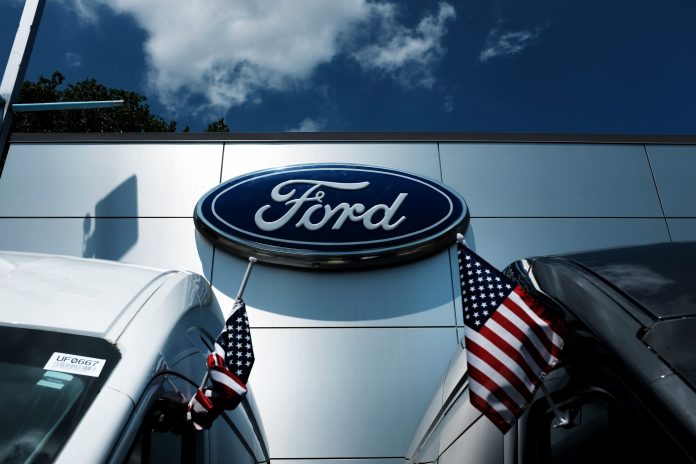
Ford CEO Says Trump Auto Tariff Reprieve Is Good But Not Enough As Industry Grapples with Fallout

0

Ford Motor Company CEO Jim Farley has welcomed President Donald Trump’s executive order offering a partial reprieve from escalating auto tariffs but warned that the U.S. still lacks a coherent industrial policy to secure the future of domestic automaking.

While the move offers temporary relief to companies like Ford, Farley said it falls short of the deep structural reforms needed to stabilize the sector, encourage exports, and maintain the affordability of vehicles for American consumers.

The executive order, signed Tuesday, allows partial reimbursement of the upcoming 25% tariffs on imported automotive parts—but only for vehicles that undergo final assembly in the U.S. That measure, set to remain in place for two years, was introduced in response to sustained pleas from automakers who have warned of severe disruptions to production and price hikes across the supply chain. These new tariffs, which take effect May 3, come on top of Trump’s earlier 25% tariff on imported vehicles and levies on materials like steel and aluminum, a layered approach that industry players describe as “tariff stacking.”

Speaking at the launch of the 2025 Ford Expedition at the company’s Kentucky Truck Plant, Farley said the tariff modification would help ease short-term pressures, but cautioned that it does not amount to a full solution.

“The changes this week on tariff plans will help ease the impact for automakers, suppliers and consumers, but … we need to continue to work closely with the administration on a comprehensive set of policies to support our shared vision of that healthy and growing auto industry, and we are not there yet,” Farley said.

The Ford chief urged policymakers to adopt a forward-looking strategy that rewards companies for producing and exporting from U.S. soil.

“So many of the vehicles we build here are exported around the globe. Shouldn’t we get credit for that?” he said. “Those are American jobs and we have to keep working on affordable parts to ensure that those supply chains promote domestic growth and affordable vehicles in our country.”

The Sector-wide Effect

While Ford appears cautiously optimistic about navigating the tariff impact, thanks in part to its expansive U.S. manufacturing footprint, the broader auto industry is reeling from the uncertainty. Some foreign automakers have already begun halting exports to the United States, while others are urgently reevaluating their supply chains and pricing models.

Several auto companies, including Audi, Jaguar Land Rover, and Mitsubishi, have placed a temporary freeze on U.S.-bound exports until the full impact of the new tariff regime is understood.

Others are exploring whether increased localization of final assembly operations could allow them to qualify for tariff reimbursements under the new order, but such shifts take time and capital.

This upheaval has set off alarm bells across the sector, especially for smaller parts suppliers who operate on razor-thin margins. Industry associations warn that cascading costs could prompt layoffs, delays in new vehicle rollouts, and a contraction in investment just as automakers are transitioning to electric vehicles and advanced technologies.

Repercussions for Consumers and Jobs

The stakes are equally high for American consumers. Multiple industry analysts have said that the cumulative tariffs, if not offset, could result in price hikes of $1,000 to $2,500 per vehicle, depending on the model and complexity of imported components. That could push many entry-level vehicles out of reach for middle-class buyers, especially at a time of high interest rates and inflationary pressure.

At the national level, Farley warned that the U.S. risks missing a historic opportunity to reassert its global dominance in auto manufacturing. He floated a scenario in which all foreign companies matched Ford’s domestic output, saying it could yield 4 million more vehicles annually, 15 new manufacturing plants, and over 500,000 new jobs.

“Imagine if the companies who import all the vehicles in the U.S. treated American manufacturing like Ford,” Farley said — while noting that Ford itself still imports a share of its parts and vehicles from Mexico, Canada, and China.

Trump’s tariffs are intended to push manufacturers to “build American”, but many have criticized the move, arguing that the blunt-force approach lacks nuance and coordination.

The tariff is stirring friction between the Trump administration and the auto industry, which has warned that unpredictable tariff policy is undermining long-term investment decisions. Trump has signaled no intent to withdraw the broader 25% vehicle import tariffs, and on Wednesday he again defended the new round of parts tariffs as necessary to prevent outsourcing and protect American jobs.

However, the political optics are shifting as the consequences of the trade war become more visible. With the 2025 model year approaching and consumer prices still high, automakers are preparing for more turbulence.

Farley indicated that the policy must reward the kind of manufacturing and exporting done in the U.S., and can’t just be about protection but about growth.

With May 3 fast approaching, industry leaders are lobbying the administration to reconsider or delay the full implementation of the new tariffs or expand exemptions and credits for domestic production. Some experts believe that if pushback grows stronger, the administration may revisit its approach.

Cardone Capital Announces Plan to Acquire 1000 Bitcoins

0

Cardone Capital, led by Grant Cardone, announced plans to acquire over 1,000 Bitcoin (BTC) as part of its investment strategy, according to multiple sources from late April 2025. This move involves using profits from its real estate ventures to fund the purchase, signaling a strategic shift to diversify its $5 billion asset portfolio into cryptocurrencies.

The announcement, highlighted in posts on X and web reports, is seen as a bullish signal for Bitcoin, with potential to increase institutional demand and drive price volatility. For instance, trading volume on Binance’s BTC/USDT pair surged 18% to $1.2 billion shortly after the news on April 29, 2025, indicating market optimism.

Cardone’s strategy includes integrating Bitcoin with real estate cash flow, as seen in their 10X Space Coast Bitcoin Fund, which combines multifamily properties with BTC purchases to enhance returns while mitigating volatility. The acquisition could boost Bitcoin’s price and volatility due to increased institutional demand. The reported 18% surge in BTC/USDT trading volume on Binance ($1.2 billion) post-announcement on April 29, 2025, suggests immediate market optimism. Large purchases like this reduce Bitcoin’s available supply, potentially driving prices higher, especially if other institutions follow suit.

Cardone Capital’s move signals growing confidence in Bitcoin among traditional investment firms, particularly in real estate. This could encourage other asset managers to allocate portions of their portfolios to cryptocurrencies, further legitimizing Bitcoin as an asset class and accelerating mainstream adoption.

By integrating Bitcoin into its $5 billion real estate portfolio, Cardone Capital aims to hedge against inflation and fiat currency devaluation. Bitcoin’s historical performance as a store of value could enhance returns, but its volatility introduces risks that may affect the fund’s stability and investor confidence. The 10X Space Coast Bitcoin Fund, combining multifamily real estate cash flow with Bitcoin investments, represents a novel hybrid model. This could attract investors seeking exposure to both stable real estate income and high-growth crypto assets, potentially setting a precedent for similar funds.

Large-scale crypto purchases by a firm like Cardone Capital may draw attention from regulators, especially in the U.S., where cryptocurrency oversight is tightening. Compliance with SEC or IRS rules could complicate the acquisition or impact how the fund operates. The announcement may polarize Cardone’s investor base. While crypto enthusiasts may view it as a forward-thinking move, conservative real estate investors might worry about the risks of Bitcoin’s price swings, potentially affecting capital inflows or redemptions.

Increased institutional investment could bolster Bitcoin’s infrastructure, such as custody solutions and trading platforms, while also pressuring networks to scale e.g., via Lightning Network to handle growing transaction volumes. This move could amplify Bitcoin’s market presence and institutional credibility but introduces risks tied to volatility, regulation, and investor perception. It also underscores a trend of blending traditional and digital assets in investment strategies.

Beyond the announced plan to acquire 1,000 Bitcoin (BTC), Cardone Capital has made notable strides in integrating cryptocurrency into its investment strategy, primarily through its innovative real estate-Bitcoin hybrid model. In December 2024, Cardone Capital launched the 10X Space Coast Bitcoin Fund, a $87.5 million fund combining institutional-grade real estate with Bitcoin purchases. The fund acquires cash-flowing multifamily properties (e.g., a 300-unit Class A asset in Melbourne, Florida) without debt and uses the monthly rental income to make ongoing Bitcoin purchases.

The fund targets a 12%-15% internal rate of return (IRR) from real estate, with Bitcoin’s growth potential aimed at boosting overall returns. It includes a tax-free refinancing strategy, potentially returning 100% of investors’ initial capital after several years while retaining ownership of both real estate and Bitcoin. Cardone Capital purchases Bitcoin in a price-agnostic manner within 72 hours of monthly real estate cash flow distributions, holding it through an institutional custodian rather than spot ETFs. There are no immediate plans to sell the Bitcoin holdings.

The fund attracted $100 million in commitments within 72 hours, reflecting strong investor confidence in this hybrid model. Grant Cardone has expressed ambitions to roll out 10 additional real estate-Bitcoin hybrid projects by June 2025, with a total investment of $1 billion. If Bitcoin reaches Cardone’s projected $1 million per coin within five years, these funds could amass a significant Bitcoin reserve, potentially worth hundreds of millions, funded by real estate cash flow.

The strategy draws inspiration from MicroStrategy’s Michael Saylor, who suggested combining real estate cash flow with Bitcoin accumulation. Cardone plans to raise capital for these funds through investor commitments and corporate bonds, aiming to replicate Saylor’s convertible note formula. In 2018, Grant Cardone expressed caution about cryptocurrencies, stating they were “not there yet” and emphasizing real estate’s reliability for consistent cash flow. This suggests a shift in his outlook by 2024, likely driven by Bitcoin’s growing institutional acceptance and price appreciation.

Gary Cardone, associated with Cardone Digital Ventures, has voiced strong interest in Bitcoin and infrastructure ventures like Node 40, but this is separate from Cardone Capital’s activities under Grant Cardone. Gary’s focus includes Bitcoin accumulation and compliance-related crypto ventures, but there’s no indication of direct overlap with Cardone Capital’s funds.

By incorporating Bitcoin, Cardone Capital aims to enhance returns beyond traditional real estate yields (10-12% IRR to potentially 20%+), appealing to investors seeking exposure to high-growth assets while maintaining real estate’s stability. The firm’s Bitcoin purchases, especially if scaled to $1 billion across multiple funds, could contribute to price appreciation by reducing available supply, particularly as institutional interest grows e.g., Franklin Templeton, BNY Mellon.

Bitcoin’s volatility poses risks to fund performance, and the long-term lockup (3-10 years) may deter investors needing liquidity. Regulatory scrutiny could also intensify due to the fund’s novel structure and crypto exposure. The hybrid fund targets two audiences: traditional real estate investors new to crypto and crypto enthusiasts interested in real estate. However, the latter may be less interested unless direct Bitcoin-based property purchases (e.g., crypto mortgages) are enabled, which Cardone acknowledges are not yet available.

Cardone Capital’s cryptocurrency investments are centered on Bitcoin, primarily through the 10X Space Coast Bitcoin Fund and planned future hybrid funds, with no confirmed investments in other cryptocurrencies like Ethereum or altcoins. The strategy leverages real estate cash flow to accumulate Bitcoin, aiming to blend stability with high-growth potential.