DD
MM
YYYY

PAGES

DD
MM
YYYY

spot_img

PAGES

Home Blog Page 1230

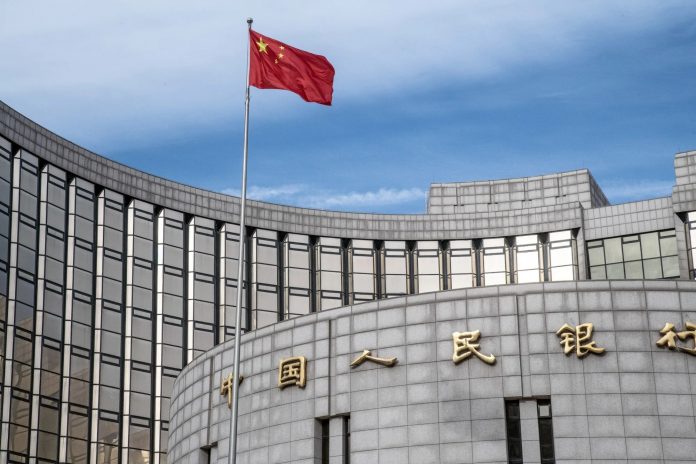
The People’s Bank of China Has Injected Significant Liquidity Through Open Market Operations

0

The PBoC has lowered key policy rates, such as the one-year loan prime rate (LPR) and the seven-day reverse repo rate, to reduce borrowing costs and encourage lending. For instance, in late 2024, the PBoC cut the one-year LPR to 3.35% and the five-year LPR to 3.85%, alongside reductions in the medium-term lending facility (MLF) rate. The PBoC has cut the reserve requirement ratio (RRR) multiple times, with a notable 50 basis point reduction in September 2024, freeing up approximately 1 trillion yuan ($141 billion) in long-term liquidity for banks to lend.

The PBoC has injected significant liquidity through open market operations, including reverse repos and MLF loans. For example, in October 2024, it injected 800 billion yuan via the MLF to maintain ample liquidity in the banking system. These actions are part of a broader stimulus package to counter economic challenges like deflationary pressures, a property sector slump, and weak consumer demand. The PBoC has also introduced measures to support the property market, such as lowering mortgage rates and easing home purchase restrictions, and has launched programs like a 500 billion yuan relending facility for tech innovation and a 300 billion yuan bond-buying program to stabilize markets.

The actions taken by the People’s Bank of China (PBoC)—cutting interest rates, reducing reserve requirements, and injecting liquidity—carry significant implications for China’s economy and highlight a growing economic divide, both domestically and globally. Lower interest rates and increased liquidity aim to boost lending, encourage investment, and stimulate consumer spending. The RRR cuts, freeing up ~1 trillion yuan, and liquidity injections (e.g., 800 billion yuan via MLF) provide banks with more capacity to lend to businesses and households. This is critical for countering deflationary pressures and supporting sectors like manufacturing and technology.

Excessive liquidity could lead to asset bubbles, particularly in real estate or stock markets, despite targeted measures to stabilize property. Weak consumer confidence may limit the effectiveness of these policies, as households prioritize saving over spending. Easing mortgage rates, lowering down payment requirements, and supporting developers through relending facilities aim to revive the beleaguered property sector, a key driver of China’s GDP. These measures could stabilize housing prices and restore confidence.

Overreliance on property stimulus may delay structural reforms, and moral hazard could emerge if developers or investors expect repeated bailouts. Demand-side weakness (e.g., low buyer confidence) may blunt these efforts. A stronger Chinese economy could boost global demand for commodities, benefiting exporters like Australia and Brazil, and support supply chains reliant on Chinese manufacturing.

Aggressive monetary easing may weaken the yuan, potentially triggering capital outflows or competitive devaluations in other emerging markets. This could also exacerbate trade tensions if China’s exports become cheaper. These measures aim to reverse deflationary trends, with consumer prices showing mild recovery (e.g., CPI up 0.4% year-on-year in October 2024). Higher liquidity could stimulate demand-driven inflation.

If stimulus overshoots, it could spark inflation, eroding purchasing power, especially for low-income households. Conversely, persistent deflationary pressures (e.g., from weak global demand) could render these measures insufficient. Urban areas, particularly tier-1 cities like Shanghai and Beijing, benefit more from property stimulus and access to credit, widening the gap with rural regions where financial inclusion remains limited.

Lower interest rates benefit asset owners (e.g., property or stock investors), while low-income households, reliant on wages or savings, face reduced returns and higher living costs if inflation rises. The property focus may further entrench wealth inequality, as homeownership becomes harder for younger or less affluent citizens. Large state-owned enterprises and tech firms often access cheaper credit more easily, while small and medium-sized enterprises (SMEs) struggle with tighter lending standards, despite PBoC’s targeted relending programs.

Stimulus prioritizes property and high-tech sectors (e.g., 500 billion yuan for tech innovation), potentially neglecting traditional manufacturing or service industries. This could lead to uneven recovery across sectors. While liquidity boosts export-oriented industries via a weaker yuan, domestic consumption lags due to low consumer confidence and high savings rates, creating an imbalance in growth drivers.

A weaker yuan and export-driven growth could disadvantage other emerging economies competing in global markets, potentially straining trade relations. Meanwhile, China’s stimulus may attract foreign capital, diverting investment from other regions. China’s ability to deploy large-scale stimulus contrasts with smaller economies lacking fiscal or monetary firepower, widening global economic disparities. However, reliance on debt-fueled growth could strain China’s long-term fiscal position compared to less leveraged developed economies.

Younger generations face challenges like high youth unemployment (14.9% in late 2024) and unaffordable housing, despite property stimulus. Policies favoring asset owners may deepen intergenerational inequality, as older, wealthier cohorts benefit disproportionately. The PBoC’s measures are a pragmatic response to China’s economic slowdown, aiming to stabilize growth, revive key sectors, and counter deflation. However, they risk amplifying domestic and global divides—between rich and poor, urban and rural, and China and other economies.
GM Shifts Mexican Vehicle Production to U.S. Plants in $4bn Bet on Gas-Powered SUVs Amid Trade Pressure

0

General Motors has announced a $4 billion investment across three U.S. assembly plants, part of a sweeping reshuffle of its North American manufacturing operations that includes relocating production of two vehicles currently built in Mexico.

The move comes as the automaker navigates increasing pressure from the Trump administration’s aggressive trade policies, including 25% tariffs on imported vehicles and many auto parts.

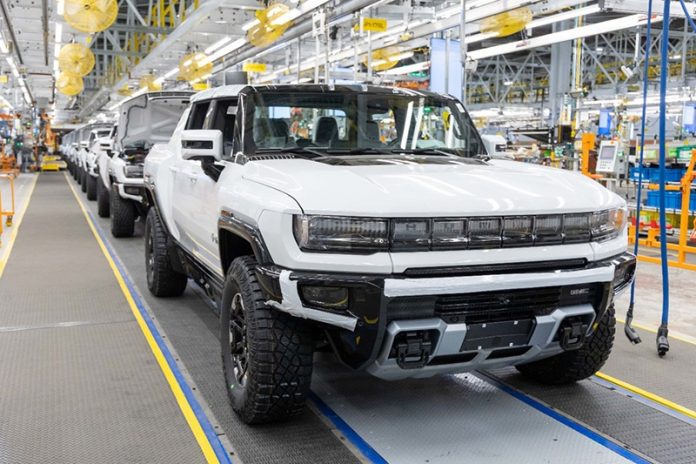
The new investment—set to span through 2027—will fund additional production of the gas-powered Chevrolet Blazer and Chevrolet Equinox at U.S. plants, while also converting a once-idled Michigan factory, initially designated for all-electric trucks, into a hub for gas-powered SUVs and trucks.

A source familiar with GM’s plans said production of the Blazer would fully shift from Mexico to the U.S., while Equinox assembly in the U.S. would augment, not replace, current output at the Ramos Arizpe plant in Mexico. GM has not clarified the future of the Mexican plant, but the shift is already being interpreted as a political and economic win for Trump’s tariffs, which came into effect earlier this year.

GM said the investment will allow it to produce more than two million vehicles annually in the U.S. by the end of the investment cycle.

From EV Dreams to Tariff Realities

The plan also signals a retreat from GM’s earlier aggressive push into electric vehicles. The Orion Assembly plant in Michigan, once projected to become the company’s second EV-exclusive facility, will now be retooled to manufacture gas-powered vehicles instead.

This marks a significant pivot at a time when GM had committed billions to electrification, echoing a wider trend in the auto industry, where automakers are walking back EV ambitions amid persistent cost pressures, regulatory uncertainty, and slower-than-expected consumer adoption.

GM insists the change is rooted in market realities and consumer demand. “Today’s announcement demonstrates our ongoing commitment to build vehicles in the U.S. and to support American jobs,” said CEO Mary Barra, noting that GM remains focused on giving customers a choice between electric and combustion-powered vehicles.

The Fairfax Assembly plant in Kansas will begin building the gas-powered Equinox in mid-2027, while the Spring Hill plant in Tennessee will add Chevrolet Blazer production in the same year.

Although GM refrained from directly linking its decision to political pressure, the timing leaves little room for ambiguity. With Trump’s 25% auto tariffs creating fresh uncertainties across the sector, GM has spent recent months analyzing its production footprint while executives adopted a cautious “wait and see” stance. That caution has now shifted toward tactical adjustments.

The investment is being viewed by analysts as both a nod to economic nationalism and a response to policy headwinds.

“We believe the future of transportation will be driven by American innovation and manufacturing expertise,” Barra said, indirectly echoing themes Trump has championed since returning to the White House.

GM maintained its 2025 capital spending forecast at between $10 billion and $11 billion but now expects annual spending between $10 billion and $12 billion through 2027, likely to accommodate the new reshuffling of its manufacturing plans.

Balancing Tariffs and Strategy

During a recent Bernstein investor event, GM CFO Paul Jacobson downplayed the panic surrounding the tariffs, saying the impact may not be “as bad as the market reacted to.” He noted that GM could mitigate between 30% and 50% of tariff-related costs without new capital spending in the near term. However, this latest investment suggests the company is now taking longer-term steps to restructure its operations to absorb ongoing policy risks.

Meanwhile, Mary Barra hinted that despite the challenges, the new trade landscape may also open doors. “You’re going to see us be very resilient… and seize opportunities where the vehicles are so successful,” she said, referencing strong demand for GM’s gas-powered SUVs.

The automaker’s shift also highlights how tariff threats and shifting trade alliances are accelerating broader recalibrations in global supply chains—particularly as automakers like GM look to de-risk from over-dependence on Mexico and shore up domestic production capacity in anticipation of further regulatory turbulence.

This U.S. manufacturing push not only burnishes GM’s credentials as a patriotic brand under political scrutiny but also aligns it with a growing realization in the auto industry: that consumer preference for gas-powered SUVs remains strong, even as EV investments are scrutinized for long-term profitability.

Tesla Rebounds After Trump Feud, Robotaxi Reveal—And Musk’s Break From Politics

0

Tesla shares are nearly back to pre-crisis levels after suffering a sharp drop last week following Elon Musk’s highly public spat with President Donald Trump.

The stock surged 5.7% on Tuesday to close at $326.09, putting it just about $6 short of its price before Musk and Trump’s social media clash sent the company’s market cap spiraling by 14% in a single session.

The recovery is being interpreted by investors as a turning point, not just for Tesla’s stock, but for Elon Musk’s public priorities.

Robotaxi Sparks Rally—But It’s About More Than Cars

The latest rally followed the release of an eight-second video showing a Tesla Model Y operating autonomously on the streets of Austin, Texas, without a safety driver. The vehicle, painted black and bearing a graffiti-style “Robotaxi” logo, was seen navigating an intersection, slowing for pedestrians at a crosswalk. Tesla fans hailed it as a long-awaited public appearance of the company’s Full Self-Driving (FSD) software operating in “unsupervised” mode.

Musk amplified the clip on X, calling it a “beautifully simple design” and emphasizing that these were regular, unmodified Teslas, meaning future robotaxis are already rolling off the production line. A pilot ride-hailing program using about 10 to 20 Model Y vehicles is expected to launch in Austin on June 12, though Tesla has not formally confirmed the date. For now, the cars will operate within a geofenced zone and be remotely monitored by employees who can intervene if needed.

Despite the excitement, analysts and researchers have warned against reading too much into the short clip. Philip Koopman, an autonomous vehicle safety researcher at Carnegie Mellon, told CNBC the video doesn’t offer enough information to evaluate how safe or effective the system really is.

Even so, the market appears encouraged—not just by the robotaxi test, but by what the test signals: a Musk who’s refocusing on Tesla after months of political entanglements and public controversies.

Exit from DOGE Marks a Turning Point

Tesla’s rebound coincides with Musk stepping down from his high-profile, though informal, role as head of the Department of Government Efficiency (DOGE) under the Trump administration. Though the post was largely symbolic, it positioned Musk at the intersection of policy, tech, and power—and increasingly distracted him from his core ventures.

Since exiting DOGE, Musk has become more publicly engaged in Tesla’s operations and vision, starting with renewed pushes on autonomy and streamlining the company’s AI development pipeline. Analysts say the stock’s recent uptick may be the market pricing in the benefits of Musk returning to business leadership, where his strategic instincts have typically shone.

His recent fallout with Trump makes a return to politics even less likely in the near term. The two men, once aligned on regulatory rollbacks and space policy, began trading insults last week following disagreements over a new spending bill. Trump threatened to end federal contracts and subsidies for Musk’s companies, including Tesla and SpaceX. Musk, in turn, said SpaceX will ‘immediately decommission’ its Dragon capsule with NASA.

For investors, that’s welcome news.

“The more time Musk spends engineering and shipping products, the better it is for Tesla,” one analyst at a major investment firm told CNBC. “The political distractions were hurting the brand and the stock.”

Pressure to Refocus—and Perform

Tesla’s first quarter was a rough one. Automotive revenue fell 20%, as Chinese competitors like BYD and XPeng undercut Tesla on price, and Musk’s personal brand began to erode consumer enthusiasm in key markets like Germany and mainland China. Tesla also faced pushback in Europe, where sales slid in the early months of the second quarter.

Even before the Trump-Musk feud, investors were already pressuring the CEO to concentrate on product rollouts, not political posturing. The robotaxi reveal, along with the apparent dialing down of his political engagements, seems to signal that Musk is listening—at least for now.

Tesla is currently listed as “testing” on the City of Austin’s official autonomous vehicle registry, joining companies like Amazon’s Zoox and AVRide. Only Waymo, a subsidiary of Alphabet, holds a “deployment” designation, underscoring how far Tesla still has to go in commercializing autonomous mobility.

However, for bulls like Piper Sandler, that process has now officially begun. “A key component of our TSLA thesis has officially begun playing out,” the firm wrote in a Tuesday note, reaffirming its “buy” rating.

While Musk’s political estrangement may have opened a clearer path for Tesla to recover both public trust and investor confidence, the company still needs to navigate safety concerns and roll out a viable robotaxi service.

The big question now is whether Musk stays the course.

With Trump clearly drawing battle lines, and DOGE no longer occupying his calendar, all signs point to a Musk who is—for the first time in months—all in on Tesla. And the market, at least for now, appears to be rewarding that.

Vast Data Eyes $25bn Valuation Amid AI Boom, Fuelled by Demand from Coreweave, Lambda, and Pixar

0

Vast Data, the nine-year-old enterprise data storage company quietly powering some of the world’s most demanding AI workloads, is back in the market to raise a fresh round of funding—this time at a proposed valuation of $25 billion, according to a person familiar with the deal.

The move would mark a monumental leap from its $9 billion Series E valuation in December 2023 and signals just how aggressively investor sentiment has shifted in favor of companies building the underpinnings of the AI revolution.

Although the terms of the round are not yet finalized, and insiders say the valuation could change, interest in Vast from venture capitalists has intensified. The startup has emerged as a key enabler of large-scale AI deployment, offering a data infrastructure that handles the growing complexity, volume, and speed demands of modern artificial intelligence applications.

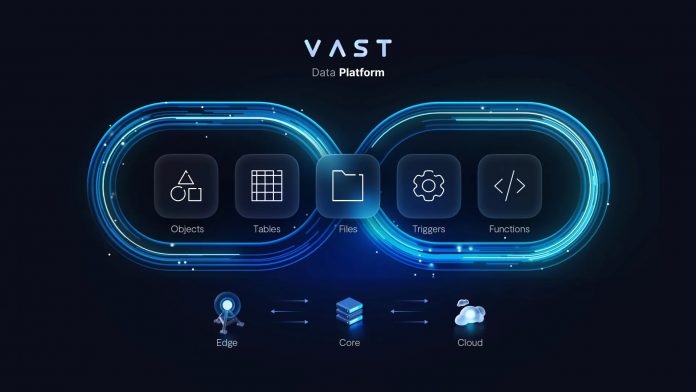
At the core of Vast’s appeal is its AI-native storage platform, designed to unify all types of data—structured, semi-structured, and unstructured—under one high-speed, flash-based system. Unlike traditional systems that rely on storage tiers—slower, cheaper storage for archival data and high-performance storage for active datasets—Vast’s architecture collapses those silos, allowing immediate access to massive volumes of data. This structure is particularly critical for AI model training and inference, where delays in data retrieval can slow down entire pipelines.

Its platform, paired with hardware from Supermicro, HPE, and Cisco, is already trusted by next-gen AI cloud providers like Coreweave and Lambda, as well as established enterprises such as Pixar, ServiceNow, and Xai, Elon Musk’s AI research company. These clients use Vast not only for storage but also for the performance benefits it brings to AI workloads that require rapid and frequent data access.

Economic Impact of AI Behind Valuation Surge

Vast’s bid for a $25 billion valuation isn’t occurring in a vacuum. It underscores a broader market trend: the economic gravitational pull of AI, which is projected to generate up to $15.7 trillion in global economic value by 2030, according to a report by PwC. Of that, nearly $6.6 trillion is expected to come from increased productivity, with the rest driven by consumption-side effects, including new product and service offerings.

As the AI wave accelerates, so does the demand for the foundational infrastructure—computing, storage, and data management—that enables it. Vast Data sits at the center of that value chain, providing the kind of high-throughput storage systems needed to make large language models (LLMs), generative AI tools, and autonomous systems operate efficiently.

It’s why Vast’s year-over-year revenue has reportedly been growing at 2.5x to 3x, and why it hit $200 million in annual recurring revenue (ARR) when it last raised funds 18 months ago. CEO Renen Hallak said on a podcast in May 2023 that the company has also been free cash flow positive for four consecutive years, further bolstering investor confidence.

From Storage to Full-Stack Data Infrastructure

What sets Vast apart is its strategic ambition to move beyond storage. The company is building a next-generation database architecture that could position it to compete with Databricks, a $43 billion juggernaut in unified data analytics and AI services. This move transforms Vast from a storage provider into a broader data infrastructure company, helping customers not only store data but optimize how it flows into AI models and enterprise systems.

That ambition places it in a different league compared to rivals like Weka, which raised $140 million last year at a $1.6 billion valuation, or even Pure Storage, a publicly traded firm with a market cap of around $17 billion. If Vast secures its new valuation, it will leapfrog both to become one of the most valuable private companies in the enterprise AI space.

To date, Vast has raised $381 million from heavyweight backers such as Fidelity Management & Research Company, NEA, BOND Capital, and Drive Capital. The next round, if closed at the intended figure, would not only rank as one of the largest step-ups in enterprise tech but also validate the thesis that data infrastructure is as valuable as AI models themselves.

The Silent Engine of the AI Boom

As consumer-facing AI firms like OpenAI and Anthropic dominate headlines, startups like Vast Data are emerging as the silent engines making the AI economy viable. From managing the flood of training data to delivering high-speed access for real-time inference, these infrastructure players are quietly redefining how value is created in the digital age.

And as the projected $15.7 trillion AI economy begins to take shape over the next five years, it is companies like Vast—those enabling AI to run faster, more reliably, and more affordably—that may define the next era of enterprise technology.

DeFi x TradFi = Hybrid Finance: A New Financial Era in 2025

0

Hybrid Finance (HyFi) is a merging of traditional finance and decentralized finance on blockchain technology. Simply put, HyFi is a bridge that makes the worlds of traditional finance and cryptocurrency compatible. In 2025, this combination is a trending topic because of asset tokenization, big institutions deploying blockchain, and clearer crypto regulations. Trading.biz has positioned itself as a pioneer in HyFi, driving new interest and adoption across both sectors. Let’s see how HyFi operates, as well as its trends and main problems.

Understanding Hybrid Finance Through Real Use Cases

Hybrid Finance isn’t just theory – it’s already present in products today. HyFi means delivering traditional financial products (funds, loans, payments, etc.) on blockchain networks. Major banks are creating such systems. JPMorgan’s blockchain arm (Onyx/Kinexys) and Citi’s tokenization team, for instance, have prototype networks for payments and settlement.

Asset managers are converting legacy funds into tokens: BlackRock introduced a dollar money-market fund (BUIDL) that is available on various blockchains. Such use cases illustrate how blockchain properties, such as immediate settlement and fractional ownership, can improve traditional finance.

5 Key Drivers Behind the HyFi Boom

Hybrid Finance isn’t growing out of nowhere. Here are the main main drivers.

1. Institutional Adoption of Blockchain

Major financial firms are rapidly shifting to blockchain. JPMorgan and Citi banks are running live cryptocurrency projects to make payments and settlements. Asset managers are going beyond and are satisfied with just tokenized funds and securities.

As an example, BlackRock launched a BUIDL token fund and worked with BNY Mellon to create a blockchain-based share class for a $150B fund. The announcement of these measures by JPMorgan, Citi, BlackRock, and other firms clearly indicates that hybrid models remain attractive not only on Wall Street but also in other regions.

2. Regulatory Progress in Digital Assets

Hybrid goods are being unblocked by new rules that have been established globally. The new MiCA regulation in the EU is a set of uniform rules for crypto-assets. Proposed bills and Securities and Exchange Commission (SEC) guidelines in the US are designed to make it clear how tokens and stablecoins can function.

Besides, Dubai and Singapore, which are world financial centers, have also introduced new crypto regions. As regulators delineate what is permissible, institutions get assured of their confidence to construct tokenized offers. Clear stablecoin regulations and security-token blueprints, for instance, provide banks and investment funds with the necessary legal certainty.

3. Growing Demand for Tokenized Traditional Assets

Investors want familiar assets in token form, with crypto benefits. Tokenized stocks, bonds, funds, and loans can be traded 24/7 and split into small fractions. Demand is rising: tokenized U.S. Treasuries and money-market funds surpassed $1?billion on-chain by early 2024. These tokens let holders move in and out instantly (instead of waiting days for settlement), boosting liquidity. Fund firms like Franklin Templeton, Hashnote, and Ondo now offer such products, so investors can earn yields on-chain just like in legacy markets.

4. Improved Interoperability Between Systems

Technology bridges are the connectors between DeFi and TradFi. Cross-chain protocols and APIs turn blockchains into cooperative units with banks. Chainlink’s CCIP connects multiple blockchain networks, granting the movement of tokens without friction across different ecosystems.

Infrastructure platforms like Fireblocks, Paxos, and Circle offer safe and secure transport between crypto networks and traditional finance. The case in point is when Circle reveals that its dollar stablecoin (USDC) can now be reached through most exchanges and more than 500?million bank accounts and wallets globally. These means facilitate the smooth flow of liquidity between TradFi and DeFi.

5. Shift Toward Yield-Generating On-Chain Products

Clearly, there exists a transition from pure crypto speculation to stable, income-generating assets. Now the capital flows into tokenized real-world funds, and yield-bearing tokens are quite substantial. One such example is BlackRock’s BUIDL token fund, which gives daily interest on tokenized U.S. Treasury holdings.

Other platforms also offer blockchain-based tokenized loans or bonds that pay interest directly to investors on-chain. Experts think that inflation and low interest rates have made organizations eager for alternative yield sources. Consequently, HyFi products have become mostly focused on providing steady returns, rather than volatile price changes.

Challenges and Risks in the Hybrid Finance Model

Innovation comes with caution. HyFi faces several challenges:

Security and Smart Contract Risk

Smart contracts can have bugs, and HyFi deals in real money. DeFi hacks have already cost billions (over $ 2 billion lost in 2024). Any token contract or bridge flaw could let attackers steal or manipulate funds. Hybrid platforms must invest heavily in security audits, real-time monitoring, and insurance. Despite precautions, a single exploit could undermine user trust and stall the adoption of HyFi services.

Regulatory Uncertainty Across Jurisdictions

The regulations have become better, although they are still uncoordinated across the world. Various nations have dissimilar approaches towards cryptocurrencies. A legal tokenized bond platform in Europe may encounter obstacles in the US or Asia.

This mosaic not only obstructs the smooth cross-border scaling of the business but also makes it a nightmare for banks and asset managers who have to deal with diverse licensing, KYC/AML, and securities rules in each market. As long as there is no further harmonization, companies could be reluctant to go global with HyFi products.

User Experience and Trust Barriers

Finally, customers need to trust HyFi platforms. Today’s crypto wallets and exchanges can be complex compared to polished banking apps. People may fear losing private keys or being scammed. Past crashes and scandals have shaken the public perception of crypto. HyFi services must offer clear guarantees (regulatory oversight and custodial protections) and intuitive interfaces to succeed. Simplifying the experience and educating users will be key to broader adoption.

What’s Next for Hybrid Finance After 2025?

Beyond 2025, Hybrid Finance is likely to expand. Market analysts make a big bet on the fact that tokenized assets will increase in value from several billion dollars at present to hundreds or more a few years from now. We can expect a lot more tokenized ETFs, bonds, real estate, and currencies on-chain. Banks and funds that are still traditional will probably go along with it using blockchain for clearing, settlement, and new investment products.

Investors and traders must remain vigilant and evaluate the possibility of getting involved. Readers can get ready to take advantage of this new era by keeping track of the latest regulations and platforms. The time to pay attention is now; those that come early may find great opportunities.