DD
MM
YYYY

PAGES

DD
MM
YYYY

spot_img

PAGES

Home Blog Page 1234

Temu Scraps China Shipments as Trump Kills De Minimis Rule, Igniting E-Commerce Shakeup and Price Hikes

0

Chinese discount retailer Temu has dramatically overhauled its U.S. operations following the formal repeal of the de minimis rule and the introduction of a 145% tariff on Chinese goods by President Donald Trump, a policy shift that is already reshaping the landscape of online shopping in America and pushing prices higher.

As the new rules took effect early Friday, Temu stripped its app and website of nearly all China-shipped products, which once accounted for the bulk of its ultra-low-cost offerings. Instead, the platform now displays only items shipped from U.S.-based warehouses, while Chinese-sourced goods are marked “out of stock.”

Temu, a subsidiary of Chinese e-commerce giant PDD Holdings, previously relied on the de minimis trade provision, a 2016-era rule that allowed goods worth $800 or less to enter the U.S. duty-free, to ship millions of low-cost items directly from Chinese factories to American doorsteps. It enabled prices like $3 earbuds, $1.50 garlic presses, and $5 sneakers, often cheaper than what domestic sellers could offer.

But with the end of the loophole, coupled with Trump’s newly imposed 145% tariff on Chinese imports, Temu has been forced to pivot. The retailer is not only raising prices and cutting back on aggressive advertising, but it has now completely transitioned to a model reliant on domestic fulfillment and U.S.-based sellers.

“Temu has been actively recruiting U.S. sellers to join the platform,” a company spokesperson told CNBC, adding that all sales are now fulfilled “from within the country.” The company insists prices remain “unchanged,” but that claim has been undercut by soaring backend costs and widespread reports of elevated product pricing following the shift.

Before the move, American shoppers trying to purchase China-based products from Temu were presented with import fees ranging from 130% to 150%, sometimes higher than the product itself. These charges, tied directly to Trump’s tariff, effectively doubled or tripled the final cost of many items, rendering Temu’s trademark affordability unsustainable under the new regime.

To mitigate the damage, Temu now highlights U.S.-based goods with labels such as “no import charges” and “no extra charges upon delivery”, hoping to reassure buyers who may have been turned off by surprise fees.

The broader impact is already reverberating across e-commerce platforms.

Amazon, the U.S. e-commerce giant and a competitor to Temu through its Amazon Haul section, announced last week that prices would be going up due to Trump’s tariffs. Haul, which focused on shipping inexpensive Chinese goods (typically under $20) directly to American consumers, was built around the same de minimis framework that Temu used to thrive.

Amazon initially began displaying the tariff-related costs for Haul products at checkout to improve transparency. But according to sources familiar with the matter, Trump intervened directly, reportedly objecting to Amazon “weaponizing the tariffs” against his administration. The company was forced to remove the price breakdown and reverse the feature after a behind-the-scenes clash with the White House.

The resulting confusion and policy reversals have frustrated sellers and customers. Multiple third-party merchants on Amazon said they’ve already seen reduced margins and increased returns due to unexpected fees and pricing shifts. Others are now scrambling to find domestic partners or warehouse space in the U.S. to replicate Temu’s pivot and stay compliant.

Shein, another China-rooted online retailer known for dirt-cheap clothing, has also moved to include tariff costs in its pricing structure. The app now shows a banner at checkout that reads, “Tariffs are included in the price you pay. You’ll never have to pay extra at delivery.”

But the removal of the de minimis rule, which some lawmakers have called “a customs blindspot”, is more than a tariff story. It is expected to significantly increase the cost of goods nationwide, particularly for categories like electronics, clothing, household accessories, and toys — most of which come from China. This comes at a time when inflation remains a top concern for many American households.

Retail analysts say that price hikes will be unavoidable. Chinese suppliers either have to absorb the tariffs (which many can’t), or shift fulfillment to the U.S. (which adds overhead and warehousing costs). That cost increase, inevitably, will be passed down to consumers.

Temu’s rapid shift was months in the making. The company had begun building out U.S. warehousing and logistics infrastructure in 2023, anticipating that Trump or any future administration could clamp down on de minimis. But experts say even with that head start, the company faces a long road toward replicating the scale and efficiency of its China-to-doorstep model within U.S. borders.

Meanwhile, Trump’s second-term trade policy continues to raise alarms in corporate circles, where firms have already warned of broader supply chain disruptions, especially for small businesses that rely on Chinese manufacturing. Trade groups have cautioned that the tariffs will hurt U.S. competitiveness.

The move to kill de minimis was rooted in bipartisan concerns about national security, illicit imports, and fair competition. Lawmakers and customs officials had argued that millions of low-value packages entering the U.S. each day were evading inspection, making it easier for fentanyl, counterfeit goods, and undeclared electronics to slip through the cracks.

While President Biden had also floated the idea of restricting de minimis, it was Trump who executed the repeal, branding it as part of his effort to put “America First” and clamp down on “unfair trade practices” by China.

With one of its key advantages erased, Temu’s future in the U.S. is now under threat. While the company has taken early steps to adapt, it is not clear whether a platform born on the back of ultra-cheap, China-shipped goods can remain viable under present circumstances – without de minimis.


Nigeria’s Central Bank Says Gold Reserve Rose to N2.77tn in Dec 2024

0

The Central Bank of Nigeria (CBN) has reported that the value of its gold reserves rose significantly to N2.77 trillion as of December 31, 2024, up from N1.28 trillion at the end of 2023, more than doubling within a year.

This development, which forms part of the apex bank’s newly released audited financial statements for the 2024 fiscal year, underscores not only a rebound in the valuation of Nigeria’s reserve assets but also marks a notable shift in the CBN’s asset management strategy amid volatile global economic conditions.

Crucially, the report comes at a time when the Central Bank is declaring its first annual profit in years, signaling a rare moment of financial stability after prolonged periods of operational deficits and controversial fiscal maneuvers. According to the financial statement, the CBN recorded a profit of N103.8 billion for the 2024 financial year, a marked turnaround from a loss of N498.2 billion reported in 2023. The bank also reported a comprehensive income of N1.67 trillion for the year under review, reversing a negative figure of N832 billion in the previous year.

Although the volume of the CBN’s gold holdings remained unchanged at 687,402 troy ounces, the dramatic increase in valuation was fueled by a sharp rise in global gold prices. The bank priced its gold bullion at $2,624.39 per ounce as of December 2024, up from $2,062.98 per ounce at the end of 2023. This surge in price mirrored trends seen across global markets, where gold was in high demand among central banks and institutional investors.

The rising value of gold reserves coincides with a broader global trend that saw central banks increase their gold purchases in 2024 in response to inflation fears, currency volatility, and geopolitical uncertainty. According to the World Gold Council’s Gold Demand Trends report for 2024, total global demand for gold, including over-the-counter investments, rose by one percent to 4,974 tons, setting a new all-time high. For the third consecutive year, central banks accounted for over 1,000 tons of this demand, reinforcing gold’s status as a safe-haven asset.

The London Bullion Market Association (LBMA) reported that the average gold price in 2024 stood at $2,386 per ounce, representing a 23% increase over the previous year. In the fourth quarter alone, gold prices averaged $2,663 per ounce, sharply boosting the market value of gold holdings in central bank vaults worldwide. The total market value of global gold demand reached $382 billion in 2024, driven by high prices and sustained buying interest across sectors ranging from monetary authorities to private investors.

Against this backdrop, the CBN’s gold holdings now account for approximately 5.1% of Nigeria’s total external reserves, up from 4.3% in 2023. The bank’s decision to increase reliance on gold, even without boosting physical holdings, is a strategic move to hedge against the weakening of fiat currencies, particularly the US dollar, and to enhance the stability of Nigeria’s reserve portfolio. This form of diversification is increasingly being adopted by monetary authorities globally in response to shifts in global monetary policy, ongoing conflicts, and slowing global growth.

In addition to the increase in gold value, Nigeria’s total external reserves rose sharply to N54.73 trillion by the end of 2024, up from N29.98 trillion recorded in 2023. This expansion is not just a numerical gain; it reflects the impact of both asset revaluation due to currency movements and a series of deliberate actions by the apex bank to improve its foreign asset position.

As of December 31, 2024, Nigeria’s net foreign exchange reserves had climbed to $23.11 billion — the highest level in over three years. This represents a major recovery from $3.99 billion in 2023, $8.19 billion in 2022, and $14.59 billion in 2021. The growth in net reserves followed a strategic decision by the CBN to reduce its exposure to short-term foreign exchange obligations, particularly currency swaps and forward contracts, which had previously exerted significant pressure on the net reserve position.

Alongside improved asset management, the bank also benefitted from increased foreign exchange inflows from non-oil sources, helping to ease Nigeria’s historical reliance on crude oil exports. Non-oil export receipts and diaspora remittances played a growing role in shoring up the reserve base, as the CBN implemented policies aimed at enhancing inflows and curbing speculative demand for foreign exchange in the domestic market.

Gross external reserves also recorded an uptick, rising to $40.19 billion at the end of 2024, compared to $33.22 billion in the previous year. This increase, while supported by revaluation gains, also reflected efforts by the CBN to improve liquidity conditions and build confidence in the foreign exchange market.

The audited financial report offers a rare glimpse into a central bank that has faced intense scrutiny in recent years, especially under the leadership of its previous governor. During that period, the CBN was often accused of monetary policy distortions, opacity in foreign exchange management, and overreliance on interventionist programs that stretched its balance sheet.

Now under a new leadership, the 2024 financials appear to signal a turn toward fiscal discipline and more conventional central banking practices. The bank’s ability to report a profit, grow its reserves, and participate meaningfully in global asset revaluation trends is likely to boost investor confidence and restore credibility to Nigeria’s monetary policy framework.

Global forecasts suggest that central banks will continue to increase their gold holdings in 2025 amid lingering uncertainty. The CBN’s current positioning appears consistent with global best practices. By holding on to its gold stockpile and benefiting from its appreciation in value, the apex bank has not only improved its financial standing but also strengthened Nigeria’s buffer against external shocks.

2025 Price Forecast- Cardano and Lightchain AI Set For Huge Pumps, But Dogecoin Faces Uncertainty

0

As 2025 approaches, market sentiment is turning bullish for select altcoins with real-world potential. Cardano continues to build on its strong foundation, and Lightchain AI is emerging as a powerful new player in the space. Currently in presale and priced at $0.007, Lightchain AI has already raised $18.3 million, signaling strong investor belief in its AI-integrated blockchain vision.

With a focus on transparency, scalability, and decentralized governance, the project is positioned for major upward movement. In contrast, Dogecoin faces increasing uncertainty due to its limited utility and reliance on community-driven momentum. As trends shift, smart capital is flowing toward innovation.

2025 Price Forecast- Cardano and Lightchain AI Poised for Major Upside

In 2025, both Cardano (ADA) and Lightchain AI (LCAI) are expected to experience notable price movements, according to various analysts.

For Cardano, projections differ.

Some forecasts estimate ADA may trade within a range of $0.83 to $1.20, suggesting potential sideways movement.

Other predictions propose a broader range of $0.67 to $2.21, with an average price near $1.46, assuming ADA sustains support above the $0.824 level. These variations highlight the impact of market conditions and adoption rates on ADA’s future performance.

Lightchain AI, integrating artificial intelligence with blockchain technology, has attracted attention due to its innovative approach. Analysts project substantial growth for LCAI in the upcoming bull run, with some forecasts suggesting the token could reach $5 by the end of 2025. Such projections highlight the market’s optimism regarding LCAI’s potential.?Finbold

Investors should conduct thorough research and consider market volatility when evaluating these forecasts.

Lightchain AI’s Bullish Trajectory- Why Analysts Expect Massive Growth

Lightchain AI is making good progress in the market and is therefore seeing a lot of attention from analysts because of its uniqueness and applicability. Its main feature is the low latency design, permitting separate nodes to perform AI tasks in a really fast and efficient manner—an absolute nectar for time-sensitive applications.

Such a unique trait as well as the flexible pricing model using gas fees based on computational complexity that Lightchain AI has are the main two drawbacks. These traits guarantee the costs to be the same for everyone and the free flow of network.

Beyond that, enhancing the gas optimization procedures that in turn lower the costs of the users through the cleverly allocating resources to the network —-these are the factors that lead to Lightchain AI being a strong and highly efficient blockchain for the intelligent applications. Being a new player in the market (although it shows potential), Lightchain AI still has to go a long way to be considered a forerunner in this field.

Don’t Miss Out on Lightchain AI – Invest in Future of Blockchain Today!

Lightchain AI is the talk of the town, and for good reason. This cutting-edge project is set to disrupt the blockchain space with real-time AI execution, low-latency performance, and dynamic gas optimization. The best part? You can get in early before it takes off!

Getting started is easy. Visit lightchain.ai, connect a wallet like MetaMask or Trust Wallet, and purchase tokens using ETH, USDT, or even your credit/debit card through seamless on-ramp services.

With its clear roadmap, powerful tokenomics, and growing community of developers and investors, Lightchain AI is more than just another project – it’s the next big thing in decentralized technology. Don’t wait. Secure your share today and be part of the revolution!

https://lightchain.ai

https://lightchain.ai/lightchain-whitepaper.pdf

https://x.com/LightchainAI

https://t.me/LightchainProtocol

TON Foundation and Libre Tokenized $500M Worth of Treasury Bonds

0

The TON Foundation, in partnership with Libre, a decentralized infrastructure firm specializing in real-world assets (RWAs), has launched a $500 million Telegram Bond Fund (TBF) to tokenize a portion of Telegram’s $2.35 billion in outstanding corporate bonds on The Open Network (TON) blockchain. This initiative, announced on April 30, 2025, targets institutional and accredited investors, offering compliant, on-chain access to institutional-grade yield products with yields up to 9.4%.

The TBF allows these investors to use tokenized bonds as collateral for on-chain borrowing and to develop yield-bearing DeFi products within the TON ecosystem. Libre, which has already tokenized over $200 million in assets from institutions like BlackRock and Brevan Howard, will deploy its multi-phase Libre Gateway infrastructure to manage subscriptions, redemptions, and transfers using fiat or stablecoins via TON-native wallets. This move marks TON’s entry into the growing RWA tokenization sector, bridging traditional finance and DeFi, and is one of the largest institutional RWA deployments to date.

Tokenizing corporate bonds on the TON blockchain enables institutional and accredited investors to access traditional financial instruments (bonds yielding up to 9.4%) within a decentralized finance (DeFi) ecosystem. This creates a hybrid model, blending the stability of traditional finance with the flexibility and innovation of DeFi. Tokenized bonds can be used as collateral for on-chain borrowing or integrated into DeFi products, enhancing liquidity. This allows investors to leverage these assets in ways not possible with traditional bonds, potentially attracting a broader range of participants to the TON ecosystem.

The involvement of Libre, which has tokenized assets for major institutions like BlackRock, signals growing institutional confidence in blockchain-based RWA tokenization. This could accelerate adoption of blockchain technology in traditional finance, particularly for high-value assets. As one of the largest institutional RWA deployments, this move strengthens the real-world asset tokenization sector, projected to grow significantly (some estimates suggest a $10 trillion market by 2030). It sets a precedent for other corporations to tokenize their assets, potentially transforming capital markets.

The focus on accredited and institutional investors, coupled with Libre’s compliant infrastructure, underscores efforts to align with regulatory frameworks. This could pave the way for broader acceptance of tokenized assets, though navigating global regulations remains a challenge. By integrating high-yield, institutional-grade products, TON enhances its appeal to sophisticated investors and developers, potentially increasing transaction volume, wallet adoption, and DeFi innovation within its network.

This positions TON as a competitor to other blockchains like Ethereum, Polygon, and Stellar, which also support RWA tokenization. TON’s ability to leverage Telegram’s user base and Libre’s infrastructure could give it a competitive edge. Tokenization introduces risks such as smart contract vulnerabilities, regulatory uncertainty, and market volatility. The success of the Telegram Bond Fund will depend on robust security, investor trust, and seamless integration with TON’s infrastructure.

This initiative could reshape how high-value financial assets are managed and traded, driving innovation in both blockchain and traditional finance while positioning TON as a key player in the RWA tokenization space. The tokenization of $500 million in Telegram’s treasury bonds by the TON Foundation has significant impacts on the real-world asset (RWA) ecosystem on The Open Network (TON).

The $500 million Telegram Bond Fund (TBF) is one of the largest institutional RWA deployments on TON, demonstrating the blockchain’s capacity to handle high-value financial assets. This could attract more institutions to tokenize assets on TON, expanding the RWA ecosystem. Tokenized bonds can be used as collateral for on-chain borrowing or incorporated into yield-bearing DeFi products. This creates new use cases for RWAs within TON’s DeFi ecosystem, fostering innovation in lending, staking, and other financial primitives.

By enabling tokenized bonds to be traded, transferred, or used in DeFi protocols, the TBF enhances liquidity for RWAs on TON. This makes high-yield, institutional-grade assets more accessible to accredited investors and developers building on the network. Partnering with Libre, which has tokenized over $200 million in assets for firms like BlackRock, lends credibility to TON’s RWA infrastructure. This could draw more institutional players, such as asset managers or corporations, to explore tokenization on TON.

The introduction of high-value RWAs like corporate bonds strengthens TON’s appeal to sophisticated investors and developers. This could drive higher transaction volumes, wallet adoption, and the development of RWA-focused dApps, boosting the overall TON ecosystem. The TBF’s focus on compliance for institutional and accredited investors highlights TON’s commitment to regulatory standards. This could encourage the development of compliant RWA tokenization frameworks, making TON a preferred platform for regulated financial products.

The TBF positions TON as a strong contender in the RWA tokenization space, competing with blockchains like Ethereum, Polygon, and Stellar. Leveraging Telegram’s user base and Libre’s infrastructure could give TON a unique advantage in attracting RWA projects. While the TBF expands RWA opportunities, it also introduces risks such as smart contract vulnerabilities or regulatory hurdles. Addressing these through robust security and compliance measures will be critical to sustaining RWA growth on TON.

This Altcoin Could Be 2025’s Breakout Winner as XRP Smart Money Moves In

0

By market capitalization, XRP has been one of the top cryptocurrencies, boasting a loyal following and strong institutional ties. But recent price action tells a different story.

While XRP still holds value, many savvy investors, often called smart money, are starting to shift their focus. Their new target? A promising altcoin called RCO Finance (RCOF).

This quiet movement is picking up speed fast. As XRP struggles with price stagnation, capital is moving into earlier-stage opportunities like RCOF, where the room for explosive growth still exists. The writing is on the wall; XRP smart money is preparing for the next wave, and RCO Finance could lead the charge.

XRP’s Recent Struggles and the New Opportunity in RCOF

XRP hasn’t been able to break out in recent weeks. With regulatory noise in the background and a market favoring innovation over legacy, XRP has underperformed. Despite some minor gains this month, XRP has failed to impress, increasing less than 5% according to CoinGecko.

This underperformance has caused institutional and experienced crypto traders to explore other options. That’s where RCOF steps in.

RCOF is gaining serious momentum. Unlike XRP, which is more mature and heavily influenced by macro sentiment, RCO Finance is still in its early stages, offering much higher upside potential. And this isn’t just speculation; there’s solid money backing this shift.

$7.5 Million VC Buy-In: The Signal of Big Moves Ahead

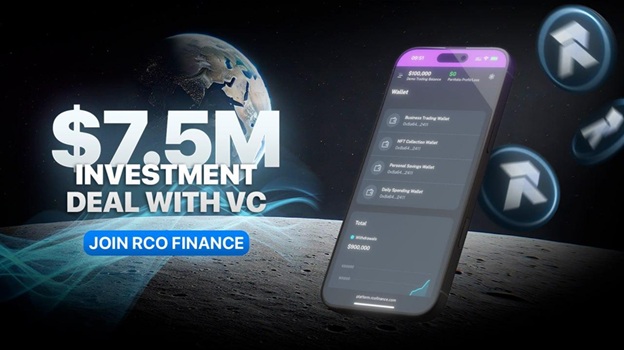
One of the most significant developments that has set RCO Finance apart is its recent $7.5 million investment from a top-tier venture capital firm. This isn’t a fluke; it’s a sign. The backing came after RCOF’s explosive beta growth, which saw over 285,000 users register even before the platform’s official launch.

In total, RCOF has raised more than $14.7 million. That kind of early-stage capital injection from institutional players means one thing: confidence. Big investors are actively searching for the next altcoin with a massive upside, and RCOF is showing all the right signals.

Securing this much capital confirms that the project’s goals are being taken seriously and now has the means to grow at speed. For anyone sitting on the fence, this level of VC interest should be a wake-up call.

What Makes RCO Finance Different From XRP and Other Altcoins?

RCO Finance stands out because it’s not just another token. It’s building something that most altcoins simply can’t offer. First off, its low market cap gives it far more room to grow. It’s still early. RCOF is not just about hype; it’s delivering real products and tools that support every stage of the investor journey.

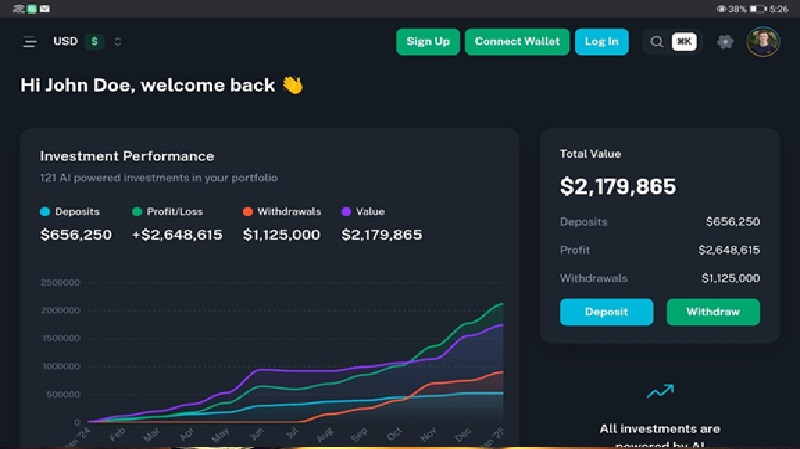
Over just four months, RCOF has introduced a complete set of tools, including AI-based portfolio insights, interactive demo trading, and auto-investing features. One standout feature is its access to exclusive Private Syndicate ETF Funds.

These are typically only available to high-net-worth individuals or institutions. RCOF holders, however, can pool their funds and invest in a diversified mix of ETFs across real estate, stocks, bonds, and more.

The platform also operates a decentralized governance model. Using $RCOF tokens, users can vote on major updates and help steer the platform’s direction.

This community involvement helps keep the project aligned with investors’ needs. It contrasts sharply with more centralized coins like XRP, where updates are often top-down.

On the DeFi side, RCOF’s use of automated market makers (AMMs) for trading means users can earn passive income by providing liquidity. It’s a win-win: investors earn while the platform stays liquid and active.

Leading the Next Wave in DeFi and AI-Powered Trading

With the DeFi space projected to have a multi-billion-dollar value, RCO Finance is making its mark as a serious player. The heart of this movement is its AI Robo Advisor. This tool helps users identify trends early and avoid costly mistakes.

Take the case of Pundi AI (PUNDIAI), which surged by over 210% in just one day. RCOF’s Robo Advisor would have flagged this move before most traders even noticed, allowing users to act early.

The AI also warns users when a coin shows signs of collapse, like Bluefin (BLUE), which recently dropped over 23% in a single day. The Robo Advisor’s ability to detect risk and reward gives RCOF users a unique edge in the crypto market.

The platform gives users access to over 120,000 different assets spread across more than 12,500 sectors. From equities and tokenized real estate to commodities, the platform offers data feeds from trusted sources like Bloomberg and Reuters.

Thanks to fractional asset ownership, everyday investors can now take advantage of opportunities that used to be out of reach.

Another major selling point is privacy. Unlike many platforms, RCOF allows users to trade without KYC, offering freedom and anonymity while maintaining security.

The Beta Platform Boom

The beta launch of RCO Finance’s beta platform drew a huge wave of interest, with user numbers spiking rapidly in a short time. Over 10,000 users joined in just days, quickly growing to 285,000. The surge in user adoption happened alongside RCOF’s fourth fundraising stage, which pulled in over $10 million.

The beta version offers traders a full range of AI-powered tools. From managing large portfolios to spotting trade opportunities across global markets, it gives users everything they need to build a winning strategy. Unsurprisingly, so many are rushing to get in before the full launch.

Upcoming Features: Built for the Future of Trading

The roadmap ahead is just as exciting. Starting in Q2 2025, users will get access to AI-simulated trading, allowing them to test strategies before going live. A new leaderboard will spotlight the top demo traders, with monthly rewards to encourage healthy competition.

A detailed trade analytics dashboard is also on the way, helping users learn from past performance. By mid-May, RCOF’s CRM sync will personalize user experiences, while calendar-based profit tracking will help users plan long-term strategies.

Later in May, users will be able to fund demo trades with real crypto; no banks or KYC will be needed. By June, a real-time AI trading indicator will help detect key market patterns.

The August rollout will expand the platform into traditional markets, such as stocks and forex, making RCO Finance one of the few crypto projects truly bridging the gap between crypto and TradFi.

Don’t Miss Out: The Presale Is Heating Up

RCO Finance is currently in its sixth presale phase. Over 16.8 million tokens have already been sold, raising $17 million. Right now, tokens are priced at just $0.13, but once the next phase hits, the price jumps to $0.15.

Analysts believe this altcoin could deliver gains of up to 40,000% in the coming bull cycle. That means a $1,000 investment today could grow to $400,000 or more. And with whispers of a $100,000 giveaway, the excitement is building fast once the project hits its $250,000 milestone.

Even better, RCOF has passed a full audit by SolidProof, reinforcing trust in the platform’s security and legitimacy. With leverage opportunities and a growing presale price, this is one of the rare moments in crypto where everything lines up.

If you’re still watching from the sidelines, now’s the time to act. The token price has only gone up in the past few months, and all signs point to continued growth. Smart XRP investors are already moving in. The question is: will you join them before the next price hike?

Seize this massive opportunity and join the presale before it’s too late.

For more information about the RCO Finance (RCOF) Presale:

Visit RCO Finance Presale

Join The RCO Finance Community