DD
MM
YYYY

PAGES

DD
MM
YYYY

spot_img

PAGES

Home Blog Page 1236

Apple Hit With Wall Street Downgrades as Tariff Pressures Mount and Growth Prospects Dim

0

Apple Inc. ended the week under pressure, with its shares tumbling 4.3% on Friday after two high-profile downgrades followed the company’s latest earnings report.

While the quarterly results were largely in line with Wall Street’s expectations, analysts flagged deepening worries over escalating tariffs, muted revenue forecasts, and the absence of a breakthrough growth catalyst. These concerns are shifting investor sentiment toward caution, even as Apple attempts to reassure markets.

Jefferies and Rosenblatt Securities both issued downgrades, citing tariff-related headwinds and the need for a new product cycle to reignite excitement around the stock. The downgrades came on the heels of Apple’s disclosure that it expects President Donald Trump’s China-era tariffs to add $900 million in costs to the company’s fiscal third quarter, a figure that highlights the mounting drag of geopolitical trade policies on Apple’s bottom line.

“Tariff impact will expand over time to create more earnings downside,” Jefferies analyst Edison Lee warned in a note that cut Apple to underperform—a rare bearish stance on one of the world’s most closely watched companies.

The $900 million in projected tariff-related costs marks one of the highest quarterly burdens Apple has attributed to import duties since the U.S.-China trade war escalated. Apple’s global supply chain, designed to maximize efficiency across China, India, and Vietnam—is now exposed to increased tariff-orchestrated uncertainty under Trump.

Jefferies noted that Apple’s guidance assumes existing tariffs remain static and do not broaden to cover imports from India and Vietnam, where Apple has been moving part of its assembly operations in recent years to hedge its exposure to China.

“These assumptions are unlikely to hold longer term, especially if there will be sectoral tariffs that are non-negotiable,” Lee added, pointing to the political risk looming over Apple’s manufacturing diversification strategy.

Weak China Sales and Tepid Outlook Deepen Worries

The earnings report also showed that sales in China fell short of expectations, reinforcing concerns that Apple is struggling in a market where local competitors like Huawei are surging and nationalistic sentiment is growing. Despite aggressive discounting and promotional campaigns in the region, Apple’s performance underscored its vulnerability to local market dynamics and geopolitical pushback.

More broadly, Apple told investors it expects revenue in the current quarter to grow in the “low- to mid-single-digit” range year over year. While modestly positive, the projection is notably cautious for a company that once routinely delivered double-digit revenue expansion. That forecast has led to renewed calls for Apple to deliver a new product that can re-energize growth and justify its premium stock valuation.

“Muted Growth” in an Unforgiving Market

Barton Crockett of Rosenblatt Securities also downgraded the stock, moving from buy to neutral, citing what he called “OK-muted growth” in a volatile regulatory and geopolitical environment.

“We’re left with a well-run company, with a need for an exciting new product to reinvigorate growth, trading at a premium multiple in a choppy tariff and regulatory environment,” Crockett wrote.

Crockett praised Apple’s resilience in iPhone sales, which outperformed some of the more pessimistic forecasts, and highlighted the company’s deep operational skill, particularly in its supply chain. But he emphasized that without a breakthrough, particularly one leveraging artificial intelligence, Apple risks being outshone by peers who are making more visible progress in AI-driven consumer applications.

“There needs to be an AI-driven sharp acceleration in iPhone sales for the stock to really outperform from here,” he said. “And as time has gone on, the argument for that seems to be fading.”

However, not all analysts are turning bearish. Citigroup’s Atif Malik viewed the results as decent given the broader trade environment, noting that Apple’s fundamentals “remain intact.” Malik described the guidance as conservative, suggesting that Apple could outperform if trade tensions ease or demand proves more resilient.

Even with some supportive voices, Wall Street is clearly more cautious about Apple than its mega-cap peers. Less than 60% of analysts tracked by Bloomberg now rate Apple as a buy, a stark contrast with names like Microsoft, Nvidia, or Alphabet, where bullish sentiment remains elevated. The downgrade from Jefferies brings the total number of “sell” ratings on Apple to four—a small but symbolically significant number for a company long seen as a market darling.

Apple’s declining analyst support also comes at a moment when Microsoft Corp. has surged ahead in both performance and perception. The software giant’s quarterly earnings were described as “blowout,” driving a rally that allowed Microsoft to surpass Apple in market value as of Friday’s open.

That symbolic shift further reinforces how investors are now looking for clear, AI-driven narratives—something Microsoft, with its heavy investment in OpenAI and integration of generative AI into core products, has leaned into with great effect.

The AI Gap and the Innovation Question

Apple’s next big opportunity likely hinges on its strategy for artificial intelligence. While the company has touted its custom silicon and on-device processing advantages, arguing that this makes AI more secure and private, there has yet to be a tangible, headline-grabbing product that channels those capabilities into consumer appeal. Competitors, meanwhile, have rolled out AI copilots, assistants, and integrations that have captured public and investor attention.

There are expectations that Apple may reveal more AI-forward features at its Worldwide Developers Conference (WWDC), but until then, analysts say the lack of a clear growth driver will continue to weigh on sentiment.
Dangote Targets $30bn Revenue in 2026, But Global Oil Slump and Trump’s Tariffs Threaten Export Hopes

0

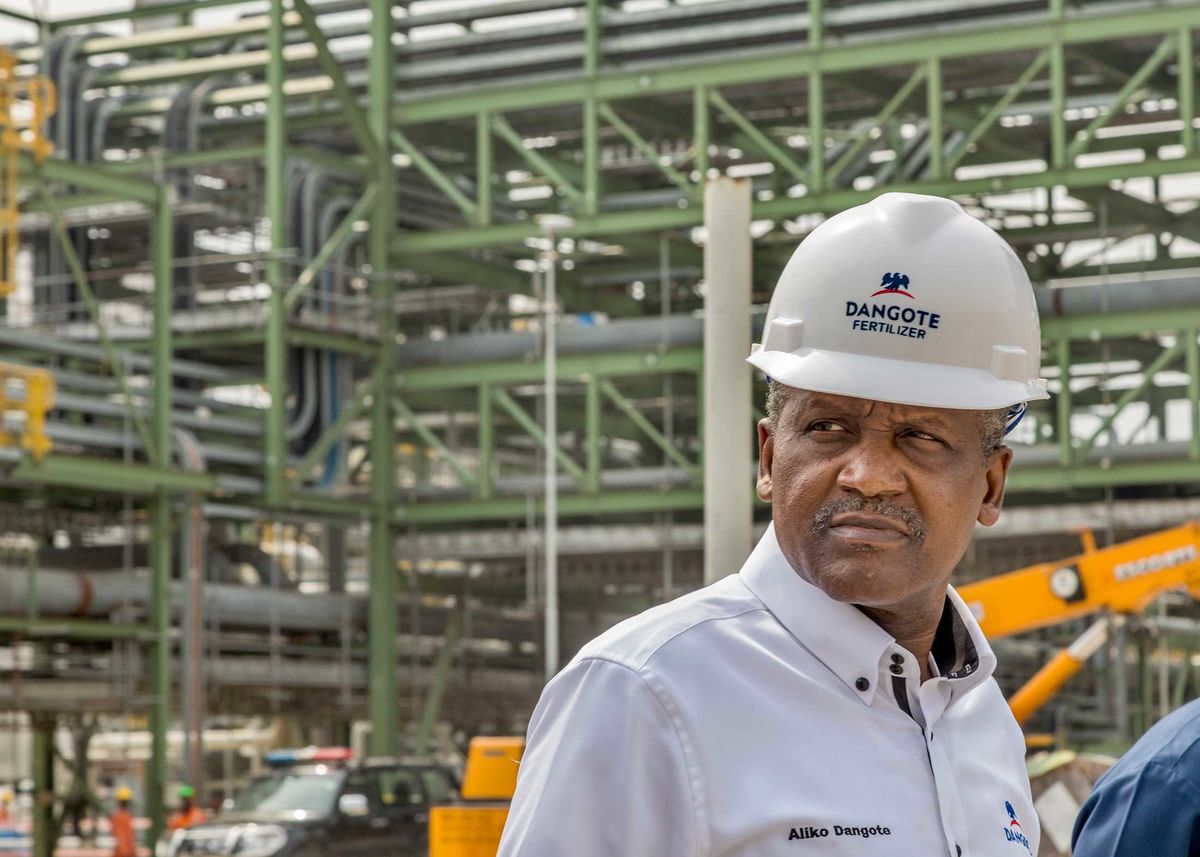
Africa’s richest man, Aliko Dangote, has projected that his vast business empire is on track to hit $30 billion in annual revenue by 2026. But that forecast, delivered at a venture capital forum in Lagos on Thursday, is already colliding with growing global economic instability—most notably, the disruptive trade policies of U.S. President Donald Trump and the resulting slump in oil prices.

Dangote, whose conglomerate spans cement, fertilizer, sugar, and now oil refining, said the group is expected to hit $25 billion in revenue next year, before adding another $5 billion by 2026, driven primarily by his new 650,000 barrels-per-day refinery in Lagos. That refinery, he stressed, would be a major foreign exchange earner, helping Nigeria reduce reliance on fuel imports and becoming a dominant force in petroleum exports.

But there’s a hitch. Trump’s renewed tariff wars are already rippling through global supply chains, and the oil market has begun to feel the strain. Last month, the international benchmark Brent crude slipped below $60 per barrel, its lowest point in nearly a year, reflecting a sharp drop in global demand amid rising geopolitical tensions and trade friction triggered by Washington’s aggressive economic nationalism.

This drop in oil prices casts a shadow over the very asset Dangote expects to power the group’s next growth chapter.

While the U.S. administration has so far excluded oil and gas from its latest wave of tariffs, the indirect damage is already evident. China, Europe, and other major markets have reduced energy purchases as they brace for a slowdown while manufacturing output has declined in key economies—two symptoms of a contracting global trading environment. All this means fewer buyers, lower prices, and increased competition.

Dangote did not ignore the turbulence entirely. He admitted that his fertilizer business, another crucial export arm, was briefly at risk due to U.S. tariff adjustments.

“I was worried about the U.S. tariff because 37% of our urea goes to the U.S.,” he said. “Luckily for us, Algeria was slapped with 30% tariffs.”

That stroke of fortune gave Nigerian urea a price advantage, but analysts warn that advantage could be fleeting, given how easily Washington’s policy shifts.

Meanwhile, Nigeria’s broader trade relationship with the U.S. hangs in the balance. A report by Strategy&, the consulting arm of PwC, warns that Nigeria could soon lose key trade privileges under the African Growth and Opportunity Act (AGOA), which allows duty-free exports to the U.S. The Trump administration has floated a review of AGOA, citing a need to protect American industries and reduce deficits. Nigeria, which exported $1.76 billion worth of goods under AGOA in 2024, mostly crude oil and agricultural produce, would be hard hit by any withdrawal.

Dangote told investors that the group’s cement production would rise to 62 million metric tons by next year, up from the current 53 million, putting his company ahead of Egyptian rivals and making it Africa’s largest cement producer. With total group assets now valued at $27.5 billion, according to the Bloomberg Billionaires Index, the business remains formidable in size and scope.

“We will be number one,” he said, referring to the group’s cement expansion. “We are building for the long term.”

However, questions persist about whether that scale is sufficient to weather a global downturn. Analysts are particularly skeptical about revenue targets tied to oil exports at a time when the market is growing more volatile.

The situation is particularly concerning for Nigeria, which is relying on Dangote’s refinery to ease pressure on its currency and reduce its crude-for-fuel swap bills, the stakes are even higher. The refinery is expected to curb the outflow of foreign exchange by replacing imported fuel with locally refined products, while simultaneously earning dollars from exports. But if global oil demand shrinks, or if U.S. protectionism intensifies, the expected gains may not materialize.

Nigeria’s policymakers are watching closely. According to the Strategy& report, titled Global Economic Policy Changes and Implications for Nigeria, the country must now develop contingency plans for a world where U.S. markets are less accessible. That could mean strengthening regional trade within Africa, speeding up refinery product standardization to meet European export requirements, and exploring non-oil exports.

Tether Reported Over $1B Operating Profit For Q1 2025

0

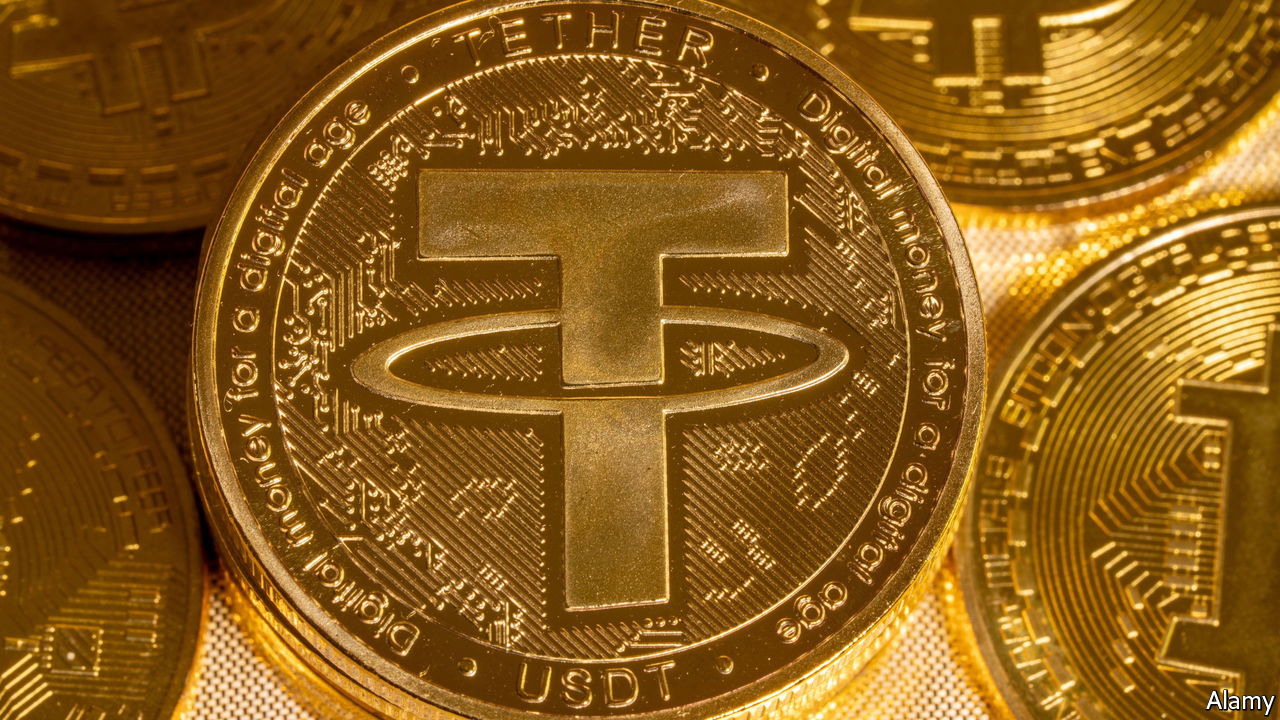
Tether reported over $1 billion in operating profit for Q1 2025, driven by its nearly $120 billion in U.S. Treasury holdings, with $98.5 billion in direct Treasury bills and $23 billion through repurchase agreements and money market funds. Its flagship stablecoin, USDT, grew by $7 billion in circulating supply, reaching a market cap of nearly $150 billion, with 46 million new wallets added.

The company maintains $5.6 billion in excess reserves, down from $7.1 billion in Q4 2024, and operates under El Salvador’s Digital Assets framework for regulatory oversight. Tether is planning to launch a U.S.-based stablecoin by late 2025 or early 2026, targeting institutional clients for faster interbank settlements. CEO Paolo Ardoino emphasized compliance with U.S. regulators, framing the product as an extension of the U.S. dollar’s global reach.

This move aims to challenge competitors like Circle’s USDC, which dominates domestically, while USDT remains focused on emerging markets. The launch depends on U.S. stablecoin legislation progress, with Tether engaging lawmakers and pursuing a full audit to enhance transparency.

Some skepticism exists due to Tether’s history of regulatory scrutiny and lack of a full audit, with critics questioning reserve backing and potential systemic risks. European regulators have raised concerns about overreliance on dollar-pegged stablecoins.

Tether’s $1 billion Q1 profit and USDT’s $150 billion market cap solidify its dominance in the stablecoin market, dwarfing competitors like Circle’s USDC. The U.S.-based stablecoin aims to challenge USDC’s domestic stronghold, potentially intensifying competition in institutional markets. Success could further entrench Tether’s global influence, especially if it captures significant U.S. market share, but failure to comply with stringent U.S. regulations could cede ground to rivals.

Launching a U.S.-based stablecoin signals Tether’s intent to align with U.S. regulators, a shift from its historically contentious relationship with authorities. Compliance could enhance credibility, especially if accompanied by a full audit, addressing long-standing transparency concerns. However, pending U.S. stablecoin legislation introduces uncertainty. Strict regulations or delays could hinder the launch, while favorable laws could set a precedent for broader crypto adoption.

Tether’s engagement with lawmakers suggests proactive lobbying to shape outcomes. A U.S.-based stablecoin for interbank settlements could streamline cross-border transactions, offering faster, cheaper alternatives to traditional systems like SWIFT. This aligns with Tether’s framing as an extension of the U.S. dollar’s global reach, potentially strengthening dollar hegemony.

Critics warn of systemic risks, as Tether’s massive Treasury holdings ($120 billion) and USDT’s ubiquity could amplify financial instability if mismanaged or under-reserved. European regulators’ concerns about dollar-pegged stablecoin reliance highlight potential vulnerabilities in global markets.

Targeting institutional clients could drive mainstream crypto adoption, particularly if Tether’s stablecoin integrates with existing financial infrastructure. This could attract banks and fintechs seeking efficient settlement solutions. Skepticism persists due to Tether’s regulatory history and lack of a full audit, which may deter risk-averse institutions unless transparency improves.

Tether’s focus on emerging markets with USDT contrasts with its U.S. ambitions, potentially bridging dollar access gaps in underserved regions while competing domestically. This dual strategy could reshape global stablecoin dynamics. European regulatory pushback may limit Tether’s growth in key markets, forcing reliance on U.S. and emerging market expansion to sustain momentum.

Tether’s financial strength ($5.6 billion excess reserves, $1 billion profit) may boost investor confidence in USDT’s stability, but ongoing scrutiny over reserves could fuel volatility if doubts resurface. A successful U.S. launch could catalyze broader crypto market growth, signaling regulatory progress, while setbacks could dampen sentiment and reinforce skepticism about stablecoin reliability.

Tether’s moves could reshape the stablecoin landscape, enhance U.S. dollar influence, and drive institutional crypto adoption, but success hinges on regulatory compliance, transparency, and managing systemic risks. Failure to address these could undermine its ambitions and market position.

Unlock your financial future with Bow Miner: The Ultimate Cloud Mining Revolution!

0

Bow Miner breaks the logic of “holding coins but not mining” of traditional crypto assets. It takes BTC mining as the core income engine, integrates mainstream assets such as XRP and DOGE, and creates a truly low-threshold, highly transparent, and sustainable passive income platform for global users. In this evolving crypto world, instead of waiting for the market to change you, it is better to choose a system that allows assets to actively create value. Start now, not only hold, but also release the true potential of your assets.

Three trump crypto assets, opening a new era of wealth

XRP-a revolutionary in cross-border payments

Daily cross-border settlement volume exceeds US$5 billion, and it is a partner of the Federal Reserve’s instant payment system FedNow

BTC-the gold of the digital world

Institutional holdings increased by 217% in 2024, and the average annual increase during inflation outperformed Nasdaq by 36%

DOGE-the king of the community economy

Daily trading volume exceeds US$800 million, supported by Musk’s X platform, and more than 20 million community users

“These are not just three cryptocurrencies, but the three pillars of future finance”-Mark, a senior analyst on Wall Street

Why choose Bow Miner?

Bow Miner brings a revolutionary “hold coins and earn” model, allowing your idle crypto assets to automatically generate stable income. We provide: daily automatic settlement, transparent and visible income, support for flexible exchange of 10+ mainstream currencies, full license supervision by the UK FCA, security guarantee, military-grade encryption technology, 7×24 hours all-weather protection, 60 seconds to open an account, zero technical threshold, computer and mobile phone operation at any time, simple and convenient. Just hold the coins, you can easily get continuous cash flow, making your digital assets truly “live”!


User real income case

Case 1: Singapore user David

Investment: 5BTC

Period: 50 days

Income: 5.25BTC


Case 2: Japanese user Misaki

Investment: 500,000 Dogecoins

Period: 30 days

Income: 277,500 Dogecoins

“Since using Bow Miner, my crypto assets are finally no longer “sleeping”!” —— David’s experience sharing

Buy a contract plan that suits you

Let your crypto assets automatically make money 24 hours a day!


For example:

  • BTC Classic Hashrate?: Investment amount: $100, total net profit: $100 + $4.

  • Iceriver KAS KS7 Lite?: Investment amount: $500, total net profit: $500 + $31.5.

  • AntMiner S19j Pro?: Investment amount: $1500, total net profit: $1500 + $213.

– Whatsminer M50S?: Investment amount: $5,000, total net profit: $5,000 + $1,772.

– Filecoin Miner 4U?: Investment amount: $10,000, total net profit: $10,000 + $4446.

  • Immersion Cooling System MC40?: Investment amount: $30,000, total net profit: $30,000 + $16,650.


FAQ

Q: How is the return calculated?

A: Based on real-time computing power and market conditions, the annualized return is 8-15%


Q: Is the fund safe?

A: All assets are stored in cold wallets and protected by multi-signatures


Q: How long does it take to withdraw cash?

A: T+0 fast withdrawal system, supports multi-currency deposits and withdrawals, and the fastest arrival time is 5 minutes

For more contract information, please follow the official website of Bow Miner platform: https://88miner.com/

Company email: info@88miner.com

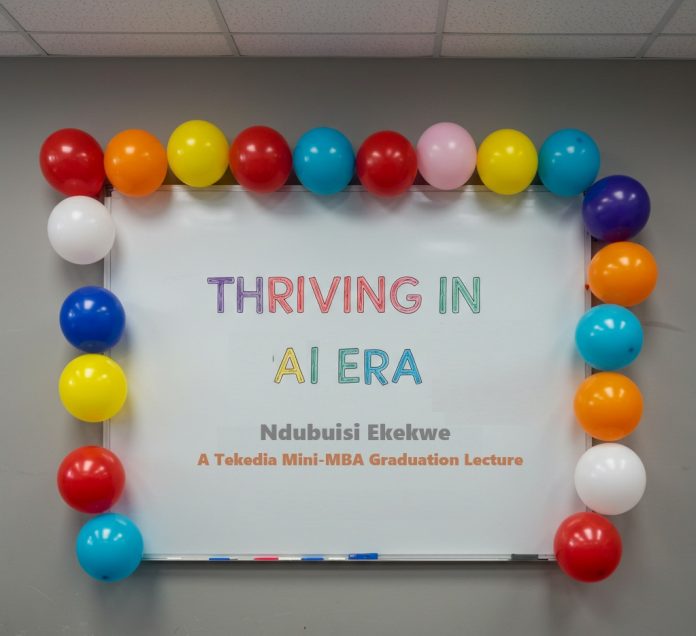
Thriving in AI Era – A Tekedia Mini-MBA Graduation Lecture

0

Good People, the future is not just coming; it’s being coded. And in Africa, that code is being written with the potential to reshape our markets, our businesses, and our very lives. Tomorrow is Tekedia Mini-MBA edition 16 graduation day, and I am going to speak on “Thriving in AI era”.

We often talk about AI as some abstract force. But note that the world, at its core, is made of numbers. Understanding and harnessing these numbers is the key to unlocking the true potential of AI. It’s not about replacing human ingenuity; it’s about augmenting it. Here are a few crucial points:

AI as a Market Fixer: In many African markets, information asymmetry is a significant challenge. AI offers the potential to level the playing field, making markets more efficient and transparent.

Beyond Invention, Into Innovation: Africa is brimming with brilliant ideas. But the real magic happens when we translate those ideas into tangible solutions that address real-world challenges. This is where innovation, the commercialization of ideas, becomes paramount.

Capabilities are King: Having the right tools, the right people, and the right processes is non-negotiable. We need to invest in building these capabilities to truly leverage the power of AI.

AI as an Efficiency Amplifier: AI has the potential to dramatically enhance how we utilize our resources, from optimizing energy consumption to improving agricultural yields.

The Business Model Imperative: AI is not a silver bullet. It must be integrated into a robust business model to deliver sustainable value.

This is not just about technology; it’s about strategy. It’s about how we position ourselves to capture the immense value that AI offers. It’s about creating new opportunities for investment, for job creation, and for inclusive growth across the continent.

Let’s move beyond the hype and focus on the practical applications of AI. Let’s build businesses that solve real problems, that create real value, and that drive Africa forward.

What are your thoughts? How do you see AI transforming Africa’s future? Let’s discuss at Tekedia Mini-MBA graduation day!

Sat, May 3 | 7pm – 8.30pm WAT | It’s Graduation Day – Thriving in AI Era – Ndubuisi Ekekwe | Zoom Link

In the lecture, I will focus be on the transformative power of Artificial Intelligence (AI) and its profound impact on various industries. To fully grasp the depth of this conversation, I will look into the foundational understanding of AI technologies and the historical context leading which underscores the evolution of AI alongside advancements in semiconductors, computers, and other key technologies. This shift from an era of invention to one of innovation has paved the way for AI’s integration into business operations.

Key themes that will be explored include how AI drives innovation and productivity across industries while reshaping job markets and economic landscapes. Understanding market dynamics and information symmetry are crucial for businesses aiming to leverage AI effectively for growth and success. Recent events have highlighted accelerated innovation driven by AI technologies, such as its transformative impact on industries like insurance through AI agents. Moreover, discussions will delve into challenges in establishing foundational platforms for AI innovations as well as efforts to utilize AI in sectors like agriculture and energy.