DD
MM
YYYY

PAGES

DD
MM
YYYY

spot_img

PAGES

Home Blog Page 1238

MTN Paid N764bn in Taxes in 2024, Reinforcing Telecom Sector as Nigeria’s Economic Cash Cow

0

MTN Nigeria Communications Plc says it paid a staggering N764.2 billion in taxes and levies to the Nigerian government in 2024, a figure that towers over contributions from many key sectors of the economy and underscores a growing reliance on the telecoms industry as Nigeria’s primary fiscal lifeline.

The payment, detailed in the company’s 2024 Sustainability Report, marks a 40.5% increase from the N543.9 billion the company paid in 2023. While the telecom giant has routinely appeared among the top corporate taxpayers in the country, this surge in contribution in a year marked by rising inflation, currency devaluation, and dwindling oil revenues — underlines more than just corporate resilience. It reflects a deepening structural shift in Nigeria’s economic foundation.

Telecoms have quietly edged oil and gas in terms of consistency and reliability of fiscal remittances. For years, Nigeria’s economic lifeblood was crude oil. However, with crude exports plagued by theft, declining global demand, and OPEC quotas, the government has increasingly turned to telecom operators and financial institutions to fill revenue gaps.

Among them, MTN has emerged as the standout performer. Its N764.2 billion tax contribution in 2024 not only sets a new record but places the company above some major oil producers operating in Nigeria — many of whom have been criticized for underreporting and evading full tax liabilities through complex fiscal arrangements and regulatory loopholes.

While some multinational oil firms and banks still contribute sizeable amounts, none has matched MTN’s transparency and upward trend. Even the Nigeria National Petroleum Company (NNPC) figures, though larger, are often shrouded in controversy and represent revenue from sales of state assets rather than pure taxation.

This explains why the telecom sector has increasingly become Nigeria’s economic cash cow. It’s a reputation many believe directly influenced the Nigerian Communications Commission’s (NCC) decision to approve a 50% hike in telecom tariffs earlier this year.

The rationale behind the increase, regulators said, was to help telecom firms manage rising operational costs. But sources familiar with the discussions say it also aligned with the government’s broader fiscal strategy — to squeeze more revenue from performing sectors while offsetting the collapse of oil-driven income.

MTN’s Strategic Expansion

Beyond fiscal contributions, MTN’s newly released sustainability report offers a broader view of the company’s activities in 2024. CEO Karl Toriola emphasized that MTN’s growth was anchored on a framework of long-term value creation.

“We have increased female representation in our workforce to 41.4%, empowered local businesses by directing 59.6% of our spend to local suppliers, contributed N764 billion in taxes and levies to support national development, and invested N3.5 billion in Corporate Social Investment initiatives, positively impacting over 663,300 lives,” Toriola said.

“These efforts reflect our unwavering dedication to long-term value creation and building a more connected, sustainable future,” he added.

The company also claimed to have achieved 93% network coverage across Nigeria and reduced its Scope 1 and 2 carbon emissions by 11% from its 2021 baseline, a significant feat in an industry with a heavy environmental footprint.

Other notable initiatives include:

  • 194 new solar-powered rural sites, enhancing connectivity and reducing dependence on diesel generators.
  • Eco-friendly SIM card launch, making MTN the first telecom operator in West Africa to take this step.
  • A 159% jump in capital expenditure (CAPEX) in Q1 2025, with ?202.4 billion invested to expand network capacity.

MTN’s Profit Turnaround

MTN’s profitability in early 2025 marked a significant turnaround after a string of quarterly losses brought on by the naira’s free fall and inflationary shocks. A major driver of this rebound was the tariff increase approved by the NCC, a controversial but, in hindsight, an effective measure that allowed the company to recoup escalating operating costs — including diesel, FX costs, and hardware imports.

The regulatory decision drew mixed reactions. Consumer advocates criticized it as tone-deaf amid widespread economic hardship.

In the report, MTN also highlighted its continued investment in grassroots development through the MTN Foundation. According to Tobe Okigbo, Chief Corporate Services & Sustainability Officer, the company’s flagship program “What Can We Do Together” has transformed community infrastructure in health, education, and water access across hundreds of towns since its inception in 2015.

“Since its launch in September 2015, this initiative has transformed lives and contributed to grassroot development across Nigeria,” Okigbo added.

Meta-Spotify-led Coalition Takes Aim At Apple’s ‘Duopoly’ As Phonemaker Faces Contempt Ruling Over “Anticompetitive” Conduct

0

App developers have long complained about the “walled garden” that Apple and Google maintain around their mobile ecosystems, but now they may have found the pressure valve they’ve been seeking.

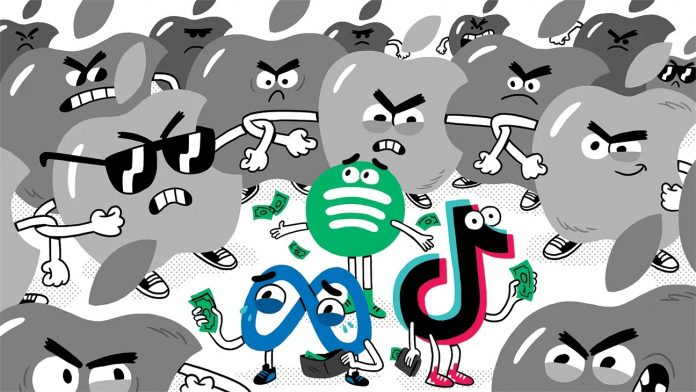
A newly formed coalition – led by Meta, Spotify, Garmin, Match Group, and others – is taking aim at what it calls the “duopoly” that governs mobile app distribution. And its campaign may be gaining traction just as Apple finds itself in deeper legal trouble than previously anticipated.

The Coalition for a Competitive Mobile Experience, officially announced this week, has set out with the goal of challenging what it sees as unfair dominance by Apple and Google over how mobile apps are distributed, monetized, and regulated. Initial advocacy efforts are focused on pushing app stores to take over age verification responsibilities – a move currently left to individual developers. But the coalition’s ambitions are much broader: to dismantle platform favoritism, demand open payment systems, and back antitrust investigations and lawsuits against the tech giants.

The timing of the coalition’s launch coincided with a stinging federal court ruling against Apple. On Wednesday, Judge Yvonne Gonzalez Rogers of the U.S. District Court for the Northern District of California found Apple in contempt of court for deliberately circumventing a 2021 injunction that was meant to prevent anticompetitive behavior in its App Store policies.

According to the judge, Apple knowingly continued imposing commission fees – up to 27% – on purchases made through links that directed users to developers’ own websites. These purchases were explicitly meant to bypass Apple’s in-app payment system, which takes a 30% cut. The court found that Apple’s workaround wasn’t just non-compliant but intentionally designed to preserve what had already been ruled an anticompetitive revenue stream.

“Apple’s continued attempts to interfere with competition will not be tolerated,” Judge Rogers wrote in a scathing opinion. “That it thought this court would tolerate such insubordination was a gross miscalculation… As always, the cover-up made it worse. For this court, there is no second bite at the apple.”

The judge also ordered Apple to immediately stop collecting commissions on out-of-app transactions and pay Epic Games’ legal fees, after determining that the company lied under oath and withheld critical internal documentation.

In a particularly damning passage, Rogers said Apple Vice President of Finance Alex Roman “outright lied under oath” when he testified that the company hadn’t determined what fee to apply until January 2024. Internal evidence later revealed that Apple not only considered its fee structure much earlier but also knowingly set the rate just above the cost developers would incur by setting up their own payment systems, making Apple’s “discount” illusory.

The judge accused Apple of abusing privilege protections to hide records of a June 2023 executive meeting that included CEO Tim Cook. The documents, only recently submitted to the court, allegedly revealed how Apple executives strategized on maintaining revenue while giving the illusion of compliance with the earlier ruling.

“This evidence shows a desire to conceal Apple’s real decision-making process,” Rogers wrote, “particularly where those decisions involved senior Apple executives.”

The ruling is a dramatic escalation in the ongoing legal battle between Apple and Epic Games, which began in 2020 when Apple removed Epic’s popular game Fortnite from the App Store after Epic introduced a direct payment option that bypassed Apple’s cut. That case led to the 2021 injunction ordering Apple to allow developers to direct users to external purchasing options. Apple’s attempts to blunt the impact of that ruling have now landed it in deeper legal jeopardy, with possible criminal contempt charges now under consideration by U.S. attorneys.

In response, Apple said it “strongly disagrees with the decision” but will comply and appeal. Meanwhile, Epic CEO Tim Sweeney declared victory, posting on X (formerly Twitter), “No fees on web transactions. Game over for the Apple Tax.” Sweeney said Fortnite will return to the U.S. iOS App Store next week and may reappear globally if Apple expands the new framework worldwide.

The court’s ruling significantly boosts the new coalition’s efforts. For years, developers large and small have struggled to challenge Apple and Google on their own. Now, with legal precedent turning against Apple, the coalition is betting that its unified voice can force regulatory and legislative changes.

Brandon Kressin, the coalition’s director and a seasoned antitrust attorney, told Bloomberg that many smaller developers are fearful of retaliation or simply lack the resources to take on Apple or Google alone.

“There’s power in numbers, especially when going up against companies as powerful as the duopoly,” he said.

The coalition has already thrown its weight behind new laws, such as Utah’s statute requiring app stores, not individual developers, to handle age verification. It’s also backing broader federal efforts to curtail Big Tech dominance and is expected to support the Department of Justice’s ongoing antitrust lawsuits against both Apple and Google.

For Apple, the contempt ruling may only be the beginning. The company is already under growing scrutiny from U.S. and European regulators, with multiple cases focusing on whether it unfairly promotes its own services and limits developer freedom. The latest setback not only reinforces existing concerns about Apple’s conduct but also raises serious questions about its internal compliance culture.

The coalition is positioning itself to be more than just a lobbying group – it’s aiming to be a catalyst for change in an industry that has long operated under tightly controlled terms dictated by the very platforms developers rely on. With Epic’s partial victory, increasing bipartisan momentum in Washington, and now a federal judge openly accusing Apple of deception, the momentum seems to be shifting.

How to Bet on the Kentucky Derby in Alaska – AK Sports Betting 2025

0

The highly-anticipated Kentucky Derby is finally here and ahead of the Churchill Downs showpiece on Saturday, May 3, find out how to bet on the race from Alaska using our list of the best US offshore betting sites headed by BetWhale.

Best Alaska Sports Betting Sites for the Kentucky Derby

  1. BetWhaleBrand-new operator with $1,250 in free bets to be claimed
  2. BetOnline$250 bonus bets for Kentucky Derby promo
  3. BUSR –  $1,000 in bonuses to be claimed for 2025 Kentucky Derby
  4. Bovada$750 free bets for horse racing
  5. BetNow200% deposit bonus for new customers

How to Bet on the Kentucky Derby in Alaska

It only takes three small steps to bet on the Kentucky Derby in Alaska.

  1. Sign up for a BetWhale account
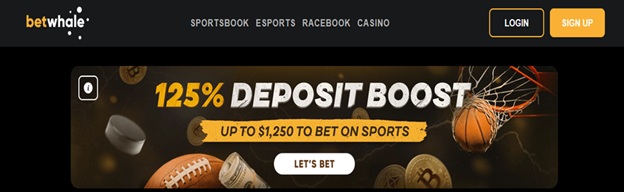
  2. Deposit up to $1,000 (Receive 125% bonus up to $1,250)
  3. Place your 2025 Kentucky Derby bets

Alaska Sports Betting Latest – Can I Bet on the Kentucky Derby in Alaska?

As of May 2025, there are no regulated sports betting options in Alaska – meaning the only way to place wagers on the Kentucky Derby is through the best offshore betting sites listed in this guide.

There are a number of advantages to using the sites on our page, such as incredibly lucrative Kentucky Derby offers that you couldn’t even dream of with state-regulated sportsbooks.

With thousands of dollars in bonus bets ready to be claimed for the 2025 Kentucky Derby in Alaska, your big win could be just around the corner and it’s worth taking advantage of.

Our pick of the best offshore sports betting sites are quick and easy to register with as they don’t require any KYC checks, meaning you can wager as much as you want, when you want without question.

Another benefit to these sites is that you can deposit and withdraw using cryptocurrencies, for which transactions take between 1-3 hours to process compared to days when using traditional banking methods.

The 5 Top Alaska Kentucky Derby Sports Betting Sites Reviewed

1. BetWhale (125% Deposit Bonus, up to $1,250)

BetWhale is a newer sportsbook compared to some of the other names on our list but in terms of its opening offer, it simply cannot be beaten.

It is offering an incredible 125% deposit bonus meaning you can bag up to $1,250 in free bets to use on the 2025 Kentucky Derby in Alaska.

Despite launching just a few years ago in 2023, BetWhale has already established itself as a leading operator in the industry.

Why Join BetWhale for Horse Racing?

  • $1,250 free bets for 2025 Kentucky Derby
  • Well catered to mobile bettors with a smooth user interface
  • No payout limits or restrictions

Sign up with BetWhale Now

2. BetOnline (50% Deposit Bonus, up to $250)

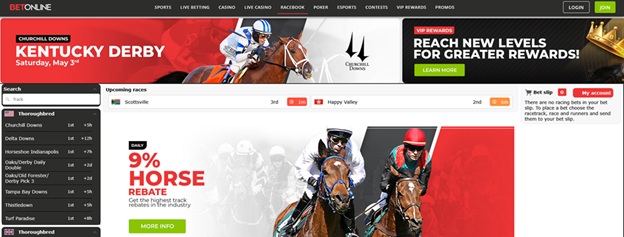
After signing up with the top option BetOnline, it would be rude not to go ahead and claim the $250 in bonus bets for the 2025 Kentucky Derby on offer with BetOnline.

BetOnline rates a leading player for betting on the Kentucky Derby in Alaska for good reason. With a 50% deposit bonus on offer, there is much excitement to be had ahead.

BetOnline is an industry leader with decades of experience at the top of its field and there are no state restrictions, meaning you can wager from anywhere in the US including Alaska.

Why Join BetOnline for Horse Racing?

  • Two decades of experience as an industry leader
  • $250 bonus available upon sign up
  • Plenty of deposit methods including cryptocurrency

Sign up with BetOnline Now

3. BUSR (100% Deposit Bonus, up to $1,000)

If you’re looking for the most dedicated horse racing tips sportsbook, look no further than BUSR – which literally stands for Bet US Racing!

This site was founded in 2014 and its first priority has always been racing, so there is no better option when looking to wager on the 2025 Kentucky Derby in Alaska.

This offshore sportsbook boasts a lucrative welcome offer of $1,000 in free bets with a 100% deposit bonus for new players ahead of the Churchill Downs showpiece.

Why Join BUSR for Horse Racing?

  • 10% horse racing rebate on offer every day
  • $100 money back special on selected races
  • Plenty of deposit methods including cryptocurrency

Sign up with BUSR Now

4. Bovada (75% Deposit Bonus, up to $750)

Bovada is recognized as one of the top online sports betting no ID platforms for users in Alaska and you simply can’t go wrong with this operator.

New players signing up for the Kentucky Derby can take advantage of their 75% welcome bonus where you can bag up to $750 in bonus bets to use on Saturday’s feature race at Churchill Downs.

Why Join Bovada for Horse Racing?

  • 75% deposit bonus, $750 free bets for Kentucky Derby
  • Mobile app available for punting on the go
  • Slick user interface

Sign up with Bovada Now

5. BetNow (Up To 200% Deposit Bonus)

The fifth and final offshore best Kentucky Derby betting sites according to businessinsider.com to sign up with is BetNow, who are offering a tasty 200% deposit bonus up to $200.

The deposit bonus differs, with 150% available up to $225 and 100% for up to $500.

BetNow is the perfect choice for bettors looking to avoid handing out their Social Security Number and bypassing KYC checks to wager on the Kentucky Derby.

Why Join BetNow for Horse Racing?

  • Instant payouts with cryptocurrency
  • Perfect for novices looking to gain first experience
  • Rebate program available

Sign up with BetNow Now

Kentucky Derby Odds 2025

See below the latest odds ahead of the 2025 Kentucky Derby with our top pick, BetWhale.

Journalism forms much of the market here following an impressive win in the Santa Anita Derby last time out – but favourites don’t have a terribly good record in the race with the last being Justify back in 2018.

In behind Journalism is Florida Derby runner-up Sovereignty and Arkansas Derby winner Sandman.

There are a number of different bets to consider placing on the race, such as a win bet (horse must win), place bet (horse must place first two), show bet (horse must place first three) and a trifecta (pick the first three home in the correct order).

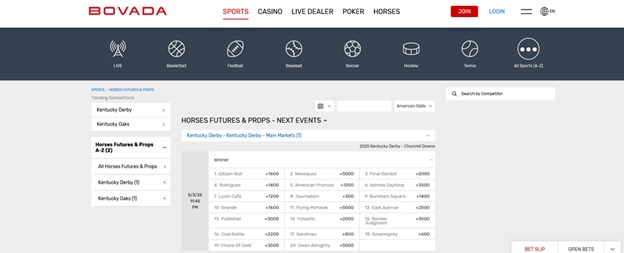
2025 Kentucky Derby Runners, Post Positions and Betting Odds

  • 1 Citizen Bull 20-1
  • 2 Neoequos 30-1
  • 3 Final Gambit 30-1
  • 4 Rodriguez 12-1
  • 5 American Promise 30-1
  • 6 Admire Daytona 30-1
  • 7 Luxor Cafe 15-1
  • 8 Journalism 3-1
  • 9 Burnham Square 12-1
  • 10 Grande 20-1
  • 11 Flying Mohawk 30-1
  • 12 East Avenue 20-1
  • 13 Publisher 20-1
  • 14 Tiztastic 20-1
  • 15 Render Judgement 30-1
  • 16 Coal Battle 30-1
  • 17 Sandman 6-1
  • 18 Sovereignty 5-1
  • 19 Chunk of Gold 30-1
  • 20 Owen Almighty 30-1


Note: Odds are subject to change

Exploring FIFA’s EVM Prepositions and FIFA Rivals Games

0

FIFA announced plans to launch the “FIFA Blockchain,” an Ethereum Virtual Machine (EVM)-compatible blockchain to host its NFT platform, FIFA Collect. The migration from the Algorand blockchain, where FIFA Collect was initially launched in 2022, is set to begin no earlier than May 20, 2025. The new blockchain aims to offer improved performance, scalability, and support for future features, aligning with broader Web3 trends for enhanced interoperability and developer adoption.

FIFA Rivals is an officially licensed, free-to-play mobile football game developed by Mythical Games in collaboration with FIFA and Bacon Games, set for a global launch in June 2025 on iOS and Android, with a pre-release in May 2025 coinciding with the FIFA Club World Cup. The game integrates blockchain technology via the Mythos blockchain, powered by Polkadot, to offer a unique arcade-style football experience with player-owned digital assets.

Unlike traditional FIFA simulation games, FIFA Rivals emphasizes fast-paced, arcade-style football with real-time player-versus-player (PvP) matches. Players can engage in head-to-head competitions, focusing on accessibility with a “shallow learning curve” for casual players and advanced features for dedicated gamers. The game moves away from hyper-realistic aesthetics (like EA Sports FC) to a style described as a blend of “simulation and fantasy,” offering a distinct, engaging experience.

Players can create, manage, and build their own football clubs, assembling lineups with officially licensed football stars, both past and present. This includes buying, selling, and trading players to enhance squads. The game allows players to level up their teams, strategize, and compete globally, aiming to “dominate the competition and create your legacy.”

Blockchain Integration and NFTs

FIFA Rivals uses the Mythos blockchain to enable ownership of in-game assets, such as NFT player cards, which players can collect, trade, or sell via in-game and web-based marketplaces. These NFTs represent professional football stars, adding a layer of digital ownership and monetization through a play-to-earn economy.

Blockchain ensures secure, transparent transactions, reducing fraud and enhancing trust by immutably recording asset ownership. Players can earn cryptocurrencies or NFTs based on in-game achievements, similar to Mythical’s NFL Rivals. NFTs are optional, addressing concerns about accessibility and controversies surrounding blockchain in gaming, such as environmental impact or speculative markets.

The game introduces tokenized rewards, where players can earn in-game assets with real-world value, tradeable outside the game. This mirrors successful blockchain games like Splinterlands, which use similar mechanics to boost engagement. The integration of $MYTH tokens (used in Mythical’s ecosystem) may allow players to participate in the game’s economy, though specifics on token mechanics are not fully detailed.

Esports and Community Engagement

FIFA Rivals is designed to integrate with FIFA’s esports platform, offering competitive opportunities for players worldwide to participate or spectate. This aligns with FIFA’s goal to expand its gaming and esports portfolio. A leading Web3 gaming studio with experience in blockchain titles like NFL Rivals (over 6 million downloads) and Blankos Block Party (3 million monthly transactions). Mythical’s expertise in blockchain and major franchises (e.g., Call of Duty, World of Warcraft) positions it to deliver a robust gaming experience.

Bacon Games: A Colombian studio collaborating on FIFA Rivals, bringing creative input to craft a fresh football experience that blends arcade gameplay with blockchain innovation. This is FIFA’s second major Web3 venture after its FIFA Collect NFT platform (launched on Algorand in 2022, now transitioning to an EVM blockchain). Previous NFT projects included collectibles tied to the 2022 Qatar World Cup and 2026 World Cup ticket opportunities. FIFA Rivals marks FIFA’s first blockchain-integrated interactive game, reflecting a broader trend of sports organizations embracing digital engagement.

Mythos Blockchain: Built with Polkadot technology, the Mythos chain is optimized for gaming, offering cross-chain infrastructure and support for NFT economies. It ensures scalability, security, and interoperability, critical for handling millions of transactions. The game is free-to-play, lowering barriers to entry, and supports both iOS and Android, targeting a global audience. The mobile-first approach leverages the massive reach of mobile gaming, especially given the 5 billion viewers of the 2022 FIFA World Cup.

As with other Mythical Games titles (e.g., Nitro Nation), FIFA Rivals may require significant storage (potentially over 1GB), which could necessitate device space management. FIFA Rivals aims to attract football fans, blockchain enthusiasts, and casual gamers. Mythical Games’ CEO, John Linden, projects over 100 million players, citing NFL Rivals’ success and football’s global popularity.

The game enters a competitive space dominated by EA Sports FC (formerly FIFA) and its mobile counterpart, EA Sports FC Mobile. Unlike EA’s lootbox-based model, FIFA Rivals uses blockchain for asset ownership, potentially appealing to a niche of crypto-savvy players but facing challenges in toppling EA’s dominance. The partnership reflects a growing trend of sports organizations collaborating with blockchain studios (e.g., NFL with Mythical, Ubisoft with Oasys). This convergence of traditional sports, mobile gaming, and Web3 could set new benchmarks for fan engagement.

FIFA Rivals could redefine sports gaming by mainstreaming blockchain integration, offering true digital ownership and innovative rewards. Its success may influence other sports organizations to adopt Web3 strategies. The game’s tie-in with the FIFA Club World Cup and esports platform could boost visibility and engagement, especially among younger, tech-savvy audiences. By educating players about blockchain through gameplay, it may bridge traditional gaming and Web3 communities.

Blockchain and NFTs in gaming remain divisive due to environmental concerns and speculative markets. Making NFTs optional may mitigate backlash but could limit adoption among traditional gamers. EA Sports FC’s established player base and licensing deals (17,000+ pro players) pose a significant hurdle. FIFA Rivals will need compelling gameplay and unique features to compete.

Blockchain integration requires players to use crypto wallets (e.g., for trading NFTs), which may deter non-crypto users. The shift from Algorand to EVM wallets in FIFA’s ecosystem suggests similar requirements here. The mobile gaming market is crowded, and FIFA Rivals must stand out amidst numerous football titles and blockchain games.

While FIFA Rivals aligns with FIFA’s push to innovate post its 2022 split with EA Sports, the reliance on blockchain raises questions about accessibility and long-term viability. The game’s arcade focus and free-to-play model are smart moves to attract a broad audience, but the NFT component may alienate players wary of crypto’s volatility or environmental impact. FIFA’s claim of delivering “the best” gaming experience (per President Gianni Infantino) is ambitious, given EA’s dominance and FIFA Rivals’ niche Web3 focus. The collaboration with Mythical and Bacon Games is promising, but success hinges on balancing blockchain novelty with intuitive, engaging gameplay. Without robust marketing and a seamless user experience, it risks being a niche product for crypto enthusiasts rather than a mainstream hit.

FIFA Rivals is a bold step for FIFA into blockchain gaming, combining arcade-style football with NFT-based ownership and esports potential. Set for a pre-release in May 2025 and a full launch in June, it targets a global audience with its free-to-play model and mobile accessibility. While its Mythos blockchain integration offers innovative rewards and security, it faces challenges in competing with EA Sports FC and overcoming NFT skepticism. For football fans and crypto enthusiasts, it promises a fresh, interactive experience, but its success will depend on delivering on gameplay, accessibility, and FIFA’s esports ambitions.

The transition will involve moving FIFA’s NFT collections, which have minted over 1.5 million digital collectibles, to the new network. Users will need EVM-compatible wallets like MetaMask, as Algorand-based wallets (e.g., Pera, Defly) will no longer be supported post-migration. No immediate action is required from users, and FIFA has promised clear instructions closer to the migration date.

Collectibles exported from the platform must be re-imported before May 20 to be included in the migration, with a verification process for those missing the deadline. The move is part of FIFA’s broader Web3 strategy, including projects like the blockchain-based mobile game FIFA Rivals, set for a pre-release in May 2025.

Trump-Era Tariffs to Add $900m to Apple’s Q3 Costs, as U.S.-China Trade Tensions Reshape Global Tech

0

Apple CEO Tim Cook has revealed that the lingering effects of the Trump-era tariffs will add an estimated $900 million to the company’s costs in the third quarter, a disclosure that offers a stark reminder of the deepening impact of U.S.-China trade tensions on global technology firms.

Cook’s comments, made during Apple’s second-quarter earnings call on Thursday, come as tech companies increasingly confront the long-term consequences of geopolitical rivalry between the world’s two largest economies. While Apple reported only a “limited impact” from tariffs during the March quarter, Cook made it clear that the June quarter is being shaped by residual trade barriers that continue to affect its cost structure.

“This estimate assumes that current global tariff rates and policies remain unchanged for the balance of the quarter,” Cook said, emphasizing that any new duties or changes to trade policy could worsen the cost burden. He cautioned investors against using the $900 million figure to extrapolate future quarters, as “unique factors” in the current quarter could offset further impact.

Despite the immediate relief felt by investors—one called the situation a “pretty good outcome”—the longer-term picture remains uncertain, especially as Apple and other multinationals navigate an increasingly fragmented global supply chain.

Apple’s tariff burden underscores a larger and more complex reckoning underway across the tech industry, where the once-global supply chain is now being reshaped by geopolitical forces.

The U.S. government’s imposition of tariffs on a wide range of Chinese goods has compelled American tech companies to diversify their supply bases. For Apple, this has meant moving substantial iPhone production to India and shifting assembly of other products to Vietnam. Cook noted in a CNBC interview that around half of the iPhones sold in the U.S. are now manufactured in India.

But relocation is not a seamless process. For many companies, it comes with high costs, infrastructure gaps, and the challenge of rebuilding manufacturing ecosystems outside China. Apple, for instance, has faced delays and quality control issues as it expands production in new regions.

Others, like Dell and HP, have taken similar steps to diversify operations, but they too are encountering rising operational expenses that could eat into long-term margins.

Beyond tariffs, the trade standoff has brought with it a wave of export restrictions and regulatory pressure that directly affect U.S. semiconductor and software firms. Companies like Nvidia and AMD, which previously supplied cutting-edge chips to China’s AI industry, are now developing downgraded alternatives to comply with new U.S. export controls. These restrictions have begun to bite into earnings potential, especially as Chinese firms seek domestic substitutes.

At the same time, China is tightening its own regulatory environment. Foreign software is being restricted in government offices, and U.S. companies are under increasing scrutiny. Microsoft’s LinkedIn exited China in 2021, citing an “increasingly challenging operating environment,” and Apple has faced waves of nationalist pushback on Chinese social media.

China remains one of the largest consumer markets for U.S. tech firms, and the risk of being sidelined could jeopardize billions in revenue.

A Fragmented Tech World

What’s emerging is a fractured global tech industry. The Biden administration pushed allies in Europe and Asia to limit exports of advanced chipmaking tools to China, aiming to contain Beijing’s technological rise. In turn, China is ramping up efforts to build its own semiconductor supply chain and deepen tech ties with nations outside the Western orbit.

U.S. tech giants now face the prospect of a dual-track world—one set of standards, rules, and products for the West, and another for China and its partners. For Apple, the $900 million tariff bill this quarter could be just one small part of a larger and costlier transformation of the global tech economy.

Cook’s remarks were notably cautious. “I don’t want to predict the future… I’m not sure what will happen with the tariffs,” he said when pressed for more clarity on the rest of the year. He emphasized that Apple remains committed to long-term investment and innovation, saying, “We will manage the company the way we always have—thoughtfully and deliberately.”

That sentiment reflects the broader strategy tech companies are now being forced to adopt: bracing for instability, investing in redundancy, and managing growth within a much more unpredictable global system.