DD
MM
YYYY

PAGES

DD
MM
YYYY

spot_img

PAGES

Home Blog Page 1239

The Job of the Future in AI Era

0

I have noted that AI will commoditize intelligence as it uses computing power to scale the acquisition and deployment of intelligence. Now, the question becomes: if AI does commoditize intelligence, what could be the jobs of the future?

It is simple: we need to become better MANAGERS at operational, tactical and strategic levels. What that means is this: we need to have the capabilities to manage an amalgam of AI agents which would be given to us to manage and get our jobs done.

In other words, we need to be above “intelligence” and operate at the level of knowledge, managing machines to accomplish tasks. Companies will replace Labourers (humans) even as they pile resources on knowledge. But what is Labour? Forget what Adam Smith wrote decades ago since in his era there was no Knowledge as a factor of production.

To get a job or thrive at your current one, you must demonstrate besides everything how you are a better manager, knowing that you may not just be managing humans, but AI agents assigned to you! So, as AI scales, we will get into an age of MANAGEMENT. Yes, we will not have many entry-level jobs and internships because AI agents will do what those interns and new grads currently do. That is scary!

But in a nutshell, improve your management playbook because companies will increasingly hire people who can manage machines to execute business objectives since most knowledge systems are being commoditized.

Tekedia Institute Introduces “AI Workforce Management & Leadership in AI Projects” Course Module

Tekedia Introduces “AI Workforce Management & Leadership in AI Projects” Course Module

1

If knowledge becomes commoditized as a result of AI, applying knowledge becomes the opportunities of the future. So, I do posit that MANAGEMENT, and specifically project management, will rise in the next few years with the understanding that project managers may be managing more machines (yes, AI agents) than humans.

Yes, to thrive in this era, you cannot just focus on acquiring knowledge because AI systems will beat you, you must also develop capabilities on how to APPLY knowledge because that is what companies will be paying for. Indeed, if  knowledge acquisition becomes unbounded and unconstrained due to AI, the application of knowledge becomes the core career nucleus of the free market.

Pythagoras wrote extensively on numbers, and how numbers are the unit of the universe (if you master and understand numbers, you will understand your world, just as a cell is the unit of biological life).  Connect Pythagoras’ work to Aristotle’s definition of phronesis as  “a certain kind of practical wisdom” and his clear proclamation that “the purpose of knowledge is action, not knowledge”, you will see in our contemporary world how opportunities will shift from pure brainpower of knowledge to application. Every person can get ideas from ChatGPT, but not many can execute the ideas!

So, in this AI era, AI will scale our knowledge and we will understand our universe better. But the careers of the future and the opportunities ahead will be anchored on what Aristotle wrote: “ACTION” on “practical wisdom”. Indeed, in the AI era, every worker must be a “Manager”.

You have mastered Human Capital Management, HR Management, Workforce Management; now, you need to upgrade to AI Workforce Management & Leadership in AI Projects because some of your future colleagues are likely going to become AI agents! I am excited to share that Tekedia Institute is adding this new module and I invite you to explore our programs. This course will be available in Tekedia AI in Business masterclass, and Tekedia Mini-MBA Live.

Trump Accuses China of Violating Critical Minerals Truce as Rare Earths Flow Stalls and Trade Talks Lose Momentum

0

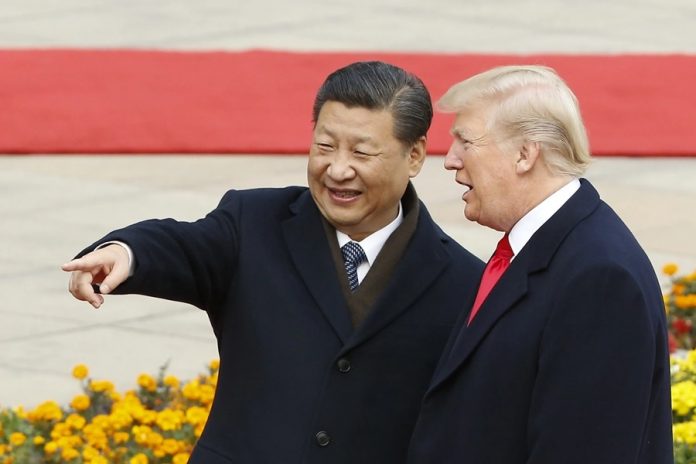
U.S. President Donald Trump on Friday accused China of breaching a newly negotiated deal to roll back trade barriers and tariffs on critical minerals — a development that now casts doubt over a fragile truce and clouds the prospects of restarting broader U.S.-China trade negotiations.

“China, perhaps not surprisingly to some, HAS TOTALLY VIOLATED ITS AGREEMENT WITH US. So much for being Mr. NICE GUY!” Trump wrote on Truth Social, referring to a mid-May deal struck in Geneva, Switzerland, where both countries agreed to ease triple-digit tariffs for 90 days while broader negotiations continued.

Trump said the agreement, which he described as a “fast deal,” was intended to de-escalate tensions and provide relief to China’s already struggling industrial base. He claimed his earlier tariffs — which reached as high as 145% on certain Chinese imports — were pushing China toward factory shutdowns and the threat of social unrest.

But now, Trump accuses Beijing of failing to honor the agreement, claiming China has not taken the steps it promised.

Rare Earths Licenses at the Heart of Dispute

While Trump did not offer specifics on the alleged breach, a U.S. official told Reuters that China has not followed through on commitments to issue export licenses for rare earth minerals — essential elements used in everything from semiconductors and electric vehicles to aerospace and weapons systems.

Under the Geneva deal, China was expected to remove countermeasures that limited the export of these minerals to U.S. companies, many of which rely on Chinese suppliers for core industrial and defense applications. But so far, those shipments have not resumed in a meaningful way.

“The Chinese are slow-rolling their compliance, which is completely unacceptable and it has to be addressed,” said Jamieson Greer, the U.S. Trade Representative, during an interview on CNBC. Greer did not outline how the U.S. plans to respond.

The Chinese government, meanwhile, pushed back against the accusation. Liu Pengyu, spokesperson for China’s embassy in Washington, said Beijing had maintained communications with U.S. officials and instead criticized Washington’s tightening of export rules.

“Recently, China has repeatedly raised concerns with the US regarding its abuse of export control measures in the semiconductor sector and other related practices,” Liu said. “China once again urges the US to immediately correct its erroneous actions, cease discriminatory restrictions against China and jointly uphold the consensus reached at the high-level talks in Geneva.”

U.S. Tightens Its Own Controls

Behind the scenes, Washington has also taken new steps that are likely aggravating Beijing. According to sources familiar with the matter, U.S. authorities have revoked some existing export licenses and ordered companies to stop shipping a range of goods to China without special permission.

The affected products reportedly include semiconductor design software, specialty chemicals, machine tools, and even aviation-related equipment. The new restrictions suggest that while the U.S. agreed to ease tariffs temporarily, it has continued to ratchet up other barriers — particularly those aimed at limiting China’s technological advancement.

Talks ‘Stalled’ as Supreme Court Decision Looms

U.S. Treasury Secretary Scott Bessent confirmed Thursday that trade talks with Beijing have hit a wall. Speaking on Fox News, Bessent said that discussions since the Geneva truce have “stalled” and that breaking the deadlock may require direct intervention from Trump and Chinese President Xi Jinping.

More than two weeks after the agreement, neither side appears willing to make the next move. And it remains unclear what Trump’s latest accusation will mean for the negotiation — whether it signals the collapse of the truce or a negotiating tactic designed to pressure Beijing.

Analysts say Beijing may now be calculating that legal developments in Washington could weaken Trump’s hand. Earlier this week, the U.S. Court of International Trade ruled that Trump’s sweeping global tariffs, including those on China, were invalid because he had overstepped his authority under a national emergency law used to justify them.

While an appeals court has temporarily stayed that ruling, allowing the tariffs to remain in place, the case is expected to reach the U.S. Supreme Court in the coming months. If the court upholds the lower court’s decision, it could strike down many of the tariffs Trump imposed during his presidency, undermining the legal basis for future action.

That possibility could be encouraging Beijing to wait — believing that a U.S. court, rather than Trump, may soon force the rollback of some tariffs.

Stock Markets React

U.S. stock indexes dipped Friday after Trump’s comments reignited fears of another trade flare-up. Investors had briefly cheered the Geneva deal, hoping it would lead to a broader reset in U.S.-China economic ties. But the deeper tensions — over industrial policy, technology access, and geopolitical rivalry — remain unresolved.

The Geneva agreement did little to address longstanding U.S. complaints about China’s state-led, export-driven economy or its massive subsidies for strategic industries. Trump’s tariffs, initially framed as a way to address those imbalances, now face legal and political headwinds — while negotiations appear rudderless.

Tesla Shares Rally 22% in May Despite Slumping Global Sales and Political Blowback

0

Tesla stock rebounded strongly in May, gaining more than 22% for the month, despite a string of discouraging sales data in two of its most important markets — China and Europe.

The rally comes at a moment when CEO Elon Musk has promised to refocus on his companies, scaling back his visible role in politics and government work.

The more than 22% surge in Tesla’s stock in May helped reverse some of the damage done earlier in the year. The company is still down about 14% year-to-date, making it one of the poorer performers among major U.S. tech companies. Apple, for instance, is down more than 19%, the worst of the so-called megacaps.

The recent bounce comes as Tesla shifts investor attention away from slumping global sales and toward its future in robotics and autonomous driving. However, the rally is also fueled by expectations that Trump’s return to power will help Tesla maintain a favorable regulatory and political environment — particularly on tariffs, EV credits, and AI policy.

Musk Steps Back From Government Role — But Not Entirely

May also marked a symbolic turning point for Musk’s political entanglements. Trump announced Friday that Musk’s time as a “special government employee” in charge of the Department of Government Efficiency (DOGE) had formally come to an end.

“This will be his last day, but not really, because he will, always, be with us, helping all the way,” Trump wrote on Truth Social. “Elon is terrific!”

The DOGE role was an informal White House post created for Musk early in Trump’s second term. Though largely ceremonial, it gave Musk direct access to senior federal officials and aligned him closely with the Trump administration’s economic agenda.

Speaking at the White House on Friday, Musk said he would no longer be spending significant time in government service but would remain on call for the president.

“I expect to remain a friend and an advisor, and certainly, if there’s anything the president wants me to do, I’m at the president’s service,” he said.

Musk said on a recent Tesla earnings call that his involvement with DOGE would be reduced to “a day or two per week” through the end of Trump’s term. He also confirmed that he plans to keep an office in the White House.

Sales in China and Europe Collapse

While the political winds in Washington may be shifting in Musk’s favor, Tesla’s business metrics continue to flash warning signs.

In Europe, Tesla’s car sales fell by more than 50% in April compared to a year earlier. In China, which has become a critical global market for electric vehicles, Tesla’s sales have declined by about 25% during the first eight weeks of the second quarter.

Analysts say the company is losing ground to more agile and aggressive competitors. In China, local giants like BYD have expanded their offerings and cut prices, eating into Tesla’s market share. In Europe, the company is now facing a potent mix of regulatory resistance and political backlash.

Protests and Political Fallout

Musk’s open support for Trump and recent endorsement of Germany’s far-right AfD party have triggered a public backlash, including organized protests at Tesla’s Gigafactory in Grünheide, Germany.

That political stance has alienated key segments of Tesla’s once-loyal customer base. What was once a brand associated with progressive innovation has, under Musk’s leadership, become polarizing.

Some U.S. consumers have turned away from Tesla over Musk’s increasingly combative public persona and political rhetoric.

Pension funds and institutional investors are growing impatient. A group of major pension fund managers recently sent a letter to Tesla’s board, urging directors to rein in Musk and require that he commit a minimum of 40 hours a week to the company. They described the current state of affairs as a “crisis” and cited a need for stronger corporate governance.

Tesla Shifts Focus to Robotaxis and AI

In an attempt to change the narrative, Tesla has been emphasizing its future in automation, robotics, and artificial intelligence. The company hopes to reignite excitement around its long-promised robotaxi service.

Bloomberg reported this week that Tesla is planning to launch the robotaxi ride-hailing service in Austin, Texas, on June 12 — although Tesla has not yet confirmed that date. Musk told CNBC’s David Faber in a recent interview that Tesla would start with a small fleet of Model Y Tesla vehicles equipped with the company’s newest, Unsupervised Full Self Driving hardware and software.

Musk has been promising investors a self-driving robotaxi since 2019, but the company has so far lagged behind Alphabet-owned Waymo, which recently passed 10 million paid, driverless rides in the U.S.

However, while investors appear encouraged by Musk’s pivot back to business, the path forward is still fraught with reputational and strategic challenges. Analysts warn that Tesla’s longer-term prospects depend less on stock performance and more on its ability to regain a customer base that has grown wary of Musk’s deepening political affiliations, especially his alignment with President Donald Trump and far-right political groups in Europe.

FTX Has Started Distribution of Over $5B In Stablecoins To Creditors Today

0

FTX began distributing over $5 billion in stablecoins to creditors today, May 30, 2025, as part of its second major repayment wave following its 2022 bankruptcy. This payout, facilitated through BitGo and Kraken, targets creditors with claims exceeding $50,000 who completed pre-distribution requirements by April 11, 2025. Recovery rates vary by creditor class: 72% for Class 5A (Dotcom Customer Entitlement Claims), 54% for Class 5B (U.S. Customer Entitlement Claims), 61% for Classes 6A and 6B (Unsecured and Digital Asset Loan Claims), and 120% for Class 7 (Convenience Claims under $50,000).

The distribution, representing nearly 2% of the total stablecoin supply, is expected to boost crypto market liquidity, with analysts like Miles Deutscher suggesting funds may flow into Bitcoin, Ethereum, and altcoins, potentially sparking a market rally. Funds should reach eligible creditors within 1-3 business days. The FTX distribution of over $5 billion in stablecoins to creditors has significant implications for both the crypto market and the affected creditors, with a clear divide in outcomes based on creditor class and market dynamics.

The release of $5 billion in stablecoins, equivalent to roughly 2% of the total stablecoin supply, is a massive liquidity event. Stablecoins like USDT and USDC are often used as on-ramps for crypto investments. Analysts, including Miles Deutscher, predict that a portion of these funds will flow into Bitcoin, Ethereum, and altcoins, potentially driving a market rally. Historical data from similar events, like the Mt. Gox distributions, suggests short-term volatility followed by bullish momentum if funds are reinvested.

The successful execution of this payout could bolster confidence in crypto bankruptcy resolutions, signaling that even major collapses can result in substantial recoveries. However, any delays or issues in distribution could reignite skepticism about centralized platforms. The influx of stablecoins could temporarily affect their pegs or trading volumes, particularly on exchanges like Kraken, which is facilitating the payout. Increased stablecoin circulation may also pressure issuers like Tether or Circle to manage supply adjustments.

The distribution highlights a stark divide in recovery rates among creditor classes. Class 5A (Dotcom Customer Entitlement Claims): Recover 72% of their claims, reflecting partial compensation for losses. Class 5B (U.S. Customer Entitlement Claims): Recover 54%, a lower rate due to regulatory or jurisdictional factors. Classes 6A and 6B (Unsecured and Digital Asset Loan Claims): Recover 61%, indicating moderate recovery for riskier claim types. Class 7 (Convenience Claims under $50,000): Recover an impressive 120%, including interest, favoring smaller claimants who opted for simplified settlements.

This divide underscores inequities in the bankruptcy process, where smaller creditors (Class 7) fare better than larger ones, potentially due to negotiated terms or asset valuation methodologies. Creditors receiving stablecoins face immediate tax implications, as the IRS may treat these distributions as taxable income based on the value at receipt. Large creditors (claims over $50,000) must also navigate converting stablecoins to fiat or other assets, potentially incurring fees or market slippage.

Only creditors who completed pre-distribution requirements by April 11, 2025, are eligible for this wave. Those who missed the deadline or have smaller claims may face delays, creating frustration and a sense of exclusion. Smaller creditors (Class 7) receive disproportionately higher recoveries (120%) compared to larger creditors (54%-72%), potentially exacerbating tensions between retail and institutional investors. Creditors with immediate access to funds via BitGo or Kraken can capitalize on market opportunities, while others awaiting future distributions may miss out on potential price surges.

U.S. customers (Class 5B) recover less than non-U.S. customers (Class 5A), reflecting regulatory disparities that penalize certain jurisdictions. Sophisticated creditors with legal or financial advisors likely navigated the claims process more effectively, securing better outcomes than less-informed retail investors. This payout, while a step toward resolving FTX’s collapse, doesn’t erase the broader fallout.

The 2022 crash, triggered by mismanagement and fraud under Sam Bankman-Fried, wiped out billions in customer funds. The recovery process, led by John J. Ray III, has been praised for salvaging $16 billion in assets, but the uneven distribution and ongoing legal battles (e.g., clawbacks from prior settlements) highlight persistent inequities.

The FTX distribution is a pivotal moment for the crypto market, likely spurring short-term bullishness, but it also underscores deep divides in creditor outcomes, shaped by claim size, jurisdiction, and access to resources. Creditors should monitor market conditions and consult tax professionals to navigate the aftermath.