DD
MM
YYYY

PAGES

DD
MM
YYYY

spot_img

PAGES

Home Blog Page 1247

In an Age Flooded with AI Content, Human Craft May Be the Edge That Wins — OpenAI’s Former VP of Marketing Says

0

As businesses around the world increasingly integrate artificial intelligence into nearly every facet of their operations, a growing number of industry leaders are calling for a return to the fundamentals: human judgment, taste, and craft.

Among them is Krithika Shankarraman, a former Vice President of Marketing at OpenAI and the first marketing hire at Stripe, who now serves as an Entrepreneur in Residence at venture capital firm Thrive Capital.

Speaking on a recent episode of Lenny’s Podcast, Shankarraman warned that in the era of AI saturation, success may hinge less on how widely artificial intelligence is used, and more on how thoughtfully it is applied by people.

“Taste is going to become a distinguishing factor in the age of AI because there’s going to be so much drivel that is generated by AI,” she said. “That power is at anyone’s fingertips.”

Shankarraman pointed out that AI tools have made it easier than ever to deploy, brand, and market a product. But that ease, she argued, has come with a flood of uninspired, indistinct content. The result is a noisy marketplace in which genuine quality is harder to spot — and more valuable than ever.

“The companies that are going to distinguish themselves are the ones that show their craft,” she said. “That they show their true understanding of the product, the true understanding of their customer, and connect the two in meaningful ways.”

For her, this means companies should avoid using AI as a substitute for human insight and creativity. Instead, AI should serve to augment and amplify what a skilled team is already doing — not replace it.

“To me, that is going to be a real differentiator for not only great marketers but great companies to stand out in the field,” she said.

Shankarraman emphasized that understanding the mechanics behind a product, from its design to its target audience, is essential. She warned that marketers who rely too heavily on generative AI without understanding core principles risk producing empty content that fails to connect with customers.

“What it means to market a product, what it means to show up as a fantastic operator, is in and of itself changing,” she said. “Understanding the underlying mechanics of what you’re trying to achieve is key.”

That line of thinking, she noted, also explains her ongoing support for foundational education in STEM (science, technology, engineering, and mathematics). A deep grasp of basic concepts, she argued, allows practitioners the freedom to apply or adapt technology like AI in effective and creative ways — rather than becoming bound to it.

“This is why I would still be a very firm believer in STEM education, is that you understand the fundamental concepts,” she explained. “And then you can have a choice and optionality in how you decide to apply those concepts, but the concepts themselves have to be there in the foundations.”

She also spoke passionately about the importance of cultivating a growth mindset — one that values learning for its own sake, not just for credentials or completion.

“Because being of that growth mindset, if you go to school just to earn the grades or to finish the coursework, it’s a very different mindset than if you go to school to learn those concepts and to understand how to apply them,” she said.

Still, even with an optimistic view of what AI can help people accomplish, Shankarraman expressed concerns about the direction in which some AI companies are heading. She warned against short-term thinking and competitive “one-upmanship” that emphasizes model performance over social responsibility.

“Long story short, what I’m trying to say is that all of these companies have to think in a much more long-term oriented fashion,” she said. “Because it’s not about a race of the best chatbot and the best outputs. It’s about, how does AI become a positive force for humanity?”

Her comments arrive at a time when major tech firms are fiercely competing to release more powerful AI models, often with little transparency about how those tools are trained, governed, or deployed. Many people have raised alarms over the ethics of large-scale data usage, misinformation risks, and the potential for biased or dangerous outputs.

Shankarraman did not dismiss the value of AI — far from it. She considers it a breakthrough tool. But she made clear that meaningful innovation will still depend on the human capacity to use these tools with clarity, taste, and purpose.

In a world increasingly shaped by artificial intelligence, her message is that it is not just about what AI can do — it’s about what people choose to do with it.
Nigeria Approves Dredging of Lekki Deep Seaport, Rekindling Debate Over Port Diversification and Congestion in Lagos

0

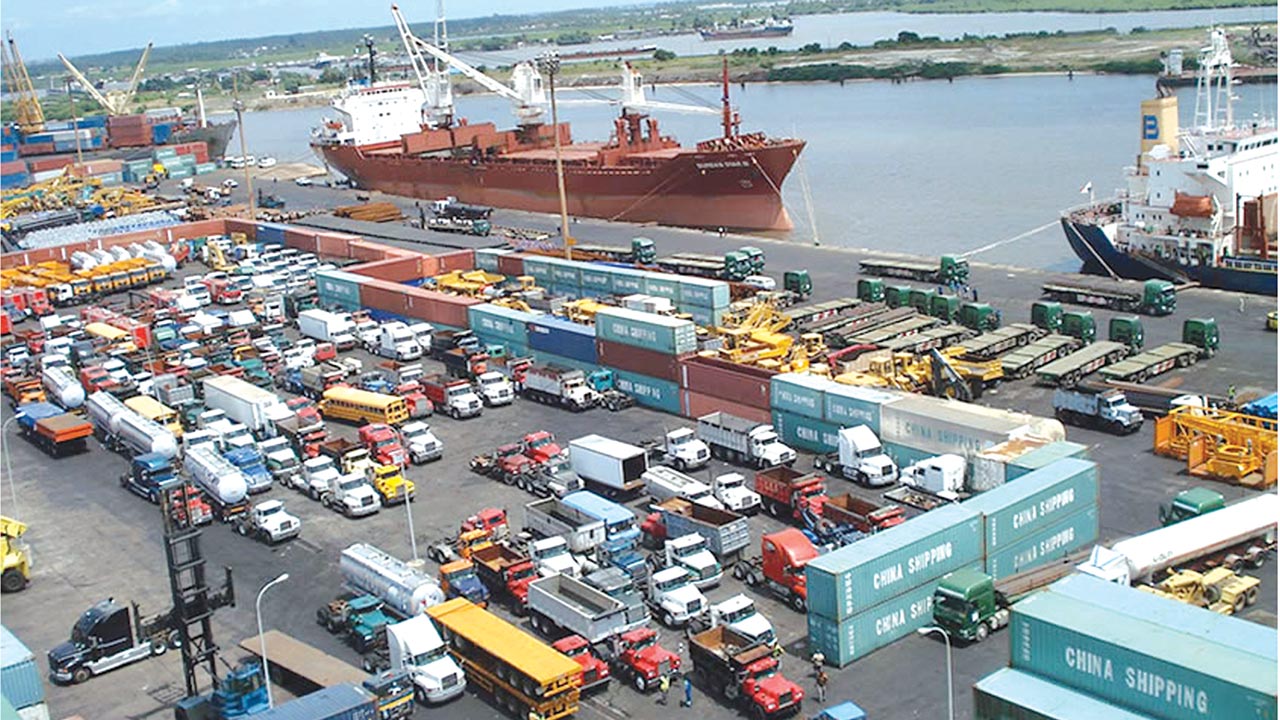
The Federal Government has approved the dredging of the Lekki Deep Seaport, a move aimed at boosting Nigeria’s maritime capacity and positioning the country to benefit from larger transshipment volumes across West Africa.

Managing Director of the Nigerian Ports Authority (NPA), Dr. Abubakar Dantsoho, announced the approval during an official visit to the facility over the weekend. According to Dantsoho, the federal government will deepen the port channel from its current 16.5 meters to 17 meters, with a long-term ambition of reaching 19 meters. The project will be executed in partnership with China Harbour Engineering Company (CHEC), following a series of consultations with stakeholders.

“The rise in throughput volume at Lekki Port is exciting to us,” Dantsoho said. “Lekki’s capacity to berth super post-Panamax vessels and deliver rapid cargo and vessel turnaround positions it as a game-changer for Nigeria’s export competitiveness, particularly for agro-allied products.”

He added that the Lekki Port’s distinctive features, including full automation and integrated cargo handling systems, will strengthen the country’s position under the African Continental Free Trade Area (AfCFTA). Dantsoho also revealed that the NPA had awarded a contract for a hydrographic survey of the channel, a prerequisite for the port’s navigation compliance with international maritime standards.

Since its commercial operations began in April 2023, the Lekki Deep Seaport, Nigeria’s largest, has been promoted as a transformative project. Designed to handle 6 million TEUs annually, the port is envisioned to reduce cargo pressure on Lagos’s overstretched Apapa and Tin Can ports. But for many industry observers, simply expanding Lekki does not solve the country’s deeper infrastructural imbalance.

Lagos-Centric Model Under Fire

But while the Nigerian Ports Authority (NPA) touts the approval as a milestone for economic competitiveness, the development has also reignited longstanding calls for the decentralization of Nigeria’s port infrastructure. This is a debate that continues to expose deep-rooted concerns about regional economic exclusion and Lagos-centric planning.

Economist Kelvin Emmanuel, in a note, said the persistent congestion in Lagos is a symptom of poor strategic planning and political manipulation of port development across the country.

“The congestion in [Lagos] cannot be solved until the government gets serious about allowing all the ports to operate freely,” Emmanuel said.

He noted that Nigeria’s eastern maritime corridor — home to ports like Onne, Calabar, Warri, and the long-stalled Ibaka Deep Sea Port in Akwa Ibom — has been neglected for years, even as Lagos’s logistical infrastructure continues to choke under rising cargo volumes.

“Lies they tell Nigerians that Lagos is the best place to site port operations in Nigeria. And that all commerce starts and ends in Lagos — wicked lies! If you don’t diversify port operations to the eastern maritime corridor and build vertically integrated standard gauge rail lines, you’ll not see inclusive growth,” Emmanuel added.

According to him, the dysfunctional state of port infrastructure outside Lagos is not accidental.

“I have made my findings and it’s Abuja that is holding the Ibaka Deep Sea Port in Akwa Ibom from moving forward,” he said. “You cannot claim to be progressive and restrict maritime operations to the Western Flank. It’s dishonest.”

At the heart of the debate is the call for a more balanced distribution of Nigeria’s maritime economy. Emmanuel argued that political interests have locked out states in the South-East and North-East from benefiting fully from Nigeria’s international trade activities.

“Decentralize port operations to the eastern maritime corridor so the South East and North East can benefit,” he said. “Remove the port categorization of Onne as E&P [Exploration & Production], so the fees for non-oil and gas cargoes will enable it to compete with Lagos. Governance that’s not structurally fair to all is dishonest.”

The Onne Port in Rivers State, for instance, is currently designated primarily for oil and gas-related cargoes — a classification that raises costs for non-oil trade and limits the port’s competitiveness. Some say this categorization must be scrapped if Onne and similar ports are to play a meaningful role in decongesting Lagos.

The Federal Ministry of Marine and Blue Economy, led by Minister Adegboyega Oyetola, has in recent months pushed to modernize Nigerian ports, with a focus on full automation and the eventual implementation of the National Single Window (NSW) for port logistics. But experts say these reforms must go beyond infrastructure upgrades and embrace a structural shift in how the country approaches port distribution.

With Nigeria aiming to become a regional maritime hub under AfCFTA, the dredging approval for Lekki Deep Seaport has once again reignited the pressure on the federal government to address port imbalance – not just as a policy matter – but as a structural injustice that hinders economic inclusion across the federation.

Tekedia Capital Welcomes Lingo.dev

0

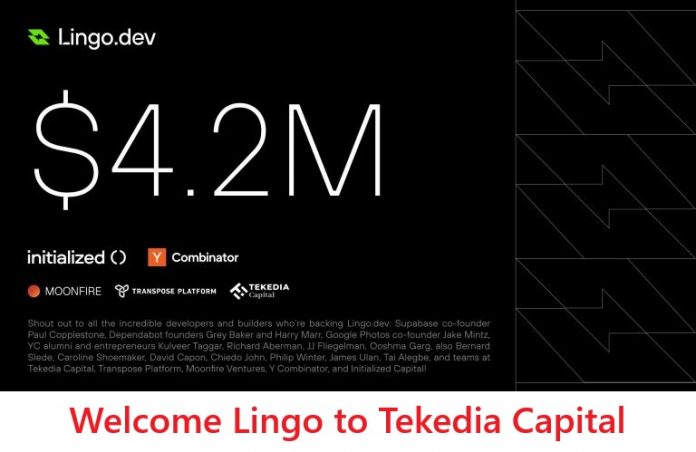
Tekedia Capital congratulates the Lingo.dev team for a $4.2M round. Lingo is building the world’s finest AI localization engine, and the mission is clear: “Overall, the [goal] with Lingo.dev is to eliminate friction from localization so thoroughly, that it becomes an infrastructure layer and natural part of the tech stack…Similar to how Stripe eliminated friction from online payments so effectively that it became a core developer toolkit for payments.”

Welcome to Tekedia Capital as we celebrate your successful fundraise which we participated in. For more on Lingo, go here lingo.dev ; for more on Tekedia Capital, visit capital.tekedia.com .

Please visit Lingo and begin to use the world’s best AI localization engine which is being used by many leading companies, including Cal.

“Before Lingo.dev, we were constantly behind on translations, even for our top languages. Now, our engineers don’t even think about localization – they just build features, and translations happen automatically, in 36 languages.” – Keith Williams, Head of Engineering at Cal.com

Tinubu Seeks $21.5bn Loan, N758bn Bond to Fund Projects, Settle Pension Arrears Amid Surging Debt and Rising Concerns Over Borrowing for Consumption

0

President Bola Tinubu has formally asked the National Assembly to approve a new wave of borrowing—seeking $21.5 billion in external loans, a N758 billion bond issuance, and an additional $2 billion in domestic borrowing—to finance critical infrastructure and offset long-standing pension arrears.

The request, read during Tuesday’s Senate plenary, has been referred to the Senate Committee on Local and Foreign Debts, which is expected to report back within two weeks.

In his letter to the legislature, President Tinubu explained that the proposed borrowings were necessary to finance key sectors of the economy, including infrastructure, health, education, and water supply. He further requested legislative approval to issue bonds in the domestic market worth N757.9 billion to settle outstanding pension liabilities under the Contributory Pension Scheme.

The president said the request is to enable the Federal Government to meet its obligations to retired public servants and to support the implementation of major infrastructure projects that will drive growth and job creation.

This is not the first such appeal by the Tinubu administration. A separate request was also sent to the House of Representatives seeking approval for the revised 2025–2026 external borrowing plan. Under this plan, the government is looking to secure $21.5 billion, €2.2 billion, ¥15 billion in Japanese yen, and a €65 billion grant. The House Speaker, Tajudeen Abbas, read the letter on the floor and referred it to the House Committee on Aids, Loans, and Debt Management for further review.

Mounting Debt Profile and Soaring Debt Servicing

The fresh requests come at a time Nigeria’s public debt burden is rising rapidly, triggering alarm from economists, financial watchdogs, and ordinary citizens.

According to the data released by the Debt Management Office (DMO), Nigeria’s total public debt as of December 31, 2024, stood at N144.7 trillion (approximately $94.2 billion). Of this amount, N74.4 trillion is domestic debt, while N70.3 trillion is external.

Even more worrisome is the cost of servicing the debt. In 2023, the country spent N7.8 trillion on debt servicing—more than double the N3.52 trillion spent in 2022. That figure soared to N13.12 trillion in 2024, reflecting a 68 percent rise within a single year.

These figures show that Nigeria is increasingly spending more to service existing loans than on capital projects. It also signals a deeper structural weakness: the country is not generating enough revenue to meet its obligations. Analysts warn that such a trend is unsustainable and could crowd out spending on critical sectors like education, healthcare, and infrastructure.

Borrowing for Consumption, Another Concern

Beyond the sheer size of Nigeria’s debt, another growing concern is how the borrowed funds are being utilized. Many have long pointed out that Nigeria borrows heavily to fund recurrent expenditure or service arrears, rather than to build capital projects that can stimulate the economy and generate returns.

This concern is not unfounded. The Tinubu administration’s new borrowing request includes a N758 billion domestic bond specifically earmarked for settling pension liabilities—a noble gesture on its own but one that falls under consumption, not investment.

A financial expert, Mr. Babatunde Salami, has cautioned both the federal and state governments against borrowing from the capital market for consumption. In an interview with VON, Salami said government at all levels should only borrow for capital projects whose capital returns would pay for the borrowed fund.

While President Tinubu’s request has now been submitted to the appropriate legislative committees, it is likely to be approved, though, several lawmakers have previously expressed concern over the country’s borrowing spree, especially without a clear repayment plan or project-specific transparency.

Senator Ali Ndume (APC, Borno South) earlier this year, expressed concern that the government is borrowing for consumption.

Ndume said, “Let me say that I am not against borrowing, America, Japan, China and other big countries do borrow.

“They (Nigerian government) borrow for fiscal, tangible and accountable projects, which they pay back over time. But my worry is what they borrow for.”

If approved, the proposed borrowings will push Nigeria’s total public debt beyond the N150 trillion mark. And with debt servicing costs already consuming a significant chunk of government revenue, concerns remain over how the administration intends to manage fiscal stability in the long term.

Web3 ai’s AI Utility Puts It Ahead of TRUMP Coin Price & Cardano Price Potential in the Most Popular Cryptocurrency Race

0

TRUMP coin price, Cardano (ADA) price potential, most popular cryptocurrency

While TRUMP and Cardano continue to hold major visibility in 2025 discussions, investor focus is beginning to move in a different direction. The TRUMP coin price still reacts strongly to event-driven hype, and the Cardano (ADA) price potential appears to be declining as on-chain metrics lose momentum. Though both assets remain prominent in media coverage, the shift in sentiment suggests utility and functionality are now leading factors for investor interest, and that’s where Web3 ai is quickly gaining recognition.

Currently in Stage 06 of its presale at $0.000383, Web3 ai has secured more than $5.7 million in funding. With a launch price projection of $0.005242, early buyers are eyeing a possible 1,747% ROI. More than just another trending token, Web3 ai is positioning itself as a serious candidate for the most popular cryptocurrency, thanks to its emphasis on real-world AI functionality and future scalability.

TRUMP Coin (TRUMP): Volatility Without a Clear Roadmap

The TRUMP coin price has shown frequent spikes tied to media cycles and politically charged events. Analysts report that short-term trading strategies dominate the market, as many look to enter and exit based on upcoming high-visibility news. This approach has led to repeated patterns in 2025, brief rallies, followed by fast corrections.

However, the TRUMP coin price lacks any underlying infrastructure. There’s no official platform or product roadmap supporting its value. With no sustained development or long-term planning, momentum continues to depend entirely on headlines. As a result, profit-taking remains common, and many longer-term investors are starting to question its viability.

Even as one of the most popular cryptocurrency names in discussions, TRUMP remains limited in scope. It captures attention but offers little depth. For investors seeking structured growth and real fundamentals, it is no longer the top choice.

Cardano (ADA): Declining Usage Impacts Price Outlook

The Cardano (ADA) price potential continues to weaken as user activity on the network falls. On-chain data shows drops in both transaction volume and participation, causing ADA to hover around support zones without strong buying interest. Cardano’s mission of providing a secure and decentralized platform is still intact, but the pace of technical progress appears to be slowing.

In the past, ADA gained from expectations surrounding staking, updates, and new project rollouts. But in the current market, faster-moving platforms focused on utility are capturing attention. As these alternatives grow, Cardano is losing ground. Even its dedicated base of holders is starting to look toward newer options with faster innovation cycles.

Although Cardano still holds weight in the conversation around the most popular cryptocurrency, it’s clear that many investors are exploring AI-powered platforms and early-stage entries like Web3 ai.

Web3 ai: A Utility-Focused Approach With AI and Decentralized Growth

Unlike TRUMP and Cardano, Web3 ai is focused on functionality and infrastructure rather than narrative or legacy status. It’s a platform built to support investors with AI-powered tools and predictive analytics. Where the TRUMP coin price thrives on attention and the Cardano (ADA) price potential leans on its past, Web3 ai is winning over support by looking ahead.

Part of the project’s vision includes developing new tools like NFT valuation engines, chatbot support, and SDKs that developers can use to plug AI into other crypto services. This creates room for scalable utility across Web3 products and offers flexibility for users and institutions alike.

Web3 ai is also planning integrations with exchanges, wallets, and DeFi protocols so its AI tools can be used directly through third-party platforms. This expands the $WAI token’s role beyond just internal utility, embedding it into everyday crypto workflows.

The token, priced at $0.000383 in its AI crypto presale, has a projected listing price of $0.005242. That puts early participants in position for a 1,747% ROI. With more than $5.7 million raised already, investor confidence is clearly building as the project differentiates itself from short-term or brand-driven competitors.

Concluding Thoughts

The TRUMP coin price might continue to spike around headline events, and the Cardano (ADA) price potential could rebound if its ecosystem sees progress. But right now, both rely heavily on either sentiment or legacy appeal. In contrast, Web3 ai is building a decentralized platform with clear use cases, structured governance, and a plan for AI integration.

At just $0.000383, with more than $5.7 million already raised and a projected 1,747% ROI, Web3 ai is doing more than following trends, it’s preparing to shape them. With planned tools for NFTs, SDKs, and cross-platform integrations, this project is emerging not just as another token but as a contender for the most popular cryptocurrency of 2025. Its rise is grounded in actual utility, not hype, and that could make all the difference.


Join Web3 ai Now:

Website: http://web3ai.com/

Telegram: https://t.me/Web3Ai_Token

X: https://x.com/Web3Ai_Token

Instagram: https://www.instagram.com/web3ai_token