DD
MM
YYYY

PAGES

DD
MM
YYYY

spot_img

PAGES

Home Blog Page 1248

Alphabet CEO Sundar Pichai Warns DOJ’s Remedies Will Result in ‘De Facto Divestiture’, Stripping Google of Its Core Business

0

In a striking turn at the federal courthouse in Washington, Alphabet CEO Sundar Pichai pushed back hard against what he called an “extraordinary” and “so far-reaching” demand by the U.S. government that could force Google to share its crown jewel: the data that powers its search engine.

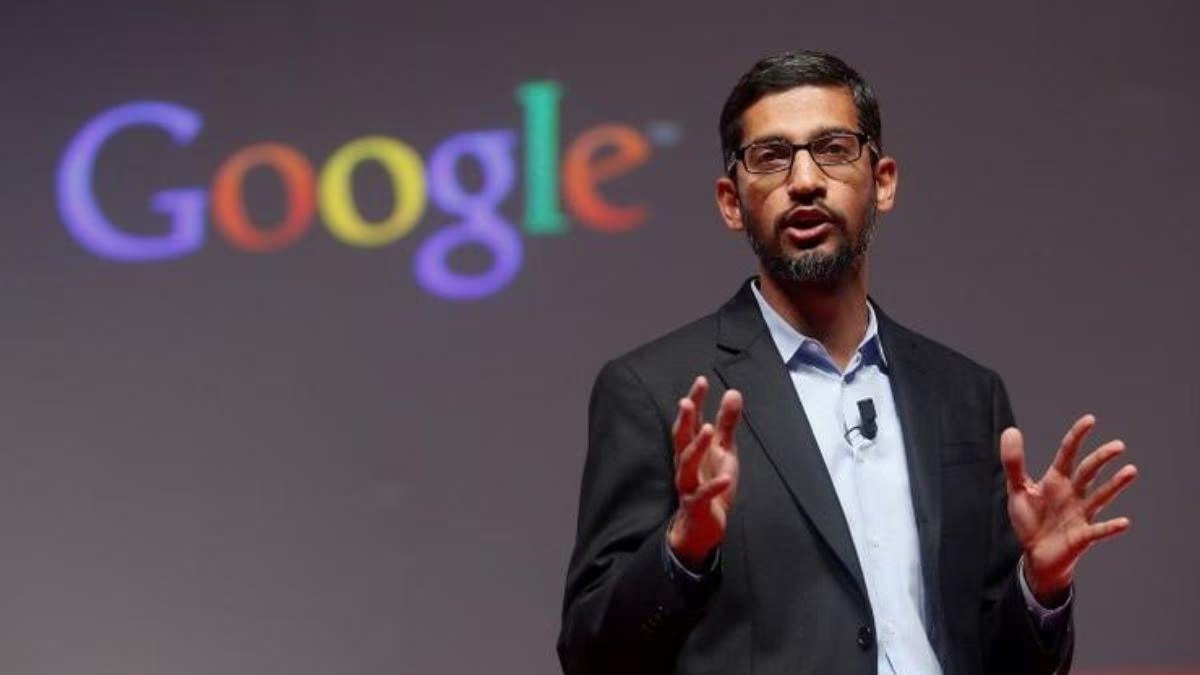
Standing in a crisp dark suit on Wednesday, the 52-year-old tech executive warned that the Justice Department’s proposed remedies, aimed at dismantling Google’s alleged monopoly, would essentially amount to carving out the very core of the company.

“It would be a de facto divestiture,” Pichai said from the witness stand, contending that forcing Google to license its search data, even to competitors, would be akin to giving away decades of innovation and billions of dollars of investment at marginal cost.

That moment underscored just how high the stakes have become in the most consequential antitrust case the tech industry has seen in decades. Judge Amit Mehta has already ruled that Google illegally maintained its dominance in the search market. Now comes the hard part: deciding what to do about it.

The Justice Department, which filed its initial case in 2020, isn’t just looking for a slap on the wrist. It wants to unravel the mechanisms that have kept Google at the top for so long — exclusive contracts with phone makers like Apple and Samsung, the tight integration of Google’s search engine with its Chrome browser, and what it claims is a self-reinforcing loop where Google’s AI tools and search feed each other in a cycle that shuts out rivals.

Pichai, who has been at Google since 2004 and once oversaw the very browser the government now wants to be split off, told the court that dismantling such integration would deeply harm the company’s ability to fund future innovation. And nowhere, he said, is that innovation more important than in artificial intelligence.

“AI is one of the most profound technologies humans will ever work on,” he said, emphasizing Google’s $49 billion investment in the space. When he took over as CEO of Alphabet in 2019, Pichai said he pushed the company to become “AI first” — not just for search, but across all its products, reflecting a broader ambition: to evolve from delivering information to helping users take action.

However, the Justice Department argues that the very strategy has turned Google’s dominance in one area into a springboard for monopoly in another. Its lawyers say AI tools like Gemini benefit from Google’s search data, a trove no rival can match, and in turn funnel more users back into Google’s search ecosystem, creating what it called an “unbreakable feedback loop.”

That closed loop, the government contends, is especially dangerous now as generative AI takes center stage. OpenAI’s Nick Turley, who testified for the government earlier in the trial, said that after ChatGPT became a global phenomenon, his team realized they needed a search index to make their product more robust. But building one from scratch was too expensive. They approached Google, Turley testified, and got turned away.

That, in the Justice Department’s eyes, is the problem.

So they want a fix that cuts deeper than default settings and marketing agreements. They’re asking Judge Mehta to force Google to license its search data to competitors — a demand that Pichai portrayed as nothing less than a gutting of the company’s intellectual property.

However, government lawyers argue that without access to Google’s index, essentially a massive, constantly updated map of the internet — no AI model or rival search engine stands a real chance at competing. They point out that even when OpenAI sought workarounds, the imbalance in scale and resources remained insurmountable.

Still, Google’s defense hinges on the argument that competition exists and thrives, even in this landscape. Its lawyers argue that Meta’s Llama and OpenAI’s ChatGPT have leapfrogged Gemini in popularity. Pichai himself acknowledged as much on the stand, saying that while Google believes Gemini is a leading model, a “big gap” still exists between it and ChatGPT.

In court, the underlying message from Google has remained consistent: forcing the company to hand over the data that made it dominant would not only stifle innovation but also harm consumers who rely on its services every day.

The company’s critics — and there are many — see things differently. They say Google’s grip on search is precisely what has slowed innovation, blocked startups from flourishing and given the company unchecked power over how information is accessed globally.

But as the trial enters its final phase, with Google calling more executives and outside experts to its defense, including representatives from Mozilla and Apple, the big questions remain unresolved: Can a monopoly be undone without breaking the product itself? And what would the digital world look like if it were?

The court expects closing arguments by the end of May, and a ruling by August. Google, for its part, has indicated it will appeal — a sign that, whatever Judge Mehta rules, this legal showdown is far from over.
Tesla Board Denies Search for A New CEO Amid Poor Performance Buoyed by Elon Musk’s Politics

0

Tesla has dismissed reports that its board is actively seeking a replacement for CEO Elon Musk, calling the claims “absolutely false” even as the electric vehicle giant faces its sharpest decline in performance and investor confidence in years.

The company’s denial followed a Wall Street Journal report on Wednesday that claimed board members had approached executive search firms to begin scouting potential candidates to succeed Musk. The report, citing people familiar with the discussions, sent shares tumbling by as much as 3% in after-hours trading on platforms like Robinhood before regaining some ground.

Robyn Denholm, chair of Tesla’s board, pushed back strongly against the report, writing on social media platform X: “Earlier today, there was a media report erroneously claiming that the Tesla Board had contacted recruitment firms to initiate a CEO search at the company. This is absolutely false (and this was communicated to the media before the report was published). The CEO of Tesla is Elon Musk and the Board is highly confident in his ability to continue executing on the exciting growth plan ahead.”

Despite the denial, industry analysts say the report may have touched a nerve, reflecting mounting frustration from shareholders after a woeful start to 2025 that spilled over from last year. Tesla has seen its market value slashed by more than 30% since January, following dismal earnings, production slowdowns, and persistent concerns that Musk’s growing political involvement is undermining the company’s brand and alienating customers globally.

In the first quarter of 2025, Tesla posted a 9% drop in total revenue to $19.34 billion, far below the $21.11 billion expected by analysts, according to LSEG data. Automotive revenue fell 20% year-on-year to $14 billion, due to a combination of lower average selling prices, incentives, and temporary factory upgrades that interrupted Model Y production.

Net income collapsed 71% from the year before, plunging from $1.39 billion to just $409 million. Profit per share fell to 12 cents, down from 41 cents a year ago.

This steep decline has rattled investors, many of whom once believed Tesla could weather temporary dips in performance. Now, some point to Musk’s political entanglements, particularly his public alignment with Donald Trump, as a key factor dragging on the company’s value.

Musk’s political leanings have drawn increasing scrutiny. He was a cheerleader of the Trump campaign and was subsequently appointed to lead the Department of Government Efficiency (DOGE), which aims to streamline federal agencies’ spending and cut waste.

Although Musk said he would only spend “a day or two per week” on the project and later confirmed that he had stepped back from it, the damage may already have been done. His involvement in overt political activism, especially in a sharply divided global market, has risked alienating Tesla’s progressive consumer base, particularly in regions like California, Western Europe, and parts of Asia, where environmental and social concerns strongly influence EV adoption.

Analysts: Denial Is Not the End of the Story

Despite the board’s public defense of Musk, some analysts interpret the episode as a veiled message — a “warning shot” to the billionaire CEO that his position, while secure for now, is no longer untouchable.

Dan Ives of Wedbush Securities, a long-time Tesla bull, said the Wall Street Journal story, and the board’s quick rebuttal, reflect real tensions that have been brewing behind closed doors.

“On the WSJ/Musk article: While this was a very tense situation, we believe Musk clearly did the right thing [resigning from DOGE], and we believe Musk will remain CEO for at least five years at Tesla,” Ives said. “We would be surprised if the Board was still heading down this path. The Board did a warning shot.”

Others believe that while Musk’s recent actions have undoubtedly tested investor patience, there is still no clear successor with the vision, control, or charisma to replace him.

As Tesla struggles to regain its footing in a rapidly evolving EV industry, the leadership conversation is likely far from over. Competition is heating up from both legacy automakers and new entrants, and geopolitical tensions continue to complicate Tesla’s international growth strategy.

Analysts note that Musk’s ability to refocus on core operations while avoiding further political controversy will be critical in determining whether the company can rebound or continue to stumble.

Waymo and Toyota Team Up to Explore Self-Driving Tech for Personal Cars — Is Tesla Facing a New Threat?

0

Alphabet-owned Waymo and Japanese auto giant Toyota have entered into a preliminary partnership to explore a new frontier in autonomous driving: personally owned self-driving vehicles.

The alliance marks a potential strategic pivot away from the robotaxi-only playbook, hinting at a future where private consumers may soon own cars embedded with Waymo’s advanced driverless technology.

But beyond the immediate tech implications, the announcement has ignited debate on Wall Street and in the auto-tech sector, with some analysts now openly asking: Does Tesla finally have a real threat in the race for autonomous dominance?

Announced Tuesday, the collaboration between Waymo and Toyota aims to “leverage Waymo’s autonomous technology and Toyota’s vehicle expertise to enhance next-generation personally owned vehicles,” according to a joint statement. Though early in its formulation, the partnership hints at Toyota vehicles potentially being integrated into Waymo’s growing ride-hailing fleet, which has already been rolled out in Phoenix, San Francisco, Los Angeles, and most recently Austin.

Waymo’s co-CEO Tekedra Mawakana said the partnership could accelerate both companies’ ambitions in next-gen mobility. The idea isn’t just to fine-tune driver-assistance systems, but to potentially create fully autonomous vehicles that consumers can own — a concept once thought to be years away.

Analysts Divided: Is This Tesla’s Competition?

The announcement has not gone unnoticed on Wall Street, where opinions on its significance diverge sharply. Morgan Stanley, in a note to investors, said the Waymo–Toyota tie-up is a “major milestone” and represents “legit competition” for Tesla, which has long dominated the narrative around autonomous driving. The firm sees the partnership as a strategic alignment that brings together Google’s world-leading AI and mapping infrastructure with Toyota’s production scale and reliability.

But not everyone is buying into the buzz. Dan Ives, a tech analyst with Wedbush Securities and a long-time Tesla bull, downplayed the significance of the announcement.

“I disagree that the Waymo/Toyota is a groundbreaking deal and a threat to Tesla,” Ives said. “Tesla will own the autonomous market in my view, and no one can compete with their scale and scope. It starts in Austin in June, then the autonomous journey begins. Key chapter of growth.”

Tesla CEO Elon Musk has also been characteristically dismissive, suggesting in a recent earnings call that Waymo’s robotaxis are too expensive to be produced at scale, and reaffirming Tesla’s commitment to launching a fully autonomous ride-hailing service using its Model Y vehicles with the new “unsupervised” Full Self-Driving (FSD) software starting June in Austin.

Waymo Has the Lead — At Least for Now

However, by several measures, Waymo already has the upper hand when it comes to real-world deployment. The company is now delivering over 250,000 paid robotaxi rides per week, up from 200,000 in February. Its Waymo One service is active in four major metro areas — including Phoenix, San Francisco, Los Angeles, and Austin — with no human driver behind the wheel.

By contrast, Tesla’s so-called Full Self-Driving software, despite its name, still requires driver supervision and has yet to be validated as safe for fully autonomous operation. Regulatory agencies in the U.S. have investigated multiple incidents involving Tesla’s FSD and Autopilot features, further slowing Tesla’s path toward regulatory approval for a commercial driverless ride-hailing service.

Even Alphabet CEO Sundar Pichai acknowledged last week during Q1 earnings that Waymo has not finalized its long-term business model but emphasized the “optionality around personal ownership” as a promising revenue path. The Waymo–Toyota partnership appears to be a concrete step in that direction — potentially combining the tech know-how of Silicon Valley with the production might of Japan’s top automaker.

Not Waymo’s First Partnership — But Possibly the Most Significant

Waymo has previously collaborated with automakers including Jaguar Land Rover, Stellantis, Mercedes-Benz, Hyundai, and China’s Geely, often resulting in vehicles tailored for Waymo’s testing or ride-hailing fleets. However, those efforts largely remained limited in scale.

This Toyota deal may be different. Toyota is not only the world’s largest automaker by sales, but also a leader in hybrid and electrification platforms — a crucial advantage for developing energy-efficient autonomous systems. And unlike smaller OEMs, Toyota has the capacity to scale production globally if the partnership matures beyond testing.

Waymo said its collaboration with Toyota would not interfere with existing partnerships involving Hyundai and Geely for its Waymo One service. But industry insiders note that this tie-up could eventually open the door to mass-market personal AVs — a holy grail the industry has long chased but never achieved.

A Broader Shift in Industry Focus

Waymo and Toyota’s announcement also echoes a broader shift across the auto industry. Last year, General Motors paused its Cruise robotaxi operations after a series of safety concerns, refocusing instead on building self-driving systems for personal-use vehicles. Ford and Volkswagen similarly scaled back their investments in Argo AI, citing the difficulty of commercializing robotaxis at scale.

Meanwhile, Tesla remains an outlier, pursuing a vertically integrated approach and relying on camera-based systems, rather than the lidar and radar technologies used by Waymo and others. Musk has dismissed lidar as “unnecessary,” though Tesla’s software hasn’t proven itself in complex urban driving environments without human intervention.

It’s still unclear whether the Waymo–Toyota partnership will yield a commercially available autonomous personal vehicle. But if it does, it would mark a seismic shift — both in consumer mobility and in Tesla’s grip on the autonomous narrative.

Zenith Bank Posts N311.8 Billion Q1 Profit, Rides on Record Interest Income

0

Zenith Bank Plc, one of Nigeria’s largest lenders by assets, reported a record post-tax profit of N311.83 billion for the first quarter of 2025, a strong 20.7 percent year-on-year growth that cements its status as one of the country’s most profitable banks.

The performance was largely driven by a sharp rise in interest income, which hit N837.6 billion, the highest quarterly figure in the bank’s history.

The bank’s performance reflects a wider trend across Nigeria’s banking industry, where lenders are extending last year’s earnings momentum into 2025, thanks to sustained high interest rates, rising government borrowing, and improved asset quality.

Zenith’s interest income of N837.64 billion is a sharp 71.46 percent surge from the N488.7 billion posted in Q1 2024. This impressive growth in interest earnings, the money the bank makes from lending and investments in securities, powered the bank’s bottom line and accounted for nearly 90 percent of its gross earnings of N949.86 billion.

Zenith is not the only bank recording the massive growth. Other Tier-1 banks, including Access Holdings and GTCO, are also reporting double-digit profit growth in the first three months of 2025, driven largely by similar dynamics: strong loan expansion, bumper treasury bill investments, and rising customer deposits.

Zenith’s pre-tax profit rose 9.56 percent year-on-year to N350.82 billion, while its net interest income, which strips out the cost of funds, grew by a staggering 92.9 percent to N591.19 billion. This came despite a notable increase in interest expense, which climbed 35.34 percent to N246.45 billion, a reflection of the higher rates paid to attract and retain customer deposits.

Over 70 percent of interest expenses came from deposit liabilities, a consequence of the bank’s aggressive deposit mobilization in a high-rate environment. Customer deposits jumped by 35.14 percent year-on-year to N22.68 trillion, a boost of nearly N5.9 trillion in just three months.

However, even with higher funding costs, Zenith maintained robust margins. The bank’s net interest margin was supported by the efficient deployment of assets, with loans and advances to customers increasing by 16.19 percent to N10.05 trillion. Despite the rapid credit growth, impairment charges fell by 27.81 percent to N35.95 billion, pointing to an improvement in loan quality or stricter lending standards.

The balance sheet also swelled, with total assets climbing to N32.41 trillion, a 33.5 percent increase from Q1 2024. The expansion was largely driven by growth in deposits and increased investments in fixed-income securities, particularly Nigerian Treasury Bills, which Zenith ramped up by N2.68 trillion in the quarter. These instruments delivered a windfall — income from treasury bills alone jumped 113.24 percent to N328.8 billion, making up 39.23 percent of total interest income.

Zenith also earned N47.87 billion from cash balances placed with other banks, an uptick of 41 percent, though this remained the smallest of its three major interest income contributors.

In terms of non-interest income, Zenith posted only marginal gains. Overall, this segment rose just 0.98 percent year-on-year to N78.98 billion. Notably, electronic banking income dropped by 19 percent to N16.17 billion, likely due to changes in fee structures or reduced transaction volumes. But account maintenance charges rose 18.74 percent to N20.06 billion, partially offsetting the decline.

One notable outlier in the performance report is the drop in earnings per share (EPS), which fell by 7.66 percent to N7.59. The drop appears counterintuitive given the bank’s improved profitability, and is likely linked to the bank’s capital raise in late 2024 that increased the number of outstanding shares — a move aimed at bolstering its capital base amid planned expansion.

Also worth mentioning is the sharp rise in restricted deposits held with the Central Bank of Nigeria (CBN), which jumped by N2.24 trillion. This reflects the impact of the Cash Reserve Ratio (CRR) policy — a monetary tightening tool by the CBN that compels banks to leave a portion of their deposits with the regulator, limiting how much they can lend or invest.

Nonetheless, the bank retained strong liquidity. Cash and cash equivalents stood at N9.54 trillion, a 16.89 percent increase year-on-year.

Zenith’s Q1 performance continues a trend first established in 2023 when Nigerian banks began reporting windfall profits as interest rates soared and Treasury yields became more attractive. The Central Bank’s tighter monetary stance aimed at taming inflation and supporting the naira has worked to the advantage of lenders, even as other sectors grapple with high borrowing costs.

Analysts expect Zenith and its peers to continue riding this wave in the short to medium term, especially if the policy environment remains restrictive. However, they expect the longer-term outlook to depend on how banks manage credit risk as they expand their loan books amid a fragile economy.

Meta’s Metaverse Dreams Burn Another $4.2bn Amid Mounting Pressure and New Tariffs

0

Meta’s foray into the metaverse is proving to be an increasingly expensive gamble. In its first-quarter earnings report released Wednesday, the company revealed that Reality Labs, the unit spearheading CEO Mark Zuckerberg’s vision of immersive digital worlds, posted an operating loss of $4.2 billion.

That’s a staggering burn rate for a business division that brought in just $412 million in revenue during the same period.

The numbers, while slightly better than Wall Street’s forecasts – analysts had anticipated a loss of $4.6 billion on revenue of $492.7 million — still underscore the long and costly road ahead for Meta as it tries to pioneer a new frontier in computing through virtual and augmented reality.

Reality Labs is the division behind the Quest VR headsets and the Ray-Ban Meta Smart Glasses, key pieces of Zuckerberg’s blueprint for a mixed-reality future where people work, play, and interact through immersive digital platforms. But so far, investors have seen little beyond losses. Since the company pivoted heavily toward the metaverse in late 2020, even rebranding from Facebook to Meta in 2021, Reality Labs has hemorrhaged more than $60 billion.

A Skeptical Wall Street Watches Closely

That sustained spending has raised eyebrows across Wall Street. While Meta’s core advertising business continues to perform well, buoyed by a rebound in digital ad markets and growing traction with AI tools that help drive engagement, its heavy investment in the metaverse remains a sore spot.

Zuckerberg has insisted that building the next computing platform will take time, patience, and billions in upfront capital. But as Reality Labs racks up quarterly losses north of $4 billion, the runway for such a vision appears increasingly narrow, especially in a macroeconomic environment where costs are rising and regulatory threats are mounting.

Trump Tariffs Add Fresh Headwinds

Those costs are set to rise further. President Donald Trump’s recent imposition of sweeping tariffs on Chinese-made electronics, including components used in VR and AR devices, is expected to pressure Meta’s already stretched hardware margins. While the company hasn’t disclosed exactly how much of its supply chain is China-dependent, analysts warn the tariffs could result in significantly higher production costs for the Quest headset line and the Ray-Ban smart glasses.

That added burden may force Meta to either absorb the cost increases, deepening its losses or pass them on to consumers — a move that could dampen demand in a market already struggling to go mainstream.

Layoffs Hit Oculus Studios

Meta is also quietly trimming its metaverse ambitions in other ways. Last week, the company confirmed layoffs within its Oculus Studios unit — the team tasked with creating first-party content and games for its VR platforms. While the number of affected employees remains undisclosed, the move adds to a growing list of cost-cutting measures inside Reality Labs.

“Some teams within Oculus Studios are undergoing shifts in structure and roles that have impacted team size,” a Meta spokesperson said in a statement. “These changes are meant to help Studios work more efficiently on future mixed reality experiences for our growing audience, while still delivering great content for people today.”

The cuts follow a broader trend of tech companies scaling back moonshot projects and headcount as they confront tighter capital markets and investor pressure for profitability. For Meta, which has laid off tens of thousands of workers over the past two years in a bid to “flatten” its structure, Reality Labs remains the largest and most conspicuous money sink.

Still Betting Big on a Future Few Can See

Despite the financial and political headwinds, Zuckerberg appears unwavering. In internal memos and public remarks, he continues to describe the metaverse as a long-term investment that could rival the smartphone era in its eventual impact. Yet many remain unconvinced that Meta’s version of the metaverse – centered on headsets, avatars, and virtual workspaces — will ever achieve the kind of mass adoption needed to justify the colossal expenditure.

Even within the tech community, there’s growing competition and philosophical divergence over what the future of digital interaction should look like. Apple has taken a more premium and restrained approach with its Vision Pro headset. Meanwhile, OpenAI and other AI developers are steering the narrative in a different direction entirely, toward seamless, intelligent interfaces that don’t require users to strap devices to their heads.

As AI reshapes how people interact with technology — and how companies envision the future of work, communication, and play — the question is whether Meta’s metaverse model will still fit that world, or be left behind by a more practical, less immersive paradigm.