DD
MM
YYYY

PAGES

DD
MM
YYYY

spot_img

PAGES

Home Blog Page 1249

Why RCO Finance’s Growing Ecosystem Is Setting New Standards for Crypto Traders

0

With great expectation for its launch later this year, the decentralized finance (DeFi) platform, RCO Finance (RCOF), promises to change how crypto traders interact with both conventional and digital asset markets.

User involvement and cash inflow for RCOF show the excitement, especially after the success of the recently established beta platform, which offers early access to the platform’s capabilities prior to the official launch.

Is RCOF The Hottest Presale In Crypto? Discover Why

RCOF, now in the sixth stage of its presale, is worth only $0.13 per coin. With a remarkable $7.5 million capital infusion from a top-tier venture capital (VC) company, the platform has effectively generated over $17 million in a surprisingly short period.

The addition of a strong set of tools highlights RCO Finance’s standing as one of the top presales in the cryptocurrency market, drawing significant attention from institutional and individual investors alike.

Throughout the year, the RCO Finance team has introduced an unyielding succession of innovative features improving the whole investor experience.

All available via the beta platform through the following link, these features include automatic wealth strategies, fully interactive demo trading, and AI-driven portfolio insights.

Features of the platform also include an AI-powered dashboard, wallet management, an immediate deposit system, a demo trading environment, and connection with Telegram and X (Twitter).

Such interest in the RCO Finance ecosystem is driving the platform to over 285,000 users in only a few weeks currently testing the beta version, up from an initial 10,000.

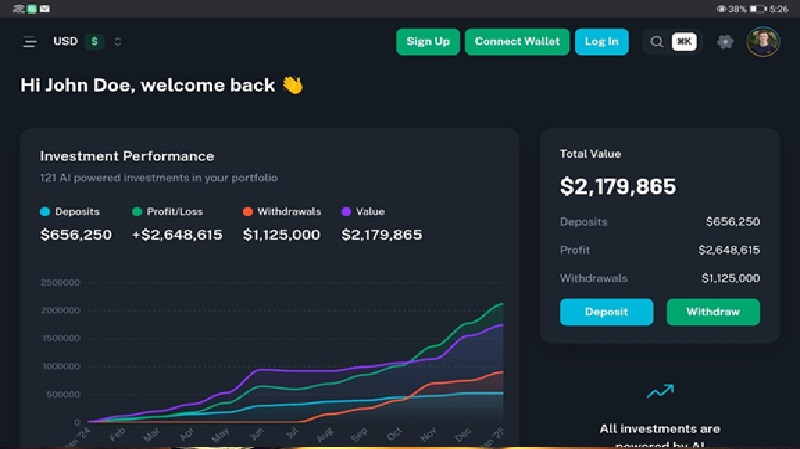
Still, among the most remarkable products is the AI-powered Robo Advisor. By means of customized investment and trading recommendations, this essential tool enables crypto traders to optimize profits.
How RCO Finance’s Robo Advisor Identifies Winning Assets

Interestingly, the Robo Advisor optimizes returns by means of machine learning algorithms creating customized investing strategies, real-time portfolio monitoring, and asset allocation changes.

The technology examines data in real time to guarantee investments stay on course, therefore eliminating emotional biases and spotting market patterns perhaps missed by human traders.

By constantly monitoring real-time data across several assets, the Robo Advisor identifies profitable trading possibilities and rapid and precise trade execution.

The Robo Advisor’s capacity to change with any market condition, bullish or bearish, is vital for increasing profits in the turbulent cryptocurrency market since it lets trades be done at the best times.

For instance, the Robo Advisor can help a trader who wants to profit from developing cryptocurrency trends and find coins with notable promise.

Consider the TRUMP token; the Robo Advisor could see early indications of its fast rise from under $1 to over $70, as shown earlier this year following its launch.

Such sophisticated technology shows the great possibilities RCO Finance’s platform and features provide by allowing traders to grab chances that might greatly increase their portfolios.

Bridging The Gap Between Digital And Traditional Markets
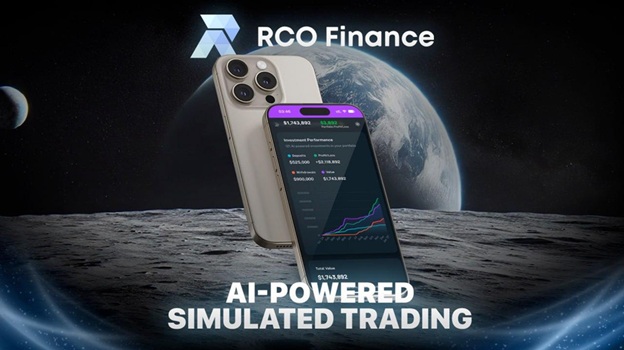
RCO Finance is going to democratize access to institutional-grade trading tools and formerly unreachable markets beyond just serving crypto traders.

Including stocks, shares, derivatives, real assets, and exchange-traded funds (ETFs), the platform offers access to more than 120,000 assets spread throughout 12,500 asset categories.

Historically, institutional investors have had restricted access to these instruments due to their high liquidity needs. RCO Finance, however, makes these financial solutions more available by dividing them into smaller, more reasonably priced components.

This implies that crypto traders will now have access to well-known crypto equities like MicroStrategy’s MSTR, Coinbase’s COIN, and high-performing Bitcoin and Ethereum ETFs from the RCO Finance platform.

But that’s not all. The protocol’s roadmap, bolstered by institutional support, promises interesting new features for users who participate in the crypto presale today.

Join The Token Presale Today For Major Gains

Set to debut in the second half of the year, forthcoming features include Crypto-Funded Demo Trading, In-Depth Trade Performance Analytics, a Demo Trading Leaderboard, and AI-Powered Simulated Trading. Among other developments, the site will also include an AI Trading Indicator.
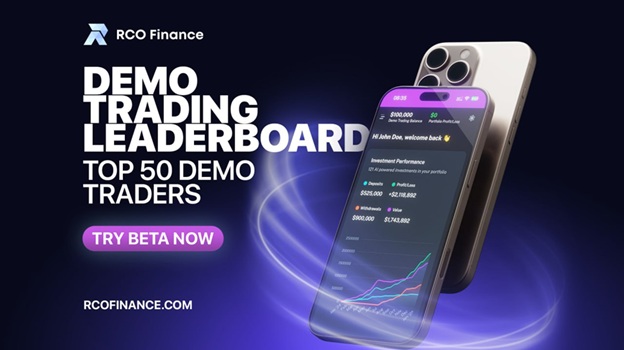
These qualities are essential to the expected 400% increase for individuals engaging in RCO Finance’s token presale today when combined with strong tokenomics supporting staking incentives, cashback offers, and notable trading fee discounts.

Holders should anticipate large gains once RCOF is fully launched to the market and published on crypto exchanges later this year. Market analysts say buying RCOF today for $0.13 could result in a rise near $0.60 driven by more user and institutional involvement and projected capital inflows.

As more investors from both conventional and digital markets see the possibility of the protocol’s presale for their financial future, join RCO Finance’s token presale today to stay ahead of the curve before this chance passes by.

Supported by ongoing smart contract audits securing every transaction, explore the beta and experience these capabilities firsthand in a user-friendly interface all while enjoying privacy and security without know-your-customer (KYC) obstacles.


For more information about the RCO Finance (RCOF) Presale:

Visit RCO Finance Presale
Join The RCO Finance Community

AI Crypto Related Tokens Shown Resilience Amid Market Instability

0

AI-related crypto tokens have shown strong performance compared to the broader cryptocurrency market in recent years, often driven by growing interest in artificial intelligence and its integration with blockchain technology. Data from 2024 indicates that AI and big data tokens surged by 131% in market capitalization from June to November, reaching $42.1 billion, fueled by the Bitcoin bull run and investor confidence in AI’s potential.

Specific tokens like Render (RNDR), Fetch.ai (FET), and Bittensor (TAO) have outperformed major cryptocurrencies such as Bitcoin and Ethereum during certain periods, with RNDR gaining 600% in six months and TAO rallying 164% over 30 days in 2024.

Posts on X reflect similar sentiment, noting that AI tokens have outperformed Bitcoin by a wide margin (10,287% vs. 133% over three years) and continue to lead in market bounces since Q4 2024. However, some skepticism exists, with critics labeling certain AI tokens like TAO as “memecoins” capitalizing on hype, suggesting volatility and speculative risks.

Increased interest in AI technologies, especially post-ChatGPT, has boosted demand for blockchain projects integrating AI, such as decentralized computing (Render), AI marketplaces (Fetch.ai), and machine learning networks (Bittensor). Real-world use cases like predictive analytics and automated trading enhance their appeal.The broader crypto market surge, with Bitcoin reaching $103,332 in December 2024, has lifted altcoins, including AI tokens. X posts highlight AI tokens riding this wave, with market cap for AI/big data tokens hitting $42.1 billion by November 2024, up 131% since June.

AI tokens are seen as high-growth opportunities, attracting speculative capital. Tokens like TAO and RNDR have seen massive gains (TAO +164% in 30 days, RNDR +600% in six months in 2024), fueled by FOMO and narratives around AI’s transformative potential.Blockchain’s decentralization aligns with AI’s need for secure, distributed data processing, driving interest in projects solving scalability and privacy issues. This synergy is emphasized in X discussions as a long-term value driver.

Positive sentiment on platforms like X, where users tout AI tokens’ 10,287% three-year gains vs. Bitcoin’s 133%, amplifies momentum. However, some warn of overhype, with tokens like TAO labeled as speculative “memecoins.” Despite the rally, risks like regulatory uncertainty, project viability, and market volatility could temper gains. The rally’s sustainability depends on continued innovation and adoption.

The outperformance of AI tokens (e.g., RNDR +600%, TAO +164% in 2024) offers high returns but also high volatility. Investors may see speculative gains, but overhype and “memecoin” dynamics increase the risk of sharp corrections. The rally diversifies the crypto market, shifting focus from Bitcoin and Ethereum to altcoins with real-world utility, potentially attracting new investors but also spreading capital thinner across projects.

Early adopters of AI tokens may see significant wealth gains, but late entrants risk losses if the rally falters due to regulatory crackdowns or project failures. The rally fuels funding for projects like Fetch.ai and Bittensor, advancing decentralized AI solutions for computing, data marketplaces, and predictive analytics. This could lead to breakthroughs in scalable, secure AI systems.

Increased capital incentivizes competition among AI crypto projects, potentially driving technological advancements but also risking redundant or low-quality projects flooding the market. Projects like Render, focused on decentralized GPU computing, could bolster infrastructure for AI applications, reducing reliance on centralized cloud providers like AWS.

The rally strengthens the case for decentralized AI, promoting privacy and user control over data. However, speculative hype may overshadow genuine use cases, eroding public trust if projects underdeliver. Decentralized AI platforms could democratize access to advanced AI tools, especially in underserved regions, but high token prices and technical barriers may limit participation.

The rapid rise of AI tokens, with a $42.1 billion market cap by November 2024, may draw stricter regulations, impacting innovation and investor confidence. Governments may target tokens labeled as speculative, like TAO. AI tokens’ success signals a shift toward utility-driven cryptocurrencies, potentially reshaping market dynamics and challenging Bitcoin’s dominance.

AI token projects could influence sectors like finance (predictive trading), healthcare (data analysis), and gaming (decentralized rendering), fostering cross-industry adoption of blockchain-AI solutions. The rally’s reliance on hype, as cautioned on X, raises fears of a bubble. A crash could dampen enthusiasm for AI crypto, while sustained growth could solidify its role in the tech ecosystem.

The rally drives innovation and investment but carries risks of volatility, regulatory pushback, and speculative excess. Its long-term impact hinges on projects delivering tangible value and navigating market and regulatory challenges.

While AI tokens show promise due to real-world applications like decentralized AI marketplaces and predictive trading algorithms, their outperformance is not guaranteed. The crypto market is highly volatile, and factors like regulatory changes, project execution, and competition can impact future results. Investors should research specific projects and consider risks carefully.

Onafriq Partners Circle to Expand Access to Cross-Border Payments Across Africa With USDC

0

Onafriq, a pan-African payments company that enables interoperable cross-border and domestic digital payments, has partnered with Circle a global financial technology company, to expand access to cross-border payments across Africa with USDC.

By integrating USDC-powered settlement solutions into its network, Onafriq is making intra-African payments faster and more efficient for individuals and organizations.

Today, over 80% of intra-African payments take a costly detour through foreign banks, settling in dollars or euros and draining a jaw-dropping US$5 billion annually in transaction fees. This clunky system stifles Africa’s economic dreams.

This partnership marks a significant step in leveraging stablecoins and blockchain infrastructure to build a more affordable and inclusive cross-border payment system that lowers costs, simplifies transactions, and strengthens trust.

Speaking on the partnership, Dare Okoudjou, Onafriq’s founder and CEO, said,

“Our partnership with Circle is an important milestone, reinforcing Onafriq’s commitment to harnessing technology to remove complexity from cross-border payments. By integrating USDC, we aim to simplify financial transactions for institutions and individuals, reduce costs, and strengthen trust. This collaboration underscores our vision to democratize access to payments and drive financial inclusion across the globe. We’re not just envisioning the future of payments we’re actively building it.”

Also speaking, Miriam Kiwan, vice president, of Middle East & Africa at Circle, said,

“The emerging markets that Onafriq serves hold tremendous potential for digital asset innovation, particularly in the adoption of stablecoins for cross-border payments. Our partnership with Onafriq aligns perfectly with Circle’s mission to promote financial inclusion and improve efficiency in areas where traditional banking has often been costly and inaccessible. Together, we aim to transform how money moves across borders, offering secure and transparent digital payment rails that enhance economic empowerment and connectivity.”

Over the past year, there has been a major leap forward in the growth and maturation of the USDC economy. Around the world, there is significant momentum as more people and businesses tap the power of digital dollars on blockchain networks. Developers continue to discover the power of USDC and Circle’s technologies as a platform for building apps that can make global commerce and finance better, faster, and more inclusive. Stablecoins and blockchain are the keys, to unlocking faster, cheaper, and more inclusive transactions that empower individuals and businesses alike.

Onafriq, a pan-African payments company that enables interoperable cross-border and domestic digital payments, has been driving the next step in this revolution. The company boasts a multi-cultural, multi-talented, agile team from over 30 different nations that is driven to create access to a borderless world for millions of Africans and African businesses.

By infusing Onafriq’s sprawling network connecting over 500 wallets and 200 million bank accounts across 40+ African markets with Circle’s USDC-powered settlement solutions, this partnership is turbocharging cross-border payments.

Notably, this collaboration is a giant leap toward a self-reliant, inclusive pan-African financial ecosystem, one where blockchain and stablecoins pave the way for a future that’s faster, fairer, and fiercely connected.

Impact of the Collaboration

• Cost Reduction and Economic Efficiency

The collaboration tackles the US$5 billion in annual transaction fees drained by foreign bank routing. Using USDC for settlements significantly lowers costs for individuals, businesses, and institutions. Cheaper transactions free up capital for investment, consumption, and growth, boosting Africa’s economic integration and competitiveness.

• Faster Transactions

Blockchain-based USDC settlements enable near-instantaneous cross-border payments, unlike the delays of traditional systems. Speed enhances business agility, supports real-time commerce, and improves cash flow for millions of users, from small entrepreneurs to large enterprises.

• Enhanced Financial Inclusion

By simplifying access to cross-border payments, particularly through mobile money platforms, the partnership reaches underserved populations, including those without traditional bank accounts. This democratizes financial services, empowering millions of Africans to participate in the global economy, fostering entrepreneurship, and reducing poverty.

• Strengthened Trust and Transparency

Blockchain’s transparent, secure ledger ensures reliable transactions, while USDC’s stability mitigates currency volatility risks. Increased trust encourages adoption by individuals, businesses, and regulators, paving the way for broader acceptance of digital currencies in Africa.

• Advancement of a Pan-African Financial Ecosystem

The partnership reduces reliance on foreign currencies and banks, promoting a self-reliant financial infrastructure tailored to Africa’s needs. This supports regional integration efforts, such as the African Continental Free Trade Area (AfCFTA), by enabling seamless trade and investment across borders.

Looking Ahead

The Onafriq-Circle collaboration is a pivotal moment in Africa’s financial evolution, signaling a shift toward a modern, inclusive, and efficient payment infrastructure. It challenges the dominance of legacy systems, empowers local economies, and sets a global benchmark for how emerging markets can leverage digital assets responsibly.

By reducing costs, enhancing access, and fostering trust, this partnership not only transforms how money moves within Africa but also strengthens the continent’s role in the global financial landscape, paving the way for a more connected and prosperous future.

U.S. Concluded Its Investigation into PayPal’s PYUSD Stablecoin Without Taking Enforcement Action

0

U.S. Securities and Exchange Commission (SEC) concluded its investigation into PayPal’s PYUSD stablecoin without taking enforcement action, as disclosed in PayPal’s Form 10-Q filing on April 29, 2025. The probe, which began in November 2023 with a subpoena requesting documents related to PYUSD’s launch and operations, ended in February 2025.

PayPal cooperated fully, and the SEC’s decision aligns with a broader regulatory shift, including softened stances under new leadership and advancing stablecoin legislation like the STABLE and GENIUS Acts. PYUSD, launched in August 2023, is backed by U.S. dollar deposits, short-term Treasuries, and cash equivalents, with a market cap of approximately $880 million as of April 2025.

PayPal is boosting adoption through initiatives like a 3.7% annual yield program for U.S. users and a partnership with Coinbase to waive PYUSD trading fees. The SEC ended its investigation into PayPal’s PYUSD stablecoin without enforcement action, as noted in PayPal’s April 29, 2025, Form 10-Q filing, likely due to a combination of factors. PayPal’s full cooperation, providing requested documents following the November 2023 subpoena, may have demonstrated compliance with regulatory standards.

PYUSD’s structure—fully backed by U.S. dollar deposits, short-term Treasuries, and cash equivalents—likely aligned with expectations for transparency and stability. Additionally, a shifting regulatory landscape, including new SEC leadership appointed in February 2025 and advancing stablecoin legislation like the STABLE and GENIUS Acts, may have softened the agency’s stance. The SEC’s decision reflects a broader trend of regulatory clarity for stablecoins, especially as market leaders like Tether and Circle face similar scrutiny.

The SEC’s decision to end its investigation into PayPal’s PYUSD stablecoin without enforcement action has several implications. The closure signals that PYUSD’s structure and operations meet current regulatory expectations, boosting confidence in its compliance and stability. This could set a precedent for other stablecoin issuers navigating SEC scrutiny.

With regulatory uncertainty lifted, PayPal can accelerate PYUSD adoption. Initiatives like the 3.7% yield program and Coinbase partnership may gain traction, potentially increasing PYUSD’s $880 million market cap and challenging competitors like USDT and USDC. The outcome may encourage other firms to launch or expand stablecoin offerings, especially as U.S. stablecoin legislation (e.g., STABLE and GENIUS Acts) progresses, fostering a clearer regulatory framework.

The SEC’s decision enhances PYUSD’s credibility, likely attracting institutional and retail users seeking regulated digital assets amid growing stablecoin demand (global market cap ~$150 billion in 2025). The resolution aligns with a softening SEC stance under new leadership and reflects broader regulatory shifts, potentially reducing adversarial oversight and promoting innovation in the stablecoin sector.

Coinbase added support for PayPal’s PYUSD stablecoin, with trading starting on August 31, 2023, on the Ethereum network as an ERC-20 token, provided liquidity conditions were met. Initially listed with an “experimental” label due to its newness and low trading volume, Coinbase has since expanded its partnership with PayPal, announced on April 24, 2025, to boost PYUSD adoption.

This includes offering fee-free 1:1 PYUSD-USD conversions for retail and institutional users and enabling direct redemptions for USD on Coinbase platforms. The collaboration also aims to explore new on-chain use cases, such as payments and DeFi applications, and extend PYUSD support to PayPal’s merchant network to enhance stablecoin utility in commerce. This strengthens PayPal’s position in the digital asset market and supports the broader stablecoin ecosystem’s growth under evolving U.S. regulations.

Solana Policy Institute Alongside Others Submitted A Proposal For ‘Project Open’ to U.S. SEC

0

Solana Policy Institute, alongside Superstate Inc., Orca Creative, and Lowenstein Sandler LLP, submitted a proposal to the U.S. Securities and Exchange Commission named “Project Open.” This initiative seeks to establish a pilot program for issuing and trading equity securities on public blockchain networks, specifically leveraging Solana’s high-performance blockchain. The proposal aims to innovate financial markets by enabling instant settlements, greater transparency, and lower costs through tokenizing securities, allowing programmable compliance and efficient settlement mechanisms.

The filing requests exemptive relief to operate under existing regulatory frameworks, proposing that issuers register token shares while blockchain networks avoid SEC registration. If approved, Project Open could mark a significant step toward SEC-sanctioned securities trading on decentralized platforms, with Solana as a key infrastructure.

Blockchain enables near-instantaneous transaction finality, reducing settlement times from days (e.g., T+2 in traditional markets) to seconds. This minimizes counterparty risk and frees up capital. By automating processes like clearing, settlement, and compliance through smart contracts, tokenization reduces intermediary fees, lowering transaction and operational costs for issuers and investors.

Blockchain’s immutable ledger ensures all transactions are publicly verifiable, enhancing trust and auditability while reducing fraud and errors. Tokens can embed regulatory rules (e.g., KYC/AML, trading restrictions) into smart contracts, ensuring automated compliance and reducing manual oversight costs.

Tokenized equities can be fractionalized, allowing smaller investors to own portions of high-value assets, democratizing access to markets.Blockchain operates 24/7 across borders, enabling seamless trading and investment worldwide without traditional market hour limitations.

Tokens on Solana can integrate with DeFi protocols, enabling new financial products like automated lending or yield farming with equities as collateral. These benefits align with Project Open’s goal to modernize securities markets, leveraging Solana’s high throughput (65,000+ transactions per second) and low fees (sub-$0.01 per transaction) to scale efficiently. However, regulatory approval and adoption hurdles remain critical challenges.

Fractional ownership on tokenized equities on a blockchain like Solana refers to dividing ownership of an asset, such as a share of stock, into smaller, more affordable portions represented as digital tokens. This enables multiple investors to hold a fraction of the asset, rather than requiring purchase of a whole unit. An equity (e.g., a share of a company) is converted into digital tokens on a blockchain. Each token represents a fraction of the underlying asset.

A single share, which might traditionally cost $100, can be split into, say, 100 tokens, each worth $1, making it accessible to smaller investors. The blockchain’s transparent ledger records who owns each token, ensuring clear, verifiable ownership without intermediaries. These tokens can be bought, sold, or traded on blockchain-based platforms, often with instant settlement and low fees.

Lowers the financial barrier, allowing retail investors to participate in high-value assets (e.g., owning 0.01 of a share in a $1,000 stock). Fractional tokens can be traded easily on decentralized exchanges, increasing market participation and liquidity. Investors can spread capital across multiple assets by buying fractions of various equities, reducing portfolio risk.

It enables investors from diverse economic backgrounds or regions to access markets traditionally limited to high-net-worth individuals. Tokens can embed rights like dividends or voting, distributed proportionally to fractional owners via smart contracts. In the Solana Policy Institute’s proposal to the SEC, fractional ownership is a key feature of tokenized equities. By leveraging Solana’s scalable blockchain, issuers can offer fractionalized shares with automated compliance (e.g., KYC/AML checks) and low-cost trading, democratizing access to securities markets.

For example, an investor could buy a $5 token representing a fraction of a company’s stock, receiving proportional dividends and benefits, all settled instantly on-chain. Fractionalized securities must adhere to securities laws, requiring clear SEC guidance, as sought in Project Open.

Traditional investors may hesitate to embrace tokenized assets due to unfamiliarity or trust concerns. Blockchain security and smart contract vulnerabilities must be addressed to protect fractional owners. Fractional ownership, enabled by tokenization, aligns with the goal of modernizing financial markets by making them more inclusive, efficient, and transparent, as envisioned in the Project Open proposal.