DD
MM
YYYY

PAGES

DD
MM
YYYY

spot_img

PAGES

Home Blog Page 125

XLM Eyes a Bounce as Mono Protocol Doubles Tokens for Black Friday

0

Stellar (XLM) is trading close to a price zone that has influenced its trend several times this year. The token sits near $0.243, showing a mild recovery after a broader decline. Traders are watching the $0.23 area again as past reactions from this level produced sharp moves.

Meanwhile, Mono Protocol is attracting attention in the crypto presale market as its Black Friday promotion doubles every token purchase.

XLM Returns to a Level That Has Repeatedly Triggered Rallies

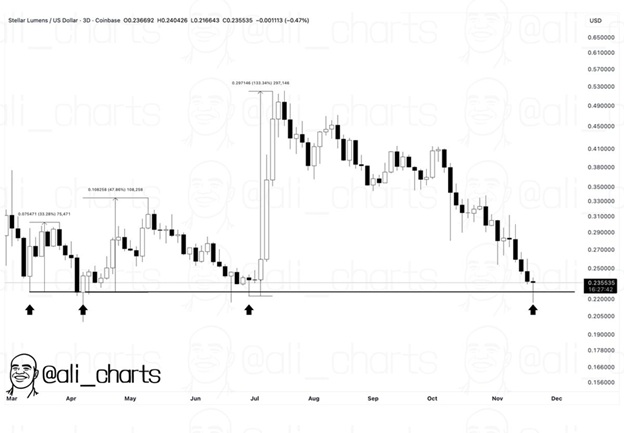
Analyst Ali Martinez noted that XLM has reacted strongly each time it touched the $0.23 zone in 2024. During earlier visits to this level, the token climbed 33% in March, 48% in April, and 133% in July. With the price now back in the same area, traders are comparing the current structure with those earlier rebounds.
Source: Ali Martinez/X

The chart shows XLM approaching support after declining from the $0.40 region. Conditions differ from those earlier tests, as momentum is weaker this time. Even so, the level remains intact, and traders are tracking how the market behaves around it. The past reactions provide a reference, but no new trend has formed.

Analyst Elite Crypto pointed out a falling wedge on the daily chart. A similar structure appeared earlier in the year and led to a breakout. The current pattern shows lower highs moving toward the same support that has held multiple times. He noted that a breakout, if confirmed, could open the door to a strong move. For now, XLM remains inside the wedge without a clear signal.

These technical factors have made the support zone the main focus. Market activity over the next sessions will reveal whether a bounce forms or if the market continues to test the range.

Mono Protocol Sees Rising Activity During Black Friday Week

While XLM holds support, Mono Protocol is gaining steady traction in the presale crypto market. The project has now raised $3.51M of its $3.60M Stage 18 target. The MONO token is priced at $0.0525, and the projected launch value remains $0.500. Interest continues to grow as the platform rolls out updates for users and builders.

Mono Protocol launched a Black Friday promotion that runs from 24–30 November. Every purchase during this window receives a 100% bonus, doubling all token allocations automatically. The event has brought increased activity from users exploring web3 crypto presale opportunities, especially those seeking larger holdings before the next stage begins.


The promotion arrives alongside several performance updates. The dashboard has been adjusted for smoother navigation, and additional improvements were released to support the higher traffic. These updates support the project’s plan to expand its toolkit for Web3 teams.

Mono’s approach continues to draw interest from users comparing new crypto presale options in the market. The bonus window, combined with the near-complete Stage 18 raise, has placed the project on the radar of those tracking cryptocurrency presales heading into 2025.

Engagement Builds Through Mono Protocol’s Rewards Hub

Mono Protocol’s Rewards Hub remains active throughout the pre sale cryptocurrency campaign. Users earn bonus MONO through tasks, referrals, and activity goals. The dashboard updates as tasks are completed, offering a clear record of progress.

The Hub includes welcome bonuses, promo codes, and a rotating set of daily and weekly tasks. This setup allows participants to increase their token count through activity rather than relying only on purchases. It also keeps users engaged during the raise, which has supported consistent traffic across the platform.

This structure, combined with Stage 18 progress and the Black Friday promotion, keeps Mono Protocol visible in the presale coin market. The project continues to build toward the next phase as interest grows across both users and builders.


Learn More about Mono Protocol

Website: https://www.monoprotocol.com/

X: https://x.com/mono_protocol

Telegram: https://t.me/monoprotocol_official

LinkedIn: https://www.linkedin.com/company/monoprotocol/

Tech Hubs Showcase Innovation Through Visual Portfolios

0

As the tech world preaches digital transformation, the savviest founders have discovered that paper still has a critical role to play in closing deals.

It’s not just nostalgia?or an aversion to change. It’s a strategy communications informed by the behavioral?sciences. When you’re explaining cutting-edge technology to potential investors who have already sat through other presentations that day, decreasing their cognitive load is not only nice,  it’s the?difference between landing a follow-up meeting and being forgotten by lunch.

Why physical materials still matter in tech

Silicon Valley and Austin haven’t given up on printed marketing despite their?digital-first image. Many tech firms continue to use printed?collateral at the biggest industry events and startup incubators have enjoyed greater investor engagement when digital presentations were paired with physical leave-behinds.

The reason is simple. Investors?go to conferences and pitch events, where they meet 50+ startups in a weekend. Digital files are lost in a?sea of emails, but portfolio piece is on their desk back in the office. It’s a physical reminder of your conversation when they’re deciding?on funding two weeks later.

How incubators are leveraging professional design

Top startup incubators such as Y?Combinator and Techstars now include pro materials in their budget for demo day preparation. They?have found that international investors, especially in European and Asian markets, want to be impressed by polished presentation materials that show attention to detail.

Tech start-ups invest in retail brochure printing to?win over overseas investors at conventions as they understand that a $200 spend can help secure funds of millions. These time-starved founders?have turned to HelloPrint, and its speed of delivery – aligning with the Agile development sprints they are used to!

Strategic content for tech portfolios

The best startup?portfolios are not simply a repeat version of the pitch deck. They’re conceived as leave-behinds?with a narrow focus of narrative. Screenshots of the product are coupled with clear explanations?rather than dense technical specifications. Quotes from beta users even?more than projections. Pictures of the?team and a short cred list inspire more confidence than does a long resumé.

There?is one good case approach – a problem-solution-traction type spread in three fold out flaps. Page 1 has a cold hard fact about the market problem in?it. Page two reveals?your answer with images and brief explanations. Page three demonstrates traction with?user numbers, revenue growth or partnership logos.

Print specifications that work for tech companies

Most incubators standardize on glossy finishes for tech portfolios because they photograph well in social media posts from events. The 170gsm silk paper stock offers durability without adding bulk to investor swag bags. Standard letter size fits easily into briefcases and folders.

Color accuracy matters when showcasing app interfaces or product designs. Companies using HelloPrint’s services often request color proofs before full runs to ensure their brand blues and greens match their digital assets perfectly.

Timing your print orders around major events

Most incubators tend to gravitate towards glossy when it comes tech portfolios because they are photo-friendly in peoples social media?posts from events. The 170gsm silk paper stock is?robust yet won’t make investor swag bags too heavy. Letter-size pages slide easily into binders?and briefcases.

When it?comes to displaying the interface of an app or a product’s design, color accuracy is important. HelloPrint clients often ask for colour proofs before printing in larger quantities to ensure their branding blues & greens match your digital material perfectly.

How to Start Crypto Mining? 6 Best Cloud Mining Sites for Fast and Easy Profit

0

Starting crypto mining in 2025 has become far more accessible thanks to legal, easy-to-use cloud mining sites that remove the need for hardware, high electricity bills, and technical setup. If you’re searching for how to start crypto mining or the best cloud mining sites for fast and easy profit, this guide walks you through the essentials and highlights the most trusted platforms to begin earning.

What Is Cloud Mining and Why It Matters in 2025

Cloud mining allows you to rent computing power from professional mining farms. Instead of running your own machines, you purchase a plan, and the platform delivers daily crypto rewards directly to your wallet.
With Bitcoin’s rising difficulty and hardware costs, cloud mining offers a simple entry point for beginners who want quick setup, predictable payouts, and passive income.

How to Start Crypto Mining: Quick Beginner Steps

1. Join AutoHash

Register on AutoHash, a Swiss-supervised cloud mining platform with transparent terms and renewable-energy farms.

2. Pick Your Mining Plan

Choose a short, AI-optimized contract that matches your budget and preferred hashrate.

3. Activate and Earn Daily BTC

Start your plan and receive automated daily payouts—no hardware, no setup, fully managed by AutoHash.

6 Best Cloud Mining Sites for Fast and Easy Profit

Below are the most reliable platforms offering strong performance, transparent terms, and beginner-friendly dashboards.

1. AutoHash — Swiss-Supervised, AI-Optimized Cloud Mining

AutoHash stands out for its Swiss oversight, renewable-energy mining farms, and AI engine that allocates hashrate for maximum output. It is one of the few platforms offering clear legal compliance plus a $100 bonus for new users.

? Click to visit AutoHash and start mining for free now!

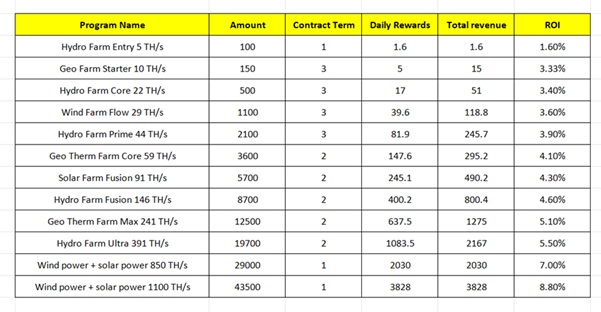
AutoHash monetization plan example:

Why users choose it:

  • AI-enhanced mining efficiency
  • Swiss regulatory environment
  • Fast Bitcoin payouts
  • Renewable energy farms
  • User-friendly mobile dashboard
  • Supports BTC, DOGE, LTC

2. BitDeer — Institutional-Grade Mining Infrastructure

BitDeer operates some of the largest industrial mining facilities in the world. Contracts range from beginner-level to high-power plans suitable for advanced users.

Highlights:

  • Transparent hosting costs
  • Long-term BTC contracts
  • Access to diverse mining pools
  • Reliable, stable infrastructure

3. ECOS Mining — Regulated Mining in Armenia’s Free Economic Zone

ECOS delivers consistent performance backed by a regulated environment. Its simple plan calculator and clear pricing make it popular for users starting crypto mining.

Highlights:

  • Operates legally within a government-supervised zone
  • Beginner-friendly contract options
  • Low minimum entry cost
  • Stable, predictable BTC output

4. NiceHash — Buy Live Hashpower with Full Flexibility

NiceHash is different from fixed-contract platforms. Instead, you buy live hashpower on a marketplace, making it ideal for users who want strategy and flexibility.

Highlights:

  • Real-time pricing
  • Switch mining algorithms anytime
  • No long-term lock-ins
  • Supports multiple crypto assets

5. Hashing24 — Simple BTC Hosting for Long-Term Miners

Hashing24 focuses on straightforward Bitcoin hosting with reliable output. It’s a good entry-level choice for users who want minimal setup and stable daily earnings.

Highlights:

  • Clear BTC-only plans
  • Stable long-term payouts
  • Easy onboarding
  • Transparent fee structure

6. ViaBTC Cloud — Multi-Coin Mining With Large Global Pools

ViaBTC is a well-known global mining pool offering cloud contracts for multiple crypto assets. It’s a strong option for users who want diversification beyond Bitcoin.

Highlights:

  • Supports BTC, LTC, BCH, and more
  • Competitive pool performance
  • Good for multi-asset mining
  • Proven operational history

Is Cloud Mining Still Worth It in 2025?

Yes—when using legal, transparent cloud mining sites. Platforms that rely on real data centers and publish clear costs can provide stable earnings, especially for users who want passive income without running hardware.

Final Thoughts: Start Crypto Mining the Smart Way

If you’re wondering how to start crypto mining or looking for the best cloud mining sites for fast and easy profit, the key is choosing trusted services with clear legal standing and transparent operations. Platforms like AutoHash, BitDeer, ECOS, NiceHash, Hashing24, and ViaBTC make it possible for beginners to earn daily crypto with minimal effort.

Start small, choose short-term plans, and scale as you gain confidence—smart cloud mining can become a steady passive-income stream in 2025.

Africa’s Tech Ecosystem: Early, Not Broken — A Data Driven Reality Check

0

Africa’s tech ecosystem is often judged by the standards of fully mature markets, from billion-dollar exits to deep growth-stage capital, and a constant stream of IPO headlines. By these metrics, it appears to be lagging.

But on a closer look, the data reveals a very different reality. Africa is not lagging; it is simply early. Too often, the continent is judged using the playbook of the U.S. in 2025 rather than the realities of an ecosystem still in its formative stages. In truth, Africa is progressing through the same foundational phases that every resilient innovation economy has experienced on its path to maturity.

Entrepreneur and seasoned investor Ido Sum, formerly a partner at TLcom Capital, has shared a data-driven reflection on the true state of Africa’s tech ecosystem. In his analysis, he explains that while it may be tempting to compare Africa’s progress to the fully mature venture capital environments, doing so paints an inaccurate picture.

Instead, he argues that Africa today mirrors what the U.S. looked like in the 1970s–80s, and Europe and India in the early 2000s, ecosystems that were still young, experimental, and slowly building trust with capital providers.

Sum notes that early-stage markets everywhere are characterized by small funds, modest rounds, very few unicorns, and exits usually ranging between $25 million and $300 million. This is a universal pattern seen in the early days of every major tech ecosystem, including Silicon Valley, China, India. Africa’s present trajectory, he asserts, fits perfectly into this historical pattern. The ecosystem is not underperforming; it is simply in its early chapters.

To illustrate this, Sum examines the “conversion funnel” of startups advancing through funding rounds. In the United States, for example, roughly half of the companies that raised Seed funding between 2008 and 2010 went on to Series A, and about 30% achieved an exit within ten years. Africa’s data, however, tells a different story. Between 2019 and 2022, 582 African startups raised pre-seed or seed funding.

Only about 26% secured any follow-on round, 16% reached Series A, 4.5% reached Series B, and less than 1% made it to Series C and beyond. When an additional 500 companies with later-stage starting points are included, the overall outcomes remain similar. The funnel tightens dramatically after Series A, mostly due to the limited availability of growth-stage capital on the continent.

The exit landscape supports this trend as well. From 2015 to 2025, Africa recorded just over 20 tech exits valued above $50 million, totalling around $5 billion in disclosed value. These companies raised an average of $250 million in equity and debt before exiting, with a typical journey taking around 10.5 years.

Most exits were strategic acquisitions, while IPOs remained rare. The majority of outcomes sat within the $50 million–$150 million range, with a few notable exceptions such as Paystack, DPO, and InstaDeep. Sum emphasizes that these numbers are not signs of a failing ecosystem. Instead, they reflect what early-stage markets everywhere experience before breakout success stories become routine.

He argues for a realistic, yet optimistic, approach to venture investing in Africa. Fund managers, he suggests, should align their expectations with the market’s current stage. Rather than designing strategies around billion-dollar IPOs, they should build funds sized between $20 million and $75 million that can thrive on $100 million–$200 million exits outcomes far more likely in the near term.

He further points out that Africa lacks the non-equity support frameworks that helped other regions grow, such as R&D grants, working-capital instruments, and large-scale venture debt. Many African startups face a financing landscape where equity angel rounds, VC series, and the expectation of dilution carries an outsized share of growth capital.

That happens because complementary, non-equity instruments that grease other ecosystems (direct R&D grants, generous R&D tax credits, predictable working-capital facilities, large-scale venture debt, credit guarantees and long-term local institutional capital deployed to SMEs) are limited or uneven across the continent. The result, a steeper funding funnel, risk-intolerant investors, and slower commercialization of capital-intensive innovation.

In Sum’s view, none of this is cause for discouragement. Instead, it is a call for investors, founders, and policymakers to treat Africa as “early, not broken”, and to design capital structures, exit pathways, and market expectations that match the continent’s current stage of development.

“How can I co-own some of Tekedia Capital Portfolio Companies?”

0
You asked: “how can I co-own some of these companies?”
Our response: Simply, via Tekedia Capital Syndicate, Africa’s leading investment syndicate and the most active with hundreds of professionals, entrepreneurs, corporates, investment clubs, and citizens.
 
Through the Syndicate, you will own a piece of some of the world’s most promising startups, typically reserved for venture firms and high-net-worth investors.
 
Membership covers four investment cycles and is priced at $1,000 or ?1,000,000, depending on your preferred currency. Join us and begin co-investing alongside a global community of innovators and builders; we do two cycles in a year.
 
To learn more about and join, visit here
 
Tekedia Capital >> funding global prosperity and empires of the future