DD
MM
YYYY

PAGES

DD
MM
YYYY

spot_img

PAGES

Home Blog Page 1250

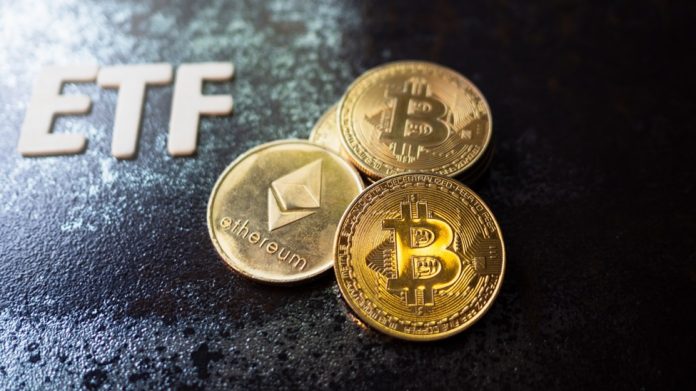
Bloomberg ETFs Analysts Updated Their Approval Odds on Several ETFs

0

Bloomberg ETF analysts Eric Balchunas and James Seyffart have recently updated their approval odds for various spot crypto ETFs, focusing on altcoins like XRP, Solana, Litecoin, and Dogecoin. As of April 30, 2025, their latest estimates.

XRP ETF: 85% chance of approval in 2025, up from 65% in February, driven by multiple filings from asset managers like Grayscale, Bitwise, and WisdomTree, though the SEC has not yet acknowledged 19b-4 filings.

Solana ETF: 90% approval odds, increased from 70%, supported by institutional interest and filings from firms like VanEck and 21Shares, with a potential timeline extending to 2026 due to SEC review processes.

Litecoin ETF: 90% approval odds, the highest among altcoins, bolstered by the CFTC’s classification of Litecoin as a commodity and SEC acknowledgment of 19b-4 filings.

Dogecoin ETF: 80% approval odds, up from 75%, despite the SEC not yet acknowledging 19b-4 filings, with the asset viewed as a commodity. Other ETFs (e.g., Hedera, Avalanche, Polkadot): Approval odds range from 75% to 80%, with decisions expected between Q3 and Q4 2025.

These estimates reflect a more favorable regulatory outlook, influenced by legal developments, bipartisan crypto support, and market momentum. However, the SEC’s final decisions hinge on factors like market manipulation concerns and the resolution of security vs. commodity classifications, expected by late 2025.

Bloomberg analysts previously raised Bitcoin ETF approval odds to 95% by January 2024 (achieved) and Ethereum ETF odds to 75% in May 2024, reflecting their track record of adjusting predictions based on regulatory shifts. Always cross-check with primary sources like SEC filings or platforms like Polymarket for market sentiment, as analyst predictions aren’t definitive.

Approval of these ETFs, particularly for altcoins like XRP (85% odds), Solana (90%), Litecoin (90%), and Dogecoin (80%), could drive substantial price increases due to increased institutional investment and retail FOMO. For example, Bitcoin surged 60% post-ETF approval in 2024, and Ethereum gained 30% after its ETF launch.

ETFs signal regulatory acceptance, potentially reducing volatility and attracting conservative investors, further integrating crypto into traditional finance. ETFs would enhance liquidity for these altcoins, narrowing bid-ask spreads and improving market efficiency, especially for smaller-cap assets like Dogecoin.

ETFs allow retail and institutional investors to gain exposure to altcoins without managing wallets or navigating exchanges, lowering barriers to entry. Investors can diversify beyond Bitcoin and Ethereum, potentially hedging against sector-specific risks while tapping into altcoin growth.

ETFs typically have lower fees than direct crypto purchases on exchanges, though expense ratios (e.g., 0.25%–0.65% for Bitcoin ETFs) should be monitored. Approvals would reinforce the CFTC’s commodity classification for these assets, reducing SEC scrutiny over security status and setting precedents for other altcoins (e.g., Hedera, Avalanche).

Asset managers like Grayscale, BlackRock, and VanEck filing for these ETFs signal confidence, likely spurring more institutional products (e.g., futures, staking ETFs). Increased capital inflows could fund blockchain development, particularly for Solana’s DeFi ecosystem or XRP’s cross-border payment solutions.

Despite high odds, SEC concerns over market manipulation or investor protection could delay approvals, especially for Dogecoin, where 19b-4 filings are unacknowledged. Speculative rallies post-approval may lead to corrections, as seen with Ethereum’s 15% dip weeks after its ETF launch in 2024. Heavy ETF inflows could centralize ownership, potentially impacting decentralized networks’ governance.

Approvals could trigger an “altcoin season,” where smaller cryptocurrencies outperform Bitcoin, shifting market dynamics. Projects without ETF prospects may struggle to attract capital, widening the gap between top altcoins and smaller tokens. U.S. ETF approvals could pressure other jurisdictions (e.g., EU, Asia) to fast-track similar products, accelerating global crypto adoption.

Investors should monitor SEC announcements, 19b-4 filing statuses, and Polymarket odds for real-time sentiment. Diversifying across ETF-eligible altcoins may mitigate risk, but beware of post-approval volatility. Long-term, approvals could solidify crypto’s role in portfolios, but short-term regulatory hiccups remain a wildcard. Always verify updates via primary sources like SEC.gov or asset managers’ filings.
Circle Rejected Ripple’s Acquisition Offer Amid Growing Interest on Circle’s IPO

0

Ripple, the blockchain payments firm behind XRP and the RLUSD stablecoin, reportedly offered $4 billion to $5 billion to acquire Circle, the issuer of the USDC stablecoin, according to a Bloomberg report on April 30, 2025. Circle rejected the bid, deeming it too low, as it focuses on its upcoming initial public offering (IPO) filed in April 2025, aiming to list on the NYSE under the ticker “CRCL” with a valuation estimated between $4 billion and $6 billion.

Sources suggest Ripple’s offer may have included illiquid equity rather than full cash, which Circle, backed by strong investors like BlackRock and Fidelity, found unappealing given its IPO plans and USDC’s $61.7 billion market cap compared to RLUSD’s $316.9 million. Ripple remains interested but hasn’t decided on a new bid, while Circle prioritizes independence and regulatory compliance. The rejection highlights strategic differences, with Ripple aiming to fast-track its stablecoin market presence and Circle betting on its IPO and established USDC network.

The rejection of Ripple’s $4B-$5B bid to acquire Circle carries significant implications for both companies, the stablecoin market, and the broader crypto ecosystem. Acquiring Circle would have given Ripple control of USDC, the second-largest stablecoin with a $61.7B market cap, significantly boosting its market share against Tether’s USDT ($216.7B). This could have accelerated Ripple’s RLUSD ($316.9M market cap) adoption by leveraging Circle’s established infrastructure and partnerships.

Ripple now faces a tougher path to grow RLUSD organically, competing with USDC’s entrenched network of 800+ partners, including Visa and MoneyGram, and its regulatory clarity in the U.S. Ripple’s continued interest suggests it may return with a higher offer or explore other acquisitions, but its reliance on illiquid equity could limit appeal to premium targets like Circle.

Circle’s IPO and Independence

Circle’s rejection signals confidence in its $4B-$6B IPO valuation and its ability to thrive independently. A successful NYSE listing could attract institutional investors, further solidifying USDC’s dominance. Circle’s focus on compliance and its U.S.-based operations position it favorably in a tightening regulatory environment, especially compared to Ripple, which has faced SEC scrutiny over XRP. If the IPO underperforms or market conditions sour, rejecting Ripple’s bid could be seen as a misstep, especially if Circle’s valuation fails to meet expectations.

The bid reflects growing consolidation interest in the stablecoin sector as firms seek scale to compete with USDT. Circle’s rejection may deter similar deals in the short term, encouraging standalone growth. Ripple’s aggressive expansion contrasts with Circle’s conservative, compliance-driven approach, highlighting divergent strategies in a market where trust and regulatory alignment are critical. Without a deal, USDC and RLUSD will continue competing, potentially fragmenting liquidity and adoption, which could benefit USDT or emerging stablecoins.

Circle’s IPO success could boost confidence in crypto markets, signaling maturity and institutional acceptance. Conversely, failure could dampen enthusiasm for crypto IPOs. A Ripple-Circle merger would have drawn intense regulatory attention, especially given Ripple’s SEC history. Circle’s independence avoids this but keeps it under the spotlight as a major U.S. crypto player.

Ripple’s acquisition aim was tied to enhancing its cross-border payment solutions. Its failure to acquire Circle may push it to innovate internally or seek other partners, impacting its rivalry with traditional systems like SWIFT. Posts on X indicate mixed views: some see Circle’s rejection as a bold move to maintain control and capitalize on its IPO, while others argue it missed a chance to align with Ripple’s blockchain expertise.

Critics of Ripple highlight its weaker negotiating position due to legal baggage, while Circle’s strong backing from BlackRock and Fidelity is viewed as a stabilizing factor. Circle’s rejection prioritizes its IPO and independence, betting on USDC’s market strength and regulatory positioning, while Ripple must now recalibrate its stablecoin ambitions. The outcome reinforces competitive tensions in the stablecoin space and could shape investor and regulatory perspectives as Circle’s IPO looms.

Visa And Mastercard Roll-Out AI-powered Shopping Tool, Unveils A New Era of Commerce

2

Payments giant Visa and Mastercard have unveiled AI-powered shopping, to make shopping experiences for users  more personal, more secure and more convenient.

Visa is bringing the power of its network and decades-long expertise to bring trust and security to AI-driven commerce. Introduced on Wednesday, Visa is rolling out “Visa Intelligent Commerce” which enables AI to find and buy. It is a groundbreaking new initiative that opens Visa’s payment network to the developers and engineers building the foundational AI agents transforming commerce.

In a statement, Visa chief product and strategy officer Jack Forestell said,

Soon people will have AI agents browse, select, purchase and manage on their behalf. These agents will need to be trusted with payments, not only by users, but by banks and sellers as well. Just like the shift from physical shopping to online, and from online to mobile, Visa is setting a new standard for a new era of commerce. Now, with Visa Intelligent Commerce, AI agents can find, shop and buy for consumers based on their pre-selected preferences. Each consumer sets the limits, and Visa helps manage the rest.”

Visa Intelligent Commerce offers:

• AI-Ready Cards: Replaces card details with tokenized digital credentials, enhancing security for consumers and simplifying payment processes for developers. They confirm that a consumer’s chosen agent is allowed to act on a consumer’s behalf and bring identity verification to AI commerce. Only the consumer can instruct the agent on what to do and when to activate a payment credential.

• AI-Powered Personalization: The consumer is in control. Consumers share basic Visa spend and purchase insights with their consent to improve agent performance and personalize shopping recommendations.

• Simple and Secure AI Payments: Allows consumers to easily set spending limits and conditions, providing clear guidelines for agent transactions. Commerce signals are shared in real-time with Visa, enabling Visa to effect transaction controls and help to manage disputes.

Visa says that it is collaborating with a mix of tech giants and startups to develop AI-powered shopping experiences that are “more personal, more secure, and more convenient.” Those companies include Anthropic, IBM, Microsoft, Mistral AI, OpenAI, Perplexity, Samsung, and Stripe, among others.

The move follows Mastercard launch of its Agentic Payments Program, Mastercard Agent Pay. The groundbreaking solution integrates with agentic AI to revolutionize commerce. It would give AI agents the ability to shop online for consumers. Mastercard said its new Agent Pay offering “will enhance generative AI conversations for people and businesses alike” by integrating payments into tailored recommendations and insights already provided on conversational platforms.

In a statement, Jorn Lambert, chief product officer at Mastercard said,

Mastercard is transforming the way the world pays for the better by anticipating consumer needs on the horizon. The launch of Mastercard Agent Pay marks our initial steps in redefining commerce in the AI era, including new merchant interfaces to distinguish trusted agents from bad actors using agentic technology. Recognizing the seismic implications of this evolution, we are keen to collaborate with industry players to advance the standards for agentic payments, such as applying the Model Context Protocol to Secure Remote Commerce. This lays the foundation for scale and builds trust in agentic commerce.”

Mastercard said it will work with Microsoft on new use cases to scale “agentic commerce,” as well as with IBM, Braintree, and Checkout.com on other aspects of AI-powered shopping.

Visa and Mastercard aren’t the only ones allowing for AI-powered shopping. On Tuesday, PayPal announced its own agentic commerce offering.

Also, earlier this month, Amazon announced the start of testing a new AI shopping agent, a feature it calls “Buy for Me,” with a subset of users. OpenAI, Google, and Perplexity have also showcased similar agents that can visit websites and help users make purchases.

Looking Ahead

The rise of AI-powered personal shopping services signifies a move towards more personalized, efficient, and customer-centric retail experiences. As these technologies continue to evolve, they promise to reshape the shopping landscape in ways we can only begin to imagine.

C-One Ventures Acquires Nigerian Fintech Firm Bankly to Bolster Fintech Expansion in Nigeria

0

C-One Ventures, an investment firm focused on technology and fintech primarily in Nigeria, has reportedly acquired Bankly, a Nigerian fintech and licensed microfinance bank, to expand its fintech portfolio.

The acquisition includes Bankly’s licenses, platform, and team, which will be integrated into C-One’s ecosystem to scale technology-driven financial services.

According to a statement from Bankly CEO Tomilola Majekodunmi, noted that a restructuring process is already underway to ensure seamless integration, and Bankly will support the transition in an advisory role.

Speaking on the acquisition, she said:

“I am immensely proud of what we have achieved at Bankly over the last six years.   Bankly was founded with a mission to drive financial inclusion to the last mile, and we have certainly made significant progress on that front. Like any business, we’ve faced our share of challenges, but I’m confident that this acquisition will keep the Bankly vision alive and further advance our mission of empowering more Nigerians through inclusive financial solutions.”

Bankly is a lifestyle bank that redefines the way people manage their money. Founded in 2019 by Tomilola Majekodunmi and Fredrick Adams, Bankly first started operations as a tech-driven solution to combat fraud and financial losses in informal savings groups.

The fintech quickly evolved into a beacon of transparency and accessibility for small business owners across Nigeria. Through digitization, it revolutionized the savings process, empowering individuals to securely save and access their money with ease.

Bankly expanded its services in 2020 to include agency banking and has since facilitated financial access for over 12 million individuals through its network of over 50,000 agents nationwide. But the journey didn’t end there. In 2021, Bankly announced that it had closed a $2 million seed round. The funding round was led by Vault. Other investors who took part in the round included Plug and Play Ventures, Rising Tide Africa, and Chrysalis Capital.

Bankly has been significantly helping the Nigerian unbanked population, by digitizing the entire money collection process and allowing users to save their money using online and offline methods. The business has a distribution and agents network that makes it easy for customers to deposit and withdraw cash with its agent, anytime.

Recognizing the ongoing financial needs of everyday people, Bankly metamorphosed into a Microfinance Bank in 2023. This lifestyle bank pioneered innovative features like Group Savings (Ajo), enhancing transparency and convenience in collective contributions, and made bill payments less expensive by offering exclusive discounts. Through the implementation of digital currency, personal identity, and comprehensive financial services, the bank has paved the way for unbanked Nigerians to partake in the formal economy, providing them with a secure and reliable platform to nurture their financial aspirations.

Bankly has been on a mission to make banking effortless for everyone, guiding customers toward financial success and giving them more bang for their buck. It also moved to transform the way local businesses access financial services, by providing the tools and support necessary to attain entrepreneurial freedom.

C-One Ventures, which describes itself as an investor focused on technology-enabled finance in Nigeria, said the integration of Bankly will support its broader strategy of offering connected financial products to individuals and businesses.

The acquisition of Bankly, a Nigerian fintech has several implications for both companies, their customers, and the broader financial ecosystem in Nigeria. By acquiring Bankly, C-One adds a microfinance bank with a strong focus on financial inclusion to its portfolio, which already includes platforms like Fulcrum (supply chain financing), GetPayed (payments and banking app), and Money (digital banking). This strengthens C-One’s ability to offer comprehensive, technology-driven financial services.

Also, Bankly’s extensive network of over 50,000 agents and a customer base of more than 2 million individuals and businesses across Nigeria gives C-One deeper penetration into the informal economy, particularly in low-income and rural communities. This aligns with C-One’s goal of scaling grassroots financial services.

Ethereum Foundation Makes Available Updates About Its Leadership Structure and Updates For 2025

0

The Ethereum Foundation (EF) has recently shared significant updates on its leadership structure and 2025 roadmap, reflecting a strategic pivot to address community concerns, enhance scalability, and maintain Ethereum’s core values. As of March 17, 2025, Hsiao-Wei Wang, a seven-year EF researcher instrumental in the Beacon Chain and sharding, and Tomasz Sta?czak, founder of Nethermind (a key Ethereum execution client), have been appointed as co-executive directors. This dual-leadership model replaces the traditional single executive director role, aiming for collaborative decision-making and technical focus.

Aya Miyaguchi, executive director since 2018, has moved to the role of president, focusing on strategic initiatives and ecosystem growth. The EF Board, including Vitalik Buterin, Miyaguchi, Wang, and Patrick Storchenegger, sets the long-term vision, emphasizing decentralization, open-source innovation, and censorship resistance. Former EF researcher Danny Ryan has joined Etherealize, a new initiative to bridge Ethereum with institutional investors, co-founded with Vivek Raman.

These changes follow community criticism in 2024 over governance, transparency, and conflicts of interest (e.g., EF researchers’ advisory roles at EigenLayer). Vitalik Buterin initiated the restructuring to enhance technical expertise, community engagement, and ecosystem support while rejecting calls for political lobbying or centralized control.

2025 Roadmap Updates

The EF outlined its 2025 goals, focusing on scalability, user experience, and ecosystem decentralization, as detailed in a recent blog and tweets. Prioritizing mainnet improvements to reduce transaction costs and congestion, including increasing transaction throughput via “blob” transactions (EIP-4844). Enhancing data availability through blobs to support Layer 2 (L2) solutions, addressing concerns about L2s cannibalizing base-layer revenue.

Streamlining interactions for developers and users, potentially accelerating projects like Verkle Trees and history expiry. Ongoing work includes 3-Slot-Finality, delayed execution (EIP-7886), and quantum-safe SNARKs to simplify the protocol and mitigate centralization risks (e.g., MEV and liquid staking).

Vitalik Buterin has suggested modernizing the Ethereum Virtual Machine (EVM) by transitioning to RISC-V for better performance and overhauling the execution layer to reduce L2 scaling costs. Refining governance models, public goods funding, and token models to ensure long-term sustainability without fostering dependency.

The EF is also exploring staking its ETH reserves for sustainable revenue and deploying funds (e.g., 50,000 ETH into DeFi protocols) to align with ecosystem participation rather than selling ETH. These updates come amid competitive pressures from blockchains like Solana, declining ETH prices, and community debates over L2 revenue impacts post-Dencun upgrade. The EF aims to balance short-term deliverables with long-term research, leveraging its new leadership to restore momentum and trust.

The Ethereum Foundation’s (EF) leadership changes and 2025 roadmap updates carry significant implications for Ethereum’s ecosystem, market position, and long-term viability. Prioritizing Layer 1 (L1) scaling (e.g., blob transactions, EIP-4844) and user experience improvements (e.g., Verkle Trees, EVM modernization) could reduce transaction costs and congestion, making Ethereum more competitive with high-throughput chains like Solana. However, execution risks remain, as complex upgrades like 3-Slot-Finality or quantum-safe SNARKs require robust testing to avoid network disruptions.

Improved data availability and lower L2 scaling costs could strengthen Ethereum’s rollup-centric roadmap, boosting adoption of L2s like Arbitrum and Optimism. Yet, this risks further diverting revenue from L1, potentially weakening validator incentives unless addressed (e.g., via Vitalik’s execution layer overhaul). Proposals like transitioning to RISC-V and delayed execution aim to streamline Ethereum’s architecture, reducing technical debt and centralization risks (e.g., MEV, liquid staking). Success could enhance developer accessibility and network resilience, but failure to deliver could erode confidence in EF’s technical leadership.

Lower L1 revenue post-Dencun has strained validator profitability. Roadmap efforts to balance L1 and L2 economics (e.g., blob fee adjustments) are critical to maintaining network security. Failure to address this could increase centralization risks via liquid staking dominance (e.g., Lido). Refining funding models for ecosystem projects could sustain Ethereum’s open-source ethos, but over-reliance on EF grants risks creating dependency. A sustainable token model or decentralized funding mechanism could enhance long-term economic resilience.

Appointing Hsiao-Wei Wang and Tomasz Sta?czak as co-executive directors, with their deep technical expertise, signals a commitment to community-driven, transparent governance. This could rebuild trust after 2024’s controversies (e.g., EigenLayer conflicts). However, the dual-leadership model is untested and may face challenges in aligning priorities. Rejecting political lobbying and centralized control aligns with Ethereum’s ethos but limits its ability to counter regulatory pressures compared to competitors with lobbying arms (e.g., Solana Foundation). The EF’s focus on technical governance (e.g., open-source innovation) may strengthen community loyalty but risks slower ecosystem coordination.

Increased transparency (e.g., detailed roadmaps, blog updates) and Buterin’s proactive restructuring address past criticisms. Sustained engagement will be crucial to avoid perceptions of elitism or disconnect, especially as Ethereum scales. Ethereum faces pressure from high-performance L1s (e.g., Solana, Aptos) and modular chains (e.g., Celestia). Successful roadmap execution could solidify Ethereum’s dominance in DeFi and NFTs by improving UX and affordability. Delays, however, could cede ground to rivals capitalizing on Ethereum’s high fees and complexity.

Simplifying the EVM and developer tools could attract more builders, reinforcing Ethereum’s lead in dApp development (e.g., ~60% DeFi TVL). Competitors offering faster onboarding or cheaper deployment may still challenge this edge if Ethereum’s upgrades lag. Danny Ryan’s move to Etherealize signals Ethereum’s growing appeal to institutional investors. However, without clearer regulatory engagement, Ethereum may struggle to match competitors’ institutional traction (e.g., Solana’s ETF progress).

Risks and Opportunities

Successful roadmap delivery could drive a virtuous cycle of lower costs, higher adoption, and stronger network effects, positioning Ethereum as the go-to smart contract platform. Leadership changes and governance reforms could enhance community trust, attracting talent and capital. Technical delays, governance missteps, or failure to balance L1-L2 economics could erode Ethereum’s market share and developer base. External factors like regulatory crackdowns or macroeconomic shifts (e.g., rising interest rates) could amplify these challenges.

The EF’s updates position Ethereum to address critical pain points—scalability, UX, and governance—while reinforcing its decentralized ethos. Success hinges on executing complex technical upgrades and maintaining community trust amid competitive and economic pressures. Short-term price volatility may persist, but long-term, Ethereum’s ecosystem strength and developer loyalty provide a solid foundation for growth.