DD
MM
YYYY

PAGES

DD
MM
YYYY

spot_img

PAGES

Home Blog Page 1250

Trump Says Xi Is “Extremely Hard” to Make A Deal With, Dampening Hopes of Trade Breakthrough

0

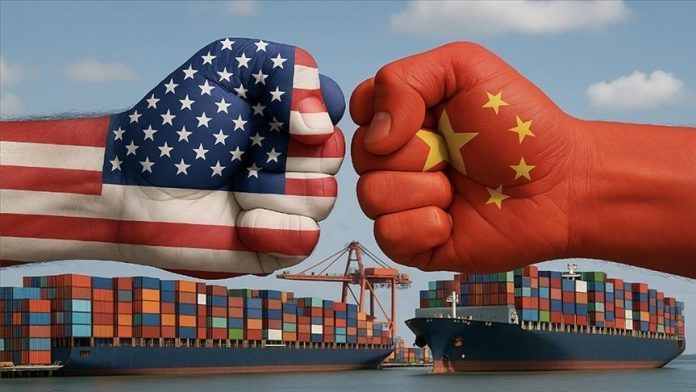
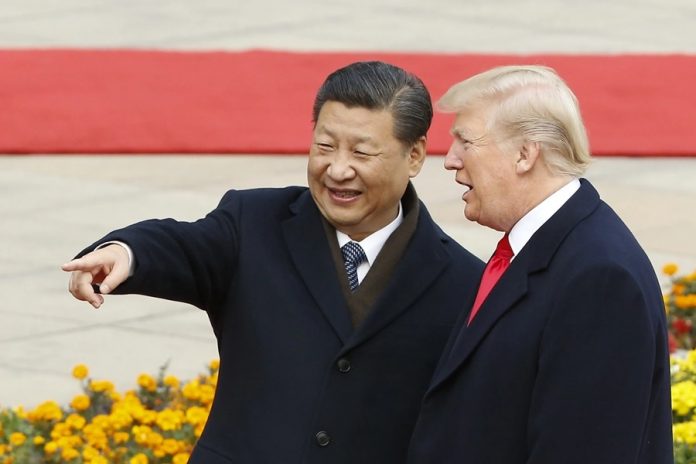
President Donald Trump on Wednesday voiced frustration over stalled trade negotiations with China, describing Chinese President Xi Jinping as “extremely hard to make a deal with.”

His remark comes at a delicate moment, as the White House signals openness to a leader-to-leader call aimed at resolving rising tariff tensions between the world’s two largest economies.

“I like President XI of China, always have, and always will, but he is VERY TOUGH, AND EXTREMELY HARD TO MAKE A DEAL WITH!!!” Trump posted on Truth Social, casting doubt on the likelihood of meaningful progress if the two leaders eventually connect.

The statement marked a stark contrast to the more optimistic tone from White House officials earlier in the week, who said a call between Trump and Xi could happen soon. But as of Wednesday, there was no confirmation that such a conversation had been scheduled.

Trump’s comments are believed to be a reflection of growing pessimism in Washington about the prospects of breaking the deadlock. His public expression of doubt has also cast a shadow over expectations that direct talks with Xi might help untangle the web of tit-for-tat tariffs and retaliatory measures that have rattled global markets.

On May 12, the two sides reached a temporary agreement in Switzerland to suspend most tariffs for 90 days and roll back China’s countermeasures, offering a brief window of relief. However, that truce has all but collapsed. The Trump administration accuses China of failing to honor its commitments, including a promise to ease restrictions on rare earth exports—key materials in electronics and defense industries.

Meanwhile, Beijing has not backed down from its position. Chinese officials have repeatedly stated that they will not yield to pressure from Washington. Foreign Minister Wang Yi reinforced that message during his meeting this week with U.S. Ambassador to China David Perdue, saying the Trump administration’s actions have been based on “groundless reasons” and violate China’s legitimate interests.

While Beijing did acknowledge Trump’s “respect” for Xi—according to the Chinese readout of the meeting—there is no indication that China is preparing to make major concessions.

American business leaders, too, are under no illusion that China will backpedal under U.S. pressure. JPMorgan Chase CEO Jamie Dimon, in a recent comment, said: “China is a potential adversary. They’re doing a lot of things well. They have a lot of problems. But they’re not scared, folks. This notion that they’re going to come bow to America—I wouldn’t count on that.”

Dimon’s assessment mirrors the broader view among U.S. industry insiders that China’s negotiating posture remains firm and strategic. As the two countries navigate this increasingly tense terrain, many agree the tariff dispute is far from resolution.

Even as Trump continues to express interest in speaking with Xi, something he has repeated in recent weeks, analysts believe China will only agree to a high-level call if there’s confidence that it won’t be followed by sudden reversals or inflammatory rhetoric from the White House.

Trump and Xi last spoke in January, just before Trump was inaugurated for his second term. Since then, the atmosphere has shifted significantly, with Washington ramping up export restrictions on Chinese access to advanced technologies and revoking visas for some Chinese students.

Presently, the hope that a phone call between the two leaders could break the deadlock appears dim. As Trump’s own words suggest, any breakthrough—if it happens at all—will be a long and uncertain walk through a minefield of competing interests, unresolved grievances, and strategic mistrust.

Circle Raises $1.1bn in Upsized IPO, Signaling Growing Market Acceptance for Stablecoins

0

Stablecoin issuer Circle Internet Group Inc. and its backers have raised nearly $1.1 billion in an upsized initial public offering (IPO) that priced above expectations, marking a significant moment of validation for the crypto industry as it inches closer to mainstream financial markets.

The IPO, which saw strong investor demand, suggests growing confidence in stablecoins at a time when the U.S. Congress is advancing legislation that could soon bring regulatory clarity to the sector.

Circle and its shareholders sold 34 million shares at $31 each, above the raised price range of $27 to $28, which itself had been increased earlier this week from the original $24 to $26 range. The offering gives the company a market capitalization of $6.9 billion, and a fully diluted valuation of approximately $8.1 billion when stock options and other securities are factored in.

The robust investor appetite led to orders outstripping available shares by more than 25 times before books closed on Tuesday, according to people familiar with the matter cited by Bloomberg.

Among those participating in the IPO are ARK Investment Management, which plans to purchase up to $150 million worth of shares, and BlackRock Inc., which intends to acquire approximately 10% of the offering. BlackRock already plays a critical role in Circle’s operations, managing a $53.3 billion reserve fund that backs its U.S. dollar-pegged stablecoin, USDC.

Circle itself sold 14.8 million shares while selling shareholders divested 19.2 million, including co-founder and CEO Jeremy Allaire. Trading of the stock is expected to commence Thursday on the New York Stock Exchange under the ticker symbol CRCL.

Circle’s public debut comes at a pivotal moment for the stablecoin industry. With Congress advancing legislation to regulate these dollar-pegged digital tokens, the IPO signals a turning point in the acceptance of crypto-related businesses by traditional markets. Legislation could boost trust and draw in even more institutional investors and competitors. According to a report from the Wall Street Journal, some of Wall Street’s largest banks are now exploring their own dollar-backed digital currencies.

Circle’s USDC currently commands about 29% of the stablecoin market, according to its SEC filings citing CoinMarketCap data. As of May 29, about $61 billion worth of USDC is in circulation. While USDC has seen its market share decline in the face of strong competition from Tether, Circle has sought to emphasize transparency in its reserve backing and its commitment to regulatory compliance.

The IPO also comes more than a year after Circle scrapped its earlier attempt to go public via a SPAC merger that would have valued the company at $9 billion. At that time, the crypto market was reeling from a series of setbacks, including the collapse of FTX and a widespread loss of investor confidence. Circle was last valued at $7.7 billion in a private funding round in 2022, according to PitchBook.

Now, with stronger demand and greater policy attention on stablecoins, Circle appears to be entering public markets under far more favorable conditions. The IPO was led by JPMorgan Chase, Citigroup, and Goldman Sachs, all of whom have deepened their involvement in digital asset infrastructure in recent years.

The success of the listing could open the door for more crypto-native firms seeking to bridge into traditional finance through public offerings, particularly if U.S. lawmakers finalize a regulatory framework that treats stablecoin issuers more like financial institutions.

Welcome Routelink Group to Tekedia Mini-MBA

0

Join me to welcome innovators and business transformers from Routelink Group to Tekedia Mini-MBA which begins on Monday, June 9, 2025. Routelink is a leading ICT solutions provider and systems integrator for application management, IT security and compliance, IT operations management, business analytics, cloud solutions, network and broadband communications.

For over 15 years, Routelink Group has been at the forefront of technological innovation and has provided cutting-edge solutions in enterprise IT, fintech, and telecommunications, empowering businesses to thrive in the digital age. Tekedia Institute appreciates this opportunity to co-learn with the innovators behind this company.

Welcome Team Routelink to Tekedia Institute; our product is Knowledge, and with that knowledge, you will discover more routes and win more territories. Welcome!

NCC Directs Banks to Deduct USSD Charges From User’s Mobile Airtime

0

The Nigerian Communications Commission (NCC) has mandated commercial banks to shift Unstructured Supplementary Service Data (USSD) transaction charges from bank account deductions to direct billing from users’ mobile airtime, effective June 3, 2025.

Under the new structure, each USSD session will incur an N6.98 charge per 120 seconds, deducted by mobile network operators (MNOs) from users’ airtime balances.

United Bank For Africa (UBA), noted that customers will receive a consent prompt at the start of each session, with charges applied upon confirmation and subject to service availability. Customers can opt out of USSD banking if they prefer not to use the new model.

Part of the bank’s statement reads,

“In line with the NCC directive, effective June 3, 2025, USSD banking charges will no longer be deducted from your bank account”. The bank further emphasized that users can discontinue USSD services at any time.

USSD (Unstructured Supplementary Service Data) is a critical banking channel in Nigeria due to its accessibility, simplicity, and effectiveness in bridging the financial inclusion gap. It works on any mobile phone, including basic feature phones, without requiring internet access or a smartphone. With over 80% of Nigerians using mobile phones but only a fraction owning smartphones or having reliable internet, USSD enables millions, especially in rural areas, to access banking services.

Notably, USSD is a cornerstone for Nigeria’s financial inclusion goals, targeting 80% inclusion. It serves underserved and unbanked populations who lack access to traditional banking infrastructure. In 2022, over 516 million USSD transactions worth about 4 trillion Naira were recorded, showcasing its massive adoption.

However, while USSD remains vital for financial inclusion, The ongoing tensions between Nigerian banks and telecom operators over Unstructured Supplementary Service Data (USSD) debts, amounting to over N250 billion as of 2024, have created significant friction, threatening the continuity of a critical banking channel in Nigeria.

The conflict began around 2019 when banks started incurring charges for using USSD services provided by telecom operators. By 2021, the debt stood at N42 billion, rising to N120 billion by 2023 and escalating to over N250 billion by 2024 due to banks’ failure to consistently remit fees to telecom operators.

The core issue revolves around the definition of a “transaction.” Banks argue they should only pay for completed transactions, while telecoms insist on charging for every USSD session initiated, including failed ones. In 2021, the Central Bank of Nigeria (CBN) and Nigerian Communications Commission (NCC) set a fee of N6.98 per transaction, deducted from customers’ accounts, to resolve this, but disputes persist over implementation.

Telecom operators, under the Association of Licensed Telecommunications Operators of Nigeria (ALTON), have repeatedly sought NCC approval to disconnect banks’ USSD services due to unpaid debts. In October 2024, telecoms pushed for regulatory approval to withdraw services, citing the unsustainable N250 billion debt.

In January 2025, the NCC issued a directive to nine banks—Fidelity, First City Monument, Jaiz, Polaris, Sterling, United Bank for Africa, Unity, Wema, and Zenith—to settle debts by January 27, 2025, or face disconnection of their USSD codes.

This followed a joint CBN-NCC memo in December 2024 outlining a three-phase payment plan: 60% of pre-API invoices by January 2, 2025; full payment by July 2, 2025; and 85% of post-API invoices by December 31, 2025.

By February 2025, banks made significant progress in clearing debts, averting immediate disruptions. ALTON’s chairman, Gbenga Adebayo, confirmed the situation was de-escalated, but the underlying issues remain unresolved, with legal and technical complications potentially prolonging the dispute.

The NCC’s directive to deduct USSD charges from mobile airtime, effective June 3, 2025, addresses the N250 billion debt dispute by shifting costs to consumers, ensuring telecoms receive direct payments, and reducing banks’ financial burden.

While this stabilizes the USSD ecosystem in the short term, it risks reducing accessibility for low-income users, potentially undermining financial inclusion.

U.S. Extends Tariffs On GPUs And Select Chinese Goods

0

The U.S. has extended the tariff pause on select Chinese goods, including GPUs, motherboards, and solar panels, until August 31, 2025, as part of Section 301 exemptions. This follows a 90-day extension from the previous deadline of August 14, 2025, announced by the Office of the U.S. Trade Representative The pause aims to support ongoing trade negotiations, with a call between U.S. and Chinese counterparts expected this week to discuss trade terms, though no specific date has been confirmed.

This temporary relief stems from a May 12, 2025, agreement reducing U.S. tariffs on Chinese goods from 145% to 30% and Chinese tariffs on U.S. goods from 125% to 10% for 90 days, intended to facilitate a longer-term deal. However, tensions persist, with China accusing the U.S. of violating the truce through actions like AI chip export controls and restrictions on chip design software sales.

The tariff pause until August 31, 2025, on goods like GPUs, motherboards, and solar panels reduces costs for U.S. importers and consumers, potentially stabilizing prices for electronics and renewable energy components. This could boost sectors like tech and clean energy, where these goods are critical. The extension provides temporary relief for Chinese manufacturers, maintaining their access to the U.S. market without the burden of high tariffs, potentially stabilizing their revenue streams.

The pause mitigates disruptions in global supply chains, particularly for tech and solar industries, which rely heavily on Chinese components. However, the short-term nature of the extension (until August 31, 2025) creates uncertainty for long-term planning. The expected U.S.-China call this week signals ongoing efforts to negotiate a longer-term trade agreement. The tariff pause reflects a mutual interest in de-escalating trade tensions, following the May 12, 2025, agreement that reduced tariffs (U.S. from 145% to 30%, China from 125% to 10%) for 90 days.

Success in these talks could lead to a more stable trade environment, but failure risks reimposing high tariffs, escalating costs, and disrupting markets. The pause is a pragmatic move to buy time for diplomacy, but underlying tensions—such as U.S. restrictions on AI chips and chip design software—could undermine trust. China’s accusations of U.S. truce violations highlight the fragility of the détente.

The extension may signal U.S. willingness to avoid immediate escalation while addressing domestic pressures to protect industries and national security. Some U.S. policymakers and industries advocate for tariffs to protect domestic manufacturing, reduce reliance on China, and address national security concerns (e.g., tech supply chains). They view the pause as a temporary concession that risks weakening leverage.

U.S. tech firms, renewable energy companies, and consumers favor the pause, as tariffs increase costs and disrupt supply chains. They argue for open trade to maintain competitiveness and affordability. China sees the pause as an opportunity to stabilize trade but is wary of U.S. actions like export controls, which it perceives as breaches of good faith. Retaliatory measures, like restricting rare earth exports, remain a risk if talks falter.

China aims to maintain its export market share while countering U.S. restrictions by boosting domestic tech capabilities (e.g., chip production). U.S. allies like the EU and Japan are caught between supporting U.S. efforts to counter China and maintaining their own trade ties with Beijing. The pause may ease pressure on global markets but doesn’t resolve the broader U.S.-China rivalry.

Countries reliant on affordable Chinese goods benefit from the pause, but prolonged uncertainty could disrupt their access to critical imports. If the U.S.-China call this week fails to yield progress, tariffs could snap back, raising costs and reigniting trade war fears. China’s potential retaliation (e.g., export bans on critical materials) could further strain global markets.

Successful negotiations could pave the way for a broader trade deal, reducing tariffs long-term and fostering stability in tech and renewable energy sectors. The divide reflects competing economic, strategic, and geopolitical priorities, with the tariff pause serving as a temporary bridge but not a resolution to deep-seated tensions.