DD
MM
YYYY

PAGES

DD
MM
YYYY

spot_img

PAGES

Home Blog Page 1253

How You Can Have Victory Over Jobs In Your Career

0

He is wrong and flatly lost on the real purpose of education. Going to school with the sole goal of getting a job, and graduating with the same thinking, means the person missed many classes in school. The biggest mistake in the career system is the way some people position the value of education. Yes, some people now see going to university to be synonymous with getting a job!

But if you understand the value of education, education does not mean or equate to jobs. Education is designed to be a system to liberate the minds, and not a system to just get jobs. Jobs are just one of the benefits or features associated with education, because education provides knowledge.

Yes, the real value of education is the liberation of the mind. If we have knowledge, we cannot be ruled by jobs. We cannot fear jobs because we will have the capacity to own our future. If you have the right education, you have victory over jobs. An Igbo proverb says that “ndu ka ihe eji azu ya” [life is bigger than whatever is required to sustain it], and that means we need to seek knowledge over the fixation of jobs. I challenge us to develop skills and capabilities, and jobs, in different forms, will emerge.

And that means even when the jobs come, we must not allow the jobs to boss over us. Largely, there is no job anyone will hold that someone has not “held” or ‘resigned” from. And that means when your job title or your position at work is the first way people relate with you, you have a problem.

Why? The day that title goes, you become miserable because the basis of your existence has gone. But if you stand as a person, you will see that nothing will “expire” in your career because job titles come and go, but you should not. Let us have victory over jobs, and stop the debate that university education is useless with some even burning their certificates in Nigeria (I doubt they do!).

Remember: making an “A” or “C” is not the education; the process of making an “A”, “C” or whatever is the education. If you do not submit to that process, irrespective of whatever grade they assign to you, you will still miss what it means to be educated!

The purpose of education is to provide you with logic tools to think to sanitize your mind. Simply, to reason. We lived in the village and used to fall sick. Then we went to schools and teachers taught why washing hands before eating is desirable. Suddenly, we could go weeks and months without falling sick. What happened? Washing hands takes germs out…

You used to kill twins but someone explains that it is a biological process and over time instead of killing them, you celebrate the arrival of twins. You knew nothing of electronics; someone explains how electrons play to give electricity, you use that to create something. If you are educated, you are provided with LOGIC tools to think.

Note that we have many degree holders who are not educated.

Microsoft CEO Satya Nadella Reveals 30% of The Company’s Code is AI-Generated

0

Microsoft CEO Satya Nadella has revealed that 20% to 30% of the company’s code is now machine-generated, signaling a new era of close collaboration between humans and AI in software development.

Satya made this disclosure at the recently held Meta LlamaCon conference, during a fireside chat with Meta’s CEO Mark Zuckerberg. He noted that AI-generated code goes beyond efficiency while emphasizing that it reshapes what’s built, who builds it, and how much control engineers retain.

The Microsoft CEO noted that Python adapts well to machine-written code, while C++ lags due to its complexity, highlighting the uneven impact of AI across programming languages. When pressed, Zuckerberg admitted he didn’t know Meta’s current machine-generated code percentage but predicted AI could soon handle half of Meta’s coding workload, underscoring heavy investment in automation.

Also, Google’s Sundar Pichai recently claimed over 30% of Google’s code is machine-generated, yet ambiguity persists across the industry about what “generated” means, autocomplete suggestions, or fully functional modules.

AI tools, now integral to Microsoft’s workflow, don’t just write code, they catch bugs and ensure quality. Recall that Microsoft subsidiary GitHub also collaborated with OpenAI to integrate Codex into GitHub Copilot, a downloadable extension for software development programs such as Visual Studio Code. The tool uses Codex to draw context from a developer’s existing code to suggest additional lines of code and functions.

GitHub’s Copilot can do a lot more, including answering engineers’ questions and converting code from one programming language to another. As a result, the assistant is responsible for an increasingly significant percentage of the software being written and is even being used to program corporations’ critical systems.

Notably, Copilot is gradually revolutionizing the working lives of software engineers, the first professional cohort to use generative AI en masse. Microsoft says Copilot has attracted 1.3 million customers so far, including 50,000 businesses ranging from small startups to corporations like Goldman Sachs, Ford and Ernst & Young. Engineers disclosed that Copilot saves them hundreds of hours a month by handling tedious and repetitive tasks, affording them time to focus on knottier challenges.

Today, AI-powered software development tools are allowing people to build software solutions. These AI-powered tools translate natural language into the programming languages that computers understand.

The future of computer programming is already facing a seismic shift driven by advances in artificial intelligence. Industry leaders have contrasting perspectives on how AI will reshape software development, with predictions ranging from transformative to cautious. One Microsoft executive has a more optimistic outlook, forecasting AI’s dominance in coding within the next five years.

Microsoft CTO Kevin Scott predicted that 95 percent of programming code will be AI-generated by 2030. However, he quickly clarified that this does not signal the end of human involvement in software engineering.

He still believes that AI will not replace developers, but will fundamentally change their workflows. Instead of painstakingly writing every line of code, engineers will increasingly rely on AI tools to generate code based on prompts and instructions. In this new paradigm, developers will focus on guiding AI systems rather than programming computers manually.

However, adoption isn’t universal, as some languages and teams resist, and the lack of a clear definition for “AI-generated” fuels skepticism. As AI code generation is revolutionizing software development by automating repetitive tasks and allowing developers to focus on problem-solvin, the industry grapples with trust, control, and readiness for this transformative shift.

MTN Nigeria Records N1tn Q1 Revenue as Tariff Hike, Stable Naira Fuel Profit Recovery

0

MTN Nigeria crossed the N1 trillion revenue mark in the first quarter of 2025, recovering strongly from a loss position last year, buoyed largely by the phased implementation of a 50% tariff hike approved by the Nigerian Communications Commission (NCC) and early signs of exchange rate stability.

The telecom giant’s revenue for Q1 2025 rose by 40.5% compared to the same period in 2024, according to its unaudited financial results released Monday. The company also posted a profit after tax of N133.7 billion, reversing the N392.7 billion loss recorded in Q1 of the previous year.

The improved earnings come just months after the NCC gave operators the nod to adjust tariffs upwards by 50%, a move that sparked debate across industry circles but was justified by regulators as necessary for the telecom industry sustainability. For MTN, the adjustment began mid-February and fully rolled out across its data and voice bundles by March — meaning the full impact is expected to manifest in Q2.

Despite only a few weeks of implementing the new pricing regime, the company reported early resilience in customer demand.

“We commenced phased implementation of the new tariff structure in mid-February… While the full impact on usage and revenue is expected from Q2, early indicators suggest continued resilience in customer demand, aided by our targeted CVM initiatives,” said CEO Karl Toriola.

Surge in Capital Expenditure

MTN’s network investments also spiked during the quarter as it moved to comply with regulatory conditions tied to the tariff increase. The company spent N202.4 billion on capital expenditure (CAPEX), representing a staggering 159% jump from the N78.1 billion it deployed in the same quarter last year.

The NCC had demanded that telcos ramp up infrastructure investments within three months of the approval. Tobe Okigbo, MTN Nigeria’s Chief Corporate Services and Sustainability Officer, noted earlier that “the better the quality [of service], the more money you spend,” adding that poor network quality results in losses for operators as well.

The increased spending appears to have been matched by meaningful growth in network usage. MTN added 3.2 million new subscribers, growing its total base to 84.1 million. Active data users increased by 2.6 million, lifting its data customer base to 50.3 million — helping drive a 46.4% year-on-year surge in data traffic.

“This growth was supported by our disciplined approach to gross connections and churn management, as well as continuous innovation in customer value propositions,” Toriola said.

Stabilizing Macroeconomic Environment

MTN’s recovery is unfolding against a backdrop of relatively steady macroeconomic indicators in Q1 2025. The company acknowledged that although uncertainty lingers, the naira’s performance, stabilizing at N1,537 to the U.S. dollar by the end of March, along with a recalibrated Consumer Price Index (CPI) and moderated inflation at 24.2%, provided tailwinds.

The easing of foreign exchange pressure, combined with MTN’s renegotiated lease terms with IHS Towers, helped curb operational costs. The new lease deal reportedly reduced the company’s forex exposure and capped price escalations.

“As a result, EBITDA increased by 65.9%, and the EBITDA margin expanded by 7.2 percentage points to 46.6%, which aligns with our guidance,” Toriola noted. He added that the exchange rate stability between December 2024 and Q1 2025 helped reduce forex-related losses, which had contributed significantly to the company’s losses last year.

Regulator’s Mandate

The NCC’s directive on tariff review, issued on January 20, was framed around the rising cost burden on operators. It referenced Section 108 of the Nigerian Communications Act of 2003, which allows it to intervene in pricing under extraordinary circumstances.

The Commission also made it clear that the hike came with responsibilities. Operators were given a three-month window to show tangible improvements in service quality, with expectations that higher tariffs would translate into better user experiences.

Industry players had long complained about squeezed margins due to inflation, forex volatility, and increasing energy costs, prompting fears that without price adjustments, infrastructure investment and service quality could deteriorate further.

MTN’s response so far has aligned with the NCC’s expectations — with CAPEX expansion, network capacity upgrades, and steady subscriber growth as key indicators.

Market Response

The company’s strong Q1 showing has sparked a rebound in investor confidence. MTN’s share price, which suffered a 24.24% year-to-date loss in 2024, has staged a comeback in 2025. As of April 29, 2025, the shares were trading at N240, up 20% since the beginning of the year.

The rally reflects both the earnings rebound and broader market optimism around the impact of the tariff hike and improving forex conditions. For investors and analysts who questioned the company’s trajectory amid macroeconomic shocks and regulatory uncertainties last year, Q1 2025 has provided reasons for renewed confidence.

However, while MTN Nigeria’s turnaround in Q1 is significant, much of the heavy lifting lies ahead. Analysts expect the full revenue impact of the new tariffs to play out in Q2 and beyond. Execution of the NCC’s service quality targets will also remain under scrutiny as subscribers begin to expect value for the higher prices they now pay.

FTX Initiates Legal Actions Against Certain Token Issuers For Failing On Contractual Obligations

0

FTX has initiated legal action against certain token and coin issuers, including NFT Stars Limited and KUROSEMI INC. (operating as Delysium), for failing to deliver contractually obligated tokens and refusing to cooperate in returning assets owed to the FTX estate. These lawsuits, announced on April 29, 2025, are part of FTX’s efforts to recover assets to repay customers affected by the exchange’s collapse in November 2022.

The complaints follow multiple unsuccessful attempts to resolve the issue without litigation, and FTX has warned that additional lawsuits will be filed against other non-responsive token issuers. The FTX Recovery Trust is actively pursuing these actions to maximize asset recovery for creditors and customers.

Asset recovery is the process of identifying, locating, and retrieving assets that have been lost, stolen, mismanaged, or otherwise improperly withheld, typically to return them to their rightful owners or to satisfy legal obligations. FTX’s efforts to reclaim funds, tokens, or other assets owed to the FTX estate following its collapse in November 2022.

Determining what assets are owed or missing, such as funds, cryptocurrencies, tokens, or other financial instruments. In FTX’s case, this includes tokens that issuers like NFT Stars Limited and Delysium were contractually obligated to deliver. Investigating where the assets are held, whether by individuals, companies, or third parties.

This may involve forensic accounting, blockchain analysis (for crypto assets), or legal discovery processes to track funds or tokens. Filing lawsuits or claims to compel the return of assets, as FTX is doing against token providers who have refused to release funds or deliver tokens. Legal mechanisms may include court orders, injunctions, or negotiations to recover the assets.

Once assets are recovered, they are typically managed by a trust, administrator, or bankruptcy estate (like the FTX Recovery Trust) to ensure they are distributed fairly to creditors, customers, or other stakeholders. In FTX’s case, recovered assets are intended to repay customers affected by the exchange’s collapse.

Assets may be held in different countries with varying legal systems, complicating recovery. Entities may refuse to return assets, as seen with the token issuers FTX is suing. The value of assets, especially cryptocurrencies, may fluctuate, affecting recovery outcomes. Assets may be hidden or transferred to obscure ownership, requiring extensive investigation.

FTX’s asset recovery efforts stem from its bankruptcy proceedings after a massive fraud led to billions in customer losses. The company is pursuing. Suing token providers who failed to deliver promised tokens or return funds. Recovering assets to increase the pool available for customer repayments, as overseen by the FTX Recovery Trust. Using lawsuits to enforce compliance after failed negotiations, with plans for further litigation against non-responsive parties.

Asset recovery is critical in bankruptcy or insolvency cases to ensure equitable treatment of creditors and victims. For FTX, successful recovery could mean billions returned to customers, though challenges like litigation costs, delays, and asset volatility may limit outcomes. The process also sets precedents for handling disputes in the crypto industry, where contractual and jurisdictional complexities are common.

When a company like FTX files for bankruptcy, its assets (cash, cryptocurrencies, tokens, intellectual property, etc.) are pooled into a “bankruptcy estate” managed by a trustee or administrator (e.g., the FTX Recovery Trust). The estate includes assets recovered through lawsuits, such as those FTX is pursuing against token providers.

FTX is undergoing Chapter 11 bankruptcy (reorganization) in the U.S., which allows the company to restructure while maximizing asset recovery for creditors. In some cases, Chapter 7 (liquidation) may apply, where assets are sold off to pay creditors. The process is governed by the U.S. Bankruptcy Code, though FTX’s global operations involve international coordination.

Assets are distributed based on a strict hierarchy of claims, determined by law. Those with collateral (e.g., loans backed by specific assets) are paid first from the sale of that collateral. Cost of the bankruptcy process, like legal fees or trustee compensation, take priority.

Certain claims, like employee wages or taxes, may rank higher than general unsecured claims. General Unsecured Creditors: Includes customers, vendors, or others without collateral (most FTX customers fall here). Shareholders or owners (e.g., FTX’s investors) are last and often receive nothing unless all creditors are fully paid.

In FTX’s case, customer claims (e.g., for lost crypto deposits) are a major focus, treated as unsecured claims but with potential priority under the bankruptcy plan. Assets in the estate are liquidated (sold for cash) or, in FTX’s case, recovered through lawsuits or negotiations (e.g., against token issuers like Delysium). Cryptocurrencies may be converted to fiat currency for distribution, though some plans allow in-kind distributions (e.g., returning Bitcoin to customers).

A court-approved plan outlines how assets will be distributed. FTX’s plan, under development, aims to repay customers based on the value of their accounts at the time of bankruptcy (November 2022), adjusted for market conditions. The plan requires creditor approval and court confirmation, balancing fairness and feasibility. Once the plan is approved, the trustee or administrator distributes assets to creditors according to the priority scheme.

Payments may be made in installments if assets are recovered over time (e.g., as FTX wins lawsuits). In FTX’s case, the Recovery Trust oversees distributions to ensure transparency and compliance. FTX’s collapse left billions in customer losses due to fraud and mismanagement. The bankruptcy estate is recovering assets through lawsuits (e.g., against token providers), clawbacks of improper transfers, and liquidation of remaining holdings.

FTX has prioritized repaying customers, with estimates suggesting over $14 billion in assets could be available for distribution. Customers may receive payments based on their account balances as of November 2022, though disputes over valuation (due to crypto price volatility) persist. Lawsuits against token issuers, like those announced on April 29, 2025, aim to recover undelivered tokens or funds to bolster the estate. Success in these cases directly increases funds for distribution.

The value of recovered crypto assets fluctuates, complicating fair distribution. FTX’s international customer base creates jurisdictional issues, requiring coordination across legal systems. Some assets were misappropriated by FTX insiders (e.g., Sam Bankman-Fried), requiring complex clawback litigation. Bankruptcy proceedings and lawsuits can take years, delaying payouts.

FTX sues token providers like NFT Stars Limited, recovering owed tokens or funds. Recovered assets are added to the bankruptcy estate, managed by the FTX Recovery Trust. Customer and creditor claims are verified (e.g., based on account balances in November 2022). A distribution plan is proposed, prioritizing customers and approved by the court. Assets are distributed, potentially as cash or crypto, with customers receiving proportional shares based on their claims.

Bankruptcy asset distribution ensures an orderly resolution of debts, maximizing returns for creditors and minimizing chaos. For FTX customers, the process determines how much of their lost funds they may recover. However, outcomes depend on the success of asset recovery efforts, the size of the estate, and legal rulings on claim priorities.

NNPCL Sacks Refinery Chiefs Amid $900m Failed Warri Refinery’s Revamp Scandal

0

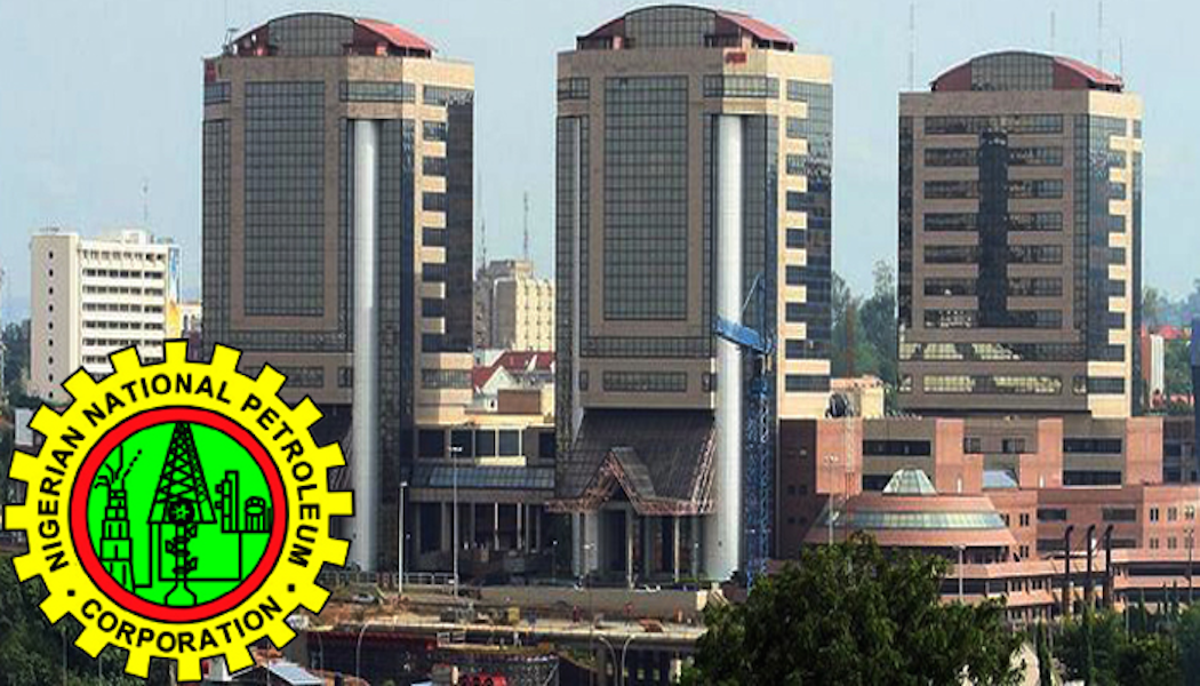
The Nigerian National Petroleum Company Limited (NNPCL) has dismissed the managing directors of the country’s three state-owned refineries—Warri, Port Harcourt, and Kaduna—amid nationwide outrage over the failure of a multi-billion naira refinery rehabilitation programme.

The development, confirmed by multiple officials within NNPCL, also includes the removal of top executives such as Bala Wunti, former chief of the Nigeria Petroleum Investment Management Services (NAPIMS), a critical subsidiary overseeing upstream oil investments. In what appears to be a sweeping purge, staff with less than a year left before retirement have also been asked to leave.

The overhaul, which insiders describe as a desperate attempt by the new management to clean up the company’s image, comes weeks after it emerged that the Warri Refinery, supposedly refurbished at a cost of $897.6 million, had never resumed operations as publicly claimed. Instead, the plant was shut down barely a month after a televised ceremony declared it ‘fully functional’.

The news has ignited a firestorm of criticism across the country, with energy experts, civic groups, and ordinary Nigerians condemning what many now see as one of the boldest episodes of official deceit in the nation’s oil industry.

Kelvin Emmanuel, a respected energy analyst, had long questioned the authenticity of the refinery revamp claims.

“Warri, Port Harcourt, and Kaduna refineries were never coming back to operations,” he said. “The entire commissioning that was shown to Nigerians on television was a charade.”

He had, in 2024, described the programme as no more than a “blending operation” designed to give the illusion of activity while masking deeper operational failures.

His words are now seen as prophetic.

An internal status report from the Nigerian Midstream and Downstream Petroleum Regulatory Authority (NMDPRA) confirms that Warri Refinery was shut down on January 25, 2025, citing “safety concerns on the Crude Distillation Unit (CDU) Main Heater.” The report makes no mention of any output of petrol or related products, contradicting the Nigerian government’s claims that the plant had reached 60 percent capacity.

The revelation has enraged many Nigerians, particularly in light of persistent fuel shortages, high pump prices, and a government that has repeatedly defended the withdrawal of petrol subsidies on the grounds of promoting domestic refining.

Tinubu’s Celebration Now A Source of Embarrassment

The fallout is particularly awkward for President Bola Tinubu, whose administration had celebrated the relaunch of the Warri Refinery in December 2024 with considerable fanfare.

In a statement broadcast across national television, Tinubu declared:

“The restart of Warri Refinery today brings joy and gladness to me and Nigerians. This will further strengthen the hope and confidence of Nigerians for a greater and better future that we promised. This development is a remarkable way to end the year following the feat recorded earlier with the old Port Harcourt Refinery.”

He continued:

“I am equally happy that NNPC Limited is implementing my directive to restore all four refineries to good working condition. I congratulate Mele Kyari and his team at NNPCL for working hard to restore our national pride and make Nigeria a hub for crude oil refining in Africa.”

At the time, the president claimed the Warri facility was already operating at 60 percent capacity and tied its supposed revival to his broader goal of energy security. His supporters on social media and in the ruling All Progressives Congress (APC) hailed the moment as proof of his reform credentials. But with new revelations that the refinery never resumed production, and in fact, shut down within weeks, critics now accuse the administration of staging a national deception.

Expert Warns Kaduna Refinery Is Another Illusion

Kelvin Emmanuel has warned that unless deep structural issues are addressed, including Nigeria’s aging pipeline network, the idea of reviving the Kaduna Refinery is equally fictitious.

“Without the 674km pipeline that connects Escravos to Kaduna, you can kiss the two CDUs—one for heavy crude and the other for light crude—goodbye,” he said. “Any claim that you want to bring back Kaduna Refinery through barging, which will cost three to five times more than regular piping, is complete fiction.”

He also renewed calls for a full forensic audit of NNPC Trading (formerly Duke Oil) and Nigeria Upstream Investment Management Services (NUIMS, formerly NAPIMS), arguing that racketeering involving inflated invoices and dubious field development costs continues to drain national resources.

“The PXF invoice and validation of field development cost racket is well known to insiders,” Emmanuel stated, urging anti-corruption agencies to step in.

Port Harcourt Refinery Also Under Scrutiny

The Port Harcourt Refinery also said to have resumed partial operations late last year, is now reportedly functioning far below capacity, with no commercial output reaching the market. Industry insiders claim its operations are limited to internal tests and mechanical runs, not actual refining of petroleum products for the public.

Sources at NNPCL say the company is scrambling to manage the fallout, particularly as international investors and bilateral partners begin to question the credibility of state-sponsored oil projects.

New Management Faces Uphill Battle

The sacking of refinery bosses is the first major action under new NNPCL Group CEO Bayo Ojulari, appointed earlier this month following the removal of Mele Kyari. Ojulari, an oil industry technocrat, is best known for leading the $2.4 billion acquisition of Shell’s onshore assets via Renaissance Africa Energy.

Together with new NNPCL Board Chairman Musa Ahmadu-Kida, Ojulari is expected to implement a turnaround plan aimed at salvaging what remains of public trust in the national oil firm. But the road ahead is steep. Aside from technical challenges, the new team must reckon with entrenched interests, opaque contracting systems, and political interference.

Sources at the Presidency who spoke to The PUNCH said the sack of Kyari and those affected at the time stemmed from mounting concern over performance and a failure to meet key production targets.

They said the shake-up was a performance-based reshuffle, arguing that those previously in charge “were going in circles” and some of them had “become part of the problem, rather than the solution.”

The broader context makes the situation even more damning. Since 2015, Nigeria has spent over $2.7 billion on turnaround maintenance and rehabilitation of its four refineries—all without producing refined products. The failure to restore domestic refining capacity has left Africa’s largest oil producer almost entirely dependent on imported petrol, exacerbating forex pressures, inflating pump prices, and undermining the removal of subsidies.