DD
MM
YYYY

PAGES

DD
MM
YYYY

spot_img

PAGES

Home Blog Page 1258

By Monetizing 2000 Megawatts Electricity to Crypto Mining, Pakistan Could Generate Billions in Revenue

0

Pakistan has allocated 2,000 megawatts (MW) of surplus electricity to power Bitcoin mining and AI data centers in the first phase of a national initiative aimed at leveraging its excess energy capacity. This move, announced on May 25, 2025, is spearheaded by the Pakistan Crypto Council (PCC), a government-backed body under the Ministry of Finance, as part of a broader strategy to monetize surplus electricity, attract foreign investment, and create high-tech jobs.

The initiative aligns with Pakistan’s recent legalization of cryptocurrency, which seeks to integrate blockchain technology into the country’s financial ecosystem and position Pakistan as a global hub for digital innovation. The allocation addresses Pakistan’s energy sector challenges, including high tariffs and surplus generation capacity, exacerbated by the rapid adoption of solar energy among consumers. Underutilized coal-based power plants, such as Sahiwal, China Hub, and Port Qasim, operating at just 15% capacity, are expected to be repurposed for this effort.

The initiative is supported by enhanced digital connectivity, notably the Africa-2 Cable Project, a 45,000-kilometer submarine internet cable connecting 33 countries, which has recently landed in Pakistan, boosting internet bandwidth and reliability critical for AI data centers. This first phase is part of a multi-stage digital infrastructure rollout. Future plans include leveraging Pakistan’s renewable energy potential—such as wind (50,000 MW in the Gharo-Keti Bandar corridor), solar, and hydropower—along with offering tax incentives, customs duty exemptions, and reduced taxes to attract global investors.

The PCC, led by CEO Bilal Bin Saqib, aims to generate billions in revenue and foreign exchange through Bitcoin mining, with potential plans to accumulate Bitcoin in a sovereign digital wallet. Pakistan’s competitive edge is further strengthened by its lower energy costs and available land compared to regional counterparts like India and Singapore, where power costs and land scarcity limit scalability.

The global context supports this move, as AI data center demand exceeds 100 gigawatts while supply remains around 15 gigawatts, creating opportunities for countries like Pakistan with surplus power. With over 40 million crypto users and a ranking of ninth in Chainalysis’ 2024 Global Crypto Adoption Index, Pakistan is well-positioned to become a regional leader in Web3, AI, and blockchain technologies. However, experts emphasize the need for robust regulation and cybersecurity to sustain investor confidence, alongside addressing geographical challenges, such as the mismatch between renewable energy sources in the south and water resources for cooling data centers in the north.

By monetizing surplus electricity, Pakistan could generate billions in revenue, as projected by the Pakistan Crypto Council (PCC). The initiative is expected to attract foreign direct investment (FDI) from global tech and crypto firms, leveraging Pakistan’s low energy costs (compared to regional competitors like India and Singapore) and tax incentives. This aligns with the global demand for AI data centers, projected to exceed 100 gigawatts, and could position Pakistan as a regional hub for Web3 and blockchain technologies.

The development of AI and crypto infrastructure is likely to create high-tech jobs, boosting sectors like IT, engineering, and blockchain development. This could help address unemployment, particularly among Pakistan’s tech-savvy youth, with over 40 million crypto users already in the country (Chainalysis 2024). Utilizing underused coal plants (e.g., Sahiwal, operating at 15% capacity) and renewable energy potential (50,000 MW from wind in Gharo-Keti Bandar) could reduce financial strain on Pakistan’s energy sector, where high tariffs and surplus capacity have been persistent issues.

Legalizing cryptocurrency and promoting Bitcoin mining could accelerate Pakistan’s adoption of blockchain technology, fostering innovation in finance, supply chain, and digital identity systems. The enhanced digital connectivity from the Africa-2 Cable Project (45,000 km submarine cable) provides the bandwidth necessary for AI data centers, potentially enabling Pakistan to compete in the global AI race, where demand far outstrips supply.

Repurposing surplus electricity addresses inefficiencies in Pakistan’s energy grid, but reliance on coal-based plants raises environmental concerns due to high carbon emissions. Future phases focusing on wind, solar, and hydropower could align with global sustainability goals, but scaling renewable infrastructure will require significant investment and time. Pakistan’s ranking as ninth in the 2024 Chainalysis Global Crypto Adoption Index and its competitive energy costs could make it a leader in the Global South for crypto and AI industries, potentially challenging established hubs like Singapore or Dubai.

The economic benefits of crypto mining and AI data centers are likely to concentrate in urban areas with better infrastructure, leaving rural regions—where energy access remains inconsistent—further behind. Rural communities may not directly benefit from job creation or technological advancements. The high capital requirements for crypto mining and AI infrastructure favor large investors and corporations, potentially exacerbating wealth inequality. Small-scale miners or local businesses may struggle to compete, limiting trickle-down effects.

While Pakistan has over 40 million crypto users, access to high-speed internet and advanced tech skills is uneven. Urban centers like Karachi and Lahore will likely see faster adoption of blockchain and AI technologies, while less-connected regions lag. The initiative demands a workforce skilled in blockchain, AI, and cybersecurity. Without widespread education and training programs, only a small, educated elite may benefit, deepening the skills divide.

Allocating 2,000 MW to crypto and AI could divert resources from addressing energy shortages in underserved areas. While the initiative targets surplus power, public perception of prioritizing high-tech industries over basic electricity access could spark social unrest. Reliance on coal plants for the initial phase may disproportionately affect marginalized communities near these facilities, who bear the brunt of pollution without reaping economic benefits.

Pakistan’s low energy costs and tax incentives may attract global firms, but without robust regulations, there’s a risk of exploitation, where foreign entities extract profits while contributing minimally to local development. This could reinforce global economic hierarchies rather than challenge them. Weak cybersecurity frameworks could expose Pakistan to risks like data breaches or crypto fraud, potentially undermining investor confidence and limiting its ability to compete with more established tech hubs.

Cryptocurrency legalization may face resistance in conservative segments of society, where digital currencies are viewed with skepticism or associated with illicit activities. Bridging this cultural divide will require public education and transparent regulation. The tech sector in Pakistan, like many globally, is male-dominated. Without targeted policies, women may be underrepresented in the new jobs and opportunities created by this initiative.

Expand internet and energy access to rural areas to ensure equitable benefits from the crypto and AI boom. Launch nationwide programs to teach blockchain, AI, and cybersecurity skills, targeting marginalized groups and women. Develop robust cybersecurity and financial regulations to protect against fraud and ensure local economic benefits. Prioritize renewable energy development to reduce environmental impacts and align with global sustainability trends.

Ensure tax incentives and opportunities are accessible to local businesses and small-scale miners, not just large corporations. Pakistan’s initiative to allocate 2,000 MW for Bitcoin mining and AI data centers, alongside crypto legalization, has the potential to drive economic growth, technological innovation, and global competitiveness.

However, it risks deepening economic, digital, and energy divides within the country and reinforcing global inequalities if not managed inclusively. Strategic investments in infrastructure, education, and regulation will be critical to ensuring equitable benefits and positioning Pakistan as a sustainable leader in the global tech landscape.
Cheap Under $0.01, This Crypto is a Better Bet to Turn $120 into $6000 Than Solana (SOL) and Ripple (XRP) Combined

0

Reliable chains like Solana (SOL) and Ripple (XRP) usually find stable growth, but it’s often the unusual tokens that can truly make people millionaires. A crypto token making news in 2025 is called Salamanca (DON). At a fraction of a penny, Salamanca (DON) is surprisingly becoming the best meme coin on the BSC and may turn out to be a far better investment for $120 than SOL and XRP combined.

Salamanca (DON): The Meme Coin Rocket

As we reach May 2025, DON/USD is available at just $0.001258. Each dollar spent can get you numerous tokens due to the low price. Applying this idea, $120 at $0.001 per token would let you buy 40,000 DON. If the DON project meets its goals, the stack could have a huge value.

At present, Salamanca (DON) can be found on Gate.io, MEXC and PancakeSwap exchanges. Because it is available to many users, it has grown fast and attracted significant trading activity. However, the biggest factor for change could show up in the future.

The Binance Listing: The Next Big Catalyst

A Binance listing is the biggest dream for meme coins and Salamanca (DON) is almost there. People close to the project say that a Binance listing is very close. Previously, when meme tokens were listed on Binance, the resulting price action was remarkable because millions of investors could buy and the available liquidity increased.

The first trading on Binance could start the DON rocket, turning those cheap buys into something worth millions for investors to remember and be grateful for.

2000% Gains: Pipe Dream or Plausible?

Lots of talk in Salamanca (DON) these days is focused on the potential for prices to jump 20x from the current level. Even though the changes sound major, this market is famous for explosive growth, especially after topics turn viral on social media, with big exchange listings driving things further.

Should DON increase by 2,000%, the coin would reach $0.06 from its current $0.001 price. That money you spent to buy shares—$120—could climb to as much as $2,400 and if you got in at the low end, your earnings could be more than that.

Why Salamanca (DON) Has Better Chances for Growth Than SOL and XRP

Solana and Ripple are known as ‘blue-chip cryptos’ because they have a gigantic market value. They won’t likely become 20x or 50x higher in the foreseeable future, because of their exceptional size. Differently, Salamanca (DON) is a micro-cap that can rise fast as a group of people drive up its value and fuel sudden life-changing profits in a day.

Key Advantages:

  • Accessible to All: The fact that it costs just under $0.01 means you can try it out.
  • Ideal for traders that want large returns from trading.
  • A major rally may be set off if Binance ends up listing.
  • A Popular Group: Meme interest and tendency for viral posts lift demand.

The Meme of the Year in the BSC Space

Salamanca may not be another anonymous meme coin—it’s already being recognized as the Best BSC Meme of 2025. Meme tokens often get crowded, but DON’s marketing, strong community and fast exchange creation make it different from the rest. Being able to reflect the current trends and take part in the hype makes this project unique in the Binance Smart Chain community.

Conclusion

Salamanca (DON) is uniquely attractive since it is inexpensive, has great potential and features upcoming catalysts. Even though Solana and Ripple are reliable for the long term, exponential gain hunters in 2025 should watch DON closely. Once listed on Binance next, the 2,000% goal in view and with a 2025 award for Best BSC Meme, Salamanca (DON) could make a $120 stake worth $6,000—or even more.

For more information about Salamanca (DON), visit:

Scott Galloway Calls Elon Musk’s Tesla Fallout “One of the Greatest Brand Destructions of All Time”

0

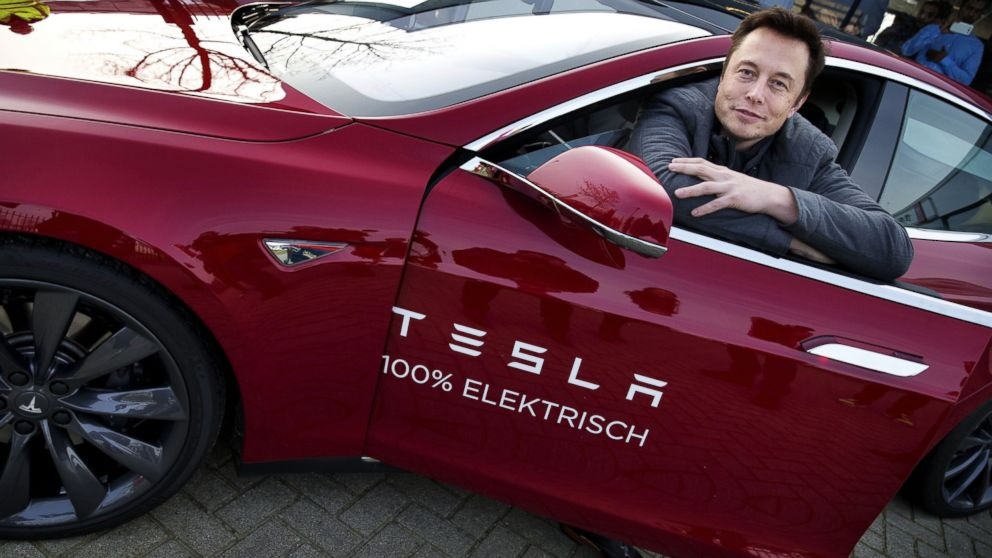
Scott Galloway, a marketing professor at New York University and prominent commentator on tech industry dynamics, has described the reputational fallout surrounding Elon Musk and Tesla as “one of the greatest brand destructions of all time.”

Speaking on the Pivot podcast, which he co-hosts with journalist Kara Swisher, Galloway blamed Musk’s political entanglements—particularly his alignment with the Trump campaign and leadership role in the White House’s Department of Government Efficiency (DOGE)—for severely damaging the automaker’s brand.

“Tesla was a great brand,” Galloway said. “The rivers have reversed and the tide has turned entirely against him.”

Tesla, once the poster child of the clean-energy movement and innovation darling, has suffered a stunning collapse in public perception. Citing a recent Axios Harris Poll, Galloway noted that Tesla has fallen from 8th place in 2021 to 95th in 2025 among the 100 most visible companies in the U.S.—a dramatic decline many observers attribute to Musk’s politicization of his public image.

Over the past year, Musk poured millions into Donald Trump’s re-election campaign and appeared regularly alongside the former president during his transition. His subsequent appointment as the public face of DOGE—a cost-cutting policy unit tasked with reducing government spending—further entrenched Musk within Republican power circles.

While the move boosted his standing among conservative voters, it triggered an intense backlash from Tesla’s historically liberal customer base.

“He’s alienated the wrong people,” Galloway warned. “Three-quarters of Republicans would never consider buying an EV. So he’s cozied up to the people who aren’t interested in EVs.”

The fallout hasn’t been limited to public perception. Tesla’s financials have cratered. In its April earnings report, the company announced a 71% drop in earnings per share compared to the same period last year and a 20% decline in automotive revenue. Widespread protests have erupted at Tesla showrooms and dealerships across the country, with critics blaming Musk’s divisive politics for the shift in consumer sentiment.

Investor frustration has also intensified. Tesla’s stock has slumped significantly in recent months, and speculation grew that the company’s board may be exploring a leadership transition, though no such move has been confirmed. The damage has led to urgent calls for Musk to refocus on Tesla’s core business.

Over the weekend, Musk signaled a potential shift in priorities. Following major outages on X, the social media platform he owns, Musk posted, “Back to spending 24/7 at work and sleeping in conference/server/factory rooms. I must be super focused on /xAI and Tesla (plus Starship launch next week), as we have critical technologies rolling out.”

At the Qatar Economic Forum on Tuesday, Musk further indicated he would be stepping back from politics—for now.

“I plan to spend a lot less on political campaigns in the future,” he said. “If I see a reason to do political spending in the future, I will do it. I do not currently see a reason.”

However, it remains unclear whether Musk’s promise to return his attention to Tesla and his other ventures means he will abandon the polarizing rhetoric that has come to define his public persona in recent years. His sharp shift toward right-wing politics, ongoing presence on X, and vocal support for controversial policies have created a disconnect between Tesla’s brand and its traditional customer base—typically younger, urban, and left-leaning.

While Musk has previously demonstrated the ability to galvanize support and lead disruptive innovation, analysts warn that his credibility with key markets is eroding. Meanwhile, competitors in the electric vehicle space—including Rivian, Hyundai, and Ford—are seizing the opportunity to lure disaffected Tesla customers.

It is not clear whether Musk can repair the damage his politics has caused Tesla. What is clear, as Galloway put it, is that the tech billionaire has “forgotten who made Tesla what it was.”

Tekedia Capital Welcomes Rulebase, Founded by Ex-Microsoft, ex-Goldman Sachs Nigerian Geeks

0

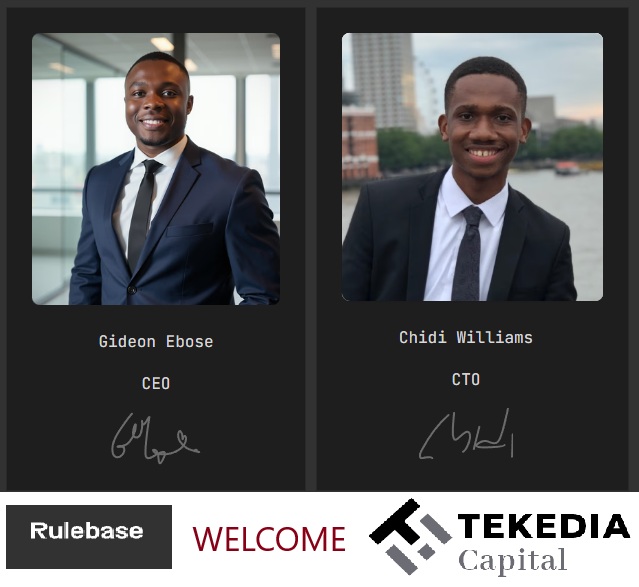
When two young men working in Goldman Sachs and Microsoft tell you they will leave the iconic companies for a startup, you really have limited options than to support them. Yes, Gideon Ebose and Chidi Williams pitched Rulebase to Tekedia Capital, and when we asked “are you leaving these giants for this startup”, they said “YES”. We asked again, and they responded in affirmative. Quickly, we said “we’re in…we will invest in this mission”. They raised $millions from global investors, and have since relocated from London to the U.S..

Our hypothesis is that Gideon and Chidi will build a modern infrastructure for most African fintech companies in the domain of QA, compliance, support, etc. And so far, some of the leading fintech companies are converging because when it comes to such vectors, local experience matters. The traction is super impressive and African fintech companies now have a modern CX partner. Of course, the mission goes beyond Africa as the product is a global one.

To learn more about Rulebase, go here https://rulebase.co/ . For Tekedia Capital, visit capital.tekedia.com .

HSBC’s Blockchain Tokenized Settlement Marks Significant Step Toward Modernizing Global Finance

0

HSBC Holdings launched Hong Kong’s first blockchain-based settlement service utilizing tokenized deposits on May 22, 2025. The service, developed in collaboration with Ant International, enables real-time, 24/7 payments in Hong Kong dollars (HKD) and US dollars (USD) for corporate clients, enhancing efficiency and security in transactions.

The platform, tested under the Hong Kong Monetary Authority’s (HKMA) Project Ensemble sandbox, converts bank cash deposits into digital tokens on HSBC’s Whale platform, with Ant International completing the first transaction. This initiative aligns with Hong Kong’s push to become a digital finance hub, supported by a new stablecoin law. HSBC plans to expand the service across Asia and Europe by the end of 2025.

The blockchain-based service enables 24/7 real-time settlements, eliminating delays associated with traditional banking systems, which often rely on batch processing or limited operating hours. By streamlining cross-border and interbank transactions, tokenized deposits reduce intermediary costs, potentially lowering fees for corporate clients. The service’s planned expansion across Asia and Europe by the end of 2025 suggests scalability, enabling broader adoption in global financial markets.

The use of distributed ledger technology (DLT) ensures immutable transaction records, reducing fraud risks and enhancing trust. Tokenized deposits on HSBC’s Whale platform provide transparent tracking, improving auditability for regulators and businesses. Hong Kong’s support through Project Ensemble and stablecoin legislation positions it as a leader in digital finance, potentially attracting fintech investments.

The service targets corporate clients initially, but successful implementation could pave the way for retail applications, broadening access to blockchain-based financial tools. Testing within the HKMA’s sandbox ensures compliance with regulatory standards, fostering trust and encouraging other banks to explore similar solutions. As HSBC expands, alignment with international regulations will be critical to ensure interoperability across jurisdictions.

Being the first in Hong Kong to launch this service gives HSBC a competitive edge in the digital finance race, potentially attracting clients from rival banks. Collaboration with Ant International strengthens the ecosystem, leveraging Ant’s expertise in digital payments. Smaller financial institutions or corporations with limited technological infrastructure may struggle to integrate blockchain solutions, widening the gap between large, tech-savvy banks like HSBC and smaller players.

Implementing and maintaining blockchain systems requires specialized skills, which may be scarce in certain regions or organizations. While long-term costs may decrease, the initial investment in blockchain infrastructure could be prohibitive for smaller firms, limiting access to these benefits. The service currently targets corporate clients, potentially leaving retail customers and smaller businesses behind until broader adoption occurs.

Different countries have varying levels of regulatory support for blockchain and tokenized assets. While Hong Kong is progressive, other regions may lag, creating uneven global adoption. Smaller institutions may face higher relative costs to meet regulatory requirements for blockchain-based systems, further entrenching disparities. Stakeholders, including businesses and regulators, need to understand blockchain technology to fully leverage its benefits. Lack of awareness could slow adoption in less tech-savvy markets.

Reliable internet and advanced computing resources are prerequisites for blockchain participation, which may exclude developing regions or underserved communities. Early adopters like HSBC could dominate the blockchain finance space, potentially marginalizing smaller competitors and reducing market diversity. Reliance on partners like Ant International could create vulnerabilities if these relationships falter or if partners exert disproportionate influence.

HSBC’s blockchain settlement service marks a significant step toward modernizing global finance, offering efficiency, security, and innovation. However, it also highlights a growing divide between large, well-resourced institutions and smaller players, as well as between regions with varying technological and regulatory readiness. To bridge this gap, efforts should focus on fostering inclusive infrastructure, providing education, and harmonizing regulations to ensure equitable access to blockchain’s benefits.