DD
MM
YYYY

PAGES

DD
MM
YYYY

spot_img

PAGES

Home Blog Page 127

Foxconn Says $1.4bn Nvidia-Backed Supercomputing Center to Be Ready H1 2026

0

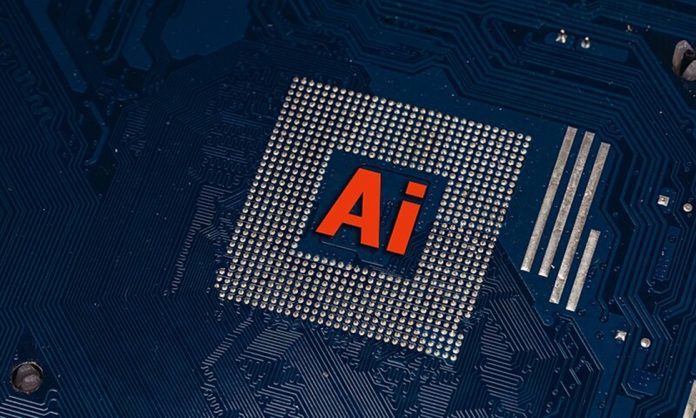
Foxconn said on Friday that the $1.4 billion supercomputing center it is building with Nvidia will be ready in the first half of 2026, signaling its tightening grip on the AI hardware world.

When completed, it will stand as Taiwan’s largest advanced GPU cluster, underscoring just how fast the AI race is turning into a full-blown infrastructure sprint.

The 27-megawatt facility will run on Nvidia’s new Blackwell GB300 chips. Neo Yao, who leads Visonbay.ai — Foxconn’s newly created unit for AI supercomputing and cloud operations — said the center will also become Asia’s first GB300 AI data facility. The announcement was made at Foxconn’s tech day, attended by key partners including Nvidia, OpenAI, and Uber.

At the event, Nvidia vice president Alexis Bjorlin pointed to an accelerating shift in how companies use AI infrastructure.

“As GPU technology accelerates, building individual facilities may no longer make economic sense,” she said.

Renting compute power, according to her, could offer a stronger return by letting organizations scale usage based on product cycles and business demands.

Foxconn already plays a central role in the industry as Nvidia’s main manufacturer of AI racks — the server assemblies that house GPUs, cabling, and other specialized equipment needed for high-intensity AI workloads. This positioning has made the iPhone assembler one of the prime beneficiaries of the global boom in data center construction, as cloud firms funnel extraordinary amounts of money into AI research and infrastructure expansion.

The momentum inside the sector is unmistakable. Foxconn issued a positive outlook last week, saying AI orders will be a major driver of growth heading into 2026. In an interview with Reuters published earlier on Friday, Chairman Young Liu said Foxconn plans to invest $2 billion to $3 billion each year in AI. He added that the company now has the ability to produce 1,000 AI racks per week, a number that is expected to rise sharply next year.

The tech day also featured an appearance by Foxconn founder Terry Gou and by Spencer Huang, a product line manager in Nvidia’s robotics division, and the son of Nvidia founder Jensen Huang. He said Nvidia is working with Foxconn to bring AI into factories and manufacturing lines, a partnership that ties directly into Foxconn’s ambition to broaden its industrial footprint.

The wide-ranging event included a push into electric vehicles, a sector Foxconn sees as another pillar of its transformation. Liu said EV volumes are reaching the threshold where automakers can now outsource more production to Foxconn. The company showcased its “Model A” electric vehicle on stage, with Chief Strategy Officer Jun Seki explaining that the EV was designed by Japanese engineers.

Foxconn intends to create a dedicated unit in Japan for customers there, and production of the Model A will move to Japan in the future, Liu added.

Across the tech world, the speed of investment has raised discussion about whether an AI-driven infrastructure bubble is forming. The race to build ever-larger GPU clusters is pushing companies to spend at levels rarely seen in such a short period. Investors are piling in with the hope of catching the next frontier of computing, while cloud providers and enterprises are scrambling to secure enough capacity to stay competitive. Analysts say the mismatch between projected long-term AI demand and the near-term flood of spending is stirring familiar questions about sustainability.

Foxconn, like several others, is sprinting ahead, positioning itself right at the center of the global buildout. The company has moved far beyond its identity as Apple’s top iPhone assembler, recasting itself as a heavyweight in AI infrastructure, EV manufacturing, and industrial automation.

Nigeria Orders Immediate Shutdown of 41 Unity Schools as Fresh Waves of Abductions Reignite National Fear

0

The Nigerian government has ordered principals of 41 Federal Unity Colleges to shut down the schools immediately. The directive, dated November 21, 2025, came from the Federal Ministry of Education and carried the approval of Education Minister Tunji Alausa.

With the country once again reeling from a resurgence of school attacks, the circular said the closure was necessary in light of “recent security challenges” and the urgent need to “prevent any security breaches.”

Hajia Abdulkadir, Director of Senior Secondary Education, signed the memo on behalf of the minister. The document instructed heads of the affected schools—spread across the North-West, North-East, North-Central, and parts of the South—to enforce the shutdown without hesitation.

It was a move that instantly sent shockwaves through parents’ groups, staff unions, and education circles, capturing the sense of a government scrambling to get ahead of a threat it has battled for more than a decade.

The government’s decision follows a grim week in which the country once again became the stage for coordinated assaults on schools. The latest attacks have revived painful memories that never fully faded: Chibok in 2014, Dapchi in 2018, Kankara in 2020, Jangebe in 2021, Tegina, Birnin Yauri, and now a fresh round of kidnappings unfolding almost in real time.

In Niger State, gunmen struck St. Mary’s Primary and Secondary School in Papiri on Friday. The attackers—witnesses counted more than 60 motorcycles—stormed the compound with precision, shot the gatekeeper (who was left critically injured), and abducted an unspecified number of students.

Barely days earlier, another group of assailants seized 25 schoolgirls during an attack in Maga town, Kebbi State. The tempo of the assaults has unsettled communities across the northern belt, where fear now travels even faster than official information.

In Nasarawa, panic sparked by rumours of two abducted pupils at St. Peter’s Academy in Rukubi spread quickly across WhatsApp groups and community radio stations. The police moved to quash the story, calling the report “false and not reflective of the true state of affairs,” but the speed at which the rumor travelled underlined the anxiety in the air.

With tension rising, President Bola Tinubu directed the Minister of State for Defence, Bello Matawalle, to relocate to Kebbi immediately to coordinate rescue operations. The president also postponed his planned trips to Johannesburg and Angola, signaling the seriousness with which the administration is treating the latest wave of attacks.

Officials familiar with the matter said the presidency is worried about an escalation if security agencies do not regain momentum quickly. The northern states have been the epicenter of school kidnappings for years, and the renewed violence threatens to undo the limited progress made in securing schools under the Safe Schools Initiative.

Education, Interrupted — Again

Federal Unity Colleges have long been symbols of national cohesion—institutions meant to mix students from different ethnic and religious backgrounds. Their shutdown is another unfortunate episode of education interruption, orchestrated by insecurity, which has continued to erode the country’s education system, particularly in regions where children already face steep barriers to learning.

The ministry’s directive did not specify how long the schools would remain closed or whether remote learning arrangements would be put in place. For students preparing for examinations, it raises the specter of yet another disrupted academic calendar.

Nigeria has been here before—too many times. Since 2014, learning institutions have become recurring targets for armed groups seeking ransom, attention, or leverage. The pattern has become grimly familiar: attackers on motorcycles, under-protected schools, frantic rescue operations, traumatized students, and parents left waiting for news.

Global organizations, including UNICEF, have repeatedly condemned the recurring abductions and urged the government to secure schools and prioritize the safety of children. Despite years of advocacy, Nigeria’s learning spaces remain deeply vulnerable.

For many communities, the question now is not how this happened again, but whether the latest wave will finally force a different level of response. The recent wave of insecurity in Nigeria has attracted the attention of the U.S. government, with President Donald Trump threatening to order military action in the country if the government fails to act fast to protect lives, especially targeted Christians.

As AI Gold Rush Accelerates, Wall Street Warns of Cracks Beneath the Frenzy

0

The AI boom has turned global markets into a kind of high-voltage arena where money, hype, and fear increasingly share the same stage. That was the mood in New York this week as two veteran finance executives described a financial system hurtling into an AI-driven future without fully accounting for the risks forming beneath its feet.

Speaking at the Reuters Momentum AI 2025 conference, Matthew Danzig, managing director at Lazard, and Joanna Welsh, chief risk officer at Citadel, painted a picture of markets where enthusiasm is running far ahead of fundamentals. AI, Danzig said, has become “the number one topic of conversation” among both investors and corporate executives. And with that obsession comes a predictable scramble: companies racing to define an AI strategy, hunting for proprietary data, and acquiring technology they cannot realistically build on their own.

“Every company that’s a potential target is figuring out their AI angle,” Danzig said, describing an acquisition landscape where nearly any firm can pitch itself as an AI play.

Valuations have drifted into historical extremes as investors pay for future potential, not present income.

“It’s markets willing to pay for the future,” he said.

Those expectations are already visible in the numbers. McKinsey & Co., Danzig noted, estimates that the industry will need roughly $7 trillion in capital by 2030 just to finance data-center expansion. It’s an astonishing figure that dwarfs the capital requirements of previous tech cycles. Yet despite the sheer volume of leverage flowing in, investors have shown limited interest in the absence of revenue needed to support that debt.

The tension surfaced again this week in the trading pattern of Nvidia, the silicon powerhouse whose chips have become the backbone of AI infrastructure. After the $4.5 trillion company posted record revenue and a 65% year-over-year jump in net income for its fiscal third quarter, the stock initially surged. Then the sentiment jolted. By Thursday afternoon, Nvidia shares were down 2.2% at $182.46, pulling down other tech names with it as worries about a potential AI bubble re-entered the conversation.

Under the sparkle of record earnings, Welsh warned, lies a market architecture that is becoming increasingly fragile.

Citadel, which manages $71 billion in assets, has been modeling scenarios in which shocks propagate through markets faster than most investors expect.

“Markets are just faster,” Welsh said. “These volatility spikes and pulses, they hit harder, they fade faster, they repeat more often.”

It’s a dynamic that becomes even more concerning when paired with credit-market behavior that Welsh and others have been tracking for months. She said risks are now “starting to converge and stack” with the AI boom, especially as companies issue 30- and 40-year bonds on assets that depreciate in roughly four years. The mismatch is stark because firms are locking themselves into decades of debt for technology that may be obsolete halfway through the current business cycle. Such distortions, she said, strain cash flow and deepen systemic vulnerabilities.

At the lower end of the credit spectrum, the picture is no more reassuring. Welsh pointed to a surge in zero-coupon convertible bonds issued by less creditworthy tech firms — instruments that give investors equity upside in boom times and priority in bankruptcy, but offer no coupon payments. The renewed appetite for these bonds is a signal she has seen before.

“Zero-coupon converts are having a big issuance year, same as they did in 2001, the same as they did in 2021,” Welsh said, invoking two eras that preceded sharp downturns. And when combined with capital flowing into illiquid private credit, she added, the mix becomes combustible. “You can see how there’s some portfolios where… a brush fire could be pretty healthy.”

What she meant was that a small shock, a wobble in tech valuations, a batch of weak earnings, a sudden liquidity squeeze, could ignite far larger disruptions. The market, she implied, has created its own dry tinder.

The broader message from both executives was not that AI’s economic potential is exaggerated. It’s that the infrastructure supporting the boom — from data-center financing to corporate capital structures — may not withstand the speed of the cycle it has created. Investors are pouring money into the future at a pace that leaves little margin if that future arrives more slowly than expected.

Congressman Warren Davidson Introduced the Bitcoin for America Act

0

U.S. Representative Warren Davidson (R-OH) introduced the Bitcoin for America Act in the House of Representatives. This legislation aims to modernize federal tax payments by allowing individuals and businesses to settle their tax obligations directly with Bitcoin (BTC).

Crucially, it would eliminate capital gains taxes on these transactions—treating BTC payments like foreign currency transfers—and direct all collected BTC into the U.S. Strategic Bitcoin Reserve, a national holding established by executive order earlier in the year.

The bill builds on President Donald Trump’s March 2025 executive order, which centralized about 200,000 BTC seized from criminal proceedings into a single federal reserve to prevent mismanagement across agencies.

Davidson’s proposal shifts the reserve’s growth strategy from one-off seizures or budget allocations to a voluntary, market-driven inflow from taxpayers, positioning Bitcoin as a hedge against inflation and a tool for U.S. financial leadership.

Taxpayers can transfer BTC to the IRS at its fair market value on the transfer date, satisfying liabilities without triggering capital gains on BTC appreciation. This removes a major barrier under current IRS rules, where using BTC for payments is a taxable event.

Funding the Reserve

100% of BTC received goes into the Strategic Bitcoin Reserve, not general funds. Taxpayers could opt to allocate their BTC specifically to the reserve, bypassing uses like foreign aid.

Applies to federal taxes for individuals and corporations; no minimum or maximum amounts specified. The reserve grows organically without new spending, debt, or market purchases—avoiding price inflation from government buying.

Davidson argues the bill strengthens U.S. sovereignty in a world where nations like China and Russia are accumulating BTC. Bitcoin’s fixed supply (21 million cap) makes it an appreciating asset, unlike the inflationary dollar.

The Bitcoin Policy Institute (BPI) projects that if just 1% of federal taxes were paid in BTC from 2025–2030, the reserve could accumulate over 2.6 million BTC—valued at ~$230 billion at current prices—creating a “democratic” accumulation model.

Critics, however, worry it could incentivize over-reliance on seizures for reserve growth or complicate IRS enforcement. Supporters like BPI’s Conner Brown hail it as a “bottom-up” alternative to top-down mandates, such as Sen. Cynthia Lummis’s earlier $80 billion purchase proposal.

The bill is in early stages, with no co-sponsors announced yet. It faces hurdles in a divided Congress but aligns with growing pro-crypto momentum.

The Bitcoin for America Act could fundamentally alter U.S. fiscal dynamics by integrating Bitcoin—a deflationary asset with a fixed supply of 21 million coins—into federal revenue streams.

Proponents argue it positions Bitcoin as a hedge against dollar inflation, which has eroded purchasing power by over 20% since 2020. By directing BTC payments into the Strategic Bitcoin Reserve, the government could accumulate holdings without new spending or debt, potentially appreciating in value to offset fiscal deficits.

The Bitcoin Policy Institute (BPI) models that if 1% of federal taxes about $50 billion annually were paid in BTC from 2025–2030, the reserve could grow to over 2.6 million BTC, valued at ~$230 billion today, creating a self-sustaining asset base.

This “democratic” accumulation avoids market distortions from direct purchases, unlike proposals like Sen. Cynthia Lummis’s $80 billion buy plan. However, risks include BTC’s volatility: a 50% price drop could devalue the reserve by tens of billions, straining budgets if liquidated during downturns.

It might also reduce incentives for fiat-based economic activity, as taxpayers holding appreciated BTC could prefer it over dollars, potentially accelerating dollar depreciation. For small and medium enterprises (SMEs), it offers payment flexibility but introduces compliance costs for tracking BTC values.

Organic accumulation via voluntary taxes; appreciates as hedge against inflation. Volatility could lead to short-term losses; over-reliance on seizures if adoption lags. Budget-neutral; reduces debt dependency. Indirect pressure on dollar value; higher IRS processing costs.

Boosts BTC adoption without government buying pressure. Could inflate BTC prices if scaled, benefiting holders unevenly. A core innovation is exempting capital gains taxes on BTC-to-government transfers, treating them like foreign currency exchanges under IRC Section 988.

Currently, using BTC for payments triggers gains on appreciation e.g., buying at $10K and paying at $60K incurs ~$50K taxable gain. This exemption removes that barrier, incentivizing HODLers to pay taxes with BTC and potentially increasing compliance among crypto users.

Valuations would use fair market value at transfer time, simplifying reporting but requiring robust IRS oracles for accuracy.For taxpayers, this democratizes tax options, especially for the unbanked 13% of U.S. households, as BTC enables borderless, permissionless payments.

Businesses could deduct BTC costs more efficiently, but it raises equity concerns: Wealthier BTC holders benefit most from the exemption, while low-income filers might face tech barriers. Legally, it codifies the March 2025 executive order, mandating cold storage and multi-sig custody to prevent past agency losses of private keys.

Enforcement challenges include AML/KYC integration and state-federal alignment, as states like California tax crypto differently. Critics warn it could complicate audits, with inconsistent regs leading to disputes over “fair market value.”

By codifying the reserve, it shields holdings from agency silos, reducing forfeiture risks (e.g., Silk Road BTC losses). It aligns with Treasury’s easing on unrealized gains taxes, potentially paving for broader DeFi integration.

Legally, it invites challenges: Environmental groups might sue over BTC’s energy use proof-of-work consumes ~150 TWh/year, rivaling Argentina’s grid, while privacy advocates decry KYC mandates for transfers. It could preempt state bans, fostering uniformity but overriding local fiat preferences.

Overall, passage could accelerate BTC’s legitimacy, but failure reinforces regulatory silos. With no co-sponsors yet, its fate hinges on 2026 midterms.

Revamping Legacy Factories: Smart PLC Upgrades on a Budget

0

Executive summary: Aging PLC-based control systems increase downtime risk and hide operational data, yet complete replacements are often unaffordable. A phased, risk-prioritized modernization—targeting CPUs, communication modules and selected I/O—combined with careful sourcing of refurbished or surplus parts can extend asset life, enable IIoT connectivity, and deliver measurable ROI without a large capital outlay.

  1. Introduction: the “Legacy” dilemma

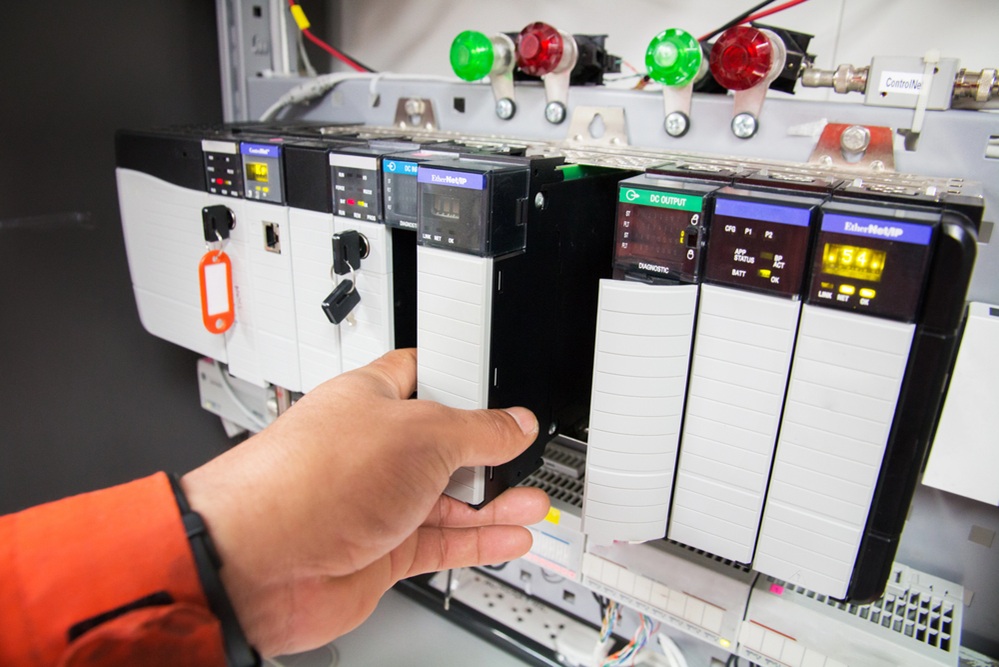
Imagine a mid-sized production line running on a reliable but obsolete PLC family—Siemens S5 or early Allen-Bradley SLC controllers, for example. They keep the lights on until a unique module fails and replacement parts are unavailable. The result: emergency downtime, rushed engineering changes, and lost production. Beyond the immediate disruption, legacy environments carry hidden costs: scarce spare parts, minimal telemetry for process optimization, and the retirement of engineers who understand legacy ladder logic and bespoke architectures.

Modernization need not mean a tear-down. A strategic retrofit—phased, targeted, and data-driven—typically provides the best balance between cost, risk and business value.

  1. Assessing your automation assets: audit before you act

Begin with a disciplined asset audit. A reliable inventory should list controller models, firmware versions, I/O counts and network interfaces; tie each component to the process it serves (safety loop, critical quality control, or non-critical auxiliary function).

  • Manufacturer support: Is the PLC still supported for firmware and critical patches?
  • Software compatibility: Can engineering tools be run on modern OS platforms, or do they require legacy virtual machines?
  • Spare parts availability: Are key modules available new, refurbished or via reputable surplus vendors?

Not all assets require immediate replacement. Use a simple risk-stratification approach:

  • High risk: Obsolete controllers that serve safety or high-availability functions, or modules with zero spare availability.
  • Medium risk: Process control loops where slow failure would cause quality degradation but not immediate shutdown.
  • Low risk: Stable, non-critical loops or equipment planned for scheduled replacement.

Actionable tip: Build a facility “Risk Heatmap” to visually prioritise investment—this clarifies where budget delivers the most risk reduction.

  1. Phased migration: the cost-effective strategy

Contrast two approaches: the disruptive “rip-and-replace” method versus a phased migration. Rip-and-replace replaces entire controllers and I/O, often requiring full rewiring, extended commissioning and a high probability of integration bugs. Phased migration reduces both capital and operational risk by sequencing changes.

A typical phased sequence:

  1. HMI modernization: Replace ageing operator panels with modern HMIs to gain diagnostics and alarms without changing control logic.
  2. Communications uplift: Add Ethernet/IP, OPC UA or protocol gateways to legacy PLCs to enable data acquisition for analytics.
  3. CPU upgrades: When CPUs fail or when increased processing is needed, migrate to modern processors while retaining field I/O via gateway/adapters.
  4. Targeted I/O replacement: Replace only the I/O modules that require higher precision or faster responses (smart I/O), leaving stable digital points untouched.

Hybrid architectures are often the pragmatic choice: new processors or IIoT gateways communicate with legacy I/O through protocol converters or chassis adapters, avoiding the time and cost of rewiring thousands of points. For planning detail and a staged technical roadmap, see this comprehensive modernization guide which breaks down the technical stages of migration.

  1. Sourcing hardware: balancing quality and budget

Supply chains for industrial components are volatile: OEM lead times can be long and prices elevated. For legacy support, the aftermarket has matured—”new surplus” and factory-refurbished modules offer cost-effective, engineering-viable alternatives. When procuring non-factory-new parts, insist on documented testing, refurbishment logs, and limited warranties where available.

Cross-border e-commerce platforms and specialist distributors make it easier to locate rare Siemens, Mitsubishi or Allen-Bradley modules that local channels no longer stock. Platforms specializing in industrial automation, such as ChipsGate, can bridge this gap by providing access to a large inventory of legacy and active PLC components.

Procurement checklist: verify seller reputation, request visual and functional test reports, require serial number traceability, and prefer sellers offering return/testing warranties.

  1. Key technologies to prioritise in a budget upgrade

Gateways & protocol converters: These translators connect Modbus, ProfiBus or legacy serial devices to MQTT or OPC UA endpoints, enabling cloud dashboards and analytics without altering control logic.

Smart I/O modules: Replace only I/O channels that need faster sampling, higher ADC resolution or integrated diagnostics—this is a precise way to boost performance by exception.

HMI modernization: Modern touchscreen HMIs greatly improve operator diagnostics and can be implemented with minimal wiring changes, often delivering the fastest user-perceived improvement for the least cost.

  1. FAQ: common questions about factory retrofitting

Q: Is it risky to mix old and new PLC brands?

A: While single-vendor environments simplify support, modern open protocols (OPC UA, MQTT, Ethernet/IP) and disciplined network segmentation make multi-vendor systems stable when managed with clear architecture and change control.

Q: How much downtime should I expect during a phased upgrade?

A: Phased upgrades are designed to minimise production impact; many tasks (HMI swaps, gateway installation) can be scheduled during weekend or planned maintenance windows. Full replacements typically require longer planned outages and higher re-commissioning effort.

Q: Can I upgrade the CPU and keep old I/O?

A: Yes. In many architectures you can retain legacy I/O (for example, Allen-Bradley 1771 I/O) and modernise the controller via a chassis adapter or protocol gateway—this saves rewiring costs while enabling improved processing and communications.

  1. Conclusion: future-proofing on your terms

Budget constraints should not freeze progress. A disciplined audit, risk-driven prioritisation, and a phased migration strategy enable factories to modernise incrementally while preserving cash flow. The real objective is not only fault-free equipment but also the acquisition of actionable data—insights that steadily improve throughput, quality and decision-making.

Next step: run a basic asset inventory and heatmap this week; identify one near-term HMI or communications upgrade that will unlock diagnostics or telemetry. Modernization is a series of manageable steps—taken thoughtfully, they compound into substantial operational improvement.