DD
MM
YYYY

PAGES

DD
MM
YYYY

spot_img

PAGES

Home Blog Page 1276

North Korean Hacker Group Reportedly Established Two LLCs in The United States to Target Developers

0
North Korean leader Kim Jong Un and his daughter Kim Ju Ae visit the Ministry of National Defense on the occasion of the 76th anniversary of the founding of the Korean People's Army in Pyongyang, North Korea in this picture released on February 9, 2024 by the Korean Central News Agency. KCNA via REUTERS

The North Korean hacker group, specifically a subgroup of the Lazarus Group tied to the Reconnaissance General Bureau (RGB), has been reported to have established two U.S.-based shell companies, Blocknovas LLC in New Mexico and Softglide LLC in New York, to target cryptocurrency developers with malware. These companies, set up using fake personas and addresses, violated U.S. Treasury and United Nations sanctions.

The hackers posed as recruiters, offering fake job interviews to lure developers into downloading malicious software, aiming to steal cryptocurrency wallets and credentials. The FBI seized the Blocknovas domain, and cybersecurity firm Silent Push confirmed multiple victims, noting the campaign’s sophistication. A third entity, Angeloper Agency, is also linked but not registered in the U.S. This tactic marks a rare instance of North Korean operatives creating legal U.S. entities to facilitate cyberattacks.

Sanctions Evasion refers to actions taken by individuals, entities, or governments to circumvent or bypass economic, financial, or trade restrictions imposed by countries or international bodies, such as the United States, United Nations, or European Union. These sanctions are typically designed to pressure targeted regimes, organizations, or individuals to change behavior, such as halting nuclear proliferation, human rights abuses, or illicit activities, by limiting access to financial systems, trade, or resources.

North Korean operatives established Blocknovas LLC and Softglide LLC in the U.S. using fake personas and addresses. These shell companies appear legitimate but have no real operations, serving as fronts to obscure the true actors’ identities and evade sanctions scrutiny. U.S. state-level business registration processes often require minimal identity verification, allowing bad actors to set up companies without disclosing their true affiliations. This enables sanctioned entities to operate under the radar.

By registering LLCs, the hackers could potentially open U.S. bank accounts, process transactions, or engage in activities that would otherwise be blocked due to sanctions on North Korean entities. The LLCs were used to pose as legitimate businesses (e.g., recruitment agencies) to target developers with malware, masking their true purpose of stealing cryptocurrency to fund North Korea’s regime, which is restricted under sanctions.

The hackers employed fake personas, such as “Robert Davis” or “Henry Wilson,” and used virtual or rented addresses to register the companies, further distancing their activities from North Korea’s Reconnaissance General Bureau (RGB). Sanctions evasion in this case violates U.S. Treasury Department and UN Security Council restrictions, which prohibit North Korean entities from engaging in financial or commercial activities due to the country’s nuclear ambitions and cybercrime activities. By setting up U.S.-based LLCs, the Lazarus Group, coul launder stolen cryptocurrency and can finance North Korea’s weapons development or other sanctioned activities. Evading sanctions weakens international efforts to curb North Korea’s destabilizing actions. It highlights gaps in corporate registration and anti-money laundering frameworks, prompting calls for stricter oversight.

The use of legitimate U.S. entities demonstrates a high level of operational sophistication, allowing hackers to blend into legitimate business ecosystems, evade detection, and exploit trust in U.S.-based companies. Targeting developers with malware to steal cryptocurrency wallets and credentials poses a direct threat to the security of blockchain networks, decentralized finance platforms, and individual investors, potentially leading to significant financial losses.

By posing as recruiters, the hackers undermine confidence in remote job opportunities, particularly in the tech sector, making developers wary of legitimate offers and complicating hiring processes. The ability to establish shell companies highlights weaknesses in U.S. corporate registration processes, which lack stringent identity verification. This enables sanctioned entities to exploit legal loopholes, potentially prompting calls for tighter regulations.

North Korea’s use of cyberattacks to fund state activities, including its nuclear program, through stolen cryptocurrency underscores the intersection of cybercrime and geopolitical threats, necessitating stronger international countermeasures. The FBI’s domain seizure shows proactive response, but the global nature of these operations, combined with North Korea’s state-backed hacking, complicates attribution, prosecution, and prevention efforts.

This tactic may inspire other threat actors to adopt similar strategies, increasing the need for enhanced cybersecurity awareness, developer training, and robust vetting of business entities to prevent malware dissemination.

 

Tekedia Crypto and Blockchain Weekend Roundup

0

On April 15, 2025, ZKsync, an Ethereum Layer-2 scaling solution, confirmed a security breach where a compromised admin account led to the theft of approximately $5 million in unclaimed ZK tokens from its June 2024 airdrop. The attacker exploited the sweepUnclaimed() function in three airdrop distribution contracts, minting 111 million ZK tokens, which increased the circulating supply by 0.45%.

The compromised account was identified as wallet address 0x842822c797049269A3c29464221995C56da5587D. ZKsync emphasized that the breach was isolated to the airdrop contracts, with no impact on user funds, the core protocol, ZK token contract, or governance systems. The team is conducting a full investigation, collaborating with cybersecurity experts and exchanges for recovery efforts, and has urged the attacker to negotiate to avoid legal consequences. The incident caused a sharp 20% drop in ZK token price, later recovering slightly to around $0.046.

Charles Schwab, a leading U.S. brokerage managing over $10 trillion in assets, plans to launch spot cryptocurrency trading by April 2026, as announced by CEO Rick Wurster during the company’s 2025 Spring Business Update. The move will allow clients to directly buy and sell cryptocurrencies like Bitcoin and Ethereum through their Schwab accounts, marking a significant shift for the firm, which currently offers crypto exposure through ETFs, futures, and closed-end funds.

The decision is driven by a 400% surge in traffic to Schwab’s crypto-related web content, with 70% from non-clients, signaling strong public interest. Wurster highlighted an evolving U.S. regulatory environment as a key enabler, with anticipated clarity under new leadership potentially facilitating the launch. Schwab’s entry into spot crypto trading aims to meet rising client demand and compete with platforms like Coinbase, Fidelity, and Robinhood, which already offer similar services.

Russia’s Ministry of Finance and Central Bank are developing a cryptocurrency exchange targeting “super-qualified investors” as part of a three-year experimental legal regime (ELR). Announced by Finance Minister Anton Siluanov on April 23, 2025, the platform aims to legalize and regulate crypto transactions for high-net-worth individuals, bringing operations “out of the shadows.”

Initially proposed requirements for “super-qualified investors” include assets of at least 100 million rubles ($1.2 million) or an annual income exceeding 50 million rubles ($600,000). These thresholds are not finalized and may be adjusted following discussions, as noted by Osman Kabaloev, Deputy Director of the Finance Ministry’s Financial Policy Department.

SOL Strategies, a Canadian investment firm focused on the Solana blockchain, has secured a $500 million convertible note facility from ATW Partners to acquire and stake SOL tokens, marking the largest financing of its kind in the Solana ecosystem. The capital will be used exclusively to purchase SOL tokens, which will be staked on validators operated by SOL Strategies, with staking yields (up to 85%) covering interest payments.

The deal includes an initial $20 million tranche, with up to $480 million available in future drawdowns, and aims to enhance network security and decentralization while positioning SOL Strategies as a leading institutional staking platform. The firm’s shares surged 25.3% following the announcement, reflecting market optimism. This move follows similar strategies by firms like Upexi and DeFi Development Corp, signaling growing institutional interest in Solana.

Jack Mallers, the CEO of Strike, has indeed launched Twenty One Capital, Inc., a Bitcoin-native company focused on acquiring and holding Bitcoin, with an initial treasury of over 42,000 BTC, valued at approximately $3.6 billion based on a Bitcoin spot price of $84,863.57 as of April 21, 2025. The company is backed by major players like Tether, SoftBank Group, and Bitfinex, and is set to go public via a SPAC merger with Cantor Equity Partners, trading under the ticker $XXI on Nasdaq.

Twenty One aims to maximize Bitcoin ownership per share, offering investors direct exposure to Bitcoin through a public company structure, and plans to develop Bitcoin-native financial products, such as lending and capital market instruments. Mallers, who will continue his role at Strike, positions Twenty One as a vehicle to accelerate Bitcoin adoption, comparing its strategy to MicroStrategy but claiming greater flexibility for capital raises. The venture has raised $585 million through convertible notes and equity financing to support further Bitcoin purchases and operations.

Tesla’s Q1 2025 earnings report confirms they held steady with their 11,509 Bitcoin, valued at around $951 million at the end of March 2025, despite a 12% price drop in the quarter. With Bitcoin rebounding to $93,000, their stash is now worth over $1 billion. Tesla’s decision to hold their 11,509 Bitcoin in Q1 2025 likely stems from a mix of strategic and market factors. Elon Musk has historically been bullish on Bitcoin, viewing it as a hedge against inflation and a potential long-term store of value, aligning with Tesla’s innovative, risk-tolerant ethos.

The company’s past behavior—buying $1.5 billion in Bitcoin in 2021 and holding through volatility—suggests confidence in its future upside, especially after Bitcoin’s rebound to $93,000 post-quarter. Selling during Q1’s 12% price dip would’ve locked in losses, which Tesla may have wanted to avoid, particularly as their $951 million valuation at quarter’s end was still below their initial investment.

Shiba Inu Price Nearing Key Breakout Level As Cutoshi Launches Cutoshi Swap Website

0

As the crypto market continues its turbulent pace, two familiar names are drawing renewed attention—Shiba Inu (SHIB) and Cutoshi (CUTO). One is a well-known meme coin navigating a prolonged price slump. The other is a rising project building tools with a focus on privacy and decentralization. While their strategies differ, both are delivering updates that could impact market sentiment in the weeks ahead.

Shiba Inu Struggles to Break Free

The value of Shiba Inu (SHIB) remains constant at $0.00001192, which is quite different from the $0.00002192 it was in early 2024. This major drop has meant that only 20% of the holders are in the money, as per data from Santiment. Some months back, the figure was 91%.

However, the outlook is not all dark: SHIB tokens being burnt have seen a dramatic increase in volume. Shibburn data shows that the daily burn rate has increased by 3,206%, with 30.1 million tokens being destroyed from existence. While this does not necessarily mean that prices will go up, the slow reduction of supply can only help stabilize or increase the value of the token as long as there is no drop in demand.

  • Key Price Zone: This is considered an important support level since the price has been trading around $0.00001192 for several days in a row.
  • Profitability Concerns: Currently, only twenty per cent of all SHIB holders are in the money, which shows how weak the token has been in the recent past.
  • Possible Upside: If the burn rate keeps on increasing and the market sentiment becomes positive, then Shiba Inu may try to bounce back. As always, the timing is hard to predict, especially in a crypto market that is known for being quite volatile.

Cutoshi Debuts New Swap Website

On the other hand, Cutoshi has released the Cutoshi Swap site that enables users to exchange their digital assets without the need to link their wallets. This new approach is meant to give people a sense of agency over their money, without having to go through traditional third-party integrations.

What Makes Cutoshi Swap So Special?

  • Wallet-Free Option
    It is possible to handle swaps without actually linking a wallet, which increases anonymity and decreases the chance of unauthorized access.
  • Cross-Chain
    Users can easily transfer assets between various blockchain networks thanks to the platform’s multiple blockchain support.
  • No Asset Restrictions
    Decentralized principles are true to form, and the platform has very few restrictions, which means that fewer tokens are blacklisted.
  • Full Autonomy
    This is because users have their private keys with them, which means that they don’t have to rely on centralized exchanges as much.

If you’re interested, you can check out CutoshiSwap.com and sign up for the waitlist to be informed when the swap dApp goes live.

Takeaways

Even though Shiba Inu and Cutoshi are different entities, their latest news shows that the crypto space is always evolving. Shiba Inu’s burn program may help to stabilize or even raise the price of the SHIB token if investors regain confidence. Also, Cutoshi’s wallet free swap feature seems to be well positioned to appeal to those who want more privacy and more chains.

  • Shiba Inu: It will need more than just token burns to come out of the current price zone, but this burn surge could be the first sign of better times.
  • Cutoshi: The new site’s approach may well attract a lot of users who are looking for a less complicated and more self-service oriented asset management.

In a constantly changing market, projects that address actual user pain points tend to do well for longer than those that are simply hyped up. Shiba Inu is playing on the supply side, Cutoshi is betting on privacy and accessibility – both of which could be good in a competitive crypto space.

Discover More About Cutoshi:

Website: cutoshi.com

Twitter (X): @CutoshiToken

Telegram: t.me/Cutoshi

Interplay of U.S.-China Trade War Escalation, India-Pakistan Tension Creates Complex Risk Environment

0

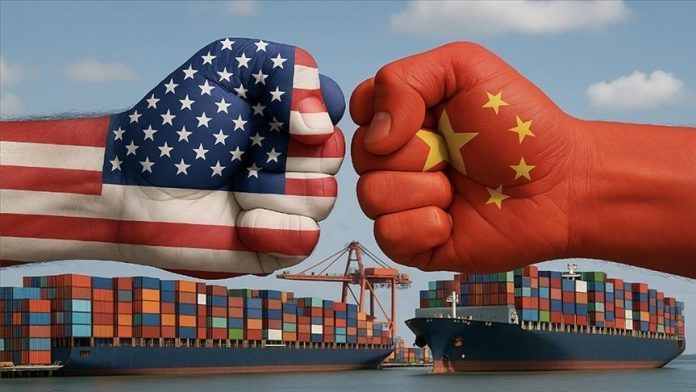
Recent developments have contributed to a cooling in both cryptocurrency and equities markets, driven by escalating geopolitical tensions and trade uncertainties. The U.S.-China trade war has intensified, with President Trump imposing 145% tariffs on Chinese goods, prompting Beijing to respond with retaliatory duties and restrictions on critical mineral exports.

China has denied claims of ongoing trade negotiations with the U.S., rejecting Trump’s assertions of progress and calling high tariffs “meaningless.” This has heightened market uncertainty, as investors had briefly rallied on hopes of de-escalation after U.S. Treasury Secretary Scott Bessent suggested tariffs were unsustainable. U.S. and global stock markets, which had rallied for three days on optimism about easing trade tensions, faced renewed pressure after China’s pushback. The mixed signals—White House optimism countered by China’s firm stance—have kept risk assets volatile.

Cryptocurrencies, often seen as a risk-off asset, have also been affected. Bitcoin (BTC) saw a surge as investors sought safe havens amid tariff-related volatility, but other major altcoins like Ethereum (ETH) have not followed suit, reflecting uneven market sentiment. Gold prices, another safe-haven asset, have continued to climb, briefly surpassing $3,500 per ounce, driven by trade war fears and broader economic uncertainty.

Pakistan-India Tensions

A deadly militant attack in Indian-administered Kashmir, killing 26 tourists (mostly Indian), has escalated tensions between India and Pakistan. India has blamed Pakistan, leading to diplomatic measures like visa cancellations, suspension of a water-sharing treaty, and Pakistan’s suspension of the Simla Agreement, which established the Line of Control (LoC). These developments have raised fears of further military escalation between the nuclear-armed neighbors, adding to global geopolitical uncertainty.

Pakistan Stock Exchange (PSX): Negative sentiment has hit the PSX, with the KSE-100 index reflecting investor concerns over the Kashmir attack and broader regional instability, compounded by global trade war fears. Indian equity benchmarks (Sensex and Nifty) have shown resilience, gaining over 4.5% recently, supported by foreign inflows and a stronger rupee (85.37/USD). However, the escalating tensions could introduce volatility if the situation worsens.

While not directly tied to South Asian tensions, the broader geopolitical uncertainty reinforces crypto’s appeal as a hedge, though market cooling suggests investors are cautious. The combination of U.S.-China trade war escalation and India-Pakistan tensions has created a risk-off environment. Investors are grappling with mixed signals—Trump’s tariff backtracking and China’s hardline response—alongside fears of regional conflict in South Asia.

Both gold and Bitcoin have seen inflows, reflecting investor flight to safety. However, equities and non-BTC cryptocurrencies remain under pressure due to uncertainty. The cooling of crypto and equities markets stems from heightened uncertainty driven by China’s denial of trade progress with the U.S. and escalating India-Pakistan tensions following the Kashmir attack. While safe-haven assets like gold and Bitcoin are benefiting, broader markets remain volatile as investors navigate these dual geopolitical and economic risks.

Global stock markets, particularly in the U.S., China, and South Asia, are likely to experience heightened volatility. Investors face uncertainty from the U.S.-China trade war and potential military escalation in South Asia, leading to choppy trading conditions. Bitcoin may continue to see inflows as a safe-haven asset, but altcoins could lag due to risk-off sentiment, creating a divergence in crypto performance.

Assets like gold (already above $3,500/oz) and Bitcoin are likely to see sustained demand as investors hedge against trade and geopolitical risks. U.S. Treasuries may also attract inflows, potentially lowering yields. Tech and consumer goods sectors, heavily exposed to U.S.-China trade, may underperform due to tariff-related cost increases. Defense stocks in India and Pakistan could see gains amid rising tensions.

Projects tied to decentralized finance (DeFi) or store-of-value narratives may outperform speculative tokens in a risk-averse environment. The U.S. dollar could strengthen as a safe-haven currency, while the Indian rupee (despite recent gains) and Pakistani rupee may face pressure if tensions escalate further. Persistent U.S.-China tariffs (145% on Chinese goods) and China’s retaliatory measures, including restrictions on critical minerals, could disrupt global supply chains, particularly for electronics, EVs, and renewable energy sectors.

Higher costs and supply shortages may fuel inflation, challenging central banks’ efforts to manage price stability. The suspension of trade and water-sharing agreements with India, combined with global trade war fallout, could exacerbate Pakistan’s economic challenges, including high inflation and currency depreciation. While India’s economy remains relatively resilient, prolonged tensions could deter foreign investment and disrupt growth in border regions like Kashmir.

The trade war and geopolitical instability may dampen global economic growth forecasts, as businesses delay investments and consumers curb spending amid uncertainty. China’s rejection of trade talks and Trump’s aggressive tariff stance signal a prolonged trade war, potentially escalating into broader economic decoupling. This could reshape global alliances and trade blocs.

India-Pakistan Conflict Risk

The Kashmir attack and subsequent diplomatic fallout (visa cancellations, treaty suspensions) raise the risk of localized military skirmishes along the Line of Control. While full-scale war is unlikely due to nuclear deterrence, heightened tensions could destabilize the region. International mediators (e.g., the U.S., UN) may face pressure to intervene, complicating global diplomatic efforts.

Tensions could spill over to neighboring countries (e.g., Afghanistan, China) or involve external powers (e.g., U.S. support for India, China’s ties with Pakistan), amplifying geopolitical risks. Investors may prioritize safe-haven assets (gold, Bitcoin, Treasuries) and defensive stocks (utilities, healthcare) to mitigate risks.

Increased use of options and futures to hedge against market swings, particularly in trade-sensitive sectors. The Federal Reserve and others may face pressure to adjust monetary policy if inflation spikes or growth slows. Rate cuts could be considered to support markets, though inflationary pressures may limit room to maneuver.

India and Pakistan may boost defense spending, straining budgets. China and the U.S. could double down on protectionist policies, further fragmenting global trade. Geopolitical uncertainty may accelerate calls for clearer crypto regulations, as governments seek to monitor capital flows amid market instability. Prolonged U.S.-China trade tensions could accelerate the shift toward regionalized supply chains and economic blocs, reducing globalization’s benefits. India-Pakistan tensions and U.S.-China rivalry may reshape alliances, with countries forced to pick sides or navigate neutral stances.

Persistent market uncertainty could bolster crypto’s role as a hedge, though regulatory crackdowns in response to capital flight risks could temper growth. The interplay of U.S.-China trade war escalation and India-Pakistan tensions creates a complex risk environment, driving market volatility, safe-haven demand, and economic uncertainty. Investors should brace for short-term turbulence and consider diversified, defensive strategies, while policymakers face challenges in balancing growth, inflation, and geopolitical stability.

Alphabet Reports Strong First Quarter 2025 Results, Amid Intense AI Competition And Economic Uncertainty

0

Alphabet, the parent company of Google and YouTube, reported robust first-quarter results for 2025, amid intensifying AI competition and economic concerns.

The tech giant surpassed Wall Street expectations, posting revenue of $90.23 billion, compared to $89.12 billion expected.

Below are the company’s financial highlights

Earnings Per Share: $2.81, topping expectations of $2.01.

YouTube Advertising Revenue: $8.93 billion, slightly below the $8.97 billion forecast.

Google Cloud Revenue: $12.26 billion, marginally under the $12.27 billion expected, but up 28% year-over-year, driven by demand for AI infrastructure and generative AI solutions.

Traffic Acquisition Costs (TAC): $13.75 billion, slightly above the $13.66 billion anticipated.

Operating Income: Up 20%, with the operating margin expanding 2 points to 34%.

Net Income: Surged 46% to $34.54 billion, with EPS rising 49% to $2.81.

Business Segment Performance

Google Services: Revenues grew 10% to $77.3 billion, fueled by strong performance in Google Search, YouTube ads, and subscriptions, platforms, and devices. AI Overviews, now serving 1.5 billion monthly users, boosted Search engagement. YouTube and Google One drove subscriptions past 270 million.

Google Cloud: Revenues climbed 28% to $12.3 billion, reflecting growth in Google Cloud Platform, AI infrastructure, and generative AI solutions.

Commenting on the report, the CEO of Alphabet Sundar Pichai expressed satisfaction with the results, emphasizing the company’s AI-driven strategy.

He said,

“We’re pleased with our strong Q1 results, which reflect healthy growth and momentum across the business. Underpinning this growth is our unique full stack approach to AI. This quarter was super exciting as we rolled out Gemini 2.5, our most intelligent AI model, which is achieving breakthroughs in performance and is an extraordinary foundation for our future innovation. Search saw continued strong growth, boosted by the engagement we’re seeing with features like AI Overviews, which now has 1.5 billion users per month. Driven by YouTube and Google One, we surpassed 270 million paid subscriptions. The cloud grew rapidly with significant demand for our solutions.”

Sundar Pichai also mentioned “efficiency” as a means of trying to keep a lean company to weather potential macroeconomic challenges.

“If the macro environment were to change and become more downwardly volatile, how should investors think about the investments that are must-make this year, almost fixed in nature, versus where there might be more flexibility?” asked Eric Sheridan from Goldman Sachs.

Pichai responded that the company plans to continue consolidating teams and cutting back on costs elsewhere, which he said should help the company have a more resilient organization, irrespective of macroeconomic conditions.

Alphabet, which reported stronger-than-expected revenue for its first quarter of 2025, faces an online ad market that’s on edge due to concerns about how Trump’s tariffs will affect the economy and business spending.

The tech giant will likely be impacted by materials needed for technical infrastructure like data centers that it uses to power efforts in artificial intelligence. It could also see secondhand effects on advertising pullback from budget constraints.

Philipp Schindler, Google’s business chief, said the company is “not immune to the macro environment,” adding that President Donald Trump’s decision to end the de minimis trade loophole next month will “cause a slight headwind to our Ads business in 2025, primarily from APAC-based retailers.”

Looking Ahead

Alphabet’s Q1 2025 results highlight its resilience in a competitive AI landscape and challenging economic environment. With significant investments in AI $75 billion planned for 2025 and a focus on operational efficiency, the company is well-positioned to sustain growth in Search, Cloud, and subscriptions while addressing macro uncertainties.