DD
MM
YYYY

PAGES

DD
MM
YYYY

spot_img

PAGES

Home Blog Page 1278

Volkswagen Surpasses Tesla in EV Sales as Musk’s Political Ties, Protests, and Poor Q1 Earnings Bite

0

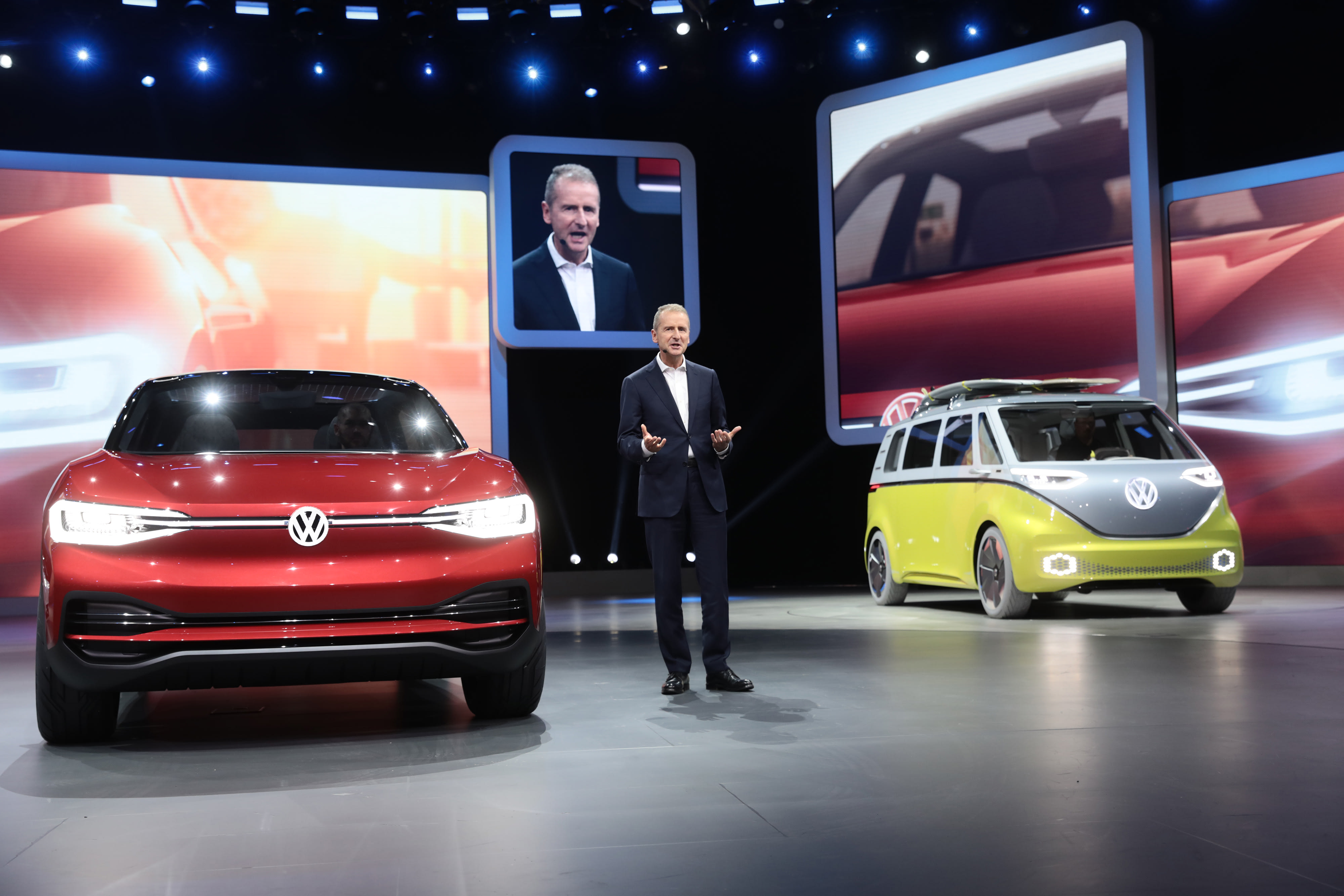
Tesla’s position as the king of electric vehicles in Europe has come under serious threat—now from Volkswagen, which overtook Elon Musk’s company in battery electric vehicle (BEV) registrations during the first quarter of 2025.

According to data from JATO Dynamics, the German automaker saw 65,679 BEVs registered in Europe from January to March, a staggering 157% jump from the same period last year. Tesla, by contrast, registered 53,237 vehicles, marking a sharp 38% decline, the steepest among the 30 most registered brands on the continent.

That market defeat lands at a time when Tesla is still reeling from one of its worst quarterly financial results on record. The American EV giant reported a 71% drop in profits for Q1 2025, missing Wall Street expectations and raising fresh questions about how long the company can hold off rising global competition, investor fatigue, and deepening reputational wounds.

While one bad quarter might not define Tesla’s future, this moment seems less like a bump and more like a brewing crisis. Musk’s blame game, aired during the company’s recent investor call, only deepened the sense of turmoil.

The Political Fallout Driving Sales Down

In that earnings call, Musk struck a defensive and combative tone, accusing protesters of orchestrating a campaign to hurt Tesla’s business.

“The protests that you’ll see out there, they’re very organized. They’re paid for,” he said, offering no proof.

Demonstrators have gathered at Tesla dealerships across the world, voicing outrage over Musk’s political activities—especially his public support for far-right politicians and his funding of President Donald Trump’s 2024 reelection campaign.

In the U.S., Tesla once had a tight grip on the progressive, climate-conscious EV demographic. That support has eroded. Many left-leaning consumers, long loyal to Tesla’s innovation and environmental brand, have grown disillusioned with Musk’s politics and are now actively avoiding his vehicles. The so-called “Tesla Takedown” protests have spread rapidly, becoming a way for critics of Trump’s policies to make a statement with their wallets.

And the damage isn’t limited to America. In Europe, Musk’s alignment with far-right ideologies, most notably his recent tacit endorsements of Germany’s nationalist Alternative for Germany (AfD) party, has also triggered a backlash. European consumers, particularly in countries with strong environmental and democratic traditions, have begun shunning Tesla in noticeable numbers. The brand’s sales have slumped by double digits across several EU countries.

Volkswagen’s Timely Rise

Volkswagen’s resurgence could not have come at a better time. While Tesla stumbles, VW has pressed forward with a clear and reliable EV rollout strategy. It has expanded production capacity, launched updated versions of its popular ID lineup, and remained relatively scandal-free. Unlike Tesla, whose marketing often revolves around its polarizing CEO, Volkswagen has kept the focus on vehicles, affordability, and customer service.

The ID.4, the company’s flagship EV SUV, has climbed to the third-most registered EV in Europe. While it still trails behind Tesla’s Model Y and Model 3, the gap is shrinking fast. In March alone, Model Y registrations fell 43%, while Model 3 inched up 1%. By contrast, VW’s ID.4 came within 2,000 units of overtaking the Model 3 for the quarter.

Volkswagen’s position in Europe has always been strong, but now, it’s evolving into a dominance driven by substance and market sentiment rather than just legacy brand power. EV buyers want affordability, functionality, and alignment with their values—and for now, VW is checking all those boxes.

Tesla’s Future Is Muddled

Back in the U.S., Tesla is also facing growing competition from Ford, Hyundai, and GM, all of which now offer EVs that match or exceed Tesla in range, performance, and price. The American EV space no longer revolves around Musk, and that spells trouble for a company still priced in the market like a tech giant rather than a carmaker.

One potential bright spot, a long-awaited affordable Tesla, is reportedly in the works. But there’s little buzz around the project, partly because Musk seems more focused on launching a self-driving “robotaxi” fleet. The first of these autonomous vehicles is expected to debut in June in Austin. However, experts warn that the viability of such a service depends entirely on Tesla’s ability to move its current models in large numbers. Without steady vehicle sales, there’s no cash to fund these grand ambitions.

That tension between Musk’s futuristic promises and Tesla’s present-day problems is becoming harder to ignore. The company helped invent the modern EV industry, but its dominance is no longer guaranteed. Consumers now have options. And in a politically divided global market, what used to be a tech icon is becoming, for many, a symbol of what they want to resist.
BUA Cement Posts N81bn Q1 Profit, Surpassing Entire 2024 Earnings on Strong Margins, Lower FX Losses

0

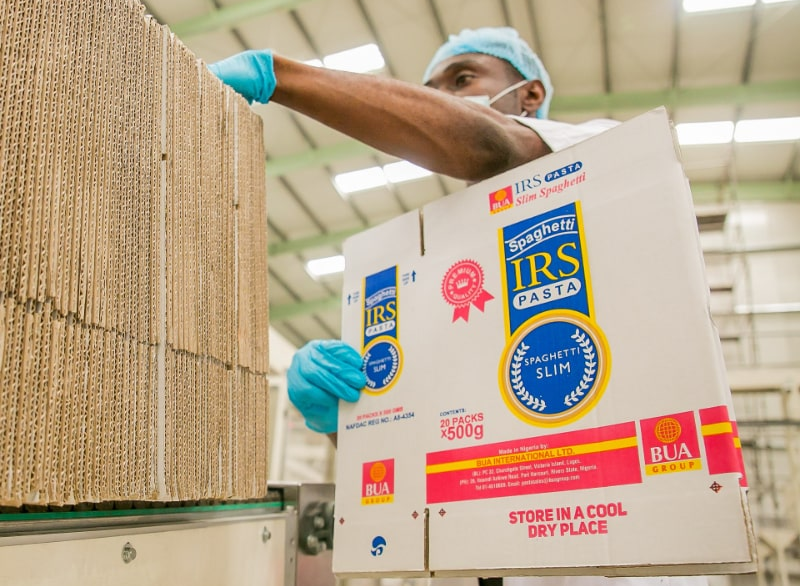
BUA Cement Plc kicked off 2025 with an eye-popping performance, posting a profit before tax of N99.74 billion in its unaudited results for the first quarter ended March 31, 2025. That figure marks a staggering 368.58 percent jump compared to the same period last year, driven by a mix of strong revenue, improved margins, and reduced foreign exchange losses.

Equally remarkable, the company’s net income soared by 351.45 percent year-on-year to N81.12 billion — more than it earned in the entire 2024 financial year.

The cement giant reported revenue of N290.82 billion in the first three months of the year, representing an 80.49 percent increase from Q1 2024. Cost of sales climbed at a much slower pace, rising 31.25 percent to N152.37 billion, allowing gross profit to more than triple to N138.45 billion. The sharp divergence between revenue growth and production costs translated to a gross margin of 47.61 percent, over 70 percent higher than last year — a sign of improved operational efficiency and cost control.

Operating profit came in at N119.03 billion, marking a 255.57 percent surge. Despite a steep rise in selling and distribution expenses to N14.41 billion, up 106.46 percent, the company still managed to grow its operating profit margin to 40.44 percent from 20.47 percent a year earlier.

The result, analysts say, is a clear sign of operational leverage in play, where revenue is rising faster than costs, thereby amplifying profits.

But perhaps the most significant turnaround came in the form of foreign exchange management. In Q1 2024, BUA Cement suffered an FX loss of N10.06 billion as a result of exchange rate fluctuations. That figure was slashed to just N837 million in Q1 2025, helping offset the steep jump in net finance costs, which ballooned by 878.69 percent to N17.79 billion.

The drop in FX losses, combined with strong operating income, gave a major lift to the bottom line.

Balance Sheet Tells a Mixed Story

Despite the blockbuster profit, BUA Cement’s balance sheet showed mixed signals. Total assets edged up slightly by 0.81 percent to N1.583 trillion, suggesting limited expansion in asset base so far this year.

However, the company’s total debt spiked sharply by over 382 percent within the three-month period to N447.62 billion. This sharp rise in borrowings could be linked to recent capital projects or efforts to shore up liquidity in response to macroeconomic uncertainties.

Yet, shareholders’ equity grew robustly to N469.67 billion, providing a buffer against the spike in liabilities. Consequently, the company’s leverage ratio, measured as total assets divided by equity, improved to 3.37. This indicates a healthier balance in how the company is funding its operations, leaning less heavily on debt per unit of asset.

Cash and cash equivalents also showed notable improvement, growing 63.98 percent to N138.97 billion, reinforcing the company’s liquidity position.

Earnings Per Share Jumps, But Market Unimpressed

Basic earnings per share (EPS) for the period stood at N2.39, a 346.41 percent increase from the same period in 2024. It’s a strong signal of value for shareholders, especially against a challenging macroeconomic backdrop.

However, despite the stellar financial performance, investors appear to be holding back. BUA Cement, the seventh most valuable firm on the Nigerian Exchange with a market capitalization of N2.83 trillion, has seen its share price fall by 10 percent since the start of the year. As of the close of trading on April 24, 2025, the stock stood at N83.70.

The subdued investor sentiment could be linked to wider market uncertainties, cautious outlooks on the cement sector, or concerns about rising debt, despite the impressive numbers.

What’s Driving This Turnaround?

The extraordinary Q1 showing raises questions about what’s really driving the turnaround. While the numbers clearly reflect an uptick in revenue, likely from increased cement prices or sales volume, they also point to a disciplined control over costs and a better grip on FX exposures.

For a company that closed 2024 with a full-year net profit lower than what it made in just the first quarter of 2025, the performance marks a dramatic shift in trajectory.

Still, analysts believe the steep rise in borrowings within a short period could become a concern if earnings momentum slows or interest rates rise. Investors may also be waiting to see if this performance is sustainable or a one-off boost from favorable currency movements and improved margins.

World Bank Warns of Rising Poverty in Nigeria Through 2027, As Faith in Tinubu’s Economic Direction Wanes

0

The World Bank has projected a bleak outlook for Nigeria’s fight against poverty, warning that the country’s poverty rate will rise by 3.6 percentage points between 2022 and 2027, a projection that many Nigerians interpret as a vote of no confidence in the current administration’s economic trajectory—despite earlier commendations from the Bank for President Bola Tinubu’s bold but painful reforms.

The projection is part of the latest edition of Africa’s Pulse, the Bank’s flagship economic update for Sub-Saharan Africa, released during the ongoing Spring Meetings of the International Monetary Fund (IMF) and the World Bank in Washington, D.C.

While the Bank acknowledged marginal gains in Nigeria’s non-oil sectors, especially during the last quarter of 2024, it warns that deeper structural issues—ranging from fiscal fragility to persistent overreliance on oil—will continue to undermine poverty alleviation efforts. More damning, however, is the implication that the current policy direction is unlikely to lift Nigerians out of hardship any time soon.

“Poverty in resource-rich, fragile countries—including large economies like Nigeria and the Democratic Republic of Congo—is projected to increase by 3.6 percentage points between 2022 and 2027,” the report noted.

Reforms Without Relief

At the heart of this worsening poverty picture are the economic policies introduced under President Bola Tinubu, who assumed office in May 2023. His administration moved swiftly to scrap fuel subsidies and unify the naira’s multiple exchange rates—two reforms praised by international lenders, including the World Bank and IMF, as necessary steps toward fiscal consolidation and market efficiency.

But these reforms, while hailed on paper, have triggered an acute cost-of-living crisis. Petrol prices have more than tripled, inflation has soared past 30%, and the naira has weakened drastically. The consequences have been severe for ordinary Nigerians, especially as wages remain stagnant and public services deteriorate.

Millions have slid into deeper poverty in the wake of these policy shocks, prompting widespread discontent. Food prices have spiraled beyond the reach of many households, and unemployment remains stubbornly high. Even sectors like agriculture once considered a cushion against oil volatility, have been hit hard by insecurity, logistics breakdowns, and inflation.

Two years into Tinubu’s first term, Nigeria’s economic outlook remains troubled, with no immediate signs of improvement. The World Bank’s warning is now being interpreted by many Nigerians as a subtle rebuke of the government’s failure to cushion the impact of its reforms or deliver inclusive growth.

The Shadow of Buhari’s Legacy

The deepening poverty also reflects the cumulative effects of policy inertia and mismanagement during the administration of former President Muhammadu Buhari. Under Buhari, Nigeria entered two recessions, while inflation and debt surged. Infrastructure stagnated, and fiscal buffers were depleted.

By the time Tinubu took office, the economy was already on life support—burdened by a massive debt profile, unsustainable subsidies, and a bloated public sector. However, rather than provide immediate relief or a gradual pathway to stability, the reforms under Tinubu’s watch have amplified the economic distress so far.

“This follows a well-established pattern whereby resource wealth combined with fragility or conflict is associated with the highest poverty rates—averaging 46% in 2024, which is 13 percentage points higher than in non-fragile, resource-rich countries,” the World Bank report noted.

Nigeria’s classification as both resource-rich and institutionally fragile underscores the severity of its challenges. According to the Bank, Sub-Saharan Africa remains home to 80% of the world’s 695 million extreme poor, with half of the region’s 560 million poor concentrated in just four countries—including Nigeria.

A Dimming Hope

There is growing skepticism among economic analysts and civil society groups that Nigeria’s current trajectory will shift without a radical rethink of priorities. The World Bank itself, while endorsing Tinubu’s reforms in earlier reports, now appears more cautious—calling on Nigeria to improve fiscal management and build a “stronger fiscal contract” with its citizens.

“Governments need to focus on improving fiscal management and building a stronger fiscal contract with citizens to promote inclusive economic development and long-term poverty alleviation,” the report emphasized.

Yet for many, these recommendations echo past advisories that have gone unheeded. The question for Nigerians is no longer whether the current economic path is difficult—it is whether it leads anywhere better. So far, the signs are not encouraging.

Unless policies shift from being structurally sound in theory to being humane and inclusive in practice, the fear is that Nigeria’s most vulnerable will continue to bear the brunt of elite-driven reforms that seem detached from the realities on the ground.

With global institutions like the World Bank now forecasting a surge in poverty, even after endorsing the Tinubu administration’s reform playbook, the cracks in Nigeria’s economic strategy are becoming harder to ignore.

OpenAI Unveils o3 And o4-mini Next Generation Reasoning Models With Enhanced Performance

0

OpenAI has announced the release of its latest o-series models, o3 and o4-mini, marking a significant leap in AI reasoning capabilities.

These models, trained to deliberate longer before responding, are the most advanced models OpenAI has developed, offering improved performance for users ranging from casual enthusiasts to seasoned researchers.

For the first time, OpenAI’s reasoning models can autonomously leverage all ChatGPT tools including web search, Python code execution, image analysis, and image generation to deliver detailed, thoughtful responses to complex queries, typically in under a minute.

Announcing the launch, OpenAI wrote,

“Today, we’re releasing OpenAI o3 and o4-mini, the latest in our o-series of models trained to think for longer before responding. Critically, these models are trained to reason about when and how to use tools to produce detailed and thoughtful answers in the right output formats, typically in under a minute, to solve more complex problems.

“This allows them to tackle multi-faceted questions more effectively, a step toward a more agentic ChatGPT that can independently execute tasks on your behalf. The combined power of state-of-the-art reasoning with full tool access translates into significantly stronger performance across academic benchmarks and real-world tasks, setting a new standard in intelligence and usefulness.”

Key Advancements

OpenAI o3: A Frontier-Pushing Reasoning Powerhouse

OpenAI o3 is the company’s most sophisticated reasoning model, excelling in coding, mathematics, science, and visual perception. It sets new state-of-the-art benchmarks on Codeforces, SWE-bench (without custom scaffolding), and MMMU, making it ideal for intricate queries requiring deep analysis. The model shines in visual tasks, such as interpreting charts, images, and graphics. External evaluations show that o3 reduces major errors by 20% compared to OpenAI o1 on challenging real-world tasks, with a standout performance in programming, business consulting, and creative ideation. Testers praised its ability to generate and rigorously evaluate novel hypotheses, particularly in biology, math, and engineering.

OpenAI o4-mini: Fast, Cost-Efficient, and High-Performing

OpenAI o4-mini is a compact model optimized for speed and affordability, delivering impressive results in math, coding, and visual tasks. It outperforms all benchmarked models on AIME 2024 and 2025, achieving a remarkable 99.5% pass@1 (100% consensus@8) on AIME 2025 with Python interpreter access. While tool use simplifies AIME tasks, o4-mini’s efficiency in leveraging tools is notable. It surpasses its predecessor, o3-mini, in non-STEM domains and data science, offering higher usage limits for high-volume, high-throughput applications. External evaluators noted improved instruction adherence and verifiable responses, bolstered by web source integration.

Enhanced Features and User Experience

Both models exhibit a more natural, conversational tone and leverage memory from past interactions to provide personalized, context-aware responses. Their ability to dynamically select and combine tools enables them to tackle multi-step problems with greater accuracy and utility. Compared to earlier o-series models, o3 and o4-mini deliver more reliable and engaging interactions, setting a new standard for AI intelligence and practical application.

Looking Ahead

OpenAI’s latest models signal a unified future, blending advanced reasoning with natural conversation and tool use. The company is merging the specialized reasoning prowess of its o-series with the natural conversational fluency and versatile tool integration of the GPT-series.

This convergence aims to create future models that deliver seamless, engaging dialogues while proactively leveraging tools for advanced problem-solving, setting the stage for more intuitive and powerful AI interactions.

Trump Softens Stance on Jerome Powell and China

0

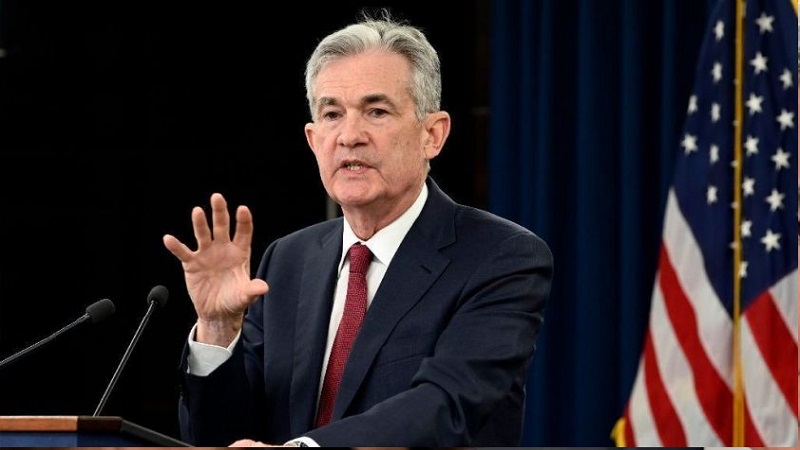
President Donald Trump has moderated his previously aggressive rhetoric toward Federal Reserve Chair Jerome Powell and China’s trade policies, responding to warnings from financial markets, business leaders, and advisors. On April 22, 2025, Trump stated he has “no intention” of firing Powell, a sharp reversal from earlier remarks where he called Powell a “major loser” and suggested his “termination cannot come fast enough.” He expressed a desire for Powell to be more proactive in cutting interest rates to stimulate the economy, particularly in light of his tariff policies, which economists warn could fuel inflation and slow growth.

Regarding China, Trump signaled a willingness to reduce the 145% tariffs on Chinese imports, stating they would “come down substantially” but “won’t be zero” as part of a potential trade deal. Treasury Secretary Scott Bessent described the current tariff levels as “unsustainable,” emphasizing the need for mutual de-escalation to avoid prolonged trade tensions. This shift followed concerns from major U.S. retailers like Walmart, Target, and Home Depot, who warned that tariffs could disrupt supply chains, raise prices, and lead to empty shelves.

China’s Foreign Ministry expressed openness to dialogue but maintained a firm stance, with spokesperson Guo Jiakun stating, “We don’t want a fight, but we are not afraid of one.” The softened tone sparked a market rally, with the Dow Jones rising over 400 points, the S&P 500 up 1.7%, and the Nasdaq gaining 2.5% on April 23, 2025. However, White House Press Secretary Karoline Leavitt clarified that Trump would not unilaterally cut tariffs without a “fair trade deal.”

Despite the de-escalation, skepticism persists. Some analysts and Chinese social media users labeled Trump’s shift as unreliable, with hashtags like #TrumpWimpsOut trending on Weibo. Markets remain cautious, as Trump’s history of policy reversals and the complexity of trade negotiations suggest uncertainty ahead.

U.S. and India Finalize Trade Deal

The U.S. and India have made significant progress toward a trade agreement, with Vice President JD Vance announcing on April 21, 2025, that the two nations had finalized the “terms of reference” for the talks. While details remain sparse, the agreement is described as a broad framework or memorandum of understanding, with specifics to be negotiated over the coming months. This development follows productive discussions between Trump and Indian Prime Minister Narendra Modi, aimed at reducing U.S. tariffs on Indian imports and strengthening bilateral trade ties. The White House is under pressure to demonstrate progress amid market volatility caused by Trump’s broader tariff policies, and the India deal is seen as a step toward stabilizing economic relations.

However, experts caution that the agreement’s ambiguity and the time required for finalization may limit its immediate impact on markets or political backlash against Trump’s trade agenda. The deal is strategically positioned to signal that India views the U.S., not China, as a primary trading partner, though negotiators have incorporated purposeful ambiguity to avoid antagonizing Beijing. India’s deep economic ties with China complicate the talks, and any overt pivot toward the U.S. could face resistance. The announcement aligns with broader U.S. efforts to secure trade agreements with multiple nations, with Trump claiming that over 100 countries have initiated trade talks following his tariff announcements.

While Trump’s softened stance on Powell and China appears to be a pragmatic response to economic warnings, it raises questions about the consistency of his economic strategy. The retreat from aggressive tariffs and threats against Powell may reflect sensitivity to market reactions and corporate lobbying, but it risks undermining his leverage in trade negotiations, particularly with China, which has shown resilience in the face of U.S. pressure.

The U.S.-India trade framework, while promising, lacks specificity and faces challenges due to India’s complex economic relationships and domestic priorities. Both developments suggest a tactical recalibration rather than a fundamental shift in Trump’s “America First” agenda, with markets likely to remain volatile as negotiations unfold.