DD
MM
YYYY

PAGES

DD
MM
YYYY

spot_img

PAGES

Home Blog Page 1295

Ripple (XRP) Poised to Rally Past $7 in Weeks, with Cardano (ADA) and This $0.20 Token Expected to Join the Climb

0

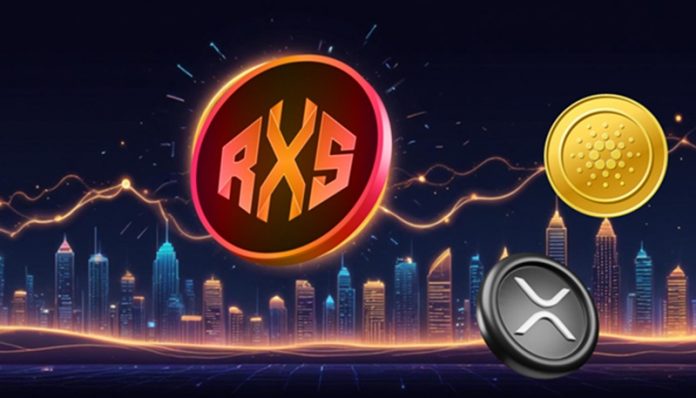
As Ripple (XRP), Cardano (ADA), and the rising surprise contender Rexas Finance (RXS) watch the crypto market blossom after positive regulatory news and further bullish indicators, all three appear well-positioned to benefit from a predicted surge. Rexas Finance, a $0.20 real-world asset tokenization project, may take center stage, while Ripple and Cardano have already demonstrated significant growth. With enthusiastic charts alongside legal clarity and innovative fundamentals, all three tokens are likely to attract the attention of investors in the coming weeks.

Ripple (XRP): Positive XRP Moves Caused by ETF Speculation

Ripple’s (XRP) growth benefits from a shift to the bull case due to increased U.S. regulatory sentiment. Exposure to cryptonism, following Paul Atkins’ appointment as the new SEC Chair, has increased optimism among XRP investors. Guaranteeing a lack of enforcement discretion based on securities law citations has biased policy construction, enforcing that claiming de facto regulation is a sharp turn from the baseline control the SEC used in the Ripple-law lawsuit. This development has led to a further 4% gain in the XRP price in under 48 hours since confirmation of his position.

Adding fuel to the bullish sentiment is Teucrium’s introduction of XRP futures and its 2X leveraged XRP ETF, which is now sparking conversations about the potential for a spot XRP ETF. These products would likely serve as the much-needed trigger for XRP to catch the attention of institutional investors. XRP is trading at $2.2187 after a peak of $2.3007, representing a 25% increase since April 7. Analysts suggest the token could surge past $7 if it exceeds the crucial resistance zone of $2.50 to $2.67. Other technical indicators, such as an inverse head-and-shoulders pattern, support this price surge expectation.

Cardano (ADA): Forecasted to Rally up to $1

Cardano has been flashing signals on its chart, which looks green. $ADA rebounded from $0.512 on April 7, which aligns with the low swing of $ADA on February 13. A double bottom pattern makes it so that a neckline is made around $1.173—an area monitored by traders for which a breakout occurs. $ADA has also surpassed $1.173, where traders actively monitor, realizing gains. Furthermore, $ADA exceeding the 50-day Exponential Moving Average has accounted for breaking out of a falling wedge—a signature bullish reversal pattern. Recent advances above the 61.8 Fibonacci retracement level significantly bolster the case. Additionally, there is spending pressure primarily coming from whale investors. All indicators suggest ADA’s price will move approximately 43% toward $1 from its current value. Increased bullish market momentum will likely warrant the token retesting 1.17, which could lead to surpassing and catalyzing even greater gains.

Rexas Finance (RXS): The Token Set at $0.20 That Might Steal Attention

As XRP and ADA dominate the headlines, Rexas Finance quietly becomes a giant in the shadows. Currently priced at $0.20, RXS is revolutionizing the crypto industry by enabling the tokenization of assets such as real estate and commodities on the blockchain. This further positions Rexas as a distinct project that goes beyond speculation into practical use cases. The project has no venture capital (VC) backing and is community-driven, further enhancing its credibility due to a full Certik audit and a transparency-focused approach. A massive $1 million giveaway campaign has helped build a vibrant, organic user base, yielding nearly 2 million entries. Rexas Finance’s presale has seen great success, raising $48.4 million by selling 462 million tokens and achieving a 92.41% completion rate. The token has also shown over 6x growth since its initial start at $0.03. Many anticipate an RXS surge following the post-launch listing date on June 19, 2025. Citing the high demand and low supply, alongside the expected listing price of $0.25, makes Rexas a post-launch propeller among the big names. With the perceived demand, Rexas is scheduled to rally or shine, surpassing its competitors.

Conclusion

The comparison of XRP alongside Cardano and Rexas Finance highlights three distinct aspects of the crypto market: redemption through regulation, a breakout from stagnation, and groundbreaking technological advancements. Ripple is moving robustly with growing institutional support and clear legal waters. There are whales silently guiding absolute Cardano sufficiency. In contrast, Rexas Finance is the $0.20 diamond in the rough, riding the presale hype, the market utility wave, and poised for a breakout. All three tokens are frontrunners in the forthcoming bull market, a movement greatly appreciated by discerning traders.


For more information about Rexas Finance (RXS) visit the links below:

Website: https://rexas.com

Win $1 Million Giveaway: https://bit.ly/Rexas1M

Whitepaper: https://rexas.com/rexas-whitepaper.pdf

Twitter/X: https://x.com/rexasfinance

Telegram: https://t.me/rexasfinance
U.S. Dollar Index Fell To a 10-Day Low of 100.186

0

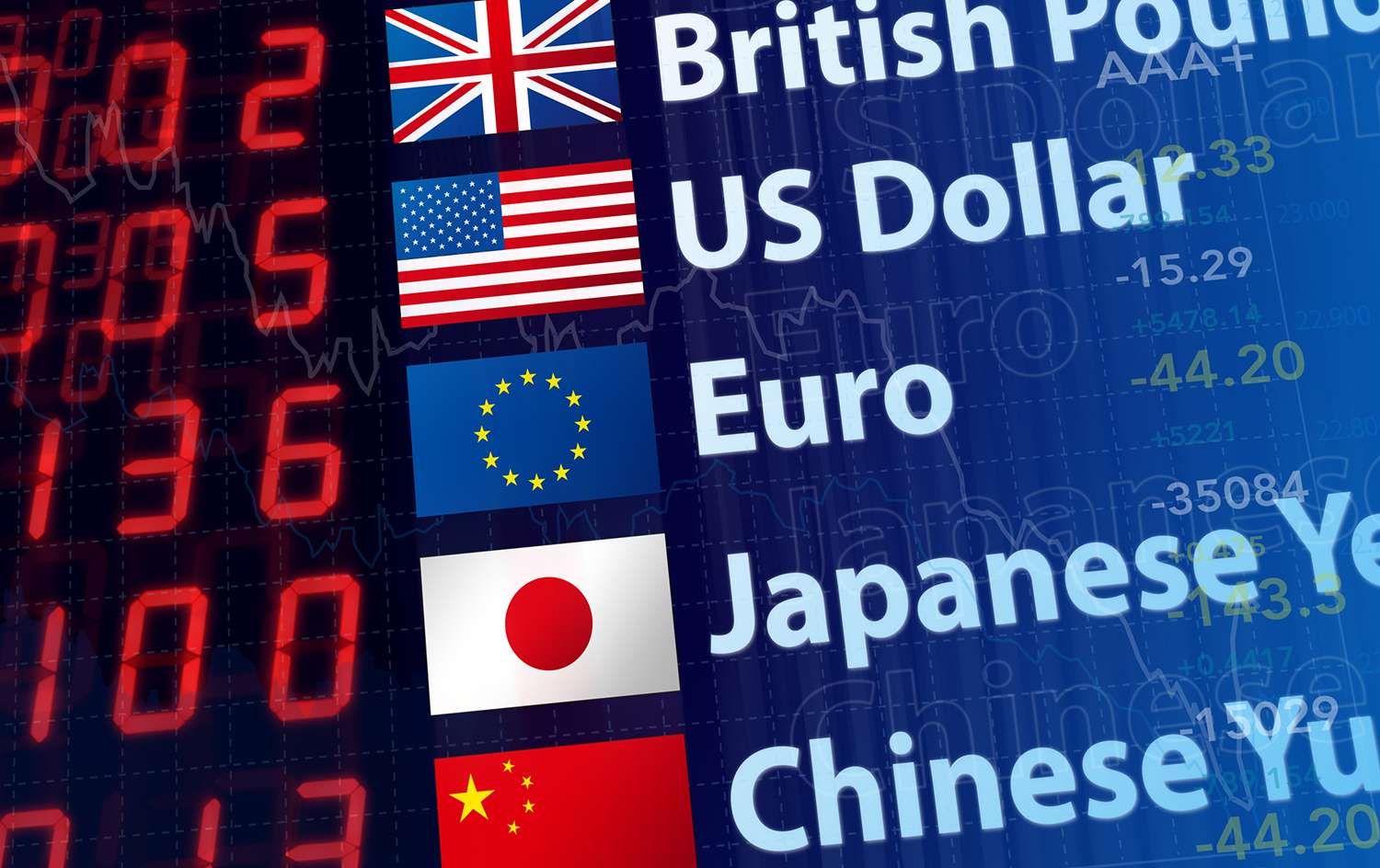
The U.S. Dollar Index (DXY) fell to a 10-day low of 100.186, as reported on May 19, 2025. This decline of approximately 0.75% occurred despite rising U.S. Treasury yields, which typically support the dollar. Analysts suggest market caution and a disconnect between rates and the dollar’s performance, with some linking the drop to broader concerns, such as Moody’s downgrade commentary.

The DXY, which measures the U.S. dollar against a basket of six major currencies (EUR, JPY, GBP, CAD, SEK, CHF), has been under pressure, with recent data showing a 0.51% decrease to 100.3080 from 100.8190. Technical analysis indicates potential further declines unless the index breaks above key resistance levels like 102.

The U.S. Dollar Index (DXY) dropping to a 10-day low of 100.186 on May 19, 2025, despite rising U.S. Treasury yields, carries significant implications for markets and highlights a notable divide between traditional economic relationships and current market dynamics. A weaker dollar makes U.S. exports more competitive, potentially boosting sectors like manufacturing and agriculture. However, it raises the cost of imports, which could pressure consumer prices and contribute to inflation.

Emerging markets with dollar-denominated debt may see temporary relief, as a weaker dollar reduces repayment burdens. The Federal Reserve faces a complex environment. A declining dollar amid rising yields could signal market skepticism about the Fed’s ability to maintain tight policy without triggering economic slowdown. Posts on X suggest traders are cautious, with some speculating the Fed might pause rate hikes if inflationary pressures ease due to a weaker dollar.

Conversely, persistent inflation (amplified by costlier imports) could force the Fed to maintain or increase rates, further complicating the dollar’s trajectory. Major currencies in the DXY basket, like the euro (57.6% weight) and yen (13.6% weight), may strengthen. This could support European and Japanese exports but challenge their domestic inflation control efforts.

A weaker dollar may also bolster commodity prices (e.g., oil, gold), as these are priced in USD. This could exacerbate inflationary pressures globally. A declining dollar often correlates with rising equity markets, as it reduces pressure on multinational corporations with foreign earnings. However, the disconnect with rising yields suggests investor uncertainty, potentially capping risk-on rallies.

The traditional relationship where rising U.S. Treasury yields (e.g., 10-year yields recently climbing) strengthen the dollar is breaking down. This divide stems from several factors: Investors may doubt the Fed’s ability to sustain high rates without triggering a recession, leading to dollar selling despite yield increases. Rising yields typically attract capital to U.S. assets, but global uncertainty (e.g., geopolitical tensions, China’s economic recovery) may be driving safe-haven flows into other currencies or assets, weakening the dollar.

Technical analysis, shows the DXY struggling below key resistance (e.g., 102). Heavy dollar positioning by traders may be unwinding, exacerbating the decline. Commentary around Moody’s downgrade of U.S. credit outlooks, referenced on X, suggests structural concerns about U.S. fiscal health, which could undermine confidence in the dollar even as yields rise.

This divide reflects a market grappling with conflicting signals: rising yields signal tighter policy, but a falling dollar suggests doubts about U.S. economic resilience. If the DXY continues to weaken (e.g., toward support levels near 99.5), it could trigger further commodity price spikes and equity volatility. Conversely, a reversal above 101 could restore the traditional yield-dollar correlation.

Microsoft Drops Developer Onboarding Fees for Windows App Store in Push to Attract More Creators

0

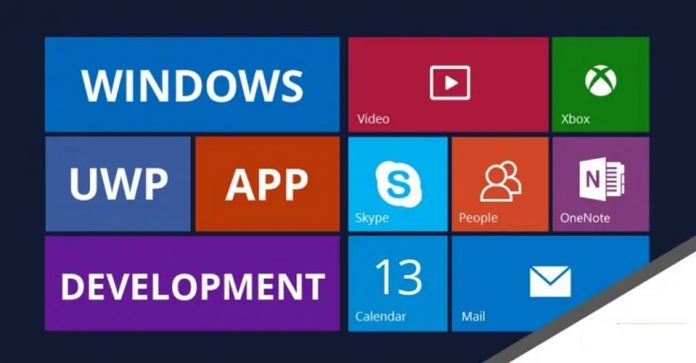
Microsoft is making a decisive play to draw more developers to its ecosystem. During its Build 2025 conference on Monday, the company announced it is eliminating the registration fee required to publish apps on the Microsoft Store.

The change takes effect in June 2025 and marks a significant shift in Microsoft’s approach to lowering the barrier for individual developers.

Under the current model, developers pay a one-time fee of $19 to sign up and submit their applications to the Microsoft Store. Beginning next June, that cost will be waived entirely for individual developers looking to publish Windows apps.

“By eliminating these one-time fees, Microsoft is creating a more inclusive and accessible platform that empowers more developers to innovate, share, and thrive on the Windows ecosystem,” the company said in a press statement.

The move positions Microsoft as the only major platform among its peers to drop developer onboarding charges altogether. Apple still requires developers to pay a $99 annual fee to distribute apps through its App Store, while Google maintains a one-time $25 registration fee for the Play Store. These charges have come under increasing scrutiny, particularly as regulatory pressure mounts against Big Tech’s control over digital storefronts and app distribution policies.

Though onboarding fees are being scrapped, Microsoft emphasized that its existing revenue-sharing model will remain in place for developers using its in-app commerce platform: 15% for non-gaming apps and 12% for games. However, developers who opt to use their own payment and commerce systems will continue to retain 100% of their revenue from non-gaming apps.

The announcement also dovetails with the launch of Microsoft’s new FastTrack Program for the Microsoft Store, designed to provide support and incentives for larger app publishers. The program offers benefits such as waived registration fees, accelerated certification processing, and customized onboarding support for qualifying companies.

In a broader overhaul of the developer experience, Microsoft is also introducing enhancements to the app review and certification process. Developers will now receive detailed submission reports, including crash logs and compliance recommendations, allowing them to fix issues more quickly and resubmit with clarity. Additionally, Microsoft will begin hosting privacy policy documents for developers at no extra cost — a move intended to ease the publication burden and eliminate the need for third-party web hosting just to meet submission criteria.

These steps are part of Microsoft’s wider effort to rejuvenate the Windows app ecosystem and reinforce the Microsoft Store as a viable and attractive alternative for developers increasingly looking for less restrictive marketplaces. The changes also come at a time when developer sentiment is souring toward Apple and Google over steep fees and stringent app review processes.

With the removal of onboarding fees, Microsoft hopes to tap into a broader pool of independent developers and startups who may have been deterred by upfront costs.

By opening the doors wider, Microsoft is signaling that it wants the Microsoft Store to become more than just a marketplace — it wants it to be a platform where developers of all sizes, from bedroom coders to enterprise teams, can publish with fewer hurdles and greater control.

Vitalik Buterin’s Proposal For Scaling Layer-1 Node Operation Addresses Concerns About Transaction Capacity and Decentralization

0

Vitalik Buterin, Ethereum’s co-founder, published a proposal titled “A local-node-favoring delta to the scaling roadmap” on ethresear.ch, outlining strategies to enhance Ethereum Layer 1 (L1) scaling while preserving accessibility for users running local nodes. The proposal addresses the tension between increasing L1 transaction capacity and maintaining decentralization, emphasizing the importance of enabling individuals to operate nodes for trustless, censorship-resistant access to the blockchain.

Buterin introduces a new node type, “partially stateless nodes,” designed to verify blocks statelessly and validate the entire chain (via stateless validation or ZK-EVM) while only maintaining a user-selected subset of the blockchain state (e.g., data for specific accounts, DeFi apps, or tokens like ETH or stablecoins). These nodes reduce storage demands by up to 50%, as users only store relevant data without needing full Merkle proofs or the entire blockchain history. Queries outside the stored subset can fail or be routed to external cryptographic solutions via an on-chain contract.

This approach enhances privacy and reduces reliance on centralized Remote Procedure Call (RPC) providers, which Buterin warns could face censorship pressures. Buterin emphasizes accelerating the implementation of EIP-4444, which limits nodes to storing approximately 36 days of historical data, significantly reducing disk space requirements. Long-term data would be stored in a distributed network using erasure coding to ensure robustness without burdening individual nodes.

This addresses the primary barrier to node operation, as storage needs currently deter many users from running nodes. A decentralized storage solution using erasure coding is proposed to maintain long-term blockchain data. Each node would store only a small fraction of historical data older than 36 days, ensuring permanence without relying on centralized providers.

Gas Pricing Adjustments

Buterin suggests modifying gas pricing to make storage-intensive operations more expensive while reducing costs for execution. This incentivizes efficient state management and supports higher L1 gas limits (potentially 10-100x increases) without overwhelming node operators. Increasing the L1 gas limit to boost throughput risks centralization, as it raises hardware and storage requirements, making it harder for individuals to run full nodes. Buterin’s proposal counters this by optimizing node efficiency.

Local nodes are critical for decentralization, privacy, and censorship resistance. A market dominated by a few RPC providers could lead to deplatforming or censorship, as some already exclude entire countries. The proposal addresses concerns that higher gas limits make full node operation inaccessible, ensuring Ethereum remains user-friendly even as it scales to meet demands from DeFi, NFTs, and on-chain gaming.

The changes could enable Ethereum to handle significantly higher transaction volumes (10-100x) while keeping node operation feasible for individuals. By reducing storage and resource demands, the proposal strengthens Ethereum’s decentralized ethos, making it easier for retail users to participate in validation and staking.

News of the proposal coincided with a 2.3% ETH price increase on May 19th, 2025, with trading volume spiking 15% on exchanges like Kraken, reflecting community optimism about Ethereum’s scalability roadmap. Increasing L1 gas limits raises concerns about centralization risks due to higher hardware requirements for validators. Buterin acknowledges the need to balance these trade-offs.

The proposal complements, rather than replaces, advanced cryptographic solutions like ZK-EVMs, aiming for a scalable, privacy-preserving network. Vitalik Buterin’s proposal introduces innovative solutions like partially stateless nodes, EIP-4444 prioritization, distributed storage, and gas pricing adjustments to make Ethereum L1 scaling more inclusive for local node runners. By addressing storage and accessibility barriers, the plan aims to boost Ethereum’s throughput while preserving its decentralized and censorship-resistant principles, reinforcing its position as a leading blockchain platform.

You Don’t Want to Miss This Undervalued Altcoin Introducing the Next Generation of Crypto Payments

0

Crypto projects come and go every day. Most talk big but deliver little. SpacePay feels different, though. This London startup isn’t just another token – they’re actually solving a real problem. They let shops accept crypto using the card machines they already have. No new equipment needed.

Looking at their setup reveals some pretty slick stuff. They work with over 325 different crypto wallets, convert everything to cash instantly for the merchant, and only take a tiny 0.5% cut on transactions. People are noticing too – they’ve pulled in more than $1 million so far in their presale. Right now, their $SPY token sits at $0.003181.

Why Shops Might Actually Use This

Most crypto payment stuff sucks for regular businesses. Who wants to buy expensive new equipment or learn complicated tech? That’s where SpacePay nails it.

They figured out how to make existing card machines work with crypto. Grab your phone, scan, pay with Bitcoin – done. The shop gets regular dollars, pounds, or euros right away. No waiting, no crypto prices crash an hour after someone buys something.

Many small business owners hate those 3% credit card fees eating their profits. When hearing SpacePay only charges 0.5%, most actually stop and listen. That’s unusual – shop owners normally zone out when crypto gets mentioned.

The volatility protection matters too. Shop owners don’t care about hodling – they need stable money to pay bills. SpacePay converts crypto payments to regular money instantly, so businesses don’t stress about price swings.

The $SPY Token: What’s It For?

So they’ve got this $SPY token. Total supply is capped at 34 billion. That’s a lot of tokens, but they’ve split them up pretty sensibly.

These aren’t just useless tokens either. If you hold this new altcoin, you get to vote on where the project goes next. Sick of projects where some anonymous team makes all the decisions? Yeah, most people are too. At least here token holders get a say.

They’re also sharing some money with token holders. As more people use SpacePay, a cut of those transaction fees goes back to people holding the token. That’s way better than tokens that do nothing but go up or down in price.

Oh, and they do these monthly airdrops for active users. Early holders also get first dibs on new features. Most people are tired of projects that just have a token for the sake of having a token. At least SpacePay built some real utility into theirs.

Visit SpacePay Presale

The Tech Stuff (Keeping It Simple)

Nobody likes getting their card declined. SpacePay uses solid encryption and watches transactions in real-time to keep things secure. No complicated explanation needed – it just works.

They support tons of cryptocurrencies too. Use whatever you’ve got in your wallet. That makes sense – limiting payment options is dumb when you’re trying to get people to actually use this stuff.

Here’s what stands out: they already have a working product. Not just promises and fancy graphics. They built it, it works, and now they’re expanding it. Plus, they’re doing all the boring regulatory compliance stuff that nobody talks about but actually matters if you want businesses to adopt your tech.

Where’s All The Money Going?

It’s always worth checking how projects split up their tokens. Shows what they really care about.

SpacePay’s breakdown looks pretty fair:

  • 20% for the public presale. That’s for regular folks, not just insider VCs.
  • Only 5% for the founders. That’s refreshingly low – most projects give founders way more.
  • 17% for user rewards. They’re putting money where their mouth is on community stuff.
  • 10% for development. Gotta keep building.
  • 36% split between partnerships, marketing, and community.
  • 12% in reserve. Every project needs a rainy day fund.

The presale price goes up in stages. Right now it’s at $0.003181. Next stage will be higher. Basic supply and demand – early birds get better prices.

How To Get In On The Presale

Thinking about grabbing some $SPY tokens? It’s pretty easy. Head to their website and connect a crypto wallet. They support all the usual suspects – MetaMask, WalletConnect, and others.

Payment can be made with ETH, BNB, MATIC, AVAX, BASE, USDT, or USDC. Don’t have crypto? They also take bank cards, which is handy for newcomers.

Just decide how many to buy, confirm the transaction in the wallet, and that’s it. Make sure to screenshot or save transaction details somewhere – those will be needed later when it’s time to claim the tokens.

After that, follow their Twitter or join their Telegram to stay updated. Crypto moves fast, and no one wants to miss important announcements.

JOIN THE SPACEPAY ($SPY) PRESALE NOW 

Website    |    (X) Twitter    |  Telegram