DD
MM
YYYY

PAGES

DD
MM
YYYY

spot_img

PAGES

Home Blog Page 1297

House Republicans Introduce Bill to Block State AI Rules Until 2035, Intensifying Partisan Divide Over Regulation

0

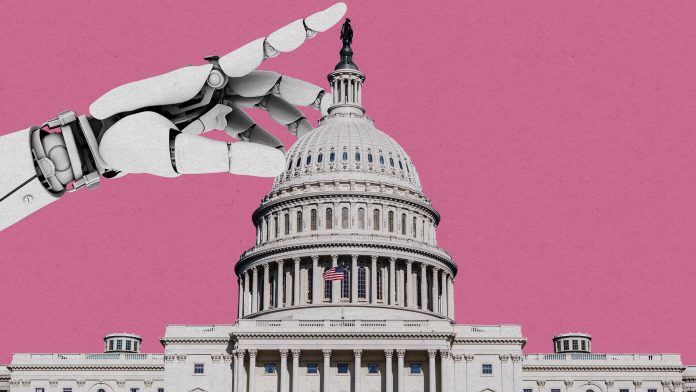
A last-minute addition by House Republicans to a proposed federal budget bill could dramatically reshape the landscape of artificial intelligence (AI) governance in the United States. The controversial provision, buried within the reconciliation package, would prohibit any state or local government from enacting or enforcing laws that regulate AI systems or automated decision-making technologies for the next ten years, unless the law specifically facilitates their deployment or operation.

If passed, the legislation would not only invalidate state-level laws currently aimed at curbing algorithmic bias and discrimination, but it would also prevent states from introducing new rules until at least 2035. That would create a regulatory void at a time when AI is increasingly embedded in housing, hiring, healthcare, and policing decisions, often without transparency or public accountability.

The provision’s insertion—just 48 hours before the bill was marked up by the House Energy and Commerce Committee—has drawn sharp rebukes from consumer advocates, legal experts, and a bipartisan group of state attorneys general. But beyond the legal ramifications, the move underscores a deepening ideological rift in Washington over how to manage a rapidly advancing technology that is transforming everything from job applications to public benefits distribution.

A Republican Vision: Deregulate, Deploy, Dominate

Supporters of the provision, mostly Republicans, argue that a patchwork of state-level AI regulations will stifle innovation, burden businesses, and threaten U.S. competitiveness in the global AI race. To them, federal preemption is a way to ensure a consistent, business-friendly national approach that allows tech firms to innovate without being slowed down by what they see as overzealous or ideologically driven state legislation.

The deregulatory stance is reminiscent of the Trump administration’s early actions to dismantle guardrails placed on AI. Upon returning to the office, President Donald Trump immediately revoked a Biden-era executive order that had established preliminary federal safety guidelines for AI development and deployment. The administration has made it clear that it sees AI regulation, particularly at the state level, as a roadblock, not a necessity.

That viewpoint is heavily influenced by corporate interests and key figures in the tech industry who have either backed Trump or aligned with his agenda. One of the most prominent is Elon Musk, the billionaire entrepreneur and early cofounder of OpenAI, who has publicly railed against what he calls “left-wing bias” in AI models.

Musk, now owner of X (formerly Twitter) and head of several companies heavily invested in AI, including xAI, has accused OpenAI’s ChatGPT and Google’s Gemini of being “woke” and serving a “leftist agenda.” He has repeatedly warned that these AI systems are being trained to push progressive values while censoring conservative viewpoints.

“The most important thing in training AI is that it is rigorously truthful. This is very, very important, essential,” Musk has said, claiming that the leading generative models reflect Silicon Valley’s liberal orthodoxy rather than political neutrality.

Musk’s criticisms have found a receptive audience among Republicans who are increasingly framing AI as another front in the broader culture war, arguing that without limits, AI tools risk becoming vehicles for “leftist indoctrination” rather than neutral technologies.

A Democratic Vision: Regulation, Transparency, Accountability

Democrats, by contrast, have pushed for stronger consumer protections, transparency, and bias mitigation mechanisms as AI systems proliferate. From algorithmic rent-setting tools to hiring software that filters applicants based on unverifiable data, Democrats argue that these systems can replicate and even amplify societal biases—unless regulators step in.

Several states governed by Democrats have already moved to impose guardrails. In California, laws now require companies to inform patients when generative AI is used in healthcare communications. In New York, employers using automated hiring tools must conduct annual bias audits. Illinois has legislation governing how facial recognition can be used in workplace surveillance.

But if the House reconciliation bill passes with the AI preemption clause intact, these state-level laws would become unenforceable, raising alarms among civil rights advocates and state officials.

“This bill is a sweeping and reckless attempt to shield some of the largest and most powerful corporations in the world—from big tech monopolies to RealPage, UnitedHealth Group and others—from any sort of accountability,” said Lee Hepner, senior legal counsel at the American Economic Liberties Project.

AI Harms Are Not Hypothetical

The real-world impact of unregulated AI systems is already being felt. A coalition of state attorneys general recently filed suit against RealPage, a property tech firm accused of colluding with landlords to artificially raise rents using an algorithmic pricing tool. Another company, SafeRent, recently settled a class-action suit filed by Black and Hispanic renters who say they were denied apartments based on secretive AI-generated scores.

Despite these concerns, House Republicans appear determined to block what they see as overreach by liberal states. The bill would not only block future regulations but erase many that are already in place, effectively freezing AI oversight at a time when the technology’s use is exploding across industries.

 A Looming Senate Battle

The battle is far from over as the measure could run into resistance in the Senate, where Democrats hold a slim majority. Given that the provision was added to a reconciliation bill—a legislative vehicle reserved for fiscal issues—Senate rules may prohibit its inclusion. Under the Byrd Rule, non-budgetary provisions can be struck from reconciliation bills if they are deemed extraneous.

“I don’t know whether it will pass the Byrd Rule,” said Sen. John Cornyn, R-Texas, referring to a provision that requires that all parts of a budget reconciliation bill, like the GOP plan, focus mainly on the budgetary matters rather than general policy aims.

“That sounds to me like a policy change. I’m not going to speculate what the parliamentarian is going to do but I think it is unlikely to make it,” Cornyn said.

If the bill becomes law as written, it would create a federal freeze on AI regulation, just as experts say the next decade will determine whether AI serves the public interest or entrenches inequality. Many see the fight over this provision as a litmus test for how the U.S. government intends to manage technological change and who it is willing to protect in the process.

Trump-Brokered Deal Gives UAE Access to Nvidia Chips, To Build Largest AI Campus Outside U.S.

0

The United Arab Emirates has struck a landmark agreement with the United States to build what will be the largest artificial intelligence campus outside US borders — a deal sealed during Donald Trump’s recent visit to the Gulf and hailed as a turning point in US-UAE tech cooperation.

However, it has also sparked concerns in Washington over the possibility of Chinese access to advanced US-origin AI technology.

Central to the agreement is a massive 10-square-mile AI campus in Abu Dhabi, with a 5-gigawatt power capacity dedicated to data centers that will run cutting-edge artificial intelligence workloads. The campus will be constructed by G42, a state-backed Emirati firm, but according to the US Commerce Department, American companies will operate the data centers and deliver US-managed cloud services across the region.

“American companies will operate the datacenters and offer American-managed cloud services throughout the region,” said US Commerce Secretary Howard Lutnick.

The deal also includes US technology companies Qualcomm and Amazon Web Services (AWS), which will partner with UAE entities to develop AI infrastructure, bolster cybersecurity, and accelerate regional cloud adoption. AWS will focus on building secure cloud systems, while Qualcomm is expected to set up an AI-focused engineering hub.

A Major Break From Biden-Era Tech Restrictions

This deal marks a stark departure from the cautious stance adopted under President Joe Biden, whose administration restricted exports of AI chips to countries like the UAE out of concern that such technologies could find their way into Chinese hands.

Under Trump’s leadership, those restrictions are being peeled back. His newly appointed AI czar, David Sacks, speaking in Riyadh earlier this week, criticized the Biden-era controls, stating they were “never intended to capture friends, allies, strategic partners.” He added that a smarter approach involves giving US allies access to key technologies while maintaining oversight.

At the core of the deal is access to Nvidia’s most advanced chips — a prized asset in the AI race. Although the specific models were not disclosed publicly, Reuters reported that the UAE will be permitted to import up to 500,000 of Nvidia’s high-end AI chips annually starting in 2025.

Nvidia CEO Jensen Huang was seen in televised footage with Trump and UAE President Sheikh Mohamed bin Zayed Al Nahyan during meetings at the Qasr Al Watan palace in Abu Dhabi. The optics underscore the level of coordination between tech industry giants and the new Trump administration in shaping global AI infrastructure.

A Win for the UAE, But at What Cost?

For the UAE, the deal is a major breakthrough. The Gulf country has long harbored ambitions to become a global AI powerhouse. It has poured billions into AI investments through state-linked vehicles like G42 and MGX, while courting partnerships with top Western firms.

Until now, its ambitions were curtailed by US export controls, which limited access to the most powerful chips and forced G42 to unwind partnerships with Chinese tech firms. Under pressure from Washington, G42 reportedly began dismantling Huawei’s infrastructure in its systems and sold off some Chinese investments. These actions paved the way for Thursday’s announcement.

“This shift enables [the UAE] to deepen its technology partnership with the US while still preserving trade ties with China,” said Mohammed Soliman, senior fellow at the Middle East Institute.

“It doesn’t mean abandoning China but it does mean recalibrating tech strategy to align with US standards and protocols where it matters most: compute, cloud, and chip supply chains.”

The deal also commits the UAE to building, financing, or investing in AI data centers in the United States that are “at least as large and powerful” as the ones being developed in Abu Dhabi. The White House said this ensures a balance of capabilities while creating tech jobs domestically.

Additionally, the agreement includes “historic commitments” by the UAE to align its national security regulations with the US, according to fact sheets released by the Trump administration. These include “strong protections to prevent the diversion of US-origin technology” — a thinly veiled reference to fears of re-export to China.

Lingering Worries Over China

However, the deal has unsettled some in Washington and among US national security circles, who argue that tech leakage remains a real threat, especially given the UAE’s long-standing ties with China. Huawei and Alibaba Cloud, two of China’s tech giants, still maintain a visible presence in the UAE, raising concerns about potential overlap or backdoor access.

A Reuters investigation earlier this year revealed that AI chips had been smuggled from the UAE, Singapore, and Malaysia into China, bypassing export restrictions meant to cut off Beijing’s access to advanced semiconductors. That report is now being reexamined in light of the new agreement.

National security analysts warn that even with US firms managing operations, risks persist.

Even so, top US tech CEOs — from OpenAI’s Sam Altman to Nvidia’s Huang — have voiced support for the deal. With China developing its own advanced AI models and custom chips, the opportunity to extend US platforms globally through friendly partners is seen as both a strategic and economic win.

The agreement caps months of high-level diplomatic and corporate engagement. AI was a major focus when Sheikh Mohamed bin Zayed visited Washington in December, just days before Biden left office. Since then, Emirati investment firms have increased their exposure to US AI startups, including OpenAI and Elon Musk’s xAI.

Microsoft, another major player in the space, announced a $1.5 billion investment in G42 last year, suggesting a coordinated push to embed American AI technology in the Middle East while curbing Chinese influence.

Trump’s visit to the region and the string of agreements that followed signal a broader strategic reset. It is seen as a recalibration aimed at ensuring the US retains influence in global AI infrastructure while extending its technological reach beyond its borders.

Revolut Commits €1 Billion to France in Major Expansion Drive

0

Revolut, a British multinational neobank and fintech company, has announced plans to invest €1 billion ($1.1 billion) in France over the next three years as part of a sweeping European growth strategy.

The move, revealed at the “Choose France” investment summit hosted by President Emmanuel Macron, underscores France’s growing importance to the neobank.

Revolut will establish a new office in Paris to serve as its hub for Western European operations and is set to create at least 200 new jobs in the country. France, with 5 million users, has emerged as Revolut’s largest and fastest-growing market within the EU.

“France offers significant opportunities for expansion and innovation,” said Pierre Décoté, Revolut’s Group Chief Risk and Compliance Officer. He added that Revolut will soon apply for a French banking license, a move that could bolster its ambition to operate with more autonomy across Europe.

The company, which already employs about 300 people in France, plans to maintain Lithuania as a strategic base for EU operations.

Launched in 2015 to transform the way people spend and transfer money abroad, Revolut is democratizing access to cross-border financial services, especially for younger and tech-savvy populations. Last year in the UK alone, it was the first financial institution to launch eSIM to help prevent high data roaming charges and added RevPoints, the first pan-European debit card loyalty program rewarding customers on their everyday spending. Revolut also introduced Mobile Wallets to allow for faster international transfers and bolstered its security measures with Wealth Protection, an additional biometric security layer protecting customers’ savings.

Globally, the neobank continues to chart an aggressive growth path. It added over 10 million customers in 2024 alone, bringing its total user base to over 55 million. Group revenues rose 72% to $4.0bn (£3.1bn), up from $2.2bn (£1.80bn) in 2023, driven by strong growth across all revenue streams.

Total customer balances expanded 66% to $38bn (£30bn), up from $23bn (£18bn) in 2023, primarily driven by strong growth in customer deposits and increased balances in our Savings products (including those held externally with Partners and Money Market Funds). Revolut maintained a prudent approach to balance sheet management, holding 62% of assets as Cash and Cash Equivalents. Simultaneously, the customer lending portfolio grew by 86% YoY to $1.2bn (£979m).

Notably, growth momentum was strong across Europe. Revolut is now the most downloaded app in the Finance category, ranking first in 19 countries and securing a spot in the top three in 26 countries across the continent.

The bank is actively securing over 10 global licenses, scaling recent market entries like Brazil, and preparing for its service launch in India (following recent PPI license approval), also seeking further opportunities across the Americas and Asia-Pacific. Last month, the company secured a second banking license in Mexico and is awaiting full authorization in the UK, its largest market with more than 10 million customers.

The expansion into France is part of a broader dual-HQ strategy in the Eurozone. Revolut’s Global Growth and Marketing Director, Antoine Le Nel, previously hinted at this shift in an April LinkedIn post celebrating the 5-million-customer milestone in France. The company aims to double its European customer base from 40 million to 80 million.

Co-founders Nik Storonsky and Vlad Yatsenko also unveiled Revolut’s forward-looking vision, including plans to launch innovative financial products and an AI-powered digital assistant in 2025. This AI tool is designed to guide users toward smarter financial habits, offering personalized advice and simplifying money management.

In its 2025 outlook, Revolut is poised for continued significant growth this year and beyond, driven by further platform enhancements and global expansion. The neobank is actively pursuing a strategic path towards achieving 100 million daily active users across 100 countries, solidifying its global leadership.

How to Find People on WhatsApp Without Knowing Their Number

1

Do you need to find someone on WhatsApp but do not know their cell phone number? Well, truth be told, finding a person on WhatsApp is a bit different from seeing a person on Facebook or Instagram. Because of privacy and security measures, this instant messaging app doesn’t allow you to search for others directly on its platform unless you already have their phone number or someone from your mutual friends or connections shares the necessary WhatsApp account with you.

In this review, we will explain how to find people on WhatsApp and the easiest methods for achieving this purpose.

How to Find People on WhatsApp?

Before we start, it is necessary to point out that finding a person on WhatsApp if you don’t know their number is different on Android and iOS-operated devices. However, there are a few tricks that you can start with, regardless of your cell phone’s OS.

Look Through Group Chats

Are you and the target person members of a specific WhatsApp group? If the answer is “yes”, you can use it to find their cell phone number there. How to find people on WhatsApp group chat?

  1. Open the WhatsApp app and navigate to the group where you both participate. To simplify the process, kindly tap the group name at the top.
  2. Then scroll down through the list of participants till you find the contact you are searching for.
  3. Tap their name and view their contact details (note: it will only be possible if their privacy settings allow it).

Check Their Facebook Profile

Want to message someone on WhatsApp but don’t have their number? Try checking their Facebook profile. If you’re lucky, their cell phone number might be public.

Here’s how to do it:

  1. Open Facebook and search for the person.
  2. Click their profile, then go to “About” and “Contact and basic info”.
  3. It’ll show up there if they’ve shared their number.

Try People Finder Tools

Need a phone number? Try tools like True People Search, PublicRecord.com, or BeenVerified. Enter the person’s name or address, and you’ll get a list of possible matches. Find the right one, click for details, and you might get their number. You can then use it to search for them on WhatsApp too.

Use “Invite to WhatsApp” Feature

If you have the target person’s number in your contacts and want to know whether they use the same number on WhatsApp, there is a simple way to check it. How?

  1. Go to your WhatsApp contact book.
  2. Search for a desired contact.
  3. If they do not have WhatsApp on that number, you will see an Invite to WhatsApp option when trying to message them.

Ask Your Friend to Help

Do you have mutual friends? Then it can be handy. Simply ask your friend to share their contact information with you. It’s as easy as eating a bar of chocolate. However, if you do not want them to ask you why you need this phone number, you should use alternative methods as described below.

Best Way to Find Someone on WhatsApp

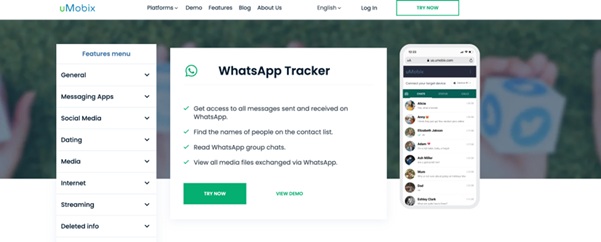
Suppose you know your kid chats with suspicious individuals or your partner chats with someone you should not know about, and each time, they delete all their messages. It can hurt, we know. But what if you try a tool that can solve almost all of your problems? With uMobix installed on your target’s cell phone or tablet, you cannot only get information about all their calls, text messages, location data, and browser history. This anonymous monitoring app has plenty of other useful features, and WhatsApp tracker is one of them.

What sort of information can you retrieve with this WhatsApp online tracker?

  • Get access to all sent, received, and even deleted messages of the monitored user shared through the app
  • Get access to their group chats
  • View shared files, passwords, and location data
  • Analyze the contacts they communicate with the most often
  • View the contact details of any contact in their WhatsApp list that you are interested in
  • Automatically receive screenshots of WhatsApp activity whenever the target uses the app

The WhatsApp tracker runs in stealth mode, so the person being monitored won’t know it’s installed. It also offers a $1 trial version, allowing you to test the features before committing to a full purchase, so you can see if it meets all your needs.

How to Use uMobix?

  1. Create a uMobix account.
  2. Choose the target person’s device OS (Android or iOS).
  3. Get instructions and install the app.
  4. Log in to your userspace and start tracking their WhatsApp activities.

Pros

  • 40+ monitoring features involved
  • Access to WhatsApp DMs and group chats
  • No technical skills are needed
  • No rooting/jailbreaking
  • Easy to use
  • Operates discreetly
  • Different subscription plans
  • $1 trial plan
  • 14-day money refund
  • Free demo
  • 24/7 support

Cons

  • 1 subscription = 1 device monitoring

Verdict

Finding someone on WhatsApp is easier than you think, if you know where to look. This guide showed you a few ways to do it, even without their phone number. For an easier way to track WhatsApp activity, try uMobix. This WhatsApp last seen tracker lets you see what’s happening on someone’s WhatsApp without them knowing.

4 Ripple (XRP) Alternatives to Pivot Into for Fast Returns as XRP Network Activity Slumps 44% in a Month

0

Ripple’s XRP is facing a wave of uncertainty as its network activity takes a sharp dive. According to new data from Glassnode, the number of new XRP addresses has plummeted by 44% in the past month. It dropped from 5,200 on March 22 to just 2,900 by April 17. This steep decline in adoption could be a red flag for investors, particularly as price momentum stalls and technical indicators suggest a bearish consolidation. In times like these, savvy investors begin seeking new opportunities. Currently, four XRP alternatives stand out as better options if you want to invest in an altcoin that will deliver fast returns. Below are four XRP alternatives to consider in the coming months.

Rexas Finance (RXS)

Rexas Finance is gaining significant attention for one key reason: it’s solving real-world problems in both the cryptocurrency and traditional finance sectors through the tokenization of real-world assets (RWAs). And it’s doing so with an ecosystem that could completely transform how we view and manage assets. Rexas enables individuals to invest in valuable assets, including real estate, intellectual property, and art. It utilizes blockchain technology to convert these assets into digital tokens that can be bought and sold by anyone. That means regular investors can now own a fraction of a luxury property or a piece of artwork—all from their phone, with just a few dollars. No middlemen, no big upfront cash.  What truly sets Rexas apart is its potential to deliver impressive decentralized apps and platforms that can fuel the growth of the sector. Its Token Builder lets users create their tokens without coding skills. QuickMint Bot allows you to create tokens directly inside Telegram or Discord. There’s also Rexas Estate for fractional real estate investment. The platform has undergone a full CertiK audit, ensuring its security is rock-solid—something especially important when investing in a fast-moving altcoin. Even better, the project has already raised over $48 million in its presale, demonstrating strong backing and a growing community behind it. With a final presale price of $0.20 and a launch price of $0.25 set for June 19, investors are eyeing a major rally once RXS hits exchanges. Many are already calling it a 100x candidate, thanks to its strong fundamentals, growing user base, and position in a tokenization market expected to hit $16 trillion by 2030. In the coming months, it could yield fast returns for savvy investors.

Dogecoin (DOGE)

DOGE is currently forming a classic cup and handle pattern on the monthly chart, a bullish signal hinting at a possible breakout. After bouncing off a local low of around $0.153, DOGE now sits near $0.165. It has gained over 7% in two weeks. Technical analysts believe that if this setup materializes, Dogecoin could rally to $0.88, representing a potential 400% increase from current levels.  Beyond price action, user activity is booming too. Active wallet addresses have increased by 111% in just seven days, showing genuine interest beyond hype. Although DOGE is still nearly 80% below its all-time high, with Elon Musk’s X Payments in the wings and the buzz around a possible DOGE ETF, it’s far from dead. For anyone hunting for fast returns, Dogecoin deserves a serious second look.

Sui (SUI)

After weeks of choppy moves, the Layer 1 blockchain is showing bullish signs, bouncing off key support zones and setting up for a possible breakout. At $2.37, SUI is up 5.5% in the past 24 hours, and traders are watching as momentum builds near the resistance level at $2.80. Sui just crossed a jaw-dropping 500 million transactions this year, leaving even Ethereum and Bitcoin in the dust. That kind of real usage isn’t common, and it’s fueling serious investor interest. Add in SUI’s growing DeFi action and a $318 million open interest, and you’ve got a project with serious near-term potential. If it can break through $2.80 with volume, analysts see $3.00 in sight and higher.

Fartcoin (FARTCOIN)

Fartcoin just surged past the $1 mark, jumping over 10% in a single day and now sitting on a market cap of over $1 billion. It’s now the biggest memecoin on Solana, overtaking Bonk. Traders are pouring in, with over six million tokens flowing into the market and smart money stacking up nearly $2 million worth in the past 24 hours. Popular analyst Altcoin Sherpa says he’s holding a “big bag” of FARTCOIN and sees further gains ahead, especially if Bitcoin continues to climb. A wallet linked to Rollbit even scooped up $758,000 worth, showing that even institutional players are taking this coin seriously. Although it’s volatile, it’s got momentum, hype, and smart money behind it.

Conclusion

With XRP’s network activity fading, now’s the time to focus on projects that are gaining traction. Rexas Finance leads the pack with its real-world asset tokenization model, strong presale backing, and upcoming launch. Add in a growing ecosystem and solid security, and Rexas could be your next big win.  Meanwhile, coins like SUI, Dogecoin, and Fartcoin are also making waves in their own right, from surging DeFi usage to massive community-driven hype. These four altcoins offer a fresh chance to ride the next wave and get quick returns this year.


For more information about Rexas Finance (RXS) visit the links below:

Website: https://rexas.com

Win $1 Million Giveaway: https://bit.ly/Rexas1M

Whitepaper: https://rexas.com/rexas-whitepaper.pdf

Twitter/X: https://x.com/rexasfinance

Telegram: https://t.me/rexasfinance