DD
MM
YYYY

PAGES

DD
MM
YYYY

spot_img

PAGES

Home Blog Page 13

2026 Will Serve As A Breakout Year for Tokenized Funds

0

Tokenized funds hit new ATH of $14.4B particularly tokenized funds like money market funds, treasury-backed products, and institutional investment vehicles on blockchains.

These represent digital tokens backed by traditional assets (e.g., U.S. Treasuries, private credit, or fund shares), offering benefits like faster settlement, fractional ownership, and on-chain yield. Tokenized U.S. Treasuries and similar yield-bearing funds have seen massive adoption, with major players like BlackRock’s BUIDL fund exceeding $2B in AUM alone in some tracking periods.

Broader non-stablecoin RWAs including tokenized treasuries, private credit, commodities, institutional funds, etc. approached or exceeded ~$15B in late 2024/early 2025, with continued upward momentum into 2026. For context, tokenized treasuries alone hit multi-billion figures, and the overall RWA market excluding dominant stablecoins has grown significantly.

Analytics platforms like RWA.xyz track these on-chain assets in detail, showing categories like U.S. Treasuries, institutional funds, and private credit contributing to totals in the tens of billions when including related products. This surge is driven by: Institutional involvement from firms like BlackRock, Franklin Templeton, Fidelity, and others launching tokenized money market funds (MMFs) and treasury products.

Regulatory progress and clearer frameworks encouraging adoption. Demand for on-chain liquidity, programmable finance, and yields in a digital-native way. Projections remain bullish: Analysts from McKinsey, BCG, and others see the tokenized asset market potentially reaching trillions by 2030, with tokenized funds as a key breakout category in 2026.

Tokenized funds reaching a new all-time high (ATH) of $14.4B refers to the surging market for tokenized real-world assets (RWAs) focused on yield-generating funds — especially tokenized money market funds, U.S. Treasury-backed products, institutional funds, and similar vehicles.

This milestone aligns with rapid growth in the broader non-stablecoin RWA sector, which has seen explosive adoption in late 2025 into early 2026.As of mid-to-late January 2026, platforms like RWA.xyz track on-chain tokenized RWAs excluding dominant stablecoins in the $19–36B range across categories, with tokenized U.S. Treasuries and institutional funds forming major portions.

The $14.4B figure may capture a specific subset like tokenized funds/institutional products or a snapshot during a recent surge, possibly driven by new launches, institutional inflows, or aggregated AUM across major issuers.

Major TradFi players like BlackRock’s BUIDL, Franklin Templeton’s BENJI/FOBXX, Fidelity, WisdomTree, Ondo, and others have scaled tokenized funds to billions in AUM. This bridges traditional finance and blockchain, bringing regulated, yield-bearing products on-chain. Institutions now use these for efficient cash management, collateral, and 24/7 settlement — reducing friction in global finance.

Bridging TradFi and DeFi

Tokenized funds offer crypto-native users like DeFi protocols, DAOs, treasuries stable, low-risk yield without exiting blockchain ecosystems. They enhance liquidity, enable fractional ownership, and automate distributions via smart contracts.

This convergence could make on-chain yields a standard “risk-free” benchmark, similar to how stablecoins became crypto’s cash layer. Clearer frameworks (e.g., U.S. stablecoin rules, MiCA in Europe, and pro-crypto policy shifts) have boosted confidence.

Tokenization solves illiquidity in assets like private credit or funds, enabling faster settlement (T+0 vs. T+2) and lower costs. This milestone signals maturation — RWAs are moving from pilots to production-scale infrastructure. Faster, cheaper, programmable finance could transform capital markets, with projections from McKinsey, Standard Chartered, and others eyeing trillions in tokenized assets by 2030.

Fractional access lowers barriers for retail/institutional investors to high-quality yields. Regulatory hurdles remain e.g., SEC compliance for U.S. users, chain fragmentation (pricing/liquidity gaps), and counterparty/ oracle risks. However, growth continues despite these.

Ethereum dominates ~60%+ share, but multi-chain expansion such as Arbitrum, Solana, others boosts accessibility. This $14.4B ATH underscores 2026 as a breakout year for tokenized funds as a core pillar of on-chain finance. It’s not just hype — it’s measurable capital flowing into blockchain-native versions of proven TradFi products, with massive upside as adoption scales.

Uber Launches AV Labs to Fuel Autonomous Vehicle Partnerships with Real-World Driving Data

0

Uber Technologies Inc. has unveiled a new division called Uber AV Labs, aimed at accelerating the development of autonomous vehicles (AVs) by collecting and sharing vast amounts of real-world driving data with industry partners.

Announced on January 27, 2026, the initiative marks a strategic pivot for the ride-hailing giant, which is not re-entering the robotaxi manufacturing space but instead leveraging its operational scale to address a critical bottleneck in AV advancement: access to diverse, high-volume training data.

The move comes amid a broader industry shift from rules-based AV systems to those reliant on reinforcement learning and machine learning models, where exposure to rare “edge cases”—unpredictable real-world scenarios—proves essential for safety and reliability.

Uber’s chief technology officer, Praveen Neppalli Naga, emphasized in an interview with TechCrunch that the value of advancing partners’ AV technology outweighs immediate monetization, stating, “Our goal, primarily, is to democratize this data… the value of this data and having partners’ AV tech advancing is far bigger than the money we can make from this.”

For now, Uber plans to provide the data free of charge, focusing first on building a robust foundation before exploring commercial models.

Uber AV Labs begins modestly with a single Hyundai Ioniq 5 vehicle equipped with sensors, including lidars, radars, and cameras, though the company is not committed to a specific model.

VP of Engineering Danny Guo described the early-stage setup as “scrappy,” noting that the team is still physically installing hardware and testing durability.

The division, which Uber expects to grow to a few hundred employees within a year, will deploy these sensor-laden cars in select cities to capture driving data, starting with targeted collections based on partner needs.

With operations in over 600 cities globally, Uber can flexibly prioritize locations of interest, such as those with unique traffic patterns or environmental challenges.

Partners like Alphabet’s Waymo, Waabi, Lucid Motors, and more than 20 others stand to benefit, though no formal contracts have been signed yet.

These companies, many already amassing their own datasets, recognize that scaling beyond fleet size limitations requires broader access to real-road scenarios—something simulations alone cannot fully replicate.

For instance, Waymo’s decade-long operations have not prevented incidents like robotaxis illegally passing stopped school buses, highlighting the need for more comprehensive data to preempt edge cases.

Data will not be shared raw; Uber plans to process it with a “semantic understanding” layer tailored to partners’ needs, aiding real-time path planning and decision-making.

An intermediate “shadow mode” step will integrate partners’ software into Uber’s vehicles, flagging discrepancies between human drivers and AV systems to refine models and promote more human-like driving behaviors.

This mirrors Tesla’s data collection strategy, which harnesses millions of customer vehicles, but Uber’s approach emphasizes precision over sheer volume, drawing from its ride-hailing expertise.

Uber’s history with AVs informs this cautious relaunch. After a fatal 2018 pedestrian incident involving one of its test vehicles in Tempe, Arizona, the company halted operations and sold its Advanced Technologies Group (ATG) to Aurora in a 2020 deal valued at around $4 billion, including Uber’s $400 million investment in Aurora.

Now, AV Labs focuses solely on data facilitation, aligning with Uber’s broader ecosystem role as a mobility platform rather than a hardware developer. Privacy considerations are addressed through a dedicated Road Data Collection Privacy Hub, where Uber commits to blurring faces and license plates in footage and sharing data only with vetted AV partners for safety advancements.

The division is actively hiring experts in data, machine learning, computer vision, and infrastructure to build capabilities in data mining, simulation, validation, and system improvements across perception, prediction, and planning.

This initiative complements Uber’s ongoing AV partnerships, including collaborations with NVIDIA for a data factory to support global fleet scaling starting in 2027, targeting up to 100,000 vehicles; Lucid and Nuro for a next-generation robotaxi program with 20,000 Lucid Gravity SUVs over six years; and others like May Mobility, Volkswagen, and Avride for robotaxi, delivery, and truck applications.

Guo underscored Uber’s unique position, saying: “If we don’t do this, we really don’t believe anybody else can… we believe we have to take on this responsibility right now.”

As AV Labs ramps up, partners’ feedback that “give us anything that will be helpful” reflects the data hunger driving the sector, where Uber’s vast network could prove transformative in closing the gap between simulation and reality.

Germany to Accelerate Offshore Wind Energy Development and Transform the Region into Energy Hub

0

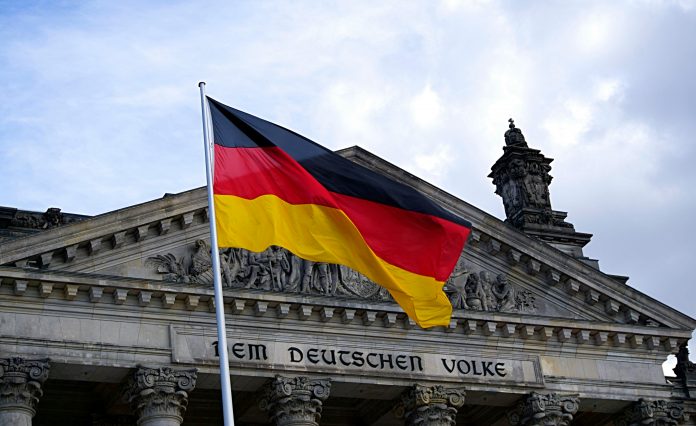
European countries bordering the North Sea have signed a major agreement at the third North Sea Summit in Hamburg, Germany, to accelerate offshore wind energy development and transform the region into what officials are calling the world’s largest energy hub or “clean energy reservoir”.

The deal, known as the Hamburg Declaration, involves 10 nations: Germany, Belgium, Denmark, France, Iceland, Ireland, Luxembourg, the Netherlands, Norway, and the United Kingdom. It commits to delivering up to 100 gigawatts (GW) of additional offshore wind capacity through joint, cross-border projects.

This builds on earlier pledges, such as the 2023 Ostend Declaration targeting 120 GW by 2030 and at least 300 GW by 2050 overall for the region. Wind farms will feed electricity directly into multiple countries’ grids via interconnected high-voltage undersea cables, improving efficiency, sharing costs, and enhancing energy security.

The initiative aims to attract massive investment—potentially €1 trillion around £867 billion by 2040—while providing planning certainty for developers through standardized approaches like Contracts for Difference (CfDs). It emphasizes resilience against geopolitical risks, including reducing dependence on fossil fuel imports particularly in light of ongoing issues with Russian energy supplies and protecting infrastructure from potential sabotage.

German Economy Minister Katherina Reiche stated: “Our goal is to develop the world’s largest energy hub.” German Chancellor Friedrich Merz described the North Sea as aspiring to become the “largest reservoir of clean energy worldwide.”

EU Energy Commissioner Dan Jorgensen framed it as a “very clear signal to Russia,” saying it ends vulnerability to energy “blackmail” and avoids indirectly funding conflicts through fossil fuel purchases. Industry groups like WindEurope welcomed the move as Europe “doubling down” on offshore wind amid challenges like rising costs and investor hesitation.

This comes against a backdrop of current installed capacity around 35 GW as of late 2025, far short of prior targets, and broader global shifts—including U.S. policy under President Trump opposing wind power and recent tensions over Greenland.

The agreement supports Europe’s transition to clean, homegrown energy, potentially powering hundreds of millions of homes long-term, creating jobs, and lowering consumer costs through better interconnection.

The Hamburg Declaration, signed by 10 North Sea-bordering nations (Belgium, Denmark, France, Germany, Iceland, Ireland, Luxembourg, the Netherlands, Norway, and the United Kingdom), represents a major step in accelerating offshore wind development.

It targets up to 100 GW of additional capacity through joint, cross-border projects by 2050, as part of the broader 2023 Ostend Declaration goal of 300 GW total offshore wind in the region. This could power around 143 million homes and transform the North Sea from a historic oil basin into Europe’s premier “clean energy reservoir” or hub.

The deal directly addresses vulnerabilities exposed by Russia’s invasion of Ukraine and energy “weaponization.” By expanding homegrown renewables and interconnections, Europe reduces reliance on imported fossil fuels especially from Russia, cutting exposure to price volatility, supply disruptions, and geopolitical blackmail.

EU Energy Commissioner Dan Jørgensen called it a “very clear signal to Russia” and a path to true energy independence. Enhanced security measures for offshore infrastructure against sabotage, cyber threats, or hybrid attacks were discussed, with NATO involvement and proposals to design some assets for dual-use.

This bolsters regional stability amid ongoing global tensions. The agreement is projected to unlock massive private investment—potentially €1 trillion about £867 billion by 2040—through better planning certainty, standardized tools like Contracts for Difference (CfDs), joint cost-sharing, and cross-border frameworks.

This de-risks projects for developers, attracts capital amid recent industry challenges, and supports supply chain growth in ports, vessels, and manufacturing. Industry groups like WindEurope and Ørsted hailed it as “doubling down” on offshore wind, with potential to lower electricity costs by up to 30% toward 2040 via efficient sharing and interconnection.

It also promises job creation—estimates include tens of thousands of “future-proof” roles in construction, operations, and related sectors—while boosting European industrial competitiveness and value retention.

Scaling offshore wind accelerates Europe’s decarbonization, cutting emissions significantly and supporting net-zero goals. It aligns with EU targets and reduces fossil fuel imports, saving billions annually while mitigating climate impacts.

A core innovation is hybrid assets: wind farms connected via multi-purpose undersea interconnectors to multiple countries’ grids simultaneously. This improves efficiency (e.g., balancing supply across borders), shares infrastructure costs, and enhances grid resilience.

Existing interconnectors will expand, with specific bilateral deals (e.g., Germany-UK, Belgium-Netherlands) paving the way for an interconnected offshore grid. This could stabilize supply, reduce curtailment, and integrate with emerging hydrogen infrastructure.

The timing contrasts sharply with U.S. policy under President Trump, who has criticized wind power and called investing nations “losers.” Europe’s push signals continued commitment to renewables despite transatlantic divergences, potentially positioning the continent as a global leader in clean energy amid U.S. shifts away from wind.

While ambitious, success depends on execution—overcoming regulatory hurdles, supply chain constraints, and cost pressures. Current North Sea capacity is around 35-37 GW as of late 2025/early 2026, so ramping to 100 GW joint projects plus the rest to reach 300 GW will require sustained momentum, financing, and protection against threats.

Overall, this pact strengthens Europe’s energy sovereignty, fosters deeper regional cooperation including post-Brexit UK-EU alignment on grids and markets, and positions the North Sea as a cornerstone of a secure, affordable, low-carbon future.

Industry reactions have been overwhelmingly positive, viewing it as a historic boost for the sector. Examples of North Sea offshore wind farms and conceptual interconnectors, showing the scale and interconnected nature of these developments.

U.S. Marshals Service Investigates Alleged $40M Government Crypto Theft

1

The U.S. Marshals Service (USMS) is investigating allegations that the son of a government contractor stole over $40 million in seized cryptocurrency from federal wallets.

The claims originated from blockchain investigator ZachXBT, who identified the alleged perpetrator as John Daghita also known online as “Lick”. He is reportedly the son of Dean Daghita, president and CEO of Command Services & Support (CMDSS), a Virginia-based IT firm.

CMDSS was awarded a contract in 2024 by the U.S. Marshals Service to assist in managing, safeguarding, and disposing of certain seized and forfeited cryptocurrency assets specifically “Class 2–4” tokens requiring specialized custody. This role gave the company access to sensitive government-controlled wallets holding assets confiscated in criminal investigations, including funds from the 2016 Bitfinex hack.

According to reports: ZachXBT traced suspicious transfers, including a major one of about $24.9 million in March 2024 from a U.S. government-linked wallet. At least $23 million was linked to a wallet Daghita allegedly controlled, with origins tied to roughly $90 million in suspected stolen government and other seized crypto from 2024–2025.

Evidence reportedly includes leaked video recordings where Daghita flaunted control over wallets containing stolen funds during a dispute with another individual. Some funds were allegedly laundered through various channels, though partial recoveries occurred in related prior incidents like $20 million drained in October 2024, mostly returned except for ~$700K.

The U.S. Marshals Service confirmed it is actively investigating these claims. No arrests or formal charges have been announced as of the latest reports from January 26–27, 2026, and the allegations remain unproven in court. CMDSS has not publicly commented, and its website/social media reportedly went offline amid the scrutiny.

This incident has reignited concerns about federal oversight of seized crypto holdings. The USMS manages billions in digital assets from forfeitures, but prior reporting from 2025 highlighted challenges in accurately tracking inventories, especially as the government considers uses like a national crypto reserve.

The allegations surrounding John Daghita (aka “Lick”) allegedly stealing over $40 million in seized cryptocurrency from U.S. government wallets—while his father, Dean Daghita, leads CMDSS, the contractor tasked with managing those assets—carry significant implications across multiple levels.

For Government Crypto Custody and Oversight

This case highlights potential vulnerabilities in how the U.S. government handles seized digital assets, which total billions in value from cases like the 2016 Bitfinex hack and others. The U.S. Marshals Service (USMS) relies on private contractors like CMDSS for specialized custody of certain “Class 2–4” tokens.

If insider access via family ties enabled the theft, it exposes gaps in: Background checks and conflict-of-interest protocols for contractors and their associates. Access controls to private keys and wallets—especially amid prior criticisms that the USMS lacked precise inventory knowledge of its holdings noted in 2025 reporting tied to national crypto reserve discussions.

Overall security in outsourcing sensitive asset management to firms with limited apparent crypto-specific expertise (prior protests from competitors like Wave Digital Assets raised similar concerns, though dismissed by the Government Accountability Office).

The incident has already prompted the USMS to confirm an active investigation, and it could lead to: Stricter vetting, multi-party custody requirements, or even a shift toward in-house or more heavily regulated solutions. Calls for Treasury or DOJ to reclaim direct control of private keys to prevent further risks.

Experts and analysts describe this as exposing systemic weaknesses in government blockchain custody: It underscores the risks of human/insider threats in high-value digital asset management, even with on-chain transparency.

It may accelerate demands for enhanced audits, real-time monitoring, AI-driven threat detection, and forensic tools—potentially boosting related security firms. In the context of evolving U.S. policy— 2025 executive orders promoting digital asset innovation while navigating regulatory ambiguities, it highlights the tension between innovation and accountability in federal crypto handling.

John Daghita faces serious potential charges like theft of government property, wire fraud, money laundering if proven—though no arrests or formal charges have been announced as of late January 2026. His alleged boasting on Telegram including live wallet demos during disputes provided key evidence via ZachXBT’s on-chain tracing.

CMDSS has seen its website, X account, and LinkedIn go offline amid the scrutiny, raising questions about the firm’s viability and any broader involvement though unproven. This could result in contract termination, fines, or debarment from future federal work.

In the crypto space, it reinforces ZachXBT’s reputation for exposing illicit flows and reignites debates on self-custody vs. institutional and government holding. Some voices argue it shows why centralized seizure management is flawed, while others see it as a cautionary tale for better safeguards.

Overall, while the claims remain allegations (unproven in court), the rapid public exposure via blockchain analysis and the USMS probe could drive meaningful reforms in how seized crypto is secured—potentially influencing future federal policy on digital asset reserves and custody standards.

AFP Protección to Launch Bitcoin Exposure Fund in Colombia 

0

Colombia’s second-largest pension fund manager, AFP Protección, has announced plans to launch a Bitcoin exposure fund.

This development marks a significant step in institutional adoption of Bitcoin in Latin America, allowing qualified clients to diversify their retirement portfolios with limited, regulated exposure to BTC.

AFP Protección manages over 220 trillion Colombian pesos approximately $55 billion USD in assets for more than 8.5 million clients across mandatory and voluntary pension plans, as well as severance accounts.

The fund is not a direct “Bitcoin reserve” for the entire pension system but an optional investment product offering exposure to Bitcoin. Access is restricted to qualified investors who undergo a personalized advisory process to assess risk tolerance.

It emphasizes long-term diversification rather than speculation, and it will not change the core allocation of traditional pension savings which remain focused on conventional assets like fixed income and equities.

This follows a similar move by another Colombian pension administrator, Skandia, which introduced Bitcoin exposure via a BlackRock Bitcoin ETF in its voluntary pension portfolios in late 2025. It highlights growing interest in cryptocurrencies among pension sectors in the region, potentially as a hedge against inflation or currency risks.

This is part of a broader trend of institutional integration of Bitcoin, with similar steps seen in other markets. While not a full “reserve” like some nation-state approaches like El Salvador, it represents meaningful mainstream financial infrastructure onboarding BTC for retirement savers.

This move signals continued momentum for Bitcoin as a legitimate asset class in traditional finance. This is a measured, optional product for qualified investors only—accessed via personalized risk assessments—not a broad overhaul of pension allocations.

It builds on Skandia’s earlier introduction of Bitcoin exposure via a BlackRock ETF in voluntary portfolios. Bitcoin is positioned as a hedge against inflation, currency devaluation, and geopolitical risks common in Latin America.

Qualified clients gain access to an asset with historically low correlation to traditional stocks/bonds, potentially improving long-term risk-adjusted returns in volatile emerging-market contexts.

Strict eligibility (personalized advisory + risk profiling) and limited allocations protect core retirement savings. The bulk of mandatory pension funds remain in conventional assets like fixed income and equities, avoiding widespread exposure to Bitcoin’s volatility.

This could draw younger or more risk-tolerant savers seeking modern diversification, helping AFP Protección compete in a market facing pressures like proposed government rules to cap overseas investments (redirecting capital domestically).

A major fiduciary like AFP Protección integrating Bitcoin validates it as a strategic diversifier rather than pure speculation. Analysts describe this as a “graduation” for Bitcoin in traditional finance, especially in emerging markets.

The move following Skandia may pressure peers in Chile, Peru, Mexico, and beyond—managing hundreds of billions in assets—to explore similar products. This accelerates regional institutional adoption amid macroeconomic challenges.

Colombia treats Bitcoin as an intangible asset not legal tender, with increasing oversight. The cautious, advisory-led structure aligns with prudence requirements under Decree 574/2025, reducing friction in a gray-area regulatory environment.

While inflows are expected to be small and gradual due to qualification limits and conservative allocations, this adds steady, regulated institutional buying pressure. Combined with global trends, it supports Bitcoin’s long-term structural demand without causing immediate price shocks.

Reports consistently note no broad-based upward pressure expected soon, as the product targets diversification—not aggressive speculation. Long-term, it contributes to Bitcoin’s maturation as a portfolio component.

Success may highlight gaps in investor knowledge and the need for better custody/regulation frameworks to scale such exposure safely. This represents cautious but meaningful progress in Bitcoin’s institutional integration in Latin America—prioritizing stability while opening doors to digital assets for retirement planning.

It aligns with a global shift where pension funds increasingly view Bitcoin as a non-traditional diversifier amid persistent inflation and currency risks. If other major administrators follow, it could reshape how millions save for the future in the region.