DD
MM
YYYY

PAGES

DD
MM
YYYY

spot_img

PAGES

Home Blog Page 1307

Coinbase Faced Data Breach Affecting 84,000 Customers

1

Coinbase, a leading U.S.-based cryptocurrency exchange, disclosed a data breach affecting less than 1% of its monthly transacting users, roughly 84,000 customers. Cybercriminals bribed overseas customer support agents, primarily based in India, to access and steal sensitive customer data, including names, addresses, phone numbers, email addresses, government-issued ID images, the last four digits of Social Security numbers, masked bank account numbers, and account details like balance snapshots and transaction histories. No passwords, private keys, two-factor authentication codes, customer funds, or Coinbase Prime accounts were compromised.

The attackers demanded a $20 million Bitcoin ransom to not publish the stolen data, which Coinbase refused to pay. Instead, the company launched a $20 million bounty for information leading to the arrest and conviction of the perpetrators. Coinbase fired the involved support agents, is pursuing legal action against them, and is collaborating with law enforcement to trace the attackers. The company estimates remediation costs and voluntary customer reimbursements will range from $180 million to $400 million.

Affected customers, already notified, will be reimbursed if they were tricked into sending funds due to social engineering scams enabled by the breach. To prevent future incidents, Coinbase is opening a U.S.-based support hub, enhancing insider threat detection, increasing high-risk transaction monitoring, and implementing mandatory scam-awareness prompts and ID checks for flagged accounts.

The breach has raised concerns about the security of outsourced customer support and the potential for social engineering attacks, with some linking it to broader crypto scam networks. Coinbase’s stock fell over 4% on the day of the announcement, reflecting investor concerns ahead of its planned S&P 500 inclusion. The Coinbase data breach, disclosed on May 15, 2025, carries significant implications for the cryptocurrency industry, user trust, and the broader divide between centralized exchanges and decentralized systems.

The breach, affecting ~84,000 users, exposed sensitive personal and financial data, amplifying concerns about the security of centralized platforms like Coinbase. Even though no funds were directly stolen, the potential for social engineering scams (e.g., phishing or impersonation) could lead to significant user losses. Coinbase’s refusal to pay the $20 million Bitcoin ransom and its $180–$400 million remediation cost estimate signal a major financial hit, potentially shaking investor confidence. The 4% stock drop on the announcement day reflects market unease, especially as Coinbase aims for S&P 500 inclusion.

Users may hesitate to store assets or personal information on centralized exchanges, pushing some toward alternatives like self-custody or decentralized platforms. The breach stemmed from bribed customer support agents, primarily in India, highlighting risks in outsourcing sensitive operations. This could prompt regulatory scrutiny of third-party vendor security practices in the crypto industry.

Coinbase’s response—firing involved agents, pursuing legal action, and opening a U.S.-based support hub—suggests a shift toward insourcing. However, this may increase operational costs, potentially passed on to users through higher fees. The exposure of government-issued IDs and partial Social Security numbers raises concerns about identity theft, likely attracting attention from U.S. regulators like the SEC, CFTC, or FTC. This could lead to stricter data protection and KYC/AML requirements for crypto exchanges.

Globally, the breach may fuel calls for harmonized crypto regulations, especially in jurisdictions with weaker oversight of outsourced operations. The stolen data (names, addresses, phone numbers, emails, etc.) is ideal for targeted scams. Coinbase’s commitment to reimburse affected users for scam-related losses is notable but may not fully mitigate reputational damage if scams proliferate. The incident underscores the need for user education on scam awareness, as Coinbase’s new mandatory prompts and ID checks aim to address.

Industry-Wide Security Reassessment

Other centralized exchanges like Binance, Kraken may face pressure to audit their customer support and insider threat detection systems. The breach could accelerate adoption of advanced security measures like AI-driven monitoring or zero-trust architectures. The $20 million bounty for catching the perpetrators signals a proactive stance, but it also highlights the sophistication of crypto crime networks, potentially linked to broader scams as noted in some analyses.

This breach amplifies the philosophical and practical divide between centralized exchanges (CEXs) like Coinbase and decentralized finance (DeFi) or self-custody solutions, rooted in control, security, and user responsibility. User-friendly interfaces, customer support, regulatory compliance, and fiat on-ramps make CEXs accessible to mainstream users. Coinbase’s 8.4 million monthly transacting users (as of Q1 2025) reflect their dominance.

The breach exposes inherent risks of centralization—single points of failure, reliance on human agents, and large honeypots of user data. Even robust security can’t eliminate insider threats or human error, as seen with the bribed agents. Users may question whether CEXs can adequately protect their data, especially as breaches like this fuel distrust. Coinbase’s planned U.S. support hub and enhanced monitoring aim to rebuild confidence, but the damage may linger.

DeFi platforms and self-custody wallets such as MetaMask, Ledger give users full control over their private keys and funds, eliminating reliance on third-party custodians. No central database of user data reduces the risk of breaches like Coinbase’s. DeFi is complex, with a steep learning curve and risks like smart contract vulnerabilities or user errors (e.g., losing seed phrases). Self-custody requires technical literacy, deterring mainstream adoption.

The CEXs align with traditional finance, offering convenience and compliance but sacrificing user sovereignty. DeFi embodies crypto’s original ethos of decentralization but demands self-reliance, which many find daunting. The breach may split users into two camps: those who value Coinbase’s reimbursements and regulatory backing, and those who see it as a wake-up call to embrace decentralization. Data from 2024 shows DeFi’s total value locked (TVL) at $100 billion, dwarfed by CEX trading volumes ($2 trillion monthly).

The breach could nudge TVL higher but won’t dethrone CEXs soon, given their accessibility. Some platforms (e.g., Uniswap’s front-end or Coinbase Wallet) blend CEX usability with DeFi principles. Coinbase’s post-breach security upgrades could incorporate decentralized identity or privacy-preserving KYC to reduce data exposure.

Improving user education on self-custody and scam prevention could ease the transition to DeFi. Coinbase’s scam-awareness prompts are a step, but broader industry efforts are needed. Balanced regulations that protect users without stifling DeFi innovation could narrow the gap. The breach may accelerate such discussions, especially in the U.S.

The Coinbase breach underscores the fragility of centralized systems, even at a leading exchange, and fuels the debate over centralization versus decentralization. While Coinbase’s response—reimbursements, bounties, and security overhauls—aims to restore trust, the incident may push some users toward DeFi or self-custody, deepening the crypto divide.

The industry faces a pivotal moment, CEXs must innovate to match DeFi’s security promises, while DeFi must simplify to rival CEX accessibility. For now, users must weigh convenience against control, with the breach serving as a stark reminder of the stakes.

Synthetix-Derive Acquisition Could Reshape and Enhance Synthetix’s Derivatives Capabilities

0

Synthetix, a decentralized derivatives protocol, has proposed acquiring Derive (formerly Lyra), an Ethereum-based options trading platform, in a $27 million token-swap deal. The proposal, outlined in SIP-415, involves exchanging 29.3 million new SNX tokens for DRV tokens at a 27:1 ratio (1 SNX for 27 DRV).

If approved by both communities, the deal would integrate Derive’s treasury, codebase, and operations, including its perpetual futures and options stack, into Synthetix’s ecosystem, aiming to enhance its derivatives suite on Ethereum mainnet. The acquisition would reunite the two protocols, which previously split, and follows a week-long rally in SNX, with its price jumping 11% amid the news.

However, some Derive community members, including Litocoen, have expressed concerns over the valuation, calling it “unfairly low,” and others have labeled the deal controversial, citing Synthetix’s past performance and the proposed terms. The deal awaits community approval and includes a one-year vesting period for the SNX tokens.

The proposed $27 million token-swap deal between Synthetix and Derive carries significant implications for both protocols, their communities, and the broader decentralized finance (DeFi) ecosystem. By absorbing Derive’s options and perpetual futures infrastructure, Synthetix aims to bolster its decentralized derivatives offerings on Ethereum mainnet. This could position Synthetix as a more comprehensive platform for synthetic assets and derivatives trading, potentially attracting new users and increasing trading volume.

The acquisition reunites Synthetix and Derive, which previously diverged. This could streamline development efforts, consolidate talent, and leverage Derive’s codebase to accelerate Synthetix’s roadmap, particularly for options trading. Acquiring Derive’s treasury and operations could strengthen Synthetix’s financial position and operational capabilities, enabling faster scaling and innovation.

The announcement triggered an 11% rally in SNX, reflecting market optimism about the deal’s potential to enhance Synthetix’s value proposition. However, issuing 29.3 million new SNX tokens could dilute existing holders’ value, depending on market absorption and future performance. Derive token holders will receive SNX tokens at a 27:1 ratio, subject to a one-year vesting period. This locks in value but exposes them to SNX’s market volatility, which some community members view as risky given Synthetix’s historical performance.

A successful acquisition could strengthen Synthetix’s competitive edge against other DeFi derivatives platforms like dYdX or GMX, especially in the growing options trading sector. The deal requires approval from both Synthetix and Derive governance communities, highlighting the decentralized decision-making process. Disagreements within Derive’s community could delay or derail the proposal.

Integrating Derive’s team and operations may foster closer alignment, but cultural or strategic differences could pose challenges during the transition. The acquisition reflects a trend of consolidation in DeFi, where larger protocols acquire smaller ones to expand capabilities and market share. This could lead to fewer but more robust platforms, potentially improving user experience but raising concerns about centralization.

By integrating Derive’s options stack, Synthetix could drive adoption of decentralized options trading, a niche but growing segment of DeFi, competing with centralized platforms like Deribit. The proposed acquisition has sparked significant debate within Derive’s community, revealing a divide over the deal’s fairness and strategic merit.

Litocoen have criticized the $27 million valuation of Derive as too low, arguing it undervalues Derive’s technology, treasury, and potential. Some community members believe Derive’s options trading infrastructure and growth trajectory warrant a higher price. The 27:1 DRV-to-SNX swap ratio is contentious. Critics argue that Derive token holders are receiving insufficient value, especially given SNX’s historical volatility and underperformance compared to other DeFi tokens.

The issuance of new SNX tokens raises concerns about dilution, which could depress SNX’s price and reduce the effective value of the swap for Derive holders. Some Derive community members question Synthetix’s ability to deliver on promises, citing its mixed track record in scaling and maintaining market share. They view the acquisition as a risky bet on Synthetix’s future success.

The one-year vesting period for SNX tokens is a point of contention, as it locks Derive holders into a potentially volatile asset, limiting their liquidity and flexibility. Proponents argue that merging with Synthetix offers Derive access to a larger user base, deeper liquidity, and shared resources, which could accelerate development and adoption of its options products.

Some see the acquisition as a way to align Derive with a more established protocol, reducing operational risks and enhancing its chances of success in a competitive market. The 11% SNX rally suggests market confidence in the deal, which could benefit Derive holders if SNX sustains its upward momentum.

The divide has spurred active discussions, with community members debating the deal’s terms on platforms like Discord and Snapshot. This reflects healthy decentralized governance but also underscores the challenge of reaching consensus. The Synthetix-Derive acquisition could reshape both protocols’ trajectories, enhancing Synthetix’s derivatives capabilities and potentially driving DeFi innovation. However, the divide within Derive’s community—centered on valuation, token swap terms, and trust in Synthetix—poses a hurdle.

The outcome hinges on governance votes, with the potential to either unify the protocols or expose deeper tensions in DeFi’s decentralized ethos. If approved, the deal’s success will depend on effective integration and delivering on the promised synergies.

Ndubuisi Ekekwe – Hall of Fame, Ministry of Science & Tech, Lagos State

0

Let me celebrate this one from the good people of Lagos Lagos state. Yes, the amazing Lagosians added a village boy from Ovim to its Hall of Fame in the Ministry of Science and Technology at Alausa, Lagos. Thank you, Lagos.

Good People, when your face shows up in college campuses and government buildings, all you can write is this: THANK YOU.

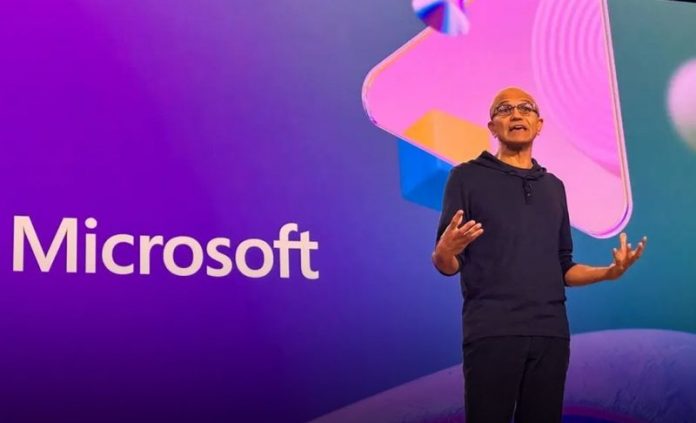
As Microsoft Lays off Its AI Director, Rethink Your Job!

0

A Director of AI in Microsoft was among the recent people the tech giant fired in its recent reorganization. Yes, a huge irony when big tech is breaking profit records, and yet big tech is laying off workers with reckless abandon. Klarna just cut 40% of its workers: “Klarna, the Swedish fintech giant known for its buy-now-pay-later services, has drastically cut its workforce by nearly 40%—a move the company attributes to a combination of artificial intelligence integration and natural attrition.”

But it should not surprise us when you remember the Stage which was one of the most politically lethal adverts created by Obama against Mitt Romney for US Presidency. In that ad, men built a stage to host a town hall meeting for a new owner, and Romney walked on that stage to fire them. They never forgot how they prepared, worked hard, to build that stage, only to be fired on that stage!

As we make AI better, AI will create job dislocations in many companies even AI opens new vistas of opportunities.  And those who actually execute their AI projects well will actually have to lose their jobs if indeed they were successful. You cannot make this up: your job is to improve the AI system so that your job will go!

So what do we do to thrive? It comes down to KNOWLEDGE. Indeed, knowledge because the best AI can do is the “artificial” version of intelligence. What that means is operating at a level where you set a new basis that makes AI lost. Indeed, we need natural wisdom at work because AI is commoditizing intelligence!

How do you contribute at work? Are you self-driven? Do you have that natural energy to get things done? Do you compound what that employer pays you over just becoming a Labourer at work?

Labour-level factor of production will go even as Knowledge-level factor will become extremely valuable. Machines like robots and AI will do Labour-level work. So, we need to evolve to become the knowledge species

Good People, the nature of work is changing. In Nov 2024, we invested in a company with 6 staff . In 4 months of launch, the company has generated $10m revenue purely by creating AI agents as new roles are needed.

NODE Acquisition of CryptoPunks IP Positions It As a Cornerstone for Digital Art Preservation

0

The Infinite Node Foundation (NODE), a nonprofit focused on preserving digital art, acquired the intellectual property (IP) of the CryptoPunks NFT collection from Yuga Labs on May 13, 2025. Yuga Labs, which had purchased the IP from Larva Labs in 2022, transferred it to NODE for an estimated $20 million, though some sources note the amount was undisclosed.

NODE also received a $25 million fund to support its stewardship, which includes preserving the collection, engaging the community, and launching a museum-partnership program to integrate CryptoPunks into leading art institutions. The acquisition led to a 40% surge in CryptoPunks NFT sales and a 170% increase in trading volume to $2.8 million within 24 hours.

Yuga Labs described the transfer as a “full-circle moment” to ensure the collection’s permanence, with Larva Labs founders Matt Hall and John Watkinson returning as advisors. Some X posts question whether the $20 million price was undervalued, reflecting mixed sentiment among holders.

The acquisition of the CryptoPunks IP by the Infinite Node Foundation (NODE) from Yuga Labs has significant implications for the NFT ecosystem, digital art preservation, and the CryptoPunks community, while also highlighting a divide in stakeholder perspectives. NODE’s nonprofit status and mission to preserve digital art position CryptoPunks as a cultural artifact rather than a speculative asset.

The planned museum-partnership program aims to integrate the collection into prestigious art institutions, potentially elevating its status in the traditional art world. The $25 million stewardship fund ensures long-term maintenance, including blockchain integrity and community engagement, reducing risks of neglect or mismanagement.

The acquisition triggered a 40% surge in CryptoPunks sales and a 170% increase in trading volume to $2.8 million within 24 hours, signaling renewed market interest. However, the NFT market’s volatility suggests this may not guarantee sustained value growth. Transferring IP to a nonprofit could stabilize the collection’s perceived value by removing it from purely commercial motives, but it may also limit future profit-driven initiatives that some investors expected from Yuga Labs.

The return of Larva Labs founders Matt Hall and John Watkinson as advisors strengthens NODE’s credibility and aligns with the collection’s origins, potentially fostering community trust. NODE’s community engagement plans, including potential decentralized governance models, could empower CryptoPunks holders, though details remain unclear.

This move sets a precedent for nonprofit stewardship of digital assets, which could inspire similar models for other iconic NFT collections, balancing commercialization with cultural preservation. It highlights the maturing NFT space, where projects transition from speculative hype to long-term cultural significance.

Many see NODE’s involvement as a win for digital art, ensuring CryptoPunks’ longevity beyond market cycles. The nonprofit model is praised for prioritizing cultural value over profit. Some holders and enthusiasts welcome the return of Larva Labs founders and NODE’s community-focused approach, expecting more inclusive governance and creative initiatives.

The immediate sales and volume spike fueled optimism among traders who view the acquisition as a catalyst for renewed interest and price appreciation. Some X posts question whether the $20 million price tag undervalues CryptoPunks, given their historical significance and prior sales (e.g., individual Punks sold for millions). Critics argue Yuga Labs may have offloaded the IP at a discount, potentially shortchanging holders expecting higher commercial exploitation.

Investors who anticipated Yuga Labs’ commercial strategies (e.g., media or metaverse integrations) worry that NODE’s nonprofit focus could cap financial upside, prioritizing art over profit. While NODE promises community engagement, lack of clarity on how holders will influence decisions has sparked skepticism. Some fear a disconnect between NODE’s vision and the community’s speculative interests.

Positive posts celebrate the “decentralized ethos” and cultural preservation, with users like NFTCollector praising NODE’s mission. Negative posts, such as those from CryptoSpeculator, express frustration over the “lowball” sale price and potential loss of commercial potential, reflecting a divide between art-focused and profit-driven holders.

The acquisition positions CryptoPunks as a cornerstone of digital art preservation, with NODE’s nonprofit model offering stability and cultural legitimacy. However, it also underscores a divide between those who value long-term legacy and those prioritizing financial returns. The success of NODE’s stewardship will depend on balancing these interests through transparent governance and effective community engagement, while navigating the broader NFT market’s evolution.