
DD
MM
YYYY

PAGES

DD
MM
YYYY

spot_img

PAGES

Home Blog Page 131

John Ternus Becomes Apple CEO as Tokenized AMC Suffers 50x Depeg on Robinhood Chain

0

Tomorrow, Apple turns a page. John Ternus is set to begin his tenure as chief executive officer, stepping into one of the most scrutinized positions in the technology industry.

Leadership changes at Apple are never merely corporate events. They are moments when investors, employees, competitors, and consumers pause beneath the enormous shadow of the company and ask the same question: what comes next?

For years, Apple has been guided by a philosophy in which hardware, software, services, and design move like instruments in a carefully composed symphony. Ternus now inherits that orchestra at a time when artificial intelligence is rewriting the score.

The smartphone is no longer simply a device; it is becoming a doorway into an increasingly intelligent digital world. Computing is moving toward inference, agents, robotics, and personalized systems.

The next Apple chapter will therefore demand more than operational excellence. It will demand imagination.

Yet as Apple prepares for a new captain, the crypto economy offers a very different lesson about the fragility of confidence. A tokenized version of AMC reportedly suffered a dramatic depeg, falling by a factor of roughly 50 because of its pairing with a memecoin on Robinhood Chain.

The episode is a striking reminder that putting traditional assets on a blockchain does not automatically make markets more stable. Tokenization may change the rails on which an asset travels, but it does not erase liquidity risks, market structure problems, or the strange gravitational pull of speculation.

The promise of tokenized equities is powerful. A stock can, in theory, become programmable, composable, and available around the clock. Traditional financial assets can enter decentralized environments where ownership, settlement, and trading become increasingly fluid.

But with that freedom comes a new vocabulary of risk. When a token representing something recognizable in the traditional economy becomes intertwined with a highly speculative asset.

The distinction between financial infrastructure and casino psychology can become dangerously thin. A price can detach from the value it supposedly represents, not because the underlying company suddenly changed.

But because the machinery around the token malfunctioned or liquidity evaporated. That is the paradox of the new financial frontier: the technology can be revolutionary while the market around it remains profoundly human.

Apple’s transition and the AMC token incident seem worlds apart, yet both reveal the importance of architecture. At Apple, leadership is the architecture of decision-making.

At Robinhood Chain, pairing and liquidity are part of the architecture of markets. In both cases, small structural choices can produce consequences far larger than their original design.

Ternus begins with an enormous inheritance: a global brand, immense resources, and expectations that stretch beyond quarterly earnings. The tokenized AMC episode arrives with an equally important inheritance—the promise that blockchain can modernize traditional finance.

But promises require foundations. Tomorrow, Apple will ask whether a new leader can carry an old institution into an unfamiliar future. The token market asks whether new financial infrastructure can carry old assets without importing new vulnerabilities.

Between the polished glass of Cupertino and the volatile currents of crypto lies one enduring truth: technology may change the machinery, but trust remains the currency. And when trust moves, markets move with it.

Crypto Security Crisis Meets Web3 Culture as Rekt Drinks Rolls Out at Burning Man

0

The blockchain was built on a promise that sounded almost rethoric: trust without permission, ownership without intermediaries, a financial world where code could become the guardian of value.

Yet this week, that promise has been tested by the oldest enemy in technology—exploitation. TectonicFi reportedly lost roughly $75 million in an exploit involving the Cronos ecosystem.

While Fogo’s mainnet was halted following another exploit. Two incidents, separated by architecture and circumstance, but united by the same uncomfortable lesson: decentralization does not make systems invincible. Code may be sovereign, but code can still bleed.

In crypto, billions can disappear in the time it takes to refresh a wallet. A vulnerability hidden inside a smart contract can become a doorway, and once that door opens, capital can rush through it like water breaking through a damaged dam.

The numbers are enormous, but the deeper damage is harder to measure. Every exploit leaves behind something more fragile than a balance sheet: confidence. For TectonicFi, a $75 million loss is not simply a headline.

It is a reminder of how much financial weight now rests upon lines of code. Decentralized finance has transformed the architecture of money, allowing lending, trading and liquidity to operate without traditional financial institutions standing between participants.

But the removal of intermediaries also removes certain layers of human oversight. The smart contract becomes the institution. Its vulnerability becomes the institution’s vulnerability.

Fogo’s decision to halt its mainnet following an exploit reveals another dimension of this new financial reality. Halting a blockchain is almost paradoxical. The technology is celebrated for permanence.

Censorship resistance and continuous operation, yet when something goes wrong, developers may have to pull the emergency brake. That contradiction deserves attention. Crypto often speaks in the language of unstoppable networks.

Reality speaks more softly: sometimes networks must stop so they can survive. And while digital infrastructure wrestles with its vulnerabilities, another kind of experiment is unfolding far from the screens and wallets of crypto traders.

At Burning Man, where temporary cities rise from the Nevada desert and disappear beneath the dust, Rekt Drinks is rolling out branded hydration. It is an almost perfect symbol of the strange world being built around modern internet culture.

In a place famous for radical self-expression, community and impermanence, brands are finding new ways to become part of the experience. On one side, decentralized networks struggle to protect millions of dollars in digital liquidity.

On the other, people gather beneath an unforgiving sun, where water is not a metaphor for liquidity but a physical necessity. One world counts tokens; the other counts bottles. Yet both stories are ultimately about trust.

DeFi asks users to trust mathematics, contracts and infrastructure. Burning Man asks participants to trust communities, preparation and shared responsibility. Both reveal that technology cannot eliminate vulnerability. It can only change its shape.

The crypto industry will continue to build faster chains, smarter contracts and deeper financial systems. But every exploit whispers the same warning: innovation without resilience is merely speed toward another failure. Perhaps that is the lesson hidden beneath the noise.

The future will not belong simply to the systems that move the most value. It will belong to those capable of protecting it when the storm arrives. Because whether it is billions moving through a blockchain or a bottle of water passing through desert dust, what matters most is not movement.

Soitec Locks In AI Optics Demand With Deposits As Photonics Wafer Orders Surge

0

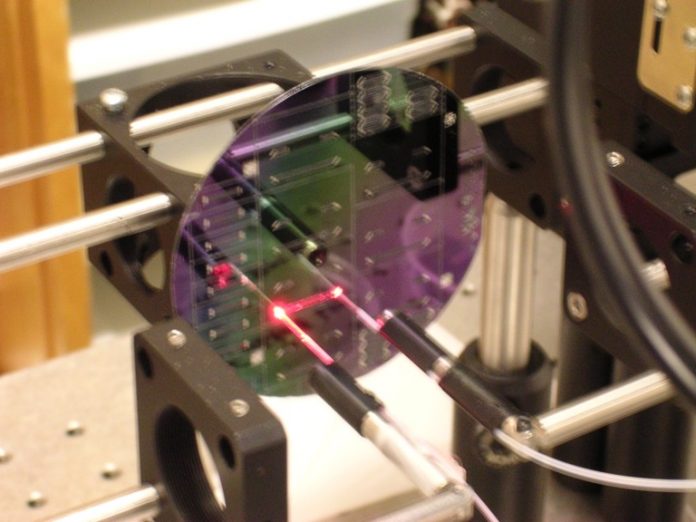
French chip materials maker Soitec is using a surge in demand for wafers used in AI data-center optics to secure multi-year customer commitments, with deposits and fixed pricing designed to give the company greater visibility over future demand and protect its margins.

The strategy comes as hyperscalers race to expand AI computing infrastructure and increasingly turn to optical connections to move data between processors. Copper connections are becoming less attractive for some high-speed applications because of their power consumption and performance limitations, increasing demand for silicon photonics.

“We are using the current situation to find the right balance between the value we bring and the price we can ask,” Soitec CEO Laurent Remont told Reuters.

Soitec told investors last month that revenue from photonics-SOI, the silicon substrate used to manufacture silicon photonics chips, would more than double in the current financial year from slightly above $100 million. Remont said that forecast now represents “absolutely a floor,” implying revenue of more than $200 million.

The acceleration is of the essence to Soitec because silicon photonics is becoming an increasingly important component of AI infrastructure. As AI systems require ever greater volumes of data to move between computing and networking components, optical technology offers advantages in speed, distance and energy efficiency.

Soitec supplies the substrate used by almost all silicon photonics chips, according to UBS, which estimates the French company controls about 95% of the market. Its shares have almost quadrupled this year as investors have bet on the company benefiting from the expansion of AI-related optical networking.

Rather than simply expanding capacity immediately, Soitec is seeking to make customers commit capital alongside their orders.

About 80% of the company’s capacity reservation agreements with more than 10 photonics customers are expected to be signed within the next one to two weeks, with the remainder expected within a month, Remont said.

The agreements will lock in prices and require customers to put down deposits against committed volumes. Customers that take the agreed quantities will have their deposits returned, while those that fall short will forfeit them. Orders above contracted volumes will be subject to fresh pricing negotiations.

“That’s a way for us to have our customer with skin in the game,” Remont said.

The arrangement gives Soitec greater confidence when allocating scarce manufacturing capacity while limiting the risk that customers reserve more wafers than they ultimately need. Customers will also be required to share inventory information, which Soitec says will help prevent companies from accumulating excess capacity simply to keep wafers away from competitors.

The approach could prove important as the AI supply chain moves from short-term capacity concerns toward longer-term commitments. For Soitec, securing demand before committing billions of dollars to new manufacturing facilities reduces the risk of expanding too aggressively if the current AI investment cycle eventually moderates.

The company does not expect to require a new fabrication plant until around 2029. Instead, it plans to increase production through existing assets.

One option is to shift output between businesses where facilities are underutilized. Another is to install additional manufacturing equipment in existing cleanroom space.

“With that we will cover easily this year and next year,” Remont said.

Soitec can also repurpose part of a French facility originally built for silicon carbide production. The company wrote down €41 million ($47.7 million) of that facility last year.

Singapore provides another potential source of expansion. Soitec produced photonics-SOI exclusively in France until five months ago, but has since qualified customers at a Singapore facility. The company also has an unequipped building there that could be fitted with manufacturing equipment instead of constructing an entirely new plant.

A decision on whether to equip that building is expected within six to 12 months, Remont said.

“We can increase quickly without building a completely new fab, just equipping a building,” he said.

The strategy also means Soitec currently sees little need to establish manufacturing capacity in the United States, even though much of the AI infrastructure boom is being driven by U.S. technology companies.

“We don’t need a U.S. plant at this stage,” Remont said, adding that customers are “more desperate to get wafers than being too picky about where the location for production is.”

The comments indicate that in the AI semiconductor supply chain, demand is no longer concentrated only in the processors that train and run AI models. Supporting technologies such as high-bandwidth memory, advanced packaging and optical networking are becoming critical bottlenecks as data-center operators build increasingly powerful systems.

That creates an opportunity for Soitec to translate its dominant position in photonics substrates into longer-term contracts, better pricing visibility, and potentially stronger returns on existing manufacturing assets before it commits to the much larger expense of building a new fab.

India Stocks Face Volatility Test as MSCI Rebalance Meets New Closing Auction

0

India’s equity benchmarks could face sharp swings in the final minutes of trading on Monday as funds tracking MSCI indexes reposition portfolios ahead of a major index reshuffle, putting the country’s newly introduced closing auction system to its first significant test.

The MSCI changes take effect on September 1, prompting passive funds and other benchmark-linked investors to adjust their holdings a day earlier so their portfolios are aligned with the revised index. Traders expect the resulting concentration of buy and sell orders to increase volatility during the closing auction, where liquidity remains relatively thin after the new system was introduced this month.

“This MSCI rebalance is the first real litmus test for the CAS,” said Arun Kejriwal, founder of Kejriwal Research and Investment Services. “We could again see some ‘chaos’ in individual stocks.”

India introduced the closing auction session, or CAS, on August 3. The roughly 20-minute session matches buy and sell orders to establish a stock’s official closing price, replacing the previous system in which the closing price was calculated using the average price of trades executed during the final 30 minutes of continuous trading.

The mechanism is widely used in major markets including China, Taiwan, Hong Kong and South Korea, but its introduction in India has already exposed the potential for sharp short-term price movements when large orders are concentrated near the close.

The MSCI reshuffle provides a crucial test because passive funds can generate sizable one-way flows in individual stocks. Unlike normal trading, where orders are distributed throughout the session, index rebalancing can concentrate demand or selling pressure into a narrow period as funds seek to minimize tracking error.

Four Indian companies will be added to the MSCI basket: Laurus Labs, Lenskart, Adani Energy Solutions and Groww. They will replace Balkrishna Industries, SBI Cards and Astral.

The reshuffle will also reduce the weight of heavyweight Reliance Industries while increasing the weighting of Adani Enterprises. The changes are unlikely to produce a major move in the broader benchmark because the companies being added are relatively small index constituents.

The greater risk is concentrated in individual stocks, where passive flows can be large relative to normal trading volumes.

“The larger names entering the MSCI basket are not major index components. Therefore, the volatility at the headline index level may not be very significant,” said Tejas Shah, head of trading at Equirus Securities.

“The greater impact is likely to be stock-specific, with sharp moves possible in individual names depending on their liquidity and the scale of the passive flows.”

That will be important for investors watching Monday’s close. A large movement in an individual stock does not necessarily indicate a fundamental reassessment of its prospects. Some price moves could instead be the mechanical result of index funds buying or selling shares to match the new MSCI weights.

The new closing auction has already demonstrated how quickly indicative prices can move when trading activity becomes concentrated near the close. Last Thursday, the Sensex’s indicative closing price at one point implied a 3.3% decline during the auction, coinciding with monthly derivatives expiry. The index subsequently recovered and ended the session down 0.7%.

The episode highlighted the difference between an indicative auction price and the eventual market close, while also raising questions about how the new mechanism will behave when large institutional orders collide with limited liquidity.

Monday’s MSCI rebalance should provide a cleaner test because there is no derivatives expiry adding another source of concentrated trading activity.

“MSCI rebalancing will bring its usual volatility. However, with no derivatives contracts expiring that day, even if closing auction results in some price distortion due to rebalancing flows, I expect its broader impact to remain limited,” said Uttam Bagri, managing director of BCB Brokerage Private Limited.

The outcome will nevertheless be closely watched by traders and market operators because the CAS is still relatively new. Its effectiveness depends partly on the depth of orders available during the auction and the ability of the mechanism to absorb large institutional flows without creating excessive temporary price distortions.

For India’s broader market, the MSCI reshuffle also illustrates the growing influence of passive investment flows. As more global money tracks benchmark indexes, changes in index composition and weightings can generate substantial trading activity independent of changes in company fundamentals.

The immediate focus on Monday will therefore be less on the direction of the Sensex and Nifty and more on what happens in individual stocks during the final minutes. Analysts say that if liquidity proves sufficient to absorb the MSCI flows, the auction could reinforce confidence in the new closing mechanism. If prices swing sharply before settling, it could intensify scrutiny of how the system handles large institutional orders.

Either way, the session will offer one of the clearest indications yet of how India’s new closing-price regime performs under the kind of concentrated, predictable institutional flows that routinely occur during major global index rebalances.

Oil Spikes as the Guns Speak Again in the Strait of Hormuz

0

Oil has always been more than a commodity. It is the bloodstream of modern civilization, flowing quietly beneath economies, factories, airports, ships and cities. But when war returns to the headlines, that bloodstream begins to race.

With the United States and Iran resuming strikes, crude prices have once again become a barometer of fear, rising as markets confront the possibility that another geopolitical storm could disrupt the fragile architecture of global energy.

The latest escalation has reminded investors of a lesson written repeatedly across history: energy markets do not wait for wars to become large before pricing their consequences. They respond to uncertainty.

The possibility of damaged infrastructure, disrupted shipping routes, reduced production or restricted access to critical waterways can be enough to send traders rushing toward crude futures.

The Strait of Hormuz remains particularly important in this equation. The narrow passage is one of the world’s most consequential energy corridors, carrying a substantial share of global oil and liquefied natural gas shipments.

Any prolonged disruption could transform a regional conflict into a global economic problem. Earlier disruptions connected to the U.S.-Iran confrontation demonstrated how quickly concerns surrounding the strait could push crude prices higher.

And so, as missiles cross the night sky, another battle begins on trading screens. Oil rises. Inflation whispers louder. Bond markets become nervous. Consumers eventually feel the shock. The danger is not simply that crude becomes expensive.

Energy is embedded in almost everything. Higher fuel costs increase transportation expenses, raise production costs and can eventually filter into food, manufacturing and household bills.

What begins as a conflict thousands of miles away can therefore arrive quietly at the doorstep of an ordinary family through the price of petrol, electricity, transportation and everyday goods.

For central banks, this creates an uncomfortable dilemma. Inflation generated by an energy shock cannot easily be defeated with conventional monetary policy. Raising interest rates may weaken demand.

But it cannot reopen a shipping lane or repair an oil facility damaged by war. Yet policymakers may still face pressure to maintain tighter financial conditions if higher energy prices begin pushing broader inflation expectations upward.

Recent oil-driven market episodes have already shown how geopolitical uncertainty can lift crude prices while simultaneously weighing on equities and increasing volatility. For investors, the landscape becomes equally complicated.

Energy producers may benefit from higher crude prices, while airlines, manufacturers, transportation companies and other energy-intensive businesses face rising costs.

Emerging markets can be particularly vulnerable because expensive energy can worsen trade balances, weaken currencies and intensify inflationary pressure.

Yet beneath the numbers lies something more profound. Every barrel of oil carries a story. It carries the story of factories waiting for fuel, ships crossing dangerous waters, governments protecting strategic reserves and families hoping that prices at the pump will not rise again.

Oil markets may appear abstract on financial screens, but their consequences are deeply human. The resumption of U.S.-Iran strikes therefore represents more than another geopolitical headline. It is a warning that global markets remain vulnerable to events that diplomacy has not yet managed to contain.

Oil rises when uncertainty grows. Uncertainty is burning brightly. The world watches the Middle East, while the markets listen for the next sound of war—or the first quiet note of peace.