DD
MM
YYYY

PAGES

DD
MM
YYYY

spot_img

PAGES

Home Blog Page 1315

India’s Supreme Court’s Push for Regulation of Cryptocurrencies Signals a Progressive Shift

0

In May 2025, the Supreme Court of India advocated for regulating cryptocurrencies instead of imposing a ban, emphasizing the need for a legal framework to manage digital assets. This stance emerged during a bail hearing involving a cryptocurrency-related fraud case, where the court highlighted the complexity of crypto markets and the necessity for expert consultation to craft effective regulations.

The court noted that cryptocurrencies like Bitcoin are already subject to a 30% tax on profits and a 1% tax deducted at source, indicating partial legal recognition. This follows the court’s 2020 decision to overturn a Reserve Bank of India (RBI) circular that had prohibited banks from facilitating crypto transactions, citing the ban as disproportionate.

Despite concerns about volatility and potential misuse, such as money laundering, the court believes regulation aligns better with global trends and India’s growing crypto market, which had a value of $221.5 million in 2023 and nearly 200 million holders in 2024. However, no comprehensive regulatory framework has been finalized, and the RBI remains cautious, promoting its own digital currency, the e-Rupee, while warning against private cryptocurrencies.

Regulating cryptocurrencies could legitimize and boost India’s crypto market, valued at $221.5 million in 2023 with nearly 200 million holders in 2024. A clear framework may attract institutional investors and foster blockchain innovation. A regulated crypto sector could create jobs in tech, finance, and compliance, supporting India’s growing digital economy.

Aligning with global trends (e.g., U.S. and EU regulatory frameworks) could position India as a hub for crypto innovation, reducing brain drain and capital flight to less restrictive jurisdictions. Regulation could introduce KYC/AML (Know Your Customer/Anti-Money Laundering) norms, reducing scams like the one prompting the Supreme Court’s remarks, where crypto was used for fraudulent activities.

Oversight might curb volatility in crypto markets, protecting retail investors while allowing informed participation. Formalizing the sector could enhance tax compliance, building on the existing 30% capital gains tax and 1% TDS on crypto transactions. 6Crafting rules for a decentralized, volatile asset class requires expertise, as the Supreme Court noted, potentially delaying implementation.

India’s regulatory bodies, like SEBI or RBI, may struggle with monitoring decentralized platforms and cross-border transactions. Overregulation could stifle startups, while underregulation risks financial crimes and investor losses. India’s approach could influence other developing nations, especially in South Asia, to adopt similar regulatory models, shaping global crypto standards.

A balanced framework might encourage international crypto firms to enter India, boosting foreign direct investment. Supreme court advocates regulation over bans to align with global trends and protect investors, as seen in its 2020 ruling against the RBI’s blanket ban and recent calls for a legal framework. Exchanges like CoinDCX and WazirX support regulation, arguing it would provide clarity, reduce fraud, and attract institutional capital. Industry leaders have called for progressive laws to foster innovation.

With nearly 200 million crypto holders, many see regulation as a way to legitimize investments, enhance security, and reduce risks of fraud or exchange failures. Reserve Bank of India (RBI) remains skeptical, citing risks of money laundering, terrorism financing, and financial instability due to crypto’s volatility. The RBI promotes its e-Rupee as a safer, centralized alternative and has historically favored restrictive measures, like the 2018 banking ban.

Banks and financial institutions worry about competition from decentralized finance (DeFi) and the challenges of integrating crypto into existing systems. Policymakers express concerns about crypto’s potential to destabilize India’s economy or enable illicit activities, advocating for stringent controls or outright bans. The Finance Ministry has taken a nuanced stance, imposing taxes on crypto (30% on profits, 1% TDS) but not yet finalizing a comprehensive law. It’s exploring regulation under G20 frameworks to balance innovation and risk.

Economists argue for a risk-based approach, regulating stablecoins and major cryptocurrencies differently from speculative tokens, to harness economic benefits while minimizing harm. The crypto industry pushes for freedom to innovate, while the RBI prioritizes financial stability, creating friction over how strict regulations should be.

The RBI’s e-Rupee represents centralized control, clashing with crypto’s decentralized ethos, raising questions about whether regulation will favor state-backed digital currencies. While the Supreme Court and industry align with global regulatory trends, the RBI’s cautious approach reflects local concerns about economic sovereignty and financial crime.

The Supreme Court’s push for regulation signals a progressive shift, potentially unlocking economic benefits and aligning India with global crypto markets. However, the divide between pro-regulation advocates and cautious entities like the RBI highlights the challenge of balancing innovation, investor protection, and financial stability. The outcome hinges on whether India can craft a framework that addresses these tensions while leveraging its massive crypto user base to drive economic growth.


Preparing Students for Nigeria’s Labour Market Through Experiential Learning

0

On May 15, 2025, I had the pleasure of engaging once again with students from the Mass Communication Department at Fountain University, Osogbo. This session was part of an ongoing effort to prepare students for the realities of the labour market in Nigeria. It was my second time walking them through the demands, uncertainties, and strategies necessary to thrive in an environment that is both challenging and full of opportunity.

This year’s event stood out not just because of the dialogue we had, but also because it was organized and executed with a national outlook. It was named the Career and Employability Summit, with the theme: Navigating Nigeria’s Job Market in Times of Uncertainties. It was fully planned and delivered by the students as part of their coursework for the Event Management class. This practical-driven course, anchored by Dr. Rasheed Adebiyi, encourages students to move beyond theory and immerse themselves in hands-on learning. Under his guidance, the students transformed their classroom knowledge into a professional-level event.

Mr. Mutiu Iyanda Lasisi prepares for his presentation, while a student MC looks on.

From the first moment, the level of organization and professionalism on display was exceptional. The students were responsible for the entire process, including communication, publicity, logistics, and content development. They produced an impressive range of information, education, and communication materials. One of the standout elements was an audiovisual production of my professional citation, which they had compiled and shared before the event. It was a well-crafted, insightful presentation that I have since featured on my digital platforms.

This kind of initiative demonstrates something very important. When students are given the right tools, mentorship, and room to lead, they do not just meet expectations (they exceed them). The notion that Nigerian institutions do not prepare students for the workplace does not hold up when you witness such competence in action. The students were not just learning about communication theory. They were practicing communication, managing real-time logistics, and demonstrating creative thinking in solving practical problems.

My keynote focused on guiding the students through the process of understanding and assessing their readiness for the job market. I noted that in a world reshaped by digital disruption, globalisation, and rapid automation, traditional career paths are evolving faster than ever. Gone are the days when a university degree alone was a golden ticket to employment. Today, employers seek not just credentials, but capability—people who understand their value, their potential, and how to position themselves strategically. That is what today is about.

I encouraged them to carry out a personal audit of their skills, knowledge areas, and strengths. We talked about identifying opportunities, understanding potential threats, and navigating the often unpredictable nature of employment in Nigeria. I emphasized that while the environment may not always be ideal, preparation, adaptability, and clarity of purpose go a long way in shaping successful career paths.

A valuable part of the event was a short but insightful talk by Professor Nnamdi Madichie, a respected academic from the Bloomsbury Institute in the United Kingdom. His contribution was focused and practical. He spoke to the students about the importance of writing professional emails and cover letters, highlighting how these often-overlooked elements can make or break a first impression. It was a timely reminder that soft skills matter, and that effective written communication is a critical tool in today’s competitive landscape.

This emphasis on communication aligned perfectly with the broader message of the event. In today’s world, being qualified is no longer enough. Employers are looking for candidates who can express themselves clearly, take initiative, and demonstrate a well-rounded understanding of workplace dynamics.

Maximize Your Car’s Worth with Our Car Valuation Calculator

0

You need more than just negotiating skills to get a top return when selling your car. Especially in this new, digital-first marketplace, car sellers must take an informed and analytical approach to the entire process. That’s where our reliable car valuation calculator comes in. To pinpoint your car’s current value, we’ve culled data from various market sources, including Kelley Blue Book and the National Automobile Dealers Association.

The more information you provide about your vehicle, the easier it is to zero in on a price range and maximize your profitability. Use our car valuation calculator to sell smarter, negotiate better, and confidently plan future vehicle purchases.

Let’s explore how to prepare for a successful valuation, decode current market trends through our valuation calculator, make the most of the tools at your disposal, and strategically plan your next move.

Preparing Your Car for a Successful Valuation

Before using our car valuation calculator, it’s essential to present your car in the best possible condition. It isn’t just about your vehicle’s appearance. Informed buyers can snuff out fluffed-up listings. You need to ensure your car is in tip-top shape to maximize its estimated value.

Here are a few important steps to take:

  1. Appearances are Everything

A sparkling clean car photographs better and shows off your dedication to the vehicle’s maintenance. First impressions aren’t just about dates. Especially in a photo-rich, digital environment, you need to hook people in with high-resolution snaps. The best way to do that is by detailing the exterior and interior.

  1. Address Minor Repairs

Seemingly small issues like a cracked windshield, worn-out brake pads, or broken lights can significantly affect your car’s value. Don’t overspend to fix every issue, but set a workable budget to get the car into selling shape.

  1. Get Your Records on Lock

Proof of regular oil changes, tire rotations, and part replacements demonstrates responsible ownership and supports a higher valuation estimate. The more you help inform a customer, the more leverage you have to negotiate over its true value.

  1. Check Tire and Battery Health

Simple checks, such as ensuring your tires have adequate tread, and your battery is in good condition, can go a long way in increasing buyer confidence. The little details are the biggest details when selling a vehicle.

Uncovering Secrets of the Car Market: Expert Insights

Our car valuation calculator helps bring the entire car market landscape into focus for you. It shows what is important to a car’s resale value and lets you strike when the iron is hot. However, our calculator is just one tool in your toolbelt. Let’s look at market insights that can help you get the most out of the calculator and your time in the selling spotlight.

Timing Is Everything

Spring and early summer are peak times for selling a car. Tax refunds and favorable weather often result in more active buyers. More interested, legitimate buyers means more opportunities to negotiate. Conversely, avoid listing your vehicle in late fall or during the holidays, when buyers tend to save for other big purchases.

Know Your Segment

Certain vehicles—such as fuel-efficient sedans or rugged SUVs—perform better in particular regions. For instance, a used truck might sell faster and at a higher price in rural areas than in urban zones. Identify your customer base and put resources into the right basket for advertising or anything else.

Monitor Industry Resources

For the most accurate and trustworthy market data, keep tabs on industry authorities like:

Kelley Blue Book (KBB)

National Automobile Dealers Association (NADA)

These resources can guide you on historical pricing trends, depreciation rates, and vehicle reliability ratings. You can use these resources in concert with our car valuation calculator to get an in-depth look at your car’s place in the market space.

Making the Most of Your Car Valuation Calculator

Our car valuation calculator is designed to give you a fair estimate of your vehicle’s current market value based on factors such as make, model, year, condition, and mileage. Many car sellers negotiate with limited information, setting prices based on wants or secondhand sources. This can cost you thousands of dollars.

Our calculator lets you intelligently target your price range and get a leg up before meeting prospective buyers. Here’s how to make it work best for you:

Be Honest and Accurate

When inputting details, resist exaggerating your car’s condition or features. A realistic assessment leads to a more reliable valuation, making negotiations with buyers smoother and more trustworthy. You’re back at square one if you get caught in a lie or exaggeration.

Set Both a Floor and a Ceiling

Once you’ve narrowed your car’s value to a range of prices about $1,000-$3,000, set a hard floor for what you’ll accept in negotiations. Also, set a ceiling so you don’t waste time overvaluing your vehicle and driving away legitimate buyers.

Negotiate with Data

Bring our car valuation calculator data to the table, whether you’re working with one of our trusted car dealers or selling on your own. The more data you bring to the table, the more your transparency will pay off.

Consider Selling to a Dealer

Car dealers have more than just a passing knowledge of the industry. It’s their livelihood to understand the industry and make sound business decisions. When you have our car valuation calculator backing you up, you can speak their language and get ahead in negotiations from the start.

Financial Planning for Your Next Automotive Purchase

Once you sell your car, you may be in the market for another one. The smart money is often the careful money. Planning is vital to making your next automotive purchase the best one yet.

Set Your Budget

Start with your car valuation calculator estimate and subtract any outstanding loan balance you may have. Once all fees and assessments are taken out, you’ll have a good picture of what money you have left over. Add whatever you decide from other sources, and you have a budget.

Plan for Overlooked Costs

Factor in potential expenses like title transfer fees, sales tax, registration, and insurance for your new vehicle. Get everything down to the penny to see how much wiggle room you have.

Explore Financing Options

You might decide to upgrade to a new vehicle, depending on your valuation results. If so, explore competitive financing options through your bank or a trusted dealership. Be sure to calculate interest rates and repayment terms to ensure that you have the capital and backup to make the monthly payments.

Setting Realistic Expectations: The Emotional Side of Selling Your Car

Selling a car isn’t just a financial decision—it’s often emotional. Whether it’s the vehicle that saw you through college or your family’s first road trip car, it’s normal to feel attached.

Accept Depreciation

Cars lose value over time—sometimes faster than we expect. Using a car valuation calculator grounds you in the reality of your car’s worth, helping you make rational decisions rather than sentimental ones.

Focus on the Future

Think of selling your car as a stepping stone toward new opportunities. Whether upgrading to something more fuel-efficient, reliable, or family-friendly, you invest in future convenience and safety.

Don’t Let Emotions Override Value

Take a step back if you find yourself pricing your car higher than market value due to emotional attachment. Consult an auto appraiser or reputable dealership for a professional opinion.

Final Thoughts

Maximizing your car’s worth isn’t about guessing or relying on emotion—it’s about preparation, research, and the smart use of tools like our car valuation calculator. By approaching the process with logic and foresight, you can secure a fair price for your vehicle and set yourself up for a successful next auto purchase.

Nigeria’s National Bureau of Statistics, Check Your Inflation Computation Again

0

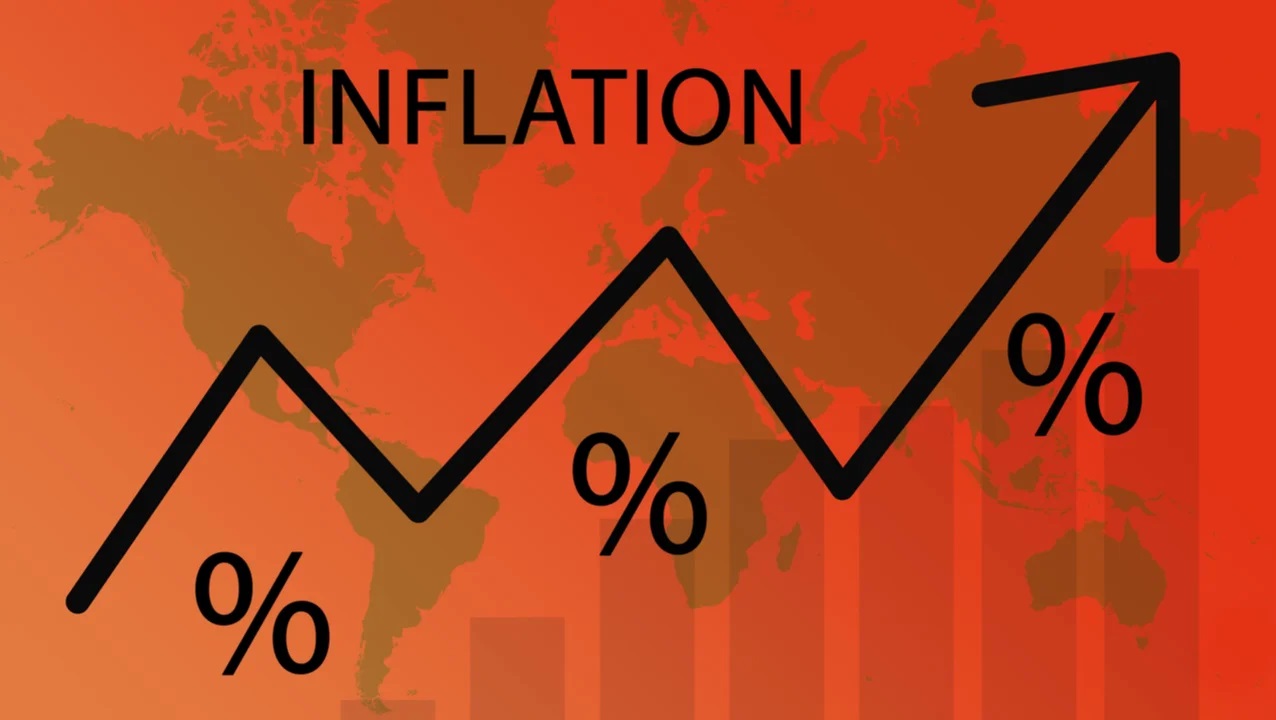
Nigeria’s National Bureau of Statistics (NBS), what is going on? You mean inflation in Benue was 51%, Ekiti 34%, and Kebbi 33%  when Ebonyi, Adamawa, and Ogun respectively recorded 7.19%, 9.52%, and 9.91%?  So, you are telling me that the delta between Benue and Ebonyi is more than 40% in your inflation computation? In the same Nigeria even though Benue is the food basket of the nation?

Looking at your numbers, things are flying all over the place; Ekiti at 34% while Ogun is sub-10%. Are the two states really that heterogeneous in composition for that level of deviation? I mean there is no order! Please look at your data and methodology again. The numbers with all due respect do not make any sense, and we must not have PhDs in Economics to arrive at that conclusion.

On inflation, I call on the Central Bank of Nigeria bank to also do something new: instead of raising rates to lower inflation in Nigeria, lower interest rates to boost production and supply. I guarantee you that if you lower interest rates in Nigeria, you will improve the Supply side in the market, and if that happens, inflation will drop. Our inflation is driven by low supply, and when we raise rates, we reduce supply [higher productive cost depresses supply] even though the policy has no impact on Demand since our consumer lending is largely nonexistent. If you cannot try it across Nigeria, use Ovim, and you will see how inflation will drop in Oriendu Market.

Good People, rate hike works in America/Europe where there is a developed consumer credit system. In Nigeria, we use “cash”, and rate hikes have limited impacts on demand (consumer spending). What rate hikes do in Nigeria is to increase the cost of production (via higher interest rates on bank loans to companies) which ends up reducing Supply of goods, with the unfortunate impact of pushing inflation higher

Economist Bismarck Rewane Questions NBS Inflation Data, Compares it to JAMB Scandal

Tottenham Hotspur Ends 17-Year Trophy Drought, Beats Man U 1 -0 to Lift Europa League

0

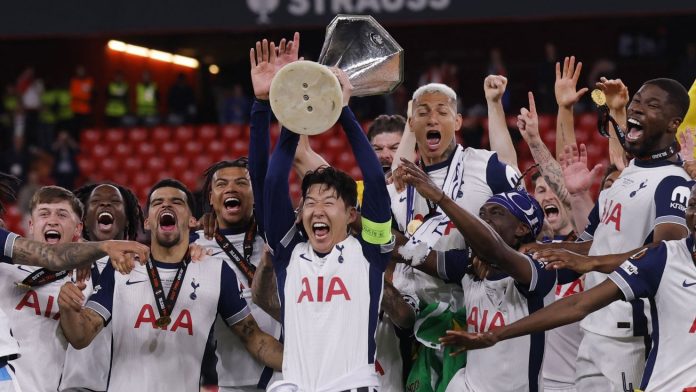
Tottenham Hotspur ended a 17-year trophy drought on Wednesday night with a gritty 1-0 victory over Manchester United in the UEFA Europa League final, held at the iconic San Mamés Stadium in Bilbao, Spain.

The win marks not just the club’s first major silverware since their League Cup triumph in 2008, but also their first continental title since the 1984 UEFA Cup — and it came at the hands of a manager who insisted from day one that he came to win.

The stadium was drenched in emotion at full-time. Thousands of Spurs supporters, many of whom had made the journey across Europe wearing their white and navy with hope and trepidation, were in tears as the whistle confirmed a long-awaited triumph. Tottenham, long derided for faltering in decisive moments, finally buried the “nearly men” tag that has followed them for over a decade.

It was not a classic, but few finals are. The first half saw both teams struggle to find rhythm. Sloppy passes and a lack of urgency meant chances were few. But in the 42nd minute, Tottenham found the moment that would decide the match. A right-footed cross from Pape Sarr into United’s box deflected off Luke Shaw before brushing off Spurs’ top scorer and falling kindly for Brennan Johnson. The Welshman, alert to the opportunity, stabbed the ball past André Onana to give his side the lead, prompting wild celebrations from the Tottenham end.

The goal, Johnson’s most important yet in a Spurs shirt, came just in time to lift a flat half — and it proved decisive.

While the first half belonged to Johnson, the second belonged to Micky van de Ven. The Dutch defender’s scissor-kick goal-line clearance in the 62nd minute was as spectacular as it was vital. With goalkeeper Guglielmo Vicario caught out from a failed attempt to claim a free-kick, United’s Rasmus Højlund looked certain to equalize with a free header into an empty net. But van de Ven, reading the moment to perfection, launched his body into the air to hook the ball off the line and preserve Spurs’ slender lead.

Vicario, shaky earlier, redeemed himself with key saves from Alejandro Garnacho and Luke Shaw late on to ensure a clean sheet and, with it, the trophy.

A Reward Beyond the Trophy

The Europa League win does more than end a trophy drought, it opens the door to the UEFA Champions League next season. Despite enduring a dismal domestic campaign that saw Spurs languishing in 17th place with 21 league defeats, European success means they return to Europe’s elite competition, complete with the prestige and financial windfall it brings.

Ironically, Manchester United, also in the midst of a torrid season that has seen them win just four Premier League matches since January, came into the final with similar hopes of salvaging a campaign gone wrong. Instead, they leave empty-handed, mired in crisis.

“This season hasn’t been good at all, but I swear, not one of us players right now care about that,” said match-winner Brennan Johnson, draped in the Welsh flag during his post-match interview. “The club hasn’t won a trophy for 17 years. Honestly, this is what it means. All the fans get battered, we get battered about not winning a trophy… I’m so happy.”

Postecoglou’s Prophecy

The win was especially vindicating for manager Ange Postecoglou, whose belief in the project, even during Spurs’ worst league form in years, never wavered. The Australian, appointed in June 2023, had boldly predicted success in his second season, a pattern that has followed him throughout his career in Australia, Japan, and Scotland.

“I don’t usually win things… I always win things in my second year. Nothing has changed,” Postecoglou said confidently back in September, even after a loss to Arsenal.

Speaking after the final, Postecoglou explained his mindset: “I think people misinterpreted it. It wasn’t really boasting, it was me making a declaration. And I believed it.”

“At the time I said it, I was still in the Carabao Cup. I just had this thing inside me. More than anything else, I know our league form has been terrible – nowhere near good enough and unacceptable – but us finishing third wasn’t going to change this football club. The only thing that would change this football club is us winning something. And when I said that, that was my intent.”

“I was prepared to wear it if it didn’t happen. The beauty of it is that people kept reminding me of it… There was still a chance to do it. I was comfortable with it.”

Postecoglou has now turned Tottenham from perennial underachievers into continental champions — all within two seasons.

Son Makes History

The triumph was historic not only for the club but also for its captain. Son Heung-min, who took over the armband this season following Harry Kane’s departure, became the first South Korean captain to lead a European club to a major continental title.

Already a national icon in his homeland, Son’s achievement further cements his place in football history and is expected to inspire a new generation of Asian players dreaming of top-level success in Europe.

In many ways, the moment is a fitting reward for Son, who has remained loyal to Spurs through years of near-misses and painful defeats. On Wednesday night, he lifted the trophy that had long eluded the club — and did so as captain.

A New Chapter Begins?

Spurs fans won’t want to get carried away just yet, especially with Premier League survival still technically undecided. But Wednesday night felt like more than just a trophy win. It felt like the start of a new chapter — one where Tottenham are no longer haunted by past failures, but instead led by a manager who dares to believe, and a captain who dared to deliver.

For now, though, the white half of north London has earned the right to celebrate. It’s been 17 years in the making.