DD
MM
YYYY

PAGES

DD
MM
YYYY

spot_img

PAGES

Home Blog Page 1316

Trump Administration to Allow UAE Import Over 1m Nvidia Chips, Igniting Security and Policy Debate Over Export Controls

0

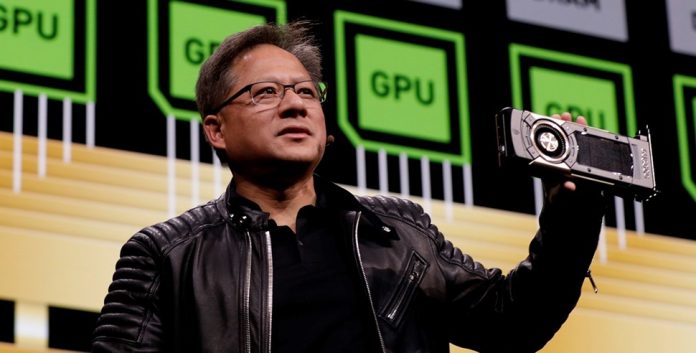
The Trump administration is reportedly considering a sweeping deal that would allow the United Arab Emirates (UAE) to import more than one million of Nvidia’s most advanced artificial intelligence chips, a decision that would significantly expand the Gulf nation’s AI infrastructure while dismantling a core piece of the Biden-era technology export framework.

According to a Bloomberg report on Tuesday, the deal, still under negotiation, could permit the UAE to purchase 500,000 Nvidia AI chips annually from now through 2027. The chips in question are understood to include Nvidia’s H100s, the current benchmark in large-scale AI model training. If finalized, the agreement would mark one of the largest foreign shipments of U.S.-made AI chips to date. It would override export controls introduced during Joe Biden’s presidency that restricted such transfers on national security grounds.

Under the terms being discussed, about one-fifth of the chips would be allocated to G42, the UAE’s flagship state-backed artificial intelligence firm based in Abu Dhabi. The remaining 80% would reportedly be directed toward U.S. companies developing data center operations in the region. Among them could be OpenAI, the developer of ChatGPT, which, according to the report, may announce new AI data center capacity in the UAE as soon as this week.

The scale of the deal is significant. Sources familiar with the terms told Bloomberg that over the lifetime of the agreement, G42 could access computing capabilities equivalent to between 1 million and 1.5 million H100 chips—around four times the number it could have obtained under the Biden-era controls.

A spokeswoman for the Department of Commerce confirmed last week that the Trump administration intends to scrap the Biden administration’s “AI Diffusion Rule,” a regulatory framework that categorized countries into three tiers and imposed varying levels of restrictions on the export of advanced U.S.-made AI chips.

Under that rule, countries like China and Russia, classified in Tier 3, were barred from receiving the chips. Tier 2 countries, such as Mexico and Portugal, would have faced new restrictions for the first time. Only Tier 1 allies like Japan and South Korea were excluded from the limitations. The now-defunct policy was scheduled to take effect on May 15 before the Department of Commerce formally rescinded it.

Instead of blanket restrictions, the Trump administration is pursuing a model based on bilateral negotiations with trusted allies, while tightening scrutiny on any pathways that could enable indirect transfers to adversaries.

“The Trump Administration will pursue a bold, inclusive strategy to American AI technology with trusted foreign countries around the world, while keeping the technology out of the hands of our adversaries,” said Jeffrey Kessler, U.S. Secretary of Commerce for Industry and Security, in a statement on Tuesday.

Concerns Over G42 and China

The deal, however, is raising alarm among U.S. national security experts and lawmakers who remain skeptical of the UAE’s ties to China. G42, in particular, has drawn scrutiny from so-called China hawks in Washington who allege the Abu Dhabi-based firm could act as a backchannel for transferring advanced U.S. technology to China, circumventing direct export bans.

While no evidence has been made public to prove such transfers have taken place, the perception of strategic vulnerability has intensified. Washington’s concern is that once high-end AI chips like the H100s are installed in overseas data centers, it becomes difficult to monitor or control how they are used, or with whom they share compute access.

In the interim guidance released on Tuesday, the Department of Commerce reiterated that it remains illegal for U.S. companies to knowingly provide advanced AI chips for use in training large-scale AI models inside China, regardless of where those chips are physically located. The guidance also warned that any use of Huawei’s Ascend AI chips—blacklisted by the U.S.—remains a violation of export law.

The potential chip export agreement comes just after President Donald Trump secured a $600 billion investment pledge from Saudi Arabia to support projects in the United States. Though separate from the UAE negotiations, the Saudi investment underscores the administration’s broader diplomatic and commercial engagement with the Gulf region, especially in sectors like AI, clean energy, and digital infrastructure.

This approach represents a major break from the Biden administration’s containment strategy around critical technologies. Rather than restricting access broadly out of concern over security leaks, Trump’s Commerce Department appears to be favoring aggressive commercial expansion, cementing American tech dominance in regions where Chinese influence is also growing.

The policy pivot may also be designed to stifle global demand for Chinese alternatives. By flooding markets with U.S. AI hardware, Washington could undercut Beijing’s attempts to sell its own AI infrastructure to countries shut out of American tech.

Impact On Chip Industry

News of the possible UAE deal triggered a rally in Nvidia shares, which surged more than 6% following the report. The gain lifted Nvidia CEO Jensen Huang’s net worth by several billion dollars, pushing his total wealth to nearly $120 billion, according to Bloomberg’s Billionaires Index.

Though Nvidia declined to comment on the report, industry analysts suggest that the deal would boost the chipmaker’s already dominant position in the AI hardware sector, at a time when demand for large-scale compute infrastructure is surging across the globe.

OpenAI, whose large models are already among the most computationally intensive in the world, would also benefit greatly from regional AI supercomputing hubs in the Middle East, especially as the company eyes expansion beyond U.S. borders.

Analyst Calls for Alphabet Breakup to Unlock Shareholder Value

0

D.A. Davidson analyst Gil Luria is calling for a full-scale breakup of Alphabet Inc., urging the company behind Google to unlock shareholder value by dismantling its tech empire — a conglomerate that now faces intensifying antitrust scrutiny and growing competitive pressure from AI-driven rivals like OpenAI.

In a report published Monday, Luria said investors “want a big-bang breakup, not isolated spinoffs,” arguing that Alphabet’s current structure masks the true value of its high-growth businesses like YouTube, Google Cloud, and Waymo, which he claims are being dragged down by management’s obsession with controlling the entire stack.

“We realize that a breakup would cause dis-synergies and that management is trying to maximize profit at the Alphabet level,” Luria wrote, “but investors are much more interested in total shareholder value, not short-term profits.”

The breakup call helped buoy Google stock, which rose amid broader market optimism sparked by improved U.S.-China trade sentiment.

In Support of Two Major DOJ Lawsuits

Luria’s remarks come at a time when Alphabet is facing two antitrust lawsuits from the U.S. Department of Justice — one targeting its dominance in internet search, and the other its stronghold over the digital advertising market.

These legal battles have already resulted in two major legal rulings:

  • In April 2024, Judge Leonie Brinkema ruled that Alphabet had engaged in classic monopoly-building tactics in digital advertising.
  • Earlier, Judge Amit Mehta ruled that Google had illegally maintained a monopoly over online search, primarily by paying Apple billions of dollars annually to be the default search engine on its devices — a move that crushed competition before it could emerge.

Both rulings are expected to inform the remedies the DOJ will push for. In particular, regulators have floated the possibility of forcing Google to divest key assets, including its Chrome browser, and possibly parts of its ad tech business — a central pillar of Alphabet’s revenue machine.

Luria believes Alphabet’s leadership will resist by making “passive aggressive spinoffs”, such as separating its ad network or Chrome/Android divisions, but only after dragging its feet to buy time.

Strong Businesses Undervalued

Despite Alphabet’s steady cash flows, Luria argues the market is punishing the company’s bloated structure, valuing it at just 16 times earnings — a multiple he says implies:

  • Zero value for Waymo, Alphabet’s autonomous vehicle unit, and
  • Severe undervaluation of YouTube, Google Cloud, and the ad network.

Analysts have long contended that YouTube, if spun off, could be worth hundreds of billions on its own. Similarly, Google Cloud, which is growing but still not profitable, may attract more focused investor interest if freed from Alphabet’s umbrella.

The OpenAI Threat

Beyond antitrust battles, Alphabet’s crown jewel, Google Search, faces existential risk from OpenAI’s ChatGPT and similar AI-driven search alternatives. These new platforms bypass the traditional search-and-click model, directly answering queries instead of listing links.

While Google has responded by launching AI Overviews, a system that integrates its Gemini AI model into search results, the shift hasn’t gone unnoticed by advertisers or investors. The move may signal Google’s pivot from web-link ad revenue to answer-based monetization, but its real-world impact remains uncertain.

“Search ad revenue growth could persist well past the point the business is damaged,” Luria noted. “Only after Apple switches defaults and ChatGPT turns on ads will we see the real impact. That may take several quarters.”

This underscores a looming overhang: while Google’s search business remains profitable now, its core model is eroding, and the shift to AI could destabilize ad revenue faster than Alphabet can adapt.

Echoes of Past Breakups

The call to dismantle Alphabet is reminiscent of investor campaigns to break up other tech giants, most notably Meta Platforms and Amazon, where many have argued that sprawling empires depressed the value of otherwise high-performing assets.

In Alphabet’s case, investors have grown impatient with a corporate structure that prioritizes internal control and moonshot investments over market discipline and shareholder returns.

The D.A. Davidson report represents one of the clearest signals yet that investors are no longer content to wait, especially as legal pressure builds and AI disruption threatens Google’s monopoly profits.

If Alphabet refuses to act on its own, it may not have much of a choice for long. With two federal rulings already on the books, the DOJ is preparing remedies, and divestiture orders may not be far off. Luria suggests Alphabet’s best bet may be to preemptively break itself apart on its own terms, before regulators dictate the process.

World Bank Reveals NNPC Remits Only Half of Subsidy Gains to Federation Account — As EFCC Probes Transparency in Oil Revenue

0

Nearly a year after President Bola Tinubu scrapped petrol subsidies, the World Bank has disclosed that the Nigerian National Petroleum Company (NNPC) Limited is remitting just 50 percent of the revenue generated from the subsidy removal to the federation account — a development that now raises fresh questions about the transparency of Nigeria’s most critical revenue stream.

In its latest Nigeria Development Update released Monday, the World Bank noted that the NNPC only began remitting the fuel subsidy savings in January 2025, despite the president’s announcement of the subsidy removal in May 2023. The bank said the state oil firm is using the remaining 50 percent of the revenue to settle what it describes as past arrears, without clarifying the nature or origin of those debts.

“Despite the subsidy being fully removed in October 2024, NNPCL started transferring the revenue gains to the Federation only in January 2025,” the World Bank said. “Since then, it has been remitting only 50 percent of these gains, using the rest to offset past arrears.”

The revelation has added to public skepticism about the federal government’s claim that subsidy removal was a fiscal turning point for Nigeria, especially when millions of Nigerians continue to face worsening inflation, high transport costs, and mounting hardship.

The World Bank’s report aligns with recent concerns raised by the International Monetary Fund (IMF), which in April called on Nigerian authorities to “increase transparency” in the oil sector, particularly in how funds from subsidy removal are managed.

“We have been commending bold reforms by the government, but we need to see a little more transparency in the oil sector to ensure that fuel subsidy removal can result in more flow of resources into government coffers,” an IMF official said during a press briefing last month.

According to the World Bank, the full revenue from subsidy removal could amount to as much as 2.6 percent of Nigeria’s GDP in 2024. However, it cautioned that unless these funds are completely transferred to the federation, the core goals of fiscal reform would be undermined. The bank emphasized that full remittance is critical for “sound fiscal management” and to prevent a slide back into deficit-driven spending.

NNPC Faces Forensic Audit, Anti-Graft Probe

The report comes just weeks after President Tinubu sacked the board of the NNPC Ltd amid growing public outcry over corruption allegations. Among those removed were former Group Chief Executive Officer Mele Kyari and board chairperson Pius Akinyelure. The president has since appointed Bayo Ojulari as the new GCEO and Ahmadu Kida as the non-executive chairman, in a shake-up aimed at cleaning house.

The NNPC is also under forensic audit, following years of alleged financial mismanagement that watchdog groups and government critics say have bled the country’s most lucrative industry. The Economic and Financial Crimes Commission (EFCC) is currently investigating top former officials of the oil company.

A letter obtained by Premium Times and dated 28 April, with reference number CR:3000/EFCC/ABJ/HQ/SDC.2/NNPC/VOL.1/698, requested the company’s management to submit certified salary and allowance records for 14 officials, including those who have retired.

This investigation includes former NNPC CEOs Mele Kyari and Abubakar Yar’Adua, both accused of abusing office and misappropriating funds during their respective tenures.

Lingering Transparency Questions Over Subsidy Funds

When Tinubu announced the end of the petrol subsidy during his inaugural address in May 2023, the move was lauded as a courageous step to plug Nigeria’s fiscal holes. However, the delay in NNPC’s remittance and the lack of public clarity about how the revenue is being used have led to mounting suspicion, especially as the government’s claim to have removed subsidies was belied by its reappearance through indirect means.

This backdrop has compounded the opacity surrounding NNPC’s arrears and deductions, becoming a growing point of tension between the government and its international partners.

World Bank Warns on Budget Risks and Rising State Revenues

Beyond oil revenue, the World Bank also flagged fiscal risks in the implementation of Nigeria’s 2025 budget, warning that overly ambitious revenue projections could result in a wider-than-expected budget deficit. While the federal government aims to increase capital spending, the World Bank urged caution, recommending that any such moves be anchored in a broader fiscal consolidation framework.

“The budget aims to boost capital spending, and this must be done sustainably, within the broader objective of fiscal consolidation to complement monetary policy and achieve an overall policy mix that maintains fiscal discipline and brings down inflation,” the report said.

It added that states, not just the federal government, have a major role to play in ensuring efficient expenditure and transparent governance. Notably, the report highlighted that state governments received a combined N13.8 trillion in 2024, more than the federal government’s N12.3 trillion share.

With these figures, the World Bank noted that improving service delivery, closing infrastructure gaps, and cutting waste would depend not only on more revenue but also on how that revenue is spent.

The latest disclosure puts President Tinubu’s administration in a tight spot. While the president continues to tout subsidy removal as a necessary reform, the inability to fully account for the gains raises uncomfortable questions about the sincerity of the government’s fiscal plans and whether the gains are being diverted before they ever reach the national treasury.

Coinbase’s Replacement of DFS in the S&P 500 is a Pivotal Moment

0

Coinbase Global (COIN) is set to replace Discover Financial Services (DFS) in the S&P 500, effective before trading opens on Monday, May 19, 2025. This change reflects Coinbase’s growing prominence in the financial sector, particularly as the first cryptocurrency exchange to join the index, while Discover Financial Services is being removed following its acquisition by Capital One.

The announcement has driven significant market interest, with Coinbase shares surging 8-10% in after-hours and pre-market trading. This milestone highlights the increasing mainstream acceptance of cryptocurrency within traditional financial markets. The replacement of Discover Financial Services (DFS) with Coinbase Global (COIN) in the S&P 500, effective before trading opens on May 19, 2025, carries significant implications for the financial markets, the cryptocurrency industry, and broader economic perceptions.

Coinbase’s inclusion in the S&P 500, as the first crypto exchange in the index, signals growing mainstream acceptance of cryptocurrencies. This move validates the crypto sector as a legitimate part of the financial ecosystem, potentially attracting institutional investors and boosting confidence in digital assets.

It reflects the increasing integration of blockchain-based financial services into traditional markets, with Coinbase benefiting from its role as a regulated, publicly traded platform. Coinbase’s stock surged 8-10% in after-hours and pre-market trading following the announcement, indicating strong investor enthusiasm. Inclusion in the S&P 500 typically leads to increased demand from index funds and ETFs that track the index, potentially driving further price gains.

The broader crypto market could see a positive spillover effect, with major cryptocurrencies like Bitcoin and Ethereum potentially benefiting from heightened investor interest. Analysts suggest Bitcoin hitting new highs above $100,000 around this period, possibly amplified by such developments. The replacement of DFS, a traditional credit card and banking services provider, with Coinbase underscores a shift in the financial sector toward technology-driven, decentralized models. This reflects evolving consumer and investor preferences for innovative financial solutions over legacy systems.

Discover’s removal, tied to its acquisition by Capital One, highlights consolidation in traditional finance, contrasting with the rise of disruptive players like Coinbase. Coinbase’s inclusion may introduce greater volatility to the S&P 500, given the crypto market’s historical price swings. Investors may face new risks associated with the crypto sector’s regulatory uncertainties and market sentiment-driven fluctuations.

Regulatory scrutiny of Coinbase and the crypto industry could intensify, as its S&P 500 status places it under a brighter spotlight. Ongoing debates about crypto regulation, as seen in recent X posts, could influence its long-term stability. This move symbolizes the broader trend of digital transformation in finance, with fintech and crypto firms gaining prominence over traditional institutions. It may encourage other crypto-related companies to pursue public listings or seek greater market integration.

The inclusion of Coinbase in the S&P 500 highlights several divides in the financial landscape, reflecting differing views, priorities, and economic realities. Represented by DFS and legacy institutions, this side emphasizes stability, established regulatory frameworks, and conventional banking services. Investors favoring this camp may view Coinbase’s inclusion skeptically, citing crypto’s volatility and regulatory risks.

Coinbase represents the rise of DeFi and crypto, appealing to those who prioritize innovation, decentralization, and technological disruption. Enthusiasts view this as a victory for crypto’s mainstream adoption. Many investors express optimism, seeing Coinbase’s inclusion as a catalyst for crypto market growth and a sign of institutional acceptance. This group anticipates higher valuations for COIN and related assets.

Some investors remain wary, pointing to crypto’s speculative nature and potential for regulatory crackdowns. This divide is evident in mixed sentiments, with critics questioning the sustainability of crypto’s rally. Younger investors, often more tech-savvy and open to crypto, may see Coinbase’s inclusion as a natural evolution of finance. Older or more conservative investors may prefer traditional financial stocks, viewing crypto as unproven or risky.

This generational split influences market dynamics, with younger demographics driving demand for crypto-related investments. The crypto industry faces a patchwork of global regulations, with the U.S. still grappling with clear guidelines. Coinbase’s S&P 500 status amplifies the debate between those advocating for crypto-friendly policies and those pushing for stricter oversight to protect investors.

Coinbase’s rise aligns with a shift toward decentralized, tech-driven economic models, challenging centralized banking systems. This pits advocates of free-market innovation against those who prioritize financial stability and government oversight. The inclusion highlights philosophical debates about the future of money, with crypto proponents envisioning a decentralized utopia and skeptics warning of systemic risks.

Coinbase’s replacement of Discover in the S&P 500 is a pivotal moment that underscores the growing influence of cryptocurrencies in global markets. It boosts Coinbase’s visibility, validates the crypto sector, and signals a shift toward tech-driven finance. However, it also exposes deep divides between traditional and decentralized finance, bullish and cautious investors, generational perspectives, regulatory approaches, and economic philosophies.

Google Bolsters Android with Cutting-Edge Security and Privacy Upgrades

0

On Tuesday, Google took the stage at the Android Show, just ahead of Google I/O, to unveil a transformative array of security and privacy enhancements for Android.

These advancements, meticulously crafted to shield users from scams, secure stolen devices, and strengthen device-level defenses, mark a significant step forward in addressing the evolving landscape of cyber threats. With protections spanning call safety, screen-sharing safeguards, messaging security, theft prevention, and system-wide fortifications, Google is weaving a comprehensive safety net for Android users.

Many of these features will debut with Android 16, while others extend to devices running as far back as Android 6, ensuring broad accessibility.

Safeguarding Calls Against Phone Scams

The scourge of phone scams, where attackers manipulate users into clicking malicious links or installing harmful apps, lies at the heart of Google’s call protection strategy. For Android 16, Google is introducing dynamic safeguards that activate during calls with unknown contact numbers not stored in a user’s contact list. These measures prevent users from sideloading apps from unverified sources, such as web browsers or messaging apps, during such calls, effectively blocking scammers from sneaking malicious software onto devices.

Similarly, the system bars apps from gaining accessibility permissions, a tactic often exploited to grant scammers remote control. To ensure continuous vigilance, Google is also locking down Google Play Protect on devices running Android 6 or later, preventing users from disabling this critical app-scanning tool during calls. This real-time intervention creates a robust barrier, alerting users to potential scams and halting risky actions when they’re most vulnerable.

Strengthening Screen-Sharing Defenses

Screen-sharing, a growing avenue for fraud, is another focal point. Scammers frequently pose as trusted entities to trick users into exposing sensitive information during shared sessions. Google’s response is twofold. First, Android devices will now prompt users to stop sharing their screens once a call ends, reducing the chance of inadvertently leaking data.

Second, in a targeted pilot with select U.K. banks, Google is testing a warning system for devices running Android 11 or later. When a user opens a partner bank’s app while sharing their screen during a call with an unknown number, a prominent alert warns of a possible scam, complete with a button to instantly end the session. This initiative, currently localized to the U.K., showcases Google’s willingness to collaborate with industry partners to tackle region-specific threats, with potential for global expansion if the pilot proves effective.

Fortifying Google Messages with AI and Encryption

In the realm of messaging, Google Messages is undergoing a significant security overhaul. Building on an AI-driven anti-scam feature launched in March 2025, Google is enhancing its on-device detection to identify a broader spectrum of fraudulent schemes, including cryptocurrency scams, gift card fraud, toll road and billing fee ruses, financial impersonation, and fake technical support.

By analyzing conversation patterns locally, this system alerts users to threats without compromising privacy, offering a seamless yet powerful layer of protection. Complementing this, Google is introducing verification keys to the Google Contacts app, set to launch in summer 2025 for Android 10 and later. This feature allows users to authenticate contacts via QR code scanning or number matching, ensuring end-to-end encrypted conversations in Google Messages. If an attacker hijacks a contact’s number through a SIM swap, the app flags the conversation as “unverified,” providing a clear visual cue to users. This blend of AI and encryption fosters trust and security in digital communications.

Locking Down Stolen Devices

Device theft, a persistent threat, is addressed through a suite of protections that render stolen phones nearly unusable and safeguard user data. Google’s Identity Check, previously exclusive to Pixel and Samsung devices with OneUI 7, is expanding to other manufacturers with Android 16. This feature mandates biometric authentication—such as fingerprint or facial recognition—for critical actions like changing a PIN, updating biometrics, disabling theft protection, or accessing Passkeys, but only when the user is outside trusted locations.

Reinforcing the Android Ecosystem

Later in 2025, Google will bolster Factory Reset protection, restricting core functions on devices reset without the original lock pattern, PIN, or Google account credentials, making stolen phones less appealing to thieves. To counter remote locking attempts, a new security challenge question adds an extra authorization step. Additionally, Android 16 will hide one-time passwords when a device is offline and hasn’t been recently unlocked, thwarting attackers seeking to intercept sensitive codes.

Beyond these targeted protections, Google is fortifying Android’s broader ecosystem. Google Play Protect’s live detection, available in the coming months for Android 6 and later, will gain the ability to spot apps with hidden or altered icons, a common hallmark of malicious software. New on-device rules will further expand its ability to catch diverse categories of harmful apps, ensuring comprehensive threat coverage.

For high-risk users like public figures, Google is enhancing its Advanced Protection Mode with tailored on-device features, though specifics remain under wraps. Meanwhile, the debut of Find My Hub introduces a user-friendly way to track items, friends, and family, seamlessly integrating security with everyday convenience.

The rollout of these features is strategically timed to maximize impact. Android 16 will usher in call protections, Identity Check expansion, and one-time password safeguards, while Factory Reset enhancements and Google Play Protect upgrades are slated for late 2025 and the near term, respectively. The Google Messages verification keys will arrive in summer 2025, and the U.K. banking app warning system remains in testing, with its future expansion contingent on success.