DD
MM
YYYY

PAGES

DD
MM
YYYY

spot_img

PAGES

Home Blog Page 1333

IMF Lowers Nigeria’s 2025 Growth Forecast to 3.0%, Warns of Deep-Rooted Economic Risks

0

The International Monetary Fund (IMF) has downgraded its growth projection for Nigeria in 2025 to 3.0 percent, a modest outlook that falls short of the Federal Government’s 4.6 percent estimate in the 2025 budget.

The revision, released Tuesday in the IMF’s latest World Economic Outlook, trims 0.2 percentage points off its earlier October 2024 forecast of 3.2 percent, citing weaker oil prices and lingering structural challenges.

The report, which examines global and regional economic trends, also sees Nigeria’s growth slowing further to 2.7 percent in 2026—a trajectory that casts doubt on the sustainability of the country’s ongoing economic recovery despite recent policy overhauls.

The Fund’s projection is at odds with figures released by Nigeria’s National Bureau of Statistics (NBS), which reported that the country’s economy grew by 3.84 percent in real terms in Q4 2024. That figure marked a noticeable uptick from both Q3 2024 and the same quarter a year earlier. The NBS attributed this acceleration to a modest rebound in the non-oil sector, improved agricultural output, and stronger performance in services.

Still, the IMF’s caution stems from broader vulnerabilities—chief among them inflation, unemployment, and a deepening food crisis.

Reforms Recognized, But Their Impact Remains Uneven

In its separate staff report following a recent visit to Nigeria, the IMF Mission led by Axel Schimmelpfennig acknowledged that President Bola Tinubu’s administration has taken “important steps” to correct years of macroeconomic instability. Among the reforms lauded were the scrapping of fuel subsidies, a liberalized foreign exchange regime, and halting the Central Bank of Nigeria’s deficit financing for the federal government—measures aimed at restoring fiscal and monetary discipline.

But while these policies have earned praise from international institutions, they have yet to deliver tangible benefits to most Nigerians.

“Gains have yet to benefit all Nigerians as poverty and food insecurity remain high,” the IMF cautioned, flagging the risk that prolonged hardship could undermine public support for the reforms and slow down implementation.

In March 2025, inflation climbed to 24.23 percent—driven largely by food and transport costs. Although the CBN has taken an increasingly hawkish stance, raising interest rates and tightening liquidity to combat inflation, the Fund warned that price pressures remain deeply embedded, especially in the context of widespread poverty and weak purchasing power.

A Regional Standout, But Not Out of the Woods

Nigeria’s 3.0 percent forecast puts it ahead of regional rivals like South Africa, which is expected to grow just 1.0 percent in 2025 and 1.3 percent in 2026. The average growth for sub-Saharan Africa is pegged at 3.8 percent in 2025 and 4.2 percent in 2026.

Still, Nigeria’s position isn’t secure. The IMF noted that the country’s outlook was downgraded due to softening oil revenues, a critical source of foreign exchange, and unresolved fiscal imbalances.

“Among the larger economies, the growth forecast in Nigeria is revised downward by 0.2 percentage point for 2025 and 0.3 percentage point for 2026, owing to lower oil prices,” the report noted.

Across emerging markets, countries in Asia are expected to grow at an average of 4.5 percent in 2025, while the United States is forecast to grow at 1.8 percent, and advanced economies more broadly at 1.4 percent.

CBN Commended for Data-Driven Approach

The IMF expressed support for the Central Bank of Nigeria’s new leadership and its “data-dependent” approach to monetary policy. The Fund described the strategy as appropriate for navigating Nigeria’s complex inflation dynamics and external vulnerabilities.

Since assuming office, the CBN governor, Yemi Cardoso, has moved to restore investor confidence and credibility, raising the benchmark interest rate several times. However, with inflation continuing to bite, especially for food and transport, households remain under pressure.

For the Tinubu administration, the challenge lies in converting technical reforms into meaningful gains for Nigerians. The disconnect between macroeconomic indicators and lived realities continues to haunt policy credibility.

While the reforms may have won Abuja some applause abroad, the true test remains at home—where millions are still waiting for the promises of economic recovery to translate into affordable food, jobs, and stability.

OpenAI Announces Interest to Purchase Google Chrome if Forced to Sell

0

Artificial intelligence firm OpenAI has announced interest in purchasing Google Chrome if forced to sell by the US Department of Justice (DOJ).

OpenAI executive Nick Turley in a court hearing on Tuesday, disclosed that acquiring Chrome would allow OpenAI to offer an incredible experience and introduce users into what an AI-first browser looks like.

Turley had been called by the Justice Department to testify as part of a trial aimed at determining what business practices Google must modify after a judge found the company monopolized the online search market. The Justice Department has asked that Google be forced to divest Chrome.

Recall that OpenAI has reportedly considered working on a web browser to compete with Chrome. Last year November, the potential browser, which could incorporate OpenAI’s ChatGPT, is said to have been shown in prototype or design form to companies such as Conde Nast, Redfin, Eventbrite, and Priceline. The company went as far as hiring ex-Google developers Ben Goodger and Darin Fisher, who worked on the original Chrome project, several months ago.

Meanwhile, the U.S. Department of Justice (DOJ) has continued to intensify its antitrust case against Google, suggesting that the tech giant sell its Chrome browser to curb its monopolistic hold on online search. Justice Department lawyer David Dahlquist said that the company should also be forced to help rival search engines that it has unfairly kept out of competition.

“This is the time for the court to tell Google and all other monopolists who are out there listening, and they are listening, that there are consequences when you break the antitrust laws,” Dahlquist said. Notably, Government lawyers have also made their case in opening statements, saying that Google should be forced to sell Chrome, its web browser, which pushes people to the Google search engine.

Google has countered the lawsuit, with the company lawyers stating that any remedies should only consider the company’s deals with companies such as Apple, Mozilla, and Samsung to make it the default search engine for smartphones and other devices. “Google won its place in the market fair and square,” said company attorney John Schmidtlein, according to NBC News.

According to the Justice Department, the Google search engine is used for nearly 90% of web searches, but the company disputes that number. Google has not offered Chrome for sale. However, if forced to sell Chrome due to the ongoing antitrust trial, the implications would be far-reaching for Google, the browser market, the tech industry, and internet users.

Meanwhile, prosecutors have raised concerns that Google’s search monopoly could give it advantages in AI, and that its AI products are another way to lead users to its search engine. Google has pointed to competition among companies offering generative AI products, such as Meta Platforms, Opens New Tab, and Microsoft.

Notably, the tech giant argues that the DOJ’s proposals, including divestiture of Chrome, exceed the scope of the case and could harm its competitiveness. A Bloomberg analyst estimates Chrome’s value at over $15 billion, underscoring the high stakes. Judge Mehta is expected to decide on remedies by August 2025.

Google plans to appeal the ruling that it holds a monopoly. The beginning of the high-stakes trial provided a glimpse into the generative AI race, where Big Tech companies and startups are vying to build up their apps and gain users.

[Latest!] How to Spoof Pokemon GO Location without Being Banned

0

Introduction

Pokémon GO location spoofing is still a hot topic in 2025, but it’s no longer as easy as before. Niantic’s anti-cheat system has become more advanced, detecting most traditional spoofing tools and rendering old guides outdated. The biggest myth is that any app offering “one-tap spoofing” is safe—most aren’t. Niantic tracks GPS inconsistencies, app behavior, and even joystick patterns. However, with careful use, certain methods like hardware-based GPS modification and advanced proxy techniques can still work.

The latest trend involves Bluetooth-based location dongles, which modify GPS data at the hardware level and are much harder to detect. Unlike software-only solutions, these tools don’t raise immediate red flags. To minimize risks, users also rely on cooldown timers, realistic movement patterns, and multi-device syncing. Spoofing isn’t dead in 2025, but it’s no longer just about installing an app. In this guide, we’ll explore the best spoofing tool currently available for Pokémon GO.

The Changing Landscape of Pokémon GO Spoofing

Niantic’s Latest Security Updates & Their Impact

In 2025, Niantic has cracked down harder on spoofers with real-time location tracking and advanced AI cheat detection. Unlike in the past, bans now occur within hours instead of days. Using a Pokémon GO spoofer iOS with unrealistic teleportation, erratic joystick movements, or frequent GPS jumps can quickly lead to account suspension.

iPhone vs. Android: Why iOS is Losing the Spoofing Battle

Apple’s iOS 18 update has made spoofing even harder. Strict app verification means most location-changing apps won’t install without a computer or developer account. Meanwhile, Android users still have access to developer mode and APK installations, making GPS modifications easier.

Outdated Spoofing Apps That No Longer Work

Many popular spoofing apps have been patched or blacklisted by Niantic, including:

  • iPogo – Instantly detected, leading to permabans.
  • PGSharp – No longer bypasses real-time GPS checks.
  • Fake GPS Joystick – Triggers bans due to artificial movements.
  • Fone Virtual Location – Blocked by Niantic’s latest security updates.

So as we have seen that old school tools are now totally obsolete. Now we need a new hero to fight with this error 12 location failed problem.

Method That Actually Works in 2025 (No Jailbreak)

iToolab AnyGo + iWhereGo POGO Genius: A Powerful Combo

If you’re looking for a reliable way to spoof your Pokémon GO location on your iPhone without jailbreaking, iToolab AnyGo is a top-tier option. It allows one-click teleportation, route customization, and joystick-based movement. However, when paired with iWhereGo POGO Genius, you get enhanced GPS stability, better anti-detection features, and a more realistic spoofing experience.

Pros & Cons of iToolab AnyGo

Pros:

– Simulated Walking & Joystick Control – Move naturally at adjustable speeds with the Pokemon GO joystick hack for smooth, immersive gameplay.
– Two-Spot & Multi-Stop Mode – Create smooth walking routes instead of abrupt jumps.
Cooldown Timer – Prevents soft bans by enforcing Pokémon GO’s cooldown rules.
Import GPX Files – Use pre-made GPX routes for efficient Pokémon hunting.
Customize Cycle Times – Set automatic route repeats for realistic movement.
Supports Up to 15 Devices – Spoof on multiple devices simultaneously.
Display Pokémon Info – View CP, coordinates, and despawn timers for smart targeting.

Cons:

  • Not Free – Requires a paid subscription for full features.
  • PC Required – When first downloading AnyGo for iOS App, a computer is required to install necessary components.

How to Download & Set Up iToolab AnyGo for Spoofing

Spoofing Pokémon GO in 2025 requires precision, safety, and a reliable tool. iToolab AnyGo – Location Changer is one of the few non-jailbreak solutions that work seamlessly on both iOS and Android. Below is a step-by-step guide to downloading, installing, and setting it up for a smooth experience.

Step 1: Download & Install iToolab AnyGo

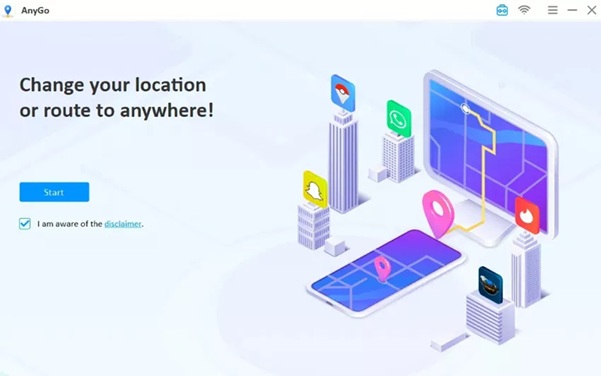
Visit the official iToolab AnyGo website and download the software for Windows or Mac.Install it by following the on-screen instructions. Once installed, launch the program and click “Start.”
Step 2: Connect Your Device

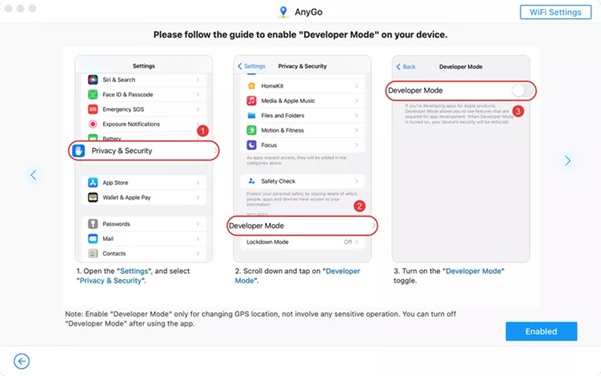
For iPhone Users: Connect your iPhone to your computer via USB. If you’re using iOS 16 or later, enable Developer Mode in Settings, restart your device, and confirm activation. For iOS 15 or earlier, simply connect and proceed.
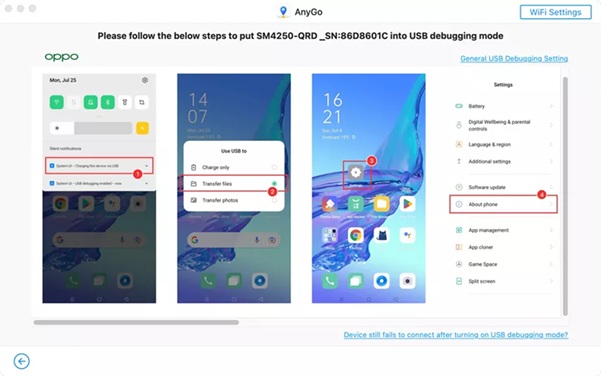
For Android Users: Connect your phone to your PC using a USB cable. In the notification panel, choose File Transfer Mode under USB settings. Then, go to Settings > About Phone and tap “Build Number” seven times to enable Developer Mode. Return to Developer Options, turn on USB Debugging, and confirm the pop-up request.
Step 3: Teleport to Any Location Instantly

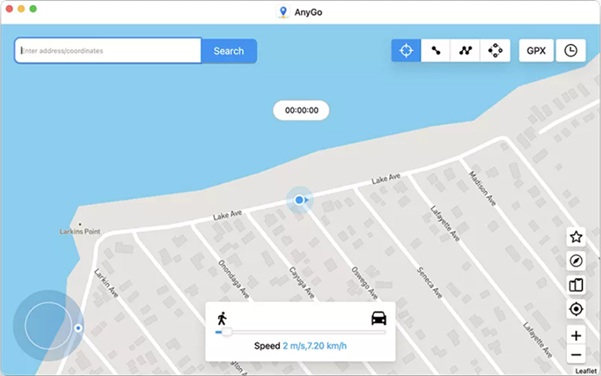
Once your device is connected, you’re ready to change your location in seconds! Now a map will display your current GPS position. If it’s incorrect, click the “Center On” icon to recalibrate.
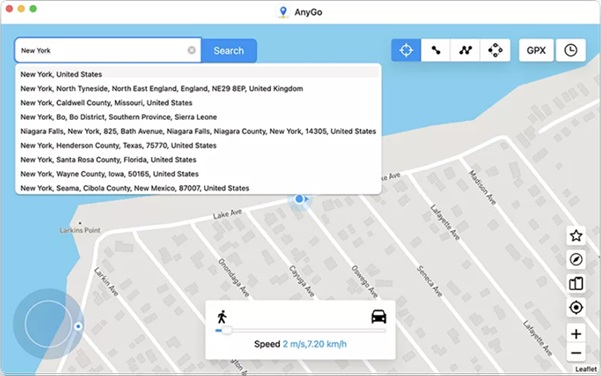
Enter your target location and click the “Teleport” button (upper-right corner), type your desired location, and hit “Search”.
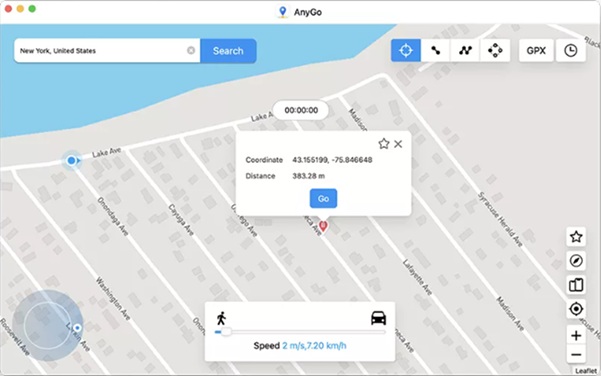
The new location will be set. Simply hit “Go”, and your phone’s GPS will reflect the new position—no jailbreak required!
Common Mistakes That Lead to Bans in Pokémon GO Spoofing

  1. Teleporting Without a Cooldown Period
    Jumping between distant locations instantly triggers Niantic’s anti-cheat. Solution? Follow cooldown timers based on distance traveled before performing in-game actions.
  2. Using Modified Pokémon GO Apps (iPogo, PGSharp, etc.)
    Third-party modified apps are easily detected. Niantic actively blacklists accounts using these tools, leading to instant bans.
  3. Overusing Auto-Walking Features
    Setting unrealistic walking speeds (like 100 km/h) exposes spoofers. Solution? Keep it under 6 km/h for safety.
  4. Playing Events with Suspicious Location Changes
    Jumping between continents to farm rare spawns gets flagged. Solution? Stick to one region per event.
  5. Using Free or Unverified GPS Spoofing Apps
    Many free spoofers leak data or inject malware. Solution? Use paid, trusted tools like iToolab AnyGo.
  6. Catching Too Many Pokémon Too Fast
    Mass catching after teleporting signals bot-like behavior. Solution? Catch Pokémon gradually to appear more human-like.
  7. Ignoring Soft Ban Symptoms
    Pokémon fleeing, stops not giving items? You’re already soft-banned. Solution? Stop spoofing immediately and wait for the timer to reset.

How to Recover from a Soft Ban or Shadow Ban in Pokémon GO

Following cooldowns, avoiding extreme teleporting, and sticking to trusted tools can help you keep spoofing safely in 2025.

1. Signs of a Soft Ban vs. a Full Ban

A soft ban is temporary and typically lasts from 30 minutes to 12 hours. The key signs include:

  • PokéStops not giving items when spun.
  • Pokémon instantly fleeing after one throw.
  • Raids failing to start despite a successful join.

A shadow ban, however, lasts 7–30 days and affects Pokémon visibility. You’ll only see common Pokémon, while rare and high-IV spawns disappear. A full ban results in a permanent account lock.

2. Cooldown Strategies to Recover Faster

Cooldowns prevent detection by ensuring you don’t teleport unrealistically fast. Follow this safe cooldown chart:

  • 1–5 km: Wait 1 minute
  • 10–25 km: Wait 10 minutes
  • 100+ km: Wait 2 hours
  • 500+ km: Wait 12 hours

3. How Long Do Bans Last & When to Stop Spoofing?

Soft bans reset automatically, while shadow bans are strike-based—getting multiple can result in a permanent ban. If you receive a shadow ban twice, stop spoofing for at least a month to reset your strike status.

FAQ

Can I use a VPN to spoof Pokémon GO?
A VPN alone will not allow you to spoof Pokémon GO. While it can hide your IP address, Niantic detects GPS-based discrepancies. Spoofing requires GPS manipulation tools, and using only a VPN won’t bypass location verification.

Is spoofing safer on older Pokémon GO versions?
No, even if you use an older version, Niantic’s detection happens server-side. Their anti-cheat system monitors movement patterns, GPS jumps, and third-party tool usage, regardless of the app version. Downgrading won’t help.

Can my Pokémon GO account be restored after a ban?
If permanently banned, there is no official way to restore your account. Soft bans and shadow bans are temporary, but permanent bans result in a complete loss of progress. Some players attempt appeals, but success is rare.

Why does Pokémon GO still detect my spoofing method even when using paid tools?
Paid tools reduce detection risk but don’t guarantee complete safety. Niantic’s AI tracks inconsistencies in movement, login history, and cooldown violations. Even high-end spoofing tools require careful usage to avoid bans.

Conclusion

In 2025, spoofing Pokémon GO is riskier than ever due to Niantic’s AI detection and strike system. Tools like iToolab AnyGo with iWhereGo POGO Genius offer safer spoofing with realistic movement and cooldowns. Avoid teleporting, joystick abuse, and modded apps. While ethical spoofing may seem harmless, Niantic has zero tolerance. For smart, committed players, spoofing can still work—but casual users may find the risks too high.

Global Trade Needs New Frameworks That Include Internet Ports, Besides Seaports, Airports, to Calculate Trade Deficits/Gains

1

The framework we are using in international trade is severely outdated, and we must update it to include INTERNET PORTS (online digital-based products and services), besides seaports, airports and land ports. Until we do that, all the conversations around trade gains and deficits will remain unbalanced. 

Follow me: If Country A imports physical goods worth $10m from Country B, and Country B imports physical goods worth $30m from Country A, Country A has a trade surplus of $20m, using the current global trade framework. 

But look deeper, on services, gaming, banking and software, Country A is importing things valued at $50m from Country B, when Country B records zero from Country A on things which go via Internet ports. 

If we include everything, you can even notice that Country B is the one with a comprehensive trade surplus when you include all “ports”, beyond air, land and sea, to include “internet ports”. 

 To say that Nigeria has a trade surplus with the US is nonsensical when you know that every major bank in Nigeria runs a correspondent bank partnership with New York banks. In other words, if you look at Nigerian wealth warehoused in those banks, the debate on who is running surplus will not even begin. Add that US banks hold Nigeria’s crede revenue, you will get the big picture that focusing on seaports, airports and landports while neglecting internet ports is not balanced.

Summary

  • The US and China need to redefine their relationship in the 21st century, considering the dominance of both countries in global trade.
  • Beyond physical goods, services and software play a significant role in international trade, where the US excels and maintains trade surpluses with most countries.
  • Traditional trade frameworks focusing solely on physical goods may not accurately reflect the modern economy shaped by digital products and services.
  • Nigeria, for example, has a trade surplus with the US in physical goods but a significant trade deficit in services and software.
  • When considering all aspects of trade, including services, banking, and software, the US emerges as the leader with comprehensive trade surpluses.
  • The importance of including all trade aspects in calculations is emphasized, especially in the context of negotiations between countries.
  • The need for updated tools and methodologies to measure total trade balance accurately, considering the impact of modern technology and intangible services.
  • Challenges arise when big companies register their businesses in specific countries, affecting how trade balances are perceived and calculated.
  • The importance of recognizing the true origins and ownership of companies in international trade negotiations is highlighted, especially in the context of digital services and software.

Context

In the realm of global trade, a paradigm shift is underway as traditional frameworks grapple with the transformative impact of digitalization on economies worldwide. Historically centered on physical goods, international trade is now increasingly shaped by intangible services and software in the 21st century. This evolution necessitates a reevaluation of how we measure trade balances, moving beyond conventional metrics to encompass the full spectrum of economic activities in today’s interconnected world. Recent events, such as trade negotiations between major players like the US and China, underscore the urgency for updated methodologies that accurately capture the complexities of modern trade relationships.

As countries navigate this new landscape, key themes emerge around the significance of services and software in shaping global trade balances. The rise of digital products has not only blurred traditional boundaries but also posed challenges in accurately assessing trade dynamics. Looking ahead, it becomes imperative to consider extensions of these ideas beyond services and software – exploring regulatory hurdles related to intangible assets in trade agreements and envisioning new policies that can effectively address the intricacies of contemporary international commerce. With technology continuing to drive change at an unprecedented pace, nations must adapt their approaches to ensure that their trade policies reflect the evolving nature of global commerce in an increasingly digital age.

US Trade Tariff and How Nigeria Can Move From 14% To 0%


Northern Gambling Pleasure: Insights into the World of Online Casinos in Finland

0

Finland is not only considered a land of untouched nature and the Northern Lights, but also a pioneer in responsible gambling regulation. Since the market opened in 2019, numerous online casinos in Finland have offered modern gaming fun – always under strict regulations to protect players.

Whether classic slots with Lapland motifs, live dealer tables in Scandinavian design, or secure payment methods via Trustly and mobile banking: Finnish platforms combine regional themes with international technology. Below you will find an overview of licenses, popular games, bonus offers, and responsible gaming in the Finnish online casino scene.

Regulation and Specifics of the Finnish Market

Until 2019, the state-owned company Veikkaus held a monopoly on gambling in Finland. Since then, the government has opened the market, allowing private netticasinot in finland to operate – albeit only under strict conditions.

Key regulatory points:

  • EU license: Providers require a valid EU license and must also comply with Finnish regulations.
  • Regulatory authorities: The National Lottery Authority (NLA) and the gambling supervisory authority FINCIS monitor player protection, advertising standards, and licensing requirements.
  • Player protection: Automatic limits on deposits and losses, as well as a central self-exclusion register, are mandatory.

Thanks to these regulations, Finnish online casinos combine modern technology with a high level of player responsibility. This creates trust and ensures that gaming fun and security go hand in hand.

Popular games and platforms

Finnish online casinos offer a diverse selection for every gaming preference. Video slots with local themes are particularly popular: Northern Lights animations, reindeer sleigh adventures, and mystical Lapland forests create a true Finnish feeling.

For fans of classic casino flair, roulette and blackjack are available in an elegantly understated, Scandinavian design. Those seeking a particularly authentic experience can choose live studios with Finnish-speaking dealers, who create a real dealer atmosphere via HD stream.

Well-known platforms such as LeoVegas and Casumo score points with fast registration and mobile-optimized interfaces. Niche providers rely on innovative features, such as WinSpins with daily free spins or regional tournaments exclusively for Finnish players. This means everyone can find their favorite casino – from major brands to exclusive insider tips.

Payment Methods and Security

Finnish online casinos rely on proven and fast payment solutions that combine convenience and security. Particularly popular are:

  • Trustly and e-banking via Nordea, OP-Pankki, or other major banks: Direct transfer without additional registration, deposits appear instantly.
  • Mobile payments (Siirto): With the national app, funds can be transferred between your account and the casino app in seconds – ideal for on-the-go gaming.
  • E-wallets such as Skrill or Neteller: An additional layer between your bank account and the casino, often linked to bonus promotions.
  • Credit/Debit Cards: Visa and Mastercard remain a solid alternative, especially for quick withdrawal requests.

Security is strictly observed: All transactions are processed using SSL encryption, which makes personal data unreadable. Two-factor authentication (2FA) also protects your account from unauthorized access.

Payment methods and security standards work hand in hand to guarantee a smooth and trustworthy gaming experience.

Bonus Offers and Loyalty Programs

Finnish online casinos advertise attractive bonus offers that sweeten the start of your gaming experience. Common models include:

  • Free spins with no wagering requirements: Immediately after registration, you have access to several free spins – winnings are often immediately withdrawable.
  • Deposit bonuses: A common bonus model grants up to 100% extra on your first deposit. This doubles your balance for additional game rounds.

Loyalty programs and VIP clubs are attractive for regular players:

  • Collect points with every bet, which you can later exchange for free spins, exclusive cashback, or non-cash rewards.
  • Personal support and tailored promotions starting at a certain wagering level.

Transparent terms and fair limits ensure that you can use bonuses and loyalty offers safely and with peace of mind.

Responsible Gaming in Finland

In Finland, the protection of players is a top priority. Online casinos must therefore offer numerous measures to identify and curb risky gambling behavior early on:

  • Self-exclusion and limits: Deposit, loss, and stake limits can be set with a click. Those who wish can opt in temporarily or permanently.
  • Automatic monitoring: Suspicious gaming patterns trigger warnings, allowing the casino to temporarily contact and offer assistance.
  • Age verification: Only persons 18 and older are granted access – thanks to identity verification at the beginning of registration.

In addition, the government counseling center Peluuri supports people with gambling problems and their families. Here, those affected can find confidential help, advice, and information on prevention programs.

Thanks to these clear rules and support services, players in Finland can enjoy their online casino experience responsibly and always keep their gambling behavior under control.

Conclusion

Finnish online casinos combine modern gaming fun with high levels of player protection: clear regulations, smart payment methods, and regional themes make the market unique.

With Lapland-themed video slots, live dealers, secure transactions, and transparent bonus offers, every player will find the right offering. At the same time, automatic monitoring, self-exclusion options, and advisory services like Peluuri ensure a responsible gaming experience.

Enjoy the variety of online casinos in Finland – discover your favorites, set personal limits, and experience Northern Europe’s gambling world safely and in style.