DD
MM
YYYY

PAGES

DD
MM
YYYY

spot_img

PAGES

Home Blog Page 1337

With Tekedia Mini-MBA Annual Plan, You Get Blucera Free

0

Greetings! We’re launching a new supporting ecosystem with the start of Tekedia Mini-MBA edition 17: on  June 9, 2025: Blucera (not ready, still finalizing it). Here are some of the features in Blucera:

  • eVault Legal Custodial: we provide tools to enable you to preserve important personal and business documents, including MOUs, agreements, copies of certificates, financial records, etc with legal custodial services, and your designated next of kins.
  • Training: we give you access to Tekedia libraries of courses including videos and lecture notes.
  • Business Tools: we provide software tools to power your professional and personal ventures; those tools  include bookkeeping, inventory management, invoicing, etc.
  • AI Personal Business Educator and Coach: we created an AI (Blucera WinGPT)  trained with Tekedia and global libraries to support your knowledge systems to win in markets and careers.
  • And Many More.

If you enroll for Tekedia Mini-MBA annual plan, you will get a one year access to Blucera with 100% of its features. This is an additional benefit for Tekedia Mini-MBA annual plan. To learn more and enroll, go here.

Regards,

Team Tekedia Mini-MBA

Boston, USA | Owerri, Nigeria

Charles Schwab Plans to Launch Spot Crypto Trading

0

Charles Schwab, a leading U.S. brokerage managing over $10 trillion in assets, plans to launch spot cryptocurrency trading by April 2026, as announced by CEO Rick Wurster during the company’s 2025 Spring Business Update. The move will allow clients to directly buy and sell cryptocurrencies like Bitcoin and Ethereum through their Schwab accounts, marking a significant shift for the firm, which currently offers crypto exposure through ETFs, futures, and closed-end funds.

The decision is driven by a 400% surge in traffic to Schwab’s crypto-related web content, with 70% from non-clients, signaling strong public interest. Wurster highlighted an evolving U.S. regulatory environment as a key enabler, with anticipated clarity under new leadership potentially facilitating the launch. Schwab’s entry into spot crypto trading aims to meet rising client demand and compete with platforms like Coinbase, Fidelity, and Robinhood, which already offer similar services.

The firm has also taken steps to bolster its crypto strategy, including appointing Joe Vietri as Head of Digital Assets in February 2025 and partnering with Trump Media and Technology Group to launch Truth.Fi, a platform offering crypto and traditional financial products. Analysts, including Nate Geraci of ETF Store, view this as a potential game-changer for mainstream crypto adoption, though the high volatility and regulatory risks of crypto remain a concern for investors.

As a trusted financial giant with over $10 trillion in assets, Schwab’s move legitimizes cryptocurrencies, potentially accelerating their integration into traditional finance. This could attract conservative and institutional investors who have been hesitant, boosting overall market participation. Schwab’s entry intensifies competition among platforms like Coinbase, Fidelity, and Robinhood. This could lead to lower trading fees, improved services, and innovation in crypto offerings, benefiting consumers but pressuring smaller platforms’ market share.

Schwab’s decision, tied to anticipated U.S. regulatory clarity, may push regulators to finalize frameworks for crypto trading and custody. This could set industry standards but also introduce stricter compliance costs, impacting smaller firms disproportionately. Increased accessibility through Schwab’s platform could drive higher trading volumes and liquidity for major cryptocurrencies like Bitcoin and Ethereum. However, it may also amplify price volatility, especially during speculative market cycles, posing risks to retail investors.

The 400% surge in crypto-related web traffic, particularly from non-clients, suggests Schwab could capture a younger, tech-savvy demographic. Partnerships like Truth.Fi with Trump Media may further diversify its user base, though political affiliations could alienate some clients. Offering spot crypto trading exposes Schwab and its clients to crypto’s high volatility and cybersecurity risks. While ETFs and futures provide indirect exposure, direct trading increases potential losses, which could lead to reputational risks if not managed properly.

Schwab’s move may pressure other traditional brokerages (e.g., Morgan Stanley, Bank of America) to follow suit, accelerating the convergence of traditional and digital finance. This could reshape wealth management, with crypto becoming a standard portfolio component. Overall, Schwab’s entry is a pivotal step toward crypto’s mainstream integration, but it introduces competitive, regulatory, and risk-related challenges that will shape the financial landscape.

Charles Schwab’s planned launch of spot cryptocurrency trading by April 2026 introduces several tax implications for U.S. investors, given the IRS’s treatment of cryptocurrencies as property. Selling crypto for fiat, trading one cryptocurrency for another, or using crypto to purchase goods/services triggers capital gains tax. For Schwab clients, trading Bitcoin or Ethereum directly on the platform will create taxable events.

Taxed as ordinary income (10–37%, depending on income level). For example, if a client buys Bitcoin and sells it within six months at a profit, the gain is taxed at their income tax rate. Taxed at 0–20%, based on income. Holding crypto for over a year before selling on Schwab’s platform can significantly reduce tax liability. Gains/losses are calculated as sale proceeds minus cost basis (purchase price + fees). Schwab’s platform may provide transaction records, but clients must track their cost basis.

Income from staking, mining, or receiving crypto as payment (e.g., through Schwab’s potential integration with Truth.Fi) is taxed as ordinary income at fair market value on the receipt date (10–37%). For example, if a client earns 0.5 ETH from staking at $2,000 per ETH, they report $1,000 as income. If earned crypto is later sold, any gain over the fair market value at receipt triggers capital gains tax.

Starting January 1, 2025, Schwab, as a broker, must report crypto transactions to the IRS via Form 1099-DA, including gross proceeds. From 2026, cost basis reporting is also required, simplifying tax filing but increasing IRS oversight. Form 8949 and Schedule D: Clients must report capital gains/losses on Form 8949 and summarize them on Schedule D (Form 1040). Schwab’s transaction data will aid this process, but clients with external wallets must consolidate records.

As of 2025, investors must track cost basis by wallet, not universally. Transfers between Schwab’s platform and personal wallets require careful record-keeping to avoid misreporting. Selling crypto at a loss can offset capital gains and up to $3,000 of ordinary income annually. Unlike stocks, crypto is not subject to the wash sale rule, so clients can sell at a loss on Schwab’s platform and immediately repurchase without losing the deduction. This is a key strategy for high-frequency traders.

Gifting crypto (up to $19,000 per recipient in 2025) is not taxable, but exceeding this limit requires filing Form 709. Schwab’s platform may facilitate gifting, especially via Truth.Fi. Donating crypto to charities is tax-deductible at fair market value if held over a year, with no capital gains tax. Donations over $5,000 require a qualified appraisal.

Crypto losses from theft are deductible only if linked to a federally declared disaster area (post-TCJA rules). Assets devalued to less than $0.01 cannot be claimed as losses without a sale. Clients using Schwab’s custodial services may face fewer theft risks but should be aware of these limits. Failing to report crypto transactions can lead to fines up to $100,000, audits, or criminal charges. Schwab’s Form 1099-DA reporting will make unreported transactions more traceable, increasing compliance pressure.

Some states (e.g., California) treat crypto as cash for sales tax, while others (e.g., Texas) exempt it. Schwab clients must check state-specific rules, as federal capital gains taxes apply uniformly but state taxes vary. Holding crypto for over a year qualifies for lower long-term capital gains rates, ideal for Schwab’s buy-and-hold investors.

Tools like CoinLedger or TaxAct can integrate with Schwab’s data to automate Form 8949 preparation, reducing errors. Prepare for Form 1099-DA and wallet-specific accounting by maintaining detailed records now. High-volume traders or those with complex transactions (e.g., DeFi via Truth.Fi) should work with crypto tax accountants to navigate evolving rules.

Schwab’s entry simplifies access but amplifies tax complexity due to increased transaction volume and IRS scrutiny. Clients should leverage Schwab’s reporting tools, maintain meticulous records, and consider tax-advantaged strategies to minimize liabilities. For personalized advice, consult a tax professional familiar with crypto regulations.

A Look Into Trump’s Non-Tariff Cheating List

0

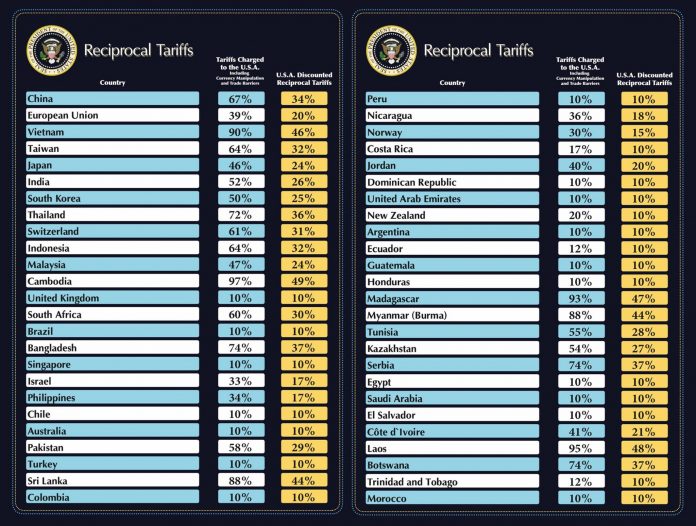
President Donald Trump shared an eight-point “non-tariff cheating” list on Truth Social, targeting trade practices he claims harm U.S. interests. Posted on Easter Sunday, the list highlights methods allegedly used by trading partners to gain unfair advantages, potentially straining diplomatic and trade relations. This move followed his April 9 announcement of a 90-day pause on sweeping reciprocal tariffs for most countries, except China, amid negotiations with over 75 nations. The list includes:

Accusing countries of devaluing currencies to boost exports and make U.S. goods costlier abroad. Claiming VATs act as tariffs by taxing imports while refunding exports, creating an uneven playing field. Selling goods abroad at prices lower than domestic markets or production costs. Providing financial support to exporters, distorting market competition.

Citing examples like the EU’s ban on genetically engineered corn as barriers to U.S. exports. Referencing Japan’s alleged “bowling ball test” to block U.S. cars, a claim Trump made in 2018. Intellectual property violations that harm U.S. businesses. Routing goods through third countries to evade U.S. tariffs.

Trump’s list aligns with his broader trade agenda, emphasizing reciprocity and reducing the U.S. goods trade deficit, which he declared a national emergency on April 2, 2025, under the International Emergency Economic Powers Act. He argues these non-tariff barriers are as damaging as tariffs, if not worse, and aims to pressure trading partners to negotiate fairer terms. The announcement coincided with heightened U.S.-China trade tensions, with tariffs on Chinese goods escalating to 145% after Beijing’s retaliatory 125% duties.

The list sparked market reactions, with gold prices surging 3.5% per ounce within an hour, reflecting demand for safe-haven assets. Bitcoin and Ethereum rose 2.2% and 1.8%, respectively, while gold-backed cryptocurrencies like Tether Gold saw a 25% trading volume spike. Critics, including economists like Kent Jones, argue Trump’s focus on trade deficits oversimplifies imbalances, which often stem from comparative advantages rather than “cheating.”

Some note the U.S. also employs non-tariff barriers, like quotas, complicating the narrative. The World Trade Organization can adjudicate genuine trade violations, but Trump’s formula—based on trade deficits rather than evidence of cheating—has drawn skepticism for lacking economic validity.

Trump’s administration imposed tariffs starting with a 10% levy on Chinese goods on February 1, 2025, escalating to 20% by March 4, 54% by April 2, and reaching 145% by April 9, following China’s retaliatory tariffs of up to 125%. These tit-for-tat measures have led to a near-total freeze in bilateral goods trade, with the World Trade Organization (WTO) estimating an 80% drop in U.S.-China merchandise trade in 2025.

Trump’s “non-tariff cheating” list, posted on April 20, 2025, accuses China of practices like currency manipulation, export subsidies, and intellectual property theft. This aligns with his broader narrative of addressing trade imbalances, though critics argue it oversimplifies economic dynamics. China counters that U.S. tariffs infringe on its sovereignty and demands structural economic changes. The tariffs are projected to cost U.S. households an average of $1,243 annually and reduce after-tax income by 1.2%. Imports are expected to fall by $800 billion (23%) in 2025, with global trade declining by 1.5% and GDP growth slowing to 2.2%.

China’s economy, already facing a slowdown, is shifting toward domestic demand and diversified export markets, reducing reliance on the U.S. from 19.8% of exports in 2018 to 12.8% in 2023. Trump’s strategy aims to isolate China by negotiating tariff deals with other nations, but Beijing is countering with diplomatic outreach, forging trade ties with Vietnam, Malaysia, and others. China’s leaders believe their economy is resilient enough to endure prolonged trade disruptions, while Trump’s approach risks alienating allies like Japan and South Korea, who face high U.S. tariffs.

The trade war threatens to split the global trading system into U.S.- and China-led blocs, with Southeast Asian nations hedging toward China. Tensions also risk spilling into military and diplomatic arenas, particularly over issues like Taiwan and critical minerals, where China has restricted exports to the U.S. Both sides show little willingness to de-escalate. Trump insists on Xi Jinping initiating talks, while China vows to “fight to the end,” leveraging its economic resilience and global partnerships. The standoff is causing market volatility, with U.S. businesses facing supply chain disruptions and higher costs.

Financial Modeling and Business Valuation | Tekedia Mini-MBA

0

How much is that company worth? How do you know how much you should sell that startup? How do you model how much you should pay for that business? Join us today as we discuss “Financial Modeling and Business Valuation” at Africa’s finest business program for the mastery of entrepreneurial capitalism. At Tekedia Mini-MBA, our product is Knowledge.

Meanwhile, we have opened registration for the June edition here

Dollar Weakens Further as Trump’s Clash with Fed Sparks Market Turmoil; Gold Surges Past $3,500 in Flight from U.S. Assets

0

The U.S. dollar plunged to its lowest level in three years on Monday, deepening a slide that has unsettled global markets and sent investors scrambling for safer assets, particularly gold, which surged past $3,500 an ounce for the first time in history.

The ICE U.S. Dollar Index, a benchmark that measures the strength of the greenback against a basket of six major currencies, fell to 97.92 before settling slightly higher at 98.38 by mid-day trading. This marked its lowest level since March 2022, according to data from FactSet.

The sharp decline in the dollar comes amid intensifying concerns over President Donald Trump’s open confrontation with the Federal Reserve. Investors were rattled after Trump renewed his attacks on Fed Chair Jerome Powell, referring to him as “Mr. Too Late” and “a major loser” in a post on Truth Social. The president’s continued undermining of the central bank’s independence, combined with reported efforts by White House officials to explore the legality of removing Powell, has created a crisis of confidence among investors and market participants.

“We’re seeing a clear signal from the market that it doesn’t like even the idea that the president might try to remove the Fed chair,” said Krishna Guha, vice chairman at Evercore ISI, during an appearance on CNBC’s Squawk Box on Monday. “There has been some loss of confidence in U.S. economic policy making in recent weeks. We’ve seen that in this very odd combination of upward pressure at times on longer-term bond yields combined with a weaker dollar. That suggests global investors pulling capital out of the U.S.”

The political brinkmanship has pushed global investors to reassess their exposure to U.S. assets, triggering an exodus that has accelerated over the past several weeks. Business leaders are increasingly voicing concern that the current trajectory is sending all the wrong signals about America’s economic stability and institutional coherence.

“Gold is not just any commodity, it’s money,” said Peter Schiff, Chief Economist and Global Strategist at Euro Pacific Capital. “Under normal circumstances gold does not move the way it is now. It’s already up another $58 tonight [Monday], trading above $3,483. This is the end of the U.S. dollar’s dominance. Life in America is about to change in ways few can imagine.”

The rally in gold, long considered a refuge during economic uncertainty, has been dramatic. Spot prices breached the $3,500-per-ounce mark early Tuesday, up from $2,623 at the start of the year. Analysts now believe the metal could push past $4,000 in the coming weeks, noting the pace at which it broke the $3,000 barrier was already unprecedented.

Historically, during periods of market turmoil, investors have turned to U.S. dollars and Treasuries. But this time, with Washington itself at the center of the storm, many are abandoning traditional havens in favor of gold and other non-U.S. assets. The dollar’s weakness has been accompanied by sharp drops in major stock indexes, with Wall Street continuing to bleed.

On Monday, the Dow Jones Industrial Average fell by nearly 1,000 points — a 2.5% decline — making it one of the worst single-day losses in recent months. The index is now on track to record its worst April performance since 1932, deepening anxieties that the political conflict in Washington is evolving into a broader financial crisis.

Other major currencies gained sharply against the dollar. The euro rose 1.3%, while both the Japanese yen and Swiss franc advanced as traders moved to unwind dollar holdings. Treasury yields also fell as prices rose, reflecting rising demand for government bonds even as questions swirl about the long-term credibility of U.S. fiscal and monetary policy.

Andy Laperriere, head of U.S. policy at Piper Sandler, warned clients in a note that the president’s behavior could continue to roil markets.

“We are looking at a president who is determined to turn Washington upside down,” Laperriere wrote. “Investors who ignored Trump’s own words proclaiming higher tariffs were ill-served by doing so. Likewise, it would be a mistake to brush aside Trump’s own words and actions on these other issues.”

While Trump’s supporters argue that the president is simply pushing for accountability and better economic results, the markets are reacting to what appears to be an erosion of institutional guardrails. The Fed, traditionally an apolitical actor charged with safeguarding monetary stability, has now been dragged into a battle that could redefine its role.

Thus, the dollar’s decline, the record-setting rally in gold, and the red ink across stock markets suggest investors are bracing for more instability in the weeks ahead. While Washington remains embroiled in political wrangling, Wall Street is signaling that the price of unpredictability may already be showing up in the balance sheets of global portfolios.