DD
MM
YYYY

PAGES

DD
MM
YYYY

spot_img

PAGES

Home Blog Page 1345

Shiba Inu (SHIB) Shows Signs of Recovery, But Will It Last? This Token’s 21784% Upside Might Be a Safer Bet

0

Rexas Finance (RXS) is attracting widespread notice because of its groundbreaking method of tokenizing real-world assets (RWA). The RXS presale in its final phase delivers both lucrative financial gains and a disruptive method for managing ownership of real-world assets. The recovery of the Shiba Inu (SHIB) meme coin creates discussions about its prospects versus upcoming tokens, including RXS.

Shiba Inu’s Recovery: A Glimmer of Hope?

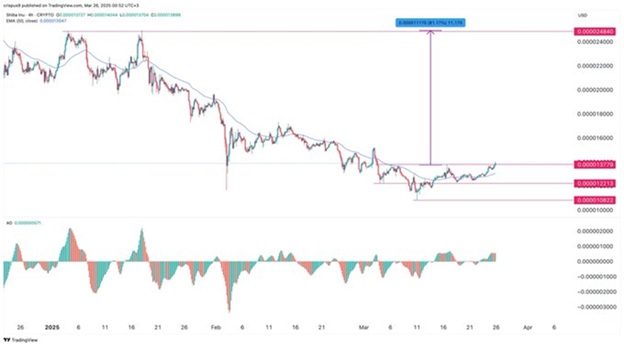
The current trading price of SHIB stands at $0.00001443, while its value has decreased by 5.21% during the last day, although it demonstrates a significant burn rate increase of 57,069.02%. According to analyst predictions, technical indicators, including rising RSI and ADX levels and an inverse head-and-shoulders pattern, indicate that SHIB will likely experience a bullish breakout phase. The following price target for this Token stands at $0.00002484, which reached its highest point in January.

RXS Presale 91.71% Complete – 7X Gains Already, 21,784% Growth Potential Next?!

The main strength of Rexas Finance (RXS) is its dedication to tokenizing real-world assets while targeting trillion-dollar markets that include real estate and commodities alongside the artwork. Through blockchain technology, RXS allows investors to buy fractional parts of illiquid assets, which provides stability and diversification benefits compared to the speculative nature of SHIB and other meme coins.

The Current Stage of RXS

presale is 91.71% completion, while sales have reached 91.71% of the total target. The presale of RXS tokens has achieved $47,709,220 from its $56 million target through a price of $0.200 per Token. The upcoming RXS listing at $0.25 on June 19th, 2025, will result in a 25% price increase for investors who purchased during the presale.

The innovative platform of Rexas Finance uses the Rexas Token Builder and DeFi features, including staking and yield farming, to boost token value. Certik audited RXS registered on CoinMarketCap and CoinGecko while delivering a 7X profit to early investors before the Token is expected to generate a 21,784% return.

RXS vs. SHIB: Real Assets, Limited Supply & $400T Market Potential!

SHIB’s community initiatives have strengthened its meme coin value, but RXS provides investors with a structured investment opportunity by backing tangible assets. RXS stands apart from SHIB because it has a restricted one-billion-dollar token supply, and SHIB maintains a massive trillion token circulation, which leads to unstable prices. The real-world asset platform RXS seeks to capitalize on a market valued at more than $400 trillion through blockchain technology. RXS provides investors with a safe investment opportunity because it delivers tangible value, ensuring long-term growth rather than speculative price fluctuations.

Conclusion

The crypto market development brings interesting investment possibilities between Shiba Inu and Rexas Finance. The recovery of SHIB may generate short-term gains through community work and ecosystem development activities. The innovative asset management system of RXS makes this Token stand out as a potential market leader in its sector. Before its June 19th launch date and its demand skyrocketing, investors are encouraged to act fast and head to the RXS website and buy into the final stage of the presale.

Website: https://rexas.com

Whitepaper: https://rexas.com/rexas-whitepaper.pdf

Twitter/X: https://x.com/rexasfinance

Telegram: https://t.me/rexasfinance
Africa Has Investors; Our Main Challenge for Long-Term Investment Remains Currency Deterioration

1

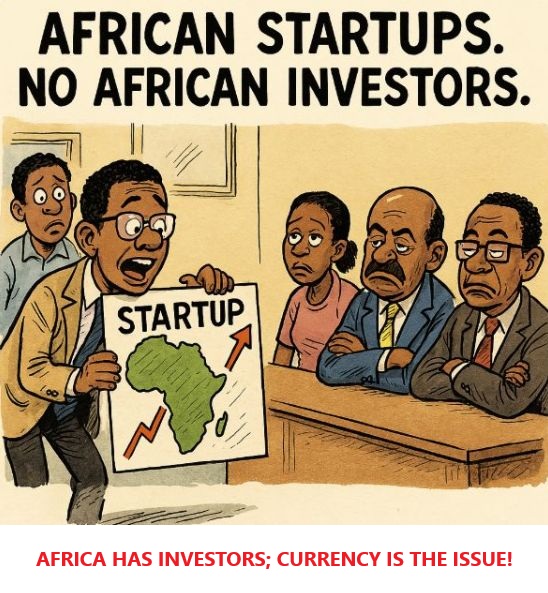
Let me expand the conversation by noting that Africa does have investors. My original comment: “I think there are African investors. The real challenge is not the startups but the currency. If you invested in Nigeria, for example, before 2015, when Naira was about N200/$, there is no way you would be fine now that the currency is N1600/$. We should understand that investors do not run charities. I wrote here how I put 15% of my gross wages as an entry banker and how worthless everything has become because of currency. Let us push for African leaders to find solutions to the currency mess and inflation. Africa has INVESTORS; the issue is that we do not have stable currencies for long term investments.”

I will add that even if you want to remove the impact of exchange rate, as an investor, you MUST still model the time value of money. Yes, you do not do investments to pack digits in your bank accounts. You do investments to create value on your assets so that you can have more spending power after you have grown your asset value. So, the real issue is not the absolute amount but the purchasing power, post the investment.

Looking at that, if you invested N2 million in 2015 in Nigeria and that money has “grown” to N2.2 million in 2025, even though you have “grown” the absolute value of that asset, you have lost on the purchasing or spending power associated with that asset. In other words, that investment is not a good one. Inflation and currency loss have destroyed value there!

So, the loss of spending power as a result of currency deterioration does not shield local investors. Simply,  even if you are investing and getting returns in Naira, you are going to lose value when it comes to using that fund due to inflation and the loss of the value of the money in an import-dependent economy. And that takes me to the summary: until we can stabilize our currencies in Africa, few investors will do long-term deals.

SpacePay Shifts Token Launch to Q2 2025: Strategic Patience Behind $1M+ Presale Success

0

Despite crossing $1 million in presale funding with tokens at $0.003181, the team announced rescheduling their token launch to Q2 2025 after consulting with advisors, market makers, and industry partners. This decision prioritizes long-term success over short-term excitement.

Recent crypto history is filled with promising projects that launched at the wrong time. This resulted in disappointing debuts despite strong technology. By securing strategic partnerships, finalizing agreements with top-tier launchpads, and waiting for more favorable market conditions, SpacePay aims to give its payment platform the strongest possible start.

What is SpacePay: The Foundation of a Long-Term Payment Solution

SpacePay is a payment processing system built over four years to connect crypto wallets with existing merchant terminals. The platform charges just 0.5% in fees compared to the traditional 2.5-3.5% that card processors take from businesses. 

When customers pay using any of 325+ supported wallets, merchants receive their local currency instantly rather than waiting days for settlements.

The system works by adding crypto capabilities to standard Android-based payment equipment through software updates. This approach eliminates the need for stores to buy specialized hardware or train staff on complex new systems. Customers simply scan QR codes with their preferred wallet app. This creates a familiar payment experience that matches the simplicity of card transactions.

At its core, SpacePay solves four key problems that previously limited crypto use in everyday commerce: high processing fees, settlement delays, equipment costs, and price volatility. The platform’s price protection ensures merchants receive exactly what they charged in their local currency regardless of crypto market movements during the transaction.

This foundation wasn’t built overnight. The four-year development period involved creating secure smart contracts. This includes designing merchant dashboards, building wallet integrations, and establishing regulatory compliance across multiple markets.

Strategic Timing: Why Q2 2025 Makes Business Sense

The decision to reschedule SpacePay’s token launch to Q2 2025 comes after analyzing numerous recent crypto debuts that underperformed despite strong fundamentals.

Market timing proves crucial for token launches – projects entering during unfavorable conditions often struggle regardless of their technical merit or real-world utility. By selecting a strategic window in Q2 2025, SpacePay positions itself for optimal market receptivity.

Top-tier launchpad partnerships require careful scheduling that aligns with market cycles. These relationships boost initial valuation and adoption but depend on coordinated timing across multiple platforms and partners. The extended timeline allows SpacePay to finalize these arrangements properly rather than compromising on launch quality or partner selection.

Liquidity depth impacts token stability during early trading. Recent market analysis shows that launches with insufficient liquidity face excessive volatility that damages long-term performance and investor confidence. The additional preparation time allows SpacePay to establish proper liquidity pools across multiple exchanges before debut.

This patient approach shows professional market wisdom rather than delay tactics. Just as major corporations carefully time their IPOs for maximum success, crypto projects benefit from strategic launch windows.

For a payment platform designed for years of everyday use, ensuring the strongest possible market entry outweighs the temporary excitement of an earlier but potentially compromised debut.

SpacePay’s Achievements Driving Presale Success

Despite the extended timeline to Q2 2025, SpacePay has already crossed the milestone of $1 million in presale funding with tokens at $0.003181.

This achievement shows investor confidence in the platform’s foundations rather than just launching speculation. The funding success comes from tangible progress across multiple areas of development.

The platform secured $750,000 in early private investment that provides capital to build the core payment technology that now connects over 325 crypto wallets to standard merchant terminals. This initial backing came from investors who recognized the platform’s potential to transform payment processing with lower fees and faster settlements.

Technical development has yielded a working payment system verified through comprehensive Smart Contract Audits. These security validations confirm that SpacePay’s technology processes transactions safely while protecting merchant funds. The successful audit completion proves the platform’s readiness for real-world financial operations.

Industry recognition came through the “New Payment Platform of the Year” award at the CorporateLiveWire Global Awards 2022/23. This acknowledgment from payment experts validates SpacePay’s approach to solving merchant challenges with digital currencies.

The platform established regulatory compliance across unsanctioned nations. This has removed legal barriers that might otherwise limit market expansion. This careful approach to regulations helps avoid compliance issues that have hampered other crypto projects while opening doors for global operation when the token launches in 2025.

Joining the SPY Journey to 2025 Launch

The extended timeline to Q2 2025 creates opportunities for early supporters to participate before the wider market. The presale continues with tokens at $0.003181. This provides entry at pre-launch prices for those who see value in the platform’s payment solutions and strategic approach to timing.

To join the presale, visit SpacePay’s official website and follow these steps:

  1. Connect your crypto wallet through the presale portal
  2. Select your preferred payment method
  3. Enter your desired investment amount
  4. Review the transaction details
  5. Confirm your purchase

During the waiting period to Q2 2025, token holders will receive regular updates through community channels on Telegram and X. These updates will include development progress, partnership announcements, and preparation activities for the eventual token launch.


                                  JOIN THE SPACEPAY (SPY) PRESALE NOW

       Website    |    (X) Twitter    |  Telegram 

Trump’s Economic Approval Hits Record Low Amid Concerns Over Tariffs, Inflation and Spending

0

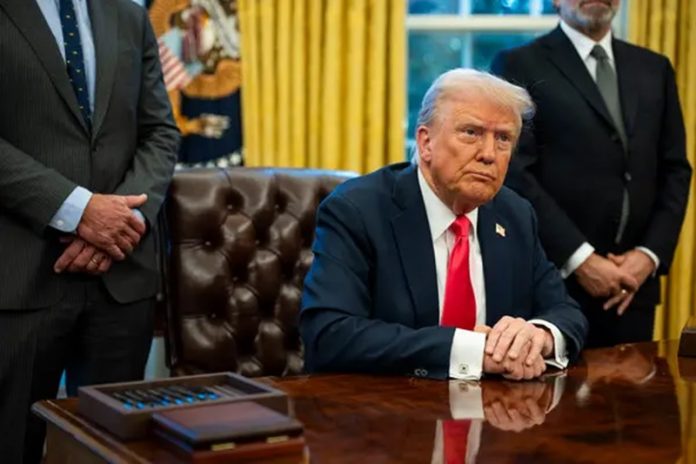
President Donald Trump is facing the lowest economic approval ratings of his presidency, according to the latest CNBC All-America Economic Survey, as discontent grows over his administration’s handling of inflation, tariffs, and federal spending.

The downturn in sentiment is not just among Democrats but also showing cracks within his independent support base and even some corners of the Republican bloc.

The poll, conducted from April 9 to 13 with a sample size of 1,000 American adults and a margin of error of ±3.1%, found that 55% of respondents disapprove of Trump’s economic performance, while just 43% approve — the first time he has received a net negative economic rating during his presidency.

This erosion of support marks a reversal from the boost in economic optimism that accompanied his reelection. The public outlook has since shifted markedly toward pessimism. Nearly half (49%) now believe the economy will worsen in the coming year, the most negative reading since 2023. Only 38% say it’s a good time to invest, compared to 53% who believe it is not — a significant reversal from the optimism seen following Trump’s reelection victory.

Even more concerning for the administration, the economic outlook among independents, a key demographic in Trump’s reelection bid, has soured. Their approval of his economic handling has dropped 23 points compared to the average during his first term. Democrats, meanwhile, remain overwhelmingly disapproving, with a net negative margin of 90 points, significantly worse than during Trump’s previous tenure.

Trump’s blue-collar support, once one of his strongest economic constituencies, has also seen erosion. While still showing majority approval, disapproval among this group has increased by 14 points. It underscores growing discomfort even among voters who largely backed his trade and manufacturing policies.

Tariffs and Inflation Fuel Discontent

One of the primary drivers of the downturn in sentiment is Trump’s renewed tariff strategy. Americans disapprove of across-the-board tariffs by a 49% to 35% margin. Majorities believe tariffs are harmful to American workers, inflation, and the broader economy. This is particularly significant because tariffs have become a hallmark of Trump’s economic vision.

Among Republicans, support for tariffs remains, but even here the gap is narrowing. While Republicans still approve by a 59-point margin, that number is 20 points lower than their 79% net approval of Trump himself — showing tariffs are less popular than the president within his own party.

Democrats reject the tariffs by a resounding 83-point margin, and independents disapprove by 26 points, reinforcing that the policy is struggling to win broader appeal.

This unease is reflected in the broader assessment of Trump’s inflation performance. Just 37% of respondents approve of how he’s handling inflation, while 60% disapprove — the worst among all the issues polled. Even among Republicans, his strongest supporters, approval of inflation has dipped to 58%, the lowest net positive among the surveyed topics.

Additionally, 57% of respondents believe the U.S. is either already in or about to enter a recession, up from just 40% last March. A small but notable 12% believe the country is already in a recession.

Spending, Markets, and Partisan Divides

Federal government spending is another point of contention. A narrow majority — 51% — disapprove of Trump’s handling of public expenditure, compared to 45% who approve. This aligns with growing anxiety about rising deficits under his administration, despite his promises to rein in government waste.

On foreign policy, Trump also suffers a net negative: 42% approve versus 53% disapprove, with much of the disapproval tied to concerns over international economic relations.

“Donald Trump was reelected specifically to improve the economy, and so far, people are not liking what they’re seeing,” said Jay Campbell of Hart Associates, the Democratic partner on the CNBC survey.

Micah Roberts, the Republican pollster for the survey, agreed that the issue is not just economic data but public perception.

“We’re in a turbulent, kind of maelstrom of change when it comes to how people feel about what’s going to happen next. The data suggest more than ever that it’s the negative partisan reaction that’s driving and sustaining discontent,” he said.

Interestingly, while Americans overwhelmingly see countries like Canada, Mexico, Japan, and the EU as economic partners rather than threats — and view them more favorably than they did during Trump’s first term — the exception remains China. The country is still seen as an economic threat by a 44% to 35% margin, worse than in 2019.

The Bright Spot of Immigration

If there’s one area where Trump finds some solace, it’s immigration. His handling of the Southern border enjoys a 53% to 41% approval margin, while deportation policies are backed by 52% of Americans. Notably, he garners 22% support from Democrats on border policy — his highest cross-party approval.

He also edges out a slim majority among independents on the issue of deportations, which could help him maintain support in swing states where immigration remains a hot-button topic.

Despite Trump’s dip in economic approval, Democrats have yet to capitalize significantly. On the congressional ballot, the public remains nearly evenly split: 48% prefer Democratic control, while 46% favor Republicans. These figures are virtually unchanged from the March 2022 survey, showing that while the president may be losing ground, it is not automatically translating into Democratic gains.

The Implications of Trump’s Push to Use Tariff Revenue to Purchase Bitcoin

0

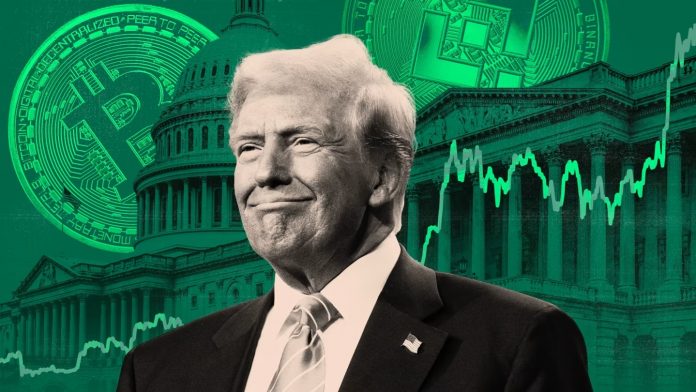
The Trump administration has explored using tariff revenue to purchase Bitcoin for a U.S. Strategic Bitcoin Reserve, as part of a broader strategy to expand national cryptocurrency holdings without increasing taxpayer burden. Bo Hines, Executive Director of the President’s Council of Advisers on Digital Assets, confirmed in an April 2025 interview with Anthony Pompliano that the administration is considering various budget-neutral methods, including tariff revenue and revaluing Treasury gold certificates (currently valued at $43 per ounce, far below the market price of over $3,200).

This aligns with President Trump’s March 2025 executive order to establish the reserve, initially stocked with seized Bitcoin, and Senator Cynthia Lummis’ Bitcoin Reserve Act of 2025, which proposes acquiring 1 million BTC over five years. Hines emphasized that “everything’s on the table” to maximize Bitcoin acquisition, likening it to gold reserves. However, the proposal has drawn criticism. Some economists, like George Selgin, argue that both tariffs and a Bitcoin reserve are flawed ideas, with tariffs acting as a consumer tax that could disproportionately harm low-income households estimated at $3,800 per year by Yale’s Budget Lab.

Critics also highlight Bitcoin’s volatility—its price dropped 10% to below $78,000 after Trump’s tariff announcement in April 2025, though it later recovered to around $86,000—and question the appropriateness of government investment in a speculative asset. Tariff revenue projections of $3.3 trillion over a decade, per the Tax Policy Center are also considered optimistic, potentially insufficient for ambitious plans like tax cuts or deficit reduction alongside Bitcoin purchases. Despite these concerns, the crypto industry sees the move as a bullish signal, potentially boosting market confidence if implemented.

Government purchases of Bitcoin (potentially 1 million BTC over five years, as proposed in the Bitcoin Reserve Act) could drive up Bitcoin’s price, increasing market capitalization and liquidity. This might stabilize its value but also risks creating a bubble if demand outpaces supply. The crypto market has already shown sensitivity, with a 10% price drop to $78,000 after Trump’s tariff announcement in April 2025, though it later rebounded to $86,000.

Tariffs, projected to generate $3.3 trillion over a decade, act as a consumption tax, raising costs for U.S. consumers (estimated $3,800 annually for low-income households). Diverting this revenue to Bitcoin purchases could limit funds for other priorities like tax cuts or deficit reduction, potentially exacerbating inflationary pressures if consumer prices rise without offsetting relief.

Using volatile tariff revenue for a speculative asset like Bitcoin introduces fiscal uncertainty. Critics argue this could undermine confidence in U.S. financial management, especially if Bitcoin’s value crashes. Revaluing Treasury gold certificates to fund purchases, another proposed method, could also distort monetary policy if not carefully managed. A national Bitcoin reserve might signal a diversification away from the U.S. dollar, potentially weakening its status as the world’s reserve currency over time, especially if other nations follow suit with crypto reserves.

The plan appeals to pro-crypto voters and industries, aligning with Trump’s campaign promises to make the U.S. a “Bitcoin superpower.” However, it faces opposition from traditional economists and fiscal conservatives who view tariffs and Bitcoin investments as risky. This could deepen partisan divides, with critics like George Selgin calling the combination a “lose-lose.”

Proposals like Senator Lummis’ Bitcoin Reserve Act require Congressional approval, which may face resistance due to concerns over funding mechanisms and economic impacts. The administration’s reliance on executive actions (e.g., the March 2025 order) may bypass some gridlock but risks legal challenges. The policy strengthens ties with the crypto sector, which has gained political clout. Industry leaders see it as a bullish signal, potentially lobbying for further pro-crypto policies, but this could alienate voters wary of corporate influence.

A U.S. Bitcoin reserve could position the country as a leader in cryptocurrency adoption, countering nations like China, which has banned crypto trading but holds significant gold reserves. It may prompt other countries to create their own crypto reserves, reshaping global financial systems. High tariffs e.g., 25% on Canada and Mexico, 10% on China to fund Bitcoin purchases could strain trade relations, risking retaliatory tariffs and supply chain disruptions. This might weaken U.S. alliances while escalating economic conflicts with adversaries.

Holding Bitcoin could enhance U.S. financial resilience against sanctions or dollar-based restrictions, as Bitcoin operates outside traditional banking systems. However, it might also embolden adversarial nations to accelerate de-dollarization efforts using crypto or other assets. U.S. government backing could legitimize Bitcoin as a global asset class, encouraging institutional adoption but also increasing regulatory scrutiny to prevent fraud and market manipulation.

Bitcoin price surges could disproportionately benefit early adopters and wealthy investors, exacerbating inequality, especially if tariff-funded purchases raise consumer costs for lower-income households. A strategic reserve might spur blockchain and crypto infrastructure development in the U.S., fostering innovation but also raising energy consumption concerns due to Bitcoin mining’s environmental impact.

While the policy could cement U.S. leadership in the crypto space and boost market confidence, it risks economic instability, trade conflicts, and political polarization. The success hinges on balancing fiscal prudence with bold innovation, navigating volatile markets, and addressing consumer impacts from tariffs.